
绿水青山就是金山银山

Search documents
二十年,“绿水青山”成世界底色|全球财经连线
2 1 Shi Ji Jing Ji Bao Dao· 2025-08-15 14:56
Core Viewpoint - The concept of "Lucid waters and lush mountains are invaluable assets" has been effectively implemented in China over the past 20 years, leading to a harmonious coexistence between humans and nature, with significant ecological and economic benefits [1][2]. Group 1: Achievements in Green Development - China has contributed to one-fourth of the global increase in greening area and has achieved zero growth in land degradation, with the largest grassland area in the world [1]. - The country generates one-third of its electricity from green sources, and its manufactured new energy vehicles are gaining global traction [1]. Group 2: Global Leadership in Renewable Energy - China leads globally in solar energy, wind energy, battery technology, and new energy vehicles, advancing the net-zero emissions agenda [2]. - The "Green Silk Road" initiative showcases China's commitment to improving ecological environments in collaboration with multiple countries, exemplified by projects like the Mombasa-Nairobi railway in Kenya and the world's largest single solar power station in the UAE [2]. Group 3: International Recognition and Cooperation - Former UN Deputy Secretary-General Erik Solheim praised China's green development as essential for global transformation, highlighting the importance of mangrove protection in climate change mitigation [1]. - Officials and experts from countries like the UAE and Kazakhstan recognize China as a role model in renewable energy, with its green solutions providing valuable experience and motivation for global sustainable development [2].
8月15日晚间央视新闻联播要闻集锦
Yang Shi Xin Wen Ke Hu Duan· 2025-08-15 14:07
Group 1 - The core idea of the news emphasizes the importance of ecological civilization and the concept of "Lucid waters and lush mountains are invaluable assets," which has been a guiding principle since the 18th National Congress of the Communist Party of China [2][4]. - The upcoming launch of a large-scale program titled "Xi Jinping's Ecological Civilization Thought Series Lectures" aims to deepen the understanding and implementation of ecological civilization principles, coinciding with the 20th anniversary of the "Two Mountains" theory [4]. Group 2 - The National Development and Reform Commission has announced significant achievements in carbon peak and carbon neutrality initiatives over the past five years, highlighting the country's commitment to sustainable development [5]. - Economic data released indicates that in July, the national economy maintained a steady and progressive development trend, achieving new results in high-quality development [6][7].
和总书记面对面 | 青山常在路更长
Xin Hua She· 2025-08-15 13:53
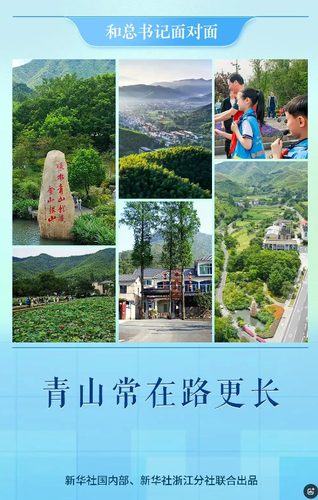
年过半百的潘春林,在矿上工作时才18岁,个头矮、力气小,常年泡在粉尘漫天、炮声隆隆的矿 上,日子过得提心吊胆不说,还落下腰痛的病根。 继续开矿还是寻求新路?20年前,站在十字路口,彷徨的余村迎来时任浙江省委书记习近平同 志。"绿水青山就是金山银山"的重要理念,让大家伙儿豁然开朗。 从那时起,潘春林全身心投入依山傍水的农家乐经营中。这些年,紧跟绿色发展步伐,山庄陆续改 造了太阳能和热水、污水供应管道,拆掉一人多高的围墙,凭借一方舒阔庭院,尽揽山水美景。 "从矿上年收入万元到现在一天就能收入万元,这日子以前想都不敢想。"潘春林说,过去眼前灰蒙 蒙,现在自家院中就能看见风景,接待来自长三角乃至全国各地的游客,天地都变宽了。 回忆起五年前那个下午,潘春林还记得院子里挤满了闻讯赶来的村民,习近平总书记同大家拉起家 常。 老村支书、返乡创业青年一一向总书记汇报生活的变化。习近平总书记寄语大家,这里的山水保护 好,继续发展就有得天独厚的优势,生态本身就是经济,保护生态,生态就会回馈你。 当时,余村村党支部副书记俞小平站在总书记对面。"总书记的话说到了我心坎里,正是因为山 水'活'了,村子也有了新活路。"俞小平说。 一场雨后 ...

三机构发起“爱护绿水青山 倡导无痕旅游”倡议
Zhong Guo Fa Zhan Wang· 2025-08-15 11:29
Core Viewpoint - The initiative "Protect Green Water and Mountains, Advocate for No Trace Tourism" emphasizes the importance of ecological protection in tourism activities, urging the public to enhance their awareness and take action to safeguard natural resources [1][2]. Group 1: Initiative Details - The initiative consists of five core points aimed at promoting ecological civilization and harmonious coexistence with nature [2]. - It calls for adherence to regulations to ensure forest safety and to avoid entering sensitive ecological areas [2]. - Respect for nature is highlighted, including not disturbing wildlife or damaging natural and cultural heritage [2]. Group 2: Tourism and Ecological Balance - The initiative stresses the need for a balance between ecological protection and tourism development, especially as China advances its tourism industry [2]. - It encourages the use of sustainable practices in tourism, such as reducing single-use plastics and promoting low-carbon activities [2]. - The collaboration among various organizations aims to integrate the concept of "Green Water and Mountains are as Valuable as Gold and Silver" into tourism practices [2].
旧水库、乱滩涂,怎么逆袭成了游客打卡地?
Bei Jing Ri Bao Ke Hu Duan· 2025-08-15 10:15
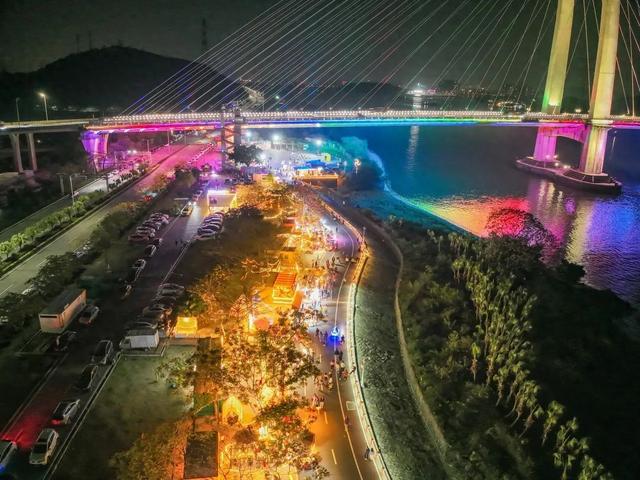
Core Viewpoint - The article emphasizes the transformation of ecological wealth into tangible benefits for the public, highlighting the successful implementation of the "Green Water and Green Mountains are Gold and Silver Mountains" concept in various regions of China, particularly in Guangdong and Chongqing [1][19]. Group 1: Water Economy Development - Jiangmen, an important city in the Guangdong-Hong Kong-Macao Greater Bay Area, has developed a vibrant water economy, with the Jiangshun Bridge area becoming a hub for both ecological and commercial activities, attracting significant foot traffic and generating over ten million yuan in annual transactions [2][5]. - The Jiangshun Nine Point Nine Market project exemplifies the integration of industrial aesthetics and ecological value, featuring a vibrant open street area that promotes consumer engagement and cultural interaction [4][5]. Group 2: Water Sports and Economic Growth - In Nansha, Guangzhou, the establishment of a water sports base has spurred the growth of related industries, including equipment manufacturing and training, with over 1.75 million training participants and more than one million annual visitors [7][8]. - The Nansha water sports project has created approximately 300 direct jobs and generated an additional 50 million yuan in local economic income, showcasing the potential of water-based activities to drive regional economic development [8]. Group 3: Ecological Tourism Initiatives - The Yuanlin Ecological Park in Heshan has transformed a previously polluted reservoir into a thriving tourist destination, with expectations of attracting 800,000 visitors and generating 80 million yuan in tourism revenue upon completion [10][11]. - The project has not only improved water quality but also created job opportunities for over 300 local villagers, enhancing their monthly income significantly [11]. Group 4: Cultural and Natural Tourism Integration - The Chuqing Rock Hanging Water Channel in Chongqing has become a popular tourist attraction, leading to the development of various adventure and cultural tourism products, significantly boosting local income and business opportunities [15][16]. - The local government is actively promoting the integration of cultural heritage and natural resources to create a distinctive tourism brand, enhancing the overall visitor experience and economic benefits [16].
绿水青山就是金山银山,看长沙自然守护之道
Chang Sha Wan Bao· 2025-08-15 09:53
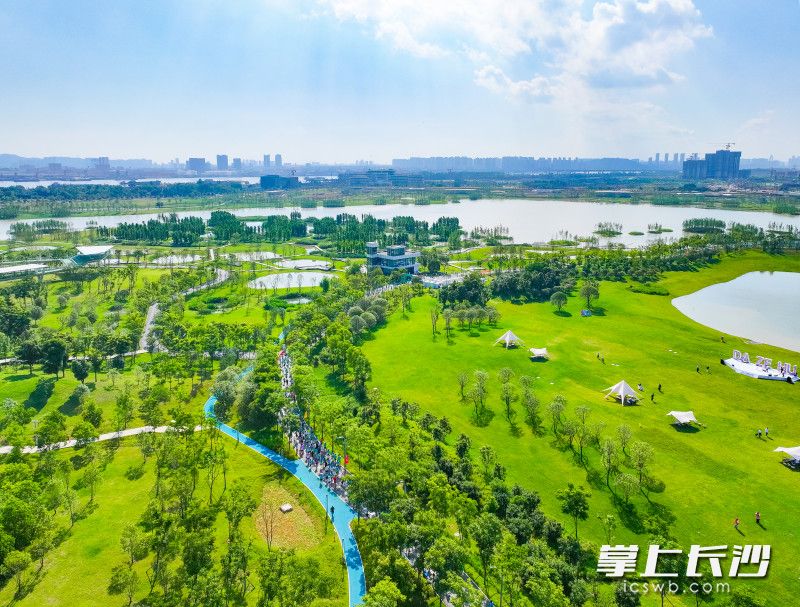
Group 1 - The core viewpoint emphasizes the integration of ecological protection and urban development in Changsha, highlighting the importance of the "Green Water and Green Mountains are Gold Mountains and Silver Mountains" philosophy [1][3][10] - The "Changsha Land Space Overall Planning (2021-2035)" has been approved by the State Council, outlining a clear blueprint for future urban development with a focus on ecological space layout and protection [3][10] - A total of 783.82 square kilometers of ecological protection red lines have been designated, primarily in the eastern, northern, and western regions of the city, to create a secure ecological pattern [3][8] Group 2 - The ecological restoration efforts in the mining sector are exemplified by the transformation of the former phosphate mine in Jinqiao Village, which has been converted into a green space with 6,800 trees planted and a 90% reclamation rate [5][7][8] - Since the launch of the abandoned mine ecological restoration initiative in 2022, Changsha has completed the restoration of 217.02 hectares of historical mining sites and 107.61 hectares of abandoned mines [8][9] - The integration of resources and industries with ecology has become a development theme, with successful projects like the Xiangjiang Happy City, which utilizes unique terrain for ecological and tourism development [9][10]
2025全国生态日广东省活动启幕,共绘生态文明新画卷
Zhong Guo Qi Che Bao Wang· 2025-08-15 08:42
Core Viewpoint - The event held in Shaoguan, Guangdong, on the occasion of the National Ecological Day aims to promote the concept of "Lucid waters and lush mountains are invaluable assets" and accelerate the transition to a green and low-carbon lifestyle and production method [1][4]. Group 1: Event Overview - The event was organized by multiple governmental bodies in Guangdong, showcasing a collaborative effort in ecological civilization construction [1]. - Representatives from various sectors, including government, academia, and industry, participated in the event, highlighting the importance of collective action in ecological initiatives [1]. Group 2: Key Messages from Officials - Guangdong's commitment to ecological civilization is emphasized, with a focus on achieving significant green development outcomes [4]. - Shaoguan's high forest coverage rate of 74.5% is noted as a vital ecological asset, contributing to the region's economic transformation [4]. Group 3: Experience Sharing and Discussions - Representatives shared experiences on green low-carbon development and waste recycling in construction, providing replicable models for ecological progress [5]. - A roundtable discussion focused on the challenges and innovations in building zero-carbon parks, offering new ideas for future developments in this area [5]. Group 4: Call to Action - A collective initiative was launched, urging all sectors of society to adopt green and low-carbon lifestyles, reflecting a strong community response [7]. - The event marked a significant step forward for Guangdong in its ecological civilization journey, with ongoing efforts to explore innovative paths for sustainable development [7].

全国生态日丨绿水青山释放经济红利 生态保护与产业发展双赢
Yang Shi Wang· 2025-08-15 08:29
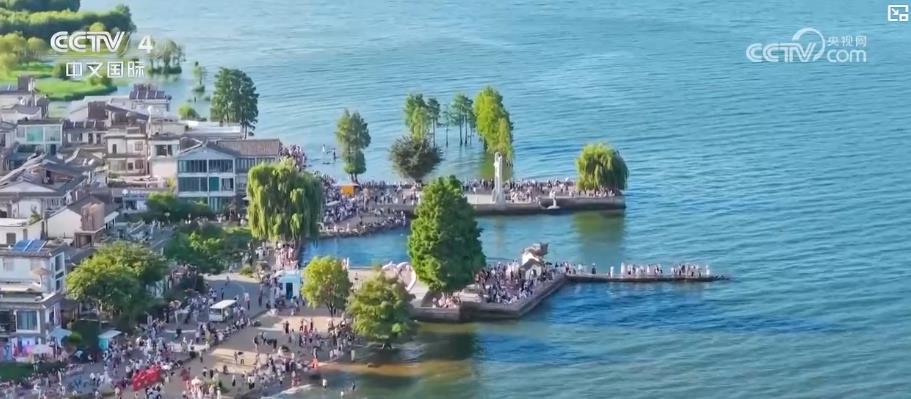
Group 1 - The article emphasizes the importance of ecological civilization construction and the integration of high-quality development with environmental protection, highlighting the transformation of ecological advantages into economic benefits [1] - The Dali Erhai Ecological Corridor in Yunnan has become a popular destination for tourists, showcasing the ecological dividends and the establishment of a comprehensive evaluation system for lake governance [3] - Qingdao Pingdu in Shandong has designated ecological protection red lines to create safe habitats for wildlife, with successful observations of the breeding process of the national second-class protected species, the Crested Serpent Eagle [5] Group 2 - Guizhou Yinjiang has strengthened the protection of wild plants and animals, achieving a record high in the population of wild Mandarin Ducks and healthy growth of the national first-class protected plant, the Southern Yew [7] - In Sichuan Mianyang, a special protection area for egrets has been established, contributing to a beautiful ecological landscape with thousands of egrets thriving in the region [9] - Jiangsu Taizhou has implemented large-scale photovoltaic power generation on fish farming ponds, promoting both economic and ecological benefits, with projected annual electricity generation of 560 million kWh by the end of 2025, reducing carbon dioxide emissions by approximately 438,000 tons [11]
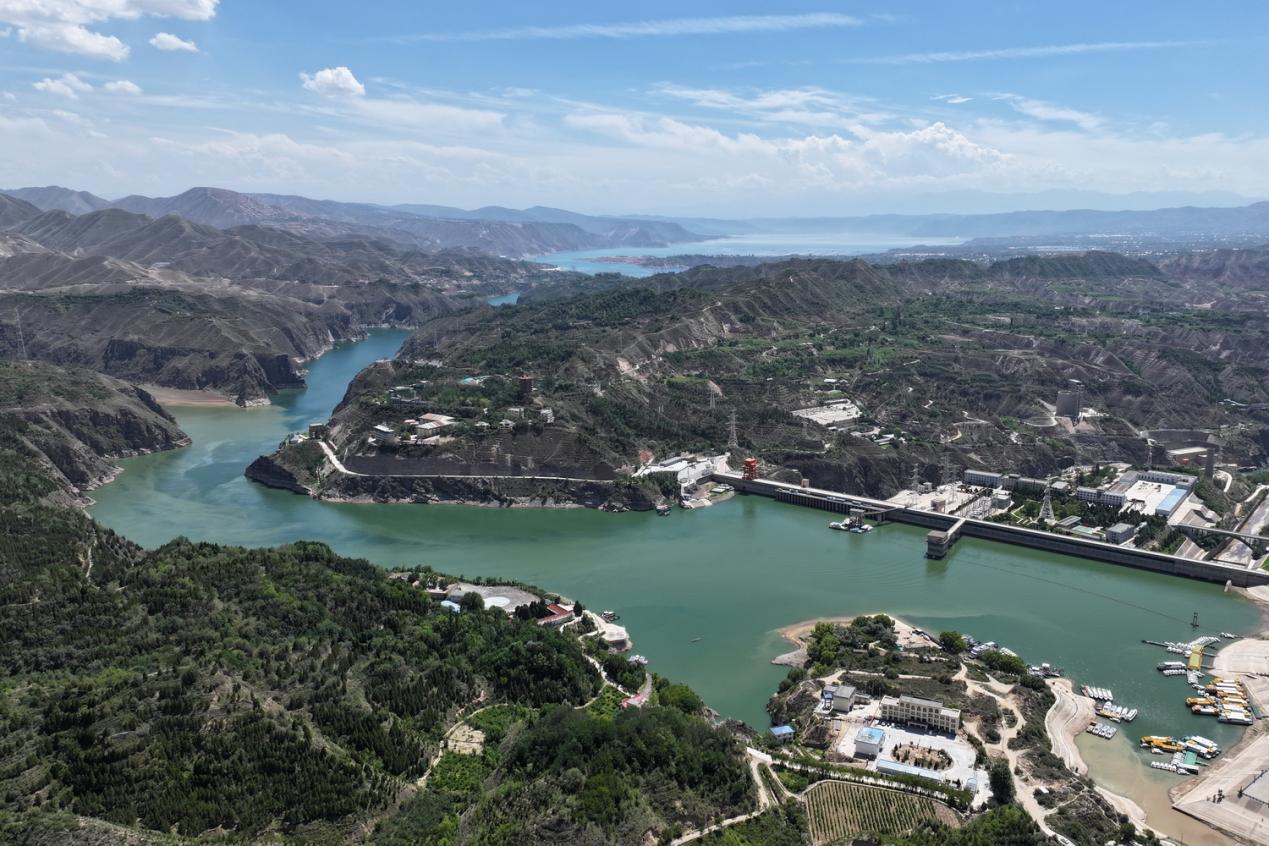
碧水青山映初心——国网甘肃刘家峡水电厂践行“两山”理念二十年纪实
Zhong Guo Neng Yuan Wang· 2025-08-15 08:20
黄河西来决昆仑,高峡平湖聚安澜。在甘肃省永靖县境内,一座巍峨大坝横亘于黄河之上,造就了"高峡出平湖"的壮美景观。这里就 是新中国第一座百万千瓦级大型水电站——刘家峡水电站。2025年,正值"绿水青山就是金山银山"理念提出二十周年,这座被誉为"共和国 水电长子"的工程,用半个多世纪的坚守与创新,谱写了一曲动人的生态保护之歌,成为黄河流域践行"两山"理念的生动典范。 荒山秃岭变绿洲:百万株树木的绿色守护 站在刘家峡水电站大坝远眺,南北两山郁郁葱葱,百万株树木如同绿色卫士般守护着母亲河。然而时光倒流半个世纪,这里曾是"红山 白土头,沟壑遍地走"的荒芜之地。建厂初期,大坝两岸地质为暗紫红色砂岩、泥岩,土质疏松,黏结性小,抗蚀性差,大风过后扬沙走 石,生态环境极为脆弱。 "我的工作,往小了说就是种种树,往大了说那可了不得,是保护母亲河呢。"原绿化班老班长赵建江朴实的话语道出了刘家峡水电厂 肩负的重大社会责任。在担任绿化班班长期间,老赵走遍了绿化区的沟沟壑壑,每一棵树像他的亲人,也像他的孩子,他见证了每一棵树 的成长存亡。 在这种特殊地质条件下植树,堪称"与自然博弈"的艺术。"水浇少了树木干渴容易枯死,土壤龟裂,刮风就起 ...
湖北谷城多点共建“堰河式”和美乡村 打造乡村共富圈
Ren Min Ri Bao· 2025-08-15 07:02
Core Insights - The development of Yanhhe Village in Hubei Province showcases the successful transformation from poverty to prosperity through rural tourism and sustainable practices [1][2] - The village has achieved significant economic growth, with a total tourism revenue exceeding 100 million yuan and an average per capita income of 38,000 yuan [1][2] Group 1: Economic Development - Yanhhe Village has a permanent population of 1,800, with approximately 85% engaged in rural tourism, leading to a total tourism revenue of over 100 million yuan last year [1] - The average per capita income of villagers reached 38,000 yuan, reflecting the positive impact of the tourism industry [1] - The village's agricultural products, including tea and mushrooms, generated sales of 3 million yuan last year [1] Group 2: Environmental Sustainability - The village transitioned from deforestation to afforestation, with 21,000 acres of previously barren land now covered in greenery, including 1,200 acres of tea gardens and 3,000 acres of economic forests [1][2] - The local leadership emphasized the principle that "lucid waters and lush mountains are invaluable assets," guiding the community towards sustainable development [1] Group 3: Community Engagement - The village's tourism strategy involves unified pricing for agricultural products and accommodations, fostering trust and participation among villagers [2] - Neighboring villages are learning from Yanhhe's model, with initiatives to develop their own agricultural industries, such as the chili pepper industry in Xiongjiagang Village [2] - A collaborative approach among seven surrounding villages has led to the establishment of shared tourism facilities and branding for agricultural products, enhancing collective economic benefits [2]