
通货膨胀

Search documents
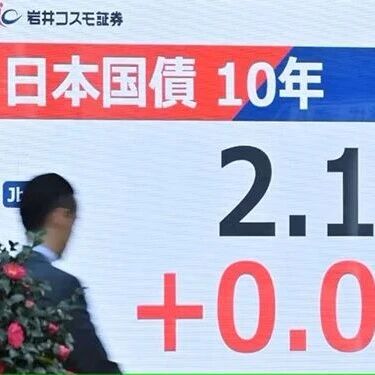
日本央行加息后日债日元仍被持续卖出
日经中文网· 2025-12-23 02:57
Core Viewpoint - The depreciation of the yen and the rise in long-term interest rates in Japan are causing concerns about inflation and the government's fiscal policies, leading to increased selling of Japanese government bonds and the yen [2][9]. Group 1: Interest Rates and Currency - Japan's long-term interest rate has risen to 2.100%, with the 10-year government bond yield reaching a new high since July 23, increasing by 0.085% [4]. - The 5-year government bond yield has also risen to 1.535%, marking a 17.5-year high [4]. - The depreciation of the yen is attributed to the belief that the Bank of Japan will not accelerate interest rate hikes, with the yen falling to around 157 yen per dollar [5][7]. Group 2: Market Reactions and Predictions - Market participants expect the yen to depreciate further, potentially reaching 160 yen per dollar, with predictions of a rate hike by the Bank of Japan not expected until October 2026 [8]. - Concerns are growing that the depreciation of the yen will lead to increased import prices and domestic inflation, with the government’s 2026 budget expected to exceed 120 trillion yen, the highest ever [9]. - The Tokyo stock market has seen a rise, with the Nikkei index surpassing 50,000 points, driven by expectations of improved corporate profits due to yen depreciation [10]. Group 3: Economic Implications - Rising long-term interest rates may suppress personal consumption and corporate investment, potentially impacting economic growth [10]. - The market is reacting to the Bank of Japan's slow response to inflation concerns, with fears that both monetary and fiscal policies are not adequately addressing rising prices [9].

高市早苗得罪韩国
第一财经· 2025-12-23 01:16
Group 1 - The article discusses provocative remarks made by Japan's Minister of Internal Affairs, Takashi Saito, regarding the territorial dispute over the islands known as Takeshima in Japan and Dokdo in South Korea, labeling them as Japanese territory [1][3] - Saito's statements are seen as politically motivated rather than based on policy considerations, potentially distracting from domestic issues in Japan [1][3] - The article emphasizes that public support is a fleeting snapshot of sentiment and does not accurately reflect policy effectiveness or governance, suggesting that provocative rhetoric cannot substitute for tangible policy outcomes [1][3]

独家专访诺奖得主罗伯特·恩格尔:在不确定性时代解构风险
21世纪经济报道· 2025-12-23 00:50
2003年诺贝尔经济学奖得主、上海纽约大学金融波动研究所(VINS)联席所长罗伯特·恩格尔 (Robert Engle)在接受21世纪经济报道记者独家专访时表示,导火索可能是通货膨胀。"关 税很可能会引发通货膨胀,如果今年冬天、明年春天通胀率持续走高,尤其是在劳动力市场疲 软的情况下,美联储将无法决定是加息还是降息,因此,低利率的好处将无法显现,债券价格 将会暴跌,股市也将大幅下跌。" 对于人工智能的风险,恩格尔不认为这是一个典型的泡沫。人工智能是否会彻底改变我们所看 到的一切,不再需要任何员工,或者它仅仅是一个提高现有工人效率的工具,这一问题存在着 如此多截然不同的观点。 恩格尔是著名计量经济学家,其创立的ARCH模型在经济、财务、统计等领域具有跨学界的贡 献。2003年,凭借开创性工作,恩格尔被瑞典皇家科学院授予诺贝尔经济学奖。他提出的 ARCH模型已成为经济界用来进行研究以及金融市场分析人士用来评估价格和风险必不可少的 工具。 编辑丨和佳 李艳霞 视频丨许婷婷 实习生余艾憧 "日中则昃,月盈则食,天地盈虚,与时消息"。万物皆有周期,金融市场也不例外。关键问题 是:下一场危机的导火索在哪儿? 整体而言,恩 ...

独家专访诺奖得主罗伯特·恩格尔:在不确定性时代解构风险
2 1 Shi Ji Jing Ji Bao Dao· 2025-12-22 23:57
Core Viewpoint - The next financial crisis may be triggered by inflation, particularly due to fluctuating tariff policies, which could lead to significant market downturns if inflation rates remain high [1][12]. Group 1: Inflation and Economic Policies - Tariffs are likely to cause inflation, and if inflation persists, the Federal Reserve may struggle to decide between raising or lowering interest rates, leading to a collapse in bond prices and a significant drop in the stock market [1][12]. - The year 2025 is expected to be tumultuous, with frequent changes in tariff policies and significant uncertainty in the financial markets, despite a strong market performance overall [3][4]. Group 2: Market Reactions and Asset Management - Despite various global risks, including geopolitical tensions and climate change, financial markets have remained robust, supported by factors such as optimism, Federal Reserve backing, and tax cuts [4]. - Investors may consider holding cash or other assets that are less sensitive to economic fluctuations as a buffer against unpredictable events [2][16]. Group 3: Gold and Currency Dynamics - The rise in gold prices is largely driven by central banks diversifying their reserves away from the dollar, indicating a potential shift in global currency reliance [5][6]. - The dollar may continue to depreciate, and there is speculation about the emergence of a multi-currency system, with currencies like the yuan or euro potentially gaining prominence [6]. Group 4: Climate Change and Regulatory Impact - The U.S. withdrawal from the Paris Agreement and subsequent deregulation efforts are seen as attempts to diminish the visibility of climate issues, which could have long-term implications for environmental policies and market stability [7]. Group 5: Systemic Risks and Financial Stability - Current assessments indicate that while systemic risks in the banking sector appear manageable, ongoing monitoring is essential, particularly regarding climate-related risks [8]. - The volatility of AI stocks raises concerns about potential bubbles, but the overall impact on the market may not mirror past crises like the internet bubble [9][10]. Group 6: Future Outlook and Political Influence - The upcoming midterm elections in the U.S. are expected to introduce market volatility as investors speculate on potential shifts in political power and their economic implications [18]. - The uncertainty surrounding current U.S. policies, particularly those affecting immigration and scientific research, poses risks to innovation and economic growth [18].
Gold, Silver, and Copper Are All Hitting Record Highs—Here's What's Driving the Frenzy
Investopedia· 2025-12-22 21:00
Core Insights - Investors are increasingly purchasing metals, leading to record high prices for gold and silver, with gold reaching $4,460 per ounce and silver more than doubling in price [1][4] - Copper is nearing $12,000 per ton, marking its largest annual increase since 2009, driven by demand from AI data centers, electric vehicles (EVs), and infrastructure projects [1][5] Market Dynamics - The metals rally is attributed to ongoing inflation fears, economic uncertainty, and a significant infrastructure buildout [2] - Expectations of rate cuts, a weakening dollar, and geopolitical tensions are contributing to the surge in metal prices [3][4] - Central banks are increasing their gold reserves to reduce reliance on the dollar and hedge against economic instability [4] Performance Metrics - Silver has surged 137% this year, its best performance since 1982, due to its dual role as a store of value and industrial metal [4] - Copper prices have increased by 36.7% this year, driven by high demand for AI, EVs, and renewable energy projects [5] Supply Chain Challenges - Copper production has been affected by mining disruptions in Chile and Peru, alongside a 50% tariff on imported copper products, leading to a hoarding trend [7] - The demand for copper is projected to grow significantly, with grid and power infrastructure expected to account for over 60% of this growth through 2030 [6]
Fed's Miran Says Recession Risks Rise Without More Rate Cuts
Youtube· 2025-12-22 18:04
Coming to the economy. Investors are watching for signals from policymakers heading into a key year for the Federal Reserve, with a new chair expected to be announced soon. Cleveland Fed President Beth Hammack among those, preferring to hold rates higher for longer.Well, our next guest is taking the other side, voting for a 50 basis point cut at the Fed's last meeting. Joining us now is Federal Reserve Governor Stephen Myron. Very good morning to you, Stephen.Thank you so much for joining us. Good morning. ...

美国为什么不制裁中国买俄罗斯石油?国务卿卢比奥辩解说,如果制裁,全球油价就会上涨
Sou Hu Cai Jing· 2025-12-22 05:13
Group 1 - The article highlights the contradiction in the U.S. stance on energy sanctions against Russia, particularly regarding China's oil purchases, revealing a complex geopolitical and economic dilemma [1][9] - Marco Rubio, a prominent U.S. senator known for his hardline stance on China, surprisingly argued against sanctions on China for buying Russian oil, citing potential negative impacts on global oil prices [3][5] - Rubio emphasized that imposing sanctions could lead to a significant increase in global oil prices, which would ultimately harm U.S. consumers and exacerbate inflation [7][9] Group 2 - In 2024, China is projected to import a record 108.5 million tons of crude oil from Russia, accounting for nearly 20% of its total oil imports, indicating China's substantial role in the global oil market [7][9] - The article points out the hypocrisy in Western energy policies, as European countries continue to rely on processed Russian oil from China, despite publicly advocating for sanctions [7][11] - The U.S. faces a dilemma where it desires to intervene in energy markets but fears the repercussions of rising oil prices on its economy, illustrating the interconnectedness of global energy markets [9][11]
美日央行政策分化
Sou Hu Cai Jing· 2025-12-22 01:25
国内方面,11月经济数据呈现"生产端稳中修复、需求端分化加剧"格局。工业生产方面,规模以上工业 增加值同比增长4.8%,环比增长0.44%修复,装备制造业、高技术制造业同比分别增长7.7%、8.4%,新 动能持续领跑。投资端整体承压,1-11月固定资产投资同比下降2.6%(降幅较上月扩大),房地产投资 下降15.9%成最大拖累,制造业投资仅增1.9%显示企业扩产意愿不足。消费方面,11月社零同比增长 1.3%明显偏弱(前值2.9%),但1-11月服务零售额同比增长5.4%,服务消费韧性仍强于商品消费。房 地产市场延续深度调整。财政收支方面,1-11月一般公共预算收入同比增长0.8%持平上月,税收增速 1.8%边际改善有限,支出增速由2%降至1.4%显示地方财政约束进一步显现,政府性基金收入因土地出 让收入降幅扩大至10.7%而同比下降4.9%,整体呈"收入弱稳、支出趋谨、中央托底、地方承压"格局。 海外方面,美日央行政策走向继续成为市场焦点。美国11月CPI同比2.7%、核心CPI同比2.6%均大幅低 于预期(3.1%和3.0%),但因政府停摆导致10月数据永久缺失、11月调查仅覆盖下半月,数据质量存 疑使其 ...
中国血汗钱正被美元“绑架”?海南封关,关乎每个人的钱袋子安全
Sou Hu Cai Jing· 2025-12-21 17:05
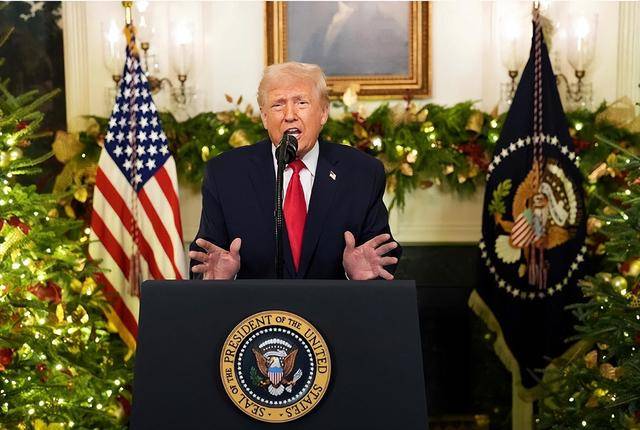
Group 1 - President Trump's recent national address aimed to commemorate his return to the White House and alleviate voter concerns over rising prices, despite the current inflation rate being lower than its pandemic peak [1][3] - The U.S. unemployment rate rose to 4.6% in November, the highest level in over four years, indicating a worrying slowdown in the job market [1] - A recent poll indicated that only 33% of American adults approve of Trump's economic policies, marking a significant decline in public support [3] Group 2 - The U.S. national debt surpassed $38 trillion, raising concerns about fiscal sustainability and the government's ability to manage its financial obligations [5] - BlackRock has downgraded its investment rating for long-term U.S. government bonds from "neutral" to "underweight," citing concerns over rising borrowing costs and government debt [7] - China's recent economic policies, including a more proactive fiscal approach and the establishment of the Hainan Free Trade Port, aim to enhance international trade and economic stability amid global uncertainties [10][13]
为何美联储降息后,长端利率不降反升?
Western Securities· 2025-12-21 09:23
Group 1: Interest Rate Dynamics - Since the Federal Reserve entered a rate-cutting cycle in September 2024, the 10-year U.S. Treasury yield has risen from 3.73% to 4.16%, despite a cumulative rate cut of 175 basis points (bp) over six reductions[1][8] - The increase in the yield is primarily attributed to an 86 bp rise in term premium, indicating higher compensation for future risks[1][10] - The yield curve has steepened, with the 10-year minus 2-year Treasury yield continuing to trend upward post-rate cuts[1][10][20] Group 2: Economic and Market Outlook - Concerns about inflation rebounding and the sustainability of global debt are limiting the downward movement of long-term yields[1][13][14] - The labor market shows signs of slowing but does not exhibit a clear risk of a significant downturn, with an unemployment rate of 4.6% and a month-on-month wage growth of 0.1%[1][20] - The market's expectations for a recession in the next 12 months are declining, reflecting optimism about economic resilience[1][20][22] Group 3: Asset Class Observations - Gold remains a favorable asset due to increasing global government credit risks, while U.S. stock market volatility is expected to persist amid mixed economic data[1][23] - As of December 20, domestic bond yields have slightly decreased, while domestic stock indices show mixed performance, and Hong Kong stocks are under pressure due to year-end profit-taking and tightening liquidity from the Fed's rate cuts[1][3][41]