
新型能源体系

Search documents
青海“十五五”规划建议:推动存量水电站增容扩机 加快抽水蓄能电站建设
Zheng Quan Shi Bao Wang· 2025-12-10 01:21
Core Viewpoint - The proposal by the Qinghai Provincial Committee emphasizes the acceleration of building a new energy system, focusing on a multi-faceted approach to energy development and consumption, contributing to national carbon reduction and energy security [1] Group 1: New Energy Development - The strategy advocates for the coordinated development of wind, solar, water, hydrogen, and thermal energy, ensuring a dual focus on both local consumption and external delivery of energy [1] - The plan aims to solidify the position of new energy in terms of installed capacity and power generation, contributing significantly to carbon reduction and energy security at the national level [1] Group 2: Infrastructure and Technology - There is a focus on optimizing the provincial and inter-provincial grid structure, accelerating the construction of new energy transmission channels, and promoting smart grids and microgrids to enhance the resilience and safety of the power system [1] - The proposal includes the construction of new-generation coal power plants and the integration of oil and gas exploration with new energy development [1] Group 3: Hydropower and Storage Solutions - The plan encourages the expansion of existing hydropower stations and the orderly development of cascade hydropower stations in the upper reaches of the Yellow River [1] - It emphasizes the acceleration of pumped storage power station construction, aiming to create a diversified development practice for new energy storage [1] Group 4: Energy Consumption and Electrification - The initiative seeks to improve the electrification level of end-use energy and advance clean heating projects, promoting the green and low-carbon transformation of energy consumption [1]
江苏分布式光伏装机规模居全国第一
Zhong Guo Dian Li Bao· 2025-12-10 01:03
12月8日,笔者从国网江苏省电力有限公司了解到,江苏新能源发展迅速,今年以来,分布式光伏新增 装机量已超1650万千瓦,总装机容量已达6221万千瓦,两项指标均居全国首位,这也意味着该省能源结 构绿色转型步伐持续加快。 "江苏是制造业强省,电力需求旺、消纳能力强。分布式光伏'自发自用、余电上网'的特性,正好可以 匹配广大企业巨大的白昼用电需求,既能降低企业用电成本,又能实现绿色电能就近高效消纳。"国网 江苏电力经济技术研究院能源研究所所长谢珍建表示。 党的二十届四中全会明确提出,要加快建设新型能源体系,积极稳妥推进和实现碳达峰。在这一背景 下,江苏省新能源建设不断提速。截至今年11月底,该省新能源装机总量已超1.1亿千瓦,其中,分布 式光伏占比约72%,成为能源结构调整的重要推动力。 发展分布式光伏,江苏优势明显。除了光照充足,规模庞大的工业园区厂房、商业建筑、公共机构屋 顶,以及超过3400万栋农村民居也为分布式光伏的"贴身"安装提供了广阔的空间载体。 "十四五"期间,江苏分布式光伏从不足800万千瓦,到如今超过6220万千瓦,年均增量超千万千瓦。为 了保障其并网消纳,江苏电力加快建设新型电力系统,并通过提 ...
四川“十五五”规划建议:布局实施西部数据基础设施建设、算电融合等重大工程
Zheng Quan Shi Bao Wang· 2025-12-10 00:48
Core Viewpoint - The article discusses the proposals by the Sichuan Provincial Committee of the Communist Party of China for the 15th Five-Year Plan, emphasizing the development of a new energy system and the establishment of Sichuan as a strong province in clean energy [1] Group 1: New Energy Development - The plan includes the construction of a new energy system and aims to create an integrated clean energy base in the "Three Rivers" basin [1] - There is a strong push for the development of renewable energy and the acceleration of regulatory power source construction [1] - The plan highlights the importance of enhancing the provincial power grid at all levels and promoting cross-provincial power transmission projects [1] Group 2: Infrastructure and Storage - The proposal emphasizes the development of new energy storage solutions and the construction of oil and gas production bases in Sichuan and Chongqing [1] - It aims to increase the reserves and production of natural gas, particularly shale gas, and strengthen shale oil exploration and development [1] - The plan includes the construction of new infrastructure, focusing on data infrastructure and the integration of computing power, establishing Sichuan as a national hub for integrated computing networks [1] Group 3: Traditional Infrastructure - There is a call for the modernization and digital transformation of traditional infrastructure, promoting the integration of facilities across different sectors [1]
署名文章︱国家能源局发展规划司:加快建设新型能源体系
国家能源局· 2025-12-09 11:35
Core Viewpoint - The article emphasizes the importance of accelerating the construction of a new energy system and building an energy powerhouse as central tasks for high-quality energy development in China, guided by the principles set forth by the Communist Party and recent strategic directives [3][4][5]. Group 1: Principles for New Energy System Construction - The construction of a new energy system must adhere to the principle of comprehensive leadership by the Party, ensuring that energy development aligns with national strategies and maintains a correct direction [4]. - The concept of prioritizing people's needs is crucial, focusing on improving energy supply quality and ensuring equitable access to energy resources for all citizens [5]. - The strategy emphasizes self-reliance in energy security, advocating for a robust domestic energy supply system to mitigate external uncertainties [6]. - A green and low-carbon development approach is essential, with a focus on transitioning to non-fossil energy sources and achieving carbon neutrality goals [7]. - Innovation is highlighted as the primary driving force for energy development, with a call for technological advancements to lead the energy sector [8]. - Deepening energy system reforms is necessary to enhance market efficiency and governance structures [9]. Group 2: Achievements During the 14th Five-Year Plan - Significant improvements in energy security and supply resilience were achieved, with total energy production reaching approximately 5 billion tons of standard coal, a nearly 40% increase over the past decade [10]. - The transition to a greener energy structure was marked by a doubling of non-fossil energy consumption, which now accounts for about 20% of total energy consumption [11]. - Technological advancements in energy production and equipment have led to a notable increase in the modernization of the energy industry, with significant breakthroughs in nuclear power and renewable energy technologies [12]. - The establishment of a comprehensive energy market system has been initiated, enhancing market dynamics and participation from various stakeholders [13]. - International cooperation in energy has been strengthened, with significant projects and partnerships established globally, contributing to a more stable energy supply chain [14]. Group 3: Strategic Planning for the 15th Five-Year Plan - The 15th Five-Year Plan aims to establish a clean, low-carbon, safe, and efficient new energy system, focusing on energy security, economic feasibility, and technological innovation [15]. - Optimizing the spatial layout of energy resources and infrastructure is a priority, with plans for distributed energy development and enhanced energy base construction [16]. - The transition to a green and low-carbon energy system will be accelerated, with specific targets for non-fossil energy consumption by 2030 [16]. - Building a resilient energy supply chain is essential, with a focus on enhancing domestic oil and gas production and establishing a robust energy reserve system [17]. - Advancements in energy technology are prioritized, with a focus on both hard and soft innovations to support the new energy system [18]. - Legal and regulatory frameworks will be strengthened to support high-quality energy development and market reforms [19]. - International cooperation will be expanded to ensure the stability of global energy supply chains and promote sustainable energy development [20].


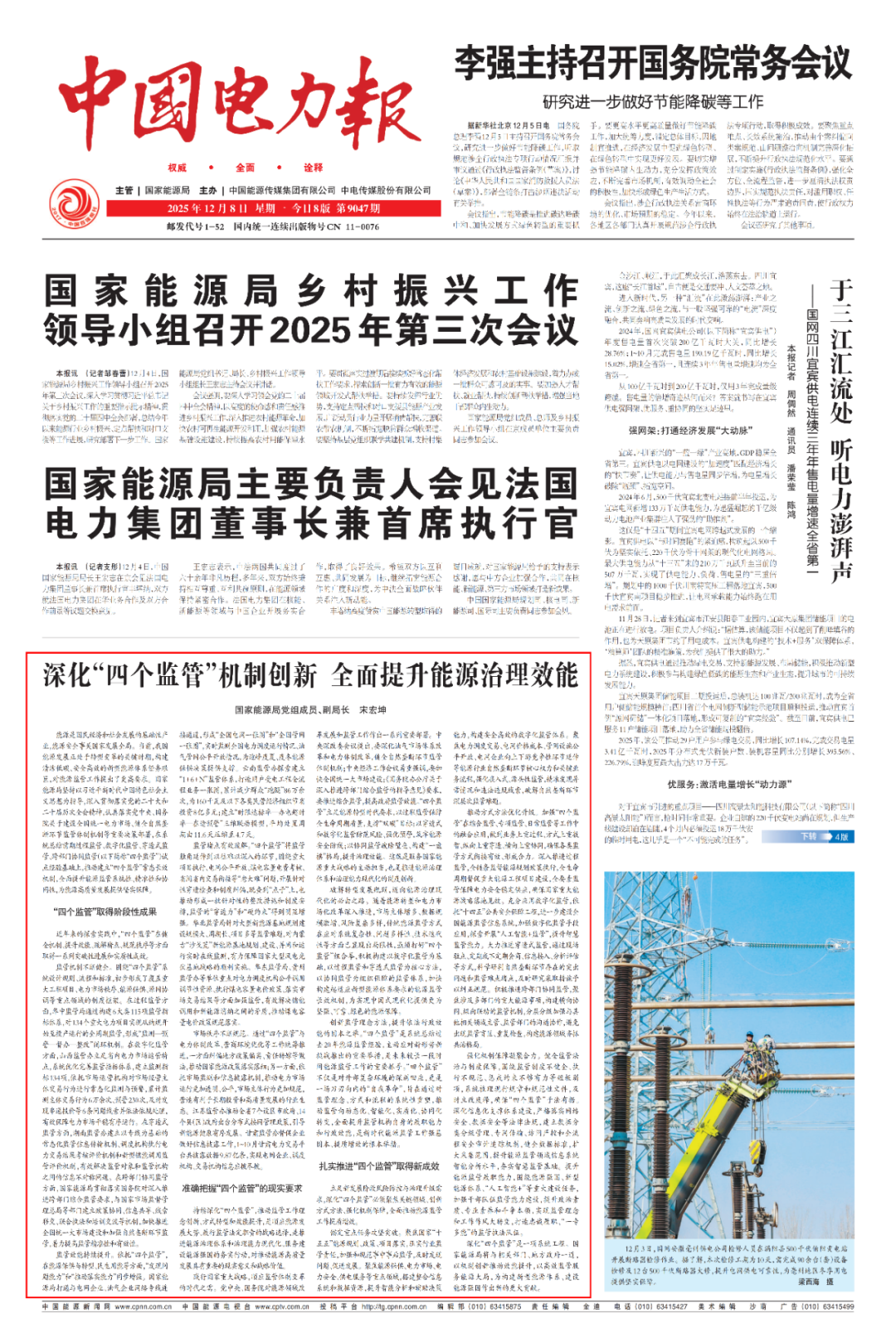
宋宏坤:深化“四个监管”机制创新 全面提升能源治理效能
Zhong Guo Dian Li Bao· 2025-12-09 07:02
Core Viewpoint - The article emphasizes the importance of enhancing energy governance efficiency through the innovation of the "Four Regulatory" mechanisms, which are essential for ensuring energy security and supporting the transition to a clean, low-carbon energy system in China [1][7]. Group 1: Regulatory Mechanism Development - The "Four Regulatory" mechanisms have led to significant breakthroughs in establishing a comprehensive regulatory framework covering key areas such as major engineering projects, electricity market order, energy supply security, and coordination between sources and networks [3][5]. - A closed-loop mechanism for process regulation has been established, enabling full-cycle supervision of 134 major electricity projects, ensuring quality from regulation initiation to operational launch [3]. - Digital regulation has been optimized, with 134 monitoring indicators established, leading to over 60,000 monitored trading behaviors and 230 warnings, effectively maintaining market order [3][4]. Group 2: Regulatory Efficiency Improvement - The "Four Regulatory" mechanisms have enhanced the ability to identify and address issues in energy supply and transformation, with real-time monitoring systems established for national electricity and gas networks [4][10]. - A new regulatory system in Yunnan has reduced the need for public visits by over 860,000 times and saved more than 800 million yuan for small private enterprises [4]. - The average processing time for electricity service requests has been reduced from 11.6 days to 4.7 days through improved regulatory models [4]. Group 3: Market Order Standardization - The "Four Regulatory" mechanisms have contributed to a more transparent and fair electricity market, correcting local policy deviations and ensuring compliance with national energy policies [6][10]. - The Jiangsu regulatory office has guided local governments to implement distributed network management policies, promoting healthy development of renewable energy [6]. - In Gansu, the electricity trading platform disclosed 987 million data entries from January to October, ensuring comprehensive information transparency among market participants [6]. Group 4: Strategic Importance of "Four Regulatory" - The continuous deepening of the "Four Regulatory" mechanisms is seen as a strategic choice to modernize energy governance and enhance regulatory capabilities, aligning with national energy strategies [7][8]. - The approach aims to address the complexities of energy transition and market reforms, necessitating a shift towards a more dynamic, intelligent, and collaborative regulatory framework [9][10]. - The focus on digital regulation, process regulation, and collaborative regulation is essential for building a robust energy regulatory system that meets the demands of a new energy landscape [8][12].
2025年经济热词盘点!你的生活因它们而变了吗?
Sou Hu Cai Jing· 2025-12-09 02:55
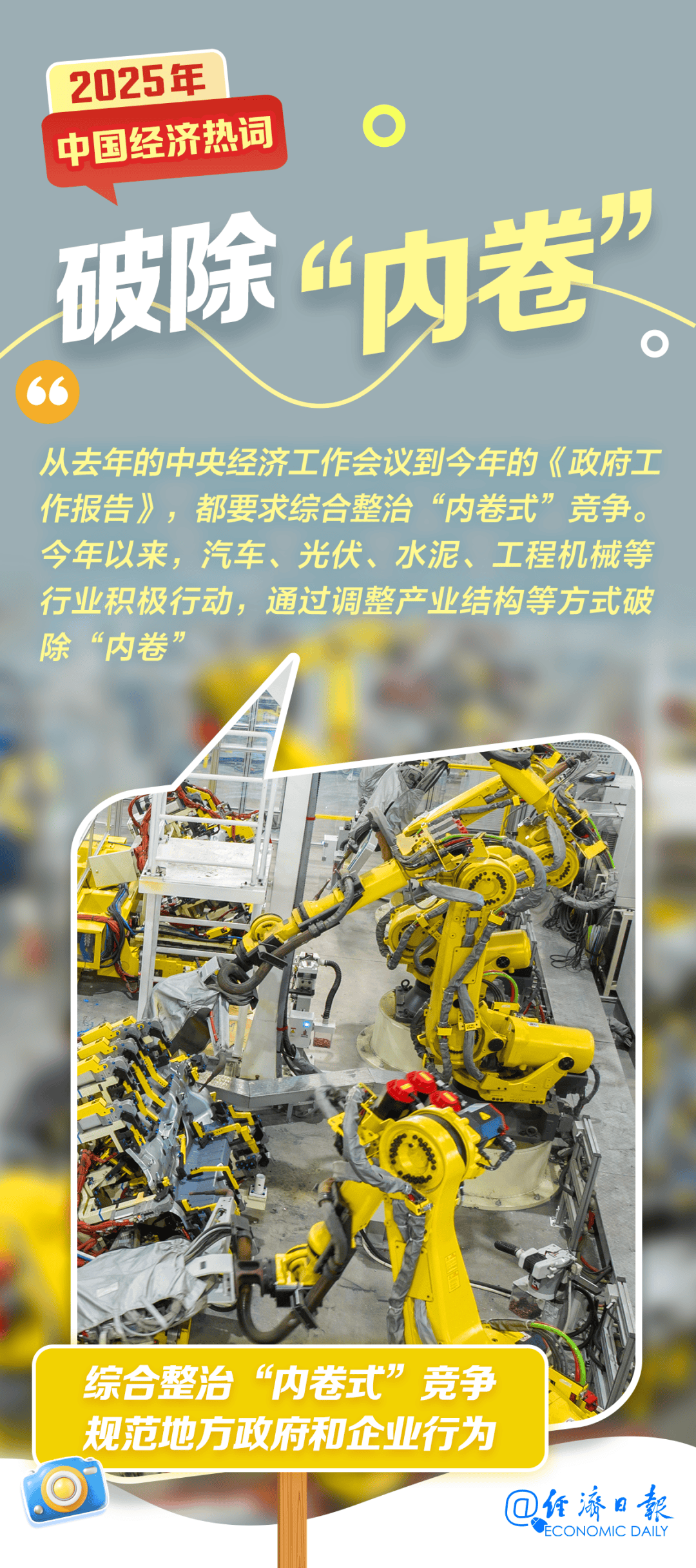
综合整治"内巷式"竞争 规范地方政府和企业行为 OK 海日報 ECONOMIC DAILY 2025年 中国经济热词 智能 今年是中国式现代化进程中具有重要意义的一年,我国经济运行总体平稳、稳中有进,新质生产力稳步发展,改革开放迈出新步伐,重点领域风险化解取 得积极进展,民生保障更加有力,社会大局保持稳定。回眸2025年,一起来盘点中国经济热词↓ 继"互联网+"之后,我国对数字经济进行又 一次战略部署。今年8月,国务院印发《关于 深入实施"人工智能+"行动的意见》,以六 大行动八大支撑赋能新质生产力发展, 为人工 智能发展按下"加速键" 人工智能领域 要占领先机、赢得优势 促进民营经济健康发展、 高质量发展 0 14 濟 取 2025年 中国经济热词 IF 2 5 IFF 上開封天 66 0.99 深日報 CONOMIC DAILY 2025年 中国经济热词 . "印尼 66 今年以来,"国补"资金按计划陆续下达、 个人消费贷款迎来财政贴息 …… 一系列真金 白银的政策加力提振消费,让消费者得到更 多实惠、市场获得更强动能 惠民生、促消费、增后劲 OF 海 海 取 2025年 0 中国经济热词 s经济促进法 ...
国家能源局副局长宋宏坤:深化“四个监管”机制创新 全面提升能源治理效能
Zhong Guo Dian Li Bao· 2025-12-09 01:55
Core Viewpoint - The article emphasizes the importance of establishing a clean, low-carbon, safe, and efficient energy system in China, highlighting the need for enhanced energy regulation mechanisms to support high-quality energy development [2][8]. Group 1: Regulatory Mechanisms - The "Four Regulations" framework has been developed to enhance energy regulation, focusing on process regulation, digital regulation, penetrating regulation, and cross-departmental collaborative regulation [4][8]. - A comprehensive regulatory framework has been established, covering key areas such as major engineering projects, electricity market order, energy supply security, and source-network coordination [4][5]. - The regulatory system has achieved significant breakthroughs in improving mechanisms, enhancing efficiency, and resolving bottlenecks [3][4]. Group 2: Regulatory Effectiveness - The effectiveness of regulation has improved, with enhanced capabilities in problem detection and implementation support for energy supply and transformation [5][6]. - The establishment of a national electricity and gas network monitoring system has facilitated real-time monitoring of electricity dispatch and gas pipeline operations, aiding in energy supply decision-making [5][6]. - The regulatory framework has successfully reduced the burden on citizens, saving over 800 million yuan for small businesses through streamlined processes [5][6]. Group 3: Market Order and Transparency - The "Four Regulations" have contributed to a more transparent and fair electricity market, promoting compliance among market participants and creating a favorable environment for long-term investment [7][8]. - Regulatory bodies have encouraged local governments to implement distributed network management policies, fostering healthy development of renewable energy [7][8]. - Information disclosure has been emphasized, with significant data shared through the Gansu electricity trading platform, enhancing market transparency [7][8]. Group 4: Strategic Importance - The continuous deepening of the "Four Regulations" is seen as a strategic choice to align with the energy development trends and fulfill regulatory responsibilities [8][9]. - The initiative aims to modernize the energy governance system and enhance governance capabilities, which is crucial for achieving high-quality energy development [8][9]. - The regulatory approach is designed to address the complexities and risks associated with the evolving energy landscape, ensuring robust energy security [9][10]. Group 5: Future Directions - The focus will be on key areas such as energy supply security, electricity market operations, and the fair opening of pipeline facilities, with an emphasis on embedded and source-based regulation [10][11]. - The integration of digital technologies and artificial intelligence into regulatory practices is expected to enhance regulatory capabilities and efficiency [11][12]. - Collaborative regulation across departments will be strengthened to avoid regulatory blind spots and ensure comprehensive governance in the energy sector [11][12].
新一代煤电技术的“东方引擎”
Zhong Guo Dian Li Bao· 2025-12-08 12:31
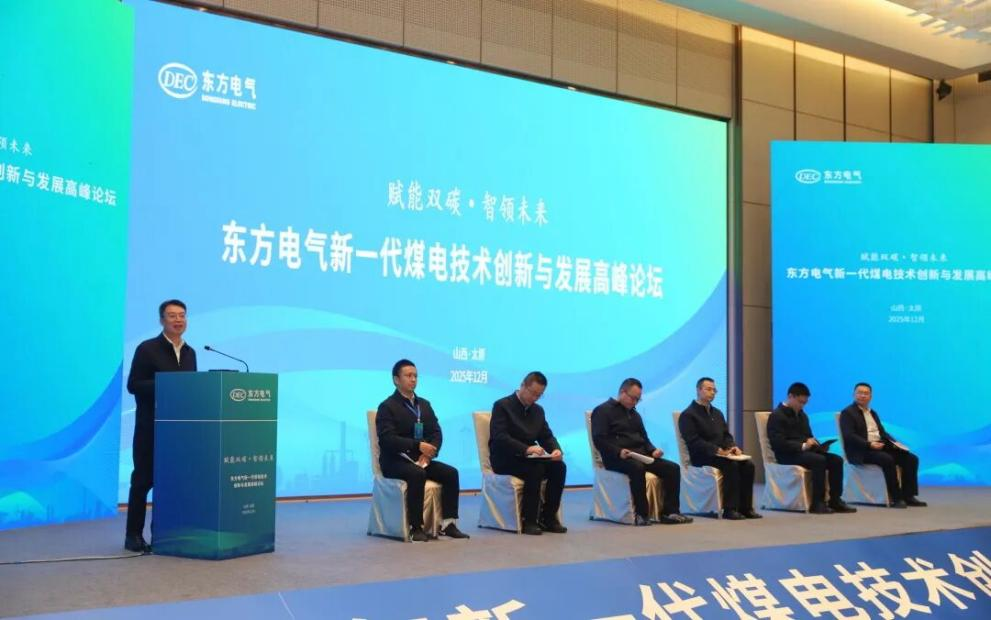
新一代煤电技术的"东方引擎" 东方汽轮机依托全国重点实验室的深厚技术储备,全面部署应用针对性技术方案。通过深化应用第五代通流技术,优化高温部件结构、应用 新型防护涂层、开发智能协同控制逻辑等,提升机组的快速响应能力、调峰深度与运行寿命,全面满足高效灵活调节的示范要求。 东方锅炉依托先进的OPCC对冲旋流燃烧、超低负荷转直流水动力等核心技术,已实现在役机组无助燃、水冷壁转直流的调峰最低负荷 18%~20%。创新研发出耦合预燃室的强稳燃旋流燃烧系统、协同汽水系统提质的超低负荷水冷壁安全体系、低应力柔性本体结构和智慧协调 控制技术,构建了新一代煤电锅炉技术,可实现无辅助15%超低调峰负荷、4%调峰速率。 东方自控聚焦清洁降碳、安全可控、高效调节与智能运行等核心指标,深度融合控制技术与装备本体,打造面向新一代煤电机组的智能控制 系统与服务,助力机组深度调峰"低得下去"、快速响应"快得起来",全面提升电厂的经济运行效益。 本次论坛是东方电气集团深入学习贯彻党的二十届四中全会精神、践行"十五五"能源体系建设的务实举措,将进一步推动产业链上下游企业 凝聚共识、协同创新,为构建新型能源体系锻造坚实可靠的"东方引擎"。 12月 ...
新华指数·博鳌发布|内蒙古生产经营平稳有序 绿色低碳新型电力系统加速构建
Xin Hua Cai Jing· 2025-12-08 09:03
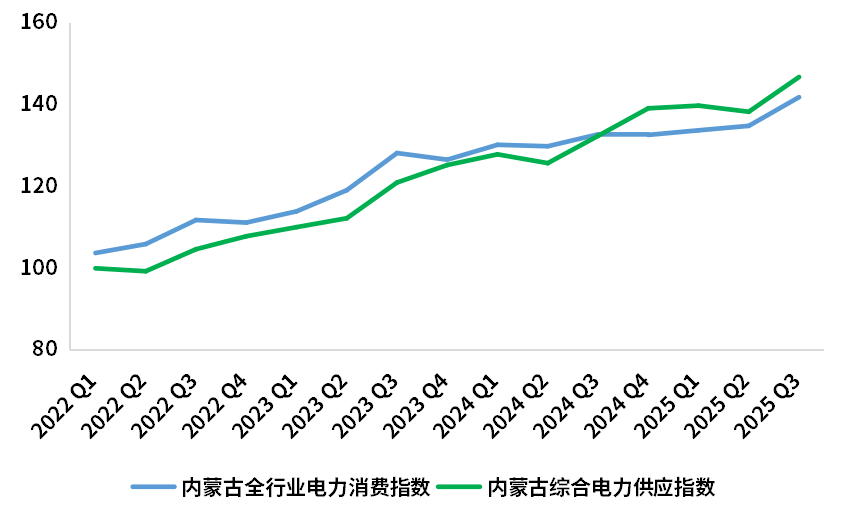
Core Insights - The Inner Mongolia region has made significant progress in developing renewable energy, achieving a historic milestone where installed capacity of new energy surpassed that of thermal power a year ahead of schedule [3] - The overall electricity consumption index and comprehensive electricity supply index in Inner Mongolia have increased by 4.49% and 10.07% year-on-year, respectively, indicating a robust growth in power generation and consumption [1][3] Group 1: Renewable Energy Development - Inner Mongolia's installed capacity of renewable energy exceeded 150 million kilowatts by the end of October 2025, ranking among the top in the country [3] - Wind and solar power account for over 80% of the newly added installed capacity, with wind power supply index and solar power supply index increasing by 24.53% and 61.99% year-on-year, respectively [3] Group 2: Industrial and Economic Impact - The manufacturing sector has played a crucial role in electricity consumption, contributing nearly 60% to the overall growth in electricity demand in the first three quarters of 2025 [4] - The digital economy is thriving, with internet data service electricity consumption increasing by 83.87% year-on-year, driven by the development of green computing hubs in Hohhot and Ulanqab [4] Group 3: Green Energy Utilization - Inner Mongolia is actively promoting the use of green energy in non-electric applications, with one-third of the total electricity consumption being green electricity [4]
连续7日净流入,电网设备ETF(159326)规模创新高,关注电网投资大周期
Mei Ri Jing Ji Xin Wen· 2025-12-08 07:02
AI算力爆发,引发全球用电紧张,此前,微软声称AI行业的发展瓶颈是缺电,AI算力引发的电力缺 口、电网升级的刚性需求,都为行业长期发展提供了有力支撑。 中信证券表示,"十五五"规划建议中进一步明确了新型能源体系的重要地位,针对电力系统建设指引了 消纳、韧性、电气化等中长期的发展重心。该机构认为,政策进一步指引和夯实了特高压、柔性直流输 配电、数智化电网等环节的中长期机遇。同时,中短期来看,输变电设备内外需景气共振,结构性需求 持续显现,特高压、智能电网等环节有望迎来景气反转。 电网设备ETF(159326)是全市场唯一跟踪中证电网设备主题指数的ETF,从申万三级行业分类上看, 指数成分股的行业分布以输变电设备、电网自动化设备、线缆部件及其他、通信线缆及配套、配电设备 为主,拥有较强的代表性。特高压权重占比高达65%,全市场最高。 (文章来源:每日经济新闻) 12月8日,A股三大指数集体反弹,电网设备板块近期呈现企稳反弹迹象,截止14点30分,全市场唯一 的电网设备ETF(159326)涨幅0.28%,成功站上20日均线,实时成交额达3.2亿元,持仓股宝胜股份涨 停,中能电气涨超8%,东材科技、金龙羽、电工合金 ...