绿色低碳转型

Search documents
打造世界一流航空能源供应商 中石化与中航油实施重组
Zheng Quan Shi Bao· 2026-01-08 18:03
Core Viewpoint - The restructuring of China Petroleum & Chemical Corporation (Sinopec) and China Aviation Oil Group (CAOG) is expected to enhance national aviation energy supply security and promote a green low-carbon transition in aviation energy supply, aiming to create a world-class aviation energy supplier [2]. Group 1: Company Overview - Sinopec is the largest refined oil and petrochemical product supplier in China, the world's largest refining company, and the second-largest chemical company, with nine listed companies covering the entire energy industry chain [2]. - CAOG is the largest aviation fuel procurement, transportation, storage, testing, sales, and refueling service provider in Asia, with its subsidiary, China Aviation Oil (Singapore) Corporation, listed on the Singapore Exchange [2]. Group 2: Market Demand and Growth - It is predicted that during the 14th Five-Year Plan period, China's aviation fuel demand will grow at an average annual rate of about 4%, reaching approximately 50 million tons by 2030 and around 75 million tons by 2040 [2]. Group 3: Synergies and Industry Development - The merger is expected to create significant synergies by leveraging integrated refining and aviation fuel supply systems, reducing intermediate links, lowering supply costs, and promoting high-quality development of the industry chain [3]. - The restructuring will enable the two companies to complement each other's strengths, further strengthening and optimizing the aviation fuel industry [3]. Group 4: Green Transition and Sustainable Aviation Fuel - Sinopec is the first company in Asia to have independent research and production technology for bio-jet fuel, with the first domestic bio-jet fuel production facility [3]. - CAOG plays a crucial role in the promotion and application of Sustainable Aviation Fuel (SAF) and ecological construction [3]. - The merger will facilitate the deep integration of both companies' advantages in the SAF sector, promoting high-quality development of the SAF industry [3].


两大能源央企重组 专家看好协同效应
Shang Hai Zheng Quan Bao· 2026-01-08 15:22
Core Viewpoint - The merger between China Petroleum & Chemical Corporation (Sinopec) and China Aviation Oil Group aims to create a comprehensive aviation fuel supply system, enhancing energy security, international competitiveness, and green transformation capabilities while optimizing state-owned capital allocation [1][4]. Group 1: Company Overview - Sinopec is the world's largest refining company and China's largest aviation fuel producer, while China Aviation Oil Group is Asia's largest aviation fuel service provider [1][3]. - Sinopec is a major integrated energy and chemical group, being the largest supplier of refined oil and petrochemical products in China, with the second-largest number of gas stations globally [3]. - China Aviation Oil Group provides fuel supply services to 258 transport airports and 454 general airports in China, serving 585 global airline customers [3]. Group 2: Strategic Significance of the Merger - The merger is seen as a significant step in advancing strategic restructuring and professional integration among central enterprises, enhancing national aviation energy supply security and promoting green low-carbon transformation [4][5]. - The integration is expected to create synergies that will enhance the overall competitiveness of both companies [4]. Group 3: Sustainable Aviation Fuel (SAF) Development - SAF is recognized as a mainstream route for decarbonizing the aviation industry, with the International Air Transport Association (IATA) estimating that SAF will contribute 65% of carbon reductions needed for the aviation sector to achieve carbon neutrality by 2050 [7]. - Sinopec has developed its own bio-jet fuel technology and has established a production facility with an annual capacity of 100,000 tons, which can utilize waste cooking oil, significantly reducing carbon emissions [8][9]. - The merger is expected to enhance the research and development, industrialization capabilities, and international trade advantages in the SAF sector, promoting high-quality development of the industry chain [9].
中国海油(600938):动态跟踪报告:践行增量降本之路,油气巨头助力建设海洋强国
EBSCN· 2026-01-08 12:04
Investment Rating - The report maintains a "Buy" rating for the company's A-shares and initiates coverage with a "Buy" rating for its H-shares [6]. Core Insights - The company is positioned as a leader in marine energy development, contributing significantly to the construction of a maritime power. It has established a comprehensive marine energy development system, including conventional oil and gas, deepwater oil and gas, LNG, and offshore wind power [1][25]. - The company's financial performance has shown resilience during oil price downturns, with significant improvements in free cash flow and a commitment to high dividend payouts, enhancing its investment value [2][4]. - The company has achieved rapid growth in oil and gas production, with a cost advantage that remains solid. Future production growth is expected to stabilize, with a focus on both oil and gas [3][66]. Summary by Sections Marine Energy Development - The company is recognized as a national team in marine energy, actively participating in the construction of a maritime power as part of national strategy [1][16]. - The company aims to enhance energy self-sufficiency and has implemented a "seven-year action plan" for domestic oil and gas production [27]. Financial Performance - The company has demonstrated strong cash flow performance, with free cash flow exceeding 100 billion yuan from 2022 to 2023 and a significant reduction in interest-bearing debt ratio from 17% in 2021 to 6% in the first half of 2025 [2][42]. - The projected net profits for 2025-2027 are 1354 billion, 1398 billion, and 1443 billion yuan, respectively, with corresponding EPS of 2.85, 2.94, and 3.04 yuan per share [4][5]. Production and Cost Efficiency - The company has achieved a compound annual growth rate (CAGR) of 8.0% for crude oil production and 10.5% for natural gas from 2021 to 2024, with future production targets indicating stable growth [3][66]. - The company's main cost per barrel is projected to be 27.35 USD, showcasing a competitive edge compared to domestic and international peers [3][66]. ESG and Green Energy Initiatives - The company is actively pursuing green energy projects, including offshore wind power and carbon capture and storage (CCUS), while maintaining a strong ESG governance framework [3][30]. - The company has committed to a high dividend payout ratio of no less than 45% from 2025 to 2027, reflecting its focus on returning value to shareholders [4][49].

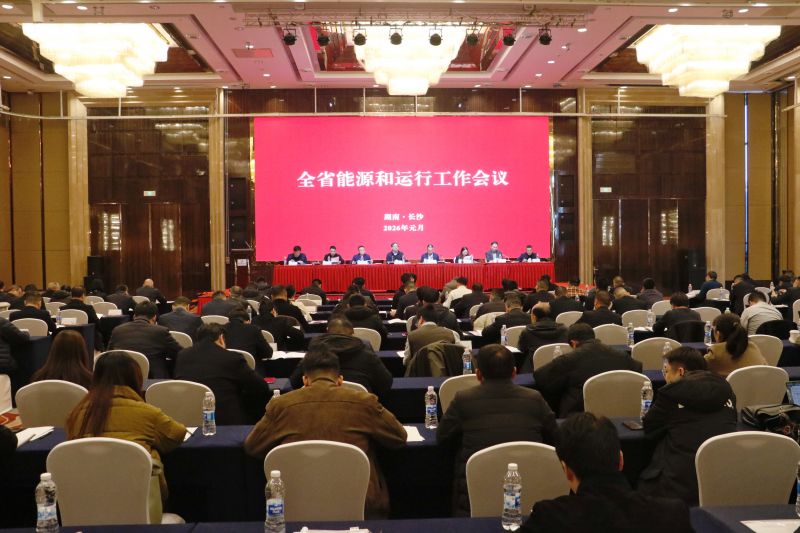
湖南召开2026年能源和运行工作会议 围绕“十五五”良好开局部署七大重点工作
Zhong Guo Fa Zhan Wang· 2026-01-08 10:39
Core Insights - The meeting emphasized the importance of high-quality energy development in Hunan for the year 2026, aligning with national goals and strategies for energy reform and security [1][4]. Summary by Sections Achievements in 2025 - Hunan's energy system successfully completed all 18 targets of the 14th Five-Year Plan, with significant projects like ultra-high voltage and large-scale coal power plants coming online [3]. - The province enhanced its energy supply capacity, achieving zero power outages and ensuring stable supply of coal, oil, and gas for three consecutive years [3]. - Major projects such as the "Ningdian Ruyin" initiative transformed the energy supply-demand landscape [3]. - Progress in green and low-carbon transitions was noted, with an increase in renewable energy installations and improvements in energy storage and charging networks [3]. - Technological innovations led to multiple first-of-their-kind equipment being recognized nationally, and the province's R&D platforms ranked highly in evaluations [3]. - Ongoing reforms in the energy sector resulted in reduced energy costs and improved competitiveness [3]. Key Focus Areas for 2026 - The meeting outlined seven key priorities for 2026, including the development of a high-quality energy plan and the implementation of a provincial "1+5" energy planning system [5]. - A total of 24 major energy projects are set to be advanced, with an investment target of 45.2 billion yuan, including significant expansions in coal and renewable energy capacities [5]. - The province aims to accelerate the green and low-carbon transition by developing renewable energy and enhancing clean coal utilization [6]. - Reforms in the energy market will continue, focusing on price mechanisms and the introduction of high-quality energy resources [6]. - The energy industry cluster will be strengthened, promoting local manufacturing and innovation in sectors like hydrogen energy and renewable equipment [6]. - Measures for energy supply security during peak winter demand will be reinforced, including risk management and emergency preparedness [7]. - The development of the energy workforce will be prioritized, focusing on enhancing skills and collaboration within the energy system [7].
生物基橡胶轮胎:全球市场规模、增长趋势分析报告
Sou Hu Cai Jing· 2026-01-08 10:21
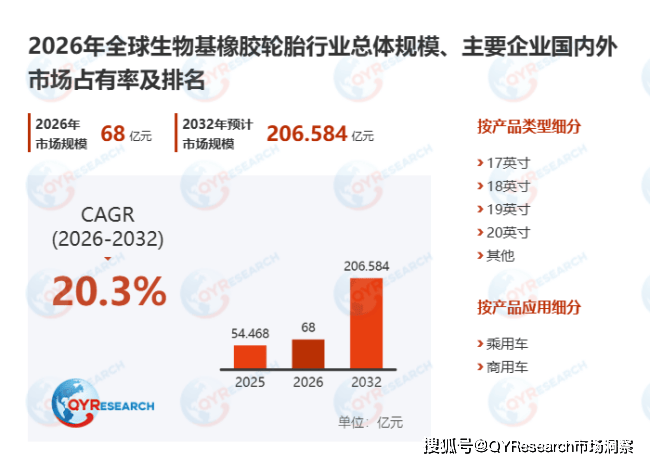
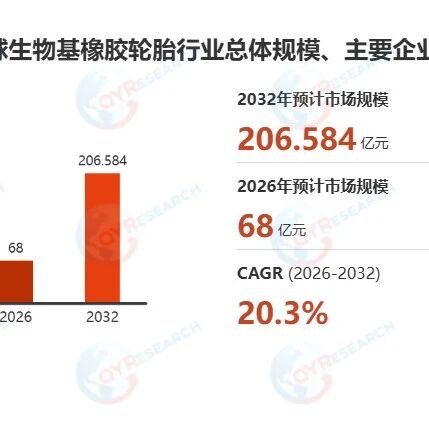
生物基橡胶轮胎是一种将源自生物来源的可再生和可持续材料纳入其组成的轮胎。 传统的橡胶轮胎主要 由石油中的合成橡胶制成,石油是一种不可再生资源。 生物基橡胶轮胎旨在通过利用天然材料来减少轮 胎制造对环境的影响。 根据QYResearch最新调研报告显示,预计2031年全球生物基橡胶轮胎市场规模将达到24.33亿美元,未 来几年年复合增长率CAGR为20.35%。 生物基橡胶轮胎,全球市场总体规模 全球生物基橡胶轮胎市场前6强生产商排名及市场占有率(基于2025年调研数据;目前最新数据以本公 司最新调研数据为准) 来源:QYResearch 南宁研究中心。行业处于不断变动之中,最新数据请联系QYResearch咨询。 全球范围内,生物基橡胶轮胎主要生产商包括固特异,韩泰轮胎,优科豪马轮胎等,其中前五大厂商占 有大约82%的市场份额。 目前,全球核心厂商主要分布在欧美和日韩。 来源:QYResearch 南宁研究中心 就产品类型而言,目前乘用车是最主要的需求来源,占据大约91%的份额。 全球生物基橡胶轮胎规模,主要生产地区份额(按产值) 来源:QYResearch南宁研究中心 生物基橡胶轮胎,全球市场规模,按产品类 ...
行业洞察:全球生物基橡胶轮胎市场生产商排名及市场占有率
QYResearch· 2026-01-08 08:58
Core Viewpoint - The bio-based rubber tire industry is transitioning towards sustainable materials to reduce environmental impact, with significant growth expected in the coming years, driven by technological advancements and regulatory support [1][14][17]. Market Overview - The global bio-based rubber tire market is projected to reach $2.433 billion by 2031, with a compound annual growth rate (CAGR) of 20.35% over the next few years [2]. - Major manufacturers in the bio-based rubber tire market include Goodyear, Hankook Tire, and Yokohama, with the top five companies holding approximately 82% market share [4]. Product Segmentation - Currently, 19-inch tires represent the largest product segment, accounting for about 22.79% of the market share [8]. - Passenger vehicles are the primary demand source, making up approximately 91% of the market [9]. Industry Development Status - The bio-based rubber tire industry is at a critical stage of moving from technological breakthroughs to commercial applications, with major tire companies actively pursuing green transformations to meet carbon neutrality goals [14]. - International giants like Michelin and Goodyear have set clear roadmaps to achieve 100% sustainability in tire materials by 2030 to 2050 [14]. - In China, unique technological routes are being developed, utilizing non-food biomass like corn cobs and straw to produce bio-based rubber, which is cost-effective and biodegradable [14]. Innovations and Challenges - Innovations extend beyond rubber to the entire material system, including the use of bio-based polyamide and modified silica to reduce carbon footprints [15]. - Despite advancements, challenges remain in raw material supply, cost competitiveness, and performance metrics compared to traditional petroleum-based products [16]. Policy Analysis - The development of the bio-based rubber tire industry is significantly influenced by domestic and international policies aimed at promoting green and low-carbon transitions [17]. - China's policies encourage the use of non-food biomass and aim to establish a comprehensive recycling system for used tires [17][19]. - International regulations, particularly from the EU, impose strict requirements on bio-based products, creating both challenges and opportunities for market entry [17]. Future Outlook - The industry is expected to focus on non-food raw material alternatives, low-carbon process innovations, and the establishment of circular economy models [19]. - The goal is to create a new industrial ecosystem that reduces reliance on fossil fuels throughout the tire lifecycle [19].
山东省委书记林武会见三一集团客人
Zheng Quan Shi Bao Wang· 2026-01-08 01:46
Core Viewpoint - The meeting between Shandong Provincial Party Secretary Lin Wu and SANY Group's Chairman Xiang Wenbo focused on accelerating the development of the new energy equipment industry and enhancing collaboration on major projects [1] Group 1: Development Initiatives - Both parties discussed the importance of accelerating the development of the new energy equipment industry [1] - There was an emphasis on strengthening the planning of major projects and improving industrial support levels [1] Group 2: Collaboration and Innovation - The meeting highlighted the intention to deepen cooperation in the supply chain and enhance joint technological research [1] - A commitment was made to jointly promote the quality and upgrade of the high-end equipment manufacturing industry [1]

林武会见三一集团客人
Da Zhong Ri Bao· 2026-01-08 01:09
1月7日下午,省委书记林武在山东大厦会见了三一集团党委书记、轮值董事长向文波一行。林武、 向文波分别介绍了山东省、三一集团发展情况,围绕加快新能源装备产业发展、加强重大项目谋划、提 高产业配套水平、推动绿色低碳转型等交换了意见,表示将在良好合作的基础上,加快推进相关项目建 设,深化产业链供应链合作,强化联合技术攻关,共同推动高端装备制造业提质升级,谱写互利共赢新 篇章。省委常委、常务副省长张海波参加。(记者 于新悦 李子路) ...
推动零碳园区建设走深走实
Jing Ji Ri Bao· 2026-01-08 00:06
Core Viewpoint - The establishment of national-level zero-carbon parks in China is crucial for achieving substantial breakthroughs in the country's green and low-carbon transition, with 52 parks recently selected as part of this initiative [1]. Group 1: Current Status and Challenges - China's zero-carbon park construction is supported by a solid industrial foundation and systemic advantages, as these parks are key carriers for manufacturing upgrades, technological innovation, and industrial clustering [1]. - The country faces significant challenges in zero-carbon park development, including large park sizes, a high proportion of energy-intensive industries, and prominent emission reduction pressures compared to developed nations [2]. Group 2: Implementation Strategies - A tailored approach is essential for advancing zero-carbon parks, with the development of "one park, one policy" implementation plans based on the energy structure, industrial chain composition, and main emission sources of each park [3]. - The promotion of clean energy alternatives in parks should be coordinated with digital and intelligent technologies to enhance energy supply-demand matching and system regulation capabilities [3]. Group 3: Policy and Market Support - A robust policy and market support system is necessary, including the establishment of carbon asset management and revenue realization mechanisms at the park level, to ensure that emission reduction results translate into economic returns [4]. - Financial support through fiscal guidance and green financial tools is crucial for reducing the transformation costs for enterprises in key areas such as low-carbon processes and clean energy utilization [4].
实践与思考丨围绕目标任务做深做实政治监督
Zhong Yang Ji Wei Guo Jia Jian Wei Wang Zhan· 2026-01-07 23:39
Core Viewpoint - The article emphasizes the importance of political supervision in state-owned enterprises, particularly focusing on Ansteel Group's commitment to high-quality development and alignment with national strategies [2][3]. Group 1: Political Supervision - The Ansteel Group's supervisory body has developed a political supervision work guide, establishing a comprehensive list of 57 key items to ensure effective oversight [3]. - The supervision focuses on aligning with the directives of Xi Jinping and the Central Committee, ensuring that the company's actions are consistent with national policies [3][4]. - A three-tiered supervision system has been established to monitor the implementation of key directives and ensure unified action across the organization [4]. Group 2: Special and Daily Supervision - Special supervision is prioritized to ensure the implementation of Xi Jinping's directives, with a focus on 41 key measures across various operational areas [5]. - Daily supervision involves regular communication between the company's leadership and supervisory bodies to enforce accountability and adherence to party discipline [6]. - The supervisory body aims to enhance the effectiveness of daily oversight by integrating various supervisory functions and ensuring a coordinated approach [7]. Group 3: Targeted Supervision - The supervisory body is intensifying oversight on key personnel, particularly focusing on the "one leader" and critical positions to prevent power abuse [8]. - Specific measures have been developed to enhance supervision of key roles, including regular discussions and assessments of leadership conduct [8][9]. - Young leaders are being educated on discipline and integrity, with initiatives aimed at fostering a culture of compliance and ethical behavior [10][11].