AGI

Search documents
MiniMax作价461亿港元募资46亿,1月9日敲钟代码00100
量子位· 2025-12-31 05:28
Core Viewpoint - MiniMax, a Chinese AI company, is set to go public with an IPO aiming to raise over $600 million, valuing the company at over HKD 46.1 billion, and is expected to list on January 9, 2026 [2][7]. Group 1: Company Overview - MiniMax is positioned as a global artificial general intelligence (AGI) technology company, with services covering over 200 countries and regions, and 70% of its revenue coming from international operations [12]. - The company has a strong backing from 14 cornerstone investors, including Alibaba and the Abu Dhabi Investment Authority, with total subscriptions amounting to approximately HKD 27.23 billion [7][8]. Group 2: Market Context - December 2025 marks a significant period for IPOs in Hong Kong, with 25 companies having completed listings, making it the busiest month since 2019 [9]. - MiniMax and another company, Zhiyuan, are both entering the market around the same time, creating a competitive atmosphere that splits investor attention [10]. Group 3: Financial Performance - MiniMax's revenue has shown remarkable growth, reaching $3.46 million in 2023 and projected to soar to $30.52 million in 2024, representing a year-on-year increase of 782.2% [35]. - For the first nine months of 2025, revenue surged by 175% to $53.44 million, significantly surpassing the previous year's total [36]. - The company has improved its gross margin from -24.7% in 2023 to 23.3% in the first nine months of 2025, indicating a positive trend in profitability [38]. Group 4: Product Development - MiniMax has released several models, including the M1 and M2 text models, with M2 achieving top rankings in performance metrics [20][21]. - The company has also developed a voice model, Speech 01, and its upgraded version, Speech 02, which supports over 40 languages and has generated over 2.2 million hours of speech [24]. - MiniMax's video model, Hailuo, has been recognized for its capabilities in generating videos and has helped create over 590 million videos globally [28]. Group 5: Investment and Support - MiniMax has raised over $1.5 billion in funding from various strategic investors, including major tech companies and venture capital firms, positioning it as a leading player in the AGI space [50]. - The company has a cash reserve of $1.102 billion as of September 30, 2025, which is sufficient to sustain operations for over 53 months without additional funding [46].


智谱(02513):IPO点评
国投证券(香港)· 2025-12-30 07:58
Investment Rating - The report assigns an IPO-specific score of 6.1, suggesting a recommendation for subscription to the financing [10] Core Insights - The company, Zhipu (2513.HK), is a leading general large model company focused on achieving AGI, having launched its pre-trained model framework GLM and commercialized its MaaS platform [1] - Zhipu's revenue for the first half of 2025 reached 190 million yuan, a year-on-year increase of 325%, with localization deployment revenue accounting for 85% of total revenue [2] - The enterprise-level large language model market is expected to grow at a compound annual growth rate (CAGR) of 60% over the next five years, with Zhipu holding a 6.6% market share, ranking second in China [3] Company Overview - Zhipu was established in 2019 and has released over 50 large models, with a cumulative download exceeding 45 million times [1] - The company has over 8,000 institutional clients as of June 30, 2025 [1] Financial Performance - In the first half of 2025, Zhipu's total revenue was 190 million yuan, with localization deployment revenue at 160 million yuan, reflecting a 504% year-on-year increase [2] - R&D expenses for the same period were 1.6 billion yuan, representing an 86% increase year-on-year [2] Industry Status and Outlook - The Chinese AI market is projected to reach 218.9 billion yuan in 2025, growing by 36% year-on-year, with the large language model market expected to grow by 81% to 9.6 billion yuan [3] - By 2030, the enterprise-level large language model market is anticipated to reach 904 billion yuan, with 76% of this being localized deployment [3] Strengths and Opportunities - The enterprise-level scenario is a crucial commercial application for large language models in China, indicating a broad industry outlook [4] - Zhipu possesses a comprehensive model matrix and a one-stop MaaS platform that facilitates model commercialization [4] - The company has strong R&D capabilities, with a team of 657 members, including leading figures in the AI field [4] Weaknesses and Risks - The development of AGI is still in its early stages, with uncertainties regarding its future realization [5] - The competition in the large model space is intense, and technological iterations are rapid, which may affect Zhipu's competitive advantage [5] - The company has a concentrated customer base, with the top five clients accounting for 40% of total revenue in the first half of 2025 [5] Fundraising and Use of Proceeds - The company aims to raise approximately 4.173 billion HKD, with 70% allocated to AI large model R&D [7][9]
电子行业2026年度投资策略:从云端到端云共振
Changjiang Securities· 2025-12-30 01:58
Group 1 - The report highlights that the electronic sector's performance over the past decade has been driven by cost inflation in segments that either innovate or experience supply-demand mismatches, with a focus on AI developments expected to drive strong demand in 2026 [5][21][26] - The report anticipates that AI advancements will lead to significant growth in demand for electronic products, particularly in AI glasses, AI smartphones, and other innovative products, mirroring the explosive growth seen in TWS earphones in 2019 [8][11][37] - The PCB market is expected to see continuous value enhancement due to ongoing upgrades in server applications, with demand for AI PCBs projected to accelerate significantly in 2026, driven by increased shipments from major companies like Google and Nvidia [9][28][39] Group 2 - The storage sector is transitioning from a supply-driven logic to one driven by AI demand, with expectations of a 30%+ growth in DRAM and NAND demand in 2026, as AI training and inference create substantial data storage needs [10][62][71] - The report emphasizes that AI glasses are poised to become a major consumer electronics trend, with significant growth in shipments expected in 2026, benefiting supply chain companies involved in assembly, SOC, and optics [11][37][89] - The report identifies that the storage industry is entering a high-growth phase, with a focus on domestic manufacturers and the expansion of production capacity, which will positively impact related equipment and materials sectors [83][84]

上海合合信息科技股份有限公司(H0255) - 申请版本(第一次呈交)
2025-12-28 16:00
香港聯合交易所有限公司及證券及期貨事務監察委員會對本申請版本的內容概不負責,對其準確性或完整 性亦不發表任何聲明,並明確表示概不就因本申請版本全部或任何部分內容而產生或因依賴該等內容而引 致的任何損失承擔任何責任。 INTSIG INFORMATION CO., LTD. 上海合合信息科技股份有限公司 (於中華人民共和國註冊成立的股份有限公司) 的申請版本 警告 本申請版本乃根據香港聯合交易所有限公司(「聯交所」)及證券及期貨事務監察委員會(「證監會」)的要求 而刊發,僅用作提供資訊予香港公眾人士。 本申請版本為草擬本,其內所載資訊並不完整,亦可能會作出重大變動。 閣下閱覽本文件,即代表 閣 下知悉、接納並向上海合合信息科技股份有限公司(「本公司」,連同其子公司稱為「本集團」)、本公司的 獨家保薦人、整體協調人、顧問及包銷團成員表示同意: 本申請版本不會向於美國的人士刊發或分發,當中所述證券並無亦不會根據1933年美國證券法登記,且 在根據1933年美國證券法辦理登記手續或取得豁免前不得於美國發售或出售。不會於美國公開發售證券。 本申請版本及當中所載資料均非於美國或任何其他禁止進行有關要約或銷售的司法管轄區出 ...
昇思人工智能框架峰会于杭州召开,正式发布“超节点时代”AI框架新范式
Huan Qiu Wang· 2025-12-28 07:13
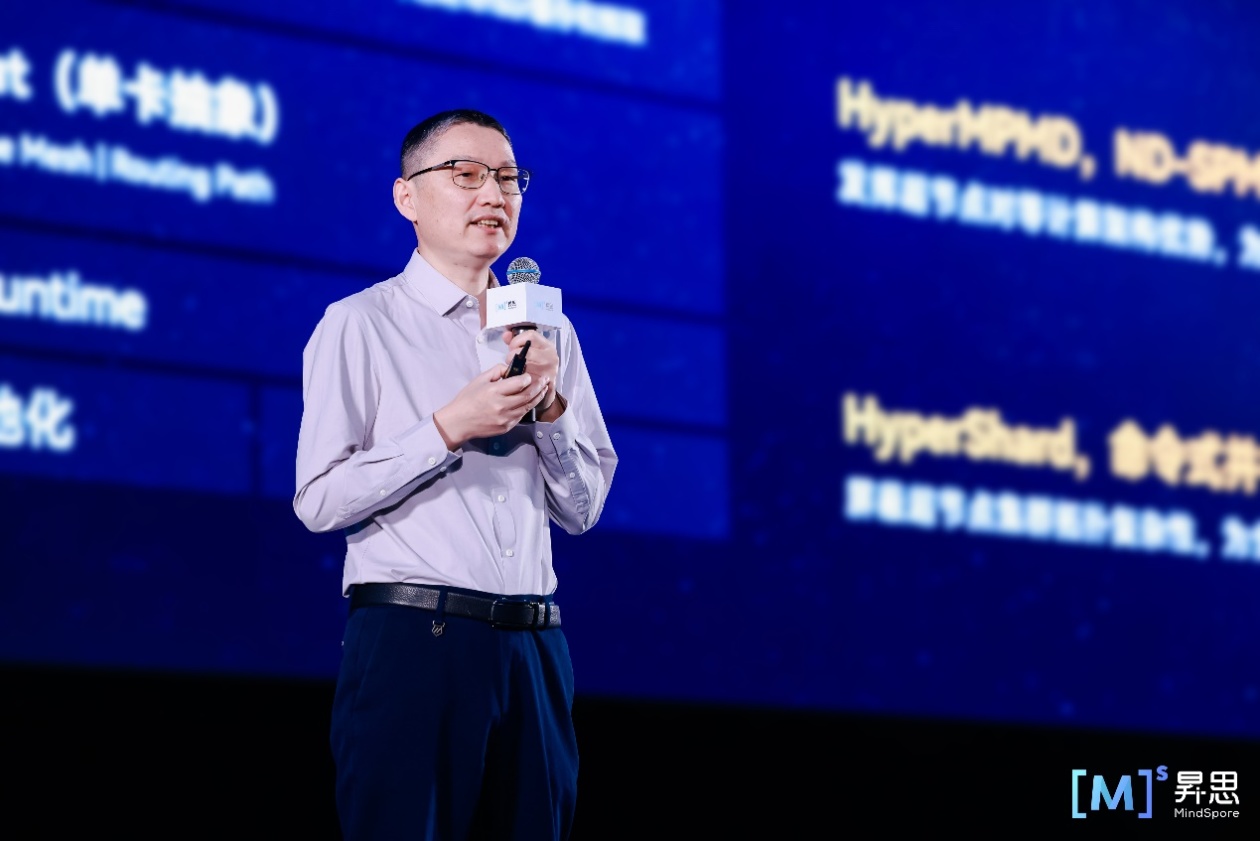
Core Insights - The summit focused on the "HyperParallel" architecture of the MindSpore AI framework, which aims to meet the increasing demands of large models in terms of computing power, storage, and scheduling efficiency [2][4] - MindSpore has become a leading AI open-source community in China, with over 13 million downloads and contributions from more than 52,000 community members [4] Group 1: HyperParallel Architecture - The HyperParallel architecture introduces three core technologies: HyperOffload, HyperMPMD, and HyperShard, enhancing training performance by over 20% and inference sequence length by 70% [4] - HyperMPMD improves computing resource utilization by over 15% and adapts to complex scenarios like reinforcement learning [4] - HyperShard reduces the time for parallel algorithm adaptation to within one day, significantly increasing tuning efficiency from days to hours [4] Group 2: Industry Applications - In the "AI for Science" sector, MindSpore supports the development of intelligent design systems, such as the "Yufeng·Zhiying" for aerodynamic design, which accelerates traditional processes to real-time interaction [5] - In finance, the application of MindSpore has enabled the stable training of large models with billions of parameters, enhancing service efficiency across various scenarios [7] Group 3: Community and Ecosystem - MindSpore promotes a collaborative open-source philosophy, supporting deployment across various platforms and integrating with mainstream ecosystems [8] - The community has established a talent cultivation system in partnership with educational institutions, training over 400 teachers and covering more than 100 universities [8] Group 4: Future Outlook - The company aims to continue developing an AI framework that is friendly to super nodes, integrates seamlessly across scenarios, and is open and agile, facilitating the intelligent transformation of various industries [9][10]
压缩之外,Visual Tokenizer 也要理解世界?
机器之心· 2025-12-28 01:30
Core Insights - The article discusses the evolution of Visual Tokenizer and its significance in understanding the world, suggesting that the next step in its development is to enhance its ability to comprehend high-level semantics rather than just focusing on pixel-level reconstruction [5][6][9]. Group 1: Visual Tokenizer Research - MiniMax and researchers from Huazhong University of Science and Technology have released a new study on Visual Tokenizer Pre-training (VTP), which has sparked significant interest in the industry [6]. - Traditional visual generation models typically involve a two-step process: compressing images using a tokenizer (like VAE) and then training a generative model in latent space [6]. - The study indicates that improving the performance of generative models can be achieved not only by scaling the main model but also by enhancing the tokenizer [6][8]. - The research reveals that focusing solely on pixel-level reconstruction can lead to a decline in downstream generative quality, as traditional tokenizers tend to favor low-level pixel information over high-level semantic representation [7][8]. - VTP proposes that introducing semantic understanding in tokenizer pre-training can make latent representations more sensitive to high-level semantics without overly memorizing pixel details [8][9]. Group 2: VTP Framework and Findings - The VTP framework integrates image-text contrastive learning (like CLIP), self-supervised learning (like DINOv2), and traditional reconstruction loss to optimize the latent space of visual tokenizers [9][10]. - The framework retains lightweight reconstruction loss for visual fidelity while introducing two semantic-oriented tasks: self-supervised loss based on DINOv2 and contrastive loss based on CLIP [9][10]. - Experimental results show a strong positive correlation between the semantic quality of the latent space (measured by zero-shot classification accuracy) and generative performance (measured by FID) [11]. - The largest VTP model (approximately 700 million parameters) achieved a zero-shot classification accuracy of 78.2% on ImageNet, with a reconstruction fidelity (rFID) of 0.36, comparable to specialized representation learning models [11][12]. - Replacing the tokenizer in a standard diffusion model training with VTP led to a 65.8% reduction in FID relative to the baseline and a fourfold increase in convergence speed [12][13]. - This indicates that investing more computational resources in tokenizer pre-training can significantly enhance downstream generative quality without increasing the complexity of the generative model [13].

清华百川楼挂牌启用后,就地圆桌开聊AI医疗
量子位· 2025-12-27 04:59
Core Viewpoint - The discussion emphasizes the importance of not overly aligning AI medical initiatives with traditional medical practices, suggesting that innovation should not be constrained by conventional medical perspectives [1][62]. Group 1: Perspectives on AI in Healthcare - The roundtable featured three key perspectives: AI entrepreneurs, researchers, and healthcare practitioners, highlighting the complexity of integrating AI into the medical field [4][5]. - The future of AI in healthcare is seen as critical, with discussions extending beyond technology to include ethical considerations, decision-making authority, and clinical reasoning [9][10]. Group 2: Vision for AI in Medicine - AI in medicine is viewed as a complex system that reflects the challenges of achieving AGI (Artificial General Intelligence), with medical knowledge spanning multiple disciplines [13][14]. - The development of large medical models is essential, serving as a foundational infrastructure that integrates various types of medical data [16][17]. - AI has the potential to drive advancements in medical research by identifying complex patterns that traditional methods may overlook [19][20]. - The relationship between doctors and patients is expected to evolve, with patients becoming more informed and demanding higher standards from healthcare providers [21][22]. Group 3: AI Medical Benchmarks - The benchmarks for AI in healthcare must evolve to reflect the dynamic nature of AI technology, focusing on long-term health monitoring and adaptive treatment plans [30][31]. - In real medical scenarios, the effectiveness of AI is measured by its clinical reasoning capabilities, acceptance by healthcare professionals, and its impact on treatment outcomes [33][34]. Group 4: Unique Value Proposition of Baichuan Intelligence - Baichuan Intelligence aims to create a companion AI that engages in long-term decision-making rather than providing one-off answers, emphasizing the importance of patient and doctor engagement [37][40]. - The company collaborates with top hospitals while recognizing that professional endorsement does not guarantee product quality [39]. Group 5: Challenges and Recommendations for AI in Healthcare - The regulatory environment in healthcare poses significant challenges for AI innovation, necessitating careful navigation to maintain trust while integrating AI into decision-making processes [50][52]. - Young professionals entering the AI healthcare field are encouraged to find genuine interests and embrace interdisciplinary knowledge to foster innovation [54][56].

2026年ChatGPT要加广告了,最懂你的AI都开始出卖你
36氪· 2025-12-26 13:08
Core Viewpoint - The article discusses the emerging trend of integrating advertisements into AI platforms, particularly ChatGPT, as a means of revenue generation amidst the challenges of sustaining profitability in the AI industry [4][12][33]. Group 1: AI Advertising Integration - OpenAI is exploring ways to incorporate sponsored content into ChatGPT, potentially prioritizing ads when users ask specific questions [4][24]. - Recent prototypes show various ad display methods, including sidebars in ChatGPT's interface [5][26]. - The shift towards advertising is seen as a necessary response to the financial pressures faced by AI companies, as traditional subscription models have not yet proven sufficient for revenue generation [12][33]. Group 2: Financial Viability and Market Dynamics - The AI industry is experiencing a significant gap between user growth and revenue, leading to a reliance on advertising as a quick recovery strategy [17][29]. - OpenAI's annual revenue is reported to be over $12 billion, but the company faces high operational costs, which may be three times the revenue generation rate [29][30]. - The article highlights the potential for AI to become a new advertising platform, with the ability to leverage user data for targeted advertising [58][59]. Group 3: User Experience and Ethical Concerns - The integration of ads into AI responses raises ethical concerns, as users may not recognize when they are being marketed to, blurring the lines between genuine advice and commercial promotion [46][62]. - The concept of "Generative Engine Optimization" (GEO) is introduced, where companies may manipulate AI outputs to prioritize their content, potentially misleading users [42][43]. - The article warns that as AI becomes more integrated into daily decision-making, the implications for user trust and the nature of information consumed could be profound [57][61].

冷静看待VLA:不是救世主,也不是“垃圾”
自动驾驶之心· 2025-12-26 09:18
Core Viewpoint - The article critiques the VLA (Visual Language Agent) approach, emphasizing that while it has merits, it also has significant limitations that need to be addressed for better performance in complex environments [1]. Group 1: Challenges and Limitations - The main challenge lies in enabling models to generalize effectively [2]. - Current models struggle in complex environments due to simplistic task settings, often limited to "grab-and-drop" scenarios with minimal obstacles [6]. - The reliance on large datasets and the black-box nature of systems hinder understanding of model capabilities [6]. Group 2: Proposed Solutions - A focus on designing effective subgoal embeddings is crucial for ensuring generalization, potentially using cross-attention mechanisms to link task text tokens with image patch tokens [3][4]. - The article suggests that learning-based methods may outperform traditional methods in complex environments, as they can adapt to visual observation errors and continuously correct actions [4]. - An explicit VLA approach is recommended, where large models break down tasks into subgoals, allowing for clearer structure and reduced training requirements [8].

马斯克宣战,太空可见,把AI超算涂成这样,微软破防了
3 6 Ke· 2025-12-26 02:34
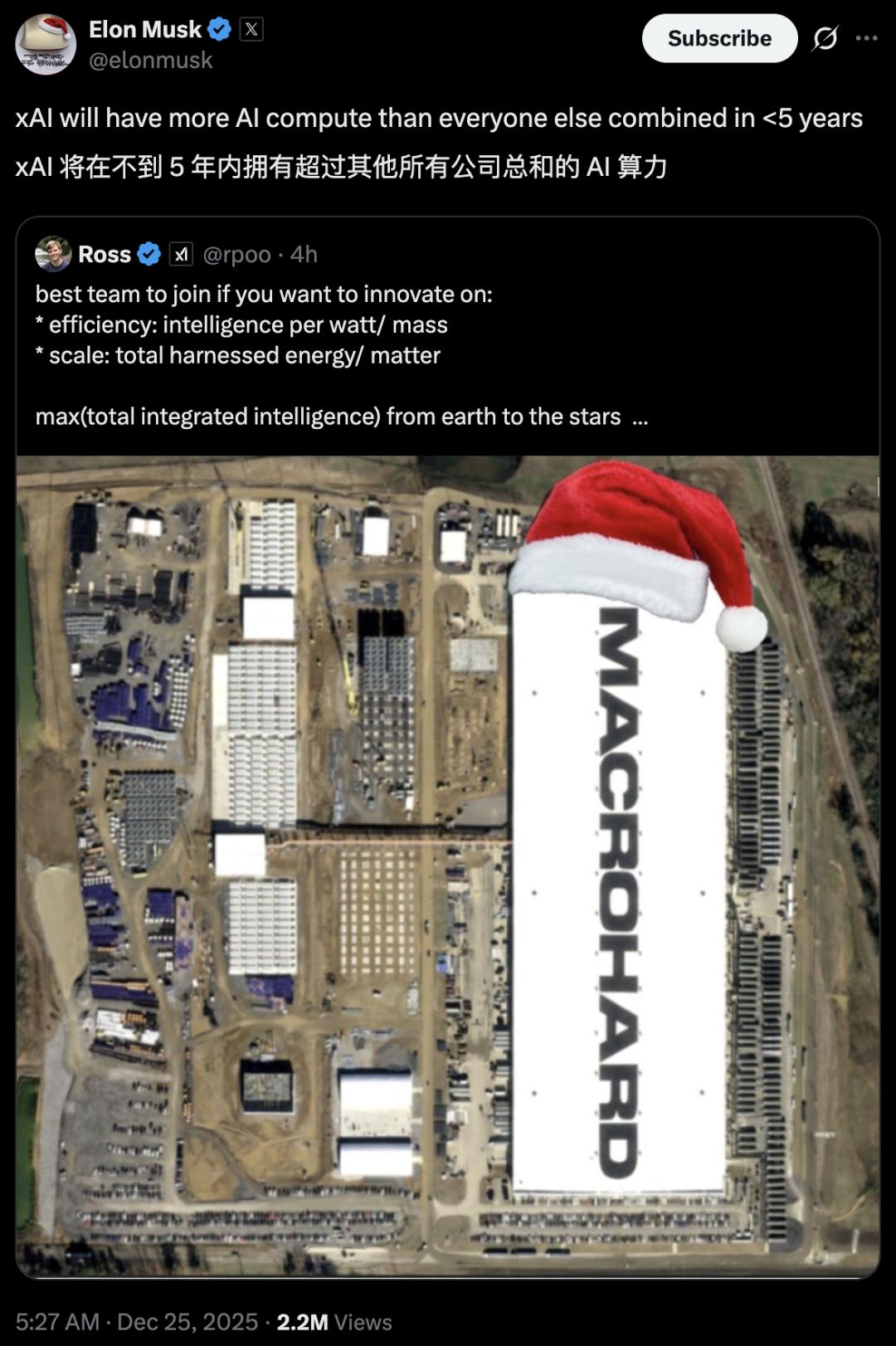
Core Viewpoint - Elon Musk has declared that xAI will possess more AI computing power than all other companies combined within five years, positioning xAI against major competitors like Google, OpenAI, and Microsoft [1][3]. Group 1: xAI's Infrastructure and Strategy - xAI's Colossus supercomputing center in Memphis is one of the largest commercial AI supercomputing centers globally, emphasizing a "hardcore" approach to AI development [5][9]. - The first phase, Colossus 1, was rapidly constructed to ensure xAI could compete, while Colossus 2 represents a more advanced engineering project aimed at long-term scalability [9][10]. - Colossus 2's construction is notably fast, with significant infrastructure completed in just six months, compared to competitors that typically require 15 months [10]. Group 2: Power Supply and Energy Strategy - xAI has strategically acquired a decommissioned power plant in Mississippi to circumvent regulatory hurdles in Tennessee, allowing for a temporary operation of gas turbines to supply power [13][15]. - Solaris Energy Infrastructure will provide over 1.1GW of power to meet the projected 1.7GW demand for Colossus 2, effectively creating an independent energy network for xAI [15][16]. Group 3: Financial Aspects and Funding - xAI is seeking $40 billion in new funding, with a valuation approaching $200 billion, despite its current revenue being minimal compared to its capital expenditures [19][16]. - The company is leveraging investments from Middle Eastern sovereign wealth funds, indicating strong financial backing for its ambitious plans [18][22]. Group 4: Company Culture and Workforce - xAI promotes a high-pressure work environment, with a culture that emphasizes extreme dedication, which has led to both attrition and the retention of passionate talent [23][24]. - The company is focusing on unique paths in AI development, such as emotional intelligence and interaction, rather than traditional programming skills [27][29]. Group 5: Future Outlook and Challenges - Musk has indicated that the next 2-3 years are critical for xAI to secure a leading position in the AI race, with significant investments required for expansion [30][31]. - The financial model of xAI raises concerns about sustainability, as training costs far exceed current revenue streams, potentially leading to market vulnerabilities [36].