
套期保值

Search documents
崇义章源钨业股份有限公司2025年第三季度报告
Shang Hai Zheng Quan Bao· 2025-10-27 22:39
Group 1 - The company guarantees the authenticity, accuracy, and completeness of the information disclosed in its quarterly report, and assumes legal responsibility for any false records or misleading statements [2][19]. - The third-quarter financial report has not been audited [3][18]. - The company reported a non-recurring loss of 1,733,089.68 yuan due to special expenditures related to environmental protection responsibilities [3]. Group 2 - The company’s total assets decreased by 42,477.49 million yuan, with accounts receivable increasing by 38,203.37 million yuan, reflecting a 100.99% increase due to accumulated transaction amounts with clients [4][5]. - The company’s net profit increased by 4,472.82 million yuan, a 30.87% increase compared to the same period last year, primarily due to increased sales volume and prices [11][12]. - The cash flow from operating activities increased by 135,185.22 million yuan, a 57.29% increase, mainly due to higher cash receipts from sales [13]. Group 3 - The company confirmed asset losses totaling 1,871.67 million yuan for the first nine months of 2025, which reduced the total profit by the same amount [40][46]. - The company incurred a fixed asset loss of 1,421.97 million yuan due to the scrapping of outdated assets, including significant losses from the Huangzhulang tungsten mine [42]. - The company plans to conduct financial derivative transactions for hedging purposes, with a total limit of 25,000 million yuan to mitigate foreign exchange risks [49][50]. Group 4 - The company approved an increase in the expected amount for daily related transactions with KBM Corporation by 13,500 million yuan, bringing the total expected amount to 38,000 million yuan for 2025 [71][72]. - The company maintains a good cooperative relationship with KBM, which is one of its top five customers, enhancing its market share in South Korea [75][76]. - The company will hold its third extraordinary general meeting on November 13, 2025, to discuss various matters, including the increase in daily related transaction limits [78].

“基差+点价”贸易助力中小企业高质量发展
Qi Huo Ri Bao Wang· 2025-10-27 02:36
Group A: Project Background - A company, located in Anhui Province, specializes in urea spot trading and has a downstream trading partner, B company, which signed a procurement agreement for 3,000 tons of urea to be delivered by May 2024 [1] - B company anticipates a price increase in the domestic urea market in May 2024 and plans to sign a "basis + spot price" procurement agreement with A company by the end of March 2024 [1] - A company aims to expand its business scale while being cautious about potential losses from unfavorable basis developments in Q2 2024 [1] Group B: Project Implementation Process - From April 2024, the urea futures market showed signs of stabilization, prompting A company to hedge part of its inventory based on market conditions [3] - B company completed the pricing of 3,000 tons of urea in early April 2024, purchasing in six batches at a favorable futures price [3] - A company also purchased 3,000 tons of urea in the spot market and executed a hedge of 150 contracts, achieving a reasonable overall profit despite low futures margins [3] Group C: Cost Reduction and Benefits - B company successfully reduced its procurement cost from over 2,200 yuan/ton to 1,984.89 yuan/ton by purchasing from A company in early April [4] - The "basis + spot price" model alleviated B company's liquidity pressure, allowing for flexible procurement without the hassle of traditional sourcing [5] - This model transformed absolute price volatility risks into relative changes in basis, stabilizing supply-demand expectations and business relationships [5] Group D: Effectiveness Evaluation - The basis trading model enables upstream and downstream enterprises in the bulk commodity sector to manage price volatility risks effectively, enhancing operational predictability [7] - The model has strong replicability and high social promotion value, benefiting the overall industry [7] - Futures companies can leverage this procurement method to better understand the spot market and tailor solutions to meet client needs, achieving a win-win situation [7]
隆华科技:公司密切关注原材料价格波动
Zheng Quan Ri Bao Wang· 2025-10-24 09:43
Core Viewpoint - Longhua Technology (300263) is actively monitoring fluctuations in raw material prices and is implementing mechanisms such as hedging to ensure normal operations [1] Group 1 - The company is closely watching the volatility in raw material prices [1] - Longhua Technology is utilizing hedging and other mechanisms to respond to price changes [1] - The measures taken are aimed at safeguarding the company's normal operations [1]

以期货之力为山东经济高质量发展蓄能
Qi Huo Ri Bao Wang· 2025-10-24 00:41
Core Viewpoint - The "DCE·Industry Tour" training program aims to enhance the quality development of state-owned enterprises and listed companies in Shandong through the application of futures derivatives in risk management and price discovery amidst global economic uncertainties [1][2]. Group 1: Training Program and Objectives - The training program, guided by the Shandong Provincial State-owned Assets Supervision and Administration Commission and the Shandong Securities Regulatory Bureau, focuses on the practical application of futures tools to support local enterprises [1]. - The program addresses five dimensions: policy guidance, practical enterprise applications, industry pain points, digital transformation, and future planning [1]. Group 2: Industry Participation and Development - Shandong has become a key region for the Dalian Commodity Exchange (DCE), with a comprehensive delivery system established for various commodities, including polyethylene, coking coal, and iron ore [2]. - The enthusiasm of enterprises to participate in the futures market has increased, with leading companies transitioning from passive price acceptance to active risk management [2]. - Since 2024, DCE has conducted over 70 training sessions in Shandong, covering 31 enterprises and over 1,800 participants, with financial support exceeding 2.1 million yuan [2]. Group 3: Regulatory and Market Insights - The Shandong Provincial State-owned Assets Supervision and Administration Commission emphasizes the importance of futures tools in managing risks and stabilizing costs amid increasing commodity price volatility [3]. - The Shandong Securities Regulatory Bureau reported that the futures market in Shandong is robust, with 614 enterprises receiving hedging services involving approximately 540 billion yuan [4]. - The region has seen the implementation of 999 "insurance + futures" projects, with insurance payouts of 660 million yuan, leading the nation [4]. Group 4: Practical Applications and Challenges - The participation of listed companies in futures is gradually increasing, with 1,503 companies publishing hedging announcements in 2024, reflecting a 15.7% year-on-year growth [6]. - However, the overall hedging participation rate among listed companies remains low at 28.6%, with commodity hedging participation below 10% [6]. - Challenges such as the applicability of hedging accounting, information disclosure conflicts, and a shortage of professional talent are identified as barriers to greater participation [6]. Group 5: Digital Transformation and Future Directions - Digital transformation is recognized as a crucial support for enhancing the quality and efficiency of futures business, with companies urged to integrate futures tools into their operational strategies [7]. - The integration of futures operations with actual business activities is essential to avoid disconnection and maximize risk management benefits [7]. - Future initiatives will focus on deepening collaboration with government and industry leaders to promote risk management case studies and develop model enterprises in Shandong [3].
“数智化”助力企业一站式套期保值
Qi Huo Ri Bao Wang· 2025-10-23 00:47
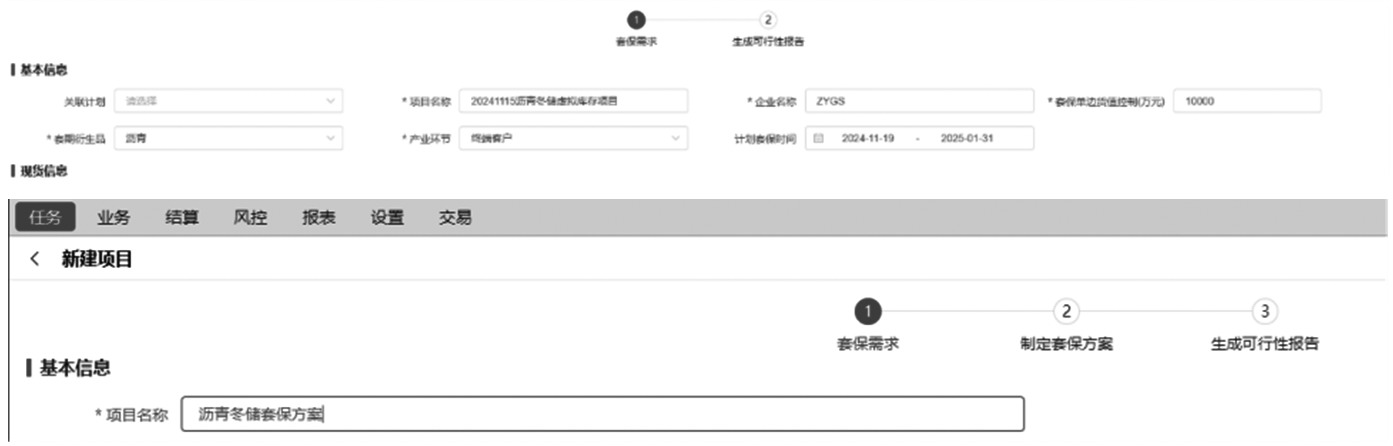
Core Viewpoint - The article discusses the development and implementation of a risk management platform called "Qizhi Hui" by Zhejiang Merchants Futures Co., Ltd. to assist a state-owned asphalt company in managing risks and utilizing financial derivatives for hedging purposes [1][24]. Group 1: Company Background - The asphalt company, referred to as Z Company, has a complete integrated supply chain for asphalt products, with an annual production capacity of 300,000 tons and a storage capacity of 50,000 tons [2]. - Z Company primarily uses high-grade petroleum asphalt and has a brand mix of 65% from Singapore (e.g., Shell, Esso) and 35% from domestic brands (e.g., Sinopec, PetroChina) [2]. - The company has historically faced devaluation risks due to a lack of risk management systems and has begun to shift its management perspective towards using financial derivatives for hedging [2][3]. Group 2: Service Solution and Process - Z Company has encountered challenges in implementing hedging strategies due to insufficient risk management systems and a lack of understanding of derivatives among employees [3][4]. - The risk management platform offers a comprehensive solution that includes centralized trading, risk control, automatic settlement, and statistical analysis to facilitate standardized management of hedging activities [4][5]. - The platform allows Z Company to input its procurement and usage plans, enabling intelligent analysis of future risk exposures [5][6]. Group 3: Hedging Process and Strategy - The platform features a rapid hedging module that generates hedging proposals and feasibility reports based on the company's needs, which can be optimized by hedging experts [7][9]. - Z Company plans to establish a virtual inventory with a maximum available capital of 100 million yuan, with an initial hedging ratio of 40% based on a price of 3,350 yuan/ton for asphalt [9][11]. - The platform provides a structured approval process for hedging applications, ensuring compliance with risk management protocols [14][15]. Group 4: Risk Management and Evaluation - The platform includes a risk monitoring module that allows real-time analysis and monitoring of risks associated with derivative trading [17][19]. - After the completion of a hedging project, the platform generates evaluation reports that analyze the correlation between spot and futures prices, profit and loss, and risk control measures [22]. - Z Company's hedging project in November 2024 resulted in a cost savings of 20.325 million yuan by locking in prices effectively [22]. Group 5: Industry Impact and Future Prospects - The intelligent risk management platform aims to lower the barriers for companies to participate in hedging, enhancing the effectiveness of risk management and reducing potential risks [25][26]. - The integration of digital technology in the futures industry is expected to improve service quality and efficiency, allowing for better risk management and support for economic stability [26][27]. - The platform's development aligns with regulatory goals of enhancing risk prevention and management capabilities within the financial market [27].

期货新开户增多了休眠户回来了 前三季度产业客户和境外客户增长最为显著
Zheng Quan Shi Bao· 2025-10-21 17:49
Core Insights - The Chinese futures market has reached a significant milestone with total funds surpassing 2 trillion yuan, reflecting increased investor interest amid heightened volatility in commodity and financial markets [1][2]. Market Growth - As of October 9, 2025, the total funds in the futures market reached approximately 2.02 trillion yuan, marking a 24% increase from the end of 2024 [2]. - The total client equity of futures companies was about 1.91 trillion yuan, also a 24% increase from the end of 2024 [2]. - The number of effective clients in the market exceeded 2.7 million, a 14% year-on-year increase, with 650,000 new clients added in the first three quarters of 2025 [2]. Client Segmentation - Two key growth segments in the futures market are industrial clients and overseas clients, with industrial clients focusing on risk management and hedging strategies [3][5]. - A record 1,583 A-share listed companies have issued hedging announcements this year, surpassing the total for 2024, indicating a growing engagement in risk management [3]. Service Enhancement - Futures companies are enhancing their service capabilities to meet the evolving needs of industrial clients, requiring frontline staff to possess in-depth industry knowledge and strong communication skills [4]. - The demand from industrial clients has shifted from basic hedging to more sophisticated risk management solutions that align with their business strategies [3]. Performance of Futures Companies - As of August 2025, the total trading volume reached 65.23 trillion yuan, with a net profit of 76.5 billion yuan for the first eight months, marking a new high [7]. - However, performance among futures companies is uneven, with profit growth concentrated in a few firms, while traditional brokerage competition remains intense [7]. Market Sentiment - The A-share futures sector has shown strong performance, with companies like Ruida Futures seeing a nearly 60% increase in stock price this year [8].
纯苯:苯乙烯风险管理日报-20251021
Nan Hua Qi Huo· 2025-10-21 11:14
纯苯-苯乙烯风险管理日报 2025/10/21 研究员:戴一帆(投资咨询证号:Z0015428) 研究助理:黄思婕(期货从业证号:F03130744) 投资咨询业务资格:证监许可【2011】1290号 苯乙烯价格区间预测 | | 价格区间预测(月度) | 当前波动率(20日滚动) | 当前波动率历史百分位(3年) | | --- | --- | --- | --- | | 纯苯 | 5200-5800 | / | / | | 苯乙烯 | 6200-6800 | 29.40% | 85.8% | source: 南华研究 苯乙烯套保策略表 | 行为导 | 情景分析 | 现货敞 | 策略推荐 | 套保工具 买卖方 | | 套保比例 | 建议入场 | | --- | --- | --- | --- | --- | --- | --- | --- | | 向 | | 口 | | | 向 | (%) | 区间 | | 库存管 | 产成品库存偏高,担心苯乙烯价格下 | 多 | 为了防止存货跌价损失,可以根据企业的库存情况,做空苯乙烯期货来锁定利 润,弥补企业的生产成本 | EB2512 | 卖出 | 25% | 6500 ...
佛燃能源集团股份有限公司关于为子公司提供担保的进展公告
Zhong Guo Zheng Quan Bao - Zhong Zheng Wang· 2025-10-21 10:44
Summary of Key Points Core Viewpoint - The company has approved a total guarantee amount of up to RMB 180 million for its wholly-owned subsidiary, Foshan Huayuan Energy Trading Co., Ltd., to conduct hedging activities [2]. Group 1: Guarantee Overview - The company has provided a guarantee for Foshan Huayuan Energy Trading Co., Ltd. for a maximum amount of USD 6.9 million to Standard Chartered Bank for foreign exchange and financial derivative transactions [3]. - The actual guarantee amount utilized for hedging activities is USD 6.9 million, leaving a remaining guarantee capacity of RMB 150,262.31 million for further hedging activities [3]. Group 2: Subsidiary Information - Foshan Huayuan Energy Trading Co., Ltd. was established on September 18, 2019, and is a wholly-owned subsidiary of Shenzhen Qianhai Furun Energy Co., Ltd. [5]. - As of December 31, 2024, the total assets of Foshan Huayuan Energy were RMB 568.84 million, with a net asset value of RMB 64.68 million, and for the first nine months of 2025, the total assets increased to RMB 827.12 million [5]. Group 3: Guarantee Agreement Details - The guarantee provided by the company covers all obligations of Foshan Huayuan Energy Trading Co., Ltd. to Standard Chartered Bank under the NAFMII Master Agreement and foreign exchange trading terms [7]. - The guarantee period lasts for two years from the date of the guarantee letter, covering the last settlement or payment date of the guaranteed debts [7]. Group 4: Cumulative Guarantee Information - As of the announcement date, the company has a cumulative external guarantee amount of RMB 298.15 million, with an actual balance of RMB 115.99 million, representing 13.77% of the company's audited net assets as of December 31, 2024 [8].
大宗商品ETF系列(一):全球大宗商品ETF全景研究
Dong Zheng Qi Huo· 2025-10-21 10:14
1. Report Industry Investment Rating No information provided in the content. 2. Core Viewpoints of the Report The report provides a comprehensive overview of the global commodity ETF market, including its development history, market structure, user groups, and application scenarios. It also compares the Chinese and overseas commodity ETF markets, highlighting the gaps and potential for development in the Chinese market. Commodity ETFs have become a core financial tool for investors to gain exposure to commodity risks, driven by factors such as inflation hedging and portfolio diversification [1][2][3]. 3. Summary According to Relevant Catalogs 3.1 Commodity ETF Development History 3.1.1 Overseas Commodity ETF Development History - **Stage 1 (Late 1990s - Early 2000s)**: The development of commodity ETFs began in the late 20th to early 21st century. Early products used futures contracts as underlying assets, and precious metals became the breakthrough for early commodity ETFs. In 2003, Australia launched the Gold Bullion Securities (GBS), and in 2004, the US launched the SPDR Gold Shares (GLD), the first large - scale and widely - adopted commodity ETF [13][14]. - **Stage 2 (2005 - 2010s)**: Commodity ETFs entered a period of rapid development with diversified product targets. The global financial crisis in 2008 led to an increase in the asset scale of gold ETFs and the diversification of commodity ETF structures, including the emergence of ETN [16][17]. - **Stage 3 (2015 - Present)**: The commodity ETF market has become more diversified. Theme - based commodity ETFs have developed rapidly, and there is a clear differentiation in investor preferences between institutional and retail investors [19]. 3.1.2 Chinese Commodity ETF Development History - **Stage 1 (2013 - 2014)**: China's commodity ETFs started late but developed rapidly. The first domestic gold ETF was launched in 2013, and several other gold ETFs were launched in 2014 [23]. - **Stage 2 (2019 - Present)**: The domestic commodity ETF market has become more diversified, covering non - precious metal sectors such as agricultural products, industrial metals, and energy [24]. 3.2 Commodity ETF Market Structure and Current Situation 3.2.1 Generalized and Narrow - Sense Commodity ETFs Generalized commodity ETFs include narrow - sense commodity ETFs (funds), commodity ETCs (physical collateral certificates), and commodity ETNs (unsecured bonds). Narrow - sense commodity ETFs can be further divided into physical, equity, and futures - based types [27]. 3.2.2 Market Scale The commodity ETF market has been growing in recent years, but its overall scale accounts for a relatively small proportion of the global ETF market. The market is highly concentrated regionally, with the US and Europe leading in terms of scale [37][40]. 3.2.3 Classification Scale Characteristics - **By Fund Type**: Narrow - sense commodity ETFs and commodity ETCs have seen stable growth in quantity and asset scale, while commodity ETNs have shown high volatility. The US is the main market for narrow - sense commodity ETFs and commodity ETNs, and Europe is the main market for commodity ETCs [42][50]. - **By Investment Target**: Asset allocation in generalized commodity ETFs is mainly concentrated in precious metals. In commodity ETNs, the composite index and energy play important roles [53][55]. 3.2.4 Concentration Characteristics and Top Products The asset scale of commodity ETFs is highly concentrated. Commodity ETCs and agricultural - themed generalized commodity ETFs have the highest concentration. The top 20 products are mainly precious - metal - based ETFs, showing concentration in fund type, asset target, and listing region [77][80][81]. 3.3 Commodity ETF User Groups and Application Scenarios 3.3.1 Investor Structure Overview Institutional investors' holding scale in the global generalized commodity ETF market has been growing steadily, while the holding ratio has remained relatively stable. Institutional investors prefer precious metals and composite index ETFs, narrow - sense commodity ETFs, and large - scale products. There are significant regional differences in investor structure [86][92][104]. 3.3.2 Investor Allocation Logic and Demand Scenarios - **Core Financial Tool**: Commodity ETFs are used for industry rotation investment, event - driven trading, theme investment, and earning roll - over returns [2]. - **Inflation Hedging**: Commodity ETFs are used to hedge inflation and are an important part of asset allocation during high - inflation periods [132][133]. - **Portfolio Diversification**: Commodity ETFs have low correlations with traditional financial assets, which can reduce portfolio volatility and enhance returns [145]. - **Currency Risk Hedging and Hedging**: Commodity ETFs can be used for currency risk hedging and hedging operations, especially suitable for small and medium - sized enterprises [149]. 3.4 Comparison of Chinese and Overseas Commodity ETFs The Chinese commodity ETF market has made great progress but still lags behind mature markets in terms of product coverage, strategy design, investor structure, and market liquidity. The Chinese market mainly consists of traditional passive products and a retail - dominated investor structure, with great potential for development [3].
延安苹果产业尝到期货“甜头”
Qi Huo Ri Bao Wang· 2025-10-21 00:43
Core Insights - The apple industry in Yan'an has become a crucial pillar of the local agricultural economy, but it faces challenges such as weakened seasonal patterns and competition from substitute fruits [1] - The maturation of the apple futures market is providing new opportunities for risk management and high-quality development in the apple industry [1] Group 1: Challenges Faced by the Apple Industry - Apple procurement merchants in Yan'an are experiencing uncertainty due to fluctuating market conditions, leading to concerns about over-purchasing or under-purchasing apples [2] - The increase in apple production in 2023 compared to 2022 has not alleviated the market's unpredictability, causing anxiety among merchants [2] Group 2: Adoption of Futures and Options - A merchant successfully utilized futures contracts to hedge against price fluctuations, pre-selling 26,000 jin of apples at an average price of 9,308 yuan/ton, which allowed for secure procurement [3] - The merchant achieved a profit of 53,000 yuan from the futures market, despite a decline in the wholesale price of apples by 3.38% from mid-October to December [3] Group 3: Innovative Risk Management Strategies - The merchant later sought advice on options trading to mitigate potential losses from price drops after the Spring Festival, successfully using options to earn premiums [4] - The understanding of risk management through futures and options has led to a significant shift in the merchant's approach to business operations [4] Group 4: Industry Development and Integration - The general manager of Chengxin Agricultural Development Co. emphasized the importance of having a reliable pricing reference in the spot market to effectively engage in futures hedging [5] - The "e+Gold" apple industry development system promotes standardized production and order-based procurement, enhancing stability and reliability in the apple supply chain [5] Group 5: High-Quality Development through Financial Integration - The integration of futures and options tools, along with innovative practices like the "e+Gold" system, is driving deep development in the Yan'an apple industry [6] - The futures market's price discovery function aids stakeholders in making informed production and operational decisions, while its hedging capabilities mitigate price volatility risks [7] - The apple industry is exploring new business models, such as "equity + dividends" and "cooperatives + farmers," to promote comprehensive development and integration of various operational aspects [7]