
数实融合

Search documents
RDA打通数实融合价值链,打造数据要素价值化新范式
Changjiang Securities· 2025-07-16 02:25
Investment Rating - The industry investment rating is "Positive" and maintained [8] Core Insights - The Shanghai Data Exchange has introduced a new paradigm called RDA (Real Data Assets), leveraging blockchain technology to convert physical assets and intangible data elements into digital forms, addressing five key challenges in the financialization of physical assets: authenticity, transparency, liquidity, economy, and consensus [2][6] - RDA emphasizes the integration of real-world assets (RWA) with data, facilitating the deep integration of the real economy and the digital economy. The market for RWA has grown significantly, from $300 million at the end of 2021 to over $19 billion by the end of March 2025, highlighting the potential for asset tokenization [6] - The new paradigm of RDA is expected to accelerate the marketization and valuation of data elements, benefiting the entire industry chain. It suggests focusing on investment opportunities in data infrastructure, blockchain technology, and data rights and trading [6][10]
贾康:中国经济具备韧性,全年5%增长目标“希望很大” | 财经大咖解码经济半年报
Sou Hu Cai Jing· 2025-07-15 20:17
Economic Performance Overview - The GDP growth rate for the first half of the year is 5.3%, aligning with the annual target of around 5% set at the beginning of the year [2][3] - The quarterly breakdown shows a growth of 5.4% in Q1 and 5.2% in Q2, indicating a slight decline in the second quarter [2] Outlook on Annual Growth Target - The expert expresses optimism about achieving the annual growth target, stating there is "great hope," but acknowledges existing pressures and challenges [3][4] - Structural issues and uncoordinated development remain significant challenges, particularly in implementing reforms to enhance productivity [3] Manufacturing Sector Insights - Industrial production has shown robust growth, with a 6.4% increase in value added for large-scale industries in the first half of the year [5] - Equipment manufacturing and high-tech manufacturing sectors have performed particularly well, with growth rates of 10.2% and 9.5%, respectively [5] - The manufacturing sector's upgrade is crucial for high-quality economic development, reflecting the integration of digital and traditional economies [5][6] Market Confidence and Policy Execution - Maintaining the positive trend in manufacturing, especially in equipment and high-tech industries, is essential [6] - There is a need to focus on market expectations and foster a "long-termism" and "patient capital" mindset to boost confidence [6]

推进平台经济强省建设三年行动 浙江力争到2027年平台企业数量过千
Shang Hai Zheng Quan Bao· 2025-07-15 18:26
Core Viewpoint - Zhejiang is advancing a three-year action plan for high-quality development of the platform economy, aiming to exceed 1,000 platform enterprises by 2027, with over 50 reaching a scale of 10 billion yuan, and total revenue of platform enterprises reaching 2.2 trillion yuan [1][2]. Group 1: Development Goals - By 2027, Zhejiang aims for over 1,000 platform enterprises and 10 million active online business entities [1]. - The total revenue of platform enterprises is targeted to reach 2.2 trillion yuan, with an annual growth rate of 5% in online retail [1][2]. Group 2: Key Initiatives - The action plan focuses on creating six new benchmarks, including technology leadership, modern industrial systems, international cooperation, consumer vitality, harmonious labor relations, and modern governance [2]. - Emphasis on transforming leading platforms into high-tech enterprises and increasing R&D investment, particularly in emerging fields like large models [2][3]. Group 3: Industry Support and Collaboration - Zhejiang is implementing a "platform + industry" dual empowerment action, with plans to create over 25 billion-level consumer goods industry clusters [3]. - Support for platform enterprises to expand internationally, including quality improvement actions and brand alliances with SMEs [3][4]. Group 4: Consumer Engagement and Satisfaction - Initiatives to enhance consumer experience include the "Zhejiang Boutique" cultivation plan and the integration of AI in consumer applications [3][4]. - A focus on creating a first-class consumption environment to promote consumer confidence in Zhejiang [3]. Group 5: Governance and Compliance - The province is advancing a modern governance approach that integrates regulation with service, enhancing credit management and compliance for platform enterprises [4][5]. - Actions to ensure fair competition and address market misconduct, such as counterfeit and fraudulent practices [4]. Group 6: Current Industry Landscape - Zhejiang currently has over 850 platform enterprises and has created more than 10 million jobs, with a robust ecosystem supporting innovation and service [6].
关乎平台经济,浙江提出新任务
证券时报· 2025-07-15 08:24
Core Viewpoint - The "Three-Year Action Plan for High-Quality Development of Platform Economy in Zhejiang Province" aims to enhance the number and scale of platform enterprises, focusing on innovation and technology-driven growth by 2027 [1][2]. Group 1: Development Goals - By 2027, Zhejiang aims to have over 1,000 platform enterprises, with more than 50 reaching a scale of 10 billion yuan, and 10 million active online business entities [2]. - The total revenue of platform enterprises is targeted to reach 2.2 trillion yuan, with an annual growth rate of 5% in online retail sales [2]. Group 2: Current Status and Growth - Zhejiang is currently a leader in platform economy development, with over 850 platform enterprises and significant transaction volumes [3]. - In 2024, cross-border e-commerce exports are projected to exceed 350 billion yuan, growing by 10%, accounting for 9.2% of the province's total exports [3]. Group 3: Technological Transformation - The action plan emphasizes guiding leading platform enterprises towards becoming high-tech companies, increasing R&D investment, and maintaining a competitive edge in emerging fields like large models [5]. - The plan supports the development of service platforms for large models and aims to create a thriving ecosystem for their applications [5]. Group 4: Consumer Empowerment and Market Dynamics - The plan includes initiatives to stimulate consumer activity, such as the "Zhejiang Boutique" cultivation program and promoting "AI + Consumption" to create innovative shopping experiences [7]. - The shift in consumer behavior from "searching for goods" to "goods finding consumers" necessitates traditional e-commerce platforms to innovate and adapt [12]. Group 5: Regulatory Framework - The action plan acknowledges the challenges faced by the platform economy due to intensified competition and changing market dynamics, emphasizing the need for robust regulatory frameworks [9][12]. - It encourages global expansion of platform economies and aims to enhance international competitiveness through improved logistics and payment systems [11].

未来云启承办“2025年全球RWA&AGI生态峰会”圆满举行
Zhong Jin Zai Xian· 2025-07-14 08:32
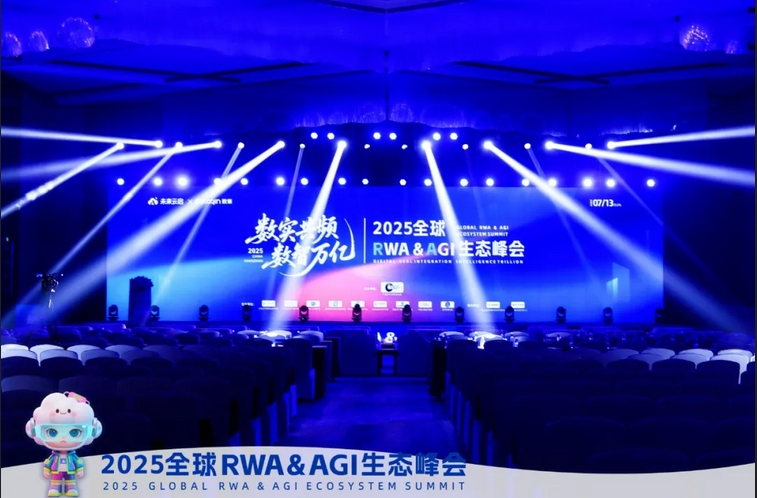
Core Insights - The "RWA & AGI Global Summit 2025" held in Hangzhou focused on the integration of Real World Assets (RWA) and Artificial General Intelligence (AGI), highlighting the importance of digital transformation in the economy [1][3][5] Group 1: Event Overview - The summit attracted over 1,000 attendees, including government officials, industry experts, and media representatives, with online viewership exceeding 50,000 [3][5] - Key discussions revolved around the digitalization of assets and the integration of AGI technology, showcasing China's advancements in asset verification and digital economy [3][6] Group 2: Key Speakers and Their Insights - Jin Shubao emphasized the role of digital economy as a growth engine and the importance of RWA in reshaping asset transactions and enhancing industrial vitality [6] - Liu Shunda discussed the philosophical implications of tokens and AGI, expressing confidence in the future of innovation in the sector [8] - Miao Chengchao highlighted RWA's potential to improve asset liquidity and facilitate financing for SMEs, urging industry players to enhance their sense of responsibility and innovation [10] - Ni Jianzhong noted that the fusion of RWA and AGI marks a new phase in digital integration, providing new financing channels for SMEs [12] - Kim Beom-jang from Korea's Future Five Group expressed optimism about the revolutionary changes RWA and AGI could bring to global industries [14][15] Group 3: Future Developments and Collaborations - The collaboration between Zhejiang Suqin Technology, Future Cloud Start, and Hangzhou Wash Intelligent Technology aims to innovate RWA applications in the real economy, marking a significant step in the development of RWA systems [24][25] - Future Cloud Start plans to expand its user base significantly and launch various RWA projects, indicating a strong growth trajectory in the coming months [23]
安庆经开区:构建"双翼"助力新质生产力腾飞
Zhong Guo Chan Ye Jing Ji Xin Xi Wang· 2025-07-14 06:39
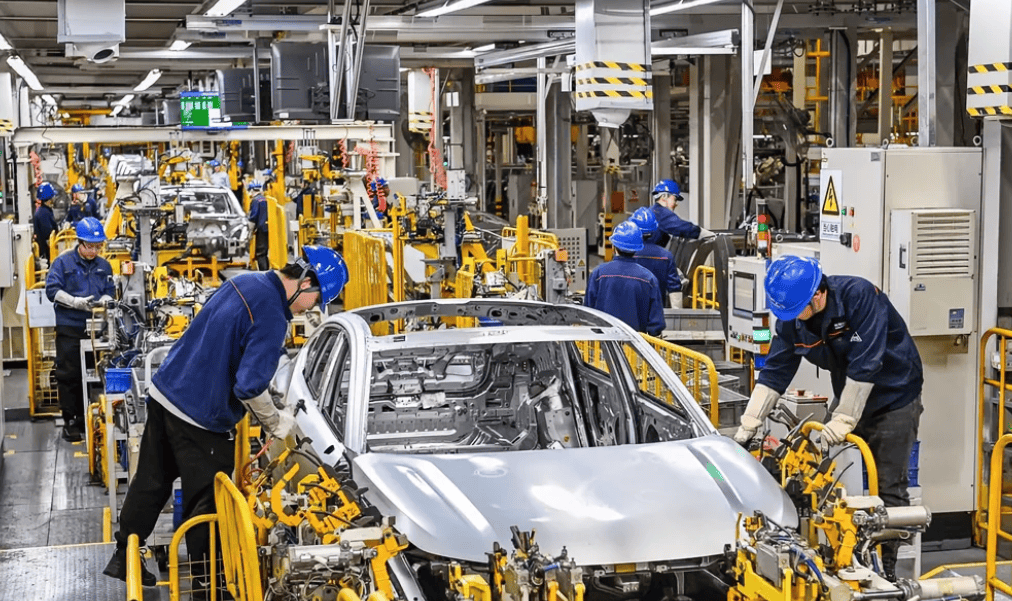
Group 1 - The core driving force for high-quality development in national economic and technological development zones is the cultivation of new quality productive forces, with Anqing Economic and Technological Development Zone focusing on technological innovation and the integration of digital and real economies [1] - Anqing Economic and Technological Development Zone is accelerating the layout of future industries to seize new development opportunities, establishing a dual-wing structure to support the rise of new quality productive forces [1] Group 2 - Huanxin Group is a leader in the integration of digital economy and real economy, promoting the transformation of "Industrial Internet + Intelligent Manufacturing" to enhance its advanced productivity and empower the automotive industry chain [2] - Huanxin Group has developed a full-stack industrial internet system that enables millisecond-level response to production data and collaboration across the entire industry chain, providing solutions in five areas including supply chain collaboration and energy management [2][3] - The company has implemented energy management optimizations that have saved 6 million yuan annually in energy costs for one of its factories by optimizing air compressor operations [3] Group 3 - Anqing Economic and Technological Development Zone is actively cultivating future industry growth poles, with companies like Guoqi Dayou Time-Space Technology showcasing advanced products such as intelligent driving simulation systems that utilize high-precision satellite data [4] - The integration of high-precision satellite positioning and mapping is essential for low-altitude economy and urban governance, providing flexible solutions for issues like shared bicycle parking [5][4] - Guoqi Dayou has established strong partnerships with major universities and research institutions, leading to the formation of several innovation centers and a consistent annual business growth, with projected revenue of over 80 million yuan in 2024 [6]

德固特跨界并购浩鲸科技 政策东风下锻造“新质生产力”新引擎
Zheng Quan Shi Bao Wang· 2025-07-14 04:52
Group 1 - The core viewpoint of the news is that Qingdao Degute Co., Ltd. is making a significant acquisition of Haowei Cloud Computing Technology Co., Ltd. to enhance its capabilities in digital technology and accelerate its transition to new quality productivity [1][2] - The acquisition aligns with national policies promoting the development of new quality productivity and encourages listed companies to pursue mergers and acquisitions for transformation and upgrading [2][4] - The merger is seen as a strategic move to integrate high-end manufacturing with digital technology, creating a powerful synergy that enhances both companies' competitive advantages [3][4] Group 2 - Degute is recognized as a "small giant" in the ultra-high temperature heat exchange sector, with strong global manufacturing capabilities and significant technological barriers [3] - Haowei Technology provides digital transformation solutions based on cloud computing, big data, and artificial intelligence, serving various sectors including telecommunications and government [3] - The collaboration aims to create an integrated solution that combines Degute's high-end energy-saving equipment with Haowei's digital technologies, potentially leading to a new paradigm of "Chinese intelligence + Chinese solutions" in global markets [4]
贵州推动传统产业转型升级(奋勇争先,决战决胜“十四五”)
Ren Min Ri Bao· 2025-07-11 22:21
Group 1: AI in Aluminum Production - The "AI Aluminum Master" developed by Guizhou Zunyi Aluminum Co., in collaboration with Huawei Cloud, optimizes aluminum electrolysis parameters, reducing energy consumption and operational variability [1] - The implementation of this AI model can save approximately 70 million kWh of electricity annually, translating to a cost reduction of about 40 million yuan [1] Group 2: Resource Utilization and Industry Chain Extension - Guizhou is focusing on deep processing of resources, with over 100 projects under construction, totaling more than 120 billion yuan in investment [2] - The province is enhancing the production of high-value products in the phosphate and aluminum industries, including high-strength aluminum alloys and lightweight materials for automobiles [2] Group 3: Digital Transformation in Manufacturing - Guizhou Tire Co., Ltd. has implemented intelligent technologies, resulting in a 57% reduction in quality defects and a 68% increase in production efficiency [3] - The province has approved over 60 digital transformation pilot projects, with more than 30,000 companies adopting cloud technologies, achieving a 60.1% integration level of information and industrialization [3] Group 4: Industrial Growth and Policy Support - Guizhou aims to enhance its industrial sector by focusing on both traditional and emerging industries, with a target for resource deep processing industry output to reach 330 billion yuan [3] - The provincial leadership emphasizes the importance of innovation and digital empowerment to rejuvenate traditional industries and build a modern industrial system unique to Guizhou [3]
完美世界入选“2025高品质消费品牌TOP100”榜单 并获“年度十大消费科技创新品牌”奖
Zhong Guo Jing Ji Wang· 2025-07-11 07:25
Core Viewpoint - Perfect World has been recognized as a leading brand in high-quality consumer technology, reflecting its significant role in the digital cultural sector and its alignment with national development strategies [1][4]. Group 1: Company Achievements - Perfect World was included in the "2025 High-Quality Consumer Brand TOP 100" list and awarded the "Top Ten Consumer Technology Innovation Brand" title, highlighting its leadership in high-quality interest consumption [1]. - The company has been recognized multiple times as one of the top 30 cultural enterprises in China and has received various accolades, including being named a key cultural export enterprise and a national cultural and technology integration demonstration base [1]. Group 2: Digital Content and Gaming - Perfect World focuses on three main sectors: film, gaming, and esports, and has a self-developed game rate of 95%, exploring cutting-edge technologies like AI [2]. - The game "Zhu Xian World" integrates traditional Chinese elements and has launched a new season with updated content, while the RPG game "Yihuan" is set to cover multiple platforms globally [2]. - The game "Persona: Nightfall" has achieved top rankings in app stores across 25 countries, showcasing the company's successful international expansion [2]. Group 3: Cultural and Tourism Integration - Perfect World is actively promoting the integration of digital culture with non-material cultural heritage and tourism, enhancing the quality of development through digital technology [3]. - The film "Chasing the Light" generated approximately 1.8 billion yuan in tourism revenue for Huizhou, while the micro-drama "Big New Year" highlighted local cultural attractions [4]. - The 2024 Shanghai Major esports event attracted nearly 90,000 attendees and generated 370 million yuan in surrounding consumption, demonstrating the economic impact of esports on local development [4]. Group 4: Future Directions - The company aims to continue leveraging digital technology to enhance content quality and create more high-quality digital cultural products for a global audience [5].

政策、市场、技术多维共振 我国快递业务量较去年提前35天破千亿件
Zheng Quan Ri Bao· 2025-07-10 16:13
Core Insights - The express delivery industry in China has surpassed 100 billion packages as of July 9, 2023, achieving this milestone 35 days earlier than in 2024, indicating strong economic resilience and vitality [1] - The growth in express delivery volume is driven by the expansion of the consumer market, increasing e-commerce penetration, and the "scale economy" effect in the logistics sector [1][2] - The industry is experiencing a technological transformation with the integration of 5G, IoT, and AI, which enhances operational efficiency and supports green development initiatives [2] Group 1 - The express delivery sector is a key driver for consumption upgrades and economic growth in China, reflecting the robust development of the economy [1] - The rapid growth in express delivery volume is attributed to three main factors: the rise of new e-commerce formats (such as live-streaming and instant retail), activation of lower-tier markets, and technological advancements [1][2] - The first package to reach the 100 billion mark was a home air conditioner sent from Zhongshan, Guangdong to Changzhou, Jiangsu, showcasing the impact of the "old-for-new" policy on both the consumer market and the express delivery industry [2] Group 2 - The express delivery industry is adopting a "renewal + recycling" closed-loop logistics management system, covering the entire supply chain from manufacturing to recycling [3] - There is a noticeable acceleration in express delivery growth in central and western regions of China, with significant consumption potential remaining [3] - The industry is moving towards higher automation levels, with the use of drones and unmanned vehicles in some areas, while also improving service quality and stabilizing prices amid regulatory support for high-quality development [3]