中国创新药出海

Search documents
摩根士丹利:中国创新药“出海”大时代拉开帷幕
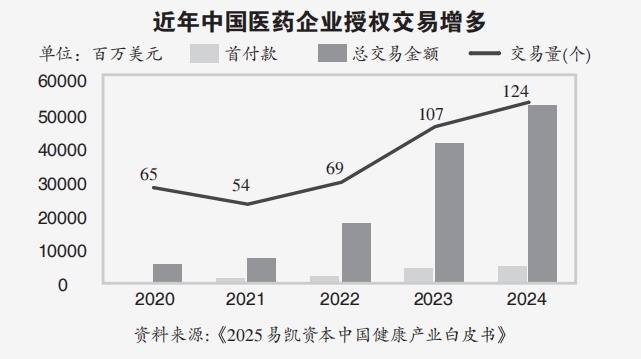
Zheng Quan Shi Bao· 2025-08-25 09:07
Core Insights - The international investment community is increasingly focused on Chinese biotech companies, driven by innovation, cost advantages, and supportive policies [1][4] - Morgan Stanley has played a significant role in facilitating major IPOs and refinancing projects in the biotech sector, highlighting the growing interest and investment in this area [1][3] Group 1: IPO and Market Performance - Hong Kong has become the world's second-largest biotech financing center, with 12 healthcare companies successfully listed in the first half of 2025, raising a total of $2.5 billion [2] - Among these, 8 biotech companies raised a total of $890 million through the Hong Kong Stock Exchange's Chapter 18A, designed to attract innovative biotech firms [2] - The average first-day gain for these newly listed companies was 23.1%, indicating strong market performance and investor interest [2] Group 2: Refinancing Activities - Morgan Stanley has assisted Chinese issuers in raising over $5 billion by the end of July, with notable projects including WuXi AppTec's $980 million share placement, the largest in the Hong Kong medical sector in four years [3] - The refinancing activities reflect a robust demand for biotech stocks, with the issuance scale for Innovent Biologics being increased by 10% due to market demand [3] Group 3: Global Expansion of Chinese Biotech - Chinese biotech companies are increasingly pursuing international clinical registrations and market entries, with a notable rise in overseas clinical trial registrations [4][5] - The gap in innovation capabilities between Chinese and U.S. biotech firms has narrowed significantly, with research indicating a reduction from 10 years to 3.7 years [5] - The cost advantages in clinical trials, particularly in Phase III trials, allow Chinese companies to maintain high investment returns [5] Group 4: Strategic Collaborations and Licensing - Chinese biotech firms are forming strategic partnerships with international giants, exemplified by the $12.5 billion deal between Hengrui Medicine and GlaxoSmithKline [6] - The licensing-out model is becoming more prevalent, with significant transactions such as the $1.25 billion upfront payment for a PD-1/VEGF bispecific antibody deal [6] Group 5: Future Outlook and Challenges - The Chinese biotech sector is expected to continue its growth trajectory, with a focus on innovative technologies such as mRNA, ADC, and gene editing [7] - However, challenges remain, including complex international regulations, intellectual property issues, and cultural differences in global operations [8] - Recommendations for overcoming these challenges include building international talent teams, enhancing communication with regulatory bodies, and optimizing government support for innovation [8]


吸引力显著增强!摩根士丹利:中国创新药“出海”大时代拉开帷幕
券商中国· 2025-08-25 04:00
Core Insights - The article highlights the significant transformation occurring in China's biotechnology sector, driven by international investor interest and the competitive advantages of Chinese biotech companies [2][5]. Group 1: Investment Trends - Morgan Stanley has sponsored notable IPOs in the Hong Kong market, including projects from companies like Heng Rui Medicine and Ying En Biology, and has facilitated multiple refinancing projects totaling billions [1][3]. - The Hong Kong Stock Exchange has emerged as the world's second-largest biotechnology financing center, with 12 healthcare companies raising a total of $2.5 billion in the first half of 2025 [3]. - New listings have shown strong market performance, with an average first-day increase of 23.1% for the 12 healthcare companies [3]. Group 2: Financing Activities - Morgan Stanley has assisted Chinese issuers in raising over $5 billion in financing by the end of July, with notable projects including WuXi AppTec's $980 million share placement [4]. - The financing activities reflect a growing demand for biotech stocks, with significant oversubscription and reduced discount rates for recent offerings [4]. Group 3: Global Expansion of Chinese Biotech - Chinese biotech companies are increasingly pursuing international clinical registrations and market entries, with a notable rise in "License-out" agreements [5][6]. - The gap in innovation capabilities between Chinese and U.S. biotech firms has narrowed, with Chinese companies demonstrating significant advancements in drug development efficiency and cost [5][6]. - The total value of transactions related to antibody-drug conjugates (ADCs) has reached approximately $44 billion, indicating robust international collaboration [6]. Group 4: Strategic Collaborations - Chinese biotech firms are forming strategic partnerships with international giants, exemplified by Heng Rui Medicine's $12.5 billion deal with GlaxoSmithKline [6][7]. - The collaboration models are evolving from simple licensing to joint development and new company formations, showcasing increased confidence in Chinese biotech capabilities [6][7]. Group 5: Future Outlook and Challenges - The article emphasizes the need for Chinese biotech companies to overcome regulatory complexities and market entry barriers to enhance their global presence [8][9]. - Recommendations include building international talent teams, improving communication with regulatory bodies, and optimizing government support for innovation [9].



下一个BD大药
投资界· 2025-08-18 07:57
Core Viewpoint - The article discusses the rising trend of business development (BD) in the Chinese innovative pharmaceutical sector, highlighting significant transactions and the evolving landscape of BD strategies among companies and investors [5][11]. BD Trends - Many fund teams are researching the next BD trends and adjusting their investments accordingly, with a notable increase in BD transaction amounts in China, exceeding $48.4 billion in the first half of 2025, including over $2 billion in upfront payments [5][6]. - The impact of BD news on companies' short-term strategies is significant, especially in a resource-constrained environment where pipeline prioritization is critical [5][6]. Major BD Events - Significant transactions this year include a $60.5 billion collaboration between 3SBio and Pfizer, setting a record for domestic dual antibodies, and a $53.3 billion deal between CSPC and AstraZeneca [8][9]. - The trend is shifting towards "packaged" BD deals, which help build trust between companies, as MNCs remain cautious about the long-term delivery capabilities of Chinese biotech firms [9][10]. Changes in Perception of Going Global - The perception of Chinese innovative drugs going global has evolved, with a shift from high barriers to entry to recognizing numerous opportunities as MNCs actively seek partnerships [12][13]. - The focus has shifted to products that can be standardized and have a proven track record in China, indicating that BD opportunities are increasingly competitive [12][13]. High-Value BD Opportunities - The PD-1/VEGF dual antibody market is highlighted as a high-value area, with multiple Chinese biotech firms entering clinical stages and generating significant BD events [13][14]. - The TCE (T-cell engagers) sector is also emerging as a promising area for BD, with substantial transaction amounts already recorded [15]. Future Considerations - The BD landscape is expected to evolve, with uncertainties about the long-term sustainability of current successes and the potential impact of future clinical data on the reputation of Chinese biotech [17][18]. - Concerns exist regarding the sustainability of companies focusing solely on BD, as excessive reliance on selling core pipelines may hinder future growth and exit strategies [18][19].

医药行业周报:礼来口服减肥药疗效低于预期,关注中国创新减肥药研发和出海进展-20250811
Shanghai Aijian Securities· 2025-08-11 08:02
Investment Rating - The report maintains a "Strong Outperform" rating for the pharmaceutical sector, indicating a positive outlook compared to the broader market indices [2][4]. Core Insights - The pharmaceutical sector continues to adjust and has underperformed the CSI 300 index, with a weekly decline of 0.84% compared to the index's increase of 1.23% [2]. - The report highlights the recent performance of various sectors, noting that the pharmaceutical sector ranks last among 31 sectors [2]. - The report emphasizes the potential of the brain-computer interface (BCI) industry, supported by recent government policies aimed at fostering innovation and development [2]. - The efficacy of Eli Lilly's oral weight loss drug, Orforglipron, was below market expectations, which opens opportunities for Chinese innovative weight loss drugs in the global market [2]. Summary by Sections Market Performance - The SW Pharmaceutical Index decreased by 0.84% this week, ranking 31 out of 31 sectors, while the CSI 300 index rose by 1.23% [2]. - The report notes that sectors such as defense, non-ferrous metals, and machinery outperformed the pharmaceutical sector [2]. Brain-Computer Interface (BCI) Development - A joint policy from seven government departments aims to promote the BCI industry, targeting breakthroughs in key technologies by 2027 and establishing a competitive industry ecosystem by 2030 [2]. - Companies actively involved in BCI technology development, such as Ruimaite and Chengyitong, are highlighted as potential investment opportunities [2]. Weight Loss Drug Market - Eli Lilly's Orforglipron showed a weight loss of 12.4% after 72 weeks, which is significantly lower than the 17.4% weight loss from a competitor's product [2]. - The report suggests that this underperformance may provide a competitive edge for Chinese companies developing similar drugs, with several already in late-stage clinical trials [2]. Investment Strategy - The report recommends focusing on core sectors with potential for business development (BD) and international expansion, particularly in ADC and PD-1 dual antibodies [2]. - It suggests monitoring high-growth companies in the CXO sector and medical devices, as well as those involved in BCI and AI in healthcare [2].
【医药板块聚光灯】特朗普药价政策扰动有限,中国创新药出海韧性凸显
Quan Jing Wang· 2025-08-05 03:28
Group 1 - Trump's recent ultimatum to 17 global pharmaceutical companies demands significant reductions in drug prices in the U.S. within 60 days, causing market volatility [1] - The policy aims to implement a "most favored nation" mechanism, requiring European and other countries to increase drug payments while the U.S. lowers its payments, potentially stabilizing total revenue for pharmaceutical companies and encouraging them to enhance R&D efficiency [1] - The true target of Trump's policy is not the pharmaceutical companies themselves, but the insurance and pharmacy benefit management (PBM) sectors, aiming to eliminate intermediaries to reduce drug prices at the consumer level [1] Group 2 - Current domestic companies primarily utilize the out-licensing (BD) model for international expansion, which is relatively insulated from U.S. drug price policy changes [2] - Even with potential structural adjustments in U.S. drug pricing, the long-term trend of Chinese innovative drugs going global remains unchanged [2] - Investors are advised to seize short-term pullback opportunities for strategic investments in innovative pharmaceuticals, focusing on companies with differentiated innovation capabilities and established international experience [2]
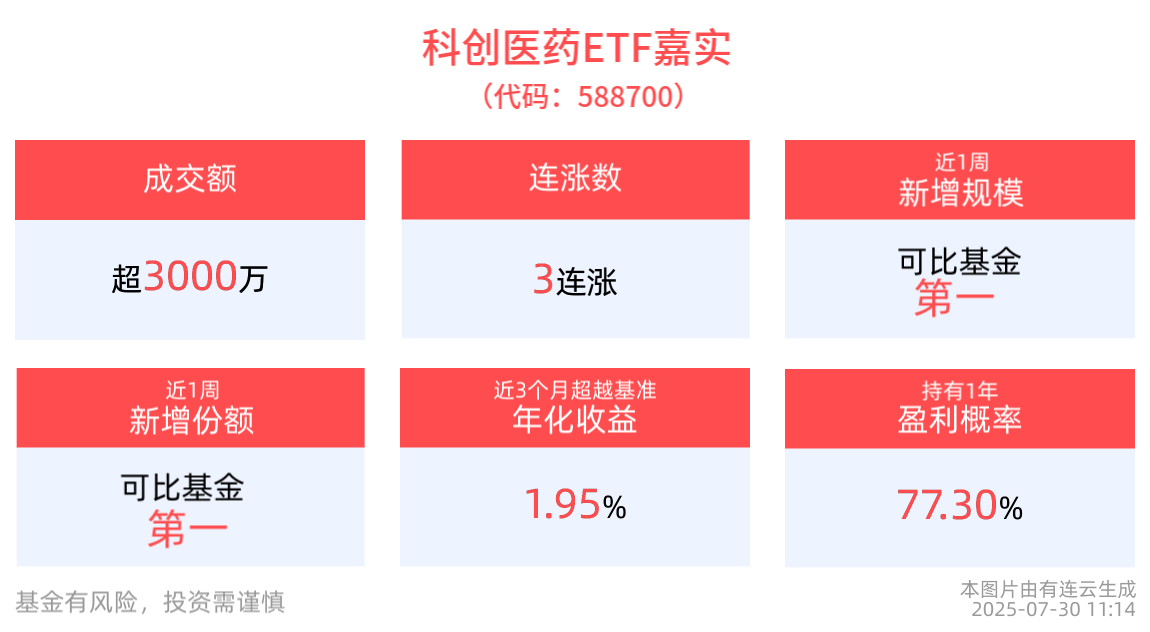
创新药板块热度不减,科创医药ETF嘉实(588700)冲击3连涨,成分股上海谊众盘中20cm涨停
Xin Lang Cai Jing· 2025-07-30 03:43
Group 1: ETF Performance - The liquidity of the Kexin Pharmaceutical ETF managed by Jiashi showed a turnover rate of 15.83%, with a trading volume of 35.2842 million yuan, indicating active market participation [3] - Over the past week, the Kexin Pharmaceutical ETF experienced a scale increase of 23.7936 million yuan, ranking first among comparable funds [3] - The ETF's net value increased by 59.34% over the past year, placing it in the top 10.34% of index equity funds [3] Group 2: Stock Performance - The top ten weighted stocks in the Shanghai Stock Exchange Science and Technology Innovation Board Biopharmaceutical Index account for 50.3% of the index, with leading stocks including United Imaging Healthcare and BeiGene [5] - Notable stock performances include United Imaging Healthcare with a rise of 1.61% and BeiGene with a rise of 0.50% [5] Group 3: Policy and Market Trends - The National Healthcare Security Administration held a meeting to discuss policies supporting innovative drug development, emphasizing the use of healthcare data resources to support "true innovation" in drug development [6] - The focus is on encouraging pharmaceutical companies to expand the breadth and depth of innovation while avoiding excessive competition within the industry [6] Group 4: Market Outlook - Aijian Securities maintains a bullish outlook on the innovative drug sector, predicting a continued bull market in pharmaceutical technology for the year, with a focus on key areas such as ADC and dual antibodies [6] - Investors without stock accounts can access opportunities in the biopharmaceutical sector through the Kexin Pharmaceutical ETF Jiashi linked fund [7]

中国创新药:出海黄金时代,游到海水变蓝
2025-07-30 02:32
Summary of Key Points from the Conference Call Industry Overview - The Chinese innovative pharmaceutical industry is experiencing a significant enhancement in strength, with its share of global first-in-class drugs increasing to 19% [7] - Multinational corporations (MNCs) are facing a severe patent cliff, with major companies like Merck, AbbVie, and BMS having over 60%, 58%, and 69% of their 2024 revenues coming from drugs facing patent expiration within the next five years [8][9] - MNCs are actively seeking business development (BD) transactions to address these challenges, with strong cash reserves available for such activities [10] Business Development Trends - The trend of Chinese innovative drugs going global is robust, driven by the strengthening capabilities of Chinese companies and the impending patent cliffs faced by MNCs [2] - MNCs are expected to engage in more BD transactions, particularly in the second half of 2025 and into 2026, as they seek to replenish their pipelines [2] Oncology Sector Insights - The oncology field is shifting from PD-1 combined with chemotherapy to next-generation immuno-oncology (IO) and antibody-drug conjugates (ADC) [3] - Potential MNC buyers in this space include AstraZeneca, Pfizer, and Merck, all of which are looking to enhance their portfolios with next-generation IO and ADC assets [3] Metabolic Disease Developments - The metabolic field is evolving from merely focusing on weight loss to comprehensive metabolic management, including fat reduction and muscle preservation [4][5] - Companies like Novo Nordisk and AstraZeneca are exploring oral medications and multi-target approaches in this area [4] Immune and Inflammatory Disease Innovations - New directions in the immune and inflammation sector include novel targets and engineering innovations, with significant investments from companies like AbbVie and Sanofi [6] - Emerging targets such as TL1a are attracting substantial investments, indicating a strong interest in this area [20] Market Position of Chinese Innovative Drugs - Chinese innovative drug companies have made significant strides in global markets, with improved clinical data quality and increased academic recognition [7] - The presence of Chinese companies in the oncology sector is growing, with several projects in advanced stages of development [14] MNC Strategies for BD Transactions - MNCs are focusing on four main strategies for BD transactions: consolidating core areas, entering new fields, exploring opportunities, and investigating new technologies [11] - The willingness of MNCs to invest in promising assets at the preclinical stage is evident, particularly in high-potential areas like TL1a [20] ADC and TCE Technology Developments - The ADC field is characterized by a tiered approach, with MNCs diversifying their portfolios across various targets [15] - T-cell engagers (TCE) are being developed for blood cancers and autoimmune diseases, with ongoing clinical trials showing promising results [16] Conclusion - The ongoing trends in the Chinese pharmaceutical industry, coupled with the challenges faced by MNCs, are creating a fertile ground for increased collaboration and investment opportunities in the global market [29]


一款国产抗癌药,“少卖”570亿元
Chang Sha Wan Bao· 2025-07-17 16:31
Core Insights - The article discusses the phenomenon of "middlemen profiting" in the innovative drug industry, highlighted by the strategic collaboration between BMS and BNT, which involved a $9 billion deal for the drug BNT327, originally licensed from Chinese company Pumice Biotech [1][2] - The rapid increase in valuations and the perceived undervaluation of Chinese biotech firms are emphasized, with examples illustrating how companies like Pumice and Hengrui have faced challenges in capturing the full value of their innovations [1][2][3] Summary by Sections Strategic Collaborations - BMS and BNT's partnership to develop BNT327 is valued at $9 billion, with Pumice Biotech originally licensing the drug for $55 million [1] - Hengrui Pharmaceuticals licensed its asthma drug SHR-1905 to Aiolos Bio for $25 million upfront, which was later sold to GSK for $10 billion, showcasing the significant markup in valuations [2] Market Dynamics - The article highlights the immature valuation system for innovative drug companies in China and their limited international operational capabilities, leading to unfavorable deals [2][3] - The quality of clinical data and the lack of unique assets hinder Chinese companies' bargaining power in the global market [3] Evolution of BD Transactions - The evolution of business development (BD) transactions in China is outlined, with three phases: exploration (pre-2014), development (2015-2019), and explosion (2020-present) [4][5] - The surge in BD transactions is attributed to the establishment of numerous innovative drug companies post-2010 and regulatory changes that encouraged innovation [5][6] License-in and License-out Trends - License-in transactions dominated initially, allowing companies to mitigate risks and shorten development timelines, but led to inflated prices and market bubbles [6][7] - License-out transactions have recently surpassed License-in, indicating a shift in strategy as companies seek immediate cash flow amid financial pressures [8] New Business Models - The emergence of the NewCo model allows companies to retain longer-term control over their product pipelines while attracting investment, marking a shift from traditional licensing agreements [13][14] - The NewCo model has gained traction among various biotech firms, enabling them to better manage their assets and secure funding [13][15] Future Outlook - The article concludes that while "cheap sales" of assets may continue, Chinese biotech firms are increasingly integrating into the global ecosystem, necessitating a focus on maximizing value within the international value chain [15][16]

财经观察:中国创新药“出海”有哪些看点?
Huan Qiu Shi Bao· 2025-07-10 22:53
Core Insights - Chinese biotechnology is experiencing a "DeepSeek moment," with significant outbound business development (BD) transactions in the innovative drug sector, marking a shift from a focus on domestic markets to global engagement [1][3] - The approval of innovative drugs like the dual-target drug Masitide by Innovent Biologics signifies a break in the monopoly of foreign products in the domestic market, showcasing the growing capabilities of Chinese companies in the metabolic disease field [2][3] - The total amount of outbound licensing transactions by Chinese innovative drug companies reached $45.5 billion in the first five months of 2025, surpassing the total for the first half of 2024, indicating a surge in international collaboration [3] Industry Development Stages - The development of Chinese original innovative drugs is categorized into three stages: "me-too" (generic drugs), "fast-follow" (rapidly following drugs), and "first-in-class" (original innovative drugs), with the industry now entering the third stage [5] - The transition from manufacturing generics to original research and development reflects a significant evolution in the capabilities of Chinese pharmaceutical companies [5][12] Market Dynamics - The increasing efficiency of clinical trial approvals in China is attracting foreign companies to explore opportunities in the Chinese market, enhancing the global competitiveness of Chinese drug firms [7][11] - The collaboration between Chinese and multinational pharmaceutical companies is becoming more common, with many foreign firms actively seeking partnerships with Chinese innovators [10][11] Future Prospects - Chinese innovative drug companies are encouraged to discover new drug targets with clinical development value to create impactful new drugs, moving from the current stage of development to a more pioneering role in global pharmaceuticals [12] - The ongoing support from the Chinese government for the biopharmaceutical sector is crucial for fostering innovation and attracting international attention [11][12]
【大涨解读】医药:海外制药巨头豪掷百亿美金收购创新药,国内政策力度也在加强,业绩也有望持续改善
Xuan Gu Bao· 2025-07-10 03:14
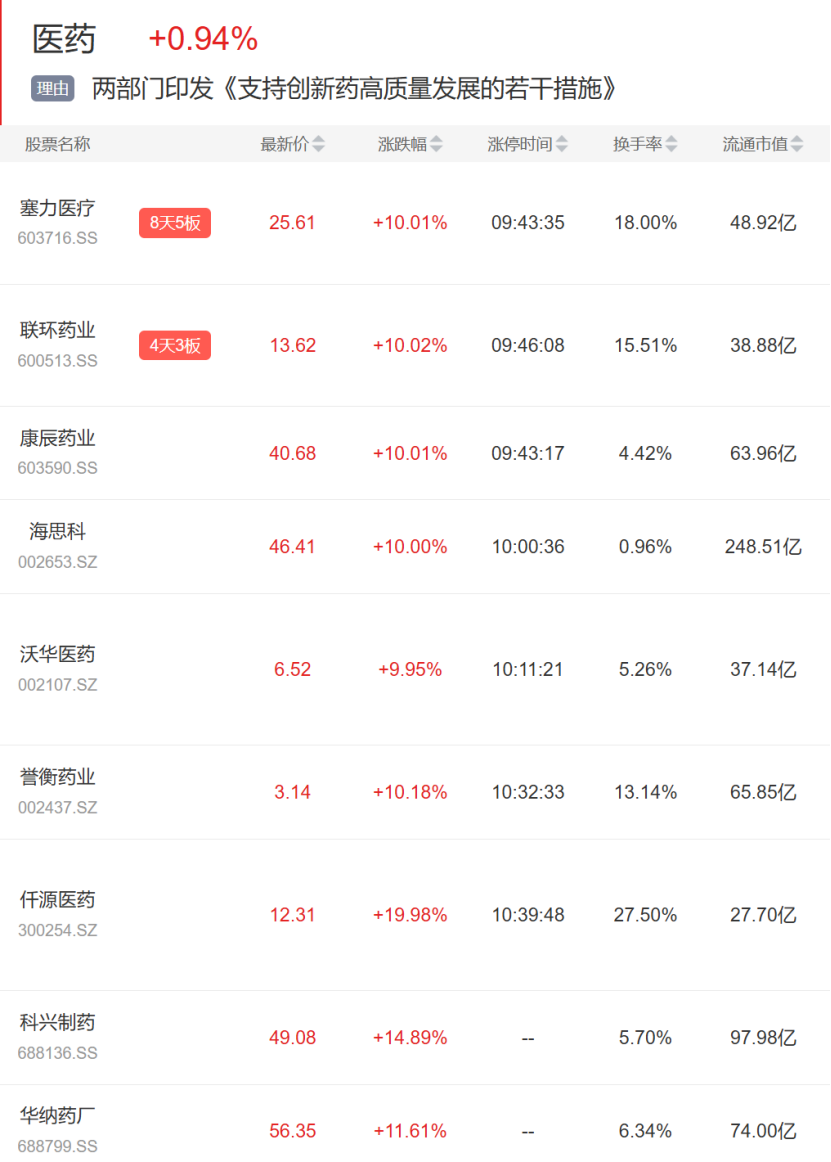
Market Overview - The pharmaceutical sector experienced a significant surge on July 10, with stocks such as Seer Medical, Lianhuan Pharmaceutical, and Kangchen Pharmaceutical hitting the daily limit [1] - Seer Medical recorded a price of 25.61 with a rise of 10.01%, Lianhuan Pharmaceutical reached 13.62 with a 10.02% increase, and Kangchen Pharmaceutical was at 40.68 with a 10.01% gain [2] Key Events - Merck, a major U.S. pharmaceutical company, announced its intention to acquire UK-based Verona Pharma for approximately $10 billion to enhance its product line for chronic obstructive pulmonary disease (COPD) [3] - Former President Trump threatened to impose a 200% tariff on pharmaceuticals, although this may not take effect immediately, allowing pharmaceutical companies a one-year buffer [3] - The National Healthcare Security Administration and the National Health Commission released measures to support the high-quality development of innovative drugs, including 16 initiatives to enhance support for R&D and encourage clinical application [3] Institutional Insights - The trend of Chinese innovative drugs entering international markets is expected to grow over the next 3-5 years, driven by improved innovation capabilities and profitability of Chinese pharmaceutical companies, which will enhance industry valuation levels [4] - The upstream raw material drug sector has seen a valuation adjustment, now positioned at relatively low levels, with the commercialization of GLP-1 products expected to drive growth in upstream peptide raw materials [4] - As the mid-year reporting period approaches, performance metrics will become a focal point for the market, with expectations for continued improvement in innovative drugs and their supply chains [4]