
企业改革

Search documents
宗馥莉:华妃以上,甄嬛未满
商业洞察· 2025-10-12 09:23
Core Viewpoint - The article discusses the challenges faced by Zong Fuli, the successor of Wahaha, in navigating the complexities of leadership and reform within the company, highlighting her aggressive strategies and the resulting conflicts with various stakeholders [4][5][12]. Group 1: Leadership Challenges - Zong Fuli's leadership style contrasts sharply with her father Zong Qinghou's approach, leading to significant internal conflicts and a lack of support from long-standing employees and partners [5][11]. - The company is currently facing three major crises: brand inheritance issues, family disputes, and survival challenges in a competitive market [9][11]. Group 2: Reform Strategies - Zong Fuli has attempted to consolidate control by transferring all Wahaha trademarks to her holding company, Hongsheng, but faced resistance from state-owned assets [13][30]. - Her aggressive reforms have included dismissing long-term employees and cutting ties with established distributors, which has led to further unrest within the company [18][19][31]. Group 3: Market Position and Competition - Wahaha has struggled to keep up with market trends, missing opportunities in the sugar-free tea and sparkling water segments, which has resulted in a reliance on products developed during Zong Qinghou's tenure [11][12]. - Despite launching new products, Zong Fuli's marketing efforts have not translated into significant sales growth, raising questions about her effectiveness as a leader [11][12]. Group 4: Personal and Family Dynamics - The ongoing family disputes over inheritance and control of the company have created a tense atmosphere, complicating Zong Fuli's position as the leader [10][54]. - Zong Fuli's attempts to distance herself from her father's legacy while simultaneously leveraging it for her own gain have led to a precarious balance of power within the family [41][54]. Group 5: Future Outlook - The article suggests that Zong Fuli's aggressive tactics may ultimately backfire, as they risk alienating key stakeholders and undermining her legitimacy as a leader [52][56]. - The potential for legal and financial repercussions from her actions raises concerns about her long-term viability in the role [56][59].


宗馥莉放下娃哈哈,“娃小宗”能撑起一片天吗?
Sou Hu Cai Jing· 2025-10-11 23:46
Core Viewpoint - Wahaha is undergoing significant internal changes, including the introduction of a new brand "Wah Xiaozong" starting from the 2026 sales year, coinciding with the resignation of Zong Fuli from her positions within the company. This transformation is influenced by trademark compliance issues, resistance to reform, and family conflicts [1][3]. Group 1: Internal Changes and Leadership - Zong Fuli's resignation is closely linked to trademark usage non-compliance, as the company's ownership structure requires unanimous consent from all shareholders for trademark use. Her attempt to transfer Wahaha resources to Hongsheng Group without paying trademark fees led to a halt in 387 core trademark transfer applications [1][3]. - During her tenure, Zong Fuli implemented reforms focused on standardization, process optimization, and digitalization, contrasting sharply with the management style of her predecessor, Zong Qinghou. These changes included restructuring the organization and adjusting the dealer system, which caused dissatisfaction among Zong Qinghou's former subordinates [3][4]. Group 2: Family Conflicts and Legal Issues - Zong Fuli is embroiled in family disputes regarding the ownership of a $2.1 billion offshore trust, with the Hong Kong High Court freezing the asset and rejecting her appeal. Additionally, there are ongoing claims from non-marital family members for a share of Wahaha Group's 29.4% equity, complicating the situation further [3][4]. - The employee stockholding committee is also facing legal challenges due to lawsuits from former employees, which have delayed the completion of necessary business changes [3]. Group 3: Financial Performance and Market Position - Despite the leadership changes, Wahaha's financial performance remains strong, with a 53% year-on-year increase in net sales revenue for 2024, marking the highest growth rate in history. The first quarter of 2025 also saw sales growth maintained at over 30%, with the company retaining its market share leadership in the dairy beverage and instant porridge sectors [3][4]. Group 4: New Brand Strategy and Challenges - The new brand "Wah Xiaozong" will grant Zong Fuli full decision-making authority, potentially enhancing decision-making efficiency. The brand aims to penetrate the rapidly growing sugar-free tea market, which has significant growth potential in China compared to Japan [4]. - However, the transition to "Wah Xiaozong" presents challenges, including the need to balance legal compliance, market acceptance, and emotional connection with consumers. The success of the new brand will depend on Zong Fuli's ability to navigate these complexities while maintaining Wahaha's traditional values [5].
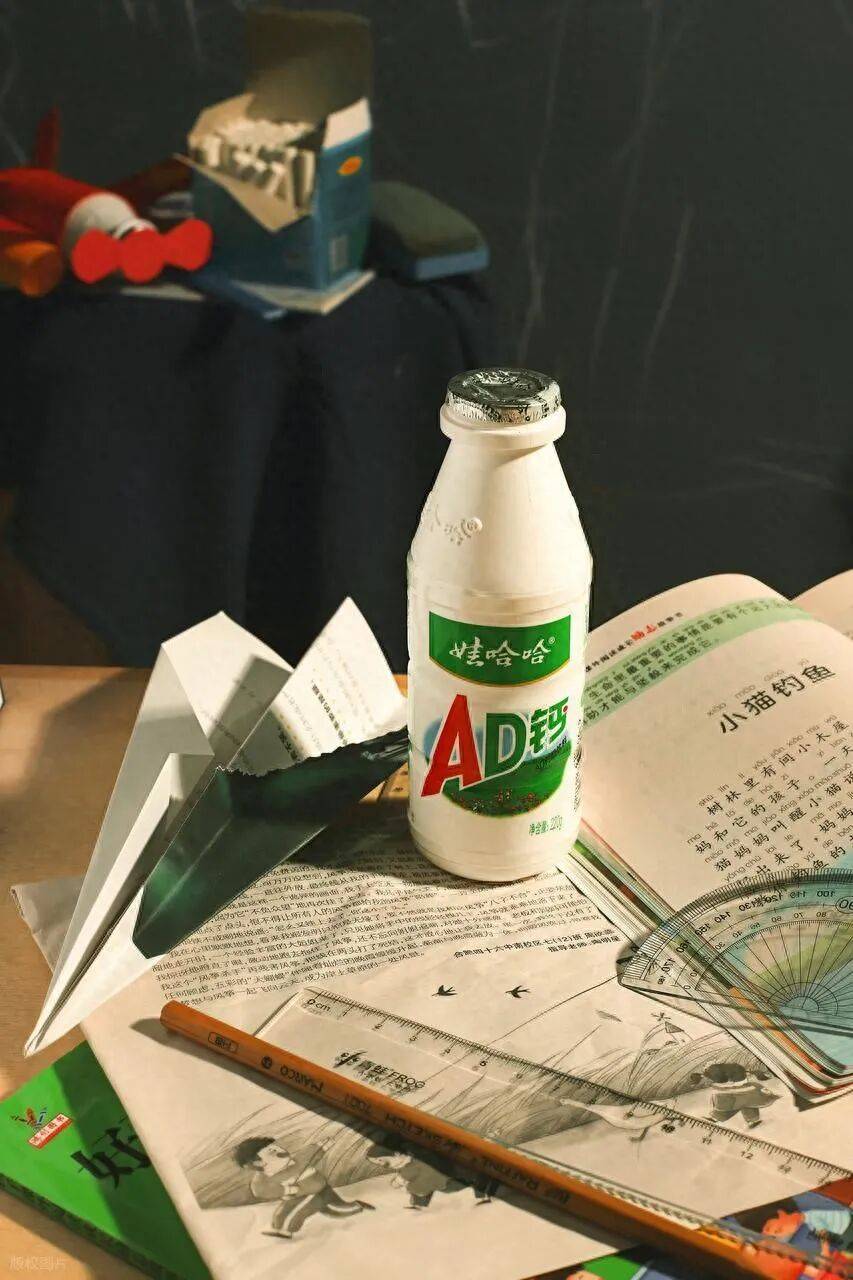
大女主高开低走,宗馥莉挂印辞职,娃哈哈自此“失宗”
3 6 Ke· 2025-10-11 07:18
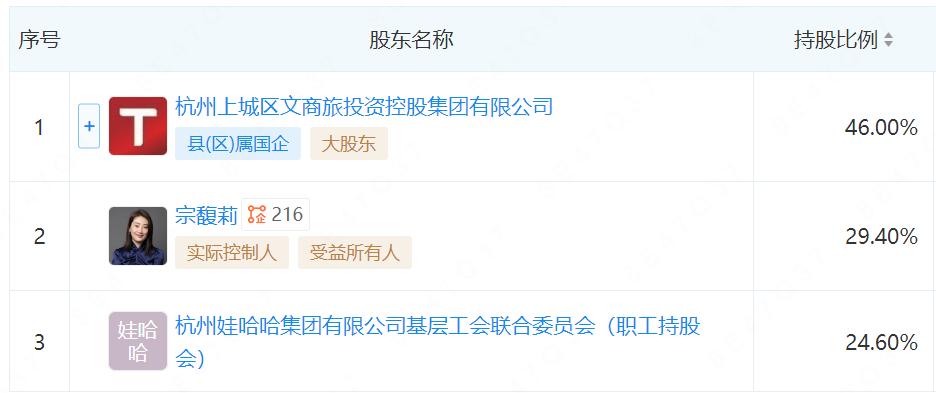
Core Points - The resignation of Zong Fuli from Wahaha Group is seen as a significant development in the ongoing power struggle within the company, with her uncle Zong Ze commenting that she has mishandled the brand [1][3] - Zong Fuli's resignation is interpreted as a strategic retreat rather than a tactical maneuver, as she has been consolidating power within the company over the past year [1][4] - The impact of her departure is expected to be profound, leading to a power vacuum and potential disruption of the reforms she initiated [4][5] Company Overview - Zong Fuli's resignation comes as she shifts her focus to her own brand "Wah Xiaozong," having already begun transferring resources from Wahaha to her wholly-owned Hongsheng Group [2][3] - Wahaha experienced a 36.7% revenue increase in 2024 due to a nostalgia wave following the death of its founder, but is now facing management instability [3][4] - The current ownership structure remains unchanged, with Zong Fuli holding 29.4% of the shares, allowing her to still influence company operations [5][6] Management Changes - Zong Fuli's departure has created a power vacuum, and the reforms she implemented may not continue without her leadership [4][5] - Key executives who supported her, such as Ye Yaqiong and Hong Chanchan, remain in their positions, which may influence the transition [4][5] - The company will likely undergo prolonged personnel adjustments in the core management team following her resignation [5][7] Brand and Market Implications - The separation of Wahaha and Wah Xiaozong could lead to brand dilution and competition similar to past cases in the beverage industry [6][7] - The immediate priority for Wahaha is to appoint a new leader and clarify its asset and equity structure [7][9] - Zong Fuli's attempt to transfer 387 Wahaha trademarks to her new company was halted by the local government, indicating ongoing disputes over brand ownership [8][9] Future Prospects - Zong Fuli's new venture, "Wah Xiaozong," will depend on her existing supply chain and distribution channels, which she has partially retained from Wahaha [11][12] - Despite her experience, Zong Fuli faces challenges in establishing a successful new brand, as her previous attempts have not yielded positive results [16][21] - The competitive landscape for beverage brands in China remains fierce, and maintaining brand value will be crucial for both Wahaha and Wah Xiaozong [27][28]
宗馥莉辞任娃哈哈董事长
Xi Niu Cai Jing· 2025-10-11 03:12
Group 1 - The resignation of Zong Fuli, the chairperson of Wahaha Group, has attracted significant attention, with her departure confirmed by the company after a brief tenure of approximately 12 months [2] - Zong Fuli implemented aggressive reforms during her leadership, but faced challenges related to trademark compliance and internal family disputes, leading to her decision to resign [2] - Since 2023, Zong Fuli was involved in major decision-making processes at Wahaha, transitioning from vice president to chairperson, and her departure marks a complete cycle of gaining and relinquishing control of the company [2] Group 2 - Zong Fuli remains associated with over 210 enterprises, with around 200 still operational, and she continues to hold a significant stake in Wahaha as the second-largest shareholder [3] - The competitive landscape for Wahaha is intensifying, particularly with rivals like Nongfu Spring and China Resources C'est Bon increasing their market presence [3] - In an interview, Zong Fuli indicated a decline in sales growth for Wahaha in the first half of the year, highlighting the need for the company to maintain its core business while facing fierce competition [3]

宗馥莉,放下了
虎嗅APP· 2025-10-11 00:23
Core Viewpoint - The article discusses the resignation of Zong Fuli from her positions at Wahaha, highlighting the internal and external reforms she attempted during her tenure, the family conflicts affecting her leadership, and the implications for the company's future [5][21]. Group 1: Resignation and Leadership Changes - Zong Fuli resigned from key positions at Wahaha, including Chairman and legal representative, after a brief tenure of just over a year [5]. - Her leadership involved significant organizational reforms, including the adjustment of the dealer system and the dismissal of underperforming dealers [4][5]. - Despite her efforts, Zong Fuli's departure appears to be influenced more by family conflicts and complex shareholding structures than by company performance [8][9]. Group 2: Internal Reforms and Challenges - Zong Fuli initiated reforms focusing on standardization, process optimization, and digitalization within Wahaha, aiming to modernize the company's operations [11][12]. - The reforms included the establishment of new performance standards and financial approval processes, transitioning the company's operations to a digital platform [12]. - However, the rapid implementation of these reforms led to internal resistance and dissatisfaction among dealers, which compounded the challenges she faced [13][14]. Group 3: Family Dynamics and Shareholding Structure - The family dynamics within the Zong family, particularly conflicts over a $2.1 billion offshore trust, significantly impacted Zong Fuli's authority and decision-making [8][9]. - Wahaha's shareholding structure is complex, with the largest shareholder being a state-owned enterprise, which complicates the Zong family's control over the company [8][20]. - Zong Fuli's position was further weakened by ongoing legal disputes regarding share ownership and the influence of other family members [8][19]. Group 4: Market Position and Future Outlook - Despite Zong Fuli's resignation, Wahaha reported a 53% year-on-year increase in beverage sales revenue in 2024, indicating strong market performance [8]. - The company continues to hold the top market share in its traditional segments, suggesting that the underlying business remains robust despite leadership changes [8]. - The future of Wahaha may hinge on how the new leadership navigates the existing challenges and the legacy of Zong Fuli's reforms [21][23].

雀巢洗牌 CEO遭解雇后 曾支持他的董事会主席卸任
2 1 Shi Ji Jing Ji Bao Dao· 2025-09-19 23:18
Core Viewpoint - Nestlé is undergoing a significant leadership transition, with Paul Bulcke stepping down and Pablo Isla taking over as chairman, while Philipp Navratil has been appointed as the new CEO following the dismissal of Laurent Freixe due to a violation of the company's code of conduct [1][2][5]. Leadership Changes - Paul Bulcke announced his early resignation to facilitate a smooth transition for Pablo Isla and Philipp Navratil to advance Nestlé's strategy [1]. - Dick Boer will become the new lead independent director and vice chairman of the board, while Marie-Gabrielle Ineichen-Fleisch will serve as vice chairman [1]. Strategic Focus - Under Laurent Freixe, Nestlé initiated a major reform focusing on three key areas: operational efficiency aiming for an additional cost savings of at least 2.5 billion Swiss francs by the end of 2027, increasing advertising and marketing investments to 9% of sales by 2025, and enhancing capabilities to become a fully interconnected enterprise [2][3]. Market Adjustments - The restructuring includes a significant change in the geographical market organization, with the Greater China Region being merged back into the Asia, Oceania, and Africa region starting in 2025 [3]. - The new leadership team in China is expected to continue the strategic focus on the market, with a commitment to invest resources for growth [4][5]. Performance Metrics - Nestlé's sales in the Greater China Region fell to 2.47 billion Swiss francs in the first half of the year, a decline of 6.4% compared to the previous year [8]. - Overall, Nestlé's revenue decreased by 1.8% to 44.228 billion Swiss francs, with net profit down 10.3% to 5.065 billion Swiss francs [9]. Future Outlook - The new management's commitment to maintaining the existing strategic direction and performance improvement plans is crucial as the company navigates through this transition [7][10].

雀巢洗牌:CEO遭解雇后,曾支持他的董事会主席卸任
2 1 Shi Ji Jing Ji Bao Dao· 2025-09-17 12:08
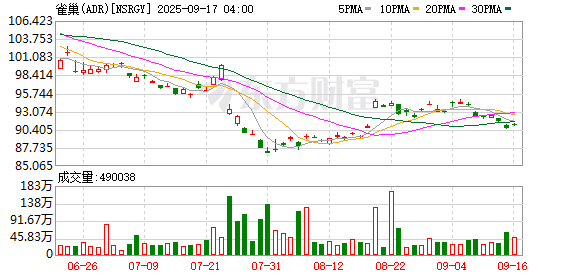
Core Viewpoint - Nestlé is undergoing a significant leadership transition, with Paul Bulcke stepping down and Pablo Isla taking over as Chairman, while Philipp Navratil becomes the new CEO following the dismissal of Laurent Freixe due to a violation of the company's code of conduct [1][3][4]. Leadership Changes - Paul Bulcke announced his resignation to facilitate a smooth transition for the new leadership team [1]. - Pablo Isla will officially assume the role of Chairman on October 1, while Philipp Navratil has already taken over as CEO [1][3]. - Dick Boer will be appointed as the Chief Independent Director and Vice Chairman of the Board, with Marie-Gabrielle Ineichen-Fleisch also becoming a Vice Chairman [1]. Strategic Focus - Under Freixe's leadership, Nestlé initiated a major reform plan focusing on three key areas: operational efficiency, product portfolio enhancement, and strengthening foundational capabilities [5]. - The company aims to save at least 2.5 billion Swiss francs by the end of 2027 and increase advertising and marketing investments to 9% of sales by 2025 [5]. Market Adjustments - The restructuring includes a significant change in the organizational structure of the Greater China region, which will be merged back into the Asia, Oceania, and Africa region starting in 2025 [6]. - The new leadership team is expected to maintain the strategic direction set by Freixe, with a focus on supporting growth in the Chinese market [9]. Performance Metrics - Nestlé's sales in the Greater China region fell to 2.47 billion Swiss francs in the first half of the year, down 6.4% from 2.639 billion Swiss francs in the same period last year [11]. - The overall revenue for Nestlé in the first half of the year was 44.228 billion Swiss francs, a decrease of 1.8%, with net profit declining by 10.3% to 5.065 billion Swiss francs [12].
雀巢洗牌:CEO遭解雇后,曾支持他的董事会主席卸任丨消费一线
2 1 Shi Ji Jing Ji Bao Dao· 2025-09-17 12:07
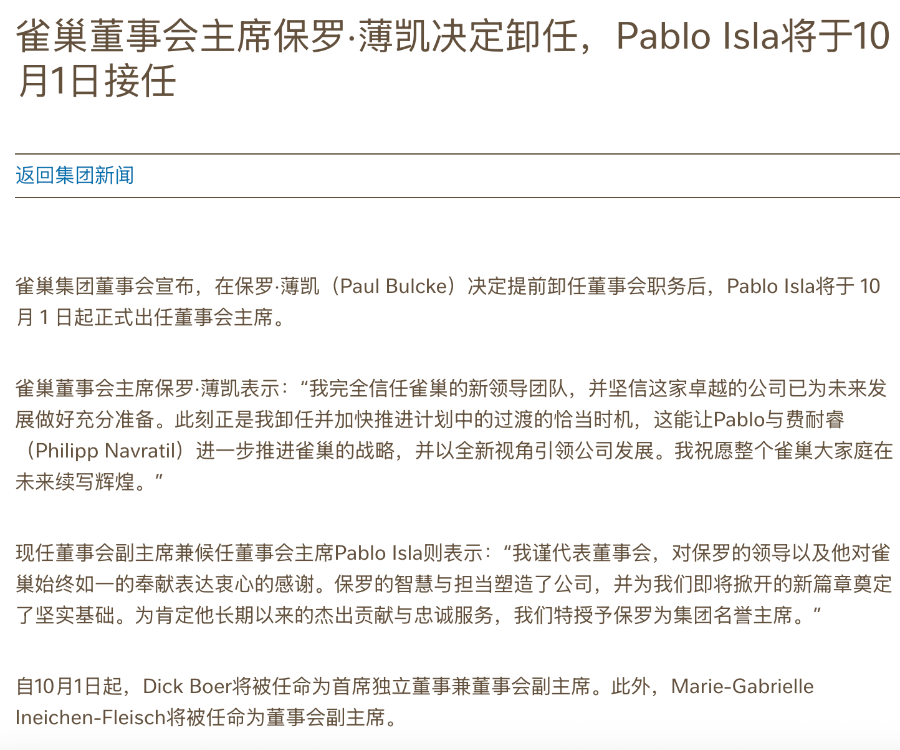
Core Viewpoint - Nestlé is undergoing a significant leadership transition, with Paul Bulcke stepping down and Pablo Isla taking over as Chairman, while Philipp Navratil has been appointed as the new CEO following the dismissal of Laurent Freixe [2][4][5]. Leadership Changes - Paul Bulcke announced his resignation to facilitate a smooth transition for Pablo Isla and Philipp Navratil to advance Nestlé's strategy [2]. - Dick Boer will become the Chief Independent Director and Vice Chairman of the Board, while Marie-Gabrielle Ineichen-Fleisch will serve as Vice Chairman [2]. Reasons for Leadership Transition - Laurent Freixe's dismissal was due to an investigation revealing an undisclosed romantic relationship with a subordinate, violating Nestlé's Code of Business Conduct [4]. Strategic Focus Areas - Under Freixe's leadership, Nestlé initiated a major reform focusing on three key areas: operational efficiency aiming for cost savings of at least 2.5 billion Swiss francs by 2027, increasing advertising and marketing investments to 9% of sales by 2025, and enhancing capabilities to become a fully connected enterprise [5]. Market Adjustments - The restructuring includes a significant focus on the Chinese market, with the Greater China Region being integrated back into the Asia, Oceania, and Africa region starting in 2025 [6][10]. - New leadership appointments in the Greater China Region are being made to support this transition, with Kais Marzouki taking over as CEO [10][12]. Performance Metrics - Nestlé's sales in the Greater China Region decreased to 2.47 billion Swiss francs in the first half of the year, down 6.4% from 2.639 billion Swiss francs in the same period last year [14]. - The overall revenue for Nestlé in the first half of the year was 44.228 billion Swiss francs, a decline of 1.8%, with net profit falling by 10.3% to 5.065 billion Swiss francs [15]. Future Outlook - The effectiveness of the ongoing reforms and the new leadership's ability to maintain strategic direction amidst these changes remains to be seen [9][16].
贵州航天电器股份有限公司第八届 董事会2025年第十次临时会议决议公告
Zhong Guo Zheng Quan Bao - Zhong Zheng Wang· 2025-09-13 03:47
Core Viewpoint - The company has approved an organizational restructuring aimed at enhancing operational efficiency and promoting high-quality development through a more streamlined and effective organizational framework [1][2]. Group 1: Meeting Details - The temporary meeting of the company's eighth board was held on September 12, 2025, with all nine attending directors present [1]. - The meeting was convened in accordance with the Company Law and the company's articles of association [1]. Group 2: Organizational Changes - The restructuring will result in the establishment of various functional departments, including Market Development Center, Technology Center, Comprehensive Management Department, Development Planning Department, Innovation and Industry Department, and others [2]. - The aim of the restructuring is to deepen corporate reform, optimize resource allocation, and improve the company's management and operational efficiency [1][2].

中炬高新上半年业绩下滑,新董事长上任后持续推进改革
Bei Ke Cai Jing· 2025-09-03 03:28
Core Insights - The company has shown significant improvement in its Q2 performance, attributed to the initial success of prior reforms under the new chairman [1] - The new chairman, Li Ruxiong, was elected in July and has extensive experience in the China Resources system [2] Financial Performance - In the first half of 2025, the company reported revenue of approximately 2.132 billion yuan, a year-on-year decrease of 18.58% [3] - The revenue from the seasoning business was 2.098 billion yuan, reflecting a year-on-year decline of 17.92% [3] - The net profit attributable to shareholders was around 257 million yuan, down 26.56% year-on-year [3] Strategic Actions - The company has implemented a proactive supply strategy, focusing on inventory reduction with leading distributors to strategically reshape the market pricing system and restore distributor confidence [4]
