
保护主义

Search documents
德国公布数据:2025年,中国反超美国
Huan Qiu Wang· 2026-02-06 13:44
2025年中国再次成为德国最大贸易伙伴 德国联邦统计局6日发布数据显示,2025年德国对华贸易额达2530亿欧元,较前一年的2463亿欧元增长约2.7%。该机构说,2025年中国再次成为德国最大 贸易伙伴。 数据显示,2025年德国自华进口额为1712亿欧元,对华出口额为818亿欧元。 同期,德国与美国贸易额为2416亿欧元,较前一年下降约4.4%。由于受美国关税政策影响明显,去年德国对美出口额下降9.3%至1469亿欧元,自美国进 口额增长2.9%至947亿欧元。 编辑:施 予 校对:秦璐敏 审核:张晓雅 德国批发和外贸协会当天表示,德国出口持续存在结构性弱点,美国保护主义关税、持续的地缘政治紧张局势以及全球需求疲软是主要挑战。 德国联邦统计局数据显示,2016年至2023年,中国连续八年保持德国最大贸易伙伴地位。2024年,美国是德国最大贸易伙伴。 来源:新华社 从整体看,2025年德国出口总额增长1%至15696亿欧元,进口总额增长4.4%至13669亿欧元,贸易顺差下降15.9%至2028亿欧元。 ...


商务部回应中国诉美国《通胀削减法》世贸争端案:美国应尊重裁决
2 1 Shi Ji Jing Ji Bao Dao· 2026-02-05 10:24
当前,国际经贸秩序受到单边主义和保护主义严重冲击,维护以世贸组织为核心的多边贸易体制是全体 世贸成员的共同责任。我们敦促美方切实尊重世贸组织裁决,尽快纠正违反世贸规则的错误做法,以实 际行动维护以规则为基础的多边贸易秩序。 现行世贸组织规则是包括美国在内的乌拉圭回合参与方共同谈判达成的。美国是谈判参加方,也作为缔 约方承担遵守国际条约义务。美方相关行为和言论是在为自身违反条约义务、滥用补贴的保护主义行为 开脱,试图把自身产业竞争力不足等内部问题归咎于他方,对全球市场搞人为干预和割裂,破坏全球产 供链稳定。 何亚东说:"面对当前不确定性挑战,中方在对外经贸交往中始终坚持互利共赢和开放合作,我们将一 如既往,继续做动荡世界的稳定锚,为世界经济注入更多稳定性与确定性,推动全球经贸合作行稳致 远。" 近日,美国贸易代表办公室就中国诉美国《通胀削减法》案世贸裁决发表声明,在承认败诉的同时,指 责世贸裁决错误,并称该裁决表明了现有世贸规则无法解决"产能过剩"等问题。在2月5日举行的商务部 新闻发布会上,新闻发言人何亚东对此进行了回应。 何亚东表示:"对于中国诉美国《通胀削减法》世贸争端案,我想再次强调,世贸组织专家组已经 ...
商务部召开例行新闻发布会(2026年2月5日)
Shang Wu Bu Wang Zhan· 2026-02-05 09:07
【何亚东】: 【CGTN记者】: 各位记者朋友: 大家下午好,欢迎参加商务部例行新闻发布会。今天我没有需要向大家通报的信息。下面我愿意回答记 者朋友提出的问题。 下面请提问。 【第一财经记者】: 我们注意到,2026年"共享大市场出口中国"首场活动昨天在北京举行,这体现了中国重视进口,推动进 出口平衡发展的积极努力。能否简要介绍一下相关活动,以及中国下一步将采取哪些措施主动扩大进 口? 【何亚东】: 中国一直高度重视扩大进口工作。习近平总书记多次强调,要扩大自各国优质产品和服务的进口。商务 部积极落实党中央、国务院决策部署,推动进口规模持续增长、来源更加多元。2025年,中国进口规模 达18.5万亿元,连续17年成为全球第二大进口市场。中国自130多个国家和地区的进口实现增长,已成 为近80个国家的主要出口目的地。 在当前经济全球化遭遇逆流,单边主义、保护主义抬头的大背景下,举办"出口中国"系列活动,是中方 积极扩大自主开放、推动全球开放合作的主动作为。2026年,我们将组织超百场形式多样的进口促进活 动。在工作中,我们将强化"出口中国"与"购在中国"的联动,搭建更多进口商品促消费场景,让优质进 口产品和服务 ...
欧印正式签下所有协议之母级合作文件!双方联手直接叫板特朗普关税,这波重大联动引全球关注?
Sou Hu Cai Jing· 2026-02-05 02:41
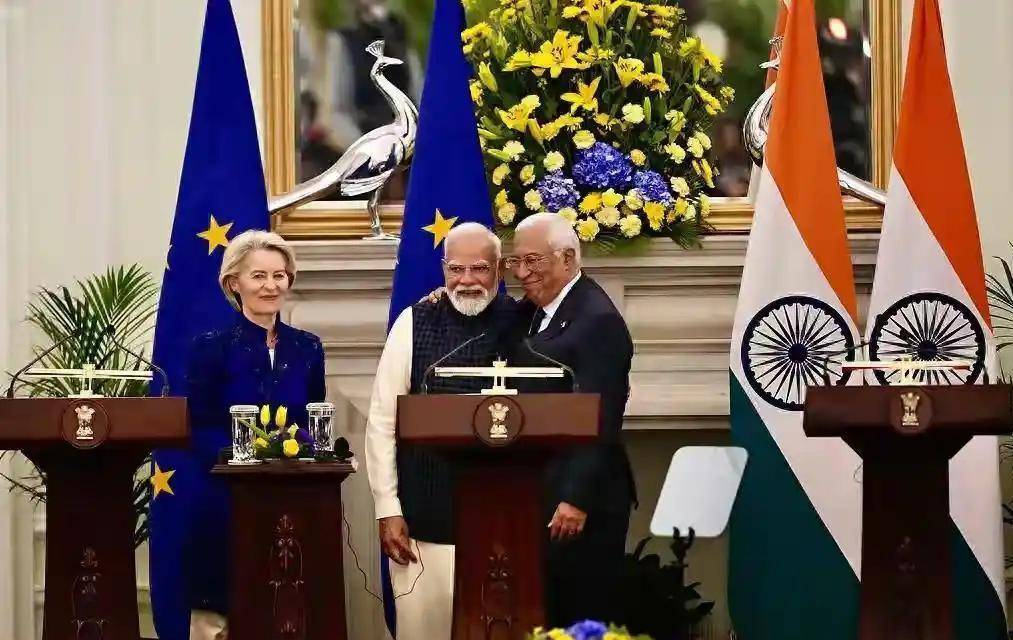
2026年1月27日,印度和欧盟宣布达成被称为"所有协议之母"的自由贸易协定,这场谈了近20年的协议终于落地。欧盟委员会主席冯德莱恩称其为"历史性成 就",印度总理莫迪则强调协议将覆盖全球25%的GDP和三分之一贸易额,惠及20亿人口。协议直接反击了美国特朗普政府的高关税政策——美国对印度商 品加征50%关税后,印度转身与欧盟联手,用全球最大自贸区之一的市场向保护主义"叫板"。 根据协议细则,印度将对欧盟取消或降低96.6%商品的关税,欧盟则对印度99.5%的商品减免关税。最受关注的是汽车领域:印度此前对欧盟汽车征收高达 110%的关税,协议规定5年内降至10%,并给予欧盟每年25万辆汽车的进口配额。这一突破对大众、奔驰等欧洲车企是重大利好,此前欧洲品牌在印度440 万辆年销量的市场中占比不足4%。 同样大幅降税的还有酒类。印度对欧盟葡萄酒的关税从150%先降至75%,最终稳定在20%左右;橄榄油关税5年内从45%降为零。欧盟则向印度的纺织品、 海产品、珠宝等劳动密集型产品全面开放市场,这些产品关税直接归零。欧盟预计,协议生效后每年可节省40亿欧元关税成本,到2032年对印度出口额将翻 番。 印欧自贸谈判始于 ...
欧盟宣布调查一家中国清洁能源企业 中方敦促欧方停止滥用单边经贸工具
Zhong Guo Xin Wen Wang· 2026-02-04 07:56
欧盟宣布调查一家中国清洁能源企业 中方敦促欧方停止滥用单边经贸工具 来源:中国新闻网 编辑:万可义 广告等商务合作,请点击这里 本文为转载内容,授权事宜请联系原著作权人 中新经纬版权所有,未经书面授权,任何单位及个人不得转载、摘编或以其它方式使用。 关注中新经纬微信公众号(微信搜索"中新经纬"或"jwview"),看更多精彩财经资讯。 中新网北京2月4日电 (记者 郭超凯)中国外交部发言人林剑4日主持例行记者会。 有记者提问:欧盟宣布对一家中国清洁能源企业展开调查,原因是担忧该公司从政府补贴中获益,"扭 曲"欧盟市场竞争。外交部对此有何评论? 林剑:你问到的具体情况建议向中方主管部门了解。欧盟频繁动用单边经贸工具,对中国企业采取歧视 性、限制性的措施,发出的是保护主义信号,损害的是欧盟形象,影响的是中国企业赴欧投资的信心。 我们敦促欧方恪守市场开放承诺和公平竞争原则,停止滥用单边经贸工具,为各国企业提供公平、透 明、非歧视的营商环境。中方坚定维护中国企业的正当合法权益。(完) ...
不能任由世界滑向“无规则”深渊
Ren Min Ri Bao· 2026-02-02 03:33
Group 1 - The world is increasingly perceived to be sliding into a "rule-less" era, with concerns about the erosion of international order and the rise of unilateralism and hegemony [1][2][3] - The transatlantic relationship between the US and Europe is experiencing significant strain, with mutual trust at a historical low, as highlighted by the US's aggressive foreign policy actions [1][2] - The current geopolitical landscape reflects a deep-seated crisis, with hegemonic powers undermining international law and order, leading to a chaotic global environment [2][3] Group 2 - The post-World War II international order, while not perfect, has been crucial for maintaining global peace and promoting trade; however, recent shifts in policy by key nations threaten this stability [3][4] - Economic cooperation is being weaponized, with geopolitical tensions disrupting global supply chains and trade, leading to a fragmented economic landscape [4][5] - The decline of multilateralism is evident as major powers withdraw from international agreements, jeopardizing the effectiveness of global governance institutions [4][6] Group 3 - The unpredictability of the current global environment poses significant risks, as nations struggle to protect their interests in a landscape where rules are disregarded [5][6] - There is a growing recognition that returning to the previous international order is unlikely, necessitating a collective response to the challenges posed by hegemonic actions [6][7] - The need for unity and cooperation among nations is emphasized as essential to countering the threats of hegemony and ensuring a stable international order [7]
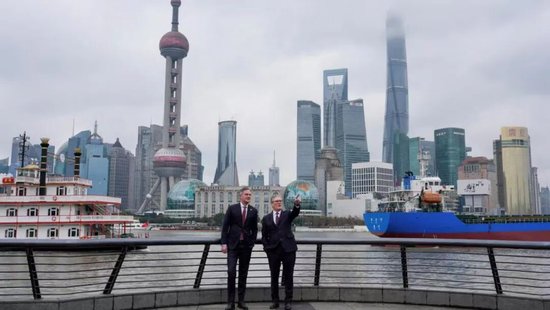
吴蔚:在斯塔默的“京沪深度行”与“东京半日游”中看见英国人的思路
Xin Lang Cai Jing· 2026-02-01 15:13
Group 1 - The core viewpoint of the article discusses the significance of UK Prime Minister Starmer's visit to Japan shortly after his trip to China, emphasizing the economic ties between the UK and both countries, with China being the UK's largest trading partner in Asia at over $100 billion and Japan as the second at several hundred billion [2] - The article highlights the potential discussions between Starmer and Japanese Prime Minister Kishi regarding China policy, indicating a shift in diplomatic narratives between the UK and Japan compared to those with China [3][4] - The article notes that Starmer's political alignment as a center-left Labour Party member may lead to less ideological resonance with the right-leaning Kishi, suggesting that their interactions are more about national interests than shared values [4][5] Group 2 - The collaboration between Japan and the UK on defense matters, particularly in the joint development of next-generation fighter jets, is confirmed, indicating a strategic partnership in military technology [7] - The article outlines Japan's desire for "normalization" in its defense posture, aiming to reduce reliance on the US and enhance its own defense capabilities, which may lead to increased military cooperation with the UK [8] - Historical ties between Japan and the UK are emphasized, noting that Japan has historically viewed the UK as a mentor in military modernization, which may influence current defense collaborations [9][10]

对话APEC PPSTI首席顾问:亚洲内部贸易正持续增强
2 1 Shi Ji Jing Ji Bao Dao· 2026-02-01 15:00
Core Viewpoint - APEC members are advancing cooperation to address common challenges such as extreme weather and climate change, emphasizing the importance of collaboration for mutual benefits [1] Group 1: APEC Cooperation - The APEC high-level meeting in Guangzhou highlighted the significance of collaboration in achieving success and sharing technological advancements [1] - Nicholas Brooke noted that the shared challenges of climate change act as a catalyst for closer cooperation among member economies [1] - The meeting facilitated productive dialogues among representatives, indicating a positive progression in discussions [1] Group 2: Trade Dynamics - Global trade has been hindered by tariff barriers and protectionism, which are expected to persist into 2026 [1] - Despite global protectionist trends, intra-Asian trade is strengthening, leading to the formation of a tighter regional trade network [1] - The upcoming APEC in 2026 will see China as a model for addressing climate change and sustainable development, influencing both regional and global economies [1]
牛弹琴:中国太厚道了
Xin Lang Cai Jing· 2026-02-01 00:32
Group 1 - European countries have realized that their focus on China was misplaced, as the real threat came from the United States, which has imposed taxes and sought to dominate resources in Europe [3][29] - In response to this realization, European nations are now turning towards China for cooperation [4][30] - Recent visits from foreign leaders, including those from Canada and the UK, indicate a shift in diplomatic relations, despite past tensions [6][35] Group 2 - Canada has faced backlash in China due to its involvement in the Meng Wanzhou incident and the imposition of high tariffs on Chinese goods, which has severely damaged its image [7][33] - The UK has also strained relations with China through various political maneuvers, but recent diplomatic engagements suggest a potential thaw in relations [8][34] - Both Canada and the UK are now seeking to improve ties with China, with Canada planning to significantly reduce tariffs on Chinese electric vehicles [10][37] Group 3 - China's leadership emphasizes a consistent stance of openness and cooperation, stating that it has never initiated conflict or threatened other nations, contrasting with the actions of some Western countries [14][42] - The Chinese government advocates for a multilateral approach to international relations, urging major powers to adhere to principles of equality and cooperation [15][43] - The recent diplomatic engagements reflect a broader trend of improving relations between China and several countries, as leaders recognize the importance of collaboration over confrontation [18][49]
逯新红:深化中韩经贸合作共促互利共赢
Jing Ji Ri Bao· 2026-01-29 00:54
Group 1 - The core viewpoint emphasizes the importance of the stable development of China-South Korea relations for the well-being of both nations and regional peace, especially in the context of global economic recovery challenges [1] - China has been South Korea's largest trading partner for 21 consecutive years, with bilateral trade consistently exceeding $300 billion, highlighting the economic complementarity and potential for deeper cooperation [1] - The two countries should enhance practical cooperation in various sectors, such as semiconductors and electric vehicles, to avoid zero-sum thinking and foster collaborative development [1] Group 2 - Emerging fields like artificial intelligence, green industries, and digital economy are identified as key areas for future cooperation between China and South Korea, leveraging each country's strengths [2] - The two nations are encouraged to strengthen policy dialogue and establish joint laboratories or innovation parks to facilitate technological collaboration and joint investment, particularly in green transformation [2] - Continued institutional openness and the implementation of trade agreements like RCEP and the advancement of the China-South Korea Free Trade Agreement are crucial for promoting regional economic integration [2] Group 3 - Both countries bear significant responsibility for maintaining regional peace and stability in Northeast Asia and should work together to uphold the outcomes of World War II and promote genuine multilateralism [3] - There is a call for enhanced cooperation in addressing global challenges such as climate change, public health, and disaster prevention, which can empower broader regional cooperation and development [3]