
光互连

Search documents
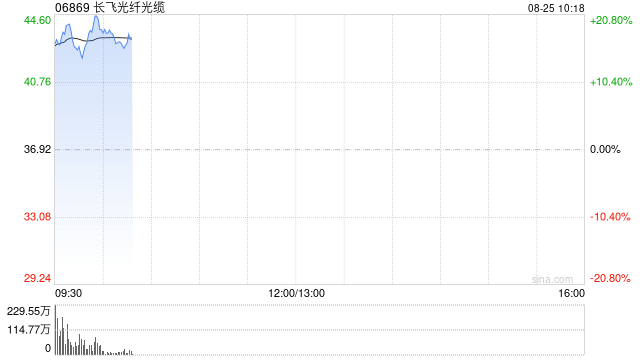
长飞光纤光缆早盘涨超20%创新高 英伟达发布Scale-across网络
Zhi Tong Cai Jing· 2025-08-25 05:50
Group 1 - Changfei Fiber (601869) saw its stock price rise over 20%, reaching a historical high of 44.86 HKD during trading, with a current price of 43.96 HKD and a trading volume of 1.22 billion HKD [1] - Nvidia announced the launch of NVIDIA Spectrum-XGS Ethernet, a technology that enables the combination of multiple distributed data centers into a one-gigawatt AI super factory, addressing the limitations of existing commercial Ethernet networks [1] - Open-source securities highlighted that the scale-across technology could become the "third pillar" of AI computing, following scale-up and scale-out, which will further drive the development of AI computing interconnect industries, emphasizing the opportunities in optical interconnect and related sectors [1] Group 2 - Zhongtai Securities reported that hollow-core fiber, which uses air as a transmission medium, features lower latency and lower loss, making it a key component for future AI data center interconnects [2] - The first commercial use of hollow-core fiber by China Mobile is expected to accelerate the commercialization process, with Changfei Fiber being the sole bidder at an actual bid price of approximately 36,000 RMB per core kilometer [2] - The report emphasizes the importance of Changfei Fiber due to its leading production capacity in hollow-core technology and its successful bids in related projects [2]

港股异动 | 长飞光纤光缆(06869)早盘涨超20%创新高 英伟达发布Scale-across网络
智通财经网· 2025-08-25 02:50
Group 1 - Changfei Fiber Optic Cable (06869) saw a significant increase in stock price, rising over 20% in early trading and reaching a historical high of 44.86 HKD, with a trading volume of 1.22 billion HKD [1] - NVIDIA announced the launch of NVIDIA® Spectrum-XGS Ethernet, a technology that enables the combination of multiple distributed data centers into a one-gigawatt AI super factory, addressing the limitations of existing commercial Ethernet infrastructure [1] - The demand for AI is surging, leading to the need for data center expansion beyond building constraints, as current infrastructures face challenges such as high latency and unpredictable performance [1] Group 2 - According to Zhongtai Securities, hollow-core fiber, which uses air as the transmission medium, is expected to be a key product for future AI data center interconnections due to its lower latency and loss characteristics [2] - The first commercial use of hollow-core fiber by China Mobile is anticipated in July 2025, which may accelerate the commercialization process, with Changfei Fiber being the sole bidder at an actual bid price of approximately 36,000 RMB per core kilometer [2] - Zhongtai Securities emphasizes the importance of Changfei Fiber, noting its leading capacity in hollow-core technology and successful bids in related projects [2]
长飞光纤光缆盘中大涨逾20%,股价创历史新高年内涨逾265%!A股长飞光纤一字涨停,机构预期Q2实现营收32.09亿
Ge Long Hui· 2025-08-25 02:36
Group 1 - The core viewpoint of the news is that Changfei Fiber Optics (601869) has seen a significant increase in its stock price, reaching a historical high of 44.86 HKD, with a year-to-date increase of over 265% [2][3] - As of the latest update, the stock price of Changfei Fiber Optics is 43.24 HKD, reflecting a daily increase of 17.12% [2][3] - The trading volume for the stock on August 25 was 24.68 million shares, with a total transaction value of 1.067 billion HKD [3] Group 2 - Changfei Fiber Optics is expected to release its financial report on August 29, with projections indicating a revenue of 3.209 billion CNY and an expected earnings per share of 0.32 CNY for Q2 2025 [4] - The report from Kaiyuan Securities highlights the launch of NVIDIA Spectrum-XGS Ethernet, which addresses challenges in data center expansion due to increasing AI demands, suggesting potential growth opportunities in the optical interconnect sector [4]

罗博特科:ficonTEC下游应用领域主要包括光互连、光感知、光计算三个方向
Zheng Quan Ri Bao Zhi Sheng· 2025-08-20 10:39
Core Viewpoint - Robotech's ficonTEC focuses on three main downstream application areas: optical interconnects, optical sensing, and optical computing, with a specific emphasis on quantum applications within optical computing [1] Group 1 - ficonTEC's downstream applications include optical interconnects, optical sensing, and optical computing [1] - The company has established business and collaboration relationships with world-renowned companies in the quantum field for testing and assembly [1]

通信行业周观点:GPT-5延续商业化正循环,多模光纤加速渗透-20250812
Changjiang Securities· 2025-08-12 08:44
Investment Rating - The report maintains a "Positive" investment rating for the communication industry [10] Core Insights - The communication sector saw a 1.57% increase in the 32nd week of 2025, ranking 22nd among major industries, and a 22.42% increase since the beginning of the year, ranking 4th [2][5] - The release of GPT-5 and Genie 3 has significantly boosted AI commercialization metrics, leading to increased infrastructure investments [6] - The trend towards Scale-up architecture is confirmed, with multi-mode fiber technology upgrades driving demand for optical interconnects and high-speed optical modules [7] Summary by Sections Market Performance - In the 32nd week of 2025, the communication sector increased by 1.57%, ranking 22nd among major industries; since the start of the year, it has risen by 22.42%, ranking 4th [2][5] - Notable stock performances include Kesi Technology (+22.3%), Dongxin Peace (+17.1%), and Qiyi Er (+16.9%) for gains, while Tianfu Communication (-6.7%), Yingstone Network (-4.3%), and Lian Te Technology (-3.5%) faced declines [5] AI Commercialization - OpenAI's GPT-5 integrates rapid response and deep reasoning, enhancing multi-modal capabilities and reducing factual errors significantly; ChatGPT's weekly active users approach 700 million, a year-on-year increase of over 400% [6] - The annual recurring revenue (ARR) for AI applications has risen to approximately $13 billion, with expectations to exceed $20 billion by year-end [6] Optical Interconnect and Fiber Technology - The shift from Scale-out to Scale-up architecture is driving high-density interconnect demand; domestic leaders are accelerating multi-mode fiber production [7] - Companies like FiberHome are targeting an annual production capacity of 4 million core kilometers by 2026, while Hengtong Optics is expanding its advanced fiber materials R&D center [7] Investment Recommendations - Recommended operators include China Mobile, China Telecom, and China Unicom [8] - For optical modules, key recommendations are Zhongji Xuchuang, Xinyi Sheng, Tianfu Communication, and Shijia Photon, with a focus on Tai Chen Guang and Yuan Jie Technology [8] - In the domestic computing sector, recommended companies include FiberHome, Huafeng Technology, and ZTE Corporation [8] - AI application recommendations include Heertai, Tuobang Technology, and Meige Intelligent [8] - For satellite applications, recommended companies are Haige Communication and Huace Navigation [8]





21专访|曦智科技沈亦晨:两年前预见的超节点未来,正在兑现
2 1 Shi Ji Jing Ji Bao Dao· 2025-08-12 06:17
Core Insights - The article discusses the emergence of "supernodes" in the computing industry, particularly focusing on the advancements in optical interconnect technology by Xizhi Technology, which has positioned itself as a leader in this field [1][2][3] - Xizhi's innovative "LightSphere X" solution aims to break traditional limitations of physical cabinets, allowing for larger-scale, cross-cabinet networks, which is a significant shift in the industry [1][9] Company Strategy - Xizhi Technology recognized the potential of the supernode concept as early as 2023, aligning its product line with this emerging trend [2][4] - The company is pursuing an open ecosystem strategy, differentiating itself from competitors like NVIDIA and Huawei by focusing on core technologies related to optical interconnects and chips [2][23] Technological Innovations - Xizhi's "LightSphere X" solution utilizes optical interconnect technology, which allows for faster data transmission and lower costs compared to traditional electrical interconnects [7][8] - The company has developed two supernode solutions: one based on optical interconnect electrical switching and another on optical interconnect optical switching, with the latter being a novel approach [5][6] Market Position - Xizhi has established a favorable position in the optical interconnect market, with a team comprising over 80% researchers, including top scientists from MIT [1][24] - The company aims to deploy a ten-thousand-card cluster by the end of the year, indicating its ambition to scale rapidly in the supernode space [11] Competitive Landscape - The article highlights the competitive dynamics in the GPU market, where various manufacturers are exploring different interconnect technologies, with some opting for electrical interconnects while others are inclined towards innovative solutions like Xizhi's [12][22] - Xizhi's open approach may pose a challenge to established players like NVIDIA and Huawei, as it aims to lower the technical barriers for adoption [22][23]

曦智科技沈亦晨:3D CPO有望在五年内实现
Zhong Guo Jing Ying Bao· 2025-07-30 18:08
Core Insights - NVIDIA has introduced two silicon photonics CPO switches at the GTC conference to enhance the interconnect speed and energy efficiency of GPU clusters, making CPO a focal point in the industry [1] - The evolution of optical interconnect technology is crucial, with a roadmap from pluggable optical modules to 3D CPO, significantly increasing single-chip bandwidth [1][3] - The demand for computing power is growing globally, necessitating advancements in optical interconnect products to address this challenge [1][2] Group 1: Optical Interconnect Technology - The transition from traditional network interconnects to NVIDIA's GB200 NVL72 supernode can increase throughput by over three times compared to conventional methods [2] - Domestic AI chip and server manufacturers are increasingly adopting the supernode concept, indicating a shift in industry trends [2] - The two main paths for expanding supernode scale are using high-density cabinets or multiple cabinets with direct optical interconnect capabilities [2][3] Group 2: Challenges and Solutions - Current solutions face bandwidth and resource wastage issues, leading to network congestion, highlighting the need for revolutionary interconnect systems [3] - The proposed evolution of optical interconnect technology includes a shift towards 3D co-packaged optics, which could enhance interconnect bandwidth by 1-2 orders of magnitude within five years [3] - The complexity of connecting multiple GPUs necessitates advanced scheduling systems for efficient network management [3] Group 3: Innovations and Developments - At the 2025 WAIC, the company launched the LightSphere X distributed OCS all-optical interconnect chip and supernode solution, demonstrating its application with partners [4] - LightSphere X is recognized as the first domestic solution for optical interconnect and GPU supernodes, winning the SAIL Award for its innovation [4][5] - The technology allows for flexible scaling of supernodes, reducing deployment costs and enabling dynamic adjustments based on computing needs [5] - Performance metrics indicate that the unit interconnect cost is only 31% of that of the NVL72, with a significant increase in model computing efficiency [5]
AI算力集群迈进“万卡”时代 超节点为什么火了?
Di Yi Cai Jing· 2025-07-30 10:24
Core Insights - The recent WAIC showcased the rising trend of supernodes, with multiple companies, including Huawei and Shanghai Yidian, presenting their supernode solutions, indicating a growing interest in high-performance computing [1][2][4] Group 1: Supernode Technology - Supernodes are designed to address the challenges of large-scale computing clusters by integrating computing resources to enhance efficiency and support models with trillions of parameters [1][2] - The technology allows for improved performance even when individual chip manufacturing processes are limited, marking a significant trend in the industry [1][5] - Supernodes can be developed through two main approaches: scale-out (horizontal expansion) and scale-up (vertical expansion), optimizing communication bandwidth and latency within the nodes [3][4] Group 2: Market Dynamics - The share of domestic AI chips in AI servers is increasing, with projections indicating a drop in reliance on foreign chips from 63% to 49% this year [6] - Companies like Nvidia are still focusing on the Chinese market, indicating the competitive landscape remains intense [6] - Domestic manufacturers are exploring alternative strategies to compete with established players like Nvidia, including optimizing for specific applications such as AI inference [6][8] Group 3: Innovation in Chip Design - Some domestic chip manufacturers are adopting sparse computing techniques, which require less stringent manufacturing processes, allowing for broader applicability in various scenarios [7] - Companies are focusing on edge computing and AI inference, aiming to reduce costs and improve efficiency in specific applications [8] - The introduction of new chips, such as the Homa M50, highlights the industry's shift towards innovative solutions that leverage emerging technologies like in-memory computing [8]

AI算力集群迈进“万卡”时代,超节点为什么火了?
Di Yi Cai Jing· 2025-07-30 07:59
Core Insights - The recent WAIC highlighted the growing interest in supernodes, with companies like Huawei, ZTE, and H3C showcasing their advancements in this technology [3][4][5] - Supernodes are essential for managing large-scale AI models, enabling efficient resource utilization and high-performance computing [3][4][5] - The shift from traditional AI servers to supernode architectures is driven by the increasing complexity and size of AI models, which now reach trillions of parameters [4][5][9] Group 1: Supernode Technology - Supernodes integrate computing resources to create low-latency, high-bandwidth computing entities, enhancing the efficiency of AI model training and inference [3][4] - The technology allows for performance improvements even when individual chip manufacturing processes are limited, making it a crucial development in the industry [4][9] - Companies are exploring both horizontal (scale out) and vertical (scale up) expansion strategies to optimize supernode performance [5][9] Group 2: Market Dynamics - Domestic AI chip manufacturers are increasing their market share in AI servers, with the proportion of externally sourced chips expected to drop from 63% to 49% this year [10] - Companies like墨芯人工智能 are adopting strategies that focus on specific AI applications, such as inference optimization, to compete with established players like NVIDIA [10][11] - The competitive landscape is shifting, with firms like云天励飞 and后摩智能 targeting niche markets in edge computing and AI inference, avoiding direct competition with larger chip manufacturers [11][12][13] Group 3: Technological Innovations - The introduction of optical interconnects in supernode technology is a significant advancement, providing high bandwidth and low latency for AI workloads [6][9] - Companies are developing solutions that leverage optical communication to enhance the performance of AI chip clusters, addressing the limitations of traditional electrical interconnects [6][9] - The focus on sparse computing techniques allows for lower manufacturing process requirements, enabling more efficient AI model computations [11][12]
初创公司,创新光互连
半导体行业观察· 2025-04-27 01:26
来源:内容 编译自 IEEE ,谢谢。 如果将过多的铜线捆扎在一起,最终会耗尽空间——前提是它们不会先熔合在一起。人工智能数据 中心在GPU和内存之间传输数据的电子互连方面也面临着类似的限制。为了满足人工智能的海量 数据需求,业界正在转向更大尺寸、更多处理器的芯片,这意味着在机架内实现更密集、更长距离 的连接。初创公司正在展示 GPU 如何摆脱铜互连,用光纤链路取而代之。 光纤链路对数据中心来说并不陌生。它们使用可插拔收发器在机架之间传输数据,将电信号转换为 光信号。为了提高能源效率,"将光学元件集成到芯片封装中一直是一个梦想,"加州大学圣巴巴拉 分校电气工程教授克林特·肖( Clint Schow)表示。这就是共封装光学器件(CPO),科技巨头们正 在全力支持它。英伟达 (Nvidia) 最近宣布量产一款网络交换机,该交换机使用嵌入在与交换机同 一基板上的光子调制器。"这震惊了整个行业,"加州桑尼维尔初创公司Avicena的首席执行官巴迪 亚·佩泽什基 (Bardia Pezeshki) 表示。 哥伦比亚大学电气工程教授、Xscape Photonics联合创始人Keren Bergman解释说, Nvid ...
