光储融合

Search documents
联姻茶饮大佬的高海纯能否带天合光能突围光伏“寒冬”?
Xin Lang Cai Jing· 2025-12-15 09:21
Core Viewpoint - The wedding of Gao Haichun, daughter of Trina Solar's founder, and Zhang Junjie, founder of Bawang Tea, has attracted significant attention due to their prominent family backgrounds and the companies they represent. Both companies are publicly listed, but there are currently no business collaborations between them [1][3]. Company Overview - Trina Solar, founded in 1997, is a leading player in the global photovoltaic (PV) industry, having once been the largest PV module supplier globally. However, its ranking has declined in recent years [9][11]. - The company went public on the New York Stock Exchange in 2006 but was privatized in 2017 and later re-listed on the STAR Market in China [10]. Leadership and Management - Gao Haichun, born in 1993 and a graduate of Brown University, has been involved in Trina Solar since 2017, holding various positions including Vice General Manager of Strategic Investment and Chairman of Trina Solar's subsidiary [4][5]. - In January 2023, she was appointed Co-Chairman of Trina Solar, indicating a significant step in her succession plan within the family business [4]. Financial Performance - Trina Solar's net profits during the peak years of 2021-2023 were 1.804 billion, 3.681 billion, and 5.527 billion yuan respectively [13]. - However, starting in 2024, the company is projected to incur losses of 3.443 billion yuan, with a loss of 4.201 billion yuan reported in the first three quarters of the year [15]. Market Position and Challenges - Trina Solar's stock price has dropped by 80%, leading to a market capitalization loss of over 140 billion yuan [16]. - The company has faced challenges in the distributed PV market, where its subsidiary Trina Bifacial was once ranked among the top two globally, holding nearly 20% market share in the domestic household market [18]. Strategic Shifts - In response to market conditions, Trina Solar is seeking to transform its business model from a PV product manufacturer to a provider of energy storage and smart energy solutions [22]. - The company has set ambitious targets for its energy storage segment, aiming for a shipment goal of 15-16 GWh in 2024, with recent orders significantly exceeding previous years' performance [27][28]. Industry Context - The PV industry is currently facing price competition and supply-demand imbalances, which pose significant challenges for leading companies like Trina Solar [29]. - The introduction of policies such as the "Document 136" has added uncertainty to the profitability of distributed PV projects, complicating the business landscape further [20].


个股异动 | 东方日升20cm涨停 储能以及海外业务稳健发展
Shang Hai Zheng Quan Bao· 2025-12-15 03:28
Core Viewpoint - The company, Dongfang Risen, has seen a significant stock price increase of 20% due to its robust development in energy storage and overseas business operations [1] Group 1: Business Overview - Dongfang Risen primarily focuses on the research, production, and sales of solar cell modules, while also engaging in photovoltaic power station EPC, operation, and energy storage, positioning itself in the midstream of the photovoltaic industry chain [1] - The company leverages advanced heterojunction technology and extensive experience in energy storage integration to formulate its business strategy, emphasizing cash flow management and cost control [1] Group 2: Strategic Initiatives - The company adopts a three-dimensional strategy of "technology premium + scenario innovation + cash flow safety line" to address the challenges posed by price competition in the market [1] - In the area of photovoltaic project integration, Dongfang Risen has expanded its development scale in regions such as Spain, Italy, Bangladesh, the Philippines, and Nepal, in addition to its existing markets in Europe, Mexico, Australia, and Vietnam [1] Group 3: Energy Storage Business - The company's energy storage system integration business focuses on large-scale energy storage products, with its subsidiary, Ningbo Shuangyili, aiming to become a global leader in comprehensive energy storage system solutions [1]

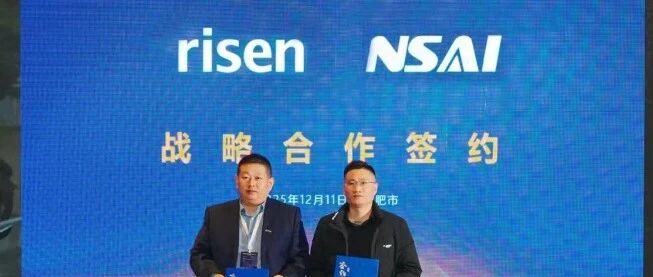
超700MWh!又有3企新签储能协议
行家说储能· 2025-12-11 11:36
Group 1 - The article highlights that several energy storage companies have secured significant orders, totaling over 4GWh, indicating a growing demand in the energy storage sector [1] - Dongfang Risen has announced a new order for 100MWh of commercial energy storage, following a previous 3GWh order from WEG in Brazil, showcasing its expanding market presence [2][4] - Wuhan Tianyuan has signed an investment agreement for two grid-side energy storage projects totaling 600MWh, with a total investment of approximately 600 million yuan, indicating strong governmental support for energy storage initiatives [5][7] Group 2 - Allye Energy has received its largest procurement order to date for five MAX500 battery storage systems, which are designed for the construction industry, highlighting innovation in energy storage solutions [8]
136号文如何影响光伏项目
Zhong Xin Qi Huo· 2025-12-04 00:50
1. Report Industry Investment Rating - Not provided in the given content 2. Core Viewpoints - With the implementation of Document No. 136, most regions expect a decline in PV project prices and IRR, and actual auction results vary significantly. The highest mechanism-based prices are in central-south provinces, but their markets are dominated by distributed projects with limited grid - connected capacity. Shandong's incremental project expected returns are low, while those in the northwest and southwest are relatively high, leaving room for capacity growth in these regions. Eastern seaboard expansion may slow down. China's PV installation is not solely return - driven, and local government plans also play a direct role. Adding energy storage can hedge against return decline, and solar - plus - storage projects have broad development prospects [2][3][17] 3. Summary by Relevant Catalogs 3.1 Mechanism - based Electricity 3.1.1 Existing Projects - The mechanism - based electricity volume ratio of existing projects varies greatly among regions. In Hunan, Shanghai, Chongqing, and Guizhou, it ranges from 80% - 100%. In most northwest regions, it's determined by hourly counts or set at a lower ratio. Some regions implement differentiated management, with distributed, older, and wind power projects generally having higher ratios [9][34] 3.1.2 Incremental Projects - Individual incremental projects can lock in 80 - 90% of their annual grid - delivered output at the regulated mechanism - based price, but the overall coverage ratio is low. Inner Mongolia offers no additional mechanism - based volume, and Xinjiang and Ningxia keep the share low. Hunan, Liaoning, Jilin, and Guizhou reserve 20%, 55%, 40%, and 77% respectively, while Hainan has higher rates [10][35] 3.2 Mechanism - based Price 3.2.1 Existing Projects - Most provinces' mechanism - based prices for existing projects are pegged to the local coal - fire benchmark price, with an average of CNY 0.3591/kWh. The price level order is southeast coastal > southwest > northeast/north > northwest [12][37] 3.2.2 Incremental Projects - The upper bound of the mechanism - based electricity price for incremental projects is generally close to that of existing projects, with an average of CNY 0.3426/kWh, a 4.8% discount. The lower bound averages CNY 0.1727/kWh (CNY 0.1989/kWh excluding Inner Mongolia), about 44.6% below that of existing projects. The price level order is southeast coastal > southwest/northeast/north > northwest [13][14][38] 3.3 Regional Situation 3.3.1 Shandong - The share of incremental mechanism - based PV projects in Shandong might be lower than 20%, higher for centralized projects. 1.265 GW of PV capacity is qualified in the first - round bidding, with a mechanism - based electricity volume of 1.248 TWh. The coverage ratio is about 30 - 40% in terms of electricity and 10 - 20% in terms of installed capacity [21][22][43] 3.3.2 Xinjiang - The share of incremental mechanism - based PV projects in Xinjiang is relatively high. 3.6 TWh of PV mechanism - based electricity volume has been allocated to 31 projects (19 centralized). It corresponds to about 14.3 GW of installed capacity, and the coverage ratio is high considering the 2025 H1 new PV installation [23][44] 3.3.3 Gansu - Gansu's wind and PV plants bid together. The first round awards 0.83 TWh for 2025 H2 projects, and the second reserves 1.52 TWh for 2026 projects. The share of incremental mechanism - based PV projects is expected to be 10 - 15% [26][48] 3.3.4 Others - Yunnan, Jiangxi, and Guangdong have completed their first bidding rounds. Yunnan didn't disclose the mechanism - admitted electricity volume. Jiangxi allocated 131 GWh to PV projects (5 - 10% coverage), and Guangdong placed 4.65 TWh under the mechanism. Selected projects in Guangdong and Jiangxi are mainly distributed systems [28][49]
光伏龙头纷纷进军储能赛道,光伏ETF华夏(515370)上涨0.91%
Mei Ri Jing Ji Xin Wen· 2025-11-25 06:14
Core Viewpoint - The integration of solar energy and energy storage has become an inevitable trend in energy transition, with major solar companies entering the energy storage sector to enhance their market positions [1]. Group 1: Market Performance - On November 25, A-shares opened higher, with the solar ETF Huaxia (515370) rising by 0.91%, and key holdings such as Hongyuan Green Energy, Shangneng Electric, and Sunshine Power increasing by over 2% [1]. Group 2: Company Developments - Longi Green Energy plans to acquire approximately 61.9998% of the voting rights of Suzhou Jingkong Energy Technology Co., Ltd. through multiple methods, achieving sole control over this energy storage "unicorn" [1]. - Other major solar companies, including Tongwei Co., JA Solar, Trina Solar, and JinkoSolar, have also entered the energy storage market this year, marking a significant shift in their business strategies [1]. Group 3: Industry Trends - Wanlian Securities believes that the integration of solar and storage is a key pathway for building a new power system, transitioning from an optional to a necessary component, and upgrading from auxiliary power to a primary power source [1]. - The Huaxia solar ETF (515370) tracks the CSI Solar Industry Index, covering upstream, midstream, and downstream companies in the solar industry, including silicon wafers, polysilicon, battery cells, cables, solar glass, battery modules, inverters, solar brackets, and solar power plants, providing a comprehensive reflection of the solar industry's overall performance [1].
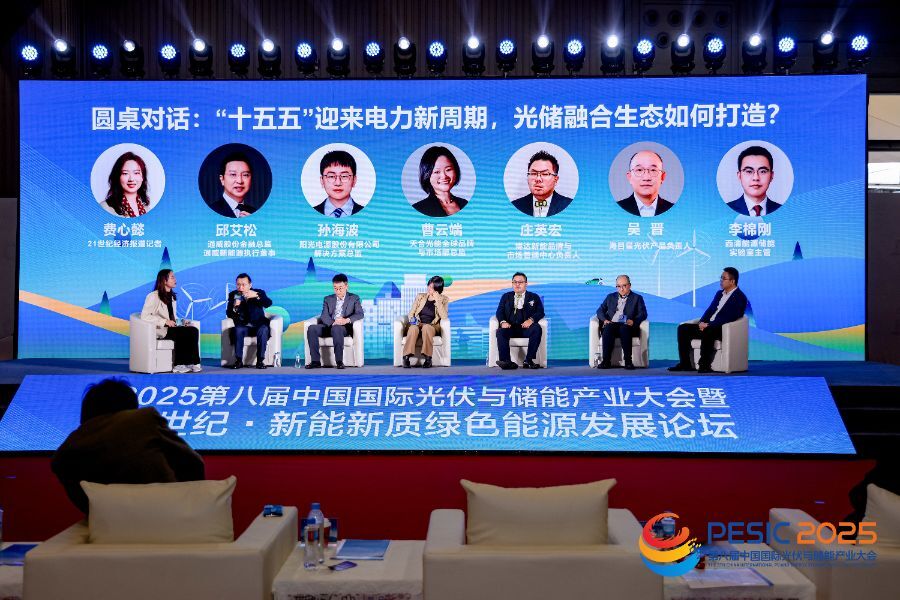
迎接电力新周期,光储融合生态构建需规则、技术与场景协同
2 1 Shi Ji Jing Ji Bao Dao· 2025-11-25 04:13
Core Insights - The power industry is undergoing a profound transformation from scale expansion to high-quality development, with photovoltaic (PV) and energy storage as core pillars of the new power system [1] - The integration of PV and energy storage has shifted from an optional choice to a mandatory requirement, emphasizing the need for a robust ecosystem [1] Industry Transition - The "14th Five-Year Plan" period marks the end of subsidy-dependent growth in the PV and energy storage sector, transitioning to a market-driven high-quality development phase [2] - Industry competition has evolved from mere scale to a comprehensive assessment of technology, application scenarios, and service capabilities [2] - The urgency of restructuring market rules is highlighted, as it significantly impacts production costs and the healthy development of the industry [2] Technological Innovation - New energy storage, particularly grid-forming storage, is becoming essential for integrating renewable energy, with a shift from policy-driven to market-driven operations [2] - Safety is emphasized as a fundamental requirement for energy storage's participation in market transactions, with proactive monitoring systems being developed to enhance safety [3] - The focus on scenario innovation is crucial, with policies mandating that new renewable energy projects must have supporting scenarios [3] Market Strategies - Companies are adopting strategies focused on high-quality orders, particularly in overseas markets, to achieve mutual benefits through product upgrades and service optimization [4] - The integration of PV manufacturing and energy storage technologies is seen as a natural synergy, enhancing cost efficiency and reliability [8] Ecosystem Development - The industry is moving towards a collaborative ecosystem that bridges laboratory innovations to industrial applications, unlocking economic, social, and ecological value [9] - Continuous R&D investment is identified as a key driver for companies to maintain technological leadership and ensure the feasibility of industrial applications [9] - The establishment of collaborative initiatives, such as the "700W+ Photovoltaic Open Innovation Ecosystem Alliance," is crucial for scaling high-efficiency technologies [11] Future Directions - The focus on high-end, intelligent, and green production is seen as essential for industry upgrades, with AI technology expected to enhance manufacturing and operational efficiency [11] - The challenge of industrializing advanced technologies, such as solid-state and lithium-sulfur batteries, is acknowledged, with partnerships for pilot testing being a potential solution [12]


迎接电力新周期,光储融合生态构建需规则、技术与场景协同
2 1 Shi Ji Jing Ji Bao Dao· 2025-11-25 03:39
Core Viewpoint - The power industry is undergoing a profound transformation from scale expansion to high-quality development, with the integration of photovoltaic (PV) and energy storage becoming a necessity rather than an option [1][3]. Industry Trends - The "14th Five-Year Plan" period marks the end of subsidy-dependent growth in the PV and energy storage sector, transitioning to a market-driven high-quality development phase [3]. - Industry competition has shifted from mere scale to a comprehensive evaluation of technology, application scenarios, and service capabilities [3]. - The urgency of restructuring market rules is emphasized, as it significantly impacts production costs and the healthy development of the industry [3]. Technological Innovations - New energy storage technologies, particularly grid-connected storage, are transitioning from policy-driven mandates to independent market operations, with high quality, safety, and economic efficiency as core requirements [3][4]. - Companies are focusing on technological innovations such as the integration of AI and advanced materials to enhance energy efficiency and reduce costs [11][12]. Application Scenarios - The integration of PV and energy storage is expanding from traditional power plants to diverse fields, necessitating a shift from single-device supply to system-level collaborative solutions [7]. - Key application scenarios identified include green electricity substitution for high-energy-consuming enterprises, optimization of renewable energy transmission channels, and support for green computing centers [7][8]. Safety and Risk Management - Safety is highlighted as a fundamental aspect of high-quality energy storage development, with proactive monitoring and risk management systems being implemented to ensure operational safety [5][6]. - The focus is on transitioning from passive responses to active prevention of safety risks through advanced monitoring technologies [5]. Ecosystem Collaboration - The industry is moving towards a collaborative ecosystem that bridges laboratory innovations with industrial applications, aiming to unlock economic, social, and ecological value [10]. - Companies are investing in R&D and forming alliances to promote the large-scale application of advanced technologies, ensuring a balance between technological leadership and industrial feasibility [10][11]. Market Dynamics - The market is witnessing a shift from price competition to value competition, driven by technological advancements and the need for sustainable practices [10][12]. - The establishment of virtual power plants and the integration of distributed energy resources are becoming popular directions in the industry [8].
光伏龙头纷纷进军储能赛道 “光伏+储能”成标配
Zhong Guo Neng Yuan Wang· 2025-11-25 00:14
Group 1 - The core viewpoint of the articles highlights the rapid development of the energy storage sector in China, with the installed capacity exceeding 100 million kilowatts, marking a growth of over 30 times compared to the end of the 13th Five-Year Plan, and accounting for over 40% of the global total, making China the world leader in energy storage [1][4] - Energy storage is becoming a crucial support for the consumption of renewable energy sources like solar and wind, addressing challenges such as the mismatch between resource distribution and electricity demand, as well as the instability of renewable energy generation [2][3] - Major photovoltaic companies, including LONGi Green Energy, Tongwei Co., JinkoSolar, JA Solar, and Trina Solar, are increasingly integrating energy storage into their business models, indicating a shift towards "solar + storage" as a standard practice in the industry [1][3] Group 2 - The National Development and Reform Commission and the National Energy Administration have set a target for 2030 to establish a multi-level energy consumption and regulation system, ensuring the efficient operation of renewable energy and meeting the annual demand for an additional 200 million kilowatts of renewable energy [4] - The energy storage market is expected to grow significantly, with projections estimating a market size of approximately 500 billion yuan by 2025 and over 2 trillion yuan by 2030, reflecting a compound annual growth rate of over 30% [4] - The integration of solar and storage is seen as a key direction for the reform of energy demand, with expectations that technological advancements and policy support will make it a core component of the new energy system [4]



共话“十五五”新能源产业:光储氢如何实现高质量发展?
2 1 Shi Ji Jing Ji Bao Dao· 2025-11-23 11:49
Core Insights - The rapid development of China's new energy industry is highlighted, with a focus on the "14th Five-Year Plan" achievements and the upcoming "15th Five-Year Plan" emphasizing energy security and the transition to a new energy system [1][5][9]. Group 1: Industry Development - The "15th Five-Year Plan" aims to promote quantum technology, biomanufacturing, hydrogen energy, and new energy storage as new economic growth points [1]. - During the "14th Five-Year Plan," China's energy consumption structure improved significantly, with the average cost of global wind power projects decreasing by over 60% and solar photovoltaic (PV) project costs dropping by over 80% in the past decade [3][5]. - The new energy sector is expected to transition from subsidy-dependent growth to a market-driven high-quality development phase during the "15th Five-Year Plan" [15]. Group 2: Technological Trends - The solar PV industry is focusing on optimizing silicon technology to maintain cost advantages, with a shift towards using less silver and more affordable metals like copper and aluminum [7]. - Lithium-ion batteries, particularly lithium iron phosphate batteries, are projected to dominate the new energy storage market, maintaining over 90% market share in the next five years [9]. - The integration of digital technologies in energy management is becoming crucial for enhancing operational efficiency and enabling smart decision-making in the energy sector [26][27]. Group 3: Market Dynamics - The global market for energy equipment is expected to reach approximately $1.27 trillion in 2024, with significant growth potential in the energy digitalization sector, projected to reach $173 billion by 2025 [27][28]. - The focus is shifting from merely increasing installed capacity to achieving efficient collaboration across the energy system, enhancing the penetration and reliability of new energy sources [11]. - The energy storage industry is urged to achieve equal treatment in capacity pricing with other flexible resources, emphasizing the need for fair compensation for the services provided by energy storage [9][15]. Group 4: Policy and Strategic Initiatives - The "15th Five-Year Plan" emphasizes the importance of energy security as a primary task for the energy industry, necessitating a shift towards a new energy system and collaborative strategies [5][13]. - The launch of the "Energy Digitalization Development White Paper" aims to explore the strategic significance and implementation paths for energy digitalization in China [28].


趋势研判!2025年中国分布式储能行业政策、产业链全景、发展现状、细分市场及未来发展趋势分析:市场驱动开启新篇,光储融合迈向主流[图]
Chan Ye Xin Xi Wang· 2025-11-21 01:07
Core Insights - The distributed energy storage industry is experiencing explosive growth driven by national policy support and increasing demand for renewable energy, with projections indicating that by 2024, new energy storage installations will account for over 40% of the global total [1][6] - The industry is transitioning from policy-driven growth to market-driven and economic viability, with a clear delineation of the supply chain from upstream materials to downstream applications [1][5] Industry Overview - Distributed energy storage systems are deployed close to energy consumption points, enabling local production, storage, and consumption of electricity, which helps stabilize the output fluctuations of renewable energy sources [2][4] - The industry is characterized by various technologies, including lithium-ion batteries and mechanical storage systems, and is categorized based on application scenarios such as user-side, grid-side, and power-side storage [2][3] Policy Landscape - A series of national policies have been introduced to support the development of distributed energy storage, including guidelines for enhancing grid peak-shaving capabilities and plans for high-quality development of new energy storage manufacturing [5][6] Supply Chain Structure - The supply chain of the distributed energy storage industry is well-defined, with upstream focusing on core materials and components, midstream on system integration and EPC services, and downstream covering applications across generation, grid, and user sides [5][6] Current Market Dynamics - The industry has seen a significant increase in installations, with projections for 2024 indicating a cumulative installed capacity of 73.76 million kilowatts, representing an annual growth rate exceeding 130% [6][7] - The market is dominated by lithium iron phosphate batteries, which hold nearly 90% market share due to their mature technology and cost advantages [6][7] Application Scenarios - The application landscape is evolving, with grid-side storage becoming the main contributor to new installations, expected to account for 60% of the market by 2025 [7][8] - Distributed photovoltaic systems are also gaining traction, with cumulative installed capacity reaching 370 million kilowatts by the end of 2024, significantly enhancing the energy structure transition [7][8] Competitive Landscape - The industry is characterized by leading companies such as CATL and BYD dominating the manufacturing sector, while others like Sungrow and Huawei lead in PCS technology [8][9] - The competitive landscape features a mix of large enterprises and smaller firms focusing on niche markets, with significant clusters in regions like the Yangtze River Delta and the Pearl River Delta [8][9] Future Trends - The industry is moving towards diversified, market-driven, and intelligent development, with applications expanding beyond simple energy storage to integrated solutions that enhance energy efficiency and reliability [9][10] - Technological advancements are expected to shift from a lithium-dominated landscape to a more diversified approach, incorporating long-duration storage technologies [10][11] - The business model is transitioning from policy-driven to market-oriented, with distributed energy storage expected to participate more actively in electricity markets and auxiliary services [11]