
合规风控

Search documents
研究 | 破与立:中国虚拟货币监管的制度重构与法律前瞻
Sou Hu Cai Jing· 2026-02-10 02:22
Core Viewpoint - The issuance of Document No. 42 marks a significant shift in China's regulatory approach to virtual currencies, transitioning from fragmented responses to a systematic reconstruction of regulations, including the inclusion of stablecoins and RWA (Real World Asset tokenization) under regulatory oversight [2][3]. Regulatory Policy Evolution - The evolution of China's virtual currency regulation can be categorized into four distinct phases: 1. **2013**: Initial classification of Bitcoin as a "specific virtual commodity" with a cautious observation approach [4]. 2. **2017**: Introduction of the ICO ban and the requirement for existing ICO projects to arrange for refunds, marking a shift to strict limitations [5]. 3. **2021**: Comprehensive crackdown on all virtual currency-related activities, defining them as "illegal financial activities" [6]. 4. **2026**: Systematic reconstruction with Document No. 42, expanding regulatory scope to include stablecoins and RWA, and enhancing legal frameworks [7]. Innovations in Document No. 42 - Document No. 42 introduces three major innovations: 1. **Stablecoins**: Clearly defined and regulated, with restrictions on issuing stablecoins linked to the Renminbi without approval, emphasizing currency sovereignty [8][9]. 2. **RWA**: Introduced under a "principle of prohibition, with exceptions upon approval" framework, allowing for regulated activities under specific conditions [10]. 3. **Overseas Operations Control**: Extends regulatory oversight to the global activities of domestic entities, marking a shift from domestic to global regulatory logic [11]. Legal Responsibilities - The addition of a dedicated chapter on legal responsibilities in Document No. 42 establishes clear administrative and criminal liabilities for violations, addressing previous gaps in enforcement [12]. Legal Classification Dimensions - The legal classification of virtual currencies in China is complex, involving civil, administrative, criminal, and foreign exchange control dimensions: 1. **Civil Aspect**: The recognition of virtual currencies as property has evolved, but contract validity remains contentious [14][15]. 2. **Administrative Aspect**: Strengthened regulatory defenses against financial institutions and enhanced information control measures [16]. 3. **Criminal Aspect**: Expansion of criminal charges related to virtual currencies, including fraud and money laundering [17][18]. 4. **Foreign Exchange Control**: Concerns over the use of virtual currencies like USDT for circumventing foreign exchange regulations [19]. Judicial Practice Developments - Recent trends in judicial practice indicate a move towards nuanced rulings in virtual currency disputes, reflecting a shift from blanket prohibitions to more refined adjudications [20][21]. - The judicial system is exploring practical solutions for the disposal of seized virtual currencies, indicating a willingness to adapt within the regulatory framework [22]. International Comparison - China's regulatory approach contrasts with global paradigms, highlighting a unique stance characterized by comprehensive prohibitions while observing developments in regions like Hong Kong and Singapore [24][25]. - The regulatory landscape in Hong Kong, with its dual-track system, provides a potential model for balancing innovation and regulation in mainland China [26]. Future Trends - The implementation of supporting regulations for Document No. 42, the specific pathways for RWA registration, and the progression of dedicated virtual currency legislation are anticipated areas of focus [27].

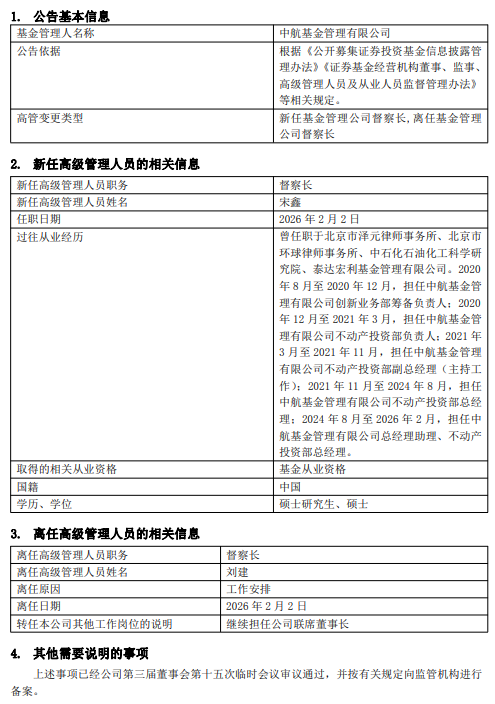
从不动产投资到合规掌舵:中航基金新任督察长宋鑫跨界晋升与治理深意
Xin Lang Cai Jing· 2026-02-04 02:23
Core Viewpoint - The announcement of senior management changes at AVIC Fund highlights the company's commitment to strengthening its governance structure and professional management capabilities during its ongoing development process [1][12]. Management Changes - Liu Jian has resigned from the position of Chief Compliance Officer due to work arrangements but will continue to serve as Co-Chairman of the company [4][15]. - Song Xin has been appointed as the new Chief Compliance Officer, effective February 2, 2026 [3][14]. New Chief Compliance Officer Background - Song Xin possesses a diverse background, having worked in legal fields and with significant experience in the real estate investment sector, which is crucial for the company's operations [5][17]. - His career includes roles at law firms and a research institute, as well as various leadership positions within AVIC Fund, indicating a strong internal promotion trajectory [6][18]. Governance Stability - The transition of Liu Jian to a higher strategic decision-making role reflects the company's focus on governance stability and continuity [7][19]. - AVIC Fund has maintained a clear and stable equity structure since its establishment in 2016, with significant asset management growth, surpassing 61 billion yuan by the end of 2025 [7][19]. Strategic Implications - The appointment of Song Xin is seen as a strategic move to reinforce compliance foundations in key business areas, particularly in real estate investment, while balancing growth and risk management [11][22].
东方财富证券注册资本增至127亿元
Jing Ji Guan Cha Wang· 2026-01-27 12:21
Core Viewpoint - The article discusses the recent capital increase and strategic adjustments of Dongfang Caifu Securities, highlighting its proactive approach to adapt to market changes amid industry consolidation and rising market concentration [3]. Group 1: Company Capital Changes - Dongfang Caifu Securities increased its registered capital from 12.1 billion to 12.7 billion yuan, marking a 4.96% increase [3]. - The company has a highly concentrated and clear shareholding structure, with the parent company holding 99.95% of the shares, providing a stable foundation for business expansion [3][4]. Group 2: Financing Strategy - The company employs a mixed financing strategy of equity and debt, having received approval to issue up to 10 billion yuan in corporate bonds and 1 billion yuan in technology innovation bonds [5]. - This multi-layered capital supplement mechanism supports current business expansion needs and reserves financial advantages for potential industry consolidation [5]. Group 3: Industry Context and Challenges - The securities industry is undergoing a fundamental shift in regulatory guidance, moving from scale expansion to functional positioning and high-quality development [5]. - The increasing concentration in the industry is evidenced by recent mergers and acquisitions among major firms, indicating a shift towards professional services rather than price competition [5]. Group 4: Company Performance and Future Outlook - As of the end of 2024, the company reported total assets of 265.877 billion yuan, a year-on-year increase of 25.98%, with revenue and net profit growing by 26.33% and 30.57%, respectively [6]. - The company aims to leverage its internet platform and financial technology capabilities to create a differentiated competitive advantage, focusing on areas such as smart investment advisory systems and customized product design [5][6]. - The success of the company's strategic adjustments will depend on its ability to convert capital advantages into actual service capabilities and innovative outcomes, which is crucial for both its development and the broader industry's transformation [6].


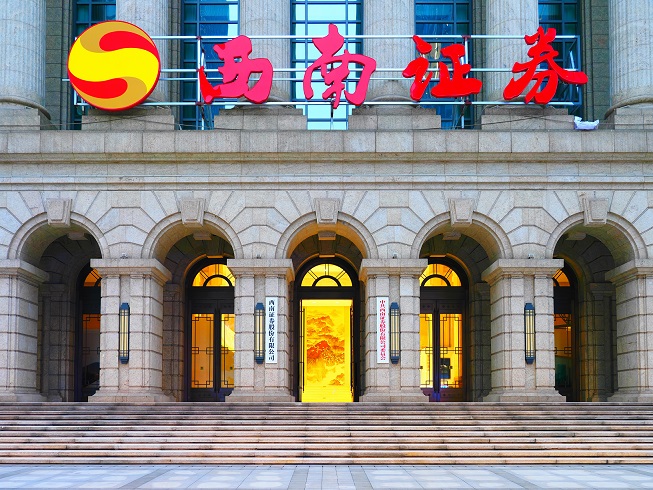
西南证券党委书记、董事长姜栋林:深学笃行 绘就公司高质量发展新蓝图
Zhong Guo Zheng Quan Bao· 2026-01-27 00:14
Core Viewpoint - Southwest Securities is actively integrating its development into national strategies and regional development, focusing on enhancing financial services to support the real economy and achieving high-quality growth [2][4][14]. Group 1: Financial Performance - In the first three quarters of 2025, Southwest Securities achieved operating income of 2.518 billion yuan, a year-on-year increase of 42.75%, and a net profit attributable to shareholders of 706 million yuan, up 46.11% year-on-year [2]. - The company has significantly increased its service scale for the real economy, exceeding 80.4 billion yuan, a growth of approximately 20%, with services in Chongqing surpassing 20 billion yuan, marking a 120% increase [4]. Group 2: Business Development - The company has seen a continuous rise in client numbers and an optimization of client structure, with explosive growth in securities investment income and significant improvements in investment capabilities and risk control [3][6]. - The investment banking division has exceeded its revenue targets, with bond underwriting amounts surpassing 20 billion yuan, solidifying its competitive advantage in the region [6]. Group 3: Strategic Initiatives - Southwest Securities has established a strategic investment fund of 1.5 billion yuan for the Chengdu-Chongqing economic circle, enhancing its role in regional development [4]. - The company has formed strategic partnerships with 38 district and county governments in Chongqing and deepened cooperation with 32 key state-owned enterprises [4]. Group 4: Digital Transformation and Innovation - The company has completed a top-level design for digital transformation, focusing on integrating AI applications and enhancing customer experience through digital tools [7]. - Southwest Securities has been recognized as a leader in financial information services for four consecutive years and has been included in the top 20 for digital transformation maturity in the industry [7]. Group 5: Compliance and Risk Management - The company has implemented a comprehensive risk management system and conducted extensive compliance training, achieving 100% coverage across all departments [9][10]. - Southwest Securities is enhancing its compliance culture through innovative activities and has established a collaborative supervision mechanism among risk management, audit, and compliance departments [10]. Group 6: Cultural and Organizational Development - The company emphasizes a culture of integrity and professionalism, integrating its core values into all aspects of its operations [12][14]. - Southwest Securities is committed to building a strong organizational structure to support its local market service capabilities and enhance overall operational efficiency [8][12].

深学笃行 绘就公司高质量发展新蓝图
Zhong Guo Zheng Quan Bao· 2026-01-26 20:54
Core Viewpoint - Southwest Securities has achieved significant milestones in capital market activities, including a 4 billion yuan financing for *ST Songfa, marking the largest fundraising by a private listed company in three years, and the approval of major asset restructuring projects, indicating its commitment to regional economic development and high-quality growth [1][2]. Financial Performance - In the first three quarters of 2025, Southwest Securities reported a revenue of 2.518 billion yuan, a year-on-year increase of 42.75%, and a net profit attributable to shareholders of 706 million yuan, up 46.11% year-on-year [2]. - The company has expanded its service scale to over 80.4 billion yuan for the real economy, with a 20% year-on-year growth, and over 20 billion yuan specifically for Chongqing, reflecting a 120% increase [3]. Strategic Initiatives - Southwest Securities has established a strategic investment fund of 1.5 billion yuan for the Chengdu-Chongqing economic circle, enhancing its role in regional development [3]. - The company has formed strategic partnerships with 38 local governments and 32 key state-owned enterprises in Chongqing, implementing tailored services for over 50 listed companies [3]. Business Development - The wealth management division has seen a steady increase in client numbers and optimized client structure, with margin financing clients growing significantly [2]. - The investment banking division has exceeded its revenue targets, with a notable increase in project reserves and business expansion [2][5]. - The asset management division has focused on market expansion and enhancing active management capabilities [5]. Digital Transformation - Southwest Securities has completed a top-level design for digital transformation, establishing a customer service system that matches client needs precisely [6]. - The company has been recognized for its digital capabilities, being rated among the top 20 in the industry for digital maturity [6]. Compliance and Risk Management - The company has launched a compliance initiative for 2025, conducting 344 compliance training sessions to ensure adherence to regulations across all departments [7][8]. - A comprehensive risk management system has been established to enhance the company's ability to manage risks effectively [8]. Cultural Development - Southwest Securities emphasizes a corporate culture centered on integrity, stability, precision, and innovation, aiming to create long-term value for clients and stakeholders [9][10]. - The company integrates cultural values with operational strategies, fostering a strong organizational culture that supports its growth objectives [9][10].
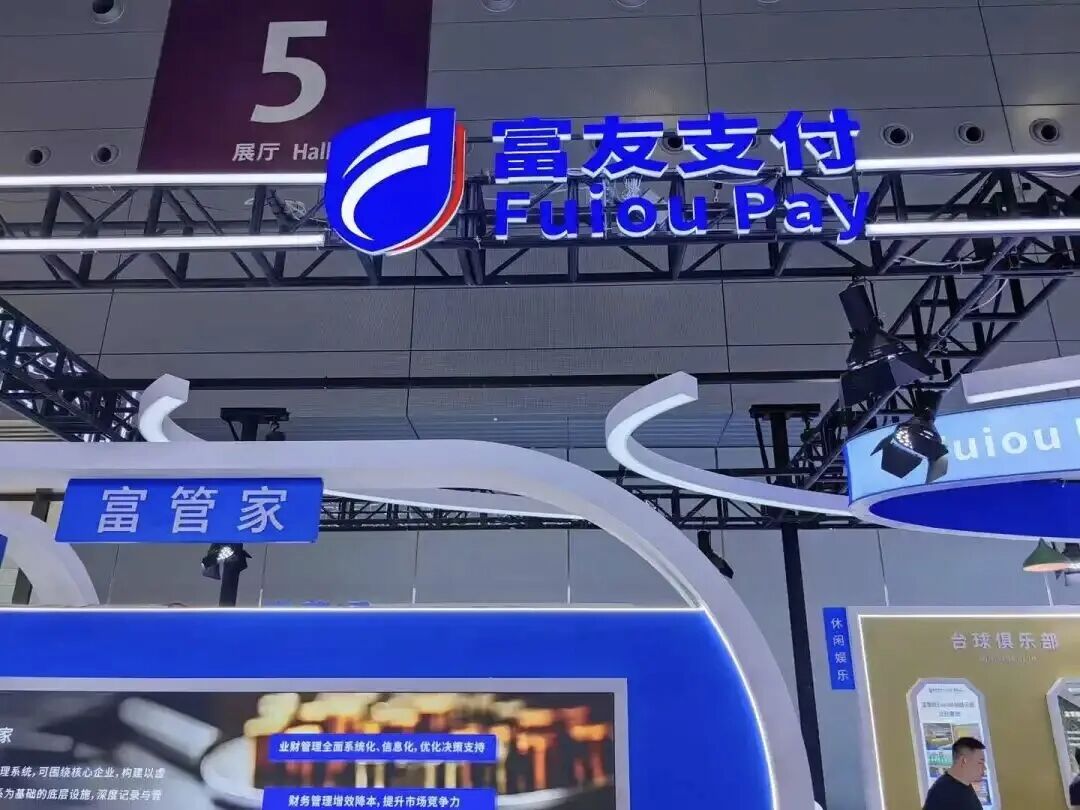
富友支付难掩三重致命硬伤
Xin Lang Cai Jing· 2026-01-25 01:02
Core Viewpoint - Compliance issues are the most significant obstacle for Fuyou Payment's listing journey, reflecting systemic internal control vulnerabilities and becoming a core concern for the Hong Kong Stock Exchange's review [3][10]. Compliance Issues - Fuyou Payment has faced numerous penalties over the past decade, indicating serious compliance failures across its operations, including payment business norms and customer identity verification [3][10]. - The company was ordered to exit payment business in seven provinces due to a serious violation in 2014, significantly reducing its operational scope [4][11]. - In 2023, Fuyou Payment was fined 4.55 million yuan for failing to fulfill customer identity verification obligations, and in 2024, it faced additional penalties for foreign exchange violations [4][11]. Business Structure and Growth Challenges - Over 80% of Fuyou Payment's revenue relies on traditional merchant acquiring services, which are highly homogeneous and face intense competition, leading to high commission costs [4][11]. - The company's domestic payment business gross margin has been declining year by year, adversely affecting overall profitability [4][11]. - The cross-border payment business has shrunk by over 30% in three years, and the anticipated growth from digital commercial solutions has not materialized [5][12]. Financial Position and Market Environment - Fuyou Payment holds only over 300 million yuan in cash and equivalents, highlighting a significant funding gap for technological upgrades and market expansion [5][13]. - The pressure from early investors seeking returns and the challenging external environment add uncertainty to Fuyou Payment's listing prospects [5][13]. - The Hong Kong market's scrutiny of financial firms has shifted towards evaluating compliance sustainability, business innovation, and growth potential, making it difficult for Fuyou Payment to gain approval [5][13]. Listing History and Future Prospects - Fuyou Payment has attempted to list multiple times, with three failed attempts in A-shares and three in Hong Kong, primarily due to unresolved compliance and performance issues [6][14]. - To succeed in its listing, Fuyou Payment must address three core issues: improving compliance, reducing reliance on traditional services, and optimizing profit structure [6][14]. - Current conditions suggest that these challenges are unlikely to be resolved in the short term, making future listing attempts potentially futile [7][14].
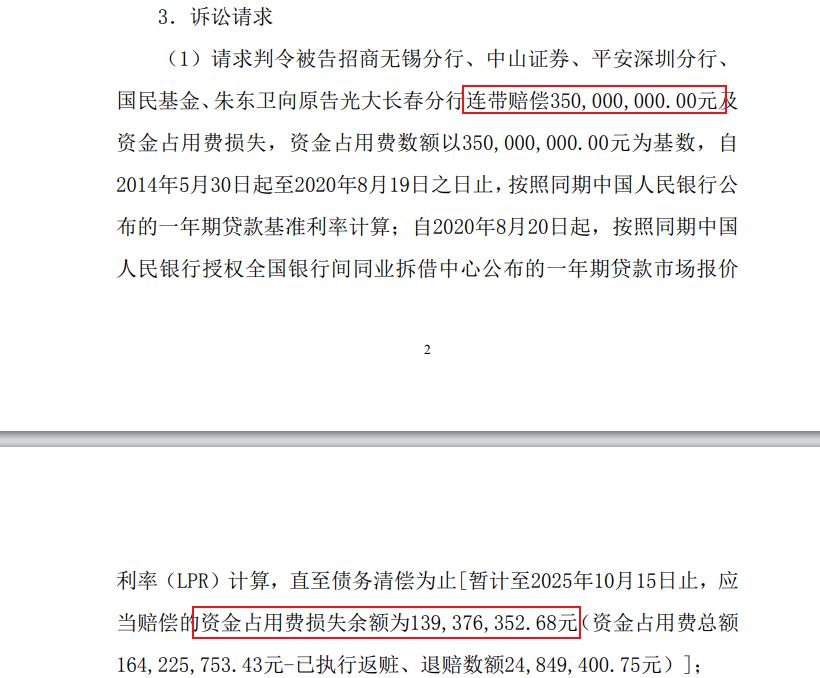
3.5亿旧案余波未了,中山证券遭连带起诉
Xin Lang Cai Jing· 2026-01-23 05:38
Core Viewpoint - The article discusses a complex loan fraud case involving multiple financial institutions and a troubled rice company, highlighting ongoing legal disputes and the financial struggles of Zhongshan Securities, a subsidiary of Jinlong Co., which is facing significant litigation and declining performance [1][2][22]. Group 1: Fraud Case Overview - A loan fraud scheme involving 3.5 billion yuan was orchestrated by Liu Mouyi, the actual controller of Liuhe Ju Xin Yuan Rice Industry Co., and Zhang Mou, a bank executive, leading to a network of deceit across four financial institutions [1][4]. - The fraudulent activities included the forgery of bank documents and misrepresentation of the company's financial status to secure loans that were never legitimately obtained [4][6]. - The case has resulted in criminal convictions for the key perpetrators, but civil disputes continue, with claims totaling 4.89 billion yuan against Zhongshan Securities and other financial institutions [7][8]. Group 2: Zhongshan Securities' Legal and Financial Challenges - Zhongshan Securities has been involved in over 90 million yuan of litigation in the past year, which represents approximately 3.77% of its latest audited net assets [2][10]. - The company reported a 29% decline in revenue and an 88% drop in net profit for 2025, indicating severe financial distress [17][22]. - The ongoing legal issues and declining performance have raised concerns about the company's compliance and risk management practices, which have been criticized in the past [20][21]. Group 3: Impact on Jinlong Co. - Jinlong Co., the controlling shareholder of Zhongshan Securities, has faced four consecutive years of losses exceeding 900 million yuan, with a high equity pledge ratio of 98.98% [19][22]. - The company has attempted to alleviate its financial burden by planning to sell stakes in Zhongshan Securities and Dongguan Securities, although these efforts have faced challenges [19][22]. - The financial instability of Jinlong Co. poses additional risks to Zhongshan Securities, complicating its recovery and operational stability [22].

东吴证券党委书记、董事长范力:以特色高质量发展谱写一流现代投行建设新篇章
Xin Lang Cai Jing· 2026-01-22 14:54
Core Viewpoint - The article emphasizes the strategic direction of Dongwu Securities, focusing on "serving small and medium enterprises" and "integrating into the Yangtze River Delta" as key components of its development strategy, aligning with national financial goals and the need for differentiated growth in the securities industry [1][2][3]. Group 1: Company Development and Strategy - Dongwu Securities has evolved from a regional broker to a comprehensive securities firm with a national presence, establishing 30 branches and 130 business units across China [3][17]. - The company has seen significant growth, with total assets reaching 217 billion yuan and net assets 42.8 billion yuan by Q3 2025, doubling and increasing by 1.5 times respectively since the end of the 13th Five-Year Plan [3][17]. - The firm aims to enhance its core competitiveness and maintain its leading position among mid-sized brokers, achieving a comprehensive strength ranking within the top 18 in the industry [3][17]. Group 2: Industry Context and Requirements - The current phase of the securities industry is characterized by deepening reforms and a strategic opportunity to build first-class investment banks and institutions [1][2]. - The China Securities Regulatory Commission has outlined new requirements focusing on functional performance, professional capabilities, differentiated development, compliance risk control, and cultural construction [2][5]. - The industry is urged to shift from "scale expansion" to "function priority," from "homogeneous competition" to "differentiated success," and from "passive compliance" to "proactive risk control" [5][20]. Group 3: Operational Strategies - Dongwu Securities has developed five guiding strategies: focusing on its base in Suzhou, integrating into the Yangtze River Delta, serving small and medium enterprises, enhancing compliance and risk control, and fostering a strong talent pool [4][19]. - The company emphasizes the importance of technology and cultural synergy in its operations, aiming to enhance efficiency and effectiveness through digital transformation and collaborative efforts [4][19]. - The firm positions itself as a financial advisor to local economies, providing comprehensive financial solutions tailored to the needs of key industries in the region [21][22]. Group 4: Risk Management and Compliance - Dongwu Securities prioritizes a robust risk management framework, implementing a comprehensive system that integrates both regulatory compliance and technological support [11][26]. - The company promotes a culture of compliance throughout its organization, ensuring that all employees are engaged in maintaining high standards of regulatory adherence [11][26]. - A clear accountability structure is established to ensure that risk management responsibilities are assigned and enforced at all levels of the organization [11][26]. Group 5: Future Vision and Commitment - Dongwu Securities is committed to becoming a first-class modern investment bank, aligning its goals with national strategies and the broader economic landscape [12][27]. - The firm aims to continue its differentiated development path, focusing on serving the most dynamic sectors of the economy and contributing to the modernization of China's financial services [12][27].

数智时代:企业全球化经营发展战略与合规落地论坛在京成功举办
Sou Hu Cai Jing· 2026-01-21 08:18
Group 1 - The core viewpoint of the articles emphasizes the profound impact of digital technologies such as cloud computing, big data, artificial intelligence, and the Internet of Things on global industrial patterns and business ecosystems, highlighting both opportunities and challenges for Chinese enterprises going global [2] - The forum titled "Digital Intelligence Era: Development Strategy and Compliance Implementation for Global Business Operations" aims to explore new paths and challenges in global business development under the digital intelligence wave, focusing on compliance strategy construction and practical norms [4] - The forum gathered over 290 participants, including top experts, scholars, and executives from well-known companies, to discuss strategic planning, legal regulatory environments, and business practices for international operations [6] Group 2 - The opening remarks by the chairman of the law firm highlighted the firm's growth through various stages and its leading position in the industry, attributing success to the support from cross-border lawyers and industry peers [8] - The Secretary-General of the China Semiconductor Industry Association discussed the challenges faced by the semiconductor industry due to international technology controls and announced the establishment of a legal compliance working group to enhance compliance management capabilities [10] - The Deputy Minister of the China Council for the Promotion of International Trade emphasized the importance of international business operations in the digital context and promoted an upcoming international supply chain trade promotion expo [12] Group 3 - A lawyer from the law firm analyzed the compliance challenges faced by enterprises in the current environment, emphasizing the need for a multi-dimensional compliance integration approach and the rapid iteration of regulatory policies [14] - The forum featured a keynote speech by an academician focusing on building a secure and trustworthy network security guarantee system, highlighting the importance of cybersecurity as a component of national security [17] - A senior partner from the law firm provided insights on compliance in high-tech sectors, detailing regulatory changes in the US, EU, and China, and offering predictions and practical suggestions for enterprises [19] Group 4 - The forum included discussions on the impact of international trade compliance, focusing on anti-dumping and countervailing investigations, and the implications of "reciprocal tariffs" between China and the US [29] - A lawyer presented on the risks and strategies related to foreign investment in China, outlining key risk points and response strategies for foreign enterprises [36] - The forum concluded with a summary emphasizing the rich content and deep insights shared by experts, showcasing China's systematic layout and innovative exploration in digital governance [72]

从信托公司工作会议看今年行业重点
Jin Rong Shi Bao· 2026-01-15 01:45
Core Viewpoint - The trust industry is focusing on high-quality development in 2026, leveraging the "three classifications" reform of trust business to transition towards asset service trusts, asset management trusts, and charitable trusts while balancing risk control and innovation [1][2]. Group 1: Strategic Focus for 2026 - Trust companies are emphasizing the importance of a clear strategic direction for the "14th Five-Year Plan," with a focus on accelerating development, maintaining stability, and ensuring compliance [2]. - The 2026 annual meetings of various trust companies highlight the need for top-level design in high-quality development, with a strong signal sent during the 2025 China Trust Industry Annual Conference [1][2]. Group 2: Compliance and Risk Management - Compliance is underscored as the foundation for the trust industry's development, with companies like GuoTong Trust and ShanGuoTou Trust prioritizing strict adherence to compliance and risk management in their 2026 plans [4]. - Measures include controlling new bad debts and systematically addressing existing non-performing assets to protect investor interests [4]. Group 3: Talent Development - The industry recognizes that a high-quality talent pool is essential for driving transformation and high-quality development, with companies implementing plans to cultivate composite talents who understand both business and governance [5]. - Shanghai International Trust emphasizes focusing on core business and differentiated development while enhancing capabilities in customer management, investment research, and risk control [5]. Group 4: Industry Trends and Focus Areas - Trust companies are aligning their strategies with industry trends, focusing on asset management and service trusts, and differentiating their offerings in sectors like energy, technology innovation, and inclusive finance [5]. - Companies are expected to deepen their competitive advantages by leveraging their unique resources and focusing on specific market segments [5].