品牌战略

Search documents
云锡5项产品荣获全国有色金属行业“质量品牌奖”
Xin Hua Cai Jing· 2025-11-21 10:50
Group 1 - The first National Nonferrous Metals Product Quality Brand Cultivation Evaluation results were announced, with Yunnan Tin Company (YTC) winning multiple awards for product quality and brand influence [1] - YTC's "YT" brand tin ingots received the "Excellent Brand" award, while its lead-free tin-based solder, cast tin-lead solder, cathode copper, and zinc ingots were recognized as "Quality Brands" [1] - The evaluation involved 44 companies and 80 products, undergoing rigorous selection processes including expert reviews and committee approvals [1] Group 2 - YTC has established and continuously improved its quality management system, integrating quality control into every production stage to enhance innovation and management levels [2] - The company achieved a 100% pass rate for tin ingots and a 99% A-grade rate for cathode copper, indicating industry-leading performance [2] - YTC employs a comprehensive quality management approach, ensuring zinc ingots have a purity of 99.9968% and a 100% pass rate, maintaining its leading position in the industry [2]

浙江宁波集成四要素赋能发展新质生产力
Zhong Guo Zhi Liang Xin Wen Wang· 2025-11-19 06:44
Core Insights - Ningbo has achieved significant recognition in quality development, winning multiple national awards, including the China Quality Award and various nominations, highlighting its commitment to high-quality production and innovation [1][2][3] Quality Enhancement - Ningbo has implemented a "quality first" philosophy, leading to the establishment of quality management systems and initiatives that have improved the quality compliance rate of 12 categories of consumer goods [2][4] - The city has received 1 China Quality Award, 7 nominations, and numerous provincial quality awards, showcasing its dedication to quality improvement [2] Brand Development - The brand value of Fotile Group, located in Ningbo, reached 20.156 billion yuan, maintaining its leadership in the kitchen appliance industry for five consecutive years [3][4] - Ningbo has cultivated over 1,800 key brand enterprises with a total output value of 15 trillion yuan, emphasizing the city's focus on brand enhancement and internationalization [4] Standardization Efforts - Ningbo is actively promoting the integration of standardization with industry, having led or participated in the revision of 8,150 international, national, and industry standards [5][6] - The city has developed national standards in various sectors, including automotive safety, which enhances the competitiveness of Ningbo products in international markets [5][6] Intellectual Property Initiatives - Ningbo has implemented the "Head Goose Project" to drive high-value patent creation and utilization, resulting in over 72,000 invention patents and a high per capita patent ownership rate [7] - The city has seen significant commercialization of patented technologies, with sales of a high-precision placement machine reaching approximately 350 million yuan [6][7]
On和Hoka等新兴品牌如何挑战Nike等巨头
3 6 Ke· 2025-11-11 07:17
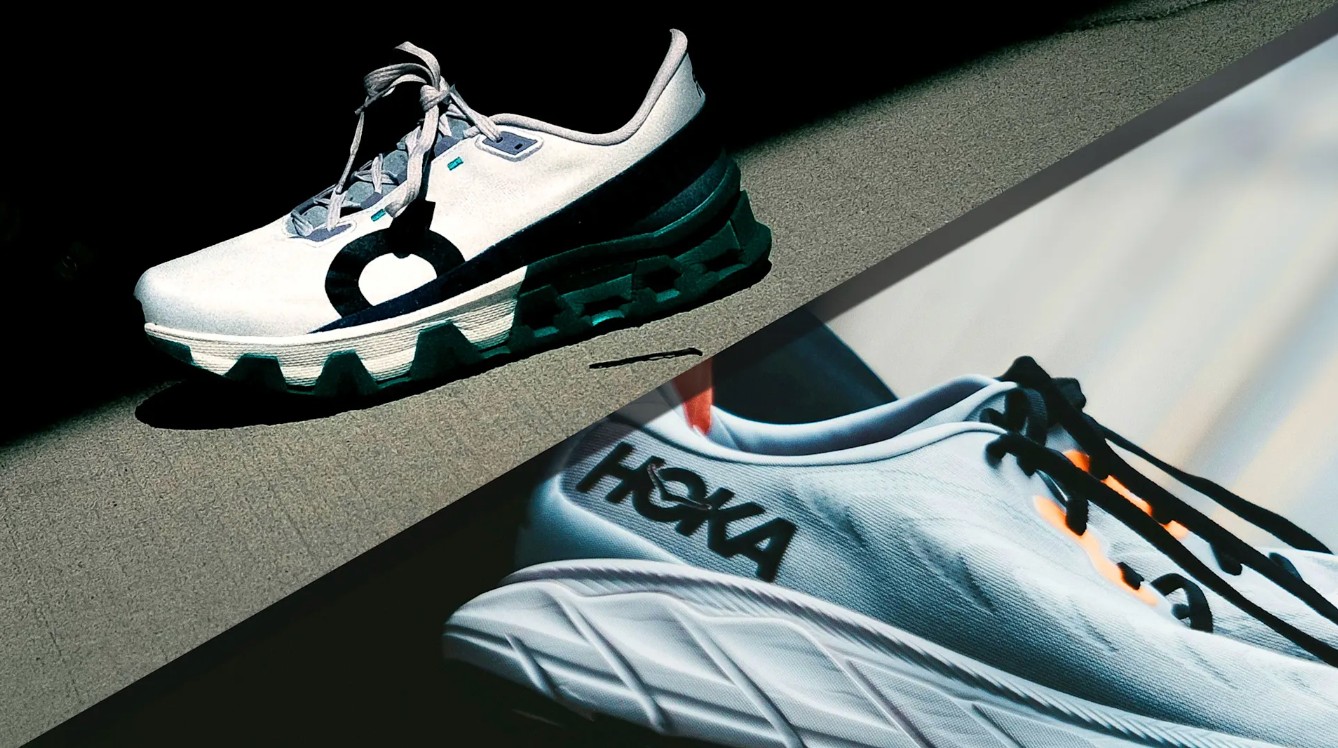
Core Insights - On has emerged as a fast-growing challenger in the athletic footwear market, gaining traction against established brands like Nike, Adidas, and Puma, particularly following Iga Światek's Wimbledon victory [2] - Between 2021 and 2023, challenger brands like Hoka and On saw revenue growth of 29%, while traditional brands only grew by 8% [2] - Hoka achieved a record quarterly sales of $653 million, a 20% year-over-year increase, while On is projected to reach approximately $2.6 billion in sales for fiscal year 2024, with net profits tripling from the previous year [2] Brand Strategy - Effective brand building goes beyond aesthetics; On focuses on a streamlined product line and proprietary technology, emphasizing emotional connection and performance [3] - Transitioning from performance to lifestyle branding is crucial for growth; brands should start by focusing on core audiences before expanding to a broader market [4] - Establishing a brand identity that transcends logos is essential; consistency and repetition in branding help build recognition and trust [5] Growth Challenges - Brands must avoid losing their unique value in the pursuit of growth; maintaining focus on core offerings is vital to avoid dilution of brand identity [6] - Community engagement is invaluable for smaller brands, but it cannot be forced; understanding and adapting to different market communities is key [7] - Successful scaling requires a clear, replicable system that maintains brand uniqueness while resisting the urge to conform to market pressures [8]


赛维时代(301381):服饰品类持续增长,非服业务拖累有望收窄
Xinda Securities· 2025-10-29 01:32
Investment Rating - The investment rating for the company is not explicitly stated in the provided documents, but the overall sentiment appears positive based on the performance metrics and growth expectations. Core Insights - The company reported a revenue of 8.188 billion yuan for the first three quarters of 2025, representing a year-on-year increase of 20.4%. The net profit attributable to the parent company was 210 million yuan, up 7.3% year-on-year, while the net profit excluding non-recurring items was 221 million yuan, reflecting a significant increase of 35.4% [1][2]. - In Q3 2025, the company achieved a revenue of 2.843 billion yuan, which is an 8.3% increase year-on-year, and the net profit attributable to the parent company surged by 200.9% to 41 million yuan [1][2]. Summary by Sections Revenue and Profitability - The company has shown robust growth in its apparel and accessories segment, maintaining a continuous growth trend despite a large base. The revenue growth rate has slowed down due to factors such as expanding sales scale of various brands and trade friction impacting short-term shipments [2][3]. - The company has recorded a gross margin of 43.6% for the first three quarters of 2025, slightly down by 1.4 percentage points year-on-year. The gross margin for Q3 2025 was 41.8%, down 0.6 percentage points year-on-year [4]. Inventory and Non-Recurring Losses - The company has made a provision for inventory impairment of approximately 90.73 million yuan due to losses from financial products and equity investments, which have significantly impacted profits. However, the company is optimistic about future improvements in profitability through strategic adjustments [3][4]. Operational Efficiency - The company has effectively controlled its expense ratios, with sales, management, R&D, and financial expense ratios showing slight declines. The inventory turnover days have decreased to approximately 97.4 days, down by about 6.5 days year-on-year, indicating improved operational efficiency [4][6]. Future Projections - The company forecasts net profits attributable to the parent company of 340 million yuan, 560 million yuan, and 690 million yuan for 2025, 2026, and 2027, respectively, with corresponding P/E ratios of 28.3X, 17.4X, and 14.1X [4][6].
高端中国茶第一股”八马茶业上市背后的“三重护城河
Mei Ri Jing Ji Xin Wen· 2025-10-28 11:29
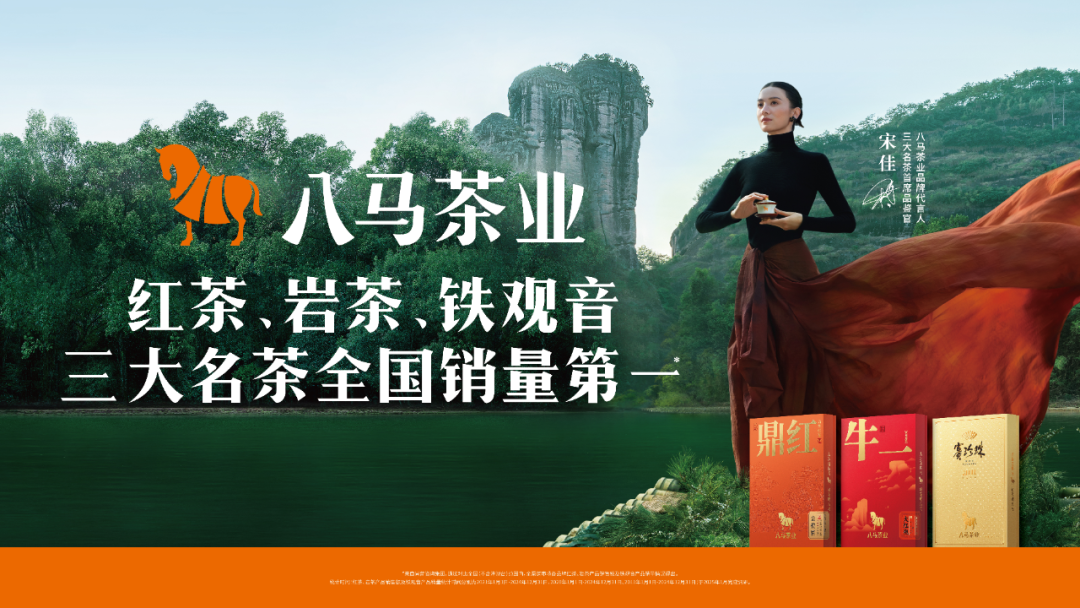
Core Viewpoint - Eight Horses Tea Co., Ltd. has officially listed on the Hong Kong Stock Exchange, marking a significant milestone as the "first high-end Chinese tea stock" and demonstrating its strong market position in a highly fragmented industry [2][14]. Company Overview - Eight Horses Tea has established itself as a leading player in the Chinese tea market, with a national chain scale and high-end brand influence, overcoming structural challenges in a market with over 1.6 million enterprises [2][3]. - The company has achieved a remarkable oversubscription of 2,680.04 times for its public offering, pricing its shares at HKD 50, and saw a first-day increase of 73%, reaching HKD 86.5, with a market capitalization of nearly HKD 7.3 billion [2][14]. Market Position - Eight Horses Tea ranks first in the number of tea chain stores nationwide and leads in revenue in the high-end tea market, oolong tea market, and black tea market [3][5]. - The company has successfully addressed the traditional issue of "having categories but no brands" in the tea industry, particularly excelling in the sales of three major tea categories: black tea, rock tea, and Tieguanyin [5][8]. Competitive Advantages - The company's core competitiveness is driven by three key elements: product quality, distribution channels, and technology, creating a flywheel effect that enhances its market position [6][8]. - Eight Horses Tea's rich heritage of nearly 300 years in tea production, combined with its commitment to high-quality raw materials, provides a unique competitive edge [7][8]. Retail Network - The company has built a robust network of over 3,700 chain stores across the country, utilizing a "direct sales + franchise" model to achieve significant scale and create strong channel barriers [9][11]. - Eight Horses Tea has implemented a rigorous franchisee selection and training system, ensuring high operational standards across its stores [9][12]. Technological Innovation - The company is addressing the non-standardization challenge in traditional tea production through significant investments in smart, digital, and information-based production lines, establishing industry-leading "super factories" [13]. - Eight Horses Tea actively participates in setting industry standards, having led or participated in the formulation of over 20 national tea industry standards [13]. Future Growth Strategy - The funds raised from the IPO will be strategically allocated to expand the channel network, enhance supply chain and smart factory upgrades, and promote brand building and international outreach [15][16]. - The company aims to leverage its market position to become a flagship brand for Chinese tea globally, particularly targeting Southeast Asia and countries involved in the Belt and Road Initiative [15][16]. Market Outlook - The Chinese tea market is projected to reach RMB 135.3 billion by 2029, positioning Eight Horses Tea favorably for future growth amid increasing competition [16].
普拉达(01913):集团收入稳健增长,MiuMiu延续高增态势
Haitong Securities International· 2025-10-27 11:16
Investment Rating - The report maintains a positive outlook on Prada Group, indicating a potential for steady profit growth and resilience in its brand portfolio [5][12]. Core Insights - Prada Group reported a revenue of €4.07 billion for the first nine months of FY25, reflecting a 9% year-on-year increase at constant exchange rates, marking the 19th consecutive quarter of positive growth [1][8]. - The acquisition of Versace for an enterprise value of €1.25 billion is expected to open new growth avenues for the group [1][4]. Revenue Performance - For the first nine months of FY25, Prada brand revenue declined by 2% year-on-year, with a 1% decline in 3Q25, showing significant improvement driven by the recovery in core leather goods and ready-to-wear categories [2][9]. - Miu Miu brand revenue surged by 41% year-on-year in 9M25 and 29% in 3Q25, maintaining strong growth despite a high comparison base from the previous year [2][9]. Regional Performance - Asia-Pacific revenue increased by 10% year-on-year, with notable recovery in mainland China, while the Americas saw a 15% increase, accelerating to 20% in 3Q25 [3][10]. - Europe experienced a 6% growth, supported by stable local demand, while the Middle East recorded a 21% increase [3][10]. Strategic Initiatives - The group is focused on optimizing its retail network, enhancing customer experience, and maintaining a strong product lineup, including high-end offerings [4][11]. - The acquisition of Versace is part of a broader multi-brand strategy aimed at expanding scale and profitability over the long term [4][11]. Future Outlook - Management expresses a cautious yet optimistic view, anticipating steady profit growth supported by a premium product mix and retail efficiency gains [5][12]. - The dual-brand strategy of Prada and Miu Miu, along with the integration potential of Versace, is expected to drive growth exceeding industry averages [5][12].

经销商嫌弃娃小宗?宗馥莉实控企业复用娃哈哈品牌,和国资和解?
Sou Hu Cai Jing· 2025-10-24 23:55
Core Insights - The recent dynamics within the "Wahaha" system have become a focal point in the business landscape, reflecting the evolution of Zong Fuli's decision-making style and the intricate relationship between brand value and market dynamics in the beverage industry [1] Brand Strategy - After Zong Fuli stepped down from her position at Wahaha Group, the Hongsheng Beverage Group, under her control, launched a series of strategic initiatives aimed at promoting independent brand development, which was interpreted as a bold attempt to build an independent brand portfolio [3] - The attitude of the distributor group became a critical turning point in the progression of this strategy, as their marketing choices directly impact the brand's market viability [5] Distributor Dynamics - Distributors, especially small and medium-sized ones, are particularly sensitive to market uncertainties, making them hesitant to take on new brands due to potential operational challenges such as inventory backlog and cash flow issues [5] - The promotion of new brands did not seem to yield corresponding market prospects, leading to increased hesitation among distributors, resulting in many choosing not to renew contracts or pay high guarantees for new brands [6] Strategic Adjustments - In response to the collective reaction from distributors, Zong Fuli demonstrated strategic flexibility by adjusting the original development direction, allowing Hongsheng Group to continue as a contract manufacturer for Wahaha Group, thus maintaining a close cooperative relationship in production [8] - It is speculated that both parties may have reached a consensus on deeper issues, including the necessity of paying licensing fees for continued use of the "Wahaha" brand, which aligns with normal business practices and protects state-owned asset interests [9] Implications of Strategic Changes - The strategic adjustment benefits all parties involved, as it allows Wahaha Group to unify its brand strategy, concentrate resources, and enhance overall market competitiveness while avoiding market share dilution from having too many brands [11] - For state-owned shareholders, a standardized brand licensing process and reasonable fee collection mechanisms ensure the preservation and appreciation of state assets, while also maintaining corporate governance rigor [11] - Zong Fuli's shift from emphasizing "independent brands" to focusing on "core brands" reflects a mature business mindset, concentrating resources to strengthen the main brand's market position for sustainable long-term development [11][12] Industry Insights - The adjustment highlights a critical industry insight: excessive resource dispersion in "internal competition" can be detrimental, as it may weaken overall competitiveness and provide opportunities for competitors [12] - Zong Fuli's decision to consolidate resources under a unified and strong brand image maximizes overall market influence, demonstrating the importance of adhering to industry development rules and fostering consensus among stakeholders for long-term stability [12]

Deckers(DECK) - 2026 Q2 - Earnings Call Transcript
2025-10-23 21:32
Financial Data and Key Metrics Changes - The company reported a revenue increase of 9% in the second quarter, with total revenue for the first half growing by 12% [7][26] - Diluted earnings per share (EPS) increased by 14% in the second quarter and by 17% in the first half [7][30] - Gross margin for the second quarter was 56.2%, up 30 basis points from 55.9% in the previous year [28][29] Business Line Data and Key Metrics Changes - HOKA revenue increased by 15% in the first half, driven by updates to major road-running franchises and strong international performance [10][20] - UGG revenue rose by 12% in the first half, with men's footwear growing at twice the rate of the overall brand [20][21] - HOKA's wholesale channel grew by 13% in the second quarter, while DTC (Direct-to-Consumer) grew by 8% [26][27] Market Data and Key Metrics Changes - International regions were the primary growth drivers for both HOKA and UGG, with UGG and HOKA revenue in international markets increasing by 38% year-over-year [7][20] - HOKA gained two points of market share in the U.S. road-running category and outpaced competition in Europe [11][15] Company Strategy and Development Direction - The company aims for continued international expansion and a balanced approach between DTC and wholesale channels, targeting a 50/50 split [9][18] - The focus remains on building brand awareness and consumer engagement through strategic marketing initiatives [8][19] - The company is committed to sustainable growth and long-term value creation for both HOKA and UGG brands [36][37] Management's Comments on Operating Environment and Future Outlook - Management expressed caution regarding consumer sentiment in the U.S. due to macroeconomic pressures, but remains optimistic about brand positioning for the holiday season [40][43] - The company anticipates a more challenging environment in the second half due to tariff impacts and shifts in consumer preferences [34][35] Other Important Information - The company repurchased approximately $282 million worth of shares during the second quarter, with $2.2 billion remaining authorized for share repurchases [31] - The guidance for fiscal year 2026 includes total revenue expectations of approximately $5.35 billion, with HOKA projected to grow in the low teens and UGG in the low to mid-single digits [32][33] Q&A Session Summary Question: Guidance reinstatement and growth expectations for HOKA and UGG - Management indicated that the guidance reflects a cautious outlook due to anticipated consumer behavior changes and tariff impacts, but remains confident in brand strength [40][42][43] Question: DTC and wholesale channel dynamics - Management explained that while wholesale growth has been strong, DTC is expected to improve in the back half of the year as inventory dynamics normalize [56][57] Question: Long-term margin structure and tariff impacts - Management acknowledged that while tariff pressures will continue, they are committed to maintaining strong operating margins above 20% in the long term [58][60] Question: Price actions and consumer demand - Management noted that price increases have not negatively impacted demand, with strong sell-throughs for key styles [68][70] Question: Order book health and consumer behavior - Management expressed satisfaction with the order book for spring/summer 2026 and noted that consumer behavior has shown deeper valleys and higher peaks due to uncertainty [80][84]

2025年品牌战略的实操要点有哪些?
Sou Hu Cai Jing· 2025-10-22 06:52
Core Insights - Brand strategy has evolved from a marketing function to a core element of corporate top-level design in the rapidly changing global business environment of 2025 [1] - The quality of brand strategy formulation and implementation directly influences a company's survival and growth potential in the era of rising consumer sovereignty [1] Group 1: Strategic Diagnosis and Monitoring - Establishing a multi-dimensional monitoring mechanism is essential for brand strategy formulation, allowing companies to track industry structure changes, competitive landscape shifts, technological trends, and consumer value orientation [3] - A brand strategy health dashboard should be constructed to monitor key indicators of brand assets in real-time, providing precise data support for strategic adjustments [3] - Brand strategies must possess foresight and adaptability to respond to the rapidly changing market environment [3] Group 2: Differentiation and Resource Allocation - Planning and selecting a differentiation path is a core aspect of brand strategy, requiring alignment between a company's core capabilities and market opportunities [3] - Companies should define their value propositions, identify target customer groups, and establish a complete brand architecture system to create differentiated advantages [3] - Optimizing strategic resource allocation and leveraging effects is crucial for the implementation of brand strategies, necessitating a focus on resource efficiency across R&D, production, channels, and communication [3] Group 3: Implementation and Performance Management - Planning the implementation path and execution control determines the ultimate effectiveness of brand strategies, requiring the breakdown of long-term strategies into phased goals [5] - A cross-departmental collaboration mechanism should be established, along with a scientific performance evaluation system to incorporate strategic execution outcomes into departmental assessments [5] - Successful brand strategies depend on rigorous execution control in the current era where execution capability is paramount [5] Group 4: Digital Transformation and Competitive Advantage - In the digital wave of 2025, the formulation and implementation of brand strategies have become a rigorous management science [7] - Companies that integrate systems thinking, data-driven approaches, and continuous innovation will build sustainable competitive advantages and gain proactive development in intense market competition [7]

激战中国市场:耐克销售下滑 阿迪达斯“高调”进击丨运动变局
2 1 Shi Ji Jing Ji Bao Dao· 2025-10-17 13:14
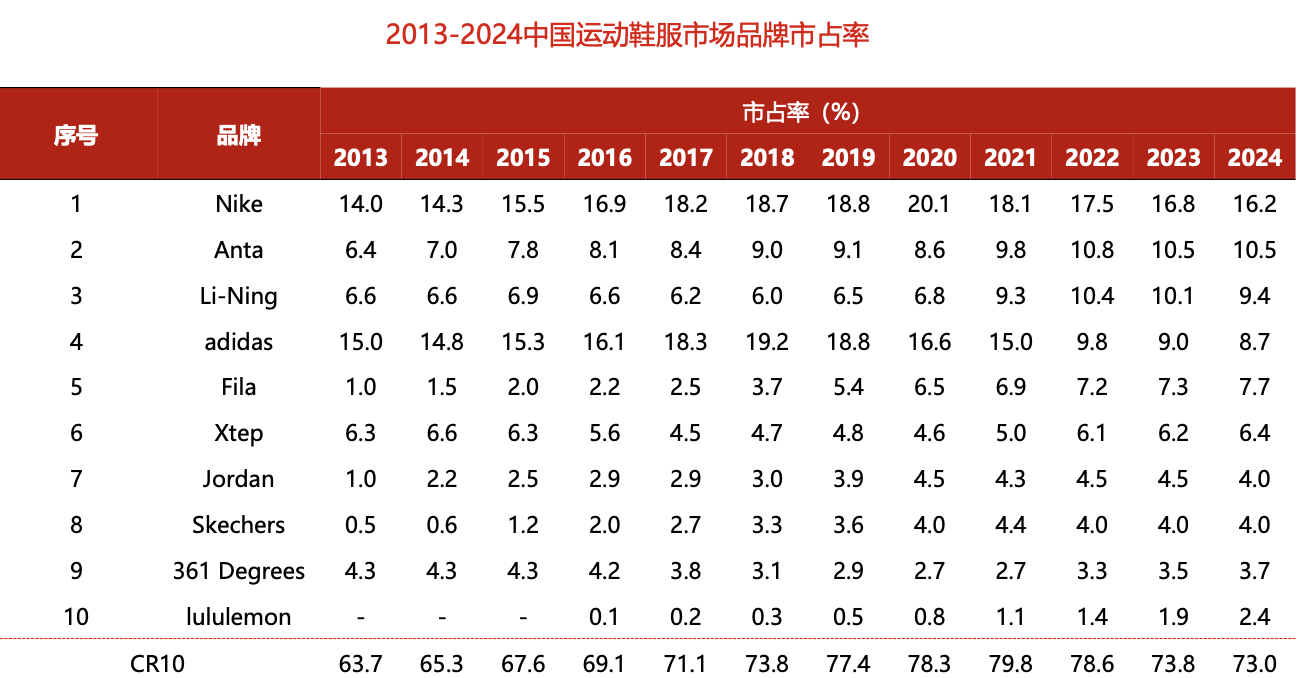
Core Insights - The global sports footwear and apparel industry is largely defined by the competition between Nike and Adidas, with a historical context of dominance by German, American, and Japanese brands before Nike's rise in the 1980s [1] - In the Chinese market, Nike and Adidas have faced increasing competition from domestic brands like Anta and Li-Ning since 2017, leading to a decline in Adidas's market share [1][10] - Adidas is actively working to regain its position in the Chinese market, showing a notable increase in revenue and market strategies [10][12] Market Dynamics - Nike's market share in China has decreased from 18.1% in 2021 to 16.2% in 2024, while Adidas's share has dropped from 15% to 8.7% in the same period [14] - Anta's market share increased from 9.8% to 10.5%, and Li-Ning's share rose slightly from 9.3% to 9.4% [14] - The competitive landscape is intensifying, with domestic brands gaining traction and impacting the pricing power of established international brands [6][22] Financial Performance - Nike's revenue in Greater China fell by 10% to $1.512 billion (approximately 10.775 billion RMB) for the latest fiscal quarter, with a decline in both direct and wholesale channels [4][5] - Adidas reported a 2.2% increase in revenue to €5.952 billion (approximately 49.625 billion RMB) in Q2, with a significant contribution from the Greater China region, which saw an 11% increase [10][11] - The operating profit margin for Adidas in China reached 22.7%, surpassing its margins in Europe and North America [11] Strategic Initiatives - Adidas's CEO, Bjorn Gulden, has been actively engaging with the Chinese market, emphasizing the importance of local production and design [12][14] - Nike is also increasing its investment in China, focusing on enhancing its retail experience and product offerings to regain market share [17][20] - Both companies are facing pressure from the rise of domestic brands, which are improving product quality and competitive pricing [8][22]