
大思政课

Search documents
探秘海岛“绿肺”
Zhong Guo Zi Ran Zi Yuan Bao· 2025-09-02 00:39
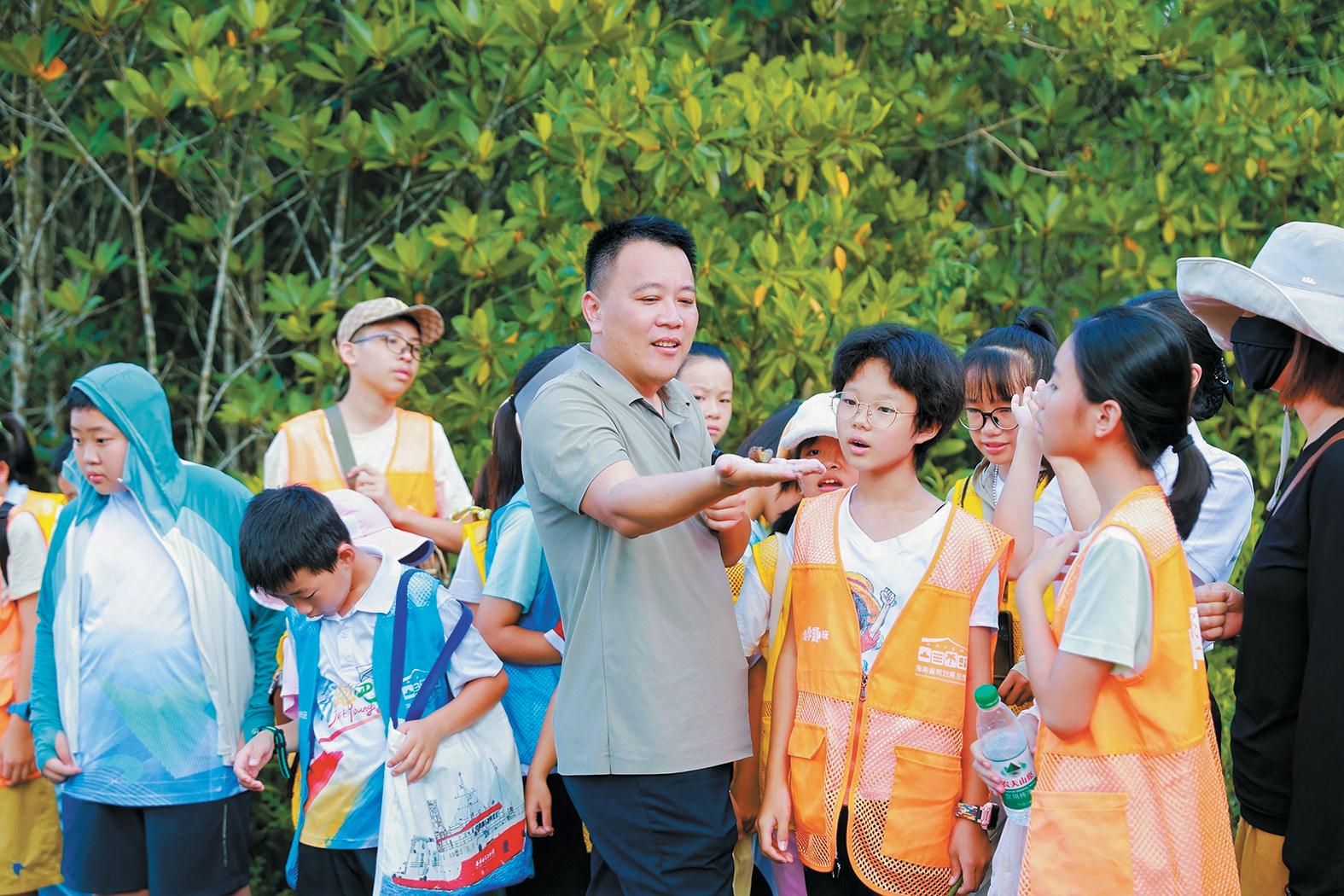
②陈石泉带领孩子们测量招潮蟹的洞口。 4 S 5 TS b . 24 e 4 The St 978 12 h SPORT - 15 6 p ③工作人员向孩子们介绍红树植物海莲的生长特征。尹建军摄 "叶片上真的有盐!书里学的知识,今天得到了验证!"8月22日,海口东寨港红树林滩涂边,中学生陈翌轩举着刚观察完的老鼠簕叶片,难掩兴奋。当 天,海南省规划展览馆主办的"探秘海岛绿肺——海南红树林沉浸式科普研学"活动在此开展,25名中学生以"小科学家"身份,完成了一场从科学猜想到实地 验证的研学实践。 ①冯尔辉向孩子们介绍石磺的生活习性和对红树林的保护作用。 在实践中收获三重成长 清晨的东寨港滩涂,"小科学家"们穿着防滑鞋、携带实验工具,在科研人员指导下开启探索。在海南东寨港国家级自然保护区管理局林业工程师冯尔辉 的带领下,植物组观察老鼠簕的吐盐现象,水质组用PH值试纸检测不同采样点水质,动物组则用标尺和样方法统计蟹洞密度,全程遵守"无干扰观察"原 则,践行生态伦理。 午后,海南省海洋与渔业科学院曲口科研基地里,该院教授陈石泉带领学生参观海草床示范区、海马实验室与东风螺培育车间,并示范高倍显微镜操 作,指导学生记录、处理 ...

感悟抗战精神 汲取奋进力量 | 上好“开学第一课”
Yang Shi Wang· 2025-08-27 08:51
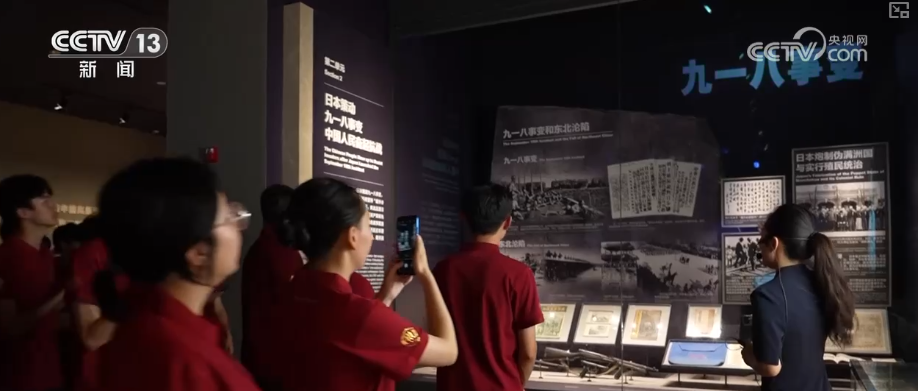
央视网消息:2025年是纪念中国人民抗日战争暨世界反法西斯战争胜利80周年。眼下,各大高校新生正陆续到校报到。在北京,中 国人民大学3000余名本科新生的开学第一课就是前往中国人民抗日战争纪念馆,参观学习抗战历史,汲取奋进力量。 中国人民大学3000余名本科新生集体参观了"为了民族解放与世界和平"主题展览,这里共展出了照片1525张、文物3237件。 在讲解员的带领下,同学们驻足凝视赵一曼家书、沈忠明革命烈士证明书等珍贵展品,深入了解先烈的英雄事迹,感悟伟大抗战精 神。 中国人民大学与中国人民抗日战争纪念馆还联合启动了2025年"纪念馆里的大思政课"活动。深入挖掘革命文物的思想内涵与时代价 值,推动课堂教学与实践教学有机融合,打造一批具有代表性的思政课程教学项目及案例。 中国人民大学"纪念馆里的大思政课"指导教师晁迪表示,对于学生而言,能够让他们以大思政课为出发点,去关注抗战历史,从而 传承好抗战精神,不忘历史才能够书写更好的未来,去做担当民族复兴大任的时代新人。 在人民战争地道战、地雷战等主题展陈区域,同学们在互动体验中,直观感受抗战时期的军民智慧。在"弘扬伟大抗战精神 深切缅 怀抗战英烈"专区,同学们在大 ...
馆校共建“纪念馆里的大思政课”研讨会在京召开
Ren Min Ri Bao· 2025-08-26 22:22
据悉,"纪念馆里的大思政课"创建活动将深入挖掘革命文物蕴含的思想内涵和时代价值,把课堂教学与 实践教学有机结合起来,讲好抗战故事,弘扬伟大爱国主义精神、伟大抗战精神。 《 人民日报 》( 2025年08月27日 11 版) 本报北京8月26日电 (记者施芳)8月25日,中国人民大学与中国人民抗日战争纪念馆在北京联合举办 馆校共建"纪念馆里的大思政课"暨推进大中小学思想政治教育一体化建设研讨会,共同探索将伟大抗战 精神有机融入学校思想政治工作的方法与路径。来自中国共产党历史展览馆、中国人民革命军事博物 馆、陕西延安革命纪念馆等20余家革命纪念馆的代表出席研讨会。与会代表表示,要遵循学校思政工作 和学生成长规律,创新推进革命文物融入校园文化塑造,策划举办走进校园、贴近师生的主题巡展、宣 传宣讲、文艺展演、知识竞赛等活动。 (责编:杨光宇、胡永秋) ...
依托专业资源,丰富公共文化(文化中国行·视线)
Ren Min Ri Bao· 2025-08-22 22:14
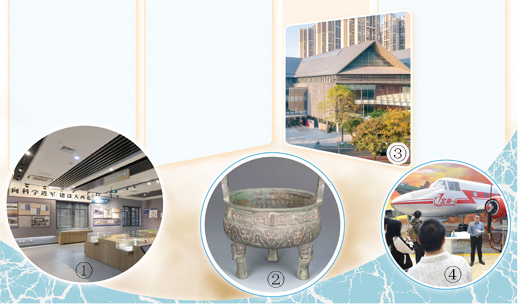
Core Viewpoint - University museums are increasingly recognized as important cultural and educational institutions, serving both academic and public interests while enhancing the educational experience for students and the community [2][3][4][5][6][8]. Group 1: Role and Impact of University Museums - University museums provide specialized public cultural services and have become a "second classroom" on campuses, leveraging academic resources to enhance education and cultural development [2][3]. - The Xi'an Jiaotong University Westward Migration Museum integrates historical narratives into the "Big Ideological and Political Course," hosting over 30 themed exhibitions to engage audiences with the Westward Migration story [4]. - The Sichuan University Museum, with over 80,000 historical artifacts, collaborates with academic research to deepen the understanding of cultural heritage and supports archaeological projects [5][6]. Group 2: Educational and Cultural Significance - University museums utilize modern technology to create immersive experiences, enhancing student engagement with Chinese civilization and culture [6]. - The Beijing University of Aeronautics and Astronautics Museum showcases significant achievements in China's aerospace history, inspiring students through exhibits like the "Beijing One" aircraft and the "Fengru Three" drone [8][9]. - Specialized university museums, such as the Electronic Science Museum at the University of Electronic Science and Technology, present collections that reflect advancements in their respective fields, serving as auxiliary classrooms for professional learning [9].
决胜“十四五” 打好收官战|教育综合改革构建铸魂育人新格局
Xin Hua She· 2025-08-19 10:50
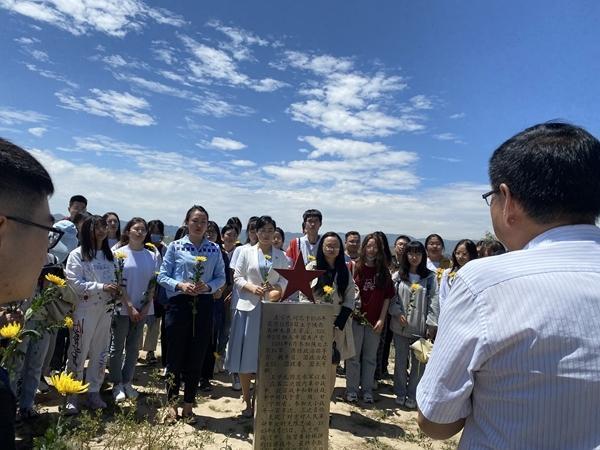
Group 1 - The core viewpoint emphasizes the importance of education in nurturing talent for the country, highlighting the commitment to reform and improve education during the "14th Five-Year Plan" period [1][3] - The education system aims to integrate education, technology, and talent development to enhance the quality and effectiveness of education, thereby increasing public satisfaction and contributing to the construction of an education powerhouse [1][6] Group 2 - The focus on moral education and the cultivation of patriotic sentiments is evident through various activities, such as the "Red Study Tour" in Hebei, which aims to instill a sense of national pride among students [2][5] - The implementation of high-quality moral education programs and the integration of political education across all educational levels are being prioritized to strengthen the foundation of education [4][5] Group 3 - The introduction of policies promoting free preschool education is expected to benefit approximately 12 million children, reflecting efforts to enhance educational equity [8] - The comprehensive reform of education is addressing key challenges, such as ensuring balanced access to education across regions and providing financial support to economically disadvantaged students [9] Group 4 - The establishment of new undergraduate programs in response to national strategies and market demands aims to cultivate innovative talents and skilled professionals [10] - The focus on teacher quality is underscored by initiatives to enhance teacher training, support, and recognition, which are crucial for achieving high-quality education [11][12]
在纪念馆,家国情怀这门必修课“直抵人心”
Zhong Guo Qing Nian Bao· 2025-08-03 01:47
Core Viewpoint - The article discusses the integration of memorials and museums into the ideological education system in China, emphasizing their role in enhancing students' understanding of history and patriotism through experiential learning [1][3][5]. Group 1: Educational Impact of Memorials and Museums - Memorials and museums are increasingly recognized as vital components of the ideological education reform, serving as practical teaching bases for students [1][3]. - The "Big Ideological and Political Course" initiative has led to the establishment of numerous practice teaching bases in significant memorial sites across the country [1][5]. - Students are engaging with history in a more profound way, often participating in activities that connect them emotionally to the sacrifices made during historical events [3][5][12]. Group 2: Innovative Teaching Methods - The "Double Teacher Teaching" model has been implemented in places like the Lanzhou Battle Memorial, combining emotional storytelling with theoretical depth to enhance learning outcomes [12][14]. - Various memorials are developing unique educational programs, such as the "Red Gene Inheritance" ceremonies and thematic performances, to engage students in a more interactive manner [5][12]. - Educators emphasize the importance of pre-visit theoretical preparation and post-visit reflections to deepen students' understanding and emotional connection to the historical narratives [14][15]. Group 3: Student Engagement and Personal Growth - Students are increasingly taking on roles as narrators of history, sharing stories of past heroes and events with their peers and communities, which fosters a sense of responsibility and connection to their national identity [15][10]. - The emotional narratives presented in memorials help students grasp the concept of sacrifice and the human cost of historical events, making the lessons more relatable and impactful [6][10]. - The shift from passive learning to active participation in storytelling and community engagement is seen as a significant development in the educational approach [14][15].
北京中轴线上“大思政课”迎来升级迭代
Zhong Guo Qing Nian Bao· 2025-07-26 22:10
Core Points - The Beijing Central Axis has been officially recognized as a UNESCO World Heritage site, marking a significant cultural achievement for China [2][3] - The integration of the Central Axis into ideological and political education (思政课) has been enhanced, providing a practical framework for teaching and community engagement [3][6][7] Group 1: Educational Initiatives - The "Big Ideological and Political Class" project at Renmin University of China has been launched to incorporate the Central Axis into educational practices, enhancing students' understanding of cultural heritage [2][3] - Various universities, including Beijing Normal University and Renmin University, have developed programs that utilize the Central Axis as a case study for teaching, focusing on cultural resources and community engagement [3][5][6] - A digital map of practical teaching bases has been created to support the integration of the Central Axis into the curriculum, highlighting key locations and resources [6][7] Group 2: Community Engagement - The "Small Courtyard Discussion Hall" in the Chaichang community serves as a model for grassroots governance, allowing residents to express their opinions and solve community issues [11][12] - Volunteer efforts in cultural heritage surveys have led to the discovery of over 800 cultural relics, demonstrating the active involvement of students in community and cultural preservation [13][14] - The research teams have engaged with local communities to understand the relationship between community governance and the preservation of the Central Axis, emphasizing the importance of grassroots participation [15][16]
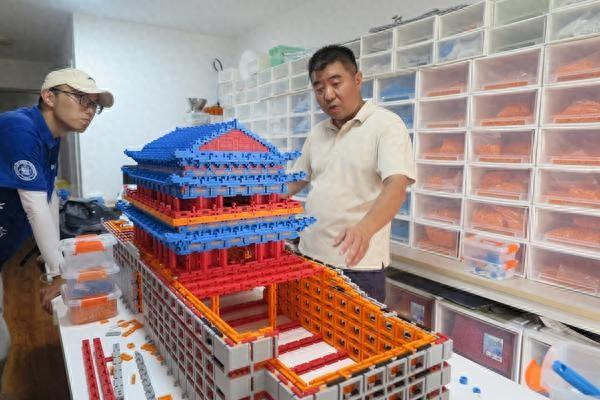
“五亲模式”激活思政课堂一池春水
Zhong Guo Qing Nian Bao· 2025-07-26 22:10
Core Viewpoint - The integration of practical case studies into ideological and political education (思政课) enhances student engagement and learning outcomes, addressing previous challenges of abstract theory and disengagement in the classroom [3][4][9]. Group 1: Five亲模式 Implementation - The "Five亲模式" combines theory and practice, creating a complete teaching loop of "practice-extraction-internalization-teaching-contribution" [4]. - The model encourages teachers to conduct field research and develop case studies that resonate with students, making lessons more relatable and impactful [3][4]. - The model has led to the establishment of a case library with independent intellectual property rights, allowing for the sharing of quality educational resources [7][9]. Group 2: Research and Development - The Marxism Institute has a tradition of practical research, which has been refined under the "Five亲模式" to focus on relevant topics that align with ideological education [6]. - Over the past two years, the institute organized collective research trips for over 120 teachers across various provinces, enhancing the breadth of case studies [6]. - The institute has produced a significant number of academic outputs, including a specialized book and numerous high-level academic papers, contributing to the field of ideological education [9]. Group 3: Classroom Engagement - The use of case studies in the classroom has significantly increased student participation and enthusiasm for ideological education [8]. - Innovative teaching methods, such as "double teacher demonstration" classes, have been implemented to enhance the learning experience [8]. - The institute has developed unique theoretical promotion brands and courses, further enriching the educational landscape [8].
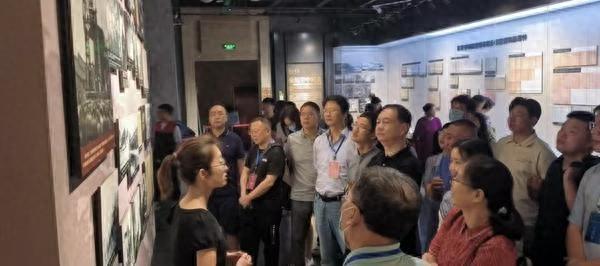
推进“大思政课”建设,提升学校思政引领力
Ren Min Wang· 2025-07-08 03:47
Core Concept - The article emphasizes the importance of the "Big Ideological and Political Course" as a primary channel for ideological education, focusing on integrating resources and optimizing structures to enhance ideological guidance and value shaping [1] Group 1: Expansion of Teaching Resources - The "Big Ideological and Political Course" aims to incorporate social educational resources, selecting materials that align with educational goals and adapting them for classroom use [2] - Students are encouraged to engage in social practices to deepen their understanding and commitment, utilizing platforms that connect educational institutions with societal experiences [2] Group 2: Utilization of Digital Technology - Digital technology is highlighted as a means to create a collaborative teaching platform for the "Big Ideological and Political Course," facilitating resource sharing and enhancing educational effectiveness [3][4] - The establishment of a resource-sharing platform is essential for aggregating high-quality educational materials, including videos, lesson plans, and case studies [4] Group 3: Strengthening Faculty Development - The article stresses the need for a strong teaching faculty, referred to as "master teachers," to drive the success of the "Big Ideological and Political Course" [5] - It advocates for the inclusion of diverse professionals as part-time instructors to enrich the teaching experience and provide real-world insights [6]
人工智能2.0时代深入推进“大思政课”建设
Xin Hua Ri Bao· 2025-06-02 21:32
Core Viewpoint - The integration of generative artificial intelligence in the construction of the "Big Ideological and Political Course" is essential for enhancing educational quality and addressing contemporary challenges in education [1][2][3][4][5][6] Group 1: Emphasis on People-Centric Education - The focus on "people first" is crucial for innovation in education, aiming to cultivate digital youth capable of national rejuvenation in the context of AI 2.0 [1] - The combination of the "Big Ideological and Political Course" with generative AI can enhance the value of ideological education, guiding students to navigate the challenges posed by AI advancements [1] Group 2: Building a Value-Driven Platform - The rise of generative AI provides new avenues for disseminating various ideologies, necessitating a strong grasp of ideological teaching authority [2] - Emphasizing mainstream ideology and utilizing generative AI to transform teaching methods can effectively counter Western erroneous thoughts [2] Group 3: Enhancing Teacher Competence - The construction of the "Big Ideological and Political Course" requires an urgent upgrade in teachers' digital literacy to meet the demands of AI 2.0 [3] - Teachers must balance traditional educational values with innovative teaching methods, enhancing their digital competencies across various teaching dimensions [3] Group 4: Problem-Oriented Resource Allocation - A problem-oriented approach is essential for leveraging generative AI to address students' concerns and improve the effectiveness of ideological education [4][5] - The focus should be on creating targeted educational resources that align with students' needs and expectations [5] Group 5: Systematic Collaboration - A systematic perspective is necessary to integrate generative AI into the "Big Ideological and Political Course," promoting interdisciplinary collaboration [5][6] - The use of AI can facilitate the connection between classroom learning and real-world applications, enhancing the overall educational experience [5] Group 6: Global Perspective - The global application of generative AI in education highlights the need for a broader perspective in constructing the "Big Ideological and Political Course" [6] - Emphasizing the importance of telling China's story and promoting its values on the international stage can enhance cultural exchange and understanding [6]