
学术诚信

Search documents
校方一再对美联邦政府妥协,哥伦比亚大学严惩“反犹”学生引爆舆论
Huan Qiu Shi Bao· 2025-07-23 22:49
Group 1 - Columbia University has imposed severe disciplinary actions on over 70 students involved in anti-Semitic protests, including suspensions, expulsions, and degree revocations [1][3][4] - The university's actions coincide with negotiations with the Trump administration regarding the release of federal funds, suggesting a political influence on the disciplinary measures [1][4] - The scale of punishment at Columbia is notably harsher compared to other Ivy League institutions, indicating a significant shift in the university's approach to student protests [4] Group 2 - The disciplinary actions have sparked a divided response in American public opinion, with some criticizing the university for capitulating to political pressure while others support the measures as necessary for maintaining order [3][4] - The protests at Columbia have been described as the most significant among U.S. universities, leading to police involvement for the first time since 1968, highlighting the intensity of the situation [3][4] - There are allegations that the disciplinary actions are part of a federal agreement, raising concerns about the implications for free speech and academic integrity within higher education [4]


用AI检测AI,花钱降论文AI率却被改得一塌糊涂
Yang Guang Wang· 2025-07-15 15:31
Core Viewpoint - The increasing reliance on AI-generated content detection in universities has led to significant challenges for students, as many AI detection tools and "AI rate reduction" software have proven ineffective, often resulting in higher AI content scores after usage [1][2][3]. Group 1: Student Experiences - Students have reported that using AI rate reduction software often leads to increased AI content scores and higher plagiarism rates, contrary to their expectations [1][2]. - Specific cases highlight that students have spent money on these tools, only to find their papers returned as unqualified due to high AI content scores [2][3]. - The inconsistency in AI detection results across different platforms has caused confusion and frustration among students, leading to multiple revisions and additional costs [3][4]. Group 2: Detection Methodology - AI detection models assess content based on indicators like "perplexity" and "burstiness," with AI-generated text typically exhibiting smoother patterns compared to the more variable nature of human writing [4][5]. - Current detection methods are not foolproof, with a significant risk of false positives, indicating that the accuracy of AI content detection remains low [5][6]. - Experts suggest that while AI can assist in content generation, reliance on it for academic writing undermines academic integrity and may lead to issues of plagiarism [5][6]. Group 3: Academic Integrity - The use of AI in writing is viewed as a potential violation of academic integrity, with many institutions having clear policies against such practices [5][6]. - Faculty members are often able to discern AI-generated content during thesis defenses, emphasizing the importance of genuine understanding and engagement with the material by students [6].
2025年大学生学术研究洞察报告
艾瑞咨询· 2025-07-03 01:53
Academic Attitude - Over 40% of university students plan to pursue further studies after graduation, demonstrating a strong academic enthusiasm, with 92.2% seeking academic progress and more than half writing papers during the evening [1][9][12] Academic Tools - University students actively utilize tools to enhance efficiency, with over half facing anxiety related to plagiarism checks, often using multiple tools for a single paper [2][3][22] Plagiarism Check Experience - Students experience conflicting results from plagiarism checks and struggle with high costs, leading to a reliance on multiple tools for reassurance [3][30][35] Academic Integrity - The topic of academic integrity has gained significant public attention, with discussions around thesis reviews becoming increasingly stringent in universities [4] Focus on Academic Work - 69.3% of students prioritize learning professional courses, while 64.0% consider completing their thesis as one of the most important tasks during their university years [7] Academic Pressure - 92.2% of students set academic KPIs for themselves, with 33.8% pursuing academic innovation, and 41% opting for further academic studies as a response to competitive pressures [9][40] Research Opportunities - The most concerning academic topics for students include academic exchange activities (67.2%) and research opportunities (52.6%), indicating a focus on networking and resource acquisition [13] Nighttime Study Habits - 53.2% of university students work on papers at night, with graduate students particularly favoring immersive late-night writing sessions [15] Time Management Challenges - Students spend significant time on logical revisions and plagiarism checks, with 57.2% focusing on content logic modifications and 55.3% on reducing similarity [17] Coping with Plagiarism Anxiety - Over half of the students are caught in a "plagiarism check loop," with 68.6% relying on AI for assistance and 62.7% willing to pay for tools or services [19][26] Tool Utilization - 59.2% of students use AI tools, and 56.2% use plagiarism checkers, indicating a trend of leveraging technology for academic tasks [22][24] AI in Academic Work - 84% of students regularly use generative AI, viewing it as a significant aid in enhancing research efficiency and handling repetitive tasks [24] Plagiarism Check Tools - More than half of students have used plagiarism checkers for various types of papers, with graduation theses being the most common reason [28] Multiple Tool Usage - It is common for students to use multiple plagiarism checkers, with 98.7% of graduate students using two or more tools for added security [30] Tool Selection Criteria - Students desire plagiarism check tools that are authoritative, safe, and accurate, but find it challenging to choose among various options [32] Inconsistent Results - 50.4% of students face inconsistencies in results from different plagiarism checkers, with 40.2% concerned about high costs and data security [35] Expectations for Tool Evolution - 53.5% of students expect plagiarism check tools to evolve with AIGC detection capabilities, and over half desire document format conversion features [37] Academic Spending - Academic papers represent the primary expenditure for nearly 70% of university students, with 78.2% of humanities students investing heavily in papers [42] Payment for Tools - 86.9% of students use both free and paid plagiarism check tools, with a higher willingness to pay among graduate students compared to undergraduates [44] Microsoft OfficePLUS - Microsoft OfficePLUS aims to support students in overcoming academic challenges while enhancing their creative capabilities through technology [46]


2025年大学生学术研究洞察报告
艾瑞咨询· 2025-06-14 08:52
Academic Attitude - Over 40% of university students plan to pursue further studies after graduation, demonstrating a strong academic enthusiasm, with 92.2% seeking academic progress and more than half writing papers during the evening [1][9] Academic Tools - University students actively utilize tools to enhance their efficiency, with over half facing anxiety related to plagiarism checks and commonly using multiple plagiarism detection tools for a single paper [2][3] Plagiarism Check Experience - Students experience conflicting results from plagiarism checks and struggle with high costs, leading to a reliance on multiple tools for reassurance [3][30] Academic Integrity Awareness - The topic of academic integrity has gained significant public attention, with discussions around "thesis" and "plagiarism check" reaching billions of views and millions of discussions on social media platforms [4] Focus on Academic Work - 69.3% and 64.0% of students consider learning professional courses and completing graduation theses as the most important aspects of their university life [7] Academic Pressure - 92.2% of students have academic KPIs, with 33.8% pursuing academic innovation; 41% prefer academic advancement as a response to external uncertainties, reflecting a long-term investment in personal development [9] Research Opportunities - The most concerning academic topics for students are academic exchange activities (67.2%) and research opportunities (52.6%), with academic resources and tools also being prioritized [13] Nighttime Study Habits - 53.2% of university students work on papers at night, with graduate students favoring immersive late-night writing sessions [15] Time Management Challenges - Students spend the most time on logical revisions and plagiarism checks, with 57.2% focusing on content logic modifications and 55.3% on reducing similarity [17] Coping with Plagiarism Anxiety - Over half of the students are caught in a "plagiarism check loop," with 68.6% relying on AI for assistance, 65.5% searching online for help, and 62.7% paying for tools or services [19] Effective Tool Usage - 59.2% of students use AI tools, and 56.2% use plagiarism detection tools, indicating a trend of leveraging technology for academic writing [22] Generative AI in Academia - 84% of students frequently use generative AI, viewing it as a significant aid in enhancing research efficiency and handling repetitive tasks [24] AI Assistance in Writing - 62.9% of students consult AI when facing writing difficulties, with over half using generative AI for their papers [26] Plagiarism Check Tools - More than half of students have used plagiarism detection tools for various types of papers, with graduation theses being the primary focus [28] Multiple Tool Usage - It is common for students to use multiple tools for plagiarism checks, with 98.7% of graduate students using more than two tools for reassurance [30] Tool Selection Challenges - Students desire "authority," "safety," and "accuracy" in plagiarism detection tools, but find it challenging to make quick decisions due to varying strengths and weaknesses [32] Inconsistent Results - 50.4% of students face confusion due to inconsistent results from different plagiarism detection tools, with 40.2% concerned about high costs and data security [35] Expectations for Tool Evolution - 53.5% of students have high expectations for AIGC detection features in plagiarism tools, with over half wanting document format conversion capabilities [37] Investment in Academic Tools - 86.6% of students believe that paying for academic-related products or services enhances their research efficiency [40] Major Academic Expenses - Academic papers are the primary expenditure for nearly 70% (69.8%) of university students, with 78.2% of humanities students investing in papers [42] Cost Management Strategies - 86.9% of students use both free and paid plagiarism detection tools, with 57.3% primarily relying on free options; graduate students show a higher willingness to pay for plagiarism checks compared to undergraduates [44] Microsoft OfficePLUS as a Support Tool - Microsoft OfficePLUS aims to be a supportive academic partner, understanding students' struggles and helping them combat paper anxiety while fostering creativity [46]

美国学生写一篇Essay,怎么证明“我不是AI”?
Hu Xiu· 2025-05-22 02:29
Group 1 - The article discusses the challenges students face in proving their authenticity in academic writing amidst the rise of AI detection systems [15][20][24] - It highlights the experiences of students who have been wrongly accused of using AI, leading to significant stress and the need for extensive proof of their work [16][19][20] - The article emphasizes the importance of academic integrity and the role of AI detection systems, which can have error rates as high as 6.8%, creating a systemic issue for honest students [20][23] Group 2 - North Carolina is noted for being proactive in integrating AI into education, being the fourth state to release guidelines for generative AI usage in public schools [27][28] - The guidelines are dynamic and aim to teach students responsible AI usage, emphasizing the need for AI literacy and ethical considerations [30][35][36] - The article outlines a framework called "EVERY," which includes rules for students on using AI responsibly, focusing on academic integrity, data security, and teacher supervision [39][40][41][42][44] Group 3 - The article contrasts different state approaches to AI in education, ranging from strict bans to supportive integration, highlighting the evolving nature of policies [46][48][50] - It mentions specific districts that have shifted from prohibiting AI tools to recognizing their potential benefits in enhancing teaching and learning [47][49][51] - The overarching theme is the need for a balanced approach that protects data security, maintains academic integrity, and addresses ethical considerations in the use of technology [51][52]

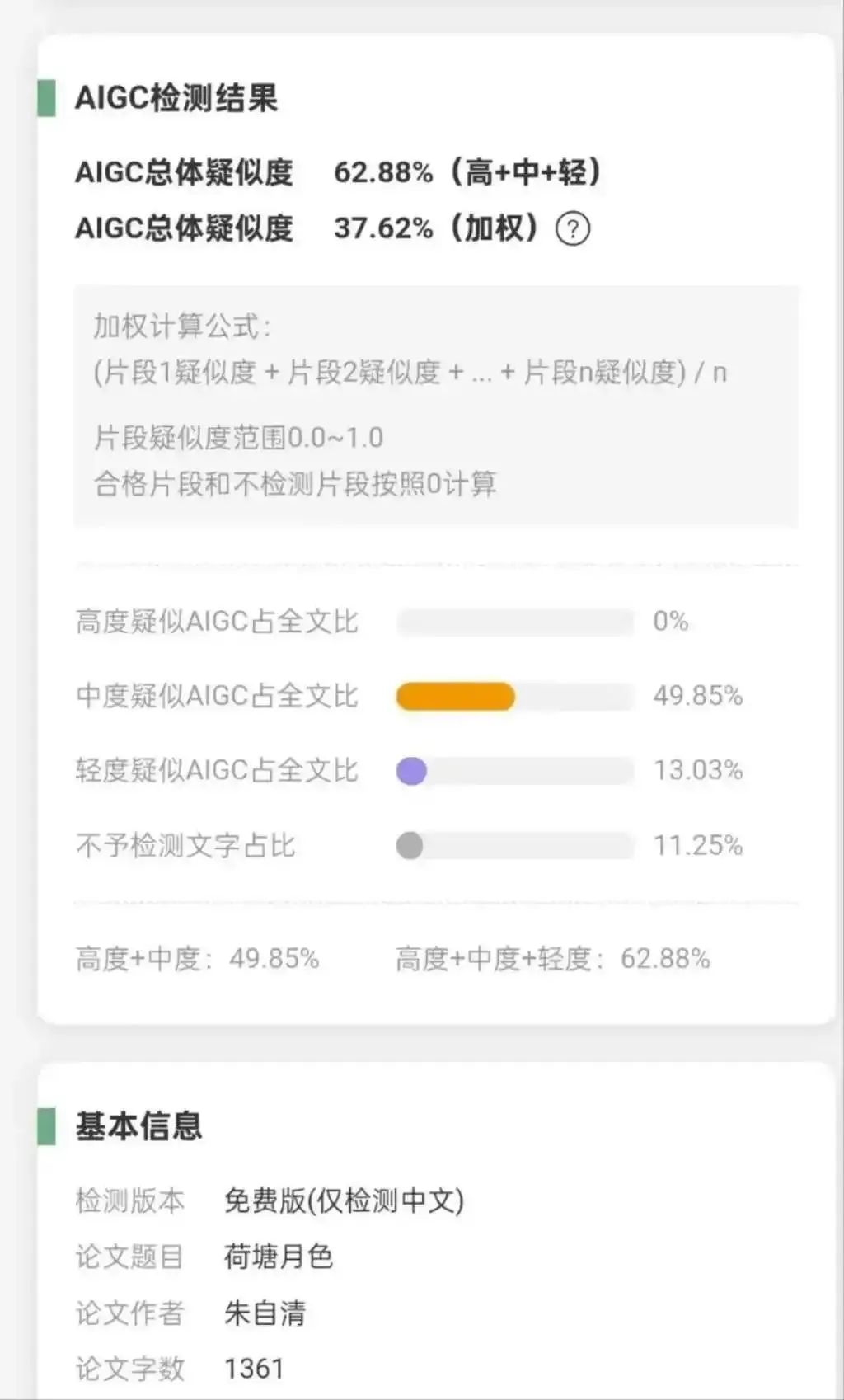
《滕王阁序》AI生成率竟达100%,高校AI检测逼疯师生
3 6 Ke· 2025-05-19 23:45
Core Viewpoint - The article discusses the transformation of AI detection systems from academic aids to new forms of academic taxation, highlighting the absurdity of the current situation where students, businesses, and platforms engage in a "cat-and-mouse" game over AI detection rates, compromising academic integrity and the essence of education [1]. Group 1: AI Detection and Academic Integrity - Several universities in China have implemented strict regulations on AI-generated content detection rates for theses, with undergraduate papers not exceeding 15%, master's theses 10%, and doctoral dissertations 5% [1]. - Classic literary works have been misidentified as AI-generated content by detection tools, with examples like "Tengwang Ge Xu" being flagged with a 100% AI generation probability, raising concerns about the reliability of AI detection technology [1][2]. Group 2: Misjudgment and Systemic Issues - AI detection systems primarily rely on public databases and online search mechanisms, leading to misjudgments of classic literature due to their widespread citation [2]. - Students have faced undue pressure to prove the originality of their work, often resorting to extreme measures to counteract AI detection, which can lead to significant psychological stress [5][10]. Group 3: Commercial Exploitation and Black Market - The increasing focus on AI detection has given rise to a "technical black market," where students feel compelled to pay for multiple detection services due to inconsistent results across platforms [14]. - Some detection platforms exploit students' anxiety over AI rates, creating a profit-driven cycle that burdens students financially, with average annual expenses for detection reaching 3000 yuan [15]. Group 4: Flaws in Detection Technology - The algorithms used in AI detection systems often exhibit "mode bias," mislabeling well-structured academic writing as AI-generated due to their reliance on specific linguistic features [6][9]. - The rapid advancement of AI generation technologies has outpaced the optimization of detection systems, leading to high misjudgment rates and exacerbating the academic evaluation crisis [10][12]. Group 5: Recommendations for Improvement - To address the challenges posed by AI detection, a multi-faceted approach is recommended, focusing on enhancing the controllability of detection technologies, adapting academic evaluation systems, and strengthening legal regulations to ensure fair practices in the detection market [26][27][28].
以生成式人工智能重塑传统文化教育范式
Xin Hua Ri Bao· 2025-04-27 02:29
Core Insights - The rapid development of Generative AI (GenAI) is transforming traditional cultural education, particularly in higher education, by shifting from standardized teaching to a co-creative and immersive learning model [1][10]. Group 1: Course Design Innovation - Generative AI is reshaping the teaching design logic of the "Introduction to Chinese Culture" course by embedding intelligent technology, creating a student-centered and culturally immersive learning experience [2]. - Technologies like Virtual Reality (VR) and Augmented Reality (AR) convert abstract cultural symbols into interactive experiences, enhancing students' understanding of complex cultural concepts [2][4]. - AI-driven personalized learning materials are generated based on real-time analysis of student data, allowing for dynamic optimization of course content to meet diverse student needs [3]. Group 2: Teaching Methodology Transformation - The integration of Generative AI promotes a shift from traditional teacher-led instruction to a collaborative human-machine interaction model, redefining classroom dynamics and roles [5]. - Students become active knowledge creators through AI platforms that facilitate discussions and debates, enhancing critical thinking and engagement with the material [5][6]. - Teachers transition to roles as learning experience designers and value guides, focusing on facilitating human-AI collaboration rather than solely delivering content [6][7]. Group 3: Ethical and Cultural Challenges - The application of Generative AI raises ethical concerns, particularly regarding data privacy and academic integrity, necessitating robust regulatory frameworks [8]. - There is a risk of cultural interpretation homogenization due to AI's reliance on high-frequency vocabulary, which may oversimplify complex philosophical concepts [9]. - To address these challenges, a collaborative mechanism between human experts and AI is proposed to ensure diverse cultural interpretations and maintain the depth of traditional cultural education [9][10].
当大学论文多了“AI味”,高校如何给AI工具使用“立规矩”
Xin Jing Bao· 2025-03-31 12:58
今年春季学期开学,各大高校纷纷宣布接入DeepSeek,学生利用AI工具辅助论文写作现象已愈发普 遍,但伴随的使用规范和学术诚信问题也随之而来。 从大背景来看,近些年来,学术不端引发的学术界科研诚信危机较为显著。随着AI技术不断发展,因 存在大量随机生成内容导致论文撤稿的比重日益增加,在高校学生群体中,直接复制使用AI生成内容 等不当使用情况也日益增多。 随着复旦大学首发国内高校"AI禁令",今年以来,不少高校纷纷推出新的政策为AI"立规矩",以规范学 生使用生成式人工智能的行为。 学术写作中AIGC使用边界应如何界定?除了"立规矩",是否有更加"硬核"的治理机制?面对AI发展浪 潮,高校要如何引导学生合理使用?对此,新京报记者采访了多所高校的教授,探讨这些热点话题。 多所高校发文规范AI使用边界 "我们在申报项目、撰写文章的时候,会先借助AI生成一个框架,再将自己的研究内容填充进去,这样 非常便捷。在编写代码时,一些基础运算也会交给AI处理,自己再根据研究进行完善提升。"北京航空 航天大学一位从事理工科研究的博士研究生告诉记者,在科研过程中,AI会被当作辅助工具,但是鉴 于AI在某些特定领域的水平有限,无法 ...