
技术主权

Search documents
培养大批专业人才,加强国家技术主权,俄全方位拥抱人工智能与信息技术
Huan Qiu Wang Zi Xun· 2025-11-23 23:15
Group 1 - The largest IT forum in Russia, "Digital Solutions," was held in Moscow, focusing on AI development and information system protection measures [1] - AI is widely applied in various sectors, including phone fraud detection, banking optimization in remote areas, and logistics efficiency [1] - The Russian government is committed to supporting the IT industry, which contributes 6% to GDP with total revenue around 13 trillion rubles [2] Group 2 - The Russian government provides significant funding for AI research projects, amounting to 350 million rubles, with 13 research centers already receiving support [3] - There is a growing demand for cloud infrastructure, with Russian companies adopting domestic cloud solutions for data analysis and project management [3] - The government aims to increase the proportion of domestic software in key industries and is establishing national capability centers for developing enterprise solutions [2][3] Group 3 - The IT industry in Russia has added approximately 100,000 new professionals this year, bringing the total workforce to over 1.1 million [4] - Successful cases of government-enterprise cooperation were highlighted, emphasizing the importance of a "white list" for ensuring communication services in restricted environments [5] - The telecommunications sector faces challenges with increasing network load and limited revenue growth, despite having one of the lowest communication fees globally [5] Group 4 - Russian companies must promote technology research and develop competitive business models to compete in the global digital economy, which they currently occupy only about 2% of [6] - The government has made significant progress in supporting education, including digital classrooms and projects for primary and secondary education [6] - The main task is to develop software that meets the needs of the real economy, enhancing efficiency and promoting technological development [6]


德勤《2026年前沿技术、智能媒体与通信行业预测报告》:AI的静默落地与全球技术主权的重构
欧米伽未来研究所2025· 2025-11-22 03:32
Core Insights - The article emphasizes that the technology industry is entering a more pragmatic and complex phase as the initial hype around generative AI subsides, with a focus on scaling applications through data governance, system integration, and compliance [2][3]. Group 1: AI Development and Market Dynamics - By 2026, the focus of AI development will shift significantly towards "inference," with two-thirds of global computing power dedicated to running AI models, surpassing the power used for model training [3]. - The rise of "passive" usage of generative AI embedded in existing applications will lead to a user base far exceeding that of standalone tools like ChatGPT, with AI-generated summaries in search engines expected to be used three times more frequently than independent Gen AI tools by 2026 [3]. Group 2: Enterprise Transformation and AI Agents - The core of enterprise transformation will be "Agentic AI," with a predicted market size of $45 billion by 2030 if interoperability and governance challenges are effectively addressed [4]. - Traditional SaaS models are expected to be disrupted, moving towards mixed pricing models based on outcomes or usage [4]. Group 3: Geopolitical Trends and Semiconductor Supply Chains - Technology sovereignty has become a central policy issue for governments, leading to accelerated efforts to establish independent digital infrastructures, particularly in AI computing power and semiconductors [5]. - Key technology trade restrictions are tightening, creating new supply chain bottlenecks, particularly around advanced manufacturing tools and technologies, which could impact a $300 billion AI chip market [5]. Group 4: Media and Content Production Trends - The media and entertainment industry is being reshaped by short videos and generative AI, with the rise of "micro-dramas" expected to double in revenue to $7.8 billion by 2026 [7]. - Video podcasts are projected to generate $5 billion in global advertising revenue by 2026, combining audio storytelling with visual elements [7]. Group 5: Telecommunications and Consumer Engagement - In developed markets, the marginal effects of technology upgrades are diminishing, leading to a shift in customer retention strategies from technical performance to brand value and service experience [6]. - By 2026, promotional strategies like free offers may prove more effective in retaining customers than emphasizing network performance [6].

“欧盟想强制成员国剔除华为和中兴设备”
Guan Cha Zhe Wang· 2025-11-11 03:04
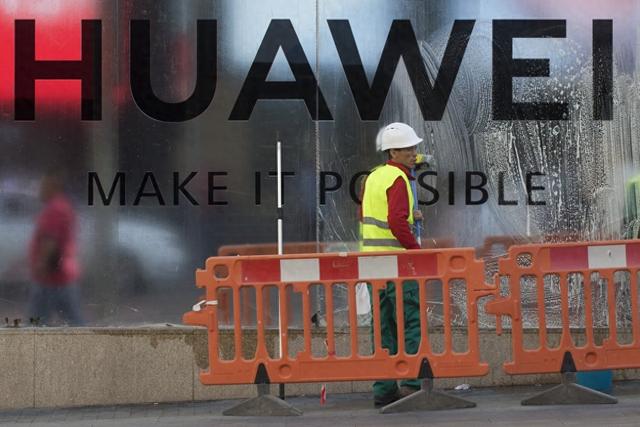
Core Viewpoint - The European Commission is exploring measures to force member states to remove Huawei and ZTE equipment from telecom networks, potentially pressuring non-EU countries by withholding funding for projects using Huawei technology [1][3]. Group 1: EU's Actions and Proposals - The European Commission's Executive Vice President, Margrethe Vestager, aims to upgrade the 2020 recommendation to stop using "high-risk suppliers" into legally binding regulations [1]. - If the proposal becomes law, non-compliance by member states could lead to infringement lawsuits and economic penalties [1][4]. - The EU is increasingly focused on the risks posed by Chinese telecom equipment manufacturers amid rising tensions in trade and politics with China [3]. Group 2: Industry Reactions and Implications - Following the news, shares of Nokia and Ericsson saw significant increases, with Nokia rising by 5% and Ericsson by 3.7% [4]. - There is a growing trend in Europe to impose stricter restrictions on Chinese suppliers, with countries like Germany and Finland considering similar measures [4]. - The inconsistency in EU member states' approaches to Huawei creates significant security risks, according to hawkish voices within the EU [4]. Group 3: Counterarguments and Responses - China has strongly opposed the EU's claims of security risks associated with Huawei and ZTE, arguing that these companies have operated in Europe for years without compromising security [5][9]. - Spain has defended its contract with Huawei, stating it poses no security risks and complies with national security standards [8][9]. - Huawei criticized the EU's designation of it as a "high-risk supplier," claiming it lacks legal basis and violates free trade principles [9].

【摩根看世界】劫持安世:华盛顿主导了一场“一箭双雕”的阳谋
Guan Cha Zhe Wang· 2025-11-04 06:50
Core Points - The ongoing conflict between ASML China and the Dutch government highlights a significant shift in the geopolitical landscape regarding technology and trust [1][10] - The Dutch government invoked a 72-year-old law to take control of ASML, citing national security concerns, which has raised alarms about the predictability of Western markets [1][5][10] Company Overview - ASML was founded in 2017 and is headquartered in Nijmegen, Netherlands, producing semiconductors for various sectors including automotive and consumer electronics, employing over 14,000 people globally [3] - The company was acquired by China's Wingtech Technology for approximately $3.6 billion in 2018, making it one of the few large chip manufacturers in Europe under Chinese control [3] Legal and Regulatory Context - The Dutch government applied the "Goods Availability Act" to ASML, a law originally designed for wartime resource management, indicating a redefinition of what constitutes critical infrastructure [5][6] - This law allows the government to intervene in private companies when the availability of key products is at risk, now extending to the semiconductor industry [5][6] Geopolitical Implications - The actions taken by the Dutch government are closely coordinated with Washington, indicating a broader strategy to control advanced technology and its production locations [6][7] - The political environment has shifted from efficiency to security, impacting global manufacturing, particularly in the automotive sector [7][9] Economic Consequences - China's response to the Dutch decision includes restrictions on low-end and automotive-grade chip exports to Europe, affecting ASML's operations and the broader supply chain [9][10] - The situation has led to significant operational challenges for ASML, with its factories in China unable to ship products and European management under government oversight [9][10] Broader Trends - The ASML case illustrates a structural transformation in global trade, where the free flow of capital and technology is increasingly influenced by political considerations [10][11] - The incident signifies a new threshold in China-Europe relations, with both sides facing heightened anxieties over technological dependencies and market access [10][11]

荷兰这个时候找茬中国子公司,无疑是在冒险
Huan Qiu Shi Bao· 2025-10-31 08:05
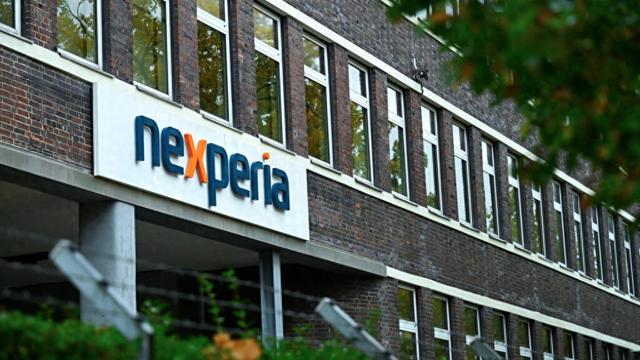
Core Viewpoint - The ongoing tensions surrounding Nexperia, a subsidiary of Wingtech Technology, have prompted the company to urge the Dutch government to reconsider its stance and remove unfounded allegations of technology theft [2][3]. Group 1: Company Actions and Responses - Wingtech Technology has stated that any agreement to restart exports from Nexperia must include the reinstatement of the company's former CEO [2][12]. - Following the Dutch government's intervention, Wingtech accused the government of geopolitical bias and excessive interference rather than a factual risk assessment [3][7]. - The Dutch government has cited "serious governance deficiencies" at Nexperia as the reason for its actions, claiming it aims to prevent potential supply risks in emergencies [3][4]. Group 2: Industry Impact and Reactions - The intervention has raised concerns in the European automotive industry about potential production line disruptions and supply chain interruptions [3][4]. - The situation has led to warnings from automotive manufacturers in Europe, the U.S., and Japan regarding possible production issues due to chip shortages [12]. - The ongoing geopolitical tensions have intensified the chip supply chain dispute, with the Dutch government's actions likely to exacerbate supply chain disruptions and impact related industries [4][11]. Group 3: Historical Context and Developments - Wingtech acquired Nexperia in a phased approach from 2018 to 2020, with the acquisition proving successful as Nexperia became a major profit source for Wingtech [6][7]. - The U.S. Department of Commerce placed Wingtech on an entity list in December 2024, suspecting the company of potentially transferring technology to the Chinese military, which subsequently affected Nexperia due to its ownership structure [5][6]. - The Dutch government's recent actions are seen as a response to U.S. pressure, highlighting the influence of U.S.-China tensions on the technology sector [10][11].

3天变10分钟!中国学者帮中亚打通钱袋子,西方专家看呆了
Sou Hu Cai Jing· 2025-10-28 02:36
Core Insights - The article highlights a significant technological revolution in cross-border remittances facilitated by blockchain technology, which has drastically reduced transaction times and fees in Kyrgyzstan [1][4][10] - The success of Xiang Lingyun's team in implementing a blockchain-based remittance system demonstrates a shift from traditional academic achievements to practical problem-solving in developing economies [6][9][12] Group 1: Economic Impact - In Kyrgyzstan, remittances accounted for 31% of GDP in 2024, indicating a heavy reliance on funds sent by overseas workers [4] - The traditional remittance process involved multiple intermediaries, taking an average of 3 days and incurring fees as high as 15%, while the new system reduces this to 10 minutes and fees below 4% [4][10] - The World Bank reported that the average global remittance cost is 6.3%, with Central Asia being the most expensive region for remittances due to weak financial infrastructure [4][8] Group 2: Shift in Academic Evaluation - Xiang Lingyun's recognition as a lifelong academician reflects a growing trend where practical solutions are valued over traditional academic metrics like publication counts [9][12] - The collaboration model emphasizes problem-solving capabilities rather than theoretical knowledge, reshaping the academic evaluation landscape [6][9] - The demand for "applied scholars" has surged by 217% globally, indicating a shift towards valuing practical applications of research [12] Group 3: Technological Soft Power - China's experience in digital economy practices has positioned its scholars as leaders in providing practical solutions to developing countries [8][11] - The modular approach of the blockchain solution allows for targeted interventions in local financial systems, enhancing the effectiveness of technology transfer [8][10] - The collaboration with Chinese teams is seen as a "safe option" for developing countries, focusing on technical parameters rather than political conditions [11] Group 4: Future of Academic Competition - The article suggests that the future of academic competition will hinge on the ability to translate laboratory breakthroughs into real-world applications [12] - The integration of AI and blockchain technologies aims to address practical issues faced by workers in Central Asia, showcasing a grounded approach to technological development [12][13] - The emphasis on solving real problems rather than theoretical discussions is becoming a new standard for academic value [13]
李在明宣称韩国要成为第四大防务强国
Xin Jing Bao· 2025-10-21 08:32
Core Viewpoint - South Korea aims to become the world's fourth-largest defense power by 2030, with significant budget investments in defense and aerospace research [1] Group 1: Defense Investment - Lee Jae-myung announced plans to invest beyond expectations in defense and aerospace research before 2030 [1] - The focus will be on investing in the independent development of key technologies, components, and materials to establish technological sovereignty [1] Group 2: Current Standing - As of 2023, South Korea ranks tenth globally in military sales [1]
普京:全球能源领域面临三大挑战
中国能源报· 2025-10-17 12:07
Core Viewpoint - The global energy sector is facing three major challenges as outlined by Russian President Vladimir Putin during the "Russian Energy Week" forum, emphasizing the reshaping of energy relations, the increasing importance of the electricity sector, and the need for technological sovereignty [1][2]. Group 1: Reshaping Energy Relations - The first challenge is the restructuring of energy relations, driven by the rise of new economic centers and the impact of Western political pressures that have led many European countries to refuse Russian energy, resulting in industrial decline and increased prices [1]. - Russia maintains its leading position in oil production, accounting for approximately 10% of global output, with an expected production of 510 million tons by the end of the year, reflecting a year-on-year decrease of about 1% [1]. - Russia continues to collaborate within the OPEC+ framework to balance the global oil market and is shifting its natural gas supply towards more promising and responsible buyers while enhancing domestic consumption [1]. Group 2: Importance of the Electricity Sector - The second challenge is the growing significance of the electricity sector, with an expectation that global electricity generation will double in the next 25 years, with about 85% of new electricity demand coming from countries in the Global South [1]. - Russia has implemented over 400 hydropower projects across 55 countries and regions and holds nearly 90% of the global nuclear power plant construction market [1]. - Plans are in place to deepen cooperation in the nuclear energy sector with Global South countries through the BRICS cooperation mechanism [1]. Group 3: Technological Sovereignty - The third challenge is the need for technological sovereignty, advocating for energy-producing countries to transition from being equipment buyers to technology leaders, establishing complete autonomy from energy extraction to processing and transportation at the national level [2]. - Russia is committed to comprehensive technological cooperation with foreign partners to enhance its capabilities in the energy sector [2].
普京:全球能源领域面临三大挑战
Zhong Guo Xin Wen Wang· 2025-10-17 09:19
Group 1 - The core challenge in the global energy sector is the restructuring of energy relationships, driven by the rise of new economic centers and the impact of Western political pressures on Russian energy sales [1][2] - Russia maintains a leading position in oil production, accounting for approximately 10% of global output, with an expected production of 510 million tons by the end of the year, reflecting a year-on-year decline of about 1% [1] - The second major challenge is the increasing importance of the electricity sector, with a forecast that global electricity generation will double in the next 25 years, and 85% of new electricity demand will come from countries in the Global South [1] Group 2 - The third challenge for participants in the global energy market is technological sovereignty, emphasizing the need for energy-producing countries to transition from equipment purchasers to technology leaders [2] - Russia is committed to comprehensive technological cooperation with foreign partners to establish complete autonomy in energy extraction, processing, and transportation [2] - The "Russian Energy Week" forum, held from October 15 to 17, 2023, in Moscow, gathered representatives from 85 countries, focusing on the theme of "Co-creating the Energy Future" [2]
涉半导体企业,美国被爆施压荷兰更换中国CEO
Huan Qiu Shi Bao· 2025-10-16 03:27
Core Viewpoint - The article discusses the forced takeover of the Chinese company Anshi Semiconductor by the Dutch government, influenced by pressure from the United States, highlighting the impact of US-China tensions on the technology sector [1][2]. Group 1: Company Actions - The Dutch government took control of Anshi Semiconductor from its parent company, Wentai Technology, in response to US sanctions and pressures [2]. - A Dutch court approved an emergency application to suspend the CEO position of Zhang Xuezheng, the founder of Wentai Technology, and placed Wentai's shares in Anshi under external third-party custody [2]. Group 2: US Influence - The US has been pressuring the Dutch government to ensure Anshi Semiconductor operates independently from Chinese ownership to avoid being placed on the US Entity List [1][2]. - The US Commerce Department's involvement is evident in the meetings with Dutch officials, indicating a strategy to isolate Anshi Semiconductor from Chinese influence [1][3]. Group 3: Industry Implications - The intervention in Anshi Semiconductor is seen as a significant industry shock following the expansion of US sanctions, marking a notable case of the Netherlands utilizing its Supply Chain Law in the semiconductor sector [2]. - The situation reflects the EU's attempts to achieve "de-risking" and "technological sovereignty" in high-tech fields, signaling a willingness to cooperate with the US on key technology security issues [3].