技术性衰退

Search documents
GDP增长-0.2%!日本经济一年来首次萎缩
Hua Er Jie Jian Wen· 2025-05-16 06:23
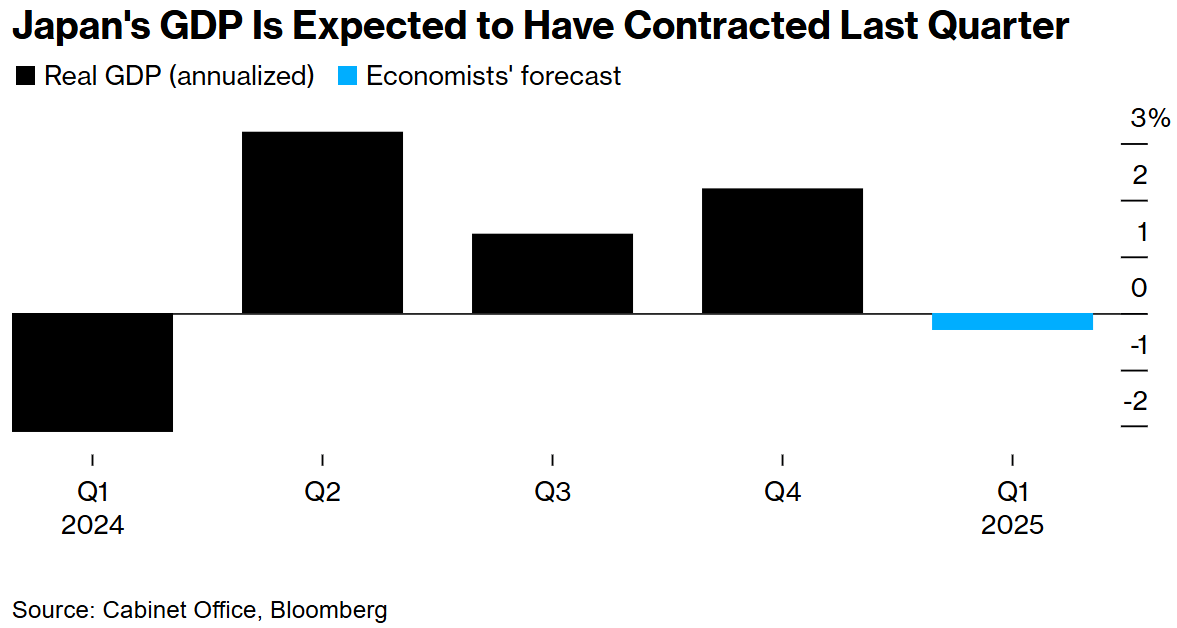
日本经济在过去一年首次萎缩,关税、通胀对日本经济造成双重打击。 第一季度数据显示,外部需求(出口减去进口)削减了0.8个百分点的增长,其中出口下降0.6%,进口 则增长2.9%。 随着美国关税损害作为日本主要增长引擎之一的出口,持续的通胀也在损害另一个引擎:私人消费(约 占GDP的一半)。周五发布的数据显示,第一季度私人支出环比持平。 "持续的价格上涨通过削弱消费者信心,对日本经济构成下行风险,"经济大臣Ryosei Akazawa周五在新 闻发布会上表示。 Akazawa表示,关税担忧尚未影响消费,但这位负责与美国进行贸易谈判的部长承诺,在最近的政府调 查显示消费者情绪可能恶化后,将密切关注消费者情绪。 企业投资成为唯一亮点 据日本政府周五发布的初步数据显示,日本一季度实际GDP环比下降0.2%,这是一年来首次经济收 缩,弱于经济学家预测的0.1%萎缩,也与前一季度0.6%的增长形成鲜明对比,一季度日本经济按年率 计算萎缩0.7%。 这一GDP数据发布之际,市场正担忧美国关税可能通过抑制出口和降低企业投资意愿,危及日本来之不 易的经济复苏。 凯投宏观亚太区主管Marcel Thieliant表示: 由于贸易 ...
巴克莱上调美国及欧元区增长预期 但警告风险犹存
news flash· 2025-05-16 05:59
金十数据5月16日讯,巴克莱银行在周四晚间发布的一份报告中表示,由于美中贸易紧张局势出现缓和 迹象,美国经济今年陷入衰退的可能性已大幅降低,因此该行上调了对美国经济增长的预测。巴克莱目 前预计,美国经济将在今年增长0.5%,2026年增长1.6%,分别高于此前预测的-0.3%和1.5%。与此同 时,随着不确定性下降和整体经济环境改善,巴克莱也上调了对欧元区的增长预期。目前预计欧元区今 年将实现零增长,好于此前预测的萎缩0.2%。不过,欧元区仍可能在今年下半年出现技术性衰退,只 是衰退幅度将小于之前的预期。"总体而言,我们对欧元区的增长前景依然持谨慎态度,因为当前不确 定性仍然很高,欧美之间关于对等关税的谈判仍停留在技术层面,且尚未出现任何进展迹象。" 巴克莱上调美国及欧元区增长预期 但警告风险犹存 ...
关税,大消息!石破茂,刚刚发声!
券商中国· 2025-05-12 10:38
针对关税谈判,日本又有最新表态! 当地时间周一,日本首相石破茂表示,日本不会与美国达成一项不包括汽车关税的初步贸易协定。石破茂还表 示,增加从美国进口玉米将是与美国进行贸易谈判的选项之一。 当天,石破茂表示,日本政府已准备好采取额外刺激措施,来缓解关税对经济的影响。不过,石破茂对削减日 本消费税税率表示谨慎。截至发稿,美元兑日元上涨2%,至148.31,创4月初以来新高。 日本首相:将进行额外经济刺激 周一,日本首相石破茂在日本国会会议上表示,面对美国提高关税带来的经济压力,日本政府已准备好采取额 外措施,来缓解其对国内经济的影响。 石破茂说,日本政府"将毫不犹豫地采取额外措施",以缓解美国提高关税给经济带来的痛苦。不过,在被一名 反对党议员问及政府是否会考虑降低食品消费税税率时,石破茂表示,"重要的是帮助受冲击最严重的民众, 而不是采取一刀切的措施。" 石破茂指出,虽然一些国家已经采取了侧重食品的减税措施,但日本的税率相对较低,同时面临快速老龄化社 会带来的财政挑战。他补充道:"谈论减税很容易。但如果不在讨论中涉及如何支付日本不断上升的社会福利 和养老金成本这样的困难问题,那就是不负责任的。" 日本的公共债 ...


特朗普关税重锤未落,日本经济已陷“技术性衰退”悬崖
智通财经网· 2025-05-12 02:20
Economic Outlook - Japan's economy is projected to contract in the first quarter of this year, with economists forecasting a 0.3% annualized decline in GDP adjusted for inflation, marking the first quarterly negative growth in a year [1][4] - The economic contraction raises concerns over the Bank of Japan's policy normalization process and Prime Minister Kishida's prospects ahead of the summer elections [1][5] Contributing Factors - Multiple factors are contributing to the expected GDP decline, including a surprising drop in imports last quarter, which diminished the net export boost, and continued weak consumer spending amid high inflation [5] - Analysts suggest that Japan currently lacks growth drivers, with a significant possibility of consecutive quarters of contraction [5] Trade Negotiations and Policy Implications - The deadlock in US-Japan trade negotiations exacerbates the pressure on policymakers, as any signs of economic weakness could complicate efforts to reach an agreement [7] - The recent data may reinforce the Bank of Japan's cautious stance, with the policy committee delaying the timeline for achieving stable inflation targets by a year and halving growth expectations for the current fiscal year [7][8] Corporate Earnings and Economic Sentiment - Major Japanese corporations are beginning to lower profit forecasts due to tariff impacts, with Toyota predicting a profit decline of about one-third for the current fiscal year [8] - Concerns are growing regarding the sustainability of Japan's "inflation-wage" cycle, as real wages have been declining due to rising living costs, leading to subdued consumer spending [9] Political and Economic Risks - Japan is experiencing a domestic version of stagflation, with insufficient consumer spending to support a moderate recovery [10] - The weak GDP data could trigger a new round of political maneuvering for economic stimulus plans ahead of the summer elections, especially as Prime Minister Kishida's approval ratings have dropped to their lowest since taking office [10]
美股一线|美股三大指数全线下挫,中美贸易谈判牵动市场
Sou Hu Cai Jing· 2025-05-12 00:08
Group 1: Market Overview - The US stock market is experiencing a downturn due to uncertainties surrounding tariffs, with the S&P 500 index down 0.47%, Nasdaq down 0.27%, and Dow Jones down 0.16% over the past week [1] - Investors are closely monitoring the high-level economic talks between China and the US, with recent meetings indicating a continued stance against excessive tariffs from the US [1][2] - The US economy is showing signs of strain, with a contraction in Q1 GDP and a potential technical recession if uncertainties persist [2][3] Group 2: Economic Indicators - The US labor market is cooling, and consumer confidence has dropped to 52.2, with inflation expectations rising from 5.0% to 6.5% for the next year [2] - The Federal Reserve is facing challenges in balancing its dual mandate of full employment and price stability, with concerns that tariffs could lead to rising unemployment and inflation [3] - Upcoming economic data, including April CPI and retail sales, are critical for assessing the risk of stagflation, which could pressure the stock market [4] Group 3: Investment Strategies - Large-cap stocks are viewed as more defensive compared to small-cap stocks in the current economic cycle, with a recommendation to focus on high-quality companies with low debt and stable earnings [7] - There is a significant risk of a further decline in the US stock market, with estimates suggesting a potential drop of nearly 20% due to economic recession concerns [7] - Recent capital flows indicate a shift away from US equities, with $8.9 billion exiting the market while European and Japanese markets saw inflows [6]
韩媒:19个经济体一季度增长排名,中国领跑韩国垫底
Huan Qiu Shi Bao· 2025-05-11 22:05
【环球时报驻韩国特约记者 黎枳银】综合韩联社、《朝鲜日报》、《亚洲日报》等韩媒11日报道,韩 国银行(央行)最新数据显示,2025年第一季度韩国实际国内生产总值(GDP)环比萎缩0.246%,在 已发布数据的全球19个主要经济体中排名垫底。国内政治动荡、消费疲软与外部不确定性共同拖累韩国 经济走弱。 韩国央行分析称,一季度经济萎缩受多重因素叠加影响。2024年12月底,韩国前总统尹锡悦宣布戒严引 发政局剧烈动荡,打击内需与市场信心。尽管尹锡悦已于今年4月被宪法裁判所(宪法法院)正式罢 免,但其执政时期遗留的制度不稳定性仍在持续影响经济运行。 外部环境也"压力重重"。美国政府推进的所谓"对等关税"政策也对韩国出口构成阻力。尽管特朗普宣布 对韩国加征25%关税的决定将推迟90天实施,但现行汽车和钢铁领域的既有关税仍在执行,使韩国这一 出口导向型经济体承压显著。 韩国《朝鲜日报》援引韩国国际金融中心的数据报道称,截至4月底,包括巴克莱银行、美国银行、花 旗、高盛、摩根大通、汇丰、野村和瑞银在内的8家国际投行已将韩国2025年全年经济增长预期平均下 调至0.8%,较3月底的1.4%骤降0.6个百分点。其中,花旗将预测 ...
从增长放缓到消费者信心下滑,美国经济是否正走向技术性衰退?
Sou Hu Cai Jing· 2025-05-02 02:52
一批意义重大的经济数据将于本周三公布,预计将显示:在总统特朗普于4月对美国贸易伙伴征收高额 关税之前,美国经济已现疲态,尽管通胀有所缓解。 数据显示,今年第一季度的美国国内生产总值预计经季节调整和通胀调整后年化增长率仅为0.4%。如 果这一数字属实,将是近30万亿美元规模的美国经济自2022年第二季度以来表现最差的一次——当时美 国险些陷入衰退。 然而,近期的一些指标显示,该季度的经济增速可能为零甚至负增长。这对美国来说是个不祥之兆,尤 其是在消费者信心跌至多年低点、通胀预期升至数十年高位的背景下。 Moody's Analytics首席经济学家Mark Zandi表示:"这一大波数据将显示出经济正陷入困境,如果关税不 尽快取消,我们就将走向衰退,"他说:"这些数据可能不会完全一致,但整体基调将偏向悲观。" 尽管华尔街普遍预计一季度GDP数据将为正,但周二发生的两件事让人对此产生疑问:美国货物贸易逆 差创下新高,以及一份报告显示消费者信心严重低迷——而消费是推动三分之二经济活动的主力。 高盛已将其GDP预期下调至-0.8%,Jefferies也预测为-0.2%。由于经济学家普遍认为关税将拖累经济增 长、推高通 ...
美国经济衰退或滞胀概率几何?|国际
清华金融评论· 2025-03-21 10:30
Core Viewpoint - The likelihood of the U.S. economy entering a recession in the foreseeable future is low, but growth is expected to slow down, with a possibility of a brief stagnation or decline, although this is considered unlikely. Current high inflation, exacerbated by rising tariffs, raises the potential for stagflation, but any occurrence would not be considered true stagflation [1][14]. Current Economic Status - The U.S. economy has shown resilience despite predictions of recession, with mixed economic indicators suggesting both recessionary signals and robust growth metrics. The Federal Reserve's recent meetings indicate a stable economic outlook, although uncertainty has increased [1][4][8]. - Various indicators point towards recession risks, including a significant drop in consumer confidence and weak retail sales data. However, the relationship between soft indicators and actual economic performance is often tenuous [5][7]. - The Atlanta Fed's prediction of a 2.8% decline in GDP for Q1 is primarily attributed to temporary factors, and economists still expect continued growth, albeit at a reduced rate [6][8]. Recession Indicators - Soft indicators, such as consumer confidence and small business optimism, have declined, but actual employment data remains strong, with job growth and low unemployment rates indicating a stable labor market [7][8]. - The mixed signals from economic data necessitate careful analysis to distinguish between temporary fluctuations and underlying trends [4][5]. Future Outlook - If current economic policies remain unchanged, the probability of recession may increase, potentially leading to a transition from soft to hard indicators of economic decline. However, historical patterns suggest that political pressures may lead to policy adjustments to mitigate economic damage [10][11]. - The impact of tariffs on inflation is projected to be temporary, with estimates suggesting an increase of 0.5-0.8 percentage points in inflation rates. The Federal Reserve is inclined to overlook these temporary effects, focusing instead on broader economic stability [14][15]. - The resilience of the U.S. economy, particularly through technological innovation and infrastructure investment, is expected to support growth while controlling inflation, although significant unforeseen challenges could still arise [15].