文化与科技融合

Search documents
文化产业营收占全国1/6 广东正从文化制造驶向“文化创造”蓝海
2 1 Shi Ji Jing Ji Bao Dao· 2025-12-01 22:36
Core Insights - Guangdong's cultural industry has maintained its position as the largest in China for over 20 years, with projected revenue surpassing 3 trillion yuan in 2024, accounting for approximately one-sixth of the national total [1][2] - The province is experiencing a cultural consumption boom, with significant growth in various sectors, including performing arts, animation, gaming, and esports [2][3] Cultural Industry Performance - In the first three quarters of this year, Guangdong hosted 35,600 commercial performances, generating revenue of 6.356 billion yuan, ranking first in the country [2] - The gaming and esports sectors have seen a remarkable growth rate of 300%, indicating a robust demand for digital entertainment [2] Investment and Financing - The 2025 Guangdong-Hong Kong-Macao Greater Bay Area Cultural Industry Investment Conference facilitated connections between over 120 investment institutions and 350 cultural enterprises, resulting in significant investment intentions [4][5] - The investment conference has achieved a financing conversion rate of 50%, with total financing exceeding 9.5 billion yuan across various projects [5][6] Policy Support and Innovation - Guangdong has introduced a comprehensive policy package aimed at promoting high-quality development in the cultural industry, covering six key areas including film, performing arts, and digital media [6][8] - The province is focusing on cutting-edge fields such as AI, the metaverse, and ultra-high-definition video, aiming to transform the cultural industry from manufacturing to creation [9] Emerging Companies and Technologies - Companies like Gu Dong Technology and Shen Zhen Intelligent Technology are at the forefront of innovation in AI and AR, with significant production and market expansion plans [3][5] - The rise of AI-driven projects, such as the AI animation film "Shan Hai Jing: Xuan Wu," showcases the integration of technology and culture, enhancing production efficiency and reducing costs [7][8] Cultural Trends and Consumer Engagement - The popularity of cultural mascots like "Da Wan Ji" reflects a growing consumer enthusiasm for cultural products, with over 2,000 licensed items developed for recent events [1][2] - The cultural landscape in Guangdong is evolving, with traditional elements being embraced by younger generations, leading to a resurgence in local cultural practices [3][6]
大湾区文投会将实现“全年不落幕” 65家企业路演 30多家获签约意向 8个项目现场签约
Nan Fang Ri Bao Wang Luo Ban· 2025-12-01 07:53
Core Insights - The 2025 Guangdong-Hong Kong-Macao Greater Bay Area Cultural Industry Investment Conference concluded with significant outcomes, including over 120 investment institutions and 350 cultural enterprises participating, resulting in 8 projects signed on-site with a total intended signing amount of approximately 6 billion yuan [1][2][5] Group 1: Event Overview - The conference adopted an innovative "3+365" model, which aims to provide continuous services throughout the year, receiving positive feedback from both investors and cultural enterprises [1][4] - The event saw a doubling of participating investment institutions compared to the previous year, with notable firms like Hillhouse Capital sending entire business teams instead of just representatives [2][5] - A total of 65 enterprises presented their projects, with over 30 receiving interest from institutions, highlighting the active engagement in investment matching [2][3] Group 2: Focus Areas - The conference emphasized the integration of culture and technology, showcasing applications of artificial intelligence, robotics, and future space technologies in the cultural sector [3] - Projects presented included AIGC-enabled cultural content applications and AI film technology, indicating a shift in the cultural industry landscape within the Greater Bay Area [3] Group 3: Policy and Ecosystem Development - Guangdong has introduced a robust policy package for high-quality cultural industry development, featuring 87 measures that have stimulated innovation and entrepreneurship [5] - The "Million Talents Gathering in South Guangdong" initiative has successfully attracted over 1 million recent graduates to the region for employment and entrepreneurship [5] - The conference is part of a broader ecosystem that includes policy guidance, platform empowerment, capital support, and talent backing, aiming to establish the Greater Bay Area as a new hub for China's cultural industry [5]
大湾区文投会现场意向签约金额约60亿元
Nan Fang Du Shi Bao· 2025-11-28 23:06
Core Insights - The 2025 Guangdong-Hong Kong-Macao Greater Bay Area Cultural Industry Investment Conference concluded with significant outcomes, including 65 companies presenting projects and over 30 securing investment intentions totaling approximately 6 billion yuan [3] - The conference introduced a "3+365" model for continuous investment activities throughout the year, emphasizing the integration of AI in the cultural industry, which is becoming a hot topic among investors [3] Group 1: AI and Cultural Industry Impact - AI development is significantly impacting the cultural industry, with high-quality content training for AI models and AIGC (AI-generated content) changing industry supply dynamics [3] - Companies like Shanghai Fufu Animation are experiencing substantial profit increases due to AI, with projected gross margins rising from 21% to 35% and net profits from 3% to 15% within three years [4] - The application of AI in content creation is reducing costs and increasing returns, with potential returns exceeding tenfold compared to traditional models [5] Group 2: New Infrastructure for AIGC - The conference highlighted the need for new infrastructure for AIGC, including model registration, general computing power, and high-quality datasets [6] - Guangdong has registered 92 generative AI services, ranking second nationally, with a focus on both general and industry-specific models [7] - The province is actively collecting high-quality datasets to enhance AI model performance, indicating a strong push towards building AIGC infrastructure [7] Group 3: Investment Trends and Opportunities - Investment in the cultural sector is evolving, with a shift from traditional areas to the integration of culture and technology, which is seen as a new growth area [8][9] - The conference showcased over 300 quality cultural projects and attracted more than 100 leading investors, indicating a robust investment ecosystem [17] - Guangdong's cultural industry is experiencing rapid growth, with revenues exceeding 2 trillion yuan and profits over 200 billion yuan in the first three quarters of 2025 [12] Group 4: Policy Support and Ecosystem Development - The provincial government has implemented a comprehensive policy framework to support the cultural industry, resulting in significant economic contributions [12][13] - The "policy package" introduced in May has already shown positive effects, with numerous cultural enterprises expanding in Guangdong [13] - The cultural industry ecosystem in Guangdong is becoming increasingly attractive for investment, with a focus on integrating capital, projects, talent, and industry clusters [16]

千机科技胡龄月:无人机是会讲故事的文化画布
2 1 Shi Ji Jing Ji Bao Dao· 2025-11-28 12:12
Core Insights - The article emphasizes the integration of technology, art, and media through drone performances, positioning them as a new cultural expression and a significant part of urban cultural content systems [1][2][3] Company Overview - Qianji Technology has executed over 3,000 performances, achieving more than 80 billion exposures globally and establishing a presence in over 30 countries [1][3] - The company has a valuation of 1 billion yuan, making it one of the few highly recognized cultural technology enterprises in the low-altitude economy sector [3] Industry Trends - The cultural industry in China is shifting from traditional media to immersive experiences, with drone performances being a key driver of this change [2][4] - The national cultural industry scale has surpassed 6 trillion yuan, with "cultural + technology," nighttime economy, and immersive performances being the fastest-growing segments [2][4] Market Potential - The global drone performance market is growing at an annual rate of over 30%, making it one of the fastest-growing segments in the cultural industry [4] - There is a strong demand for urban cultural content upgrades, particularly in nighttime economy, festival expressions, and city IP development [4] Strategic Positioning - Qianji Technology aims to embed drone performances into urban cultural systems through collaborations with local governments and cultural projects, promoting the Greater Bay Area as a significant cultural stage [4][6] - The company emphasizes its role not just as a technology provider but as a cultural service entity that tells Chinese stories through light and shadow [2][3] Challenges and Responses - The industry faces challenges related to safety and regulation, with Qianji Technology working on establishing industry standards in collaboration with local authorities [6][7] - The company acknowledges that the core challenge lies in content innovation and artistic expression rather than just technical capabilities [6][8]
挖掘新金矿!AI时代内容投资价值为何大增,这场大会给答案
Nan Fang Du Shi Bao· 2025-11-28 09:46
Group 1 - The 2025 Guangdong-Hong Kong-Macao Greater Bay Area Cultural Industry Investment Conference concluded with 65 companies presenting, resulting in over 30 companies receiving investment intentions totaling approximately 6 billion yuan [1] - The conference introduced a "3+365" model for continuous investment roadshows throughout the year, leveraging the cultural investment and financing alliance [1] - AI development is significantly impacting the cultural industry, with discussions focusing on the need for high-quality content for AI models, the transformation of content supply through AIGC, and the emergence of new content formats enabled by AI [1][3] Group 2 - Companies like Shanghai Fufu Animation reported substantial profit increases due to AI, projecting gross margins to rise from 21% to 35% and net profits from 3% to 15% within three years [3] - The application of AI in content creation is reducing costs while enhancing profitability, with potential returns increasing from 0.5 to hundreds of yuan for every yuan invested [4][5] - The demand for clear copyright ownership and transparent revenue distribution is expected to rise as the value of content becomes more pronounced in the AIGC era [5] Group 3 - Guangdong is actively building "new infrastructure" for AIGC, focusing on large model registration, general computing power, and high-quality data sets to support the cultural creative industry [6] - The province has registered 92 generative AI services, ranking second nationally, with a strong emphasis on industry-specific models [6] - The cultural industry in the Greater Bay Area is seen as having significant investment potential due to its mature industrial chain and ecosystem [9] Group 4 - Investment institutions are shifting their focus back to the cultural industry, recognizing the integration of culture and technology as a new area of growth [7][8] - The conference has highlighted the importance of promoting the cultural and technological integration as a key investment theme for future productivity [8] - Companies in the Greater Bay Area are perceived to have lower success costs and higher investment value in the cultural sector [9]
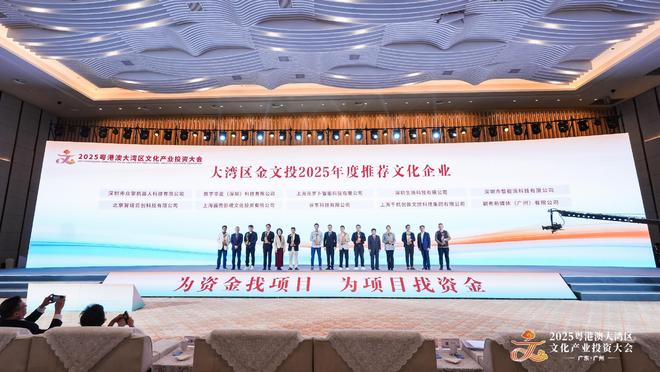
从大湾区文投会,看文化产业如何成为广东“新磁极”
Sou Hu Cai Jing· 2025-11-27 13:56
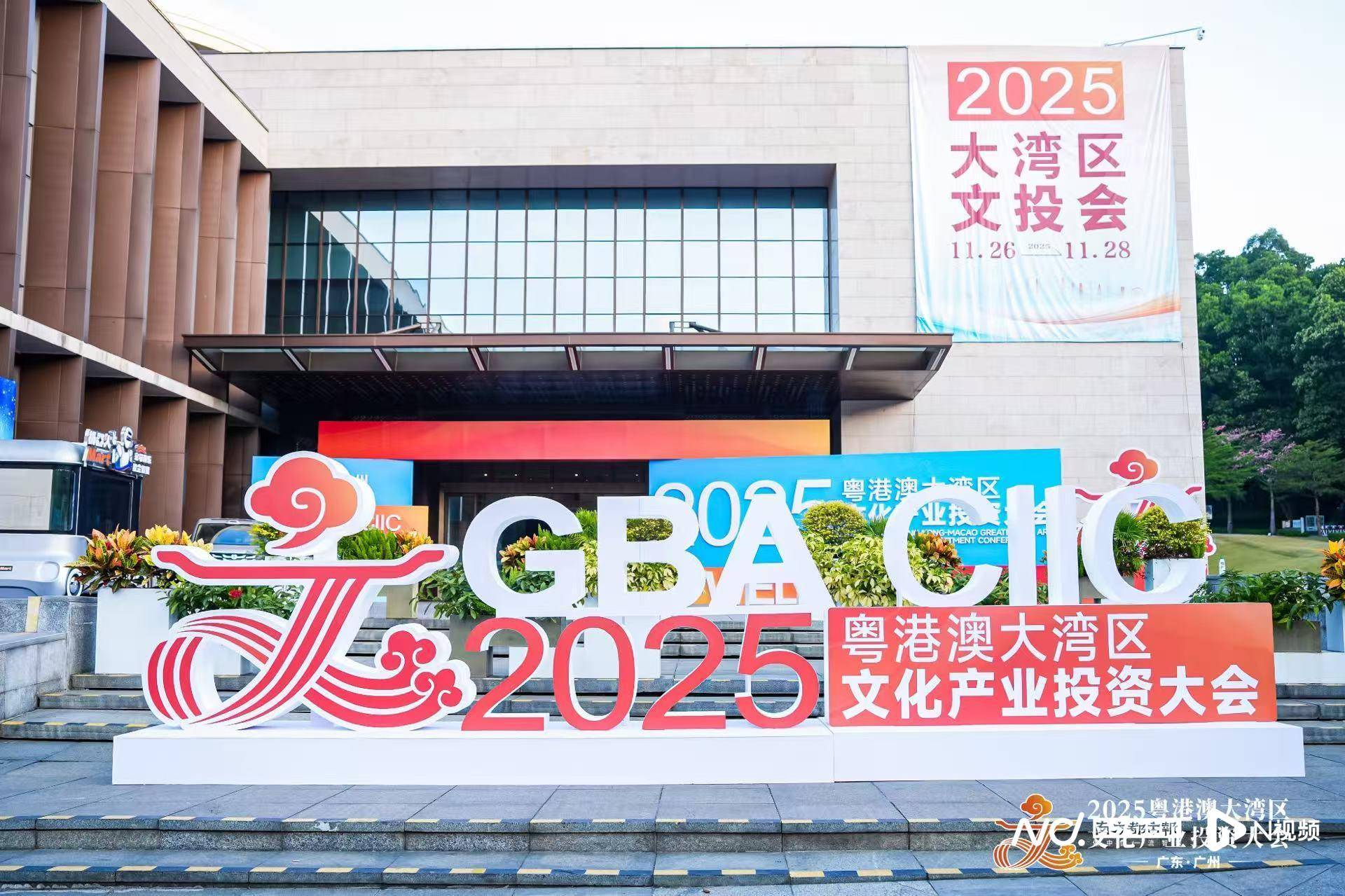
Core Insights - The 2025 Guangdong-Hong Kong-Macao Greater Bay Area Cultural Industry Investment Conference serves as a platform for cultural enterprises and investment institutions to connect, featuring a series of activities including a main conference, specialized roadshows, and supporting services [1][3] - The conference highlights the vitality of the cultural industry, showcasing the integration of culture, technology, and finance [1] Policy Support - Guangdong has established a comprehensive policy framework to support the cultural industry, ensuring stable growth and development [4] - A new policy package introduced in May 2023 includes 87 measures aimed at enhancing the quality of the cultural industry across six key sectors, which has already shown positive results [5][6] Economic Performance - In the first three quarters of 2025, Guangdong's cultural enterprises generated over 2 trillion yuan in revenue, with profits exceeding 200 billion yuan, maintaining the highest revenue in the country [5] - The province's performance in the performing arts sector is notable, with 35,600 performances and total revenue of 6.356 billion yuan, also ranking first nationally [5] Technological Integration - The integration of culture and technology is emphasized as a driving force for innovation within the cultural industry, with AI and other technologies being highlighted at the conference [7][9] - Guangdong's AI industry is projected to exceed 220 billion yuan in scale by 2024, with a growth rate of 25% [10] Investment Trends - The conference revealed that from 2020 to October 2025, the Greater Bay Area cultural industry has seen 720 financing events, with an estimated total financing amount of approximately 56.41 billion yuan [17] - Guangdong is home to 11,891 cultural enterprises, accounting for one-seventh of the national total, and has over 3,000 entertainment startups, making it a significant hub for cultural innovation [17] Industry Ecosystem - The cultural industry ecosystem in Guangdong is characterized by a self-reinforcing cycle of capital, projects, talent, and industry clusters, enhancing its attractiveness as a "new magnetic pole" [14][19] - The conference facilitated connections between over 300 quality cultural projects and more than 100 leading investors, demonstrating the effectiveness of the cultural industry ecosystem [15]
培育多元业态融合的新型公共文化空间
Ren Min Ri Bao· 2025-11-23 22:20
Core Viewpoint - The development of new public cultural spaces, including urban reading rooms, cultural stations, cultural auditoriums, and cultural squares, is essential for optimizing grassroots public cultural service networks and enhancing spatial quality, thereby promoting high-quality public cultural services [1] Group 1: Importance of New Public Cultural Spaces - New public cultural spaces are crucial for implementing the "Public Cultural Service Quality Improvement Action" as outlined in the 15th Five-Year Plan [1] - As of now, there are over 40,000 various new public cultural spaces across the country [1] - There are existing challenges such as insufficient integration of diverse business formats and low efficiency in some new public cultural spaces [1] Group 2: Multi-Industry Integration - Multi-industry integration is not merely about stacking different formats but involves breaking physical and functional boundaries to create a flexible combination of cultural content and related industries [2] - The new public cultural spaces aim to transform the traditional model of "single function, static service, and segmented business" into an open, diverse, and high-quality cultural space [2] - There is a shift in public expectations from merely having cultural services to desiring high-quality and refined experiences [2] Group 3: Demand-Driven Approach - The integration of new public cultural spaces must pivot from supply-driven to demand-driven, creating a broad coverage and multi-scenario matrix [3] - It is essential to develop thematic and segmented space types tailored to different groups based on feedback and user profiles [3] - Events like "Intangible Cultural Heritage Week" exemplify the integration of various activities to enhance user engagement and experience [3] Group 4: Local Cultural Characteristics - Local cultural characteristics are vital for giving unique identity and vitality to multi-industry integration [4] - By deeply exploring local historical contexts, folk customs, and traditional skills, public cultural spaces can avoid homogenization [4] - Successful examples include "Qiu Bai Book Garden" in Changzhou and "He Luo Book Garden" in Luoyang, which integrate local cultural heritage with public services [4] Group 5: Technological Empowerment - Technology plays a significant role in enhancing the quality of cultural experiences in new public cultural spaces [5] - Utilizing digital, networked, and intelligent methods can provide smart, high-quality, and extendable cultural services [5] - The integration of online and offline services is crucial for enhancing accessibility and user engagement [5] Group 6: Collaborative Operations - A multi-party collaborative operation model is essential for the sustainable development of new public cultural spaces [6] - The shift from a government-led model to one that includes market operations and social participation is necessary for effective resource integration [6] - Establishing mechanisms for social participation and feedback ensures that public cultural services align with community needs [6]
“声学专利+3D打印”赋能新体验
Su Zhou Ri Bao· 2025-11-21 00:25
Group 1 - The sixth Yangtze River Delta International Cultural Industry Expo opened in Shanghai, showcasing the latest achievements in the integration of culture and technology from Suzhou [1] - The Jiangsu exhibition area focuses on optimizing cultural products and services, featuring over 10,000 quality cultural products across various sectors such as cultural technology consumption and intangible cultural heritage [1] - Suzhou's silk products were a highlight, including various innovative silk creations and digital applications related to silk patterns [1] Group 2 - The "Heyan" brand, founded by Zhou Liyan, has gained popularity for its new Chinese-style clothing, with products showcased at the expo selling quickly [2] - The Art Duck Group introduced a zero-threshold customization service to meet modern consumer demands, featuring trendy cultural products developed in collaboration with local art students [3] - Suzhou Qingting Acoustic Technology Co., Ltd. presented its unique sound field systems, while Jiangsu Panxiao Technology Co., Ltd. showcased eco-friendly 3D printers with a market share of 60% to 70% [3] Group 3 - The expo, lasting three days, is co-hosted by the publicity departments of Shanghai, Jiangsu, Zhejiang, and Anhui, featuring a total exhibition area of 80,000 square meters and 37 industry events [4]
沪游对话|精文投资虞玮洁:单机游戏基金主投在沪中小项目
Sou Hu Cai Jing· 2025-11-19 06:48
Core Viewpoint - The establishment of the "Shanghai Game Industry Special Fund (Single-Player Game Direction)" aims to enhance the local gaming ecosystem by investing in diverse game projects, fostering innovation among content creators, and leveraging the synergy between cultural and technological industries [1][3][9]. Investment Strategy - The fund is initiated by Shanghai Jingwen Investment Co., Ltd., in collaboration with various partners, focusing on strategic and functional investments in the cultural sector, including media and cultural infrastructure [3][4]. - The investment strategy includes a mix of direct investments in cultural projects and fund management, with a specific focus on the integration of cultural and technological innovations [4][5]. Fund Structure - The fund operates under a "1+X+n" framework, where "1" represents a major fund for the Yangtze River Delta cultural industry, "X" includes privately managed funds, and "n" refers to additional funds managed by Jingwen Investment [5]. - The single-player game fund is part of a broader investment strategy targeting eight key cultural industries in Shanghai, emphasizing the importance of high-quality game production [5][9]. Industry Collaboration - The fund collaborates with partners like Yuncheng Capital and Sony Interactive Entertainment, ensuring a comprehensive approach to project selection and post-investment support [7][8]. - Jingwen Investment's role as a Limited Partner (LP) allows it to guide the direction of the single-player game industry while leveraging the expertise of market-oriented partners [7][8]. Focus on Game Quality - The fund aims to support diverse single-player game projects, recognizing their potential for high-quality production and cultural representation [9][10]. - The investment will not solely focus on top-tier projects but will also include a variety of game types to maintain ecosystem vitality and stimulate creativity [10]. Broader Impact - 20% of the fund's resources are allocated for investments in related industries, including upstream production technologies and downstream IP transformation, indicating a holistic approach to the gaming ecosystem [11]. - The fund seeks to enhance Shanghai's cultural identity through gaming, promoting local cultural elements and advanced technologies in game development [12].

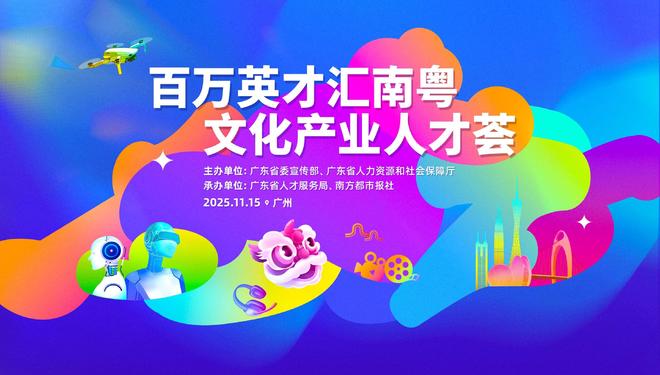
文化人才荟为何热?广东文化产业高擎创新旗帜 加速度领跑新周期
Nan Fang Du Shi Bao· 2025-11-15 11:13
Core Insights - The "Cultural Talent Fair" in the Guangdong-Hong Kong-Macao Greater Bay Area has attracted significant attention, with nearly 300 organizations offering 18,000 cultural job positions, and over 6,000 attendees submitting more than 25,000 resumes [2][19] - The growth of Guangdong's cultural industry is not only stable but is experiencing continuous breakthroughs, as evidenced by high-profile achievements in the sector [2][14] - The integration of culture and technology is accelerating, with new job roles emerging that require a blend of artistic and technical skills, particularly in AI and digital content creation [3][5][7] Job Market Trends - The job fair featured a variety of positions, including AI model designers and CG animators, with salaries ranging from 25K to 35K, indicating a strong demand for tech-savvy talent in the cultural sector [3][5] - Companies are increasingly looking for candidates who can leverage AI tools in creative processes, reflecting a shift towards "new liberal arts positions" that combine traditional skills with modern technology [5][7] - The presence of high-paying roles, such as AI chief modelers with salaries up to 700,000 yuan, highlights the lucrative opportunities available in the evolving cultural landscape [5][7] Cultural Ecosystem - The fair showcased a vibrant cultural ecosystem in Guangdong, with innovative products and experiences, such as VR installations and AI-generated art, demonstrating the fusion of technology and culture [8][10][12] - Traditional crafts and local aesthetics are being revitalized and commercialized, indicating a growing market for culturally inspired products [10][12][13] - The integration of various cultural elements, including technology, design, and traditional arts, is creating a dynamic and interconnected cultural industry in Guangdong [13][14] Policy Support - Guangdong's cultural industry has maintained its position as the largest in the country for 20 consecutive years, supported by a comprehensive policy framework aimed at fostering high-quality development [14][16] - The recent "policy package" introduced by the government includes 87 measures across six key areas, providing direct support to cultural enterprises and enhancing their operational capabilities [14][16] - The clarity and execution of these policies are encouraging businesses to invest and innovate, contributing to a more predictable and secure environment for cultural enterprises [18][21] Future Outlook - The cultural industry in Guangdong is entering a new growth cycle characterized by deeper integration of culture and technology, a more complex talent structure, and a robust policy framework [20][21] - The combination of cultural events, innovative job roles, and supportive policies is creating a fertile ground for sustained growth in the cultural sector [21]