
服务贸易

Search documents
广东经济总量连续37年居全国首位
2 1 Shi Ji Jing Ji Bao Dao· 2026-01-26 01:40
Core Viewpoint - The Guangdong Provincial Government's work report indicates a steady economic growth trajectory, with projections for GDP and various sectors showing positive trends for 2025 [1] Economic Growth - The GDP of Guangdong is projected to grow by 3.9% in 2025, maintaining its position as the largest economy in China for 37 consecutive years [1] - The local general public budget revenue is expected to increase by 3% [1] Trade and Investment - The total value of goods imports and exports is anticipated to grow by 4.4%, contributing 24.1% to the national increment [1] - Actual foreign investment utilization is projected to rise by 11.3% [1] Sector Performance - The service trade is expected to grow by 12.5% [1] - The total output value of agriculture, forestry, animal husbandry, and fishery is projected to increase by 4.9% [1] - The number of large-scale industrial enterprises is expected to reach 76,000, with an added value growth of 3% [1]
2025年1—11月 我国知识产权使用费进出口总额达3828.7亿元
Yang Shi Xin Wen· 2026-01-23 02:13
Core Insights - The number of patent transfer and licensing registrations in China reached 697,000 in 2025, marking a year-on-year increase of 13.7% [1] - Patent transfer and licensing registrations from universities and research institutions approached 90,000, with a year-on-year growth of 16.6% [1] - The industrialization rate of enterprise invention patents reached 54%, showing steady growth over several years [1] Intellectual Property Trade - From January to November 2025, the total import and export value of intellectual property usage fees in China reached 382.87 billion yuan, reflecting a year-on-year increase of 7.4% [1] - The export value of intellectual property usage fees grew by 23.1% year-on-year, contributing to the rise in China's service trade exports [1]
关注《境外投资资讯》,一键查收近期出海政策
Sou Hu Cai Jing· 2026-01-22 02:37
企业安全有序出海需要政策护航。1月20日,在广东省发展和改革委员会指导下,由中国企业"走出 去"综合服务中心主办,南方新闻网承办的《境外投资资讯》首刊发布。其中政策部署板块集纳近期国 内涉境外投资政策,为企业把握政策导向、应对境外风险、实现高质量出海提供"一键指引"。 2025年12月5日,商务部印发《企业境外履行社会责任工作指引》(简称《指引》)。此举旨在践行构 建人类命运共同体理念,落实全球发展倡议、全球安全倡议、全球文明倡议、全球治理倡议,推进高质 量共建"一带一路",完善海外综合服务体系,引导"走出去"企业在产业链供应链国际合作中更好履行社 会责任,提升境外业务可持续发展水平。 《指引》提出包括支持东道国(地区)增强经济发展动力、促进东道国(地区)民生改善与社会和谐、 支持东道国(地区)环境保护与绿色转型、推动行业健康持续发展、增强履行社会责任的保障能力等指 引内容。 扫描下方二维码,获取《指引》全文。 时隔两周,2025年12月19日,为适应跨境人民币业务发展需要,加强人民币跨境支付系统(CIPS)业 务管理,中国人民银行修订印发《人民币跨境支付系统业务规则》(简称《规则》)。 这一政策旨在适配人民 ...
2025年1-11月罗马尼亚服务贸易进出口情况报告
Shang Wu Bu Wang Zhan· 2026-01-20 07:27
Core Insights - Romania's service trade totalled €687.6 billion from January to November 2025, marking a 13.4% increase [1] - Exports reached €398.7 billion, up 12.1%, while imports were €288.9 billion, increasing by 15% [1] - The service trade surplus was €109.8 billion, reflecting a growth of 4.9% [1] Group 1: Transportation Services - Transportation services trade amounted to €143.8 billion, a growth of 11.2%, accounting for 20.9% of total service trade [1] - Exports in this sector were €99.8 billion, up 15.8%, while imports were €44 billion, remaining stable [1] - Road transport services dominated with a trade value of €92.1 billion, representing 64% of transportation services [1] Group 2: Other Business Services - Other business services recorded a trade value of €171.3 billion, increasing by 21%, making up 24.9% of total service trade [2] - Exports were €94.4 billion, up 14.7%, and imports were €76.9 billion, rising by 30.8% [2] - Technical, trade-related, and other business services accounted for €88.8 billion, growing by 20.5% [2] Group 3: Communication, Computer, and Information Services - Trade in communication, computer, and information services reached €139.5 billion, a 10.7% increase, comprising 20.3% of total service trade [3] - Exports were €101.6 billion, up 11.8%, while imports were €37.9 billion, increasing by 7.6% [3] Group 4: Tourism Services - Tourism services trade totalled €140.6 billion, growing by 4.4%, and accounted for 20.4% of total service trade [4] - Exports were €48.9 billion, up 4.7%, and imports were €91.7 billion, increasing by 4.2% [4] Group 5: Processing Trade Services - Processing trade services saw a decline, with a total trade value of €27.5 billion, down 2.9%, representing 3.9% of total service trade [5] - Exports were €26.3 billion, decreasing by 2.6%, while imports remained stable at €1.2 billion [5] - The five sectors mentioned accounted for 90.4% of total service trade [5] Additional Insights - Financial services trade surged to €15.79 billion, a remarkable growth of 101% [5] - Intellectual property fees trade reached €12.23 billion, increasing by 18.5% [5] - Construction services trade was €14 billion, up 2.8%, while insurance and pension services trade was €5.38 billion, growing by 13.7% [5]
上海“十五五”:增强内需主动力、壮大服贸优势
第一财经· 2026-01-19 15:24
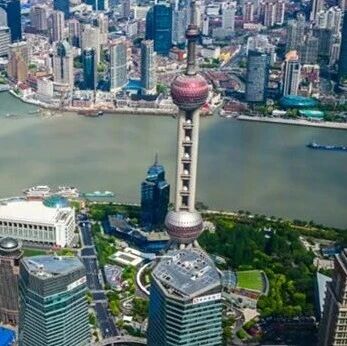
Core Viewpoint - Shanghai's "15th Five-Year Plan" emphasizes high-quality development and the construction of five key centers to enhance its global economic and competitive standing [1][4]. Group 1: Economic Development Goals - The main goals of Shanghai's economic and social development include significant achievements in high-quality development, new advancements in urban core functions, breakthroughs in high-level reform and opening up, and improvements in social civilization [4]. - The plan highlights the importance of domestic demand as a primary driver of economic growth, with a focus on enhancing the international consumption center [4][5]. Group 2: Service Industry and Consumption - Shanghai aims to expand service consumption, particularly in cultural, tourism, sports, and health sectors, while promoting innovative consumption models and enhancing the quality of service supply [5][6]. - Recent policies emphasize the integration of service industry development with consumption growth, aiming to shift from scale expansion to value enhancement in the service sector [7]. Group 3: Trade and Global Positioning - The plan outlines strategies to strengthen Shanghai's role as a global trade hub, including optimizing trade structures and enhancing service trade capabilities [8][9]. - Shanghai's foreign trade statistics indicate a significant increase, with total foreign trade reaching 4.51 trillion yuan in 2025, a year-on-year growth of 5.6%, and exports growing by 10.8% [9][10]. Group 4: Shipping and Logistics - The "15th Five-Year Plan" includes initiatives to solidify Shanghai's status as a global shipping hub, focusing on modern shipping services and digital transformation [11]. - Plans to develop a world-class shipping exchange and enhance maritime services are part of the strategy to support the international trade center [11].

上海“十五五”:增强内需主动力、壮大服贸优势
Di Yi Cai Jing· 2026-01-19 12:45
Core Viewpoint - Shanghai aims to strengthen its role as a "key node in the global city network" during a period of globalization headwinds by enhancing domestic consumption and service engines while improving its discourse power in trade and shipping rules [1][2] Economic Development Goals - The "15th Five-Year Plan" outlines major goals for Shanghai's economic and social development, emphasizing high-quality development, new leaps in urban core functions, breakthroughs in high-level reform and opening up, and significant improvements in social civilization [3] - The plan highlights the importance of building an international consumption center and enhancing domestic demand as the main driver of economic growth [3] Service Sector Expansion - Shanghai plans to expand service consumption, focusing on cultural, tourism, sports, and health services, while promoting green and smart consumption [4] - The city encourages innovation in consumption models and formats, integrating online and offline consumption, and enhancing the international influence of large consumption events [4] Policy Measures - Recent policies include the "Measures to Promote the Quality Improvement and Consumption Expansion of the Service Industry," which proposes 28 initiatives aimed at optimizing supply and expanding consumption [5] - The focus is on quality competition in the service sector, shifting from scale expansion to value enhancement [5][6] Trade and Shipping Enhancements - Shanghai's "15th Five-Year Plan" emphasizes the enhancement of trade hub functions and the optimization of trade structures, aiming to strengthen global supply chain management [7][8] - The city plans to promote high-value product exports and develop knowledge-intensive service trade, including cultural and technical trade [7] Foreign Trade Performance - In 2025, Shanghai's foreign trade is projected to reach 4.51 trillion yuan, with exports growing by 10.8% and imports by 1.8%, outperforming national averages [8] - The export of high-end manufacturing products, particularly electric vehicles and industrial robots, has shown significant growth, indicating a shift towards "Shanghai Intelligent Manufacturing" [9] Maritime and Shipping Development - Shanghai aims to solidify its position as a global maritime hub by developing modern shipping services and promoting digital and green transformations in the shipping industry [9] - Plans include establishing a world-class shipping exchange and enhancing the global service network of shipping insurance institutions [9]
外籍患者“扎堆”来华看病,会挤占中国人的医疗资源吗?
Xin Lang Cai Jing· 2026-01-19 05:48
Core Viewpoint - The influx of foreign patients seeking medical treatment in China raises questions about the potential impact on domestic healthcare resources, but the actual number of foreign patients is relatively small compared to the overall patient volume in cities like Shanghai [4][5]. Group 1: Foreign Patients and Healthcare Resources - In Shanghai, the total number of foreign and Hong Kong, Macau, and Taiwan inpatients in the first half of 2024 was only 4,128, which is negligible compared to the millions of outpatient and inpatient visits each year [4]. - The stories of foreign patients receiving treatment in China are often highlighted on social media, creating a perception of a larger presence than reality [5]. Group 2: Global Position of Chinese Healthcare - The phenomenon of foreign patients coming to China for medical care reflects the global positioning of the Chinese healthcare system and its potential advantages in the international market [5]. - China faces a significant annual deficit in service trade, with over one trillion RMB spent on travel services abroad, indicating a need to attract high-end consumption back to China [5]. Group 3: Advantages of Chinese Healthcare - China's healthcare system benefits from extensive clinical experience, particularly in handling complex and critical illnesses, as well as cost advantages due to a complete industrial system and controlled labor costs [6]. - The unique Chinese medicine system contributes to the reputation of "high-cost performance healthcare" among patients from developing countries and the middle class in developed nations [6]. Group 4: Challenges in Global Healthcare Market - To become a global healthcare provider, China must overcome challenges related to international recognition and trust, as well as system integration for payment and insurance processes [6]. - Cultural and service soft power aspects, such as multilingual environments and understanding of diverse cultures, are essential for building trust with international patients [6]. Group 5: Future Prospects - Initiatives like international medical tourism pilot programs and the establishment of international medical departments in public hospitals indicate progress in China's healthcare sector [7]. - The arrival of foreign patients could potentially drive improvements and upgrades within the Chinese healthcare system, fostering a transition from domestic leadership to international standards [7]. - China's role in global health governance is evolving, aiming to shift from being a supplier of medical products to a provider of health solutions and a setter of medical standards [7].

从“客场全球化”到“主场全球化”
Sou Hu Cai Jing· 2026-01-18 21:32
魏建国 前不久,APEC会议2026年将在深圳举办的消息引发广泛关注。在全球经贸秩序重塑的关键节点,中国 为何在此刻强调"高水平对外开放"?它究竟"高"在何处? 当前全球经贸新格局复杂态势 在了解高水平对外开放,"高"在什么地方前,我们必须了解当前全球经贸新格局呈现出什么变化,有哪 些显著特点。我认为,当前全球经贸新格局呈现了"六化并存"的复杂态势。 第一,高在开放的形态深化,从过去的"流动性开放"到"制度性开放"。其核心是通过规则、规制、管理 和标准的改革实现深层次开放。一个高水平的开放,必然是稳定、公平、透明、可预期的开放,其核心 在于推动由"政策红利"向"制度红利"的根本性转变。我们不再仅仅依靠关税优惠,取消非贸易壁垒与单 项措施,而是致力于打造国际化、法治化的营商环境,构建与高标准国际经贸规则相衔接的国内制度体 系,这是一场深刻的自我革命,其意义和影响不亚于当初我国加入世贸组织所做的关税减免承诺和有关 制度的改革。高水平对外开放要求我们主动对标国际先进水平,在知识产权保护、公平竞争、负面清单 管理领域进行刀刃向内的革命。这制度改的"深"将铸就开放的"稳"与"久",让全球投资者不仅"愿意 来",更能"放 ...
化入境流量为经济增量
Xin Lang Cai Jing· 2026-01-16 23:10
Core Insights - Recent initiatives in various cities, such as Shanghai's "immediate refund" service for departure tax and Fuzhou's "All Fujian Shopping" inbound consumption carnival, aim to enhance inbound consumption quality and expansion [1][2] - Inbound consumption is viewed as a form of "local export" service trade, contributing to foreign exchange income and showcasing China's modernization achievements [1][2] - Despite rapid growth, China's inbound consumption as a percentage of GDP still lags behind major developed countries, indicating structural challenges in the industry [2][3] Group 1: Economic Impact and Potential - Inbound consumption has characteristics such as a long industrial chain, significant multiplier effects, and high added value, making it a crucial economic engine [1] - The potential for growth in inbound consumption is supported by policies like visa exemptions with 29 countries and an expanded visa-free "circle" to 48 countries, leading to increased interest in "China tours" [1][2] Group 2: Structural Challenges and Opportunities - The current industry chain for inbound consumption is primarily limited to rigid expenditures like transportation and accommodation, with significant room for improvement in high-value segments like shopping and cultural experiences [2] - To enhance the value of inbound consumption, a multi-dimensional approach is needed, focusing on institutional supply, infrastructure development, product innovation, and service optimization [2][3] Group 3: Strategic Recommendations - Strengthening international consumption centers in key cities like Beijing, Shanghai, and Guangzhou is essential for expanding inbound consumption [3] - Optimizing duty-free shopping and enhancing the shopping experience through initiatives like "immediate refund" services can make "China shopping" more attractive [3][4] - Improving the convenience of payment systems and providing multilingual services in transportation and cultural sectors will create a more welcoming environment for international consumers [4] Group 4: Future Directions - A balanced approach between attracting international visitors and retaining them, as well as converting "flow" into "increment," is crucial for maximizing the benefits of inbound consumption [4] - The combination of a convenient consumption environment and compelling narratives about China can stimulate market vitality and support high-level opening and domestic demand expansion [4]
理响中国丨“稳”与“增”如何炼成?一图解读2025年中国外贸“成绩单”
Yang Guang Wang· 2026-01-16 06:18
Core Insights - In 2025, China's foreign trade achieved a record high, with total imports and exports exceeding 45 trillion yuan, marking a 41.1% increase compared to 2020, and an average annual growth rate of 7.1% [4][19]. Trade Performance - The total value of imports and exports reached 45.47 trillion yuan, solidifying China's position as the world's largest trading nation [4][19]. - The number of countries and regions trading with China reached 249, with 111 countries having trade volumes exceeding 1 billion yuan [6][7]. Export Composition - High-tech product exports amounted to 5.25 trillion yuan, reflecting a 13.2% increase [9]. - Exports of "new three items" and wind turbine generators saw significant growth, with increases of 27.1% and 48.7% respectively [10]. - The share of self-owned brand products in total exports increased by 1.4 percentage points, with a growth rate of 12.9% [11]. Import Trends - Imports of mechanical and electrical products reached 7.41 trillion yuan, up by 5.7% [13]. - Despite declining international market prices, imports of consumer goods like fresh fruits and edible oils increased by 5.6% and 16.6% respectively [13]. Business Dynamics - Over 780,000 entities recorded imports and exports, with private enterprises contributing significantly, accounting for 26.04 trillion yuan of the total trade value, an increase of 7.1% [16][22]. - The number of foreign-funded enterprises with import and export records increased by over 1,700 compared to 2020 [21]. Future Outlook - The foreign trade landscape is expected to focus on digital and green trade development, service trade expansion, and the integration of trade and investment [22][23].
