核聚变商业化

Search documents
碳中和50ETF(159861)涨超3%,核聚变商业化提速获关注
Mei Ri Jing Ji Xin Wen· 2025-09-05 05:58
Group 1 - The commercialization of the nuclear fusion industry is accelerating, with significant confidence from the capital market regarding its prospects [1] - Recent financing activities include Commonwealth Fusion Systems (CFS) completing a $863 million funding round aimed at constructing the SPARC demonstration device and developing the ARC power plant [1] - General Atomics has made a strategic investment of $20 million to expedite the development of a tritium fuel cycle testing facility, which is expected to be operational by 2026 [1] Group 2 - The SICAS integrated modeling framework, developed by the University of Tennessee in collaboration with a German research institute, has made breakthroughs in global plasma simulation technology for nuclear fusion devices [1] - The photovoltaic industry is experiencing a "de-involution" upgrade, with electricity consumption reaching new highs and strong demand in the sector [1] Group 3 - The Carbon Neutrality 50 ETF (159861) tracks the Environmental Protection 50 Index (930614), which selects leading companies related to environmental protection from the Chinese A-share market [1] - The index focuses on sectors such as clean energy, pollution control, and energy-saving technologies, reflecting the overall performance of the environmental protection industry [1] - Investors without stock accounts can consider the Guotai CSI Environmental Industry 50 ETF Connect C (012504) and Connect A (012503) [1]
186亿,“人造太阳”最大单轮融资来了
3 6 Ke· 2025-09-05 03:19
Group 1: Core Insights - Google has signed an unprecedented power purchase agreement with Commonwealth Fusion Systems (CFS) to procure 200 megawatts of electricity from its first commercial fusion plant, ARC, marking the largest fusion energy purchase agreement globally [1] - CFS has raised a total of $2.663 billion in its B round financing, setting a record for the largest single round of financing in the fusion sector, with notable investors including Google, Nvidia, and Bill Gates' Breakthrough Energy Ventures [1][2] - CFS's total funding has surpassed $3 billion, accounting for one-third of the global fusion industry's total financing, and its valuation has reached approximately $8 billion [1] Group 2: Technological Advancements - The 2020s have seen significant advancements in fusion technology, including high-temperature superconductors and AI control systems, which have reduced the size and cost of fusion devices [5] - CFS's innovative high-temperature superconducting magnet technology has allowed for a significant reduction in the size of fusion reactors, from "the size of a stadium" to 1/60 of that size [14][15] Group 3: Market Dynamics - Major tech companies are investing in fusion energy due to the increasing energy demands of data centers, which are projected to double by 2030, driven primarily by AI [10] - The global push for carbon neutrality has created a favorable environment for fusion energy, as it offers a stable, zero-carbon power source [10][11] Group 4: Global Competition - The race for fusion energy is intensifying globally, with various companies exploring different fusion approaches, such as Helion's magnetic inertial fusion and TAE Technologies' efforts in the field [16][17] - China is also making significant strides in fusion research, with its EAST facility achieving a world record for sustained plasma operation, and plans for a domestic fusion engineering experimental reactor [19][20] Group 5: Future Outlook - The fusion industry is optimistic about achieving commercial viability by the mid-2030s, with over 70% of private companies believing that fusion can achieve grid connection by then [18] - The path to commercialization is expected to be challenging, requiring breakthroughs in technology, engineering, and supply chain management [23][24]
可控核聚变成资本新宠 “人造太阳”商业化渐近
Zhong Guo Jing Ying Bao· 2025-08-08 19:55
Core Viewpoint - The controlled nuclear fusion industry, referred to as the "artificial sun," is becoming a focal point for capital investment, with significant funding and policy support driving its commercialization in China [3][4]. Investment Trends - Nova Fusion Energy Technology (Shanghai) Co., Ltd. completed a record angel round financing of 500 million yuan, marking a significant milestone for private nuclear fusion companies in China [3]. - China Fusion Energy Co., Ltd. received a total of 11.492 billion yuan in strategic investments from various state-owned enterprises and funds, indicating strong backing for the "national team" in nuclear fusion [3][5]. - The global nuclear fusion industry has seen explosive growth, with total investment rising from 1.9 billion USD in 2021 to 9.7 billion USD, and the number of fusion companies increasing from 23 to 53 [4]. Industry Structure - The nuclear fusion sector in China is characterized by a dual structure of "national team" and "private team," with significant investments flowing into both [3][5]. - The "national team" includes companies like China Fusion Energy and Fusion New Energy, which have received substantial capital support from state-owned enterprises and local governments [5]. - Private companies, while receiving less capital, have attracted investments from notable venture capital firms like Sequoia Capital and Kunlun Capital [5]. Technological Development - Various technological routes exist in nuclear fusion, with magnetic confinement being the most widely adopted globally, while the field-reversed configuration (FRC) is gaining attention for its cost-effectiveness [6]. - The majority of companies are focusing on the Tokamak route, while the U.S. exhibits a more diverse approach to technology development [6]. Policy Support - The Chinese government has increased its support for the nuclear fusion industry through various policies aimed at fostering innovation and commercialization [7]. - Local governments, such as those in Anhui and Sichuan, have also introduced strategic plans to accelerate the commercial application of fusion energy [7]. Commercialization Goals and Challenges - A report indicates that 35 companies globally expect to establish commercial fusion demonstration plants capable of net energy gain between 2030 and 2035 [8]. - Companies like Helion are already initiating construction of commercial fusion plants, with plans to supply power to major tech firms [8]. - Despite optimism, experts caution that significant technical and economic challenges remain before true commercialization can be achieved [9].

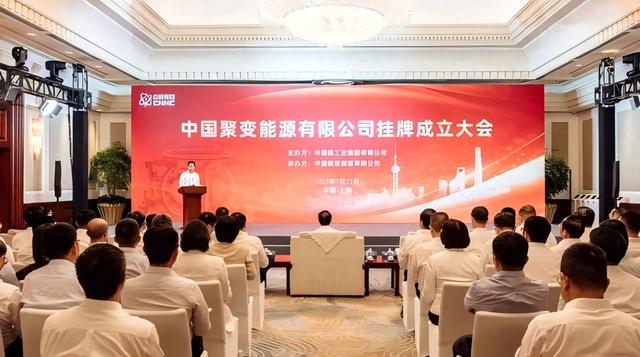
打响“逐日之战”,“人造太阳”商业化提速
2 1 Shi Ji Jing Ji Bao Dao· 2025-08-08 12:50
Core Viewpoint - The establishment of China Fusion Energy Company marks a significant milestone in China's efforts to commercialize nuclear fusion energy, supported by major state-owned and private enterprises, indicating a shift from speculative interest to long-term industrial investment in fusion energy [1][7]. Investment and Market Growth - The global fusion industry has seen explosive growth over the past five years, with total investments reaching $9.766 billion, a 414% increase since 2021, reflecting heightened investor confidence and technological advancements [2]. - The report indicates that the fusion industry is attractive due to its potential for energy security and clean energy, despite historical challenges in technology investment [2]. Technological Advancements - Significant breakthroughs in China's nuclear fusion technology have been achieved, with major devices like EAST and the Chinese Circulation No. 3 reaching record operational parameters, positioning China as a leader in plasma confinement technology [3]. - The first compact fusion energy experimental device, BEST, is set to complete construction by 2027, aiming to demonstrate fusion power generation [3]. Private Sector Involvement - Private enterprises in China, such as New Hope, have made notable advancements in fusion technology, achieving high-density plasma discharge, marking a step towards commercializing hydrogen-boron fusion [4]. - Internationally, projects like ITER and agreements between tech giants and fusion startups indicate a global acceleration in fusion commercialization [5]. Future Projections - The period from 2030 to 2035 is recognized as critical for the commercialization of fusion energy, with many companies planning to operate demonstration power plants during this timeframe [5][6]. - Industry experts predict that the first fusion power generation could occur in China by 2030, highlighting the urgency and potential of fusion energy [5]. Capital and Structural Support - The fusion industry in China is supported by a combination of national strategic capital, local industrial capital, and private innovation capital, with significant investments made by major state-owned enterprises [7][8]. - Local investments in projects like BEST have increased the capital scale significantly, indicating strong regional support for fusion energy initiatives [8]. Supply Chain Development - The maturation of the fusion supply chain is seen as a crucial factor in advancing fusion energy projects, with several companies entering the supply chain and contributing to the development of essential components [10]. - The focus on upstream materials and equipment is expected to drive demand across the industry as fusion technology progresses from validation to engineering implementation [11]. Synergistic Technologies - The convergence of AI and high-temperature superconductors with fusion technology is anticipated to accelerate the development of fusion energy, enhancing both feasibility and economic viability [11].
民营核聚变公司,融了5亿元!
Zheng Quan Shi Bao Wang· 2025-08-02 03:21
Core Insights - The nuclear fusion sector is gaining significant attention from capital investors, with Nova Fusion Energy Technology (Shanghai) Co., Ltd. completing a record angel round financing of 500 million yuan, marking a new high for private nuclear fusion companies in China [1][2] - Nova Fusion focuses on developing small, modular, and economically viable nuclear fusion power plants (FRC-SMR), filling a gap in China's small modular reactor technology and accelerating the transition from research to industrialization of domestic nuclear fusion technology [1][3] Group 1: Company Overview - Nova Fusion was established in April 2025 and is the first Chinese company dedicated to the commercialization of small modular nuclear fusion technology, founded by Guo Houyang, who has a background in energy innovation [2] - The angel round financing was backed by a consortium of industrial capital, social capital, and state-owned funds, including notable investors such as the Social Security Fund and Junlian Capital [2] Group 2: Funding and Investment - The funds from the recent financing will primarily be allocated to the research and development of China's first small modular nuclear fusion reactor, specifically targeting the power supply needs of AI [3] - Nova Fusion aims to achieve significant technological milestones in phases, with short-term goals including reaching 100 million degrees ion temperature and long-term goals of achieving 50 MW of fusion power output [3] Group 3: Industry Trends - 2025 is viewed as a pivotal year for the commercialization of nuclear fusion in China, characterized by strong collaboration between state-owned enterprises and private companies [4] - China Fusion Energy Co. has recently been established with a registered capital of 15 billion yuan, becoming the largest capital entity in the domestic fusion sector, focusing on a three-step development approach for commercial fusion energy [4] Group 4: Market Dynamics - Several startups in the nuclear fusion field are also securing funding, with Energy Singularity raising approximately 800 million yuan through two rounds of financing [5] - The global nuclear fusion industry attracted $7.1 billion (approximately 514 billion yuan) in investments last year, reflecting a nearly $1 billion increase from 2023, indicating a growing interest in the commercialization of controllable fusion technology [6]
比尔盖茨、马云等超级富豪,原来他们都在投资核聚变商业化公司
Sou Hu Cai Jing· 2025-08-01 04:56
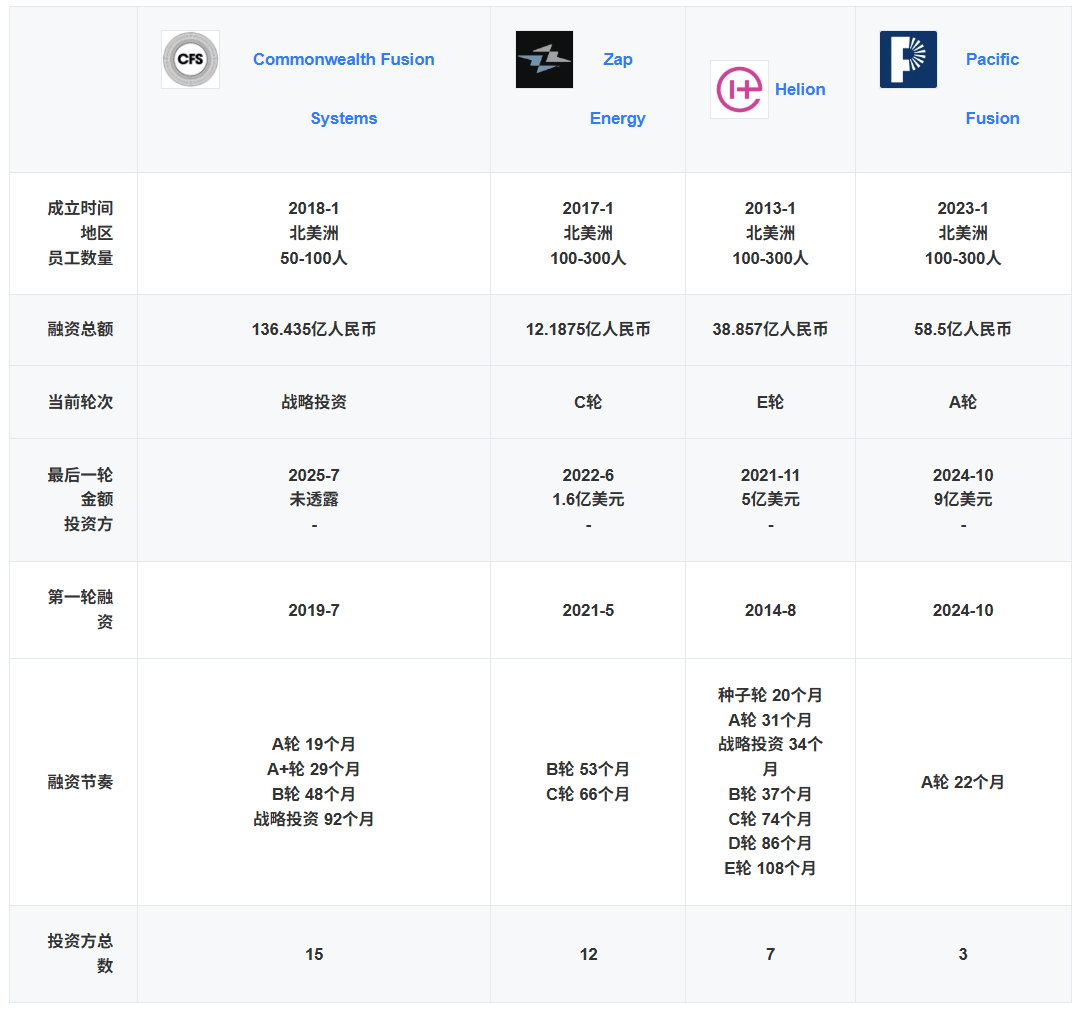
Core Insights - The article highlights the growing investment in nuclear fusion companies in China and the United States, with a total of over 100 billion RMB in funding for 12 domestic companies and approximately 26.9 billion RMB for 9 U.S. companies [1][2]. Domestic Investment Landscape - In China, nuclear fusion commercialization is in its early stages, with significant investments from state-owned enterprises, national funds, and local government capital [1]. - The total funding for domestic nuclear fusion companies has surpassed 100 billion RMB, indicating strong governmental and institutional support [1]. U.S. Nuclear Fusion Companies - The U.S. nuclear fusion sector is marked by 23 publicly disclosed investment events, with a total estimated funding of 26.9 billion RMB [1]. - Key players in the U.S. include Commonwealth Fusion Systems, Pacific Fusion, Helion, and Zap Energy, each securing over 1 billion RMB in funding [1][2]. Commonwealth Fusion Systems (CFS) - CFS, founded in 2018, focuses on commercializing nuclear fusion by leveraging decades of research from MIT [4]. - The company has raised over 2 billion USD, making it the most funded startup in the nuclear fusion sector, with notable investors including Tiger Global, Bill Gates, and Google [6]. Pacific Fusion - Established in 2023, Pacific Fusion has quickly attracted attention, securing 900 million USD in funding led by General Catalyst [9]. - The company focuses on pulse magnetic-driven inertial confinement fusion, utilizing advanced techniques to achieve fusion conditions [8]. Helion - Founded in 2013, Helion has raised approximately 570 million USD, with significant milestones including achieving plasma heating to 100 million degrees Celsius [10][11]. - The company is working on the Polaris project, which aims to demonstrate net electricity production from fusion [11]. Zap Energy - Zap Energy, established in 2017, has made significant progress in funding, completing a 160 million USD Series C round in 2022 [13]. - The company collaborates with Lawrence Livermore National Laboratory to advance its fusion technology [12]. Investment Trends - The article identifies active investors in the nuclear fusion space, including Lowercarbon Capital and Breakthrough Energy Ventures, both focused on climate change solutions [17][18]. - Lowercarbon Capital has made five investments in nuclear fusion companies, while Breakthrough Energy Ventures, founded by Bill Gates, has invested in multiple U.S. firms [17][18]. Global Investment Landscape - Other notable investors include Khosla Ventures, Starlight Ventures, Capricorn Investment Group, and Mithril Capital Management, all of which have shown interest in the nuclear fusion sector [19][21][22]. - Tencent has also participated in funding a European fusion technology company, First Light Fusion, indicating a broader interest in fusion technology beyond domestic investments [22].
国泰海通|机械:核聚变产业集群发展,商业化发电前景广阔
国泰海通证券研究· 2025-07-25 10:12
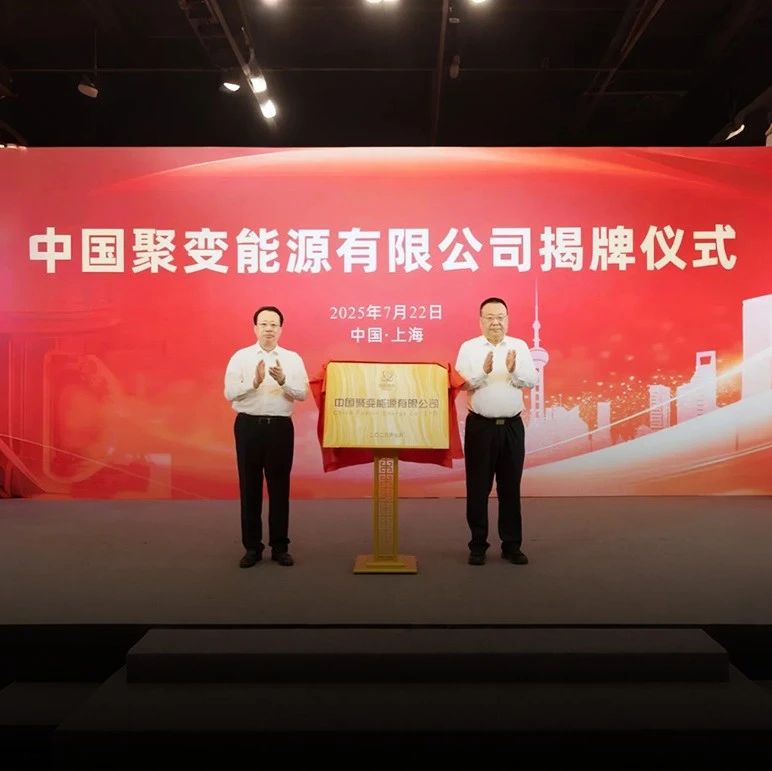
Core Viewpoint - The establishment of China Fusion Company marks a significant transition from experimental research to engineering and commercial application in fusion energy, demonstrating a key leap for the fusion industry cluster development in China [1][2]. Group 1: Company Establishment and Investment - China Fusion Company was officially established on July 22, 2025, in Shanghai, with a total investment of 11.492 billion yuan from seven units, including China National Nuclear Corporation and China Petroleum Kunlun Capital [2]. - The company will focus on the engineering and commercialization of fusion energy, utilizing the magnetic confinement Tokamak technology [2]. - China Fusion Company has signed a deepening cooperation agreement with several institutions, including Shanghai Jiao Tong University and Shanghai Electric Group, to promote collaborative development within the fusion industry chain [2][3]. Group 2: Industry Development and Technological Advancements - Shanghai is actively promoting the fusion industry cluster, emphasizing the integration of innovation elements from enterprises, universities, and research institutions to accelerate the commercialization of fusion technology [3]. - Shanghai Superconductor has achieved breakthroughs in high-temperature superconducting core technology, holding over 80% market share for domestic and international fusion reactor supplies [3]. - The establishment of the fusion innovation consortium will enhance the density of technological innovation and accelerate the development of a globally influential fusion energy innovation hub [3]. Group 3: Global Context and Future Outlook - The global fusion industry is thriving, with at least 45 commercial fusion companies and cumulative investments of approximately 7 billion USD, with 80% of surveyed companies expecting to supply power to the grid in the 2030s [4]. - China has validated the feasibility of fusion reactors through national research projects and plans to start the BEST project in 2025, aiming for its first power supply to the grid by 2030 [4]. - The role of state capital in Shanghai is crucial for encouraging social capital to foster innovation in the upstream and downstream sectors, potentially shortening the growth cycle of the fusion industry [4].

“炼金术”成真了?这家公司宣称:用核聚变“点汞成金”,未来每发电1千兆瓦或产5吨黄金
华尔街见闻· 2025-07-23 10:44
Core Viewpoint - Marathon Fusion claims to have developed a method to convert mercury into gold using nuclear fusion, potentially doubling revenue for fusion power plants [1][5]. Group 1: Technology Overview - The technology is based on existing fusion principles, utilizing high-energy neutrons to convert mercury-198 into mercury-197, which decays into stable gold-197 [2]. - The process does not reduce the power output or tritium breeding capabilities of the fusion plant [3]. Group 2: Commercial Potential - Each gigawatt of fusion power capacity is estimated to produce gold worth approximately equal to its electricity revenue, potentially doubling the plant's income [5]. - The global annual gold production is around 3,500 tons, and the company believes the gold produced from fusion can be absorbed by the market without affecting gold prices [6]. Group 3: Challenges and Considerations - The main challenge is the potential radioactivity of the produced gold due to the presence of other mercury isotopes, requiring a storage period of 14 to 18 years for safety [9]. - While particle accelerators have previously synthesized gold, the yield has been minimal and costly [9]. - The technology could also be applied to produce other precious metals, but gold is seen as the most viable option due to market size [10]. Group 4: Industry Context - The commercialization of nuclear fusion still faces significant technical challenges, with no fusion experiment yet producing more energy than consumed, although private investment is increasing optimism in the field [11].

一图看懂 | 聚变能源公司概念股
市值风云· 2025-07-23 10:14
Core Viewpoint - China's investment in controllable nuclear fusion projects has reached a total scale of 136.2 billion yuan, with the next 3-5 years being a critical bidding window for infrastructure construction [1][7]. Group 1: Investment Background - As of July 22, 2025, China Nuclear Power (601985.SH) announced a planned investment of 1 billion yuan to acquire a 6.65% stake in China Fusion Energy Co., marking an acceleration in the commercialization of nuclear fusion in China [4][7]. - Zhejiang Energy Power (600023.SH) also announced an investment of 751 million yuan for a 5% stake in the same company, further indicating the momentum in the nuclear fusion sector [4][13]. - Currently, there are 14 major controllable nuclear fusion projects under construction in China, with a total investment scale of 136.2 billion yuan [1][7]. Group 2: Key Participants - China Nuclear Power is a core participant, investing 1 billion yuan and holding a 6.65% stake in China Fusion Energy Co., which is under the China National Nuclear Corporation [11][12]. - Zhejiang Energy Power, as a traditional power enterprise, is leveraging its background to promote the commercialization of fusion technology through its 751 million yuan investment [14]. - West Superconducting Technologies (688122) is the only domestic supplier of low-temperature superconducting wire for the ITER project, breaking international monopolies in this technology [15][16]. Group 3: Strategic Significance - The investments by state-owned enterprises respond to national strategic requirements for future industries and aim to solidify their core positions in the nuclear fusion sector [12][14]. - The focus on nuclear fusion aligns with the country's energy transition goals, emphasizing the importance of clean energy development [14].


中国聚变商业化进程加速
Sou Hu Cai Jing· 2025-07-23 03:52
Core Insights - Nuclear fusion is regarded as the "ultimate energy" solution due to its nearly limitless fuel reserves and zero carbon emissions, with China making significant advancements in technology and commercialization in recent years [2][4]. Group 1: Technological Breakthroughs - China's nuclear fusion research has evolved since the 1950s, entering a phase of intensive output, with the EAST device achieving a world record of 1.2 million degrees Celsius for 101 seconds in 2021 [4]. - In 2023, the HL-3 device achieved high confinement mode operation under a plasma current of 1 million amperes, marking a transition from "catching up" to "keeping pace" in controllable nuclear fusion [4]. - Key challenges for commercializing fusion energy include high-temperature plasma confinement, radiation-resistant materials, and tritium self-sustaining cycles, with substantial progress made in the first two areas [4][5]. Group 2: Industry Landscape - The Chinese fusion industry is rapidly forming, supported by national funding and clear policy direction encouraging private capital participation [5]. - The Energy Bureau's 2023 guidelines aim to establish a fusion demonstration reactor by 2030 and achieve commercialization by 2050, integrating fusion into the new energy system [5]. - Over 20 domestic companies are involved in the fusion sector, focusing on core component manufacturing such as superconducting magnets and vacuum chambers [5]. Group 3: Innovation Ecosystem - A new innovation ecosystem is emerging in China characterized by government guidance, enterprise leadership, and capital support, which is seen as a model for global reference [5]. - China is actively participating in the ITER project, contributing 10% of procurement tasks, while also advancing its own technology through the CFETR project, which is in the engineering design phase [6]. Group 4: Future Outlook - Despite challenges such as high startup costs and the need for a tritium supply chain, the industry anticipates that fusion power generation costs could drop below 0.3 yuan per kilowatt-hour after 2035, making it competitive in the market [6]. - The commercialization of fusion energy is crucial for national energy security and reflects humanity's aspirations for a cleaner future, with China making steady progress towards realizing this vision [6].