汽车电动化

Search documents
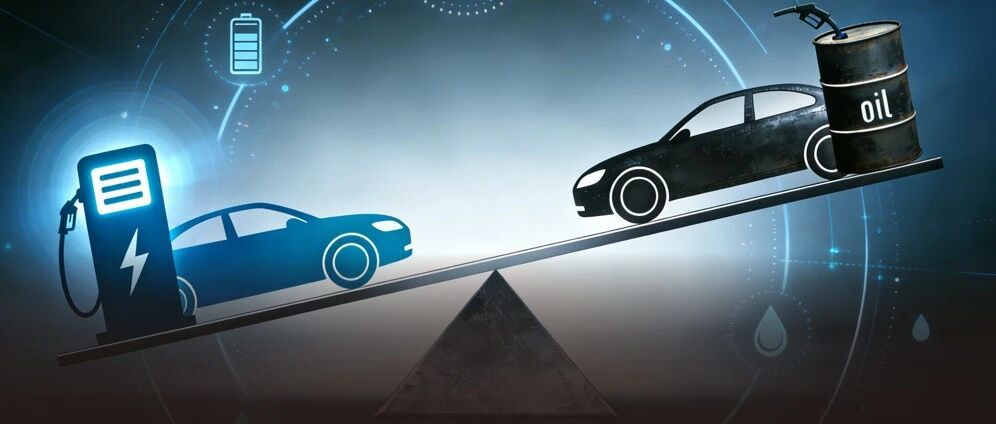
拐点已至!欧盟纯电首超燃油车,未来不可逆
汽车商业评论· 2026-01-28 23:06
加入轩辕同学 , 成就新汽车人! 设计 | 常 笑 撰文 | 张 南 编辑 | 黄 大 路 2026年1月27日,欧洲汽车制造商协会(ACEA)发布的终端注册数据,为全球汽车产业写下历史性一笔。 2025年12月,欧盟乘用车市场纯电动汽车(BEV)销量达217,898辆,同比激增51%,市场份额升至22.6%;同期汽油车销量为216,492辆,同比下 滑19.2%。 这是欧盟市场纯电动车销量首次超越燃油车,标志着欧洲汽车工业正式迈入"电动化主导"的新纪元。 | | | BATTERY ELECTRIC | | | | PLUGHN HYBRID | | | HYBRID ELECTRIC' | | | OTHERS | | | PETROL | | | DIESEL | | | 119TAL | | | --- | --- | --- | --- | --- | --- | --- | --- | --- | --- | --- | --- | --- | --- | --- | --- | --- | --- | --- | --- | --- | --- | --- | | | Decembe | Dec ...




“开不坏”的丰田汽车,正遭遇阵痛
阿尔法工场研究院· 2026-01-27 00:06
Core Viewpoint - Toyota is facing significant challenges in adapting to the new era of smart and electric vehicles, as evidenced by recent recalls and a reliance on traditional fuel vehicles for growth [4][12][15]. Group 1: Recalls and Quality Issues - Toyota has announced a recall of 10,922 RAV4 vehicles and 5,056 Venza vehicles due to issues with multimedia screens potentially going black during startup, affecting driver controls [5][7]. - This marks the second major recall in a short period, highlighting a shift from traditional mechanical issues to problems with electronic components [9][10]. - The frequency of recalls is eroding consumer trust in Toyota, which was once synonymous with reliability and durability [8][11]. Group 2: Sales Performance and Market Position - Despite the recalls, Toyota reported a sales increase in China, projecting over 1.78 million units sold in 2025, claiming to be the only foreign automaker to achieve growth in the market [11][12]. - However, this growth is primarily driven by traditional fuel vehicles, while the market is rapidly shifting towards electric vehicles, with nearly 48% penetration in 2025 [13][14]. - Toyota's electric vehicle presence is weak, with only 9% of GAC Toyota's sales coming from pure electric models, and the bZ series struggling with monthly sales below 2,000 units [14][15]. Group 3: Strategic Challenges and Future Outlook - Toyota is experiencing a "split" in its strategy, heavily invested in the declining fuel vehicle market while struggling to establish a foothold in the electric vehicle sector [15][16]. - The company faces systemic challenges in balancing the profitability of fuel vehicles with the urgent need to develop competitive electric vehicles [17]. - Despite having strong brand equity and manufacturing capabilities, Toyota must transform its traditional strengths into new competencies for the future [17][18].

为线控转向划定安全边界,汽车转向强制性国标发布
Yang Shi Xin Wen· 2026-01-26 03:38
二是完善报警机制。明确线控转向蓄电装置老化状态及性能不足的报警方式,规避潜在风险,保障线控 转向系统的长期安全运行。 三是保障可靠运行。面对转向系统越发依赖电子控制系统的发展趋势,尤其是线控转向系统完全依赖电 控实现转向操作的特性,明确转向电子控制系统功能安全相关要求,避免由电气/电子系统的功能异常 导致不合理的风险。 四是加强标准执行。为进一步加强标准的可执行性,本次修订更改了功能安全验证试验的相关要求,明 确了测试典型用例,为检验检测机构开展相关文档审核评估及试验验证提供技术依据。(央视新闻) 1月26日,据央视新闻,市场监管总局(国家标准委)批准发布《汽车转向系 基本要求》强制性国家标 准,将自7月1日起正式实施。该标准的发布实施,进一步明确汽车转向系统的技术要求及试验方法,为 线控转向等新技术划定清晰的安全边界,对于推动线控转向技术落地应用、引导规范我国汽车转向系统 发展具有重要意义。 汽车转向系统是保障车辆行驶安全的核心系统,其可靠性直接关系百姓生命财产安全。随着汽车电动 化、智能化快速发展,转向系统在结构型式、系统架构等方面产生了全新变革,逐渐发展为不再是转向 盘与转向执行机构之间的机械连接,而是 ...
马自达与中国合资EV的重要性提高
日经中文网· 2026-01-24 00:32
Core Viewpoint - Mazda has revised its electric vehicle (EV) strategy, delaying the production start of its globally strategic EV to 2029 due to changes in EV adoption policies in Europe and the U.S. The company plans to expand sales of EVs developed in partnership with China's Changan Automobile to navigate this transitional period [2][4]. Group 1: EV Strategy Changes - The production and sales of Mazda's globally strategic EV, which was initially set for 2027, have been postponed to 2029 [4]. - The adjustments in EV policies in major markets like the U.S. and Europe have influenced Mazda's decision, with the U.S. reducing tax incentives for EV purchases and the EU reconsidering its ban on internal combustion engine vehicles by 2035 [4][8]. Group 2: Market Adaptation - Mazda intends to combine its self-developed EVs with those from its joint venture with Changan to respond flexibly to market demands [8]. - The company plans to export EVs produced at its Nanjing factory in collaboration with Changan, with the Mazda 6e sedan set to launch in Europe in September 2025 and the CX-6e SUV expected in summer 2026 [8]. Group 3: Market Performance and Sales - In Europe, EV sales have shown significant growth, with a 27% year-on-year increase from January to November 2025, and EVs accounting for 19% of new car sales [8]. - The introduction of more affordable EVs priced around €30,000 has contributed to sustained double-digit growth in EV sales in Europe since January 2025 [8]. Group 4: Cost Management - The pricing of EVs is influenced by battery costs, and Changan Mazda is utilizing locally sourced lithium iron phosphate (LFP) batteries to keep prices competitive [9]. - Despite tariffs on Chinese EVs imposed by the EU, Chinese EVs are still considered cost-competitive, highlighting the importance of joint venture EVs for Mazda during this transitional phase [9].

铜价,短期宽幅整理
Bao Cheng Qi Huo· 2026-01-21 11:05
Report Industry Investment Rating - Not provided Core Viewpoints - Since January 2026, Shanghai copper has been oscillating at a high level above 100,000 yuan/ton, and LME copper has been fluctuating around $13,000/ton. The rise in copper prices since last September was driven by loose macro - policies, marginal contraction of overseas mine supply, and strong demand expectations [2]. - In 2026, in the context of loose macro - policies, rigid supply constraints and green - intelligent demand will continue to support copper prices, making the long - term upward foundation more solid. However, due to frequent geopolitical events and high cumulative price increases, copper prices are expected to shift to a high - level oscillation pattern in the short term [4]. Summaries by Related Aspects Macro - economic Situation - The global financial environment is moving towards significant loosening, leading to a general rise in major global stock markets and a widespread rally in the commodity market. Copper stood out in this asset rally, breaking through the post - 2020 price high in Q4 2025, supported by its supply - demand fundamentals [2]. Industry - level Analysis - Supply bottlenecks will provide a solid bottom support for copper prices. In China, the growth rate of refined copper production may slow down significantly under the dual influence of negative processing fees and industrial policies. CSPT members will reduce their mine - copper production capacity by over 10% in 2026, which will intensify the supply shortage of refined copper [3]. - Structural demand provides long - term growth momentum for copper consumption. The global copper demand growth engine has shifted to "green energy". In China, grid investment and automobile electrification will contribute to growth; in North America, AI data center construction will drive copper demand for supporting power grids [3]. Demand - side Situation - The State Grid's investment plan during the 15th Five - Year Plan period is expected to reach 4 trillion yuan, a 40% increase from the 14th Five - Year Plan period. This will directly and stably boost copper consumption and strengthen copper's core strategic position in energy transformation [4].
从“单一冬测基地”迈向全链条平台——黑龙江省黑河市寒区试车产业实现多维度跃升
Zheng Quan Ri Bao· 2026-01-18 17:09
Core Insights - The fifth Heilongjiang Cold Region Test Festival commenced in Heihe, attracting 147 automotive companies and 4044 test vehicles, with over 60% being new energy vehicles [1] - The transition of the global automotive industry towards electrification and intelligence has made performance metrics in extreme cold environments essential rather than optional [1] Group 1: Testing Infrastructure and Capabilities - Heihe's unique natural conditions provide a testing environment with over 200 days of ice coverage annually and temperatures below -35°C for a month, facilitating the validation of vehicle performance [2] - The city has developed 120 specialized testing roads and is investing 260 million yuan in the Honghe Valley Four Seasons Low-Temperature Test Field, aiming to create Asia's first year-round low-temperature testing facility [2] - The number of cold region test vehicles in China is projected to increase by approximately 40% for the 2025-2026 testing season, with some testing sites reporting up to 90% of vehicles being new energy models [2] Group 2: Industry Development and Standards - Heihe has invested over 1 billion yuan in infrastructure and has participated in the formulation of 58 national and industry standards, including 2 international standards, with test data recognized by over 40 countries [4] - The cold region testing industry has evolved significantly, expanding its scale and brand influence, and attracting foreign investment for testing [4] - Cold region testing is becoming a necessary quality benchmark for new energy and intelligent connected vehicles, with companies focusing on core performance metrics [4][5] Group 3: Economic Impact and Future Directions - The integration of cold testing with tourism and sports has generated over 600 million yuan annually for related industries [6] - The cold region testing has shifted from traditional performance validation to a critical technology hub for safety and reliability in electric vehicles and intelligent systems [6] - Heihe aims to enhance its testing capabilities by expanding into intelligent connected and low-altitude testing, with ongoing collaborations with companies like Baidu [5][6]
埃泰克沪市主板IPO即将上会 市场份额双冠领跑国产化
Zheng Quan Shi Bao Wang· 2026-01-18 11:51
Core Viewpoint - Wuhu E-Tech Automotive Electronics Co., Ltd. (E-Tech) is set to undergo an IPO review on January 20, focusing on its leading position in the automotive electronic control systems market, particularly in body domain controllers and other electronic products [1] Group 1: Company Overview - E-Tech, established in 2002, specializes in the research, production, and sales of automotive electronic products across four main domains: body, intelligent cockpit, power, and intelligent driving [1] - The company has built a comprehensive independent innovation system over more than 20 years, playing a significant role in the localization of automotive electronics and leading in several niche markets [1] Group 2: Market Position and Performance - According to statistics from the Gaogong Intelligent Automotive Research Institute, E-Tech holds a 25.5% market share in the body domain controllers for China's self-owned brand passenger vehicles in 2024, ranking first for three consecutive years [1] - The company also leads with a 13.83% share in the market for remote physical keys and ranks third with a 6.41% share in cockpit domain and display assembly for self-owned brand passenger vehicles [1] - E-Tech has established a strong customer base, including major domestic automakers like Chery, Changan, and Great Wall, as well as new energy vehicle manufacturers such as Li Auto and Xpeng [2] Group 3: Financial Performance - E-Tech has shown steady revenue growth, with revenues of 2.174 billion yuan, 3.003 billion yuan, and 3.467 billion yuan from 2022 to 2024, and a net profit of 77.44 million yuan, 171 million yuan, and 202 million yuan for the same years [2] - In the first half of 2025, the company achieved a revenue of 1.522 billion yuan and a net profit of 85.61 million yuan [2] Group 4: R&D and Innovation - E-Tech has developed a complete product matrix covering four functional domains, with a focus on smart control and entry systems, digital dashboards, and vehicle display screens [3] - The company has invested heavily in R&D, employing 874 researchers, which constitutes 46.29% of its total workforce, and has allocated 111 million yuan for R&D in the first half of 2025, representing 7.31% of its revenue [3] - E-Tech holds 182 patents, including 49 invention patents, and has established a comprehensive R&D system across multiple locations [3] Group 5: Future Outlook - E-Tech aims to align with the trends of electrification, intelligence, and connectivity in the automotive industry, exploring new applications for next-generation electronic and electrical architectures [4] - The company plans to expand its domestic and international markets, seeking partnerships with more quality clients to enhance its market share and contribute to the high-quality development of China's automotive industry [4]
2025年我国汽车产销量均突破3400万辆 连续17年稳居全球第一
Yang Guang Wang· 2026-01-15 01:07
Core Insights - The Chinese automotive industry is projected to achieve record production and sales volumes in 2025, with both surpassing 34 million units, marking a year-on-year growth of 10.4% and 9.4% respectively [1] - New energy vehicles (NEVs) are expected to account for over 50% of domestic new car sales by 2025, with NEV production and sales reaching approximately 16.6 million and 16.49 million units, reflecting year-on-year growth of 29% and 28.2% [1] - The industry has demonstrated strong resilience and vitality, achieving multiple record highs and successfully completing the 14th Five-Year Plan [1] Industry Performance - The automotive industry has maintained production and sales above 30 million units for three consecutive years, with revenue exceeding 10 trillion yuan, and exports ranking first globally [1] - The integration of electrification, intelligence, and connectivity is accelerating, establishing a competitive advantage for the industry [1] Future Projections - The China Automotive Industry Association forecasts that total automotive sales in 2026 will reach 34.75 million units, representing a year-on-year increase of 1% [1] - NEV sales are anticipated to reach 19 million units in 2026, with a year-on-year growth of 15.2% [1]
BBA也卖不动了?国内一年少卖26万辆,宝马连续两年降超10%
3 6 Ke· 2026-01-13 12:46
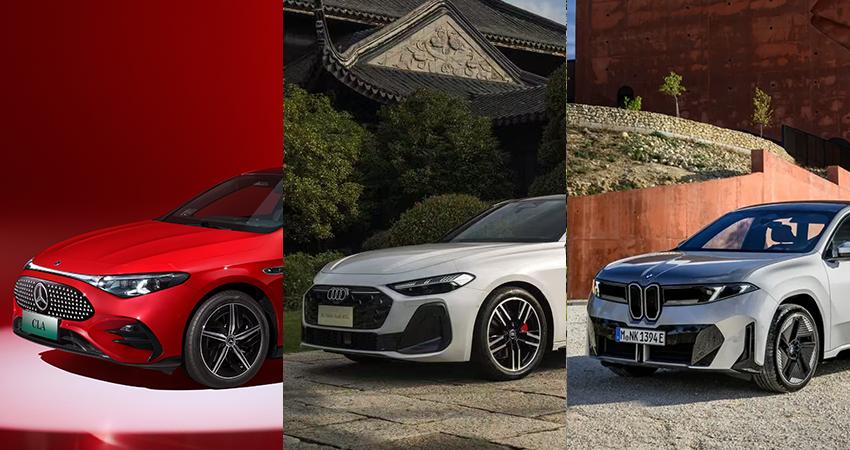
Core Viewpoint - The traditional German luxury car manufacturers, known as "BBA" (Benz, BMW, Audi), experienced a significant decline in sales in the Chinese market for 2025, with a total drop of approximately 260,000 units, representing a decline of about 12.3% compared to 2024 [1][3][5]. Group 1: Sales Performance - In 2025, Mercedes-Benz delivered 551,900 units in China, a decrease of approximately 139,000 units, marking a decline of 19% [1][6]. - BMW's sales in China for 2025 totaled 625,527 units, down by about 89,000 units, reflecting a 12.5% year-on-year decline [1][12]. - Audi's total sales in China for 2025 were approximately 617,000 units, a decrease of about 32,000 units, resulting in a decline of 4.9% [1][17]. Group 2: Market Strategy and Future Plans - In response to declining sales, BBA plans to introduce numerous new and updated models in 2026, with Mercedes-Benz set to launch over 15 new and updated models, while BMW aims to release 20 new products in the Chinese market [3][29][34]. - BBA is accelerating its transformation and enhancing cooperation with local partners in China to improve competitiveness in the market [3][42]. Group 3: Competitive Landscape - The decline in BBA's sales is attributed to increased competition from domestic brands such as Tesla and emerging Chinese electric vehicle manufacturers, which have gained significant market share [17][18]. - The luxury market in China is experiencing a shift, with local brands offering competitive pricing and advanced technology, impacting the sales of traditional luxury brands [42].
【行业深度】一文洞察2026年中国汽车PCB行业发展前景及投资趋势研究报告
Sou Hu Cai Jing· 2026-01-13 02:52
Core Insights - The automotive PCB industry is experiencing significant growth, with the global market size projected to increase from $6.457 billion in 2020 to $9.195 billion by 2024, representing a compound annual growth rate (CAGR) of 9.2% [2] - China, as the largest automotive producer and consumer, is expected to see its automotive PCB market reach approximately 22.27 billion yuan in 2024, growing by 4.3% year-on-year, driven by the rapid advancement of electric vehicles and smart automotive technologies [2] Industry Overview - Printed Circuit Boards (PCBs) are essential components in various sectors, including automotive, consumer electronics, industrial, medical, and military applications [4] - In the automotive sector, PCBs must exhibit excellent electrical performance and reliability, with rigorous testing for high-temperature aging, low-temperature shock, and thermal cycling [8] - The automotive PCB market is characterized by a shift towards high-end products, with increasing demand for advanced technologies such as ADAS and electric vehicle components [2][4] Market Dynamics - The automotive PCB market is expected to expand further, reaching $9.712 billion in 2025, with a year-on-year growth of 5.6% [2] - The competitive landscape is evolving, with a tiered structure where international giants dominate high-end markets while Chinese companies focus on mid-range segments [2] - Key competitors in the automotive PCB space include companies like Huada Technology, Shennan Circuit, and Jinko Electronics, with market shares of 3.7%, 2.3%, and 4.1% respectively in 2024 [2][3] Application and Characteristics - Automotive PCBs are categorized into flexible PCBs, rigid PCBs, thick copper PCBs, multilayer PCBs, and HDI boards, each serving different applications based on their material properties [5] - Key features required for automotive PCBs include durability, lightweight design, high current carrying capacity, and thermal resistance, which are critical for various automotive applications such as battery management systems and electronic control units [5][8] Industry Supply Chain - The automotive PCB supply chain consists of upstream raw materials (electrolytic copper, wood pulp, fiberglass, synthetic resins), midstream manufacturing, and downstream applications in traditional and electric vehicles [6][7] - The manufacturing process is capital and technology-intensive, with high barriers to entry due to the lengthy certification processes required by automotive manufacturers [6]