消费潜力释放

Search documents
扩内需等政策效应继续显现
Jing Ji Ri Bao· 2025-11-10 02:14
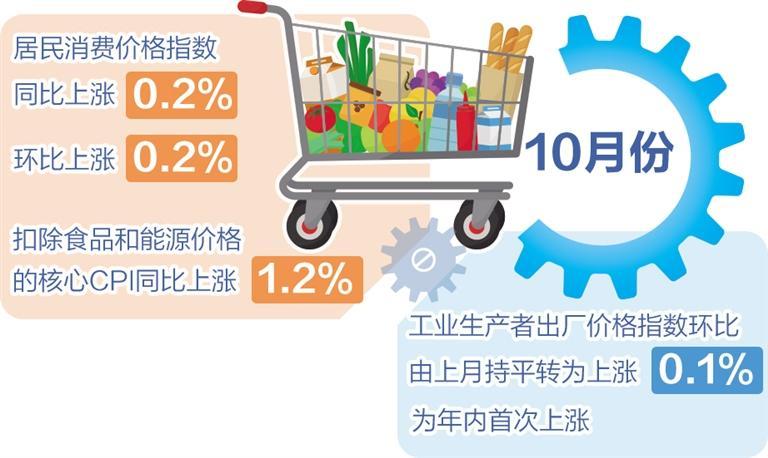
Group 1: Economic Indicators - In October, the Consumer Price Index (CPI) increased by 0.2% month-on-month and year-on-year, reflecting a recovery in domestic consumption and improved economic circulation [3][4] - The core CPI, excluding food and energy, rose by 1.2% year-on-year, marking the highest increase since March 2024 and indicating a steady recovery in service consumption [4][5] - The Producer Price Index (PPI) saw a month-on-month increase of 0.1%, the first rise of the year, while the year-on-year decline narrowed to 2.1%, showing signs of price stabilization in key industries [6][8] Group 2: Sector Performance - The increase in CPI was driven by higher service prices, particularly in accommodation and travel, with hotel prices rising by 8.6% and airfares by 4.5% during the holiday season [4][5] - Key industries such as coal mining, photovoltaic equipment manufacturing, and cement production experienced price increases due to improved supply-demand relationships [6][7] - The manufacturing sector is witnessing a shift towards high-end, intelligent, and green development, with prices in sectors like non-ferrous metal smelting rising by 6.8% [7][8] Group 3: Future Outlook - Experts predict a moderate recovery in overall price levels, supported by macroeconomic policies and a steady expansion of domestic demand [8] - The CPI is expected to rise moderately, characterized by strong food prices and stable core inflation, while PPI declines are anticipated to narrow further [8]

10月份我国CPI同比上涨0.2% 工业生产者出厂价格环比由平转涨
Yang Guang Wang· 2025-11-10 00:35
Group 1 - In October, the Consumer Price Index (CPI) increased by 0.2% year-on-year, marking a shift from a decline to an increase, driven by effective domestic demand policies [1] - The Producer Price Index (PPI) saw a month-on-month increase of 0.1%, representing the first rise of the year [1] - The core CPI, excluding food and energy, rose by 1.2% year-on-year, the highest increase since March 2024, indicating a sustained upward trend in service prices [1] Group 2 - The month-on-month CPI growth of 0.2% in October was 0.1 percentage points higher than the previous month and slightly above seasonal levels [1] - Food and energy price declines have narrowed, contributing to the overall CPI increase [1] - The rise in PPI is attributed to the accelerated construction of a modern industrial system and the orderly release of consumption potential, which has positively impacted related industry prices [1]
宏观政策发力叠加产能治理显效,PPI同比降幅连续三个月收窄
Sou Hu Cai Jing· 2025-11-09 02:51
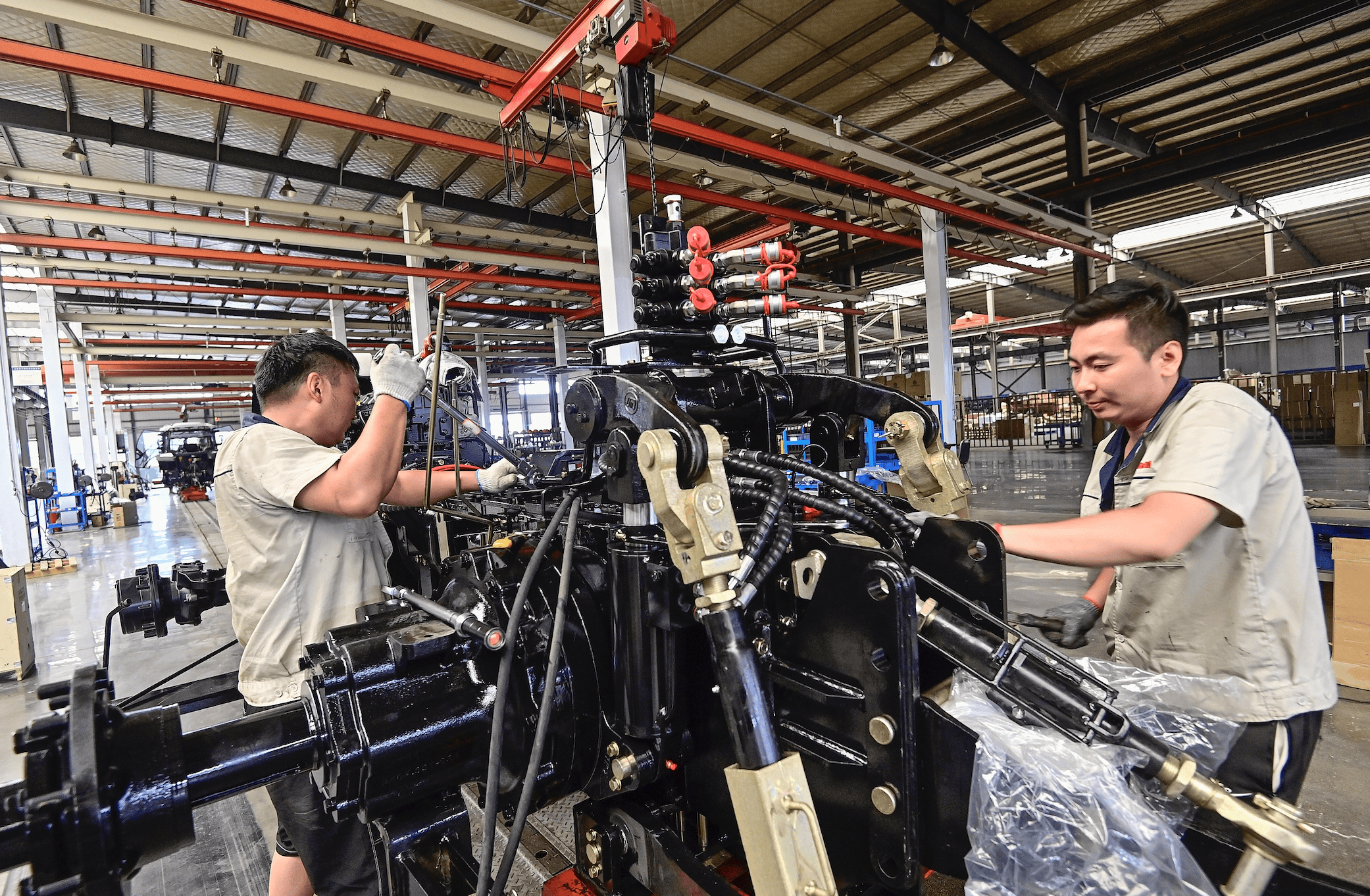
Group 1 - The core point of the article is that the Producer Price Index (PPI) in October decreased by 2.1% year-on-year, but the decline has narrowed compared to the previous month, with a month-on-month increase of 0.1%, marking the first increase this year [1][2] - The narrowing of the year-on-year decline in PPI is attributed to ongoing capacity management in key industries, leading to reduced price declines in related sectors [1] - The increase in prices in certain industries is driven by the accelerated construction of a modern industrial system and the orderly release of consumption potential, with notable price increases in sectors such as non-ferrous metal smelting and processing, which rose by 6.8% year-on-year [2] Group 2 - The article discusses the impact of external factors on PPI, including the effects of tariffs and intensified competition in certain industries, which have contributed to a wider year-on-year decline in PPI earlier in the year [4] - Analysts suggest that while the "anti-involution" policy is expected to improve market competition and support PPI recovery, there are still downward pressures on PPI due to weak consumer confidence and a struggling real estate market [4][5] - The report highlights that M1 money supply growth is a supportive factor for PPI improvement, but challenges remain due to weak investment and consumption willingness among businesses and households [5]
中国10月PPI同比降幅连续第3个月收窄
Ge Long Hui A P P· 2025-11-09 02:18
Core Viewpoint - The Producer Price Index (PPI) has decreased by 2.1% year-on-year, with the decline rate narrowing by 0.2 percentage points compared to the previous month, marking the third consecutive month of narrowing [1] Group 1: Industry Performance - Continuous progress in capacity governance in key industries has led to a reduction in the year-on-year price decline in related sectors [1] - The coal mining and washing industry saw a year-on-year price decline narrowing by 1.2 percentage points due to increased demand for winter storage and electricity [1] - The price declines in photovoltaic equipment and components manufacturing, battery manufacturing, and automotive manufacturing narrowed by 1.4, 1.3, and 0.7 percentage points respectively, reflecting an improvement in market competition and the exit of outdated capacity [1] Group 2: Modern Industrial System and Consumption - The accelerated construction of a modern industrial system and the orderly release of consumption potential have driven price increases in related industries [1] - Prices in the non-ferrous metal smelting and rolling processing industry increased by 6.8%, while electronic special materials manufacturing prices rose by 2.3% [1] - Other notable price increases include microwave communication equipment (1.8%), shipbuilding and related equipment (0.9%), waste resource recycling (0.7%), and aircraft manufacturing (0.5%) [1]
商务部启动“共享大市场·出口中国”系列活动,与世界共享大市场机遇
Di Yi Cai Jing· 2025-11-06 09:45
Core Points - The "Shared Big Market · Export China" series of activities aims to promote cooperation and development between China and the world, emphasizing China's commitment to expanding imports and its role as a significant global market opportunity [1][3] - The Ministry of Commerce plans to hold ten thematic activities under the "Shared Big Market · Export China" initiative, focusing on expanding China's global network and enhancing the import and export balance [3][4] - The "China International Import Expo" has successfully facilitated over $500 billion in transactions over the past eight years, showcasing China's proactive approach to opening its market [4] Group 1: Export China Initiative - The "Shared Big Market · Export China" initiative is a practical measure for China to expand its autonomous opening-up and promote balanced trade [3] - The initiative will include over 100 activities annually, focusing on thematic country connections, regional characteristics, and industry-specific engagements [4] Group 2: Buy in China Activities - The "Buy in China · 2025 Boutique Consumption Month" will take place in five international consumption centers and over 100 key cities, focusing on premium shopping, exquisite food, exciting tourism, and fine performances [5][6] - Various local events will be organized, such as the "Shopping Good Places List" and "Gourmet Map," to enhance consumer experiences and promote local specialties [5][6]

收评:沪指冲高回落4000点得而复失 福建板块掀涨停潮
Xin Hua Cai Jing· 2025-10-28 07:43
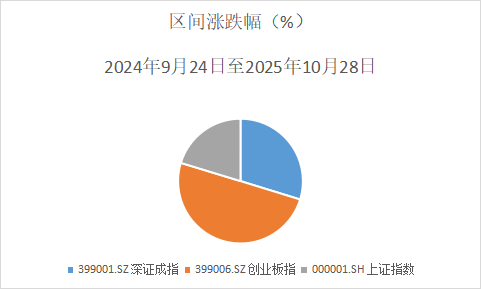
Market Overview - A-shares experienced a slight rise followed by a pullback, with the Shanghai Composite Index briefly surpassing the 4000-point mark, reaching a ten-year high before closing at 3988.22 points, down 0.22% [1] - The Shenzhen Component Index closed at 13430.10 points, down 0.44%, while the ChiNext Index ended at 3229.58 points, down 0.15% [1] - Total trading volume in the Shanghai and Shenzhen markets was 2.15 trillion yuan, a decrease of 192.3 billion yuan from the previous trading day [1] Sector Performance - The Fujian, military industry, and port shipping sectors saw significant gains, while the non-ferrous metals, wind power equipment, and oil and gas sectors experienced declines [1][3] - The Fujian sector had a surge in stocks hitting the daily limit, with over ten stocks reaching the limit, including Pingtan Development [3] Institutional Insights - Market trends are perceived to be upward, with the third-quarter report season beginning and a valuation recovery underway [4] - Investment focus is recommended on high-growth sectors such as semiconductors, consumer electronics, artificial intelligence, robotics, and low-altitude economy [4] - The China Securities Regulatory Commission (CSRC) chairman's positive remarks are expected to support the capital market's high-quality development [4] Economic Outlook - The economic structure is undergoing adjustments, with consumer spending becoming increasingly important amid external uncertainties [5] - The current valuation of consumer stocks is at historical lows, indicating significant potential for valuation recovery [6] Regulatory Developments - The CSRC is advancing a new round of capital market reforms to enhance the coordination of investment and financing functions [7] - The Shanghai Stock Exchange emphasizes support for "hard technology" companies, aiming to facilitate their listing and participation in global competition [8] Specific Company News - The wholesale price of Feitian Moutai has dropped below 1700 yuan per bottle for the first time, marking a new low since its launch, with a cumulative decline of over 31% from its initial price [9]
刚刚!A股4000点来了
Wind万得· 2025-10-28 02:24
Core Viewpoint - The A-share market is experiencing a gradual upward trend, with the Shanghai Composite Index recently surpassing the 4000-point mark for the first time since August 2015, influenced by multiple factors including policy direction, interest rate cuts by the Federal Reserve, and improved China-U.S. trade relations [1][3]. Group 1: Market Trends - The A-share market is expected to maintain a steady upward trend in the short term, with a focus on monitoring policy, capital flow, and external market changes [3]. - The recent rise in the Shanghai Composite Index indicates a significant recovery in investor sentiment, marking a notable milestone after 3723 days [1]. Group 2: Earnings Forecast - Non-financial A-share earnings growth for Q3 is anticipated to improve marginally against a low base, with high growth sectors expected to be concentrated in information technology and midstream manufacturing [5]. - Upstream resource sectors and healthcare are projected to see a narrowing of performance declines compared to mid-year reports, while financial real estate and consumer services remain under pressure [5]. Group 3: Sector Focus - Key sectors to watch include information technology (such as communication equipment, semiconductors, consumer electronics, gaming, and computer equipment) and the recovering mid-high-end manufacturing (including automotive parts, batteries, photovoltaic equipment, engineering machinery, and aerospace equipment) [5]. - The consumption sector is highlighted for its potential growth, with a focus on industries like beer, feed processing, livestock farming, white goods, and condiments, which are currently valued at historical lows, indicating significant room for valuation recovery [5].

银河证券:当前消费风格估值处于历史低位 修复空间较大
Zheng Quan Shi Bao Wang· 2025-10-28 00:37
Core Viewpoint - The report from Galaxy Securities highlights the increasing importance of consumption in China's economic structure amid slowing traditional investment growth and heightened external uncertainties, particularly for export-dependent enterprises [1] Group 1: Economic Context - Structural adjustments in the economy are leading to a slowdown in traditional investment growth [1] - Export-dependent companies are facing increased pressure due to external uncertainties [1] - Insufficient effective demand remains a prominent issue during the "14th Five-Year Plan" period [1] Group 2: Consumption Insights - The role and status of consumption in the "three drivers" of the economy are becoming more prominent [1] - The "14th Five-Year Plan" may focus on reforms in income distribution, high-quality consumption supply, and improving long-term mechanisms to stimulate consumption [1] - Current consumption style valuations are at historical lows, indicating significant potential for valuation recovery [1] Group 3: Investment Focus - Attention is drawn to sectors with valuations at historical mid-low levels and relatively strong performance metrics, including beer, feed processing, animal husbandry, white goods, and condiments [1]

中国银河证券:A股当前消费风格估值处于历史低位
Di Yi Cai Jing· 2025-10-28 00:13
Core Viewpoint - The report from China Galaxy Securities highlights the increasing importance of consumption in the economy due to structural adjustments and external uncertainties, with a focus on the "14th Five-Year Plan" to stimulate consumer demand through reforms and improved supply [1] Economic Context - Traditional investment growth is slowing down, and export-dependent companies are facing pressures due to heightened external uncertainties [1] - Insufficient effective demand remains a prominent issue during the "14th Five-Year Plan" period [1] Consumption Focus - The "14th Five-Year Plan" is expected to focus on reforms in income distribution, high-quality consumer supply, and the establishment of long-term mechanisms to promote consumption [1] - Consumption is becoming more prominent among the "three drivers" of the economy [1] Market Valuation - Current consumption style valuations in the A-share market are at historical lows, indicating significant potential for valuation recovery [1] - Key sectors to watch include beer, feed processing, animal husbandry, white goods, and condiments, particularly those with valuations at historical mid-low levels and relatively strong performance metrics [1]
为推动民营经济发展壮大把脉支招
Sou Hu Cai Jing· 2025-10-22 03:14
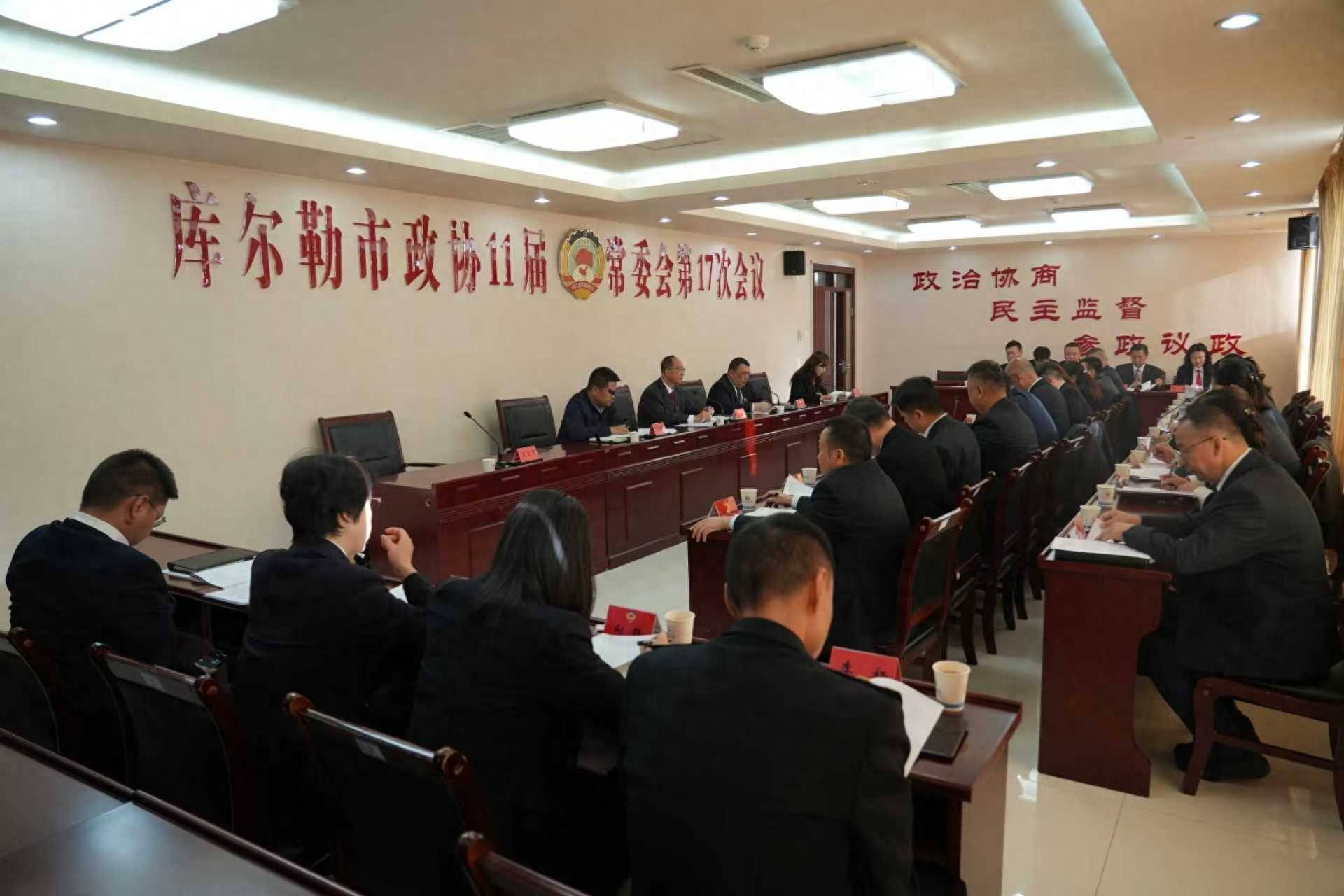
Core Viewpoint - The meeting held by the Xinjiang Korla Municipal Political Consultative Conference focused on promoting the development and growth of the private economy, aiming to provide targeted advice for high-quality development [3][6]. Group 1: Meeting Overview - The 17th Standing Committee meeting of the 11th Xinjiang Korla Municipal Political Consultative Conference took place on October 21, 2023, discussing strategies to enhance the private economy [3]. - Key officials, including the Secretary of the Political Consultative Conference and the Deputy Mayor, participated in the meeting, emphasizing the importance of high-quality development for private enterprises [3][6]. Group 2: Policy Initiatives - Korla City has been optimizing the policy environment to support private enterprises, implementing measures such as the "Thirty Measures for Promoting High-Quality Economic Development" and "Twelve Measures for Supporting Technological Innovation and Talent Development" [4][6]. - The city has established a "High-Efficiency Handling" service model, which has processed 21,824 cases this year, streamlining administrative procedures for businesses [4]. Group 3: Challenges and Recommendations - Common challenges faced by private enterprises include a lack of dedicated R&D teams and low R&D investment, which hinder product and technological innovation [6]. - Recommendations from committee members include increasing government incentives for R&D investment, enhancing financing support for small and micro enterprises, and improving policy communication and market access for private businesses [6][7][9]. Group 4: Government Response - The government is committed to supporting the work of the Political Consultative Conference and will actively consider the suggestions made during the meeting to facilitate the growth of the private economy [9].