演出经济

Search documents
大麦娱乐(01060):首次覆盖:"演艺+IP"双引擎,重构线下娱乐新基建
ZHONGTAI SECURITIES· 2025-07-02 07:47
Investment Rating - The report assigns a "Buy" rating for the company, marking its first coverage [4]. Core Views - The company is positioned as a leading all-industry chain reality entertainment platform in China, engaging in content production, promotion, distribution, IP derivative licensing, and ticket management for entertainment activities [6][11]. - The IP industry is identified as a rapidly growing market with significant potential, with the Chinese IP market projected to grow from 91 billion yuan in 2020 to 126.2 billion yuan by 2024, reflecting a CAGR of 8.5% [30][35]. - The company is expected to achieve substantial revenue growth, with projected revenues of 78.91 billion yuan, 95.34 billion yuan, and 116.83 billion yuan for FY26, FY27, and FY28 respectively, representing year-on-year growth rates of 18%, 21%, and 23% [6][19]. Summary by Sections Company Overview - The company operates through three main segments: content production, ticketing and technology platforms, and IP derivatives, leveraging resources from the Alibaba ecosystem [11][12]. - It has participated in the production and promotion of over 300 films, with significant contributions to the Chinese box office [11][12]. Financial Performance - The company reported revenues of 3.5 billion yuan, 5.04 billion yuan, and 6.7 billion yuan for FY23, FY24, and FY25, with year-on-year growth rates of 44% and 33% for FY24 and FY25 respectively [21]. - Adjusted EBITA for the same periods is projected at 310 million yuan, 500 million yuan, and 810 million yuan, with a consistent growth rate of 61% for FY24 and FY25 [21]. IP Market Insights - The IP industry is characterized by a dual-sided extension model, with significant growth opportunities in both upstream and downstream operations [27][30]. - The report highlights that the average unit licensing fee can leverage over 25 times the gross merchandise value (GMV) of licensed products, indicating a lucrative market potential [33]. Competitive Advantages - The company benefits from a robust integration of Alibaba's resources, enhancing its market position in ticketing and live entertainment [6][11]. - The report emphasizes the company's strong market share in ticketing, with nearly 100% coverage of major concert projects [6][11].
八万人鸟巢,容不下一个中年女人
Hu Xiu· 2025-06-29 02:48
Core Viewpoint - The article discusses the challenges faced by middle-aged individuals in securing concert tickets, highlighting the complexities of the ticketing industry and the emotional significance of attending live events for this demographic [25][59]. Group 1: Ticketing Challenges - The demand for concert tickets significantly exceeds supply, with over 2.7 million people expressing interest for a concert at the Bird's Nest, which has a capacity of 80,000 [31][30]. - The evolution of scalpers has transformed them into sophisticated operations that utilize technology to secure tickets, making it increasingly difficult for individual buyers [34][35]. - Ticketing platforms often remain silent on the issue of scalping, benefiting from the high demand and the fees collected from secondary sales [42][43]. Group 2: Emotional and Economic Impact - Attending concerts has become a form of emotional release for middle-aged individuals, who are willing to travel significant distances and spend considerable amounts for the experience [73][72]. - The concert economy has a broader economic impact, with events boosting local tourism and hospitality sectors, as seen with increased hotel prices and bookings during concert weekends [66][65]. - The phenomenon reflects a shift towards "emotional economy," where individuals prioritize experiences that allow for emotional expression and relief from daily pressures [72][75]. Group 3: Consumer Behavior - Despite awareness of the risks associated with scalping and the ticketing process, consumers continue to engage in attempts to secure tickets, often leading to higher expenditures on secondary markets [52][54]. - The willingness to pay inflated prices for tickets indicates a deep-seated desire for the experience, which is viewed as a rare opportunity for joy and connection [25][73]. - The article suggests that the ticketing experience is not just about the event itself but also about the broader social and emotional context surrounding it [78][79].
“票根经济”解锁多种消费场景 西安开启消费活力创新实践
Zhong Guo Xin Wen Wang· 2025-06-13 15:35
Group 1 - The core idea of the news is the launch of a consumption promotion activity in Xi'an, themed "One Ticket to Enjoy Chang'an: Experience 'West' and Delight in Shopping," aimed at stimulating local consumption through a "ticket root economy" [1][2] - The initiative is a collaboration between Xi'an's Business Bureau, Cultural and Tourism Bureau, and Sports Bureau, and will run until December 31, 2025, covering large concerts and sports events organized in the city [1][2] - Consumers can enjoy tiered discounts when spending at participating accommodation and dining businesses, with the opportunity to receive consumption vouchers by scanning a QR code at event venues [1][2] Group 2 - The promotion also includes special discount vouchers for cultural, tourism, and sports activities, extending the consumption chain and linking various consumption scenarios from historical sites to modern shopping districts [2] - This innovative model not only provides benefits to consumers but also attracts targeted customer traffic for businesses, enhancing the night economy and promoting the integration of culture, commerce, and tourism [2] - The Xi'an Business Bureau views the "ticket root economy" as a proactive attempt to innovate consumption scenarios in response to the rising "performance economy," with plans to continue developing the "consumption+" model leveraging the city's rich cultural resources [2]
观酒|演唱会挤满了白酒赞助商,歌星能否成渠道去库存救星?
Nan Fang Du Shi Bao· 2025-05-30 01:06
Core Viewpoint - The concert sponsorship by liquor companies has become a new marketing strategy, with initiatives like "buying liquor for tickets" emerging as a significant promotional tactic, although its effectiveness in inventory reduction is debated [2][11][12]. Group 1: Industry Trends - Major liquor brands, including Yanghe and Xijiu, are increasingly engaging in concert sponsorships, with the concert market projected to generate a total revenue of 79.629 billion yuan in 2024, reflecting a year-on-year growth of 7.61% [3][11]. - The trend of liquor companies sponsoring concerts has intensified over the past two years, with over 10 concerts sponsored by liquor brands since the beginning of 2023 [3][12]. - The "buy liquor for tickets" model is being widely adopted, with examples including Yanghe's sponsorship of Andy Lau's concert, where purchasing liquor products was necessary to obtain tickets [4][6]. Group 2: Marketing Strategies - The "buy liquor for tickets" strategy has been utilized by various liquor companies, with significant ticket prices requiring substantial liquor purchases, such as needing to buy over 5.8 million yuan worth of products for three tickets [6][8]. - Local liquor brands are also employing this strategy, with ticket prices linked to liquor purchases, such as the 2,088 yuan ticket requiring the purchase of six bottles of a specific liquor [8][9]. - The sponsorship of concerts not only increases brand exposure but also aims to drive sales through promotional tactics, although the actual sales impact is considered limited [11][12][13]. Group 3: Challenges and Limitations - Despite the short-term sales boost from concert sponsorships, the long-term effectiveness of the "buy liquor for tickets" model is questioned due to limited consumer purchasing power and challenges in tracking product distribution [11][13]. - The liquor industry is facing high inventory levels and competitive pressures, making traditional promotional methods less effective, thus prompting companies to explore concert sponsorships as a viable option [11][12]. - The success of the "buy liquor for tickets" model is contingent on the willingness of artists to participate, as some artists' teams may reject such marketing strategies due to concerns about fan impact [13][14].



以演兴城开新局 演出经济驱动文旅消费增长
Xiao Fei Ri Bao Wang· 2025-05-28 02:41
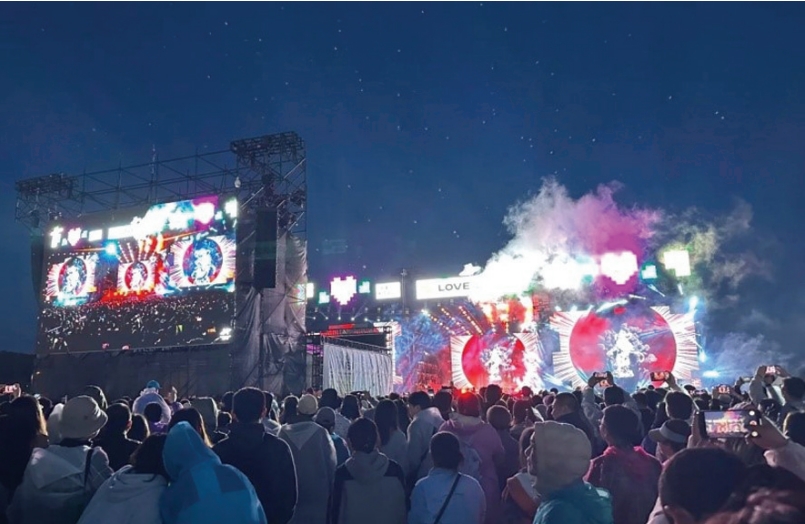
Core Insights - The "performance economy" is emerging as a new trend in cultural tourism consumption, driving significant growth in related industries such as hotels, dining, and travel [1][3] - The integration of performances into travel itineraries is creating a multi-faceted consumption model, with a notable increase in package orders around events [3] - Cities are innovating consumption scenarios linked to performances, enhancing local economic activity and tourism [3][5] Group 1: Economic Impact - The "performance+" model has shown substantial potential, with a 180% year-on-year increase in package orders during holidays [3] - In Beijing, events like the Strawberry Music Festival have led to a 100% hotel occupancy rate and generated 60 million yuan in direct and derivative consumption over three days [3] - In second and third-tier cities, events like the Hulu Guo Music Festival have resulted in a 2.4 times increase in hotel bookings [3] Group 2: Policy and Cultural Empowerment - Cities are implementing financial incentives to support the performance tourism industry, such as Nanjing's subsidy program covering up to 50% of ticket prices for selected performances [5] - Suzhou has established a reward system for large-scale events, incentivizing organizers based on ticket sales [5] - Cultural integration is being emphasized, with performances like "Three Gorges Eternal Love" in Yichang generating over 100 million yuan in revenue and increasing hotel occupancy by 120% [6] Group 3: Industry Transformation - The industry is shifting from reliance on star power to the cultivation of unique intellectual properties (IPs) [7] - There is a movement towards creating a collaborative ecosystem rather than competing solely for audience numbers [7] - Long-term operational strategies are being prioritized, as seen in Xi'an's music hall hosting over 4,100 concerts and attracting more than 2.17 million attendees over the past decade [7] Group 4: Challenges and Future Trends - The performance market faces challenges such as insufficient venues, uneven content supply, and varying quality of artistic performances [8] - Future trends include immersive experiences, localized cultural integration, and accelerated internationalization of events [8]
端午逃离人挤人:国内游奔向“微度假”,出境游迎来 “捡漏期”
Guan Cha Zhe Wang· 2025-05-27 10:16
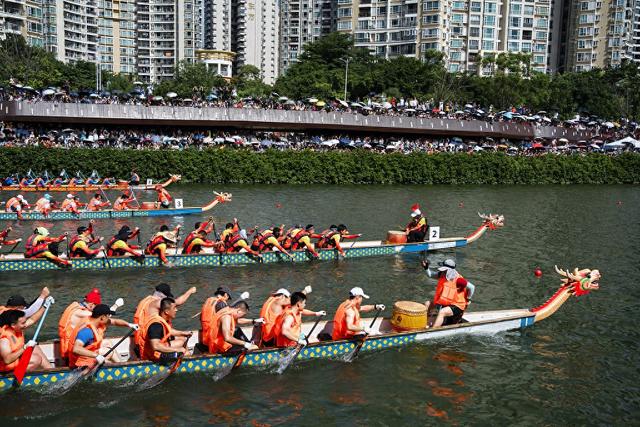
Group 1 - The core viewpoint of the article indicates that this year's Dragon Boat Festival holiday will present a "budget low peak" travel trend, with a focus on local and surrounding tourism, as well as a rise in micro-vacations and cultural experiences [1][4] - The travel market is characterized by short-distance trips, cultural tourism, and food experiences, with popular travel routes concentrated within "2-hour" and "3-hour high-speed rail circles" [4][6] - The Dragon Boat Festival holiday coincides with Children's Day, leading to a surge in family travel and pet-friendly travel, with family trips accounting for nearly 40% of travelers [7][12] Group 2 - Traditional cultural tourism is becoming a core driving force in the market, with destinations like Hunan and Guizhou seeing over 20% growth in bookings [6][8] - The rise of international interest in the Dragon Boat Festival is evident, with events like the "Hello! China" international dragon boat festival attracting global attention [9][11] - The inbound tourism market is experiencing growth, with hotel search interest increasing by over 100%, particularly from Southeast Asian countries [11][12] Group 3 - The article highlights the importance of service innovation and product upgrades in the cultural tourism industry to meet changing consumer demands [3][5] - The expansion of high-speed rail networks is enhancing food tourism and cultural experiences, making them key attractions for travelers [7][12] - The article emphasizes the need for the tourism industry to evolve from optional to essential travel experiences, integrating with other essential services like education and healthcare [13]
年轻人流行“为一场演出奔赴一座城”,折射出演出经济的巨大潜能
Di Yi Cai Jing· 2025-05-26 09:48
Core Insights - The performance economy is reshaping urban consumption and cultural logic, driven by a path of "crowd gathering - consumption activation - cultural breakout - brand reshaping" [1] Group 1: Market Growth and Consumer Behavior - In 2024, Sichuan province is expected to host 32,000 commercial performances, attracting 12.5 million attendees and generating nearly 3 billion yuan in ticket sales, marking a 60% increase from 2023 [2] - The national performance market is projected to reach a total revenue of 79.629 billion yuan in 2024, with a year-on-year growth of 7.61%, and ticket sales accounting for 57.954 billion yuan [2] - The audience demographic is predominantly young, with over 70% of attendees aged 18-34, and transportation and accommodation expenses making up 65% of their total spending [2] Group 2: Consumption Scenarios and Economic Impact - The multiplier effect of the performance economy is strengthening, with Qingdao hosting 58 large performances in 2024, generating 330 million yuan in ticket sales and driving 1.94 billion yuan in related consumption [2] - Chengdu's "performance + exhibition" model during the 2024 Sugar and Wine Fair is expected to increase transaction amounts by 23% and nighttime consumption to 41% [2] - In Beijing, small theater performances are projected to exceed 200,000 in 2024, increasing foot traffic to surrounding businesses by 15% [2] Group 3: Cultural Transformation and Social Media Influence - Local cultural IPs are rapidly transforming, with Sichuan's integration of traditional performances into tourism projects generating over 500 million yuan in ticket sales and 8 billion views on Douyin [3] - The introduction of AR technology in performances in Lanzhou has led to a 40% increase in night tourism revenue [3] - Social media plays a crucial role in promoting performances, with concert-related short videos garnering 22.8 billion views and over 8 million posts on Xiaohongshu in 2024 [3] Group 4: Urban Branding and Competition - Performances are becoming a new branding tool for cities, with Haikou attracting over 100 large performances and achieving an average visitor spending of over 6,000 yuan through a "duty-free + performance" model [4] - Shijiazhuang's "Rock City" brand has led to an annual average of 120 performances, with a 92% visitor satisfaction rate in 2024 [4] - Beijing and Shanghai continue to lead the market, with Shanghai's ticket sales reaching 5.17 billion yuan in 2024, while Beijing offers subsidies of up to 3 million yuan for large performances, resulting in a 171.7% year-on-year increase in ticket sales [4] Group 5: Future Development and Technological Integration - The future of the performance economy requires technological breakthroughs, policy frameworks, and cultural depth for sustainable development [5] - The integration of digital technology with urban services is essential, as seen in Lanzhou's "digital ticket" system, which has increased surrounding commercial consumption by 28% [5] - The use of immersive technologies, such as holographic projections and AR interactions, is reshaping the performance economy's reach and audience engagement [5] Group 6: Policy Framework and Cultural Ecosystem - The optimization of policy frameworks should shift from short-term competition to long-term ecological cultivation, as demonstrated by Beijing's 2025 support measures for high-quality performance development [7] - Cross-departmental collaboration is crucial, with initiatives in Lanzhou reducing performance approval times from 15 days to 3 days, and Shijiazhuang achieving a dual outcome of zero safety incidents and improved youth engagement [7] - The establishment of regional alliances, such as the "Silk Road Performance Alliance," has facilitated the sharing of 200 performance IPs and increased cross-regional touring by 45% [7] Group 7: Cultural Identity and Differentiation - Building a cultural ecosystem requires modern expressions of local heritage, with Sichuan's adaptation of traditional performances attracting a younger audience [7] - Lanzhou's integration of local heritage elements into modern performances has led to significant community engagement and high viewership on social media [7] - Cities like Chengdu and Lanzhou are focusing on unique cultural branding to avoid homogenization and achieve a transformation from "traffic frenzy" to "value accumulation" [7]
深圳促消费要抓住“行走的GDP”
Shen Zhen Shang Bao· 2025-05-12 17:02
Core Viewpoint - The concert market in Shenzhen is experiencing significant growth, driven by high-profile performances and strong city management capabilities, making it a key area for service consumption and economic development [1][2][3]. Group 1: Concert Market Growth - In the first quarter of 2025, Shenzhen hosted 4,647 commercial performances, attracting 941,600 attendees and generating ticket revenue of 235 million yuan, marking a 15.6% increase in the number of performances compared to the same period in 2024 [1]. - High-profile artists, including Mariah Carey and the band Imagine Dragons, are increasingly performing in Shenzhen, indicating a rising demand for major events [1][2]. Group 2: City Management and Infrastructure - Shenzhen's excellent city management capabilities ensure the safety and smooth operation of large events, as demonstrated by the use of drones and police for crowd control during concerts [2]. - The city boasts a variety of high-quality performance venues, which are essential for hosting large-scale concerts [1][2]. Group 3: Economic Impact of Concerts - Major concerts can generate substantial direct revenue, with Mariah Carey's concert expected to exceed 20 million yuan in ticket sales [2]. - The concert economy has a multiplier effect, boosting revenues in hotels, restaurants, and related industries, with hotel prices around the venue spiking to 900 yuan per night and a booking rate exceeding 95% during events [2]. - The overall economic contribution of concerts is significant, with fans spending over 10 million yuan on support activities during events, highlighting the potential of the concert economy as a driver of local GDP [2]. Group 4: Service Consumption Focus - The Chinese government is prioritizing consumption and domestic demand to counter external uncertainties, with Shenzhen positioned to leverage its strengths in service-oriented consumption, particularly in the entertainment sector [3]. - The city's economic development, high disposable income, and comprehensive urban infrastructure provide a solid foundation for expanding service consumption [3].
演出经济如何成为“抢不走的GDP”
Jing Ji Ri Bao· 2025-05-10 22:12
Core Insights - The surge in music festivals and concerts during the "May Day" holiday reflects a shift in consumer demand from material satisfaction to emotional value, highlighting the importance of "self-investment" among young people [1][2] - The performance economy is recognized for its significant spillover effects, with cities leveraging music events to enhance their cultural tourism landscape, leading to increased hotel bookings and local economic activity [2][3] - There is a growing need for the performance economy to evolve from a focus on "star power" to "content creation," ensuring that each city develops its unique cultural offerings to sustain long-term growth [2][3] Group 1 - The number of orders for food, accommodation, and entertainment packages related to music festivals and concerts increased by 180% year-on-year during the "May Day" holiday [1] - Major music festivals in cities like Beijing, Chengdu, and Wuhan have significantly boosted local tourism and cultural activities [1] - The cross-city attendance rate for large concerts was 64.2% last year, with 41.5% of attendees staying for two days and 37.0% staying for three days or more [1] Group 2 - Smaller cities are experiencing a rise in music events, such as the Huluguo Music Festival in Chuzhou and the Peach Music Carnival in Yining, which are driving local hotel bookings and revealing new market potential [2] - The performance economy is referred to as "walking GDP," emphasizing its potential to generate substantial economic activity [2] - Cities are challenged to transform their performance economy into a sustainable competitive advantage rather than relying solely on transient star power [2] Group 3 - Initiatives like "fan pick-up services" and local food stalls at music festivals are being implemented to enhance visitor experiences and stimulate spending [3] - The goal is to convert fleeting "traffic" into lasting emotional connections with cities, encouraging visitors to return [3] - Collaborative efforts among various sectors are essential to transform the current "performance heat" into a lasting "cultural heat" for economic growth [3]
刷屏了!孙燕姿北京演唱会秒空,超122万人想看
Zheng Quan Shi Bao Wang· 2025-05-09 06:30
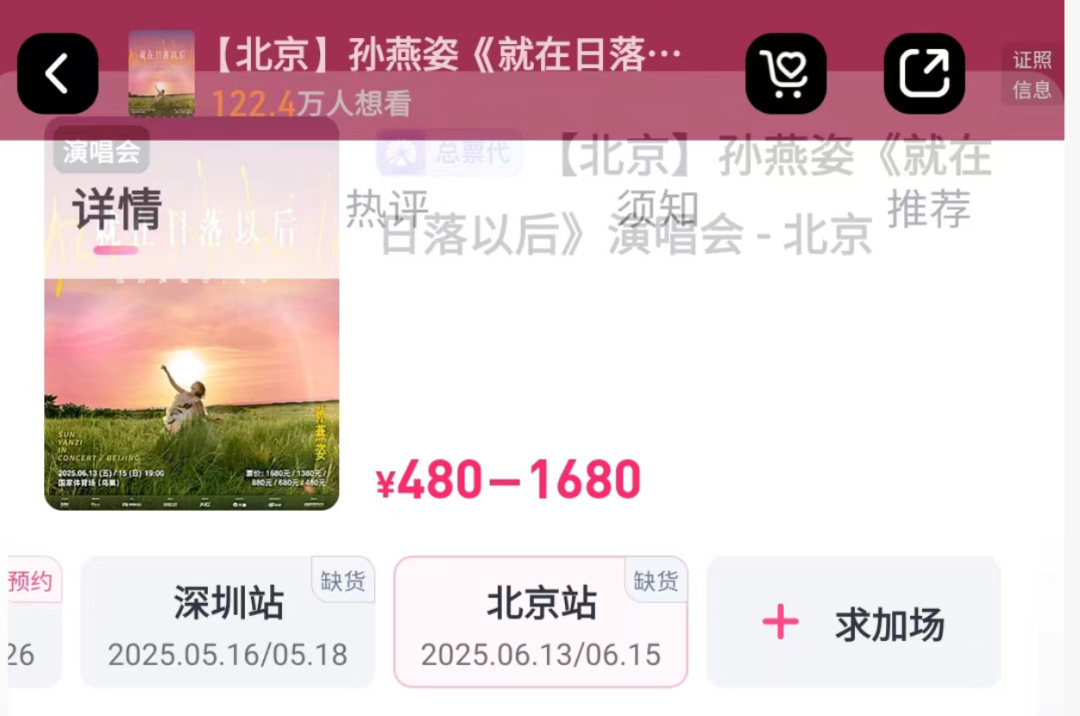
Core Insights - The recent concert by Sun Yanzi has generated significant buzz, with tickets selling out almost instantly in major cities like Beijing and Shenzhen, indicating a high demand for live performances [1][3] - The overall performance of the entertainment industry during the recent "May Day" holiday shows a robust recovery, with a total of 33,500 performances held nationwide, generating ticket sales of 2.159 billion yuan and attracting over 10.31 million attendees [3][4] - The trend of "performance economy" is on the rise, with large-scale events contributing to increased consumer spending across various sectors, including hospitality and retail [5] Industry Performance - During the "May Day" holiday, ticket sales for large-scale performances (over 5,000 attendees) reached 1.212 billion yuan, reflecting a year-on-year growth of 5.12% [4] - The popularity of concerts and music festivals is evident, with over 60 star concerts taking place during the holiday, showcasing a blend of cultural and tourism experiences [5] - The integration of cultural events with tourism is becoming a significant trend, as seen in cities like Haikou, where concert events have led to a substantial increase in hotel bookings and overall consumer spending [5] Consumer Behavior - The demand for live entertainment has led to a surge in secondary ticket sales, with original tickets priced at 480 yuan being resold for upwards of 2,000 yuan, and some inner venue tickets reaching over 10,000 yuan [3] - The "May Day" holiday saw a 162% increase in orders for concert-related services on platforms like Douyin, indicating a strong consumer interest in live events [4] - The concert economy is driving significant increases in foot traffic and sales for local businesses, with some restaurants reporting a 50% to 100% increase in late-night customer flow during concert nights [5]