
用户体验

Search documents
山姆回应App改动争议
2 1 Shi Ji Jing Ji Bao Dao· 2025-11-04 00:55
Core Viewpoint - The recent updates to the Sam's Club app have sparked controversy among members, highlighting challenges in digital transformation and intensifying competition in the membership-based retail market [3][4]. Group 1: App Controversy and Digital Transformation - The Sam's Club app update has received criticism for overly beautified images, confusing product information, and a complicated interface, affecting user experience [3]. - The company acknowledges the feedback and is committed to improving the app based on member suggestions, emphasizing a "member-first" approach [3][4]. - The competition in the membership-based retail sector is increasingly focused on digital capabilities [3][6]. Group 2: Leadership Changes and Strategic Focus - Liu Peng has been appointed as the new president of Sam's Club, bringing extensive experience in internet and retail digitalization from his previous roles at Alibaba [4][5]. - The leadership change is seen as a strategic move to address dual challenges: enhancing e-commerce capabilities to counter platform competition and reinforcing product uniqueness to maintain a premium positioning [5][6]. Group 3: Competitive Landscape - Membership-based retailers like Sam's Club and Costco are facing intensified online competition, necessitating different strategies to attract consumers [5][6]. - Sam's Club has been investing in e-commerce to expand delivery options and diversify product offerings, while Costco leverages brand influence and unique member services [5][6]. - New entrants like Alibaba, JD.com, and Meituan are disrupting traditional membership models with strong logistics and instant retail capabilities [5][6]. Group 4: User Experience and Supply Chain Integration - User experience is critical, with clear product information, user-friendly interfaces, and efficient delivery services being essential for competitiveness [7][8]. - The demand for timely delivery has escalated, with traditional giants like Sam's Club and Costco striving to enhance their delivery systems to match the speed of emerging platforms [7][8]. - Strong supply chain integration is vital for maintaining product quality and ensuring rapid replenishment and delivery, with traditional retailers needing to adapt to local instant delivery demands [8].


小熊电器(002959) - 2025年10月31日投资者关系活动记录表
2025-11-03 01:22
Sales Performance - The company achieved significant growth in Q3 2025, particularly in categories such as pots, kettles, electric appliances, and maternal and infant products, with notable increases in sales performance [2][3] - The net profit margin saw a substantial year-on-year increase due to strategic adjustments in operations and organizational structure, which were reformed into five business units [2][3] Growth Strategy - The company plans to adjust its growth strategy, focusing on overseas markets like Japan, Southeast Asia, and Europe, despite short-term uncertainties in the U.S. market [4][5] - In the domestic market, the company aims for quality improvement rather than scale growth, leveraging consumer subsidies to enhance performance [4] Overseas Expansion - Overseas development is a key focus, with efforts to expand brand recognition in Southeast Asia, particularly in Vietnam, and utilizing platforms like Amazon and TikTok for market penetration [5][6] - The company aims to collaborate with local partners to enhance channel expansion and brand influence in international markets [5] Product Development - Increased investment in maternal and infant product development is planned, with a focus on launching popular products and enhancing brand image [7] - The company intends to optimize its product structure and streamline SKU numbers to focus on high-end flagship products, improving brand image and profit margins [8][9] Marketing and Branding - The company will enhance its marketing capabilities and focus on user experience, aiming to create value through product and service excellence [8][9] - A comprehensive brand upgrade strategy is in place to reshape brand image and establish a systematic brand management framework [9] Organizational Development - The company is committed to upgrading its organizational structure, performance management, and incentive mechanisms to foster innovation and competitiveness [9] - Digital transformation initiatives will continue, leveraging AI technologies to enhance operational efficiency and organizational capabilities [9]

2025年度「焦点」产品计划重磅启动
36氪· 2025-10-30 09:42
Core Viewpoint - The article emphasizes the significance of product innovation in driving business value and enhancing user experience, particularly in the context of the WISE2025 Annual Focus Product Awards, which aims to recognize outstanding products across various sectors [2][4]. Summary by Relevant Sections Focus Areas - The awards cover a wide range of sectors including mobile phones, home appliances, new energy vehicles, digital life, healthcare, beauty and personal care, food and beverages, clothing and accessories, as well as education, enterprise services, lifestyle, creative software, and games [2][6]. Evaluation Criteria - A multi-dimensional evaluation system is employed to assess products based on their technological advancements, design, performance, and value. Each category has specific weightings for different criteria, such as: - Mobile Phones: Performance (40%), User Experience (30%), Design (20%), Value (10%) [6][7]. - Home Appliances: Performance (40%), User Experience (30%), Design (20%), Value (10%) [7]. - New Energy Vehicles: Design (30%), User Experience (30%), Sustainability (20%), Performance (20%) [7]. - Digital Life Products: Performance (30%), User Experience (20%), Design (30%), Value (20%) [7]. Participation Invitation - The article invites innovators and product creators to participate in the awards, highlighting the opportunity to showcase their work and contribute to a narrative of innovation and user experience [4][5]. Timeline for Evaluation - The evaluation process is set to begin immediately, with nominations open until November 10, 2025. The research and assessment phase will occur from November 11 to November 24, 2025, with results to be announced in late November [19].

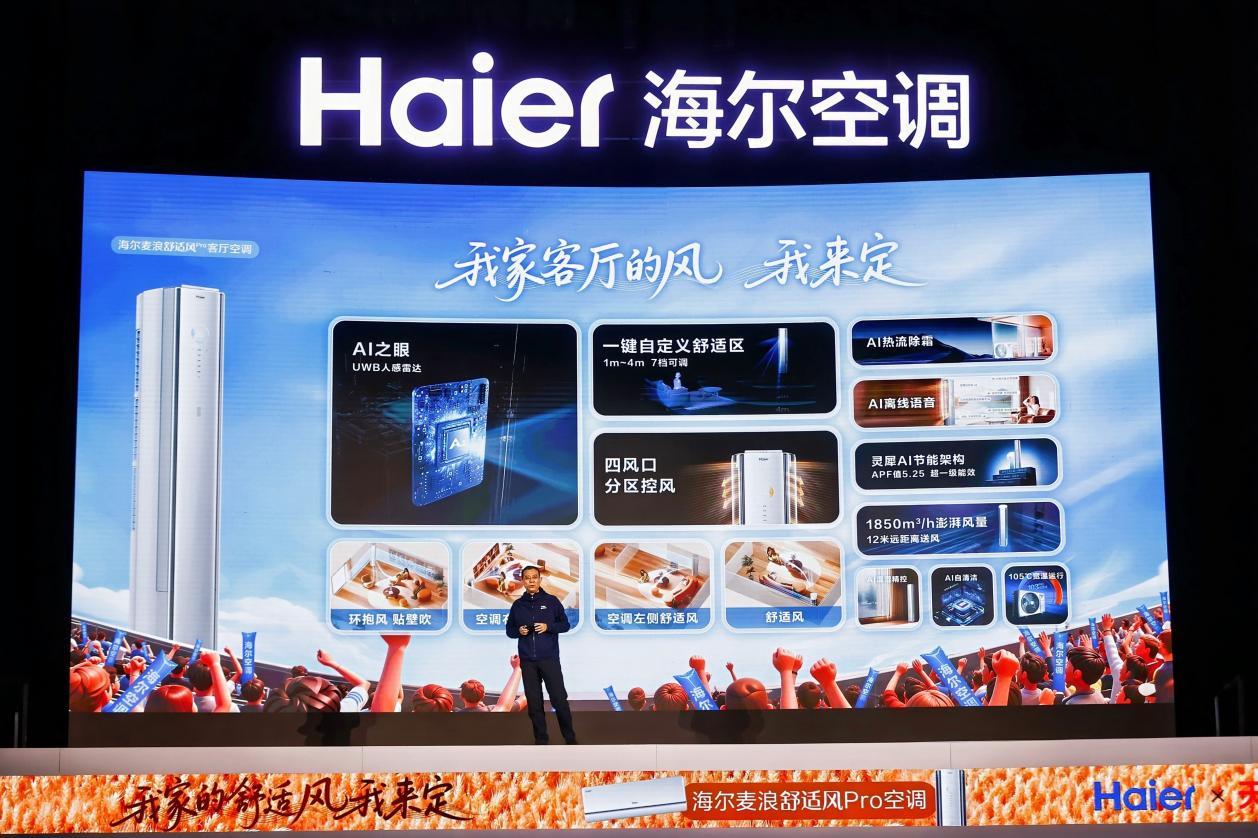
空调进入“呼吸感知”时代,海尔再次创造行业“风口”
Huan Qiu Wang· 2025-10-27 12:00
Core Insights - Haier Air Conditioning has launched the industry's first "breath-sensing" air conditioner, the Mai Lang Comfort Wind Pro series, marking a significant technological advancement from merely responsive to understanding user needs [1][3] - The air conditioning industry is shifting focus from basic temperature control to user experience, emphasizing comfort, health, and energy efficiency as new growth points [3][6] Technological Advancements - The Mai Lang Comfort Wind Pro features UWB human radar technology, allowing it to detect subtle breathing movements with a precision of 0.15 meters, ensuring it does not misinterpret a user as "absent" even when they are resting [3][5] - Haier has a history of leading three major technological transformations in the air conditioning sector over the past 40 years, including the introduction of China's first split air conditioner in 1985 and the first variable frequency air conditioner in 1993 [5][6] Market Performance - Haier Air Conditioning reported a 31% year-on-year increase in total sales across all channels in the first three quarters, with significant growth on platforms like Tmall, Douyin, and Kuaishou [6][9] - The launch of the Mai Lang Comfort Wind Pro has contributed to a 32% increase in sales on Tmall, reflecting strong market demand for innovative air conditioning solutions [6][9] User-Centric Approach - The company emphasizes a user-centered innovation strategy, focusing on addressing user pain points throughout the entire product lifecycle, from development to service [6] - Haier aims to create a collaborative relationship with users, allowing them to co-create value and enhance their overall experience with air conditioning products [6]

广告越来越多!搜狗输入法,“流氓到家了”?
新浪财经· 2025-10-27 10:52
Core Viewpoint - The article highlights the growing dissatisfaction among users of Sogou Input Method due to an increase in intrusive advertisements and changes to user experience, leading to calls for users to uninstall the software [3][4][5]. User Complaints - Multiple well-known influencers have criticized Sogou Input Method for becoming excessively ad-laden, with comments describing it as "rampant" and "annoying" [4][5]. - Users report that even after uninstalling the software, advertisements continue to appear, indicating a significant issue with the software's handling of user data and settings [5][7]. - A user noted that the increase in advertisements seems to have occurred suddenly, with a shift from skin recommendations to various types of ads, resulting in a deteriorating user experience [7][9]. Types of Advertisements - The article categorizes the types of advertisements users are encountering: - **Skin Recommendations**: Ads promoting different skins for the input method, some of which require payment [10]. - **Third-party Advertisements**: A variety of ads including e-commerce, news content, and gaming experiences [11]. Controversial Practices - Sogou Input Method has been accused of "secretly modifying browser configurations," which has led to user backlash [14]. - A report indicated that Sogou Input Method was found to alter browser settings, such as the homepage and default search engine, without user consent [14]. Market Position and Competition - Despite maintaining a leading market share of 42.3%, Sogou Input Method has seen a decline from over 70% in previous years, facing increasing competition from other input methods like Baidu and iFlytek [17][18]. - The article notes that the input method market is becoming more competitive, with new players struggling to make an impact as established brands solidify their positions [17]. User Sentiment on Advertising - A survey indicated that a vast majority of users (95.86%) are opposed to advertisements in input methods, highlighting a significant disconnect between user preferences and Sogou's monetization strategy [18][20]. - The article suggests that the close relationship between users and input methods makes them particularly sensitive to changes, which could hinder Sogou's ability to monetize effectively [20].

让高体验澎湃人心 | 2025小米质量月圆满收官
Zhong Guo Zhi Liang Xin Wen Wang· 2025-10-27 06:10
Core Insights - The 2025 Xiaomi Quality Month has successfully concluded, focusing on the theme "Let High Experience Surge the Heart," with over 120 diverse quality-themed activities conducted across multiple locations, including Beijing, Nanjing, Wuhan, Shanghai, and Shenzhen, engaging nearly 60,000 participants and over 150 partner companies [1][7]. Group 1: Quality Awareness and Engagement - The Quality Month activities included quality training, knowledge competitions, user discussions, and collaboration with external partners to enhance quality, reflecting Xiaomi's commitment to quality and user experience [1][7]. - The offline activities were held in five major parks, with various departments participating to enhance quality awareness through engaging and interactive formats [2][7]. Group 2: User-Centric Approach - Xiaomi emphasized the importance of listening to user feedback during the Quality Month, conducting multiple user engagement activities to translate user insights into product improvements [4][5]. - The "Responsible Online" series and other initiatives allowed direct interaction between users and product teams, fostering a strong communication bridge and enhancing user experience [5]. Group 3: Collaborative Ecosystem - Xiaomi reinforced the concept of ecological collaboration by partnering with over 150 companies to conduct a series of quality-focused activities, promoting a culture where everyone values and contributes to quality [7]. - The activities included quality awareness training, skill competitions, and case studies, which collectively improved the team's quality consciousness and practical skills [7]. Group 4: Future Commitment - Although the 2025 Quality Month has ended, Xiaomi remains committed to a user-centered philosophy, aiming to set new quality benchmarks in the industry as it progresses towards high-end market positioning [9].


零售“3.0”点燃中国消费新引擎
Sou Hu Cai Jing· 2025-10-23 11:32
Core Insights - The Chinese retail industry is undergoing a significant transformation driven by policy and market forces, shifting from a focus on real estate benefits to enhancing user experience [1][6][7] - The evolution of retail in China has seen three distinct phases, with the current phase emphasizing user-centric approaches and supply chain efficiency [2][3][5] Retail Evolution - The first phase of retail focused on availability, addressing the question of "whether goods are available" [2] - The second phase, characterized by the entry of large chain supermarkets, prioritized real estate value over customer satisfaction, leading to a disconnect between supply and consumer needs [2][3] - The third phase, or "Retail 3.0," marks a shift towards user-centric models, where retailers engage deeply in the supply chain and prioritize customer relationships [3][5] User Experience as a Driver - Retailers are innovating around three key dimensions: speed and convenience, emotional connection, and quality-price ratio [5][6][7] - Instant retail services, such as 30-minute delivery, are becoming standard, leveraging technology for efficient supply chain management [5][6] - New retail formats are transforming stores into community hubs, enhancing customer engagement and service quality [6][7] Policy Support - The recent policy initiatives aim to foster new retail models and stimulate consumer demand, providing a robust framework for innovation [1][6] - The focus on quality and value is reshaping the competitive landscape, encouraging retailers to adopt direct sourcing and develop private labels [6][7] - The evolution of retail spaces into multifunctional community centers reflects a broader trend towards creating immersive customer experiences [7] Conclusion - The ongoing transformation in the Chinese retail sector is fundamentally about returning to a consumer-centric business model, enhancing quality, efficiency, and emotional engagement [6][7] - This shift is expected to contribute significantly to the sustainable development of the Chinese economy, creating a more vibrant and diverse retail ecosystem [7]
体验致胜,易观千帆推动商业银行实现用户飞轮增长
Jin Tou Wang· 2025-10-21 08:08
Core Insights - User experience (UX) is a critical factor for product success in the competitive digital age, requiring companies to understand and meet real user needs to enhance satisfaction and loyalty [1] - EasyAnalysis has emerged as a powerful tool for businesses to optimize products and improve competitiveness through its core capabilities in user experience, product functionality, and interaction design [1] User Operation Funnel Model Reconstruction - Traditional banking operations focus on account openings and asset size, while EasyAnalysis introduces a new user growth funnel model: Awareness → Access → Account Opening → Activation → Retention → Recommendation [2] Customer Acquisition Strategies - The solution aids banks in optimizing marketing investments through channel effectiveness analysis, revealing that mobile banking via social sharing yields higher user quality and reduces customer acquisition costs by 40% [3] - A bank adjusted its budget allocation, increasing online customer acquisition from 15% to 35% within three months [3] - Precision marketing based on regional user characteristics is highlighted, with a bank in Beijing's CBD successfully tripling its monthly account openings through a targeted promotional campaign [3] User Retention Management - EasyAnalysis has developed a user lifecycle management system to enhance user stickiness through loyalty programs, exclusive privileges, and personalized recommendations [4] - Following the launch of a "growth system," a bank saw its core user base (monthly active users ≥ 4) increase from 18% to 25% within six months [4] Experience Optimization Management - EasyAnalysis has established a closed-loop management system for experience optimization, involving monitoring, analysis, optimization, and validation [5] - The product goes beyond basic user behavior analysis to include user profiling, competitive analysis, and user feedback management, enabling companies to understand diverse user characteristics and preferences [5] - EasyAnalysis also provides competitive analysis reports to help businesses gain insights into market dynamics and industry trends, supporting product strategy formulation [5] - As a comprehensive user experience analysis product, EasyAnalysis aims to continue innovating and optimizing to create greater value for businesses and drive user experience upgrades [5]
鸿蒙5.1升级“灾难”:兼容性崩塌,华为如何应对?
Xin Lang Cai Jing· 2025-10-18 10:24
Core Viewpoint - The recent upgrade of Huawei's HarmonyOS from version 4.3 to 5.1 has faced significant backlash due to compatibility issues with mainstream applications, leading to user frustration and data loss during the downgrade process [1][3][4]. Group 1: User Experience and Compatibility Issues - Users have reported that after upgrading to HarmonyOS 5.1, many applications became incompatible, resulting in a chaotic desktop layout and the need to reinstall and log into existing applications, increasing operational costs [3][4]. - Core functionalities of popular applications like WeChat and Douyin have failed, causing disruptions for content creators and users alike [3][4]. - The lack of a user-friendly downgrade mechanism has forced users to seek professional help to revert to the previous system, often resulting in data loss [4]. Group 2: Market Position and Competition - Huawei has regained a leading position in the Chinese smartphone market, achieving a market share of 18.1% with 12.5 million units shipped in Q2 2025, despite an overall market decline [5][6]. - The HarmonyOS ecosystem is still small on a global scale, with only 4% market share compared to Android's 79% and iOS's 17% as of Q2 2025 [7][8]. Group 3: Development and Future Challenges - Huawei has invested heavily in R&D, with expenditures reaching 96.95 billion yuan in the first half of 2025, accounting for 22.7% of its revenue, indicating a strong commitment to developing the HarmonyOS ecosystem [7]. - The transition to a "pure" HarmonyOS from a compatible Android system presents significant compatibility challenges, as seen in the recent upgrade issues [10][11]. - Building a developer ecosystem remains a critical challenge, as the user base is primarily domestic, making it difficult to attract international developers to invest in the platform [10][11]. Group 4: Strategic Outlook - The HarmonyOS has the potential for growth in various markets, including PC operating systems, mobile application development, and IoT, with significant market sizes projected [10]. - However, the path to achieving a competitive stance against Android and iOS globally is fraught with challenges, including the need for improved application quality and timely updates [10][11].
“双11”竞争:各忙各的
Bei Jing Shang Bao· 2025-10-16 16:17
Core Insights - The "Double 11" shopping festival has evolved into a month-long promotional event, with a shift from price-driven strategies to brand recognition and user experience [2][3] - Different e-commerce platforms are adopting varied strategies, such as pre-sale and immediate sale, to cater to diverse consumer needs and enhance their competitive edge [1][2] Group 1: Promotional Strategies - The competition among platforms like JD, Douyin, and Taobao is marked by differences in pre-sale and immediate sale approaches, impacting consumer behavior and merchant strategies [1] - The concept of "super brand dividends" has emerged, with platforms focusing on unique offerings like Taobao Flash Sale and membership benefits to attract consumers [2] Group 2: Consumer Behavior - Consumers are no longer rushing to stock up during the festival; instead, they are more focused on user experience and brand loyalty [3] - The shift in consumer behavior indicates that price is no longer the sole decision factor, as brand trust and long-term value become more significant [2][3]

