硬折扣零售

Search documents
实探西安京小盒:对标奥乐齐,自营商品仍需进化
Sou Hu Cai Jing· 2025-08-12 18:22
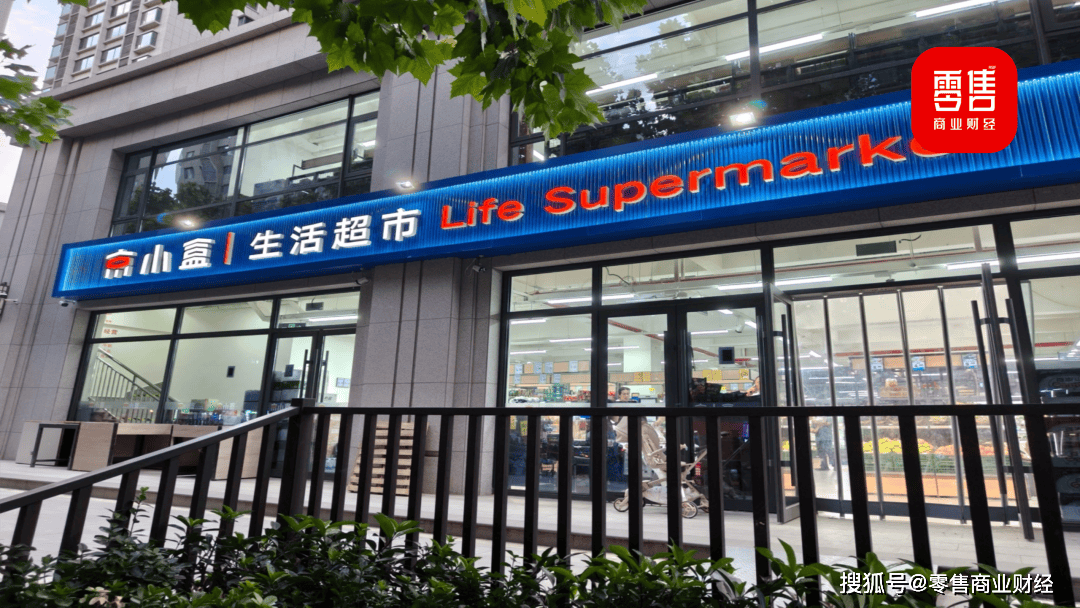
Core Viewpoint - Jingxiaobox, a leading hard discount retail brand in Xi'an, focuses on product strength, extreme cost-effectiveness, community engagement, and operational optimization to establish its market presence, providing a reference for regional retail brands [2][4]. Group 1: Company Overview - Jingxiaobox has over 130 stores in Xi'an, with store sizes typically ranging from 600 to 800 square meters and an overall SKU count of approximately 1,000 to 1,200, covering essential household categories such as grains, fresh produce, beverages, and snacks [2][4]. - The brand originated from "Adir Life Supermarket," which opened its first store in 2015, adopting a simplified product display method and pricing around 70% of other supermarkets, inspired by Germany's ALDI [2][4]. Group 2: Operational Strategy - Jingxiaobox implements a cost-control strategy similar to ALDI's "penny-pinching supermarket" model, focusing on minimizing operational costs through simplified store layouts and direct product displays [6][10]. - The stores primarily cater to daily household needs, with a focus on essential products, and some locations offer basic fresh produce in a simplified display format [6][8]. Group 3: Pricing and Product Strategy - The pricing strategy emphasizes extreme cost-effectiveness, with competitive prices on fresh produce and other essential items, such as pumpkin at 1.99 yuan per jin and bottled water at 3.8 yuan for 500ml [11][13]. - Jingxiaobox aims to enhance its self-owned product capabilities, with a focus on product differentiation and competitive pricing, similar to ALDI's approach [15][20]. Group 4: Market Positioning and Challenges - The brand's strategy is to maximize customer satisfaction by ensuring that every customer leaves with a purchase, focusing on essential household needs [23][24]. - Despite its strengths, Jingxiaobox faces challenges in standardizing operational details across stores, which may affect brand perception [24][25]. - The company needs to enhance its brand building and online presence to support its growth in the competitive hard discount market [25][26].

美团再造“快乐猴”,线下零售叫板盒马七鲜奥乐齐
3 6 Ke· 2025-07-25 08:29
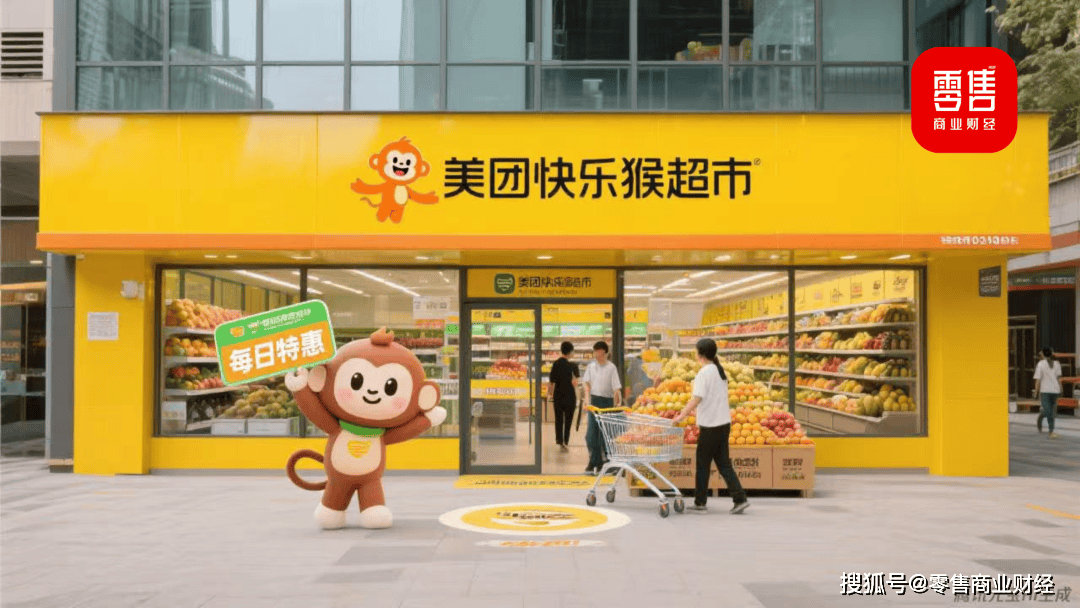
Core Insights - Meituan's first "Happy Monkey" supermarket is set to open in Hangzhou by the end of August, with plans to establish 10 stores by 2025 and a long-term goal of 1,000 stores in major cities like Hangzhou, Shanghai, Beijing, and Guangzhou [1][3] - The supermarket will focus on "hard discount retail," positioning itself against competitors like Hema NB, with initial store sizes ranging from 800 to 1,000 square meters [1][3] - This marks Meituan's renewed attempt in offline retail after the failure of its previous venture, Xiaoxiang Fresh, which closed all stores in 2020 due to poor site selection and cost control [1][3] Business Strategy - The leadership of Happy Monkey includes experienced personnel from Meituan's previous retail initiatives, ensuring a strong operational foundation [4] - The hard discount model emphasizes high self-owned brand sales, potentially exceeding 50%, which enhances market pricing power and profit margins [5][6] - Happy Monkey aims to leverage Meituan's supply chain advantages, focusing on direct sourcing from farms to offer competitive pricing on fresh produce [10][11] Market Positioning - Happy Monkey differentiates itself by offering a streamlined selection of around 1,200 SKUs, focusing on high-frequency essential items, which allows for cost reduction through centralized purchasing [10][13] - The supermarket targets the lower-tier markets in first and second-tier cities, avoiding high-end shopping districts, thus creating a competitive edge against Hema and Aldi [13][16] - The pricing strategy aims to provide 15%-30% lower prices on fresh products compared to other retail brands, appealing to price-sensitive consumers [10][13] Competitive Landscape - Happy Monkey's entry poses a threat to established players like Hema and Aldi, prompting them to adjust their promotional strategies in response [13][16] - Meituan's extensive delivery network of 8 million riders positions Happy Monkey to offer rapid delivery services, enhancing its competitive advantage in the instant retail space [19][21] - The supermarket's model is designed to complement Meituan's existing online services, creating a dual-channel approach that integrates online and offline retail [17][23] Future Outlook - The success of Happy Monkey will depend on its ability to maintain low prices while ensuring quality, which is critical for capturing market share in the competitive hard discount sector [23] - Meituan's strategy to utilize its existing resources and infrastructure aims to fill gaps in its offline retail presence, potentially reshaping the traditional retail landscape [23]

物美超值在京六店齐开
Bei Jing Shang Bao· 2025-07-25 04:29
Core Insights - Wumart Group has launched a new discount store format called Wumart Super Value, opening six stores in Beijing to cater to essential daily shopping needs [1][2] - The store offers a wide range of products, including fresh produce, meat, baked goods, and daily necessities, focusing on high-frequency consumer demands [1] - The bakery section features over 30 high-repurchase rate items, with a unique baking process ensuring fresh products are available throughout the day [1] Product Strategy - The total number of products in Wumart Super Value is limited to 1,300, focusing on six key categories: fruits and vegetables, fresh meat and fish, baked goods, ready-to-eat meals, fresh food, and groceries [1] - Over 60% of the 1,000+ products in the store are private label items, which directly connect with factories to reduce marketing costs [2] - The packaging strategy involves direct-to-store packaging, eliminating the need for secondary repackaging, which translates into visible savings for consumers [2] Pricing and Value Proposition - Wumart Super Value conducts 4 to 6 comprehensive product audits annually and weekly price comparisons across all channels to ensure competitive pricing [1] - The store emphasizes low prices year-round without relying on promotions, aiming to provide consumers with quality products at affordable prices [1]
美团快乐猴超市即将开业
3 6 Ke· 2025-07-22 07:56
Core Insights - Meituan, China's largest food delivery and instant retail platform, is facing competition from Alibaba, which plans to invest 50 billion yuan in subsidies to challenge Meituan directly [1] - Meituan announced that its daily orders for food delivery and flash purchase services have surpassed 150 million, indicating strong performance [1] - The company is set to open its first physical store, "Happy Monkey Supermarket," in Hangzhou, which is positioned as a hard discount store similar to Alibaba's Hema [1][2] Group 1: Business Expansion - Meituan plans to open 1,000 Happy Monkey Supermarket locations despite not having opened a single store yet, indicating a serious commitment to physical retail [2] - The company is actively recruiting for various positions in cities like Beijing, Hangzhou, Guangzhou, and Shenzhen, further supporting its expansion plans [2] - The Happy Monkey Supermarket is expected to open in mid to late September, aligning with the upcoming National Day sales peak [1] Group 2: Retail Strategy - The Happy Monkey Supermarket will focus on fresh produce and household goods, utilizing a self-operated model and hard discount pricing strategy [4] - Meituan's previous retail ventures, such as the "Zhangyu Fresh Supermarket," have faced challenges, leading to a rebranding and shift in strategy [3][4] - The company aims to enhance its supply chain and procurement capabilities to improve its competitive edge in the retail sector [4][5] Group 3: Market Positioning - Meituan's retail strategy includes a focus on low-margin, high-turnover sales, with an emphasis on private label products [6][7] - The company is leveraging its experience in managing offline fulfillment to establish a strong presence in the instant retail market [5][8] - Meituan's future plans include the establishment of 1,200 "Raccoon Canteens," which will serve as centralized locations for food delivery, enhancing operational efficiency [9]

快乐猴超市进击硬折扣,美团放不下“大超市”的梦想
东京烘焙职业人· 2025-07-21 08:30
Core Viewpoint - Meituan is re-entering the offline retail market with its new hard discount supermarket project "Happy Monkey," aiming to leverage synergies with its existing businesses and align with its long-term strategy in grocery retail [3][4][6]. Group 1: Project Launch and Strategy - The "Happy Monkey" supermarket is set to officially open by the end of August this year, with a target of 20 stores in 2023 and 200 stores in 2024, starting in Beijing and Hangzhou [4]. - The store size will range from 800 to 1000 square meters, with over 50% of the space dedicated to fresh produce and a total of 1200 SKUs [4][12]. - The project is positioned to compete with Hema NB, focusing on high-quality products at competitive prices through optimized supply chains and reduced operational costs [12][16]. Group 2: Market Context and Consumer Trends - The discount retail market in China is rapidly growing, with an estimated market size of approximately 1.79 trillion yuan in 2023, accounting for about 3.8% of total social retail sales [15]. - A significant portion of consumers (33%) are concerned about rising food prices, indicating a demand for high-quality yet affordable products [15]. - The hard discount model is particularly appealing in the context of consumer trends towards quality and value amidst economic pressures [13][15]. Group 3: Competitive Landscape and Supply Chain - Competitors like Aldi and Hema NB have successfully established themselves in the hard discount sector, with Aldi reporting over 500 low-priced products and Hema NB undergoing a brand upgrade [12][13]. - Meituan's strategy includes leveraging its existing supply chain from previous projects like Meituan Preferred and integrating suppliers from its past ventures [18][20]. - The focus on self-operated products will be crucial for maintaining competitive pricing and quality, with Meituan already having a significant number of self-branded products [20][21]. Group 4: Synergies with Existing Operations - The "Happy Monkey" project is expected to enhance Meituan's existing instant retail operations, which currently boast a peak daily order volume of 150 million [23]. - The integration of offline stores will provide a more comprehensive local retail experience, addressing the limitations of purely online models [27][28]. - Meituan aims to create a "big supermarket" model by connecting local demand, supply, and logistics, thereby enhancing its market presence and consumer engagement [27][28].
如何看硬折扣零售的投资机遇?
2025-07-16 06:13
Summary of Conference Call Industry Overview - The discussion revolves around the **discount retail industry** in China, particularly focusing on **temporary chain stores** and their investment opportunities [1][3][4]. Key Insights and Arguments - **Investment Background**: The speaker has extensive experience in retail investment, having previously invested in various retail formats including community group buying and fresh food chains [2][4]. - **Growth of Discount Retail**: Despite a sluggish consumer market, discount retail has been growing at an extraordinary pace, indicating strong underlying support for the industry [3][11]. - **Current Stage of Temporary Chain Stores**: The temporary chain store sector is viewed as being in its early stages of a new phase, with significant changes in supply chain dynamics and competitive landscape [4][5][6]. - **Market Dynamics**: The shift from a distribution-based retail model to a customer-centric model is highlighted, emphasizing the need for retailers to adapt to changing consumer demands [5][27]. - **Industry Consolidation**: The lack of IPO opportunities has led to increased consolidation within the temporary chain store sector, with notable mergers and acquisitions occurring [9][10]. - **Golden Era for Temporary Chain Stores**: The period from 2022 to 2024 is identified as a "golden era" for temporary chain stores, characterized by rapid growth and increased store openings [10][11]. - **Challenges Ahead**: There are signs of market saturation and declining enthusiasm among franchisees, leading to potential challenges in store performance [12][15]. Additional Important Points - **Consumer Behavior**: The overall consumer sentiment has been weak, impacting sales across various retail formats, including snacks and supermarkets [15][16]. - **Operational Challenges**: The rapid expansion of stores has led to quality issues, as many new franchisees may not be adequately prepared for the complexities of running a retail operation [14][15]. - **Future Trends**: The industry is expected to see further attempts at category expansion and innovation in store formats, with a focus on balancing SKU simplification and product diversification [37][39]. - **Digital Integration**: The potential for integrating digital solutions and e-commerce strategies into discount retail is acknowledged as a means to enhance operational efficiency [34][36]. Conclusion - The temporary chain store sector in China is at a pivotal moment, with significant growth opportunities alongside emerging challenges. The focus on customer-centric models, operational efficiency, and digital integration will be crucial for future success in this evolving landscape [27][40].
快乐猴超市进击硬折扣,美团放不下“大超市”的梦想
Sou Hu Cai Jing· 2025-07-15 18:10
Core Viewpoint - Meituan is set to re-enter the offline retail market with its hard discount supermarket project "Happy Monkey," aligning with its long-term strategy in grocery retail [2][22]. Group 1: Project Launch and Background - The "Happy Monkey" supermarkets will officially open by the end of August, with initial locations in Beijing and Hangzhou, and plans for nationwide expansion [2][4]. - This marks Meituan's return to physical stores after shutting down its previous fresh food chain, Xiaoxiang, five years ago [2][12]. - The project has been in preparation since March, with recruitment for various managerial positions in major cities [2][4]. Group 2: Market Positioning and Strategy - "Happy Monkey" aims to compete in the hard discount retail sector, targeting high cost-performance products through optimized supply chains and reduced operational costs [8][14]. - The supermarket will focus on self-operated products, which are crucial for maintaining competitive pricing and quality [15][17]. - The hard discount retail market in China is rapidly growing, with a market size of approximately 1.79 trillion yuan, accounting for 3.8% of total social retail sales in 2023 [11][12]. Group 3: Competitive Landscape - Competitors like Aoleqi and Hema NB have successfully established themselves in the hard discount space, with Aoleqi reporting over 500 low-priced products and significant sales on opening days [9][11]. - Meituan's strategy includes leveraging its existing logistics and supply chain capabilities to enhance its offline retail presence [13][20]. Group 4: Synergy with Existing Operations - The launch of "Happy Monkey" is expected to create synergies with Meituan's existing instant retail operations, enhancing local supply and demand connections [19][22]. - Meituan's instant retail business has a peak daily order volume of 150 million, supported by a vast network of local merchants and delivery personnel [20][22]. - The integration of "Happy Monkey" with Meituan's other retail initiatives aims to provide a comprehensive local retail solution, addressing diverse consumer needs [21][22].