社会消费品零售总额

Search documents
2025年社会消费品零售总额同比增长3.7% 12月同比增长0.9%
Guo Jia Tong Ji Ju· 2026-01-21 05:54
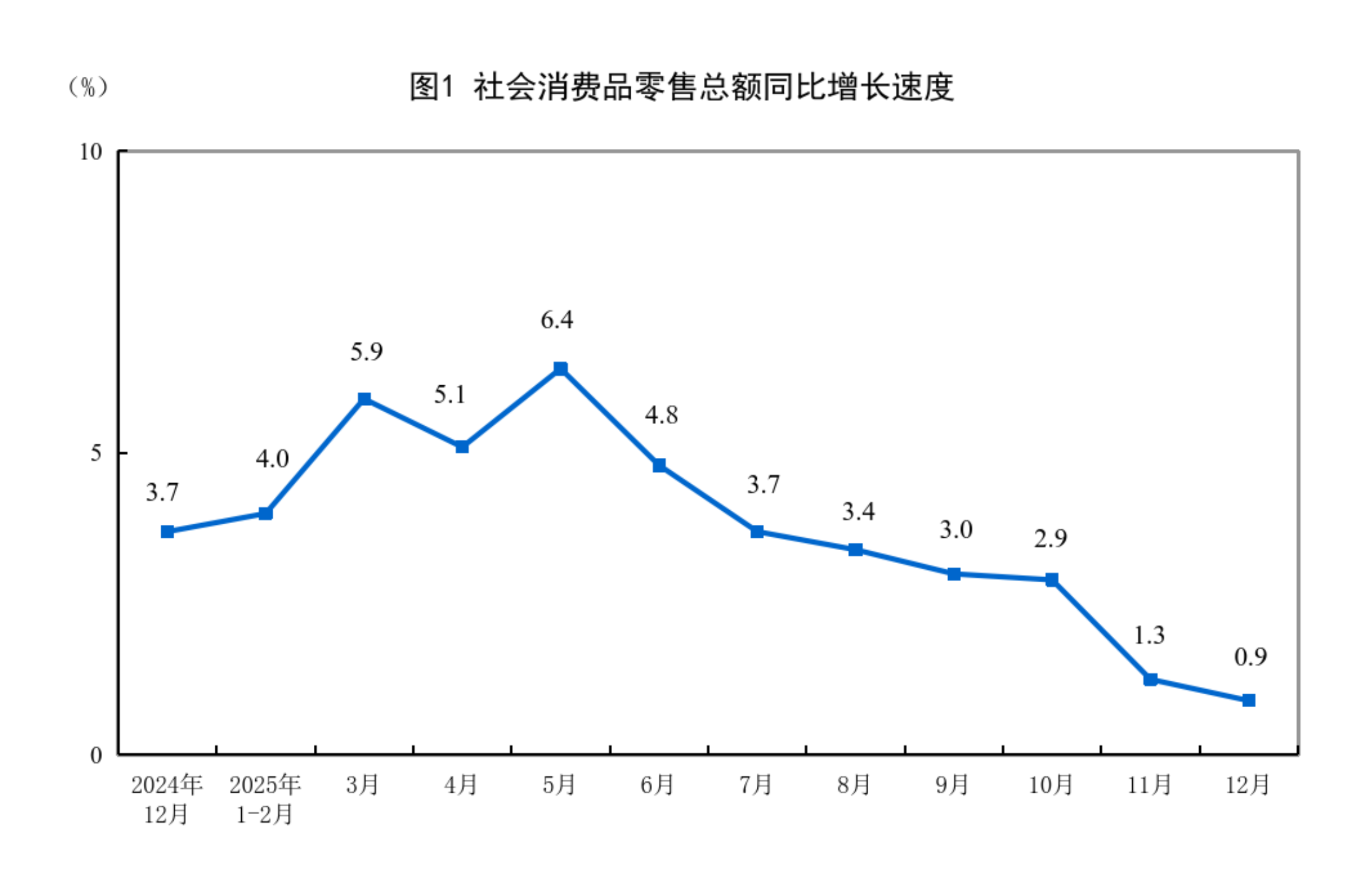
2025年12月份社会消费品零售总额增长0.9% 按消费类型分,12月份,商品零售额39398亿元,同比增长0.7%;餐饮收入5738亿元,增长2.2%。2025年,商品零售额443220亿元,比上年增长3.8%;餐饮收入57982亿元,增长 3.2%。 按零售业态分,2025年,限额以上零售业单位中便利店、超市、百货店、专业店零售额比上年分别增长5.5%、4.3%、0.1%、2.6%;品牌专卖店零售额下降0.6%。 2025年,全国网上零售额159722亿元,比上年增长8.6%。其中,实物商品网上零售额130923亿元,增长5.2%,占社会消费品零售总额的比重为26.1%;在实物商品网上零售额 中,吃类、穿类、用类商品分别增长14.5%、1.9%、4.1%。 按经营单位所在地分,12月份,城镇消费品零售额38429亿元,同比增长0.7%;乡村消费品零售额6707亿元,增长1.7%。2025年,城镇消费品零售额432972亿元,比上年增长 3.6%;乡村消费品零售额68230亿元,增长4.1%。 12月份,社会消费品零售总额45136亿元,同比增长0.9%。其中,除汽车以外的消费品零售额39654亿元,增长1 ...

商贸零售行业定期报告:全年社零+3.7%,稳健增长,提振政策显效
CAITONG SECURITIES· 2026-01-21 04:20
Investment Rating - The industry investment rating is "Positive" (maintained) [2] Core Insights - In December 2025, the total retail sales reached 45,136 billion yuan, with a nominal year-on-year growth of +0.9%, which is below the consensus expectation; excluding automobiles, the retail sales of consumer goods increased by +1.7%. For the entire year, the total retail sales amounted to 501,202 billion yuan, with a nominal year-on-year growth of +3.7%, and +4.4% excluding automobiles [11][12] - In December, both limited above goods and catering consumption underperformed the market. Specifically, catering revenue was 5,738 billion yuan, with a year-on-year growth of +2.2%, while limited above goods retail was 39,398 billion yuan, with a year-on-year growth of +0.7% [11][12] - Essential consumption remained relatively stable, while tobacco and alcohol continued to show negative growth. The Consumer Price Index (CPI) in December increased by +0.8%, with food prices contributing +0.24 percentage points to the CPI [11][12] - Optional consumption categories such as cosmetics and communication equipment showed strong growth. In December, cosmetics grew by +8.8% year-on-year, while communication equipment surged by +20.9% [11][12][18] - The real estate and automotive sectors remained cautious in consumer spending. In December, home appliances saw a year-on-year decline of -18.7%, while automotive retail fell by -14.0% [11][12][24] - Online retail sales for the year increased by +8.6%. In December, online retail sales reached 15,140 billion yuan, with a year-on-year growth of +4% [31] Summary by Sections Overall Retail Data - In December, the total retail sales reached 45,136 billion yuan, with a nominal year-on-year growth of +0.9%, and for the entire year, it was 501,202 billion yuan, with a nominal year-on-year growth of +3.7% [11][12] - Urban and rural retail sales in December grew by +0.7% and +1.7% respectively [12] Limited Above Data - In December, the limited above retail sales totaled 19,547 billion yuan, with a year-on-year decline of -1.9% [15] Classification Data - Essential consumption categories showed mixed results, with food and daily necessities growing, while tobacco and alcohol declined. Optional categories like cosmetics and communication equipment performed well [17][18] Online Retail Data - For the year, online retail sales reached 159,722 billion yuan, with a year-on-year growth of +8.6%. The physical online retail sales accounted for 29.5% of total goods retail [31][32]
2025年社会消费品零售总额突破50万亿元
Bei Jing Ri Bao Ke Hu Duan· 2026-01-21 03:13
Core Insights - The year 2025 marks the conclusion of the "14th Five-Year Plan," with a focus on boosting consumption through various initiatives, including the "Buy in China" brand and the promotion of old-for-new consumption programs [1] Group 1: Retail Performance - The total retail sales of consumer goods reached 50.1 trillion yuan, growing by 3.7%. Retail sales of goods increased by 3.8%, while catering revenue grew by 3.2% [1] - Final consumption expenditure contributed 52% to economic growth, reinforcing its role as a primary driver of economic development [1] - During the "14th Five-Year" period, retail sales of consumer goods surpassed significant milestones of 40 trillion, 45 trillion, and 50 trillion yuan, supporting sustained economic recovery and meeting the needs of the populace [1] Group 2: Durable Goods Consumption - The consumption of durable goods showed positive growth, with sales driven by the old-for-new consumption program reaching 2.61 trillion yuan, benefiting 366 million people [1] - Retail sales of passenger vehicles reached 23.744 million units, growing by 3.8%, with the penetration rate of new energy vehicles at 53.9% [1] - Retail sales of home appliances exceeded 1.17 trillion yuan, growing by 11%, marking the second consecutive year of surpassing the trillion yuan threshold [1] Group 3: Daily Necessities and Upgraded Goods - Retail sales of staple food and oil increased by 9.3%, with health consumption becoming mainstream, and organic and green agricultural products gaining popularity [2] - Retail sales of clothing, shoes, and textiles grew by 3.2%, with new styles like Hanfu and "Ma Mian Skirt" gaining traction [2] - Retail sales of sports and entertainment goods surged by 15.7%, driven by high demand for ice and snow sports equipment [2] Group 4: Specialty Goods and New Trends - The economy showed vitality with the launch of new products in smart connected vehicles and smartphones, accelerating the establishment of new brand stores [2] - Domestic products gained popularity, with collaborations between traditional brands and new consumption brands leading to innovative products and experiences [2] - The "IP + consumption" trend flourished, with sales of movie merchandise during the summer season doubling year-on-year, driving consumer enthusiasm [2]
2025年社会消费品零售总额突破50万亿元 超大规模市场优势持续显现
Shang Wu Bu Wang Zhan· 2026-01-21 02:55
Core Insights - The year 2025 marks the conclusion of the "14th Five-Year Plan," with significant efforts from various business authorities to boost consumption and implement initiatives like the "old for new" consumption program, contributing to a retail sales total of 50.1 trillion yuan, a growth of 3.7% [1] - Final consumption expenditure contributed 52% to economic growth, reinforcing its role as a primary driver of economic development [1] Group 1: Durable Goods Consumption - The consumption of durable goods showed positive growth, with sales driven by the "old for new" initiative reaching 2.61 trillion yuan, benefiting 366 million people [1] - Retail sales of passenger vehicles reached 23.74 million units, growing by 3.8%, with the penetration rate of new energy vehicles at 53.9% [1] - Retail sales of home appliances exceeded 1.17 trillion yuan, marking an 11% increase, while sales in communication equipment, cultural office supplies, and furniture grew by 20.9%, 17.3%, and 14.6% respectively [1] Group 2: Daily Necessities Consumption - Retail sales of grain and oil products increased by 9.3%, with health consumption becoming mainstream, and organic and green agricultural products gaining popularity [2] - Retail sales of clothing, shoes, and textiles grew by 3.2%, with new styles like Hanfu and "Ma Mian Skirt" gaining traction [2] - Daily necessities retail sales grew by 6.3%, maintaining stable growth [2] Group 3: Upgraded Goods Consumption - Retail sales of sports and entertainment products increased by 15.7%, driven by high demand for ice and snow sports, hiking, and cycling equipment [2] - Sales of smart glasses, smartwatches, and smart bands on key platforms grew by over 40% [2] - Retail sales of cosmetics grew by 5.1%, with Eastern aesthetics leading beauty consumption trends, while gold and silver jewelry sales increased by 12.8% [2] Group 4: Specialty Goods Consumption - The economy showed vitality with the launch of new products in smart connected vehicles and smartphones, accelerating the establishment of domestic and international brand flagship stores [2] - Domestic products gained popularity, with collaborations between traditional brands and new consumer brands creating innovative products and experiences [2] - The "IP + consumption" trend thrived, with sales of movie merchandise during the summer season doubling year-on-year, driving consumer enthusiasm [2]
【宏观经济】一周要闻回顾(2026年1月14日-1月20日)
乘联分会· 2026-01-20 13:41
Core Insights - In 2025, China's total import and export value reached 45.47 trillion yuan, marking a year-on-year growth of 3.8% [5] - The industrial capacity utilization rate for large-scale industries in Q4 2025 was 74.9%, showing a 0.3 percentage point increase from Q3 but a 1.3 percentage point decrease from the same period last year [9] - The added value of large-scale industries in December 2025 grew by 5.2% year-on-year, with a monthly increase of 0.49% [11] - Retail sales of consumer goods in December 2025 increased by 0.9% year-on-year, with total retail sales for the year reaching 5.012 trillion yuan, a 3.7% increase from the previous year [16][18] Trade and Export - In December 2025, the import and export value reached 4.26 trillion yuan, a record high with a year-on-year growth of 4.9% [5] - High-tech product exports grew by 13.2%, while the "new three samples" products saw a 27.1% increase in exports [5] - Exports of self-owned brand products increased by 12.9%, accounting for a 1.4 percentage point rise in the total export value [5] - Trade with countries involved in the Belt and Road Initiative reached 23.6 trillion yuan, a 6.3% increase, making up 51.9% of total trade [5] Industrial Performance - The overall industrial capacity utilization rate for 2025 was 74.4% [9] - By industry, the mining sector had a capacity utilization rate of 71.7%, manufacturing at 75.2%, and utilities at 74.0% in Q4 2025 [9] - In December 2025, 33 out of 41 major industries reported year-on-year growth in added value, with notable increases in sectors like coal mining (6.4%) and automotive manufacturing (8.3%) [14] Consumer Market - In December 2025, the retail sales of consumer goods totaled 45.136 billion yuan, with non-automotive retail sales growing by 1.7% [18] - Online retail sales for the year reached 15.972 trillion yuan, an 8.6% increase, with physical goods online sales accounting for 26.1% of total retail sales [19] - The growth in retail sales was driven by urban areas, which saw a 0.7% increase, while rural areas experienced a 1.7% growth [18]

12月经济数据快报
Guo Tou Qi Huo· 2026-01-20 11:47
1. Report Industry Investment Rating - No relevant information provided 2. Core Viewpoints - In 2025, China's GDP was 1,401,879 billion yuan, a 5.0% increase from the previous year. The added value of the primary, secondary, and tertiary industries increased by 3.9%, 4.5%, and 5.4% respectively. Quarterly GDP growth rates were 5.4% in Q1, 5.2% in Q2, 4.8% in Q3, and 4.5% in Q4. The Q4 GDP had a 1.2% quarter - on - quarter growth [1] - In December 2025, the year - on - year growth of industrial added value above designated size was 5.2%, 0.4 percentage points higher than the previous value, and the month - on - month growth was 0.49%, 0.05 percentage points higher than the previous value. The growth rates of mining and production and supply of electricity, gas, and water declined, while the manufacturing growth rate accelerated [1] - From January to December 2025, the year - on - year decline of national fixed - asset investment was 3.8 percentage points, with a month - on - month decline of 1.13%. Manufacturing investment increased by 0.6%, narrow - sense infrastructure investment had a growth rate of - 1.48%, and real estate development investment decreased by 17.20% [1] - In December 2025, the year - on - year growth of total retail sales of consumer goods was 0.9%, lower than the previous value of 1.3%, and the month - on - month decline was 0.40% [1] 3. Summary by Relevant Indicators GDP - The GDP quarterly year - on - year growth rates in 2025 were 5.4% in Q1, 5.2% in Q2, 4.8% in Q3, and 4.5% in Q4. The quarterly GDP growth rates were 1.0% in Q2, 1.1% in Q3, and 1.2% in Q4. The cumulative year - on - year growth rates were 5.3% in Q2, 5.2% in Q3, and 5.0% in Q4 [1] Industrial Added Value - In December 2025, the year - on - year growth of industrial added value above designated size was 5.2%, and the month - on - month growth was 0.49%. The cumulative year - on - year growth from January to December was 5.9%. Among the three major sectors, the growth rates of mining and production and supply of electricity, gas, and water declined, while the manufacturing growth rate accelerated [1] Fixed - Asset Investment - From January to December 2025, the year - on - year decline of national fixed - asset investment was 3.8 percentage points, and the month - on - month decline was 1.13%. Manufacturing investment increased by 0.6%, narrow - sense infrastructure investment had a growth rate of - 1.48%, and real estate development investment decreased by 17.20% [1] Real Estate - The cumulative year - on - year decline of real estate development investment from January to December 2025 was 17.20%. The cumulative year - on - year decline of commercial housing sales area was 8.7%. The year - on - year declines of new housing starts, housing construction, housing completion, and real estate development funds in December were 19.3%, 47.14%, 18.36%, and 28.09% respectively [1] Social Retail Sales - In December 2025, the year - on - year growth of total retail sales of consumer goods was 0.9%, lower than the previous value of 1.3%, and the month - on - month decline was 0.40%. The cumulative year - on - year growth from January to December was 3.7% [1]
长江有色:20日铝价连跌四日 今日成交乏力尽显
Xin Lang Cai Jing· 2026-01-20 08:39
Core Viewpoint - The aluminum market is experiencing downward pressure due to geopolitical risks, weak demand, and macroeconomic factors, leading to a bearish outlook for aluminum prices in the near term [2][3]. Group 1: Market Performance - LME three-month aluminum price reported at $3141.5 per ton, down $24 per ton or 0.76% from the previous trading day [1]. - Domestic futures market saw the main Shanghai aluminum contract (2603) open at 24020 CNY per ton, with a daily high of 24285 CNY and a low of 23715 CNY, closing at 23950 CNY, down 20 CNY or 0.08% [1]. - Longjiang spot market prices ranged from 23670 to 23710 CNY per ton, down 180 CNY, with a discount of 170 to 130 CNY [1]. Group 2: Macroeconomic Factors - Ongoing geopolitical tensions, including the Russia-Ukraine conflict and escalating issues in Greenland, are increasing market concerns about a potential trade war between the US and Europe, dampening investor sentiment [2]. - Market expectations for a Federal Reserve rate cut have decreased to nearly 5%, which may support the dollar and limit upward movement in aluminum prices [2]. - China's GDP is projected to grow by 5% in 2025, reaching 140.19 trillion CNY, with industrial output and service sector growth contributing positively to the economy [2]. Group 3: Supply and Demand Dynamics - Supply from Inner Mongolia and Xinjiang is gradually increasing, but overall supply pressure remains limited, providing some support for aluminum prices [3]. - Demand for aluminum is weak, with spot prices declining for four consecutive trading days, leading to limited improvement in trading activity [3]. - Current seasonal demand weakness is expected to continue, with social inventory of aluminum ingots likely to accumulate further, putting pressure on prices [3].

2025年全国餐饮收入达57982亿元 同比增长3.2%
Bei Jing Shang Bao· 2026-01-19 14:36
Economic Overview - In 2025, China's GDP is projected to exceed 140 trillion yuan, marking a 5.0% increase from the previous year [1] - The total retail sales of consumer goods are expected to surpass 50 trillion yuan, with a year-on-year growth of 3.7% [1] Restaurant Industry Insights - National restaurant revenue reached 57,982 billion yuan, reflecting a 3.2% year-on-year increase and accounting for 11.6% of total retail sales, an increase of 0.2% from the previous year [1] - Revenue from restaurants above designated size was 16,337 billion yuan, showing a 2.0% year-on-year growth [1] - In December 2025, national restaurant revenue was 5,738 billion yuan, with a year-on-year growth of 2.2% [1] - Revenue from restaurants above designated size in December 2025 was 1,463 billion yuan, which represents a decline of 1.1% year-on-year [1]
12月社零增速为0.9%,餐饮零售额增速快于商品:2025年12月社零数据点评
Hua Yuan Zheng Quan· 2026-01-19 08:32
Investment Rating - The industry investment rating is "Positive" (maintained) [1] Core Viewpoints - In December, the total retail sales of consumer goods reached 45,136 billion yuan, with a year-on-year growth of 0.9%. Excluding automobiles, the total retail sales amounted to 39,654 billion yuan, growing by 1.7% year-on-year [5][6] - The growth rate of catering retail sales outpaced that of goods, with December catering revenue increasing by 2.2% year-on-year, while goods retail saw a growth of 0.7% [5][6] - Essential consumption categories such as grain, oil, and food saw a retail sales growth of 3.9% year-on-year in December, while daily necessities grew by 3.7% [19][25] - In optional consumption, communication equipment experienced significant growth, with retail sales increasing by 20.9% year-on-year [24][31] Summary by Sections Overall Data - December's total retail sales of consumer goods were 45,136 billion yuan, with a year-on-year increase of 0.9%. Urban and rural retail sales were 38,429 billion yuan and 6,707 billion yuan, respectively, with year-on-year growth of 0.7% and 1.7% [5][6] Retail Sales by Category - The retail sales of limited above units in December were 19,547 billion yuan, down 1.9% year-on-year. The breakdown shows that limited above goods retail and catering revenue were 18,084 billion yuan and 1,463 billion yuan, respectively, with year-on-year changes of -2.0% and -1.1% [13][19] - Essential consumption categories showed strong growth, with grain and oil retail sales up 3.9% and daily necessities up 3.7% year-on-year [19][25] - Optional consumption categories like cosmetics saw a growth of 8.8% year-on-year, while communication equipment surged by 20.9% [24][31] - Other consumer categories experienced declines, with furniture down 2.2%, home appliances down 18.7%, and building materials down 11.8% [33][36]
2025年中国社会消费品零售总额超50万亿元人民币
Zhong Guo Xin Wen Wang· 2026-01-19 08:21
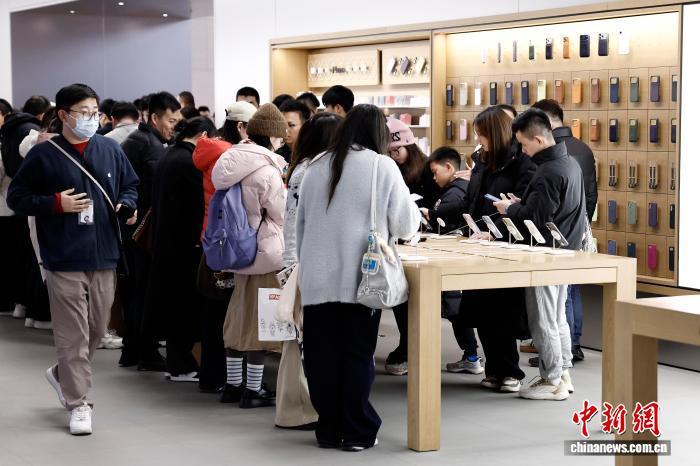
Core Viewpoint - In 2025, China's total retail sales of consumer goods are projected to exceed 50 trillion yuan, indicating a growth of 3.7% compared to the previous year [3]. Group 1: Retail Sales Data - The total retail sales of consumer goods in China for 2025 are estimated at 50,120.2 billion yuan [3]. - Online retail sales in China reached 15,972.2 billion yuan in 2025, reflecting an increase of 8.6% year-on-year [3]. Group 2: Consumer Behavior - On December 31, 2025, consumers were observed purchasing mobile phones in a store on Nanjing Road [5]. - On the same day, consumers were also seen buying gold jewelry in a store on Nanjing Road [7]. - Additionally, consumers were purchasing food items in a store on Nanjing Road [7].