
稳中求进

Search documents
债券视角看中央经济工作会议:平稳开局,重在增效
Huachuang Securities· 2025-12-13 13:09
Report Industry Investment Rating No relevant content provided Core Viewpoints of the Report - In 2026, the macro - environment and policy layout for the bond market may remain basically stable, but the policy demand for "price recovery" has increased. The bond market may continue the range - bound trading, with a slight upward shift in the fluctuation center. Under the "stable growth" goal, the currency maintains a "moderately loose" tone, and the overall macro - policy emphasizes stability and quality rather than pursuing incremental growth. The policy's stronger demand for price recovery means that the impact of inflation on nominal interest rate pricing needs attention [7][10]. Summary According to the Table of Contents 1. Macro - tone: A Stable Start with Emphasis on Efficiency - **Macro - situation judgment**: The meeting acknowledges "old problems and new challenges" and the "external environment", and points out the "contradiction of strong supply and weak demand". It highlights long - term contradictions in the economic transformation stage and the short - term uncertainty of the external economic and trade environment. It also implies that "anti - involution" and supply - side optimization need to be strengthened [11]. - **Overall tone**: The policy orientation is "seeking progress while maintaining stability and improving quality and efficiency". It focuses on stability and continuity, with a reduced demand for growth and progress. It aims to optimize practices and improve efficiency on the basis of stable policy strength, and gives priority to the "quality" of the economy over the "quantity". It also re - emphasizes "counter - cyclical and cross - cyclical" regulation, with a long - term perspective [12]. - **Fiscal policy**: It continues the positive tone, with the overall strength remaining flat. After the high fiscal increment in 2025, the focus may be on giving full play to the fiscal multiplier effect. It is expected that the fiscal deficit rate will remain at 4% in 2026. The use of quasi - fiscal tools will continue to support the goal of "stopping the decline and stabilizing investment" [14]. 2. Monetary Policy: Balancing Cross - cyclical Considerations - **Policy goals**: It focuses on growth and prices, and downplays the goal of financial aggregates. It aims to achieve "stable growth" and "reasonable price recovery" by maintaining reasonable liquidity, reducing the real financing cost, and ensuring the smooth operation of the interest rate transmission mechanism [16]. - **Use of reserve requirement ratio and interest rate cuts**: It advocates "flexible and efficient" use of reserve requirement ratio and interest rate cuts, which is more concerned about policy effectiveness and consistent with the cross - cyclical regulation idea. In a neutral scenario, there may be one policy interest rate cut of 10bp in 2026, likely to occur from the end of the first quarter to the beginning of the second quarter [17]. 3. Key Tasks: Quality > Quantity, Focus on Amplifying Policy Multipliers (1) Domestic Demand Policy: Pursuing Effect and Quality, Weakening Incremental Expansion - **Consumption**: In 2026, consumption growth may still have potential. The meeting proposes a "residents' income increase plan", expands the supply of high - quality goods and services, and optimizes the implementation of "two new" policies. The stimulus for consumption demand may remain stable or decline, aiming to improve the multiplier effect [20]. - **Investment**: The meeting for the first time proposes to "stop the decline and stabilize investment", optimize the implementation of "two important" projects, and continue to use new policy - based financial tools. The policy may support investment more in 2026, and the growth rate is expected to turn positive [21]. (2) Deepening Reforms: Prioritizing "Anti - Involution" and Accelerating Debt Clearance - **Unified market construction**: It ranks higher, with the goal of price recovery being emphasized. It formulates a "regulation" and re - emphasizes "anti - involution", which may affect the bond market's interest rate center [24]. - **Debt clearance**: It is necessary to accelerate the clearance of arrears to enterprises. In 2026, the importance of local debt clearance may remain high, and its impact on investment needs attention [24]. - **Small and medium - sized financial institutions**: There is an increase in the "reduction and quality improvement" of small and medium - sized financial institutions, and the trend of mergers is expected to continue [24]. 4. Risk Resolution: Adding Content on Local Debt Resolution, Reducing Real Estate Policy Intensity (1) Local Debt: Actively and Orderly Resolve Local Government Debt Risks - The meeting adds specific statements on local government debt risks, emphasizes the territorial and main responsibilities of debt resolution, and maintains a high - pressure regulatory attitude towards new hidden debts. It also mentions the risk of local government financing platform operating debts and may optimize relevant debt restructuring and replacement measures [26]. - It requires accelerating the clearance of arrears to enterprises, emphasizing the "three guarantees" bottom line and "living a tight - fisted life" [26]. (2) Real Estate: Weakening the Goal of Stopping the Decline and Stabilizing, "De - stocking" by City - The meeting deletes the goal of "stopping the decline and stabilizing" the real estate market, and the policy intensity is reduced. It focuses on supply - side optimization and de - stocking through measures such as "controlling increments", "de - stocking", and "encouraging the acquisition of stock properties" [27].
中央经济工作会议,这些提法意涵深刻!
Xin Hua She· 2025-12-13 05:32
Core Insights - The Central Economic Work Conference held on December 10-11, 2025, summarized economic work for 2025, analyzed the current economic situation, and outlined tasks for 2026 [1] Group 1: Key Principles - The conference emphasized "Five Musts" for economic work: fully tapping economic potential, combining policy support with reform and innovation, ensuring both flexibility and effective management, investing in both physical and human capital, and honing internal capabilities to face external challenges [3][4] Group 2: Policy Directions - The conference highlighted the need for a policy orientation focused on stability and progress, quality improvement, and efficiency enhancement, while leveraging both existing and new policies to enhance macroeconomic governance [9] Group 3: Eight Key Tasks - The conference outlined "Eight Persistences" as key tasks for the upcoming year, including prioritizing domestic demand, driving innovation, tackling reforms, maintaining openness, promoting coordinated development, leading with "dual carbon" goals, prioritizing people's livelihoods, and ensuring bottom-line security [12] Group 4: Domestic Market Focus - The conference prioritized building a strong domestic market, with tasks such as formulating a plan for increasing urban and rural residents' income, optimizing the implementation of new policies, and increasing central budget investments [15] Group 5: Innovation and Reform - The conference called for a focus on innovation, with tasks including developing a comprehensive plan for education, technology, and talent development, and establishing international technology innovation centers in key regions [17] Group 6: Market Regulation - The conference stressed the importance of reform to enhance high-quality development, including establishing a national unified market construction regulation and addressing issues like overdue payments to businesses [19] Group 7: External Cooperation - The conference emphasized the need for external openness and cooperation, with plans to gradually expand service sector openness and promote digital and green trade [22] Group 8: Coordinated Development - The conference highlighted the importance of coordinated development, focusing on rural-urban integration and regional collaboration, with specific tasks aimed at promoting high-quality county economic development [25] Group 9: Green Transition - The conference underscored the commitment to a green transition, with plans to develop a national energy strategy and enhance carbon trading market construction [27] Group 10: Livelihood Improvements - The conference aimed to prioritize people's livelihoods, with initiatives to support flexible employment, increase educational opportunities, and reform healthcare payment methods [31] Group 11: Real Estate Stability - The conference addressed the need to stabilize the real estate market through targeted measures, inventory reduction, and promoting the construction of quality housing [34]

韩文秀:2026年要促进居民收入增长和经济增长同步
Bei Jing Shang Bao· 2025-12-13 04:51
Core Viewpoint - The Chinese government aims to maintain stable economic growth, employment, and overall price stability in 2024, while promoting synchronized growth of residents' income and the economy [1] Economic Stability - The government emphasizes the need to ensure stable economic growth and maintain overall stability in employment and prices [1] - There is a focus on achieving a basic balance in international payments [1] Policy Approach - The approach for economic work in the coming year will be to adhere to the principle of seeking progress while maintaining stability and improving quality and efficiency [1] - There will be an increase in counter-cyclical and cross-cyclical adjustments to enhance the effectiveness of macroeconomic governance [1]

政策底色:稳中求进|聚焦中央经济工作会
Sou Hu Cai Jing· 2025-12-13 02:08
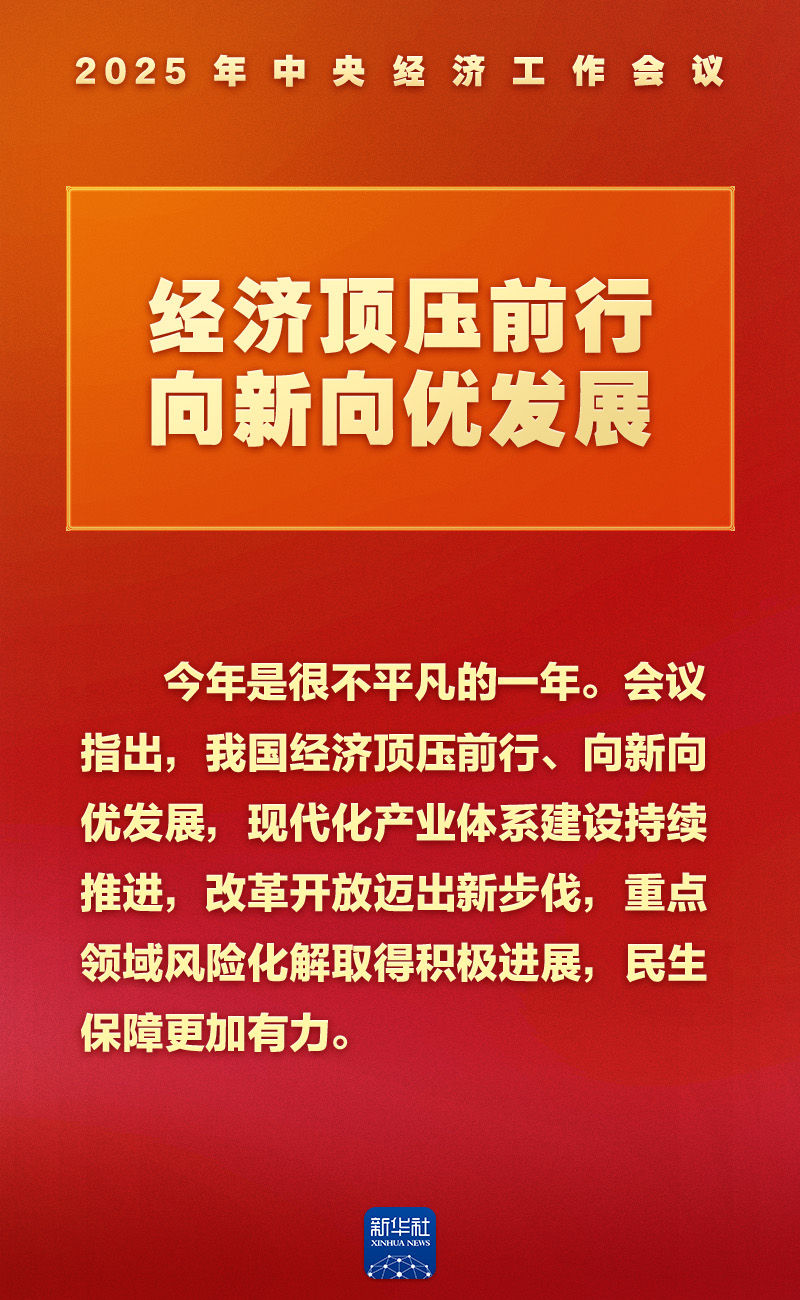
中央经济工作会议12月10日至11日在北京举行。会议以顶层设计锚定"十五五"开局航向,将《中共中央关于制定国民经济和社会发展第十五个五年规划的 建议》战略部署转化为年度具体行动。会议深刻总结2025年经济工作、分析当前形势,明确2026年经济工作的总基调、政策取向和重点任务,为"基本实 现社会主义现代化夯实基础、全面发力的关键时期"筑牢开局根基。中央经济工作会议用精准政策破解发展难题,让"十五五"开局之年的政策底色愈发鲜 明。 (全文2891字,阅读需要8分钟) 记者|朱开云 编辑|温婧 实习生|陈子荣 总基调:稳中求进 会议明确提出,2026年经济工作要"坚持稳中求进工作总基调",同时凸显"积极主动、前置发力"的实践特征,这与党的二十届四中全会确立的"六个坚 持"原则一脉相承。会议强调,做好明年经济工作必须"完整准确全面贯彻新发展理念,加快构建新发展格局,着力推动高质量发展",更好统筹国内经济 工作和国际经贸斗争、更好统筹发展和安全,推动经济实现质的有效提升和量的合理增长。 在形势判断上,会议既肯定"2025年我国经济顶压前行、向新向优发展,现代化产业体系建设持续推进,改革开放迈出新步伐,重点领域风险化解取 ...

A股周五放量上涨 贵金属板块走强
Zhong Guo Xin Wen Wang· 2025-12-13 01:51
Core Viewpoint - The Chinese A-shares experienced a significant increase on December 12, with major indices showing positive performance, driven by optimistic signals from the Central Economic Work Conference regarding future economic policies [1][2]. Market Performance - The Shanghai Composite Index closed at 3889 points, up by 0.41% - The Shenzhen Component Index closed at 13258 points, up by 0.84% - The ChiNext Index closed at 3194 points, up by 0.97% - The total trading volume in the Shanghai and Shenzhen markets was approximately 20,922 billion yuan, an increase of about 2,351 billion yuan compared to the previous trading day [1]. Economic Policy Insights - The Central Economic Work Conference held on December 10-11 emphasized a policy direction focused on stability and quality improvement for the upcoming year - The conference outlined eight key tasks for China's economic work by 2026, with a strong emphasis on domestic demand and building a robust domestic market as the top priority [1]. - Analyst Xiong Yue from Dongguan Securities noted that the conference's positive policy signals could support economic recovery and enhance market risk appetite, suggesting that A-shares may continue to rise [1]. Sector Performance - According to statistics from Dongfang Caifu, sectors such as precious metals, power grid equipment, power supply equipment, electronic chemicals, and semiconductors saw significant gains, with the precious metals sector leading with a 3.81% increase [2].
视频丨稳中求进、提质增效 明年宏观政策如何发力?专家解读
Yang Shi Xin Wen Ke Hu Duan· 2025-12-13 01:44
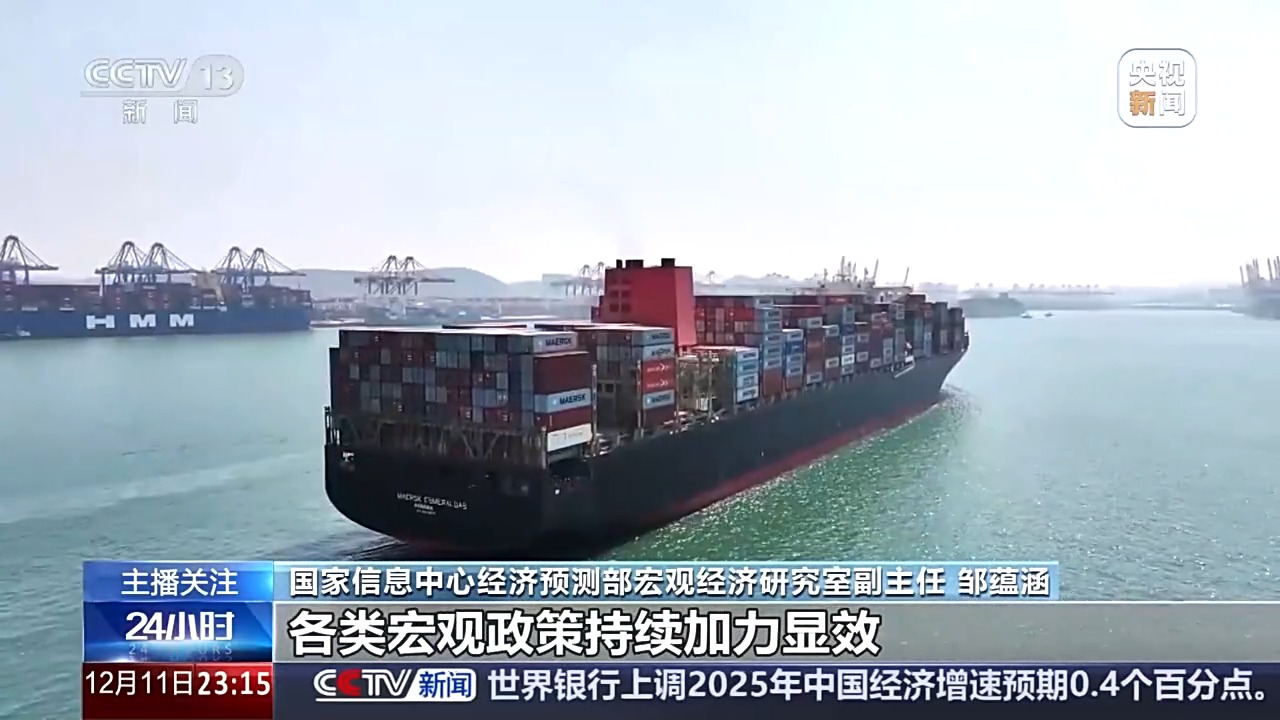
中央经济工作会议指出今年我国经济社会发展主要目标将顺利完成。这一年,中国经济有哪些亮眼表现?如何看待当前经济形势? 0:00 0:00 中央经济工作会议指出,明年经济工作在政策取向上,要坚持稳中求进、提质增效。 邹蕴涵:在政策取向上要保持稳中求进、提质增效的总的基调和原则,也就是提高经济发展的效率和效益。在政策方面特别强调要加大逆周期和跨周期的调 节力度,其中逆周期更多的是针对短期的经济波动,跨周期调节更多是面对中长期的问题。通过一系列的政策促进很多领域的重要改革推进,使得经济能够 长期平稳发展。 中央经济工作会议指出,今年是很不平凡的一年,我国经济顶压前行、向新向优发展,现代化产业体系建设持续推进,改革开放迈出新步伐,重点领域风险 化解取得积极进展,民生保障更加有力。 国家信息中心经济预测部宏观经济研究室副主任邹蕴涵:今年以来,全球经济增长持续放缓,我国经济总体保持了平稳发展态势。各方的积极性、主动性充 分调动,各类宏观政策持续加力显效,共同推动经济的内生增长动力不断壮大,全年各项指标将顺利完成,我国的经济高质量发展迈出坚实步伐。 会议用"五个必须"科学总结了做好新形势下经济工作新的认识和体会,并提出我国经 ...
视频|2026经济工作怎么干?“八个坚持”释放哪些信号?专家解读
Yang Shi Xin Wen Ke Hu Duan· 2025-12-13 00:20
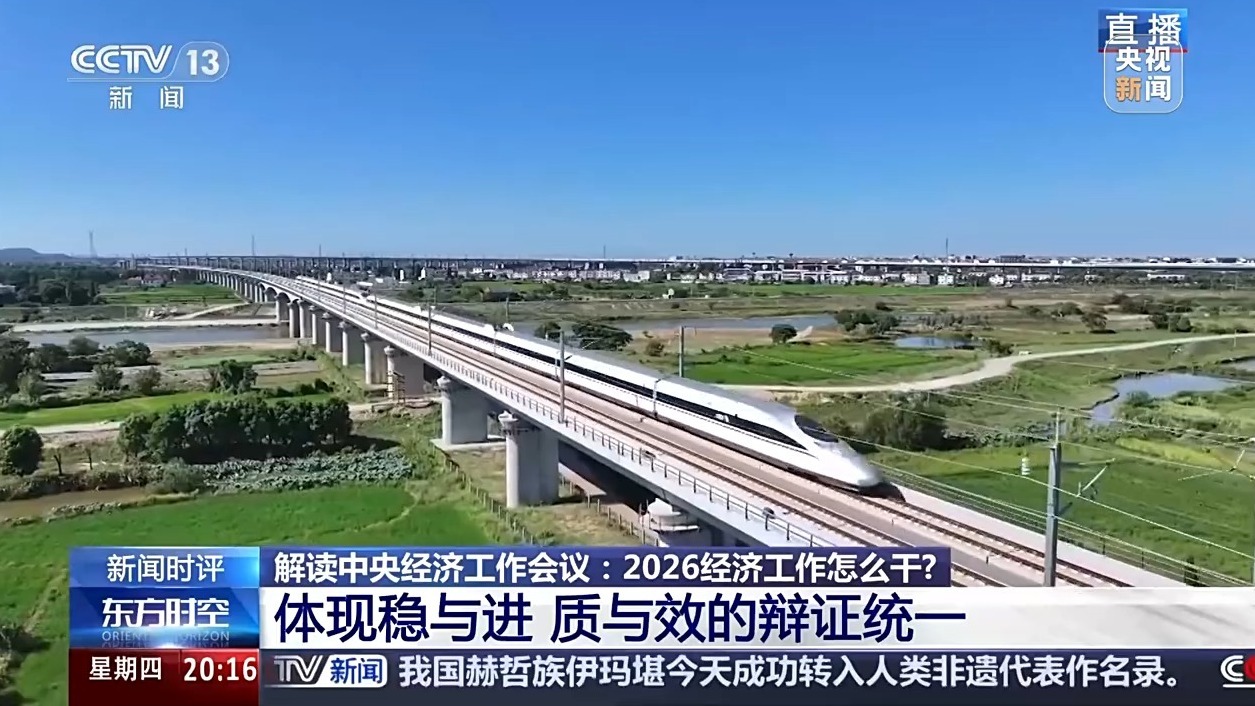
Core Viewpoint - The central economic work conference held on December 10-11 emphasizes the policy direction of "seeking progress while maintaining stability and improving quality and efficiency" as a dialectical and organic unity of stability and progress, quality and efficiency [1][4]. Group 1: Understanding "Seeking Progress While Maintaining Stability and Improving Quality and Efficiency" - The relationship between stability and progress indicates that China's economic growth remains among the top in the world, reflecting the need for effective qualitative improvement and reasonable quantitative growth [6]. - The relationship between quality and efficiency highlights the importance of developing new productive forces, achieving significant results in industrial transformation and upgrading, and promoting green and low-carbon transitions [8]. - Emphasizing the effectiveness of macro policies, it is crucial to enhance the foresight, relevance, and effectiveness of policies through detailed implementation [8]. Group 2: The Eight Key Tasks and Their Signals - The "eight persistences" clarify the key tasks for 2026, emphasizing a systematic perspective to view economic tasks holistically for effective qualitative and reasonable quantitative growth [11][13]. - The tasks are goal-oriented, linking short-term objectives with the broader "14th Five-Year Plan" to ensure balance and coherence [15]. - The focus on "putting people's livelihood first" reflects a commitment to addressing issues that directly impact people's lives, ensuring that investments in both physical and human capital are closely integrated [17].
华泰期货赵昌涛:实干担当开新局 奋勇争先谱新篇
Zhong Zheng Wang· 2025-12-12 13:19
Core Viewpoint - The Central Economic Work Conference emphasizes the importance of "stability while seeking progress" and "improving quality and efficiency" for economic development, with a focus on enhancing risk management and supporting the real economy through financial services [1] Group 1: Strategic Focus - The company aims to strengthen risk management support for the real economy in alignment with the strategy to "build a strong domestic market" [1] - The company will drive service model innovation through digital transformation, responding to the requirement of "accelerating the cultivation of new growth drivers" [1] - The company plans to integrate professional services into rural revitalization practices, adhering to the important guideline of "coordinated development" [1] - The company will implement strategies related to "dual carbon" initiatives, utilizing green financial tools to support the transformation of development methods [1]
2025年中央经济工作会议解读:宏观政策基调延续,稳中求进中做好提质增效
Datong Securities· 2025-12-12 12:36
证券研究报告|事件点评 2025 年 12 月 12 日 宏观政策基调延续 稳中求进中做好提质增效 ——2025 年中央经济工作会议解读 事件简述: 2025 年 12 月 11 日,中央经济工作会议在召开,会议总结了 2025 年的 经济工作,分析了当前经济形势,部署了 2026 年经济工作。继 12 月 8 日中央政治局会议分析研究 2026 年经济工作,提出明年八大重点任务 后,中央经济工作会议在此基础上进一步细化重点任务的政策安排和目 标,并在财政货币政策、政策关键着力点等方面提出具体部署。 核心观点: 具体内容 请仔细阅读报告最后的重要法律申明 第 1 页 共 6 页 大同证券研究中心 执业证书编号: S0770523090001 邮箱: jingjw@dtsbc.com.cn 地址:山西太原长治路 111 号山西世贸中心 A 座 F12、F13 网址: http://www.dtsbc.co m.cn 分析师:景剑文 证券研究报告|事件点评 2025 年 12 月 12 日 域的规范化指导或增加,助力人工智能领域发展。 "稳中求进"总基调不变,挖掘经济潜能做好经济提质增效。本次 会议主要根据中央政 ...
2025年中央经济工作会议解读:宏观政策基调延续稳中求进中做好提质增效
Datong Securities· 2025-12-12 12:04
核心观点: 证券研究报告|事件点评 2025 年 12 月 12 日 宏观政策基调延续 稳中求进中做好提质增效 ——2025 年中央经济工作会议解读 事件简述: 2025 年 12 月 11 日,中央经济工作会议在召开,会议总结了 2025 年的 经济工作,分析了当前经济形势,部署了 2026 年经济工作。继 12 月 8 日中央政治局会议分析研究 2026 年经济工作,提出明年八大重点任务 后,中央经济工作会议在此基础上进一步细化重点任务的政策安排和目 标,并在财政货币政策、政策关键着力点等方面提出具体部署。 具体内容 请仔细阅读报告最后的重要法律申明 第 1 页 共 6 页 大同证券研究中心 分析师:景剑文 执业证书编号: S0770523090001 邮箱: jingjw@dtsbc.com.cn 地址:山西太原长治路 请仔细阅读报告最后的重要法律申明 第 2 页 共 6 页 111 号山西世贸中心 A 座 F12、F13 网址: http://www.dtsbc.co m.cn "稳中求进"总基调不变,挖掘经济潜能做好经济提质增效。本次 会议主要根据中央政治局会议研究内容进行细化,相关任务目标具 有连 ...