端云协同

Search documents
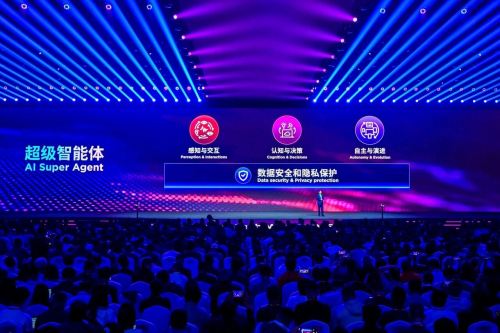
华为云的组合新范式,引爆了Agentic AI应用革命
机器之心· 2025-11-07 07:17
Core Viewpoint - The article emphasizes the transformative potential of Agentic AI, highlighting Huawei Cloud's innovative solutions that simplify AI deployment and enhance productivity across various industries [2][4][14]. Group 1: AI Technology and Solutions - Huawei Cloud introduced the Versatile intelligent body platform and CloudDevice to address three major challenges in AI deployment: high development thresholds, fragmented scenarios, and limited edge capabilities [2][4]. - The Versatile platform enables efficient development of enterprise-level agents, significantly reducing the time required for AI integration from 30 days to just 3 days, achieving a tenfold increase in efficiency [7][10]. - The platform supports a full lifecycle for agents, from development to operation, allowing for visual business logic orchestration and automatic API generation [10][11]. Group 2: Industry Applications and Impact - In the financial sector, a major state-owned bank improved mobile banking efficiency by 80% and achieved over 95% customer satisfaction using the Versatile platform [12]. - The port management sector saw a 26-fold increase in planning generation efficiency and a 10% overall operational efficiency improvement at Qingdao Port, along with a 30% reduction in vehicle waiting time and a decrease of 1.8 million tons in carbon emissions [12]. - In mining operations, the implementation of a safety supervision AI agent led to a 5% increase in operational efficiency and a 50% improvement in safety coefficients [12]. Group 3: CloudDevice and Edge Computing - CloudDevice acts as a bridge between AI capabilities and physical environments, enabling seamless collaboration across various devices and operating systems [16][18]. - It supports low-latency transmission and resource management, facilitating the deployment of AI applications across diverse scenarios, including cloud gaming with latency as low as 60ms [17][18]. - The CloudDevice technology allows for the integration of AI capabilities into personal and industry applications, enhancing data security and operational efficiency [18][19]. Group 4: Collaborative Empowerment and Future Outlook - The synergy between Versatile and CloudDevice creates a closed-loop system where data collected at the edge informs cloud-based AI model optimization, leading to continuous improvement in AI capabilities [22]. - This integration is transforming AI from a mere efficiency tool to a business partner, showcasing the real-time adaptability and self-evolution of intelligent applications [22][23]. - Huawei Cloud is positioned as a leader in the AI transformation journey, contributing to the establishment of the Global Computing Consortium to promote open innovation and sustainable development in the computing industry [23].


从“风暴眼”到“新航标”:新紫光的升级启示录
半导体行业观察· 2025-10-31 01:35
Core Viewpoint - The global semiconductor industry is experiencing a recovery cycle, with significant sales growth driven by major contributions from the Americas and Asia-Pacific regions, including China, and Chinese semiconductor giants are leveraging domestic substitution benefits to upgrade production lines and technology [1]. Group 1: Industry Overview - In October 2025, global semiconductor sales reached $649 billion, marking a 21.7% year-on-year increase and a continuous nine-month growth trend [1]. - Inventory turnover days have decreased by 22 days compared to the peak in 2023, indicating a positive shift in the industry [1]. Group 2: New Unigroup's Business Restructuring - New Unigroup has successfully restructured its business, creating a comprehensive industrial chain covering chip design, manufacturing, testing, materials, modules, ICT equipment, and cloud services [1][3]. - The company is focusing on collaborative innovation across various business sectors, driven by technologies such as AI, communication, automotive electronics, and storage [1][3]. Group 3: Key Enterprises and Their Performance - Unigroup Guowei reported a revenue of 4.904 billion yuan in the first three quarters of 2025, a 15.05% increase year-on-year, with a net profit of 1.263 billion yuan, up 25.04% [4]. - Unigroup Zhanrui has launched over 800 products in high-reliability chips and has achieved significant market share in various sectors, including automotive electronics and security chips [5][6]. Group 4: Technological Innovations - Unigroup Guoxin has developed the fourth generation of 3D stacked DRAM technology, providing high bandwidth and low power consumption solutions for AI computing chips [10]. - Unigroup Tongchuang has released the first domestically produced FPGA product based on FinFET technology, filling a gap in the domestic mid-to-high-end FPGA market [8]. Group 5: Strategic Collaborations and Market Position - New Unigroup is actively participating in the development of 5G-A and 6G technologies, collaborating with various partners to create industry benchmark projects [14]. - The company is transitioning from merely supplying chips to co-creating systems, particularly in the automotive electronics sector, enhancing its competitive edge [15]. Group 6: AI and Cloud Integration - New Unigroup has launched an edge AI platform that supports various applications, indicating a strategic shift towards integrating AI with cloud services [16][17]. - The company is building a "computing power as a service" platform, enhancing its capabilities in AI and cloud computing [17][18]. Group 7: Future Outlook - The restructuring efforts of New Unigroup have established a solid foundation for future growth, with a clear focus on R&D, manufacturing, and market strategies [20]. - The company faces ongoing challenges in maintaining competitive advantages in technology, financial performance, and organizational efficiency in a global context [20].



蜂助手:三季度归属上市公司净利增近两倍 拟定增9.84亿元构建端云生态平台
Zhong Zheng Wang· 2025-10-28 14:33
Core Insights - The company reported significant growth in its financial performance for the first three quarters of 2025, with a revenue of 1.551 billion yuan, representing a year-on-year increase of 41.64%, and a net profit attributable to shareholders of 134 million yuan, up 46.65% [1] - In Q3 alone, the company achieved a revenue of 568 million yuan, a remarkable year-on-year growth of 57.57%, and a net profit of 58.32 million yuan, which is a staggering increase of 196.69% [1] Fundraising and Strategic Projects - The company announced its first private placement plan since its listing, aiming to raise no more than 984 million yuan for three major projects: "Cloud Terminal Computing Power Center Project," "IoT Terminal Intelligent Upgrade Project," and "Thin Terminal SoC Chip Technology R&D Project" [1] - The chairman, Luo Hongpeng, plans to subscribe to at least 10% of the actual number of shares issued in this fundraising [1] Business Strategy and Development - The fundraising aligns with the company's development strategy focusing on "one foundation, two directions," emphasizing the synergy of three core business segments: 5G networks, cloud terminal platforms, and AI hardware [2] - The construction of the computing power center aims to create a distributed computing network that is efficient, stable, and scalable, significantly reducing costs by approximately 60% compared to leasing third-party data centers [2] - The IoT terminal intelligent upgrade project will enhance existing products with AI technologies, improving user experience and opening new sales channels for digital virtual goods [2] R&D and Future Directions - The "Thin Terminal SoC Chip Technology R&D Project" focuses on developing a complete technical system for lightweight AI computing and cloud collaboration, supporting the company's cloud terminal business [3] - The company aims to transition from selling hardware to operating an ecosystem, enhancing its position in the industry value chain through "AI+" services [3]
当手机“长出”机械臂:荣耀发布机器人手机,求解终端新形态
Nan Fang Du Shi Bao· 2025-10-17 12:25
Core Insights - The launch of the Honor ROBOT PHONE represents a significant innovation in smartphone design, integrating AI capabilities, robotic movement, and high-definition camera technology, which could redefine future mobile devices [1][2] - Honor's strategy emphasizes AI as a transformative force in the industry, with the ROBOT PHONE and the Magic8 series showcasing a commitment to evolving smartphone functionality [2][3] - The current smartphone market is experiencing a revival, with increased competition and the emergence of AI as a key differentiator among manufacturers [1][4] Group 1: Product Innovations - The Honor ROBOT PHONE features a retractable mechanical arm that allows for autonomous movement, target tracking, and professional stabilization, marking a departure from traditional smartphone designs [1][2] - The Magic8 series is equipped with the self-evolving AI agent YOYO, which can learn and adapt, enhancing user interaction and personalization [3][5] - Honor's CEO articulated a three-phase evolution of mobile devices, positioning the ROBOT PHONE as a potential third phase following the iPhone and the current AI-driven smartphones [2][6] Group 2: Strategic Positioning - Honor's entry into the robotics sector, previously announced in May, aligns with its broader "Alpha Strategy" to transition from a hardware-focused company to an AI terminal ecosystem provider [2][6] - The company is pursuing a dual strategy by maintaining a strong market presence with the Magic8 series while simultaneously exploring future possibilities with the ROBOT PHONE [6][7] - Honor's approach to AI involves a "cloud-edge collaboration" model, balancing user privacy with advanced AI capabilities, which may set it apart from competitors [4][5]

政策加持,巨头引领,端侧AI爆发或成中企超车良机
Cai Fu Zai Xian· 2025-10-16 06:33
Core Insights - The article discusses the significant shift of artificial intelligence (AI) from cloud-based solutions to edge computing, driven by the explosion of computing power and increasing privacy concerns. This transition is termed the "downward revolution" in AI, which is expected to create new opportunities in the industry [1][2]. Industry Developments - The Ministry of Commerce and eight other departments in China have issued guidelines to accelerate innovation in AI terminal products, emphasizing the need for collaboration between supply and demand [1][2]. - Major tech companies, including Meta, OpenAI, NVIDIA, Lenovo, and JD.com, are making significant advancements in edge AI, indicating a competitive landscape that is heating up [1][3]. - According to Tianfeng Securities, the combination of policy support and industry leadership is expected to lead to a major cycle of innovation in edge AI products, with 2026 projected to be a pivotal year [1][3]. Market Potential - The demand for edge AI is driven by user needs for real-time processing, data privacy, and personalized experiences. Edge AI reduces reliance on cloud computing resources, thereby enhancing user experience and privacy protection [2][6]. - The Chinese edge AI market is projected to grow from less than 200 billion yuan in 2023 to over 1.9 trillion yuan by 2028, with a compound annual growth rate (CAGR) of 58% [6][7]. Competitive Landscape - Companies are intensifying their efforts in edge AI, with OpenAI planning to launch several AI hardware products in the coming year, including smart speakers and smart glasses [3][6]. - Lenovo is also making strides in edge AI, with its upcoming Moto X70 Air smartphone expected to feature advanced AI capabilities, positioning it as a strong competitor to Apple's products [3][4]. Technological Innovations - The trend towards smaller AI models for edge devices is gaining traction, with companies focusing on practical performance and power efficiency rather than just increasing model parameters [7][8]. - Lenovo has introduced technologies such as model compression and inference acceleration engines to enhance the performance of AI PCs, achieving capabilities comparable to cloud-based models [9][11]. Future Outlook - The integration of edge and cloud AI is seen as crucial for enhancing overall AI performance, with companies like Lenovo developing platforms that facilitate seamless collaboration between devices [11][12]. - The maturation of model miniaturization technology and continuous upgrades in hardware components are expected to lead to a significant explosion in AI terminal products, benefiting domestic manufacturers [14].

“像把大象塞进冰箱一样困难”,端侧大模型是噱头还是未来?
3 6 Ke· 2025-10-14 08:30
Core Insights - The development of large models in AI is entering a critical phase, with key considerations around user experience, cost, and privacy becoming increasingly important [1] - Deploying large models on the edge (end devices) presents significant advantages, including enhanced privacy, reduced latency, and lower operational costs compared to cloud-based solutions [3][4] - The integration of large models into operating systems is anticipated, as their role in end devices and smart hardware becomes more significant [8] Edge Large Model Deployment - Edge large models refer to running large models directly on end devices, contrasting with mainstream models that operate on cloud-based GPU clusters [2] - The definition of a large model is subjective, but generally includes models with over 100 million parameters that can handle multiple tasks with minimal fine-tuning [2] Advantages of Edge Deployment - Privacy is a major advantage, as edge models can utilize data generated on the device without sending it to the cloud [3] - Edge inference eliminates network dependency, improving availability and reducing latency associated with cloud serving [3] - From a business perspective, distributing computation to user devices can lower the costs associated with maintaining large GPU clusters [3] Challenges in Edge Deployment - Memory limitations on devices (typically 8-12GB) pose a significant challenge for deploying large models, which require substantial memory for inference [4][9] - Precision alignment is necessary as edge models often need to be quantized to lower bit representations, which can lead to discrepancies in performance [5] - Development costs are higher for edge models, as they often require custom optimizations and adaptations compared to cloud deployments [5] Solutions and Tools - Huawei's CANN toolchain offers solutions for deploying AI models on edge devices, including low-bit quantization algorithms and custom operator capabilities [6] - The toolchain supports various mainstream open-source models and aims to enhance the efficiency of cross-platform deployment [6][20] Future Trends - The future of edge AI is expected to evolve towards more integrated systems where large models become system-level services within operating systems [8] - The collaboration between edge and cloud AI is seen as essential, with edge AI focusing on privacy and responsiveness while cloud AI leverages large data and computational power [23][24] - The emergence of AI agents that can operate independently on devices is anticipated, requiring significant local computational capabilities [23][24] Commercialization and Applications - The commercial viability of edge large models is being explored, with applications in various sectors such as personal assistants and IoT devices [21][22] - Companies are focusing on optimizing existing devices for better inference capabilities while also developing new applications that leverage edge AI [22][30]
vivo交出AI战略新答卷
Hua Er Jie Jian Wen· 2025-10-11 07:09
Core Insights - The article discusses the competitive landscape of AI smartphones, emphasizing that no clear winner has emerged yet, and manufacturers need to enhance their capabilities to redefine human-computer interaction in the AI era [2][3] Group 1: AI Strategy and Development - Vivo unveiled its upgraded AI strategy, the Blue Heart Intelligent Strategy, at the 2025 Vivo Developer Conference, focusing on the integration of AI and operating systems through three main components: the Blue Heart Model Matrix, Blue Heart Personal Intelligent Framework, and Blue Heart Intelligent Open Platform [2][3] - The Blue Heart Model Matrix, introduced for the first time, has made advancements in language, voice, and image processing, and includes a lightweight, comprehensive 3B end-side multimodal reasoning model tailored to user personalization [3][4] Group 2: Technical Innovations - Vivo has achieved the end-side deployment of various model sizes (13B, 7B, 3B, 1B) over the past two years, with a focus on the 3B model for end-side technology, which has led to the implementation of 18 functionalities on mobile devices [3][4] - The UI Agent capability allows the model to understand and operate the phone's interface, making it the first 3B model specifically designed for end-side agents [4] Group 3: User-Centric Features - The new Blue Heart Personal Intelligent Framework enhances the model's ability to understand user intentions through comprehensive perception and multimodal data fusion, while also allowing for continuous learning from personalized data [5] - Vivo's new operating system, OriginOS 6, leverages AI models to provide customized services based on individual user needs, featuring upgraded functionalities like "Xiao V Circle Search" and "Xiao V Memory 2.0" [6][7] Group 4: Future Directions - Vivo is also advancing its self-developed Blue River Operating System 3, which is the first operating system entirely written in Rust, aimed at AI-native devices and enhancing capabilities like camera speed and visual recognition [7] - The company’s AI strategy is becoming clearer as it aims for further breakthroughs in the rapidly evolving AI landscape [7]

首家AIOS落地来自vivo:个人化智能复刻人类思维,手机还能这样用
机器之心· 2025-10-11 04:18
Core Viewpoint - The article emphasizes the practical application of generative AI, showcasing vivo's advancements in AI technology that enhance user experience and privacy through localized processing and personalized intelligence [6][30]. Group 1: AI Capabilities and Innovations - vivo introduced the "One Model" concept, a lightweight 3B end-side multimodal reasoning model that aims to provide a sustainable AI experience focused on user personalization rather than just parameter competition [8][9]. - The new AI capabilities include a 30 billion parameter model that can run smoothly on flagship mobile SoCs, achieving performance comparable to industry-leading 4B language models with a 60% reduction in parameters [9][11]. - The Blue Heart 3B model supports both language and multimodal tasks, allowing for complex reasoning to be performed locally on devices, thus enhancing efficiency and privacy [13][20]. Group 2: User Experience and Personalization - The integration of AI into the mobile operating system allows for a seamless user experience, where AI acts as a personal assistant capable of understanding and executing tasks without relying on cloud services [15][18]. - The AIOS framework is designed to mimic human cognitive processes, enabling real-time perception, memory, execution, and autonomous planning, which significantly improves task efficiency [20][21]. - vivo's approach to AI emphasizes the importance of personal data integration, creating a personalized AI experience that is both efficient and secure [18][30]. Group 3: Ecosystem and Collaboration - vivo aims to build an open ecosystem by collaborating with developers and partners, allowing for the rapid deployment of new AI capabilities and applications [23][26]. - The company has established partnerships to enhance its AI offerings, such as collaborating with Ant Group's AI health application AQ, which provides comprehensive medical services [28][29]. - vivo's vision includes equipping over 300 million devices with robust local AI capabilities within the next three to five years, indicating a strong commitment to advancing AI technology [31].

高通组局,宇树王兴兴说了一堆大实话
量子位· 2025-09-26 09:12
Core Viewpoint - The article discusses the challenges and opportunities in the field of embodied intelligence and robotics, emphasizing the importance of collaboration among industry players to address technical difficulties and accelerate progress [3][25][48]. Group 1: Industry Challenges - The current state of robotics is characterized by diverse technical routes, leading to a lack of significant progress despite the apparent excitement in the field [4][25]. - Many robotics and chip manufacturers overlook the critical role of chips in robotics, which is essential for enhancing performance and reliability [16][18]. - The industry faces difficulties in deploying large-scale computing power in robots due to space constraints, battery capacity, and heat dissipation issues [20][21]. Group 2: Technological Developments - The goal of companies like Yushu Technology is to develop universal AI for robots that can perform various tasks in unfamiliar environments, akin to a "ChatGPT moment" for robotics [11][12]. - The development stages for achieving advanced robotic capabilities include fixed action demonstrations, real-time action generation, task execution in unfamiliar settings, and achieving high success rates in delicate operations [12]. - The future of embodied intelligence in robotics may involve using mobile phone chips, which could provide significant potential for innovation [24]. Group 3: Collaboration and Open Source - The article highlights the importance of open-sourcing models to foster collaboration and accelerate advancements in the field, similar to OpenAI's approach with earlier GPT models [28][29]. - Companies are encouraged to maintain an open attitude towards various models and collaborate with third parties to enhance development [30][31]. Group 4: AI and Agent Systems - The article discusses the role of agent systems in AI, emphasizing the need for end-cloud collaboration to improve user experience and privacy [35][36]. - The demand for end-side models is increasing, as they are crucial for understanding user needs and facilitating communication with cloud models [39][40]. - The industry lacks a unified standard for AI applications across different devices, leading to high development costs and fragmentation [48][50]. Group 5: Future Directions - The future of AI in robotics and other sectors will likely involve creating a cross-terminal operating system that integrates various services and enhances user experience [50][51]. - Collaboration among industry players is essential for building the necessary infrastructure and supporting innovation in smart devices [51].


苹果计划2026年推出Siri AI搜索 端云协同兼顾隐私与功能升级
Huan Qiu Wang Zi Xun· 2025-09-04 04:52
Core Insights - Apple is expected to introduce an AI web search feature for Siri in the iOS 26.4 update, scheduled for early 2026, showcasing its strategic direction in AI technology [1][3] - The new system will replace the current model of directly using Google search, implementing a three-module architecture: planner, search operator, and summarizer, enhancing user interaction [1][3] Group 1: AI Strategy - The architecture reflects Apple's "end-to-cloud collaboration" AI strategy, focusing on privacy by processing sensitive information locally while utilizing third-party models for complex queries [3] - The integration of Google's Gemini model for the summarizer function will operate on Apple-controlled servers, ensuring user queries are processed with anonymized identifiers to enhance privacy protection [3] Group 2: Technological and Environmental Commitment - Apple's approach emphasizes maintaining technological autonomy by developing its foundational models while integrating third-party models to enhance functionality [3] - The private cloud servers supporting the new system will use renewable energy, aligning with Apple's commitment to sustainability and environmental responsibility [3]