纯电动汽车

Search documents
新能源汽车上演“极限对决”
Zhong Guo Qi Che Bao Wang· 2025-09-01 14:47
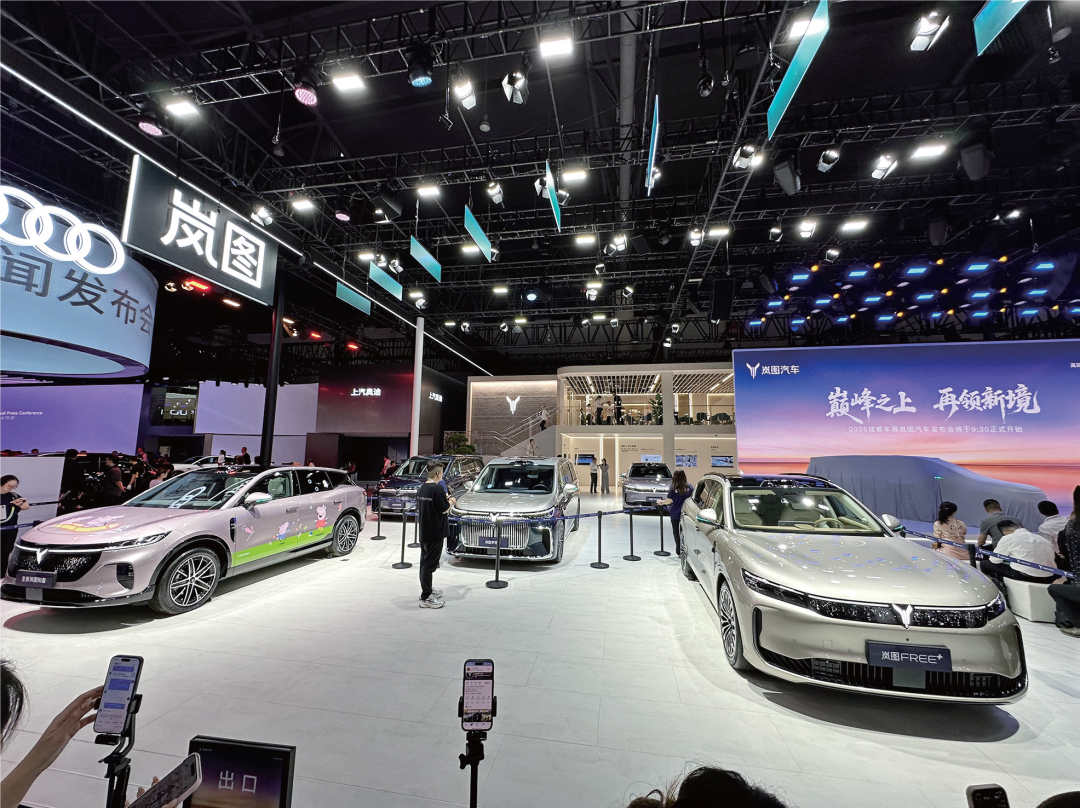
Core Insights - The Chengdu International Auto Show, which opened on August 29, 2025, features nearly 120 domestic and international automotive brands showcasing over 1,600 vehicles, with a strong emphasis on new energy vehicles (NEVs) [1] - The event highlights the current consumer trends in the automotive market, particularly the growing popularity of electric vehicles (EVs) and the advancements in technology and design [1] Electric Vehicles - Numerous brands, including traditional automakers and new entrants, presented their latest pure electric models, indicating a robust market interest in EVs [5][8] - The new models showcased impressive specifications, such as the new Zhijie R7 with a range of 802 km and fast charging capabilities [5] - The Xiaopeng P7 features a 3.7-second acceleration to 100 km/h and a top speed exceeding 230 km/h, demonstrating the performance potential of modern EVs [6] Hybrid and Extended-Range Vehicles - The auto show also highlighted the advancements in hybrid and extended-range vehicles, with models like the Roewe M7 DMH achieving a combined range of 2,050 km [10] - The Wanjie M8 extended-range version offers a range of 1,600 km, showcasing the growing appeal of this technology among consumers [14] - The integration of advanced technologies, such as Huawei's collaboration with GAC for the Xiangwang S9, reflects the trend towards enhanced performance and efficiency in hybrid models [10] Market Trends - The auto show serves as a barometer for consumer preferences, with a clear inclination towards electric and hybrid vehicles due to their environmental benefits and lower operating costs [8][19] - The industry is moving towards "scene segmentation" and "technology downscaling," focusing on personalized consumer needs and making advanced technologies accessible in more affordable models [19] - The development of new battery technologies, such as solid-state batteries, is expected to further enhance the range and performance of electric vehicles, potentially solidifying their dominance in the market [18]







做增程的品牌越来越多,但增程车却有点卖不动了
3 6 Ke· 2025-08-25 03:02
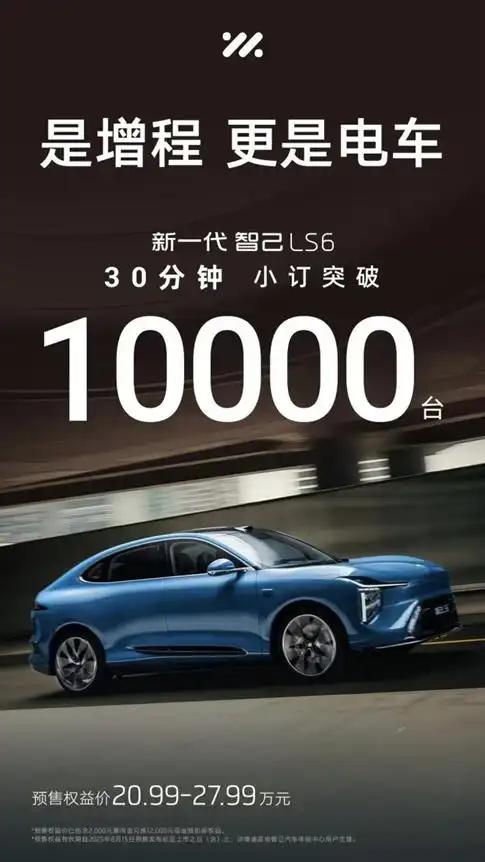
Group 1 - The article discusses the current trend of electric vehicle (EV) manufacturers shifting from pure electric models to range-extended electric vehicles (EREVs), with brands like Zhiji, Haobo, and Xiaopeng launching new EREV models [1][3][6] - Despite the initial excitement around EREVs, sales data indicates a decline in their popularity, with July retail sales of EREVs at 102,000 units, a year-on-year decrease of 11.4%, while pure electric vehicle sales increased by 24.5% [7][8] - The market share of pure electric vehicles has grown significantly, with the ratio of pure electric to EREV sales changing from 43:57 last year to 64:36 this year [7][8] Group 2 - The sales performance of leading EREV brands like Aion and Li Auto has been disappointing, with Li Auto experiencing a 39.7% year-on-year decline in July sales [10][12] - In contrast, brands like Xiaopeng and Leap Motor have seen substantial growth in pure electric sales, with Xiaopeng's sales increasing by 229.4% year-on-year [9][10] - The decline in EREV sales is attributed to the decreasing price of lithium and the resulting drop in battery costs, making pure electric vehicles more affordable and attractive [17][19] Group 3 - The article highlights that the charging infrastructure for pure electric vehicles is rapidly expanding, with an average of 34.3 public charging stations per square kilometer in major cities, alleviating range anxiety for consumers [20][23] - As battery technology improves, the range of pure electric vehicles continues to increase, with models like the Model Y achieving a range of up to 751 km [24][29] - The article concludes that while EREVs will continue to exist, they are returning to their original position as a transitional product rather than a primary choice for consumers [32][33]
东风汽车将出售所持东风本田发动机全部股份
日经中文网· 2025-08-19 08:00
Core Viewpoint - Dongfeng Motor Group is divesting its 50% stake in the Honda joint venture engine company to focus on electric vehicle (EV) investments amid declining sales and performance [2][4]. Group 1: Company Performance - Dongfeng Motor Group's new car sales and overall performance are in a downturn, with passenger car sales dropping by 10% year-on-year from January to July [4]. - The company's net profit for the first half of 2025 decreased by 90% compared to the previous year [4]. - The joint venture, Dongfeng Honda Engine, reported an operating revenue of 9.5 billion yuan for the fiscal year ending December 2024, with a net loss of 227 million yuan [4]. Group 2: Strategic Moves - Dongfeng Motor Group plans to auction its 50% stake in the Dongfeng Honda Engine joint venture, with a bidding deadline set for September 12 [4]. - The funds raised from the sale will be used to boost the sales of its new energy vehicle brand, "Lantu" [4]. - The Dongfeng Honda Engine company, established in 1998, is facing reduced demand for engines due to the increasing popularity of electric vehicles, leading to a halving of its annual production capacity at the Guangzhou plant [4].

日本7月进口EV销量增长42%,比亚迪创新高
日经中文网· 2025-08-06 08:00
Group 1 - The core viewpoint of the article highlights the significant growth in Japan's imported car sales, particularly in the electric vehicle (EV) segment, which has seen a 42% increase year-on-year, reaching 2,397 units [2][4] - Tesla's sales in Japan, categorized under "others," have surged to 1,021 units, marking a 3.2-fold increase compared to the previous year, contributing to the overall growth of EV sales in the country [4] - BYD's sales have also increased by 10%, reaching 227 units, with strong performance from the newly launched SUV "Hai Lion 7" [4] Group 2 - The overall imported car sales in Japan have experienced a continuous growth for seven months, with Mercedes-Benz leading the market with a 7% increase, totaling 4,349 units [5] - BMW and Volkswagen follow, with BMW's sales decreasing by 9% to 2,429 units, while Volkswagen's sales have surged by 72% to 2,129 units [5] - High-end vehicle sales have shown robust growth, with vehicles priced over 10 million yen (approximately 490,000 RMB) increasing by 25% to 3,551 units, and those priced between 4 million yen (approximately 200,000 RMB) and 10 million yen growing by 12% to 11,648 units [5]

汽车行业双周报:理想i8问卷调查:400组进店询单用户反馈分析-20250804
Hua Yuan Zheng Quan· 2025-08-04 11:56
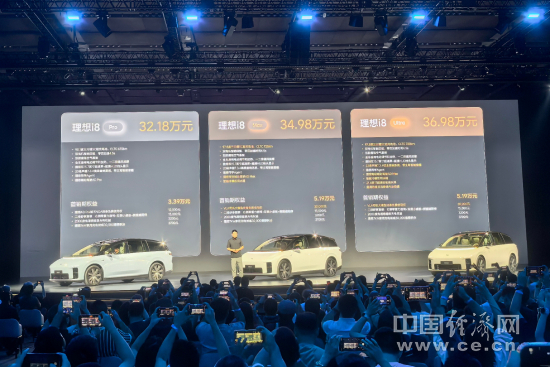
Investment Rating - The investment rating for the automotive industry is "Positive" [1] Core Insights - The report highlights that the Ideal i8 has received positive feedback regarding its product strength, with potential orders expected to gradually increase [4][8] - The sales strategy of Ideal is noted to be conservative, which may contribute to a significant portion of potential customers remaining in a wait-and-see state [5][17] - The report emphasizes the potential for the Ideal i8 to attract a broader customer base, including single individuals and traditional vehicle owners considering electric options [18][20] Summary by Sections 1. Ideal i8 Product Feedback - The Ideal i8, launched on July 29, is priced between 321,800 to 369,800 yuan, and has received favorable feedback from potential users regarding its appearance, space, range, and configuration [5][8] - A survey of 401 potential customers revealed that 49% are still in a wait-and-see mode, with only 7% having placed orders, indicating a cautious approach to purchasing [19] - The i8's range of 670/720 km and energy consumption of 14.6/14.8 kWh per 100 km are highlighted as competitive advantages [28] 1.1. Product Strength Recognition - Over 90% of respondents do not consider the i8's appearance unattractive, and more than 70% believe its electric range is sufficient [9][13] - The survey indicates that more than 50% of users are comfortable with the absence of a front trunk, and most find the rear trunk adequate [11][12] 1.2. Customer Observation State - The report notes that 41% of potential users are not considering purchasing the i8, while 49% are contemplating but have not yet committed [19] - The conservative sales strategy, including the lack of aggressive discounts or financing options, is suggested as a reason for the observed customer hesitation [16][17] 1.3. Expanding Customer Demographics - The survey indicates that nearly 25% of potential i8 customers are single, suggesting a widening demographic for the vehicle [20][21] - A significant portion of potential customers currently own traditional fuel vehicles and are showing interest in switching to electric models [18][22] 1.4. Alternative Vehicle Considerations - If not purchasing the i8, nearly 50% of potential customers would consider other electric models rather than hybrid or traditional fuel vehicles [24][26] - The report identifies that potential customers are comparing the i8 with models such as NIO ES8 and other Ideal models, indicating competitive positioning in the market [25][27]
葡萄牙汽车协会(ACAP):葡萄牙7月份特斯拉(TSLA.O)新注册量同比下降48.5%,而新纯电动汽车注册量则增长 9.5%。
news flash· 2025-08-01 16:20
Group 1 - The core point of the article highlights that Tesla's new registrations in Portugal for July have decreased by 48.5% year-on-year, indicating a significant decline in demand for the brand in this market [1] - In contrast, the overall new registrations of pure electric vehicles in Portugal have increased by 9.5%, suggesting a growing acceptance and adoption of electric vehicles among consumers [1]
听劝的李想,能打的i8
Zhong Guo Jing Ji Wang· 2025-07-30 13:14
Core Insights - Li Auto's first pure electric SUV, the Li i8, was officially launched on July 29, with a price range of 321,800 to 369,800 yuan, and deliveries are set to begin on August 20 [3][5] - The CEO, Li Xiang, emphasized the importance of the i8 in maintaining the company's leadership position in the large space family vehicle segment within the pure electric SUV market [3][6] - The launch event was strategically held in a venue previously used by Xiaomi, reflecting a competitive spirit and a desire to replicate Xiaomi's success in vehicle pre-orders [5][8] Product Development and Market Positioning - The Li i8 aims to redefine the pure electric SUV segment, addressing previous challenges faced by the MEGA model, which did not meet sales expectations [6][7] - The i8 features a yacht-inspired design, a spacious interior, and advanced safety measures, including a high-voltage platform and multiple safety tests [11][13] - The vehicle offers two battery options (90.1 kWh and 97.8 kWh) with a maximum range of 720 kilometers, and boasts a charging network of 3,000 stations and 16,000 charging piles, positioning it as a leader in charging infrastructure [13] Competitive Landscape - The mid-to-large pure electric SUV market is growing, with a current market share of approximately 8% in China's new energy vehicle sector, indicating significant growth potential [14] - The Li i8 faces strong competition from models like Tesla's Model Y and other emerging brands, raising concerns about potential internal competition with Li Auto's existing models [14] - The company aims to achieve a sales target of 640,000 units by 2025, with the i8 and the upcoming i6 expected to contribute significantly to this goal [13][14]
理想增程与纯电的逻辑
数说新能源· 2025-07-16 09:38
Group 1: Design Logic of Extended-Range and Pure Electric Vehicles - The target customers for extended-range vehicles are fuel vehicle users, such as Toyota Highlander, with pricing comparable to mainstream fuel models [1] - Extended-range vehicles have comprehensive advantages over fuel vehicles in terms of product strength and user experience [1] - Pure electric vehicles target fuel vehicle users, extended-range users, and other pure electric users, such as Mercedes-Benz GLE, Li Auto L9, and Tesla Model X [2] - Pure electric vehicles offer a better driving experience compared to fuel vehicles but have disadvantages in charging experience compared to both fuel and extended-range vehicles [2][3] - The challenge lies in converting users from extended-range vehicles to pure electric vehicles due to two main disadvantages: charging experience and price [3] Group 2: Competitive Positioning and Market Strategy - In cases where price differences are not significant, most users will prefer extended-range vehicles, especially in higher price segments [5] - The design of the Li Auto i8 aims to create a significant space advantage over its extended-range SUV, the L8, potentially rivaling the L9 [6] - Users who prioritize charging experience will choose the extended-range series, while those who require more space will opt for the pure electric series [8] - The competitive advantage of the Li Auto i8 against other brands' extended-range products is its superior internal space [9] - Huawei's vehicles, such as the M9, have a competitive edge due to their larger dimensions, which allows for more flexibility in future product designs [10] Group 3: Market Dynamics and Consumer Behavior - The construction of supercharging stations is crucial for maintaining competitive advantages against rival products [12] - The low sales figures for pure electric vehicles compared to extended-range vehicles can be attributed to the lack of compelling reasons for consumers to choose a product with inferior charging experience but similar other features [13] - The design starting point for the Li Auto i8 is to create an extreme cabin space compared to the extended-range model, which presents a more challenging market entry strategy [13]

特斯拉在印度开首家销售店,卖中国造EV
日经中文网· 2025-07-16 03:16
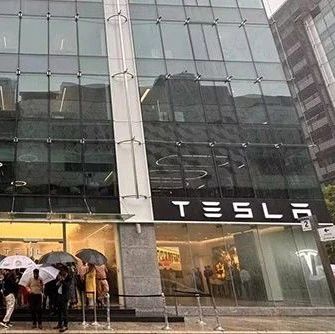
Core Viewpoint - Tesla has opened its first sales showroom in India, focusing on importing EVs manufactured in China, with significant challenges posed by high import tariffs [1][2]. Group 1: Tesla's Market Entry - Tesla's first showroom is located in the upscale BKC area of Mumbai, with plans for a second showroom in New Delhi by the end of July [1][2]. - The starting price for the Model Y in India is approximately 6.1 million rupees (around 510,000 RMB), which is significantly higher than prices in the US and China due to a minimum 70% import tariff on EVs [1][2]. Group 2: Market Potential and Competition - The Indian automotive market is projected to sell 5.25 million new vehicles in 2024, making it the third-largest market globally, following China and the US [2]. - Although EV sales in India are currently over 100,000 units, the market holds substantial growth potential [2]. - Tesla's entry into India comes at a time when its global sales are stagnating, positioning India as a crucial market. Additionally, Chinese EV competitor BYD has not penetrated the Indian market significantly due to geopolitical tensions, providing Tesla with a strategic advantage [2].
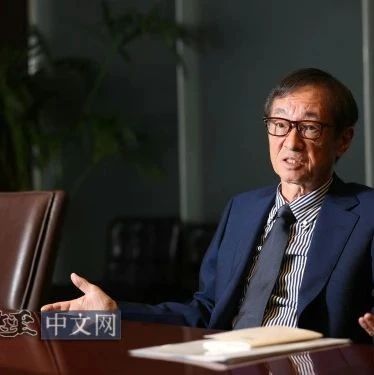
日本制铁CEO:不认为中国是第1
日经中文网· 2025-07-14 03:12
Core Viewpoint - Japan's Nippon Steel, led by CEO Eiji Hashimoto, acknowledges China's dominance in steel production but emphasizes that it does not equate to being the best, citing differences in pricing and profitability among domestic products [1][6]. Group 1: Acquisition of US Steel - The acquisition of US Steel by Nippon Steel was a result of lengthy negotiations, deemed beneficial for both the US and Nippon Steel, with the final agreement reflecting a mutual understanding of the need for revitalization in the US steel industry [1][2]. - The local community, initially skeptical, recognized that the partnership with Nippon Steel was essential for the economic recovery of the region, especially after observing the struggles of competitors like Cleveland-Cliffs [2]. Group 2: Operational Reforms - Hashimoto outlines a two-step approach to operational reform: first, restoring profitability to motivate employees, and second, ensuring sustainable growth over the next 10 to 20 years [3]. - The first step involves top-down reforms, while the second requires a cultural shift within the company to foster a growth-oriented mindset among employees [3]. Group 3: Challenges in the US Steel Market - The US steel industry faces challenges such as low production rates and high variable costs, which hinder competitiveness despite existing demand [4]. - Nippon Steel has already dispatched 40 technical personnel to address these issues and improve production methods [4]. Group 4: Market Demand and Product Contribution - There is a significant demand in the US market that can support increased production, particularly in sectors like AI and electric vehicles, where Nippon Steel can provide high-performance materials that are currently lacking in the US [5]. Group 5: Competitive Landscape with China - Hashimoto expresses concern over China's aggressive expansion in the steel market, particularly in emerging markets like India and Thailand, and emphasizes the need for proactive measures to counter this trend [6][7]. - The company aims to maintain its competitive edge by focusing on high-end steel products in markets with clear growth potential [9]. Group 6: Future Aspirations - Nippon Steel aims to reclaim its position as the world's leading steel producer within the next decade, targeting a crude steel production of 100 million tons, while also maintaining its technological leadership in Japan [8]. - The company is open to further acquisitions, particularly of smaller manufacturers in the US, to enhance its market position, while remaining cautious about the competitive landscape in Asia [9].