
经济下行压力

Search documents
综合晨报:美国5月核心PCE同比涨2.7%,中国工企利润回落-20250630
Dong Zheng Qi Huo· 2025-06-30 00:45
1. Report Industry Investment Ratings No specific industry investment ratings are provided in the content. 2. Core Views of the Report - The report covers a wide range of financial and commodity markets, including macro - strategy, black metals, non - ferrous metals, and agricultural products. Market conditions are influenced by various factors such as economic data, policy changes, and geopolitical events. For example, the US core PCE data affects gold and stock markets, and policy changes in different countries impact commodity markets [13][21][37]. - Different markets have different outlooks. Some markets are expected to be bullish in the long - term but may face short - term fluctuations, while others are expected to be bearish or remain in a range - bound state [2][21][34]. 3. Summary by Relevant Catalogs 3.1 Financial News and Reviews 3.1.1 Macro Strategy (Gold) - The US May core PCE price index rose 2.7% year - on - year, exceeding expectations. Inflationary pressure led to a lack of short - term motivation for the Fed to cut interest rates, causing gold prices to decline on Friday. Geopolitical risks did not intensify. Short - term gold prices are expected to be weak with potential for further decline [13][14]. 3.1.2 Macro Strategy (Foreign Exchange Futures - US Dollar Index) - Trump's "Big and Beautiful" bill has entered a short - term deadlock. Although it is expected to pass, the US dollar index is expected to weaken in the short term due to the split within the Republican Party and the expected increase in the deficit [15][17][18]. 3.1.3 Macro Strategy (US Stock Index Futures) - The US May core PCE price index growth was higher than expected. The market's risk appetite remains high under the support of the interest - rate cut cycle and upcoming tax - cut bills. However, the current position of US stocks does not fully account for negative factors such as tariff negotiations and economic downturn, so there is a risk of correction [19][21]. 3.1.4 Macro Strategy (Treasury Bond Futures) - The profits of large - scale industrial enterprises in China declined in May. Treasury bond futures rose as a reaction to the weak stock market. The central bank's support for market liquidity is a key factor for the bullish view, but the market may face short - term fluctuations. Long positions can be held, and buying on dips is recommended [22][24][25]. 3.1.5 Macro Strategy (Stock Index Futures) - The profits of industrial enterprises from January to May turned negative, but the stock market has been strong recently. The divergence between the market and fundamentals is increasing. If policies can promote economic recovery, the market will be more stable; otherwise, the sustainability of the market rally will be reduced. It is recommended to allocate evenly among stock indices [26][28][29]. 3.2 Commodity News and Reviews 3.2.1 Black Metals (Steam Coal) - US coal production increased from January to May 2025. Steam coal prices strengthened, with the 5500K coal price remaining stable and low - calorie coal prices rising slightly. High - temperature weather in June improved demand, and supply was slightly affected by safety inspections. It is expected that the demand pressure will ease in July [30][31]. 3.2.2 Black Metals (Iron Ore) - The air - conditioner production orders in July turned negative year - on - year. The iron ore price rebounded slightly this week. Although there is pressure on port inventories in July due to the shipping rush in June, this negative factor has been partially priced in. The overall trend is expected to be range - bound, and steel mill profits may be slightly compressed [32]. 3.2.3 Agricultural Products (Soybean Oil/Rapeseed Oil/Palm Oil) - Indonesia plans to implement the B50 biodiesel plan in 2026. Palm oil production data in Malaysia shows mixed trends, and exports are expected to increase. Palm oil is expected to remain range - bound, and soybean oil is also expected to be range - bound. Attention should be paid to factors such as Indian restocking, US soybean weather, and US biofuel policies [33][34]. 3.2.4 Agricultural Products (Sugar) - A cold front caused frost in the sugar - cane producing areas of southern Brazil. The sugar - cane crushing volume in the first half of June in southern Brazil is expected to decrease by 19.3% year - on - year, and sugar production is expected to decrease by 19.9%. The international sugar market is under supply pressure, but the external market has shown signs of stabilization, and Zhengzhou sugar is expected to be slightly bullish in the short term [35][37][38]. 3.2.5 Agricultural Products (Cotton) - The drought - affected area of US cotton remained at 3% in the week ending June 24. Indian cotton planting area increased slightly. US cotton export contracts declined. Zhengzhou cotton is expected to remain in a low - level range - bound state, and attention should be paid to the USDA's actual planting area report [40][42][43]. 3.2.6 Agricultural Products (Soybean Meal) - The soybean crushing volume of oil mills was close to 2.5 million tons last week. The drought - affected area of US soybeans decreased. Imported soybean costs declined, and soybean meal is expected to continue to accumulate inventory. The price of US soybeans and soybean meal futures are expected to be supported at certain levels, and attention should be paid to US soybean planting area and inventory reports [44][46]. 3.2.7 Black Metals (Rebar/Hot - Rolled Coil) - South Africa imposed temporary safeguard measures on imported steel flat - rolled products. The production of white goods in July decreased year - on - year. Steel prices rebounded, but the profit margin declined. The steel market may rebound slightly in the short term but faces medium - term pressure [47][49][50]. 3.2.8 Agricultural Products (Corn) - The growth progress of corn in different regions varies. The spot price of corn is likely to strengthen, but significant price increases may require accelerated inventory depletion. It is recommended to wait and see for old - crop contracts and consider shorting new - crop contracts when the production situation is clearer [52]. 3.2.9 Agricultural Products (Corn Starch) - The price difference between corn starch and tapioca starch narrowed. The substitution effect needs further attention. It is recommended to wait and see due to complex influencing factors [52]. 3.2.10 Non - Ferrous Metals (Alumina) - The national alumina inventory increased slightly. The spot price remained stable, and the weighted index declined slightly. The short - term futures price is expected to be strong due to low inventory and warehouse receipts [53]. 3.2.11 Non - Ferrous Metals (Copper) - India plans to take measures to address copper supply risks. A new copper project in Canada has released resource data. Short - term macro - expectations are volatile, and the US dollar may continue to weaken. The domestic copper inventory situation is divided. The copper market is expected to be range - bound at a high level, and caution is needed when chasing long positions [55][57]. 3.2.12 Non - Ferrous Metals (Lithium Carbonate) - Zhongkuang Resources plans to invest in a lithium salt production project. The short - term lithium price is expected to be slightly bullish. It is recommended to avoid short positions or shift to the LC2511 contract and look for buying opportunities on dips [58][59]. 3.2.13 Non - Ferrous Metals (Polysilicon) - The polysilicon futures contract rebounded, possibly related to policy news. The supply is expected to be in surplus in July. It is recommended to look for short - selling opportunities on rebounds and consider positive spreads between contracts [60][61]. 3.2.14 Non - Ferrous Metals (Industrial Silicon) - A large silicon enterprise in Xinjiang suddenly cut production. The industry's production situation is complex. It is recommended to look for short - selling opportunities on rebounds and manage positions carefully [62][63]. 3.2.15 Non - Ferrous Metals (Nickel) - GreenMei's products are suitable for low - altitude aircraft power scenarios. Nickel prices rebounded last week. The prices of nickel ore and nickel iron are expected to be weak. It is recommended to look for short - selling opportunities on rebounds [64][65][66]. 3.2.16 Non - Ferrous Metals (Lead) - The short - term supply and demand of lead are weak, but there is an expectation of strong supply and demand in the long - term. It is recommended to look for buying opportunities on dips and pay attention to positive spreads between contracts [68]. 3.2.17 Non - Ferrous Metals (Zinc) - The LME zinc spread was in contango, and the spot premium continued to decline. The zinc market may rise in the short term but faces a surplus in the medium - term. It is recommended to wait and see, protect existing short positions, and consider positive spreads between contracts [69][70]. 3.2.18 Energy Chemicals (Carbon Emissions) - The EUA carbon price fluctuated last week. The short - term carbon price is expected to be volatile. Attention should be paid to European weather and geopolitical situations [71][72][73]. 3.2.19 Energy Chemicals (Crude Oil) - OPEC+ may discuss increasing production in July. The number of US oil rigs decreased. The oil price has returned to near the pre - conflict level, and the risk premium may remain in the third quarter. The oil price is expected to be range - bound [73][74][75]. 3.2.20 Energy Chemicals (PVC) - The spot price of PVC powder increased, but the trading volume was low. The PVC market is expected to be range - bound in the short term [75][76]. 3.2.21 Energy Chemicals (Bottle Chips) - Bottle - chip factories' export prices were mostly stable. The industry plans to cut production in July, which will relieve supply pressure. It is recommended to look for opportunities to expand the processing margin [77][78]. 3.2.22 Energy Chemicals (Caustic Soda) - The price of caustic soda in Shandong had minor fluctuations. The supply was limited due to enterprise maintenance, and the demand was relatively stable. The futures price rebounded, but the rebound height may be limited [79][80]. 3.2.23 Energy Chemicals (Pulp) - The spot price of imported wood pulp stabilized. The futures price rebounded slightly. The pulp market is expected to be range - bound [81][82]. 3.2.24 Shipping Index (Container Freight Rates) - The Antwerp port was severely disrupted by strikes, causing delays for nearly 50 merchant ships. The spot freight rate is showing signs of peaking. The short - term decline of the EC2508 contract is limited, but the return on long positions is also limited [83][84][85].
下个月,即将开始放水?
大胡子说房· 2025-06-25 12:00
Group 1 - The central bank is likely to resume purchasing government bonds next month, indicating a potential liquidity injection into the market [2][7]. - The central bank's bond purchases are equivalent to "printing money," as it increases the base currency by buying bonds from banks [3][4]. - Since August of last year, the central bank has already injected 1 trillion yuan through bond purchases over five months [5]. Group 2 - Recent actions by major state-owned banks, which have aggressively purchased short-term government bonds, signal that the central bank is preparing to inject liquidity [8]. - Despite interest rate cuts by the central bank, government bond yields have increased, raising the cost of issuing new bonds [10][11]. - The central bank's strategy to stabilize bond yields involves purchasing bonds to drive prices up, thereby lowering interest rates for the government [12][13]. Group 3 - The central bank's intention to buy bonds is supported by its May report, which indicated a readiness to act [14]. - Global trends show a potential wave of interest rate cuts, with several central banks expected to lower rates soon, reducing the hesitation for the central bank to act [16][17]. - Economic pressures, including insufficient liquidity and market stagnation, necessitate the central bank's intervention through bond purchases [20]. Group 4 - The central bank's previous reliance on short-term tools like reverse repos and medium-term lending facilities is shifting towards long-term bond purchases for more stable liquidity [22][23]. - The effectiveness of monetary easing through bond purchases may take time to reflect in the market, and the impact on inflation is uncertain [25][26]. - The current economic environment suggests that without inflationary pressures, significant price increases in investments are unlikely [28]. Group 5 - The volatility in commodity and capital markets is expected to continue due to low liquidity and unstable funding [29]. - A recommendation is made to avoid heavy investments in capital markets or commodities, focusing instead on preserving capital and seeking stable, low-volatility returns [30][31].


下个月,即将开始放水?
大胡子说房· 2025-06-17 11:10
Group 1 - The central bank is likely to resume purchasing government bonds next month, indicating a potential liquidity injection into the market [2][7] - The central bank's bond purchases are equivalent to printing money, which increases the base currency and provides liquidity to the banking system [3][4] - Since August of last year, the central bank has already injected 1 trillion yuan through bond purchases over five months [5] Group 2 - Recent actions by major state-owned banks, which have aggressively purchased short-term government bonds, signal that the central bank is preparing to inject liquidity [8] - Despite interest rate cuts by the central bank, government bond yields have increased, indicating rising borrowing costs for the government [10][11] - The central bank's strategy to stabilize bond yields involves purchasing bonds to drive up their prices, thereby lowering the interest rates on new issuances [12][13] Group 3 - The central bank's intention to buy bonds is supported by its May report, which indicated a readiness to act [14] - Global trends show a potential wave of interest rate cuts, with many central banks, including the Swiss National Bank, expected to lower rates soon [16][17] - Economic pressures, including insufficient liquidity and market stagnation, necessitate the central bank's intervention through bond purchases [20] Group 4 - The central bank's previous reliance on short-term tools like reverse repos and medium-term lending facilities is shifting towards long-term bond purchases for more stable liquidity [22][23] - The effectiveness of monetary easing through bond purchases may take time to reflect in the market, and the impact on individual investors may be limited [25][26] - The current economic environment, characterized by global recessionary pressures, suggests that inflation is unlikely to emerge despite liquidity injections [24][28] Group 5 - The investment landscape is expected to be volatile, with a tendency for short-term trading rather than stable long-term investments [29][30] - Investors are advised to prioritize capital preservation and consider stable, low-volatility investment options, such as bank deposits or medium-term assets [31]

王喆:拉动内需应回归收入基本面
news flash· 2025-06-03 01:49
Core Viewpoint - The current economic development faces multiple adverse factors, with increasing uncertainty in the external trade environment and internal challenges [1] Economic Indicators - Major macroeconomic indicators have significantly weakened at the beginning of the second quarter, indicating increased downward pressure on the economy [1] Policy Recommendations - The effectiveness of previous supportive consumption policies needs further evaluation, and follow-up measures should be introduced based on actual conditions [1] - To stimulate domestic demand, it is essential to return to the income fundamentals, implementing practical measures to improve the employment environment, enhance social security, increase disposable income for residents, and improve market expectations [1]
5月16日电,日本央行审议委员中村豊明表示,美国关税政策实施,经济下行压力加大。
news flash· 2025-05-16 04:06
Core Viewpoint - The implementation of the U.S. tariff policy has increased economic downward pressure according to Nakamura Toyoaki, a member of the Bank of Japan's Policy Board [1] Group 1 - The U.S. tariff policy is impacting global economic conditions [1] - Economic pressures are intensifying as a result of these tariffs [1]
(财经天下)鲍威尔“静观其变” 美联储警示风险
Sou Hu Cai Jing· 2025-05-08 14:22
白雪认为,在当前偏高的利率背景下,随着关税政策对经济的负面冲击开始显现,加之美国新一届政府 裁员和加征关税、削减支出等收缩性政策推行更早、更为激进,私人部门和金融市场对宏观走势的预期 明显转弱,叠加高利率环境下经济活动仍受到抑制,美国经济下行压力将进一步加大。尤其考虑到二季 度美国企业将迎来偿债高峰,维持高利率将显著增加企业的再融资成本和信用风险。(完) 白雪称,鲍威尔近期多次警告,加征关税政策可能带来"更高的通胀和更慢的经济增长",且其影响可能 比预期更持久。无论从本次会议声明,还是鲍威尔近期的讲话来看,都意味着美联储短期内将维持"观 望策略"。 工银国际首席经济学家程实表示,从最新数据看,美国关税政策对自身经济增长的反噬作用已初现端 倪。一方面,劳动力市场边际降温,企业在政策不确定性下趋于保守;另一方面,实际通胀降温放缓, 通胀预期持续攀升。同时,美国一季度经济增长陷入萎缩,环比折年率录得负数。 程实认为,总体来看,美国经济正陷入自我强化的恶性循环:关税推升通胀预期,压缩货币政策空间。 高利率环境下面对财政与经济双重压力,特朗普政府对美联储施加降息压力,试图挑战货币政策独立 性,反而引发市场担忧,进一步推 ...
加拿大央行:信贷损失可能导致银行收缩放贷规模,从而加剧经济下行压力。
news flash· 2025-05-08 14:08
Core Viewpoint - The Bank of Canada warns that credit losses may lead to a contraction in lending by banks, which could exacerbate downward pressure on the economy [1] Group 1 - The potential for increased credit losses is highlighted as a significant concern for the banking sector [1] - A reduction in lending activity by banks is anticipated as a response to these credit losses [1] - The overall economic outlook may worsen due to the tightening of credit conditions [1]
刚刚,三大利空!,银行全线大跌,工行大跌4%,银行有5个利空
Sou Hu Cai Jing· 2025-05-03 04:16
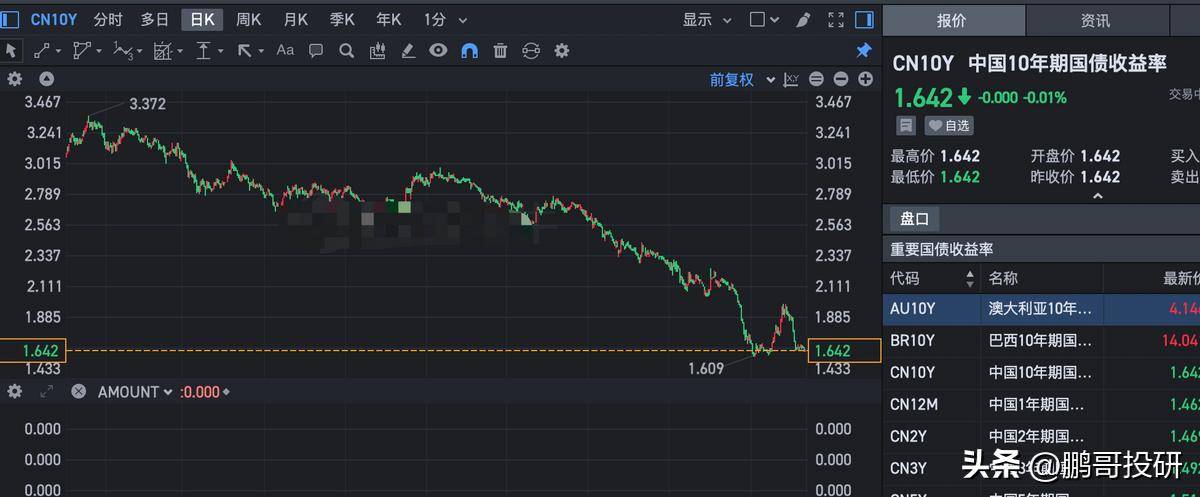
Core Viewpoint - The recent sharp decline in the A-share market, particularly in the banking sector, raises concerns about the sustainability of the previous recovery trend and the potential for panic selling in the near future [1] Group 1: Banking Sector Performance - The banking sector has shown a significant downturn, with major banks like Industrial and Commercial Bank of China, China Construction Bank, China Merchants Bank, and Industrial Bank reporting noticeable declines in both revenue and profit [1] - The performance of bank stocks has been a critical support for market stability, but the recent downturn may indicate a shift in sentiment among investors [1] Group 2: Contributing Factors to Decline - A major factor contributing to the decline is the drop in earnings, which has prompted profit-taking among investors [1] - The ongoing slump in the real estate market and weak consumer spending have made it difficult for banks to issue loans, further impacting their recovery prospects [2] - Expectations of interest rate cuts and reserve requirement ratio reductions are putting additional pressure on banks' interest margins, making long-term performance challenging [3] - Economic pressures are increasing, as indicated by a manufacturing PMI drop to 49 in April, suggesting significant economic strain and a rising non-performing loan ratio [3] - The dividend payout ratio for banks has stabilized around 30%, but declining profits could jeopardize future dividends, undermining shareholder confidence [5] Group 3: Market Outlook - The risks in the A-share market remain pronounced, with core sectors showing poor performance and economic data indicating a downward trend [7] - The impact of trade disputes since April has begun to reflect negatively in leading indicators, raising concerns about unexpected earnings declines in upcoming reports [7] - The rapid decline in the yield of China's ten-year government bonds signals a lack of clear recovery prospects for the economy, warranting close attention from investors [7]
日本央行:家庭对支出的防御性态度可能进一步增强,可能会对经济产生下行压力。
news flash· 2025-05-01 03:14
日本央行:家庭对支出的防御性态度可能进一步增强,可能会对经济产生下行压力。 ...