
虚拟现实(VR)

Search documents
品牌实力证明:帮助企业吸引投资与合作-权威机构中金企信
Sou Hu Cai Jing· 2025-10-16 09:18
Core Insights - CICC International Consulting's core advantages stem from its exceptional data capabilities and specialized research methodologies [2] - The company employs 194 full-time consulting staff, with approximately 37% holding master's or doctoral degrees, and 55% holding bachelor's degrees [2] - The consulting team is supported by around 7,000 external expert consultants, creating an efficient collaboration model [2] Market Position Certification - Market position certification is crucial for reflecting a company's comprehensive strength and product market position, enhancing competitiveness, brand value, and market trust [3] - The certification covers various aspects such as industry leaders, brand rankings, customer satisfaction, and user numbers, applicable across multiple digital and traditional media platforms [3] Game Headset Market Insights - The Chinese game headset market has expanded significantly, growing from approximately 13 billion yuan in 2018 to nearly 27 billion yuan in 2022, with a compound annual growth rate of 12.8% [8] - Wired game headsets dominate the market, accounting for over 60% of the total market size, while wireless headsets are experiencing rapid growth due to technological advancements and consumer demand for portability [8] - Consumer demand is increasingly focused on high sound quality, comfort, durability, and personalized designs [8] Competitive Landscape - The game headset market is becoming increasingly competitive, with domestic and international brands vying for superiority in technology development, product quality, and after-sales service [9] - The growth of online sales channels, driven by internet penetration and the evolution of e-commerce platforms, is expected to create more sales opportunities and market share for the industry [9]


“上海健康播报”专家详解音乐疗愈 “音乐处方”疗愈身心
Jie Fang Ri Bao· 2025-10-10 02:05
Core Insights - Music therapy has significant effects on mental health and well-being, becoming a popular self-care method in daily life, especially with the integration of new technologies like artificial intelligence for personalized "music prescriptions" [1][3] Group 1: Mechanisms of Music Therapy - Music therapy operates on three levels: physiological, psychological, and cognitive-behavioral. Physiologically, it can regulate heart rate, breathing, and blood pressure, and trigger the release of neurotransmitters like dopamine and endorphins [2] - Psychologically, music provides emotional resonance and a channel for expression, helping to distract from pain or anxiety and facilitating non-verbal communication for those who struggle with language [2] - Cognitively, structured music can enhance focus and assist in improving coordination for individuals with movement or cognitive disorders, while active participation in music activities boosts self-identity and control [2] Group 2: Common Misconceptions - There are four common misconceptions about music therapy: it is always positive, there is a universal playlist, it can replace traditional medical treatment, and only specific types of music are effective [2] Group 3: Differences Between Casual Listening and Professional Therapy - Casual music listening is a form of self-care and stress management, while professional music therapy is a structured clinical process led by certified therapists with specific therapeutic goals [3] - Individuals are encouraged to maintain their music listening habits and enhance their experience through mindful practices like focusing on breathing and engaging with the music [3] Group 4: Future of Music Therapy - The future of music therapy is expected to be personalized, accessible, and immersive, with advancements in technology such as AI for generating music prescriptions, VR/AR for creating multi-sensory environments, and wearable devices for real-time stress monitoring [3] Group 5: Practical Music Therapy Techniques - Four simple music therapy techniques include creating emotion-matching playlists, singing for emotional expression and cognitive improvement, listening to calming music before sleep to enhance sleep quality, and combining music with meditation for better focus and relaxation [4][5]
南山智尚(300918):发布员工持股计划及新一代触觉智能手套
Xin Lang Cai Jing· 2025-10-09 06:33
Core Points - The company has launched an employee stock ownership plan (ESOP) to raise a maximum of 62.55 million yuan, with each share priced at 1.00 yuan [1] - The total number of shares to be acquired under the ESOP is capped at 5.3691 million shares, representing 1.06% of the company's total equity [1] - The ESOP will last for 60 months and will involve up to 40 employees, including a maximum of 7 directors and senior management [1] - The first unlock period for the ESOP is set for 2025, requiring a revenue growth rate of no less than 15% compared to 2024 [3] - The second unlock period in 2026 has two conditions: either a revenue growth rate of no less than 45% or a net profit growth rate of no less than 20% compared to 2024 [3] - The company aims to align core tasks with stock incentives to enhance the commercialization of its humanoid robot business [3] Product Development - The company has officially released a new generation of tactile smart gloves, developed in collaboration with Wuhan University and Shouzhih Innovation [4] - The gloves integrate flexible sensing and drive technologies, enabling high integration of perception, driving, and processing [4] - Key features include high precision, low latency, strong comfort, and multi-platform support for applications [4] - Current application scenarios for the gloves include remote operation of industrial robots, robot skill learning, and virtual assembly testing in VR [4] Commercialization Efforts - The company plans to collaborate with Shouzhih Innovation to promote the commercialization of the smart gloves, focusing on market development, open-source software, and supply chain production [5] Financial Outlook - The company maintains its profit forecast, projecting net profits of 200 million, 230 million, and 280 million yuan for 2025 to 2027, with corresponding P/E ratios of 55x, 48x, and 39x [6][7]

科技绘新景:国庆中秋假期里的文旅“智”变
Bei Jing Ri Bao Ke Hu Duan· 2025-10-07 07:17
Core Insights - The integration of technology into cultural and tourism experiences is enhancing visitor engagement and creating immersive environments across various locations in China [1][3][11] Group 1: Technological Innovations in Cultural Experiences - The "West Expo Treasures" digital art interactive experience project showcases ancient artifacts using digital technology, allowing visitors to engage with history in a tactile manner [1] - The Shaanxi History Museum's VR experience enables visitors to immerse themselves in Tang Dynasty scenes, enhancing the historical experience with high-definition visuals [3] - The Zhejiang Provincial Museum's new AR-guided tour brings ancient artifacts to life, demonstrating the application of cutting-edge technology in cultural settings [3] Group 2: Enhanced Visitor Experiences - Various locations, such as Chongqing and Guangdong, are utilizing light shows and projections to narrate local legends and enhance the aesthetic appeal of historical sites [4][6] - The Zhuhai Chimelong Ocean Kingdom's light and drone show offers a spectacular visual experience, combining technology with entertainment to attract visitors [6][8] Group 3: Smart Tourism Management - The implementation of smart management systems in popular tourist destinations, like Lijiang Ancient Town, is improving visitor satisfaction by monitoring crowd flow and providing real-time guidance [9][11] - The use of advanced infrastructure and intelligent applications in tourism is fostering a synergy between cultural preservation and modern tourism practices [9][11] Group 4: Future of Cultural and Tourism Integration - The ongoing technological advancements are transforming the cultural and tourism sectors, making technology an essential component for high-quality development in the industry [11] - Experts emphasize that technology should serve cultural purposes and enhance visitor experiences, ensuring a balance between innovative presentation and cultural depth [11]

“逛展”全球数贸会:杭州科创新势力吸睛
Zhong Guo Xin Wen Wang· 2025-09-29 00:24
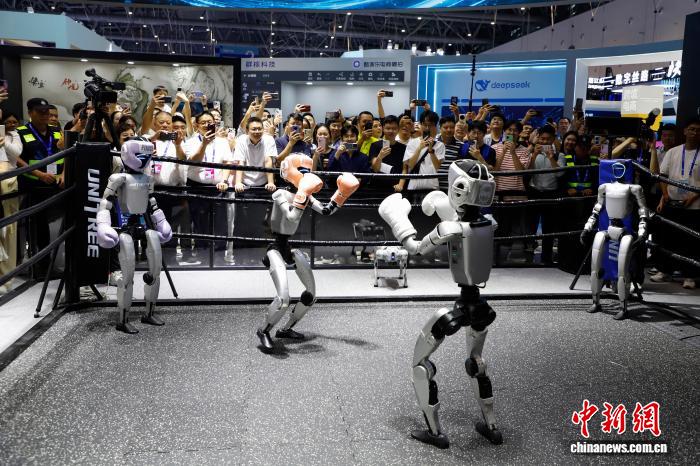
Group 1: Event Overview - The fourth Global Digital Trade Expo is being held in Hangzhou, Zhejiang from September 25 to 29, attracting nearly 11,000 international merchants [1] - The event highlights the "Kechuang New Forces" of Hangzhou, showcasing the city's emerging industries and innovations [1] Group 2: Company Innovations - Yushu Technology Co., Ltd. showcased its G1 humanoid robot in a fighting competition, demonstrating advanced algorithms for motion control, including balance and autonomous recovery after being knocked down [3] - Qiangnao Technology Co., Ltd. presented its Revo2 bionic dexterous hand, which can perform delicate tasks with a grip strength of up to 50N while weighing only 383g, utilizing non-invasive brain-computer interface technology [4][5] - Chuanhe Lingjing Technology Co., Ltd. introduced mixed reality (MR) and virtual reality (VR) technologies, creating immersive experiences that blend traditional culture with modern technology, attracting interest from international clients [6]
光学与AI迭代助力智能眼镜,下一代智能终端加速普及
Guotou Securities· 2025-09-28 15:12
Investment Rating - The report maintains an investment rating of "Outperform" with a target price set at 1599 CNY for the preferred stock [5][6]. Core Insights - The smart glasses industry is experiencing a significant evolution driven by optical display technology and AI integration, marking a transition into a robust growth phase since 2023 [1][17]. - The market for AI glasses, particularly those that integrate camera and voice interaction without optical display modules, is rapidly expanding, with Meta's Ray-Ban Meta leading the charge [2][38]. - The report identifies four main categories of smart glasses: AI shooting glasses, AR viewing glasses, AR full-domain glasses, and VR glasses, each with distinct technological and application characteristics [26][32]. Summary by Sections 1. Optical Technology Driving Product Iteration - The development of smart glasses can be categorized into four stages: 1) Early exploration (before 2012) focused on technology validation 2) Commercial trial (2012-2016) saw initial product launches like Google Glass 3) Product diversification (2017-2022) led to a variety of offerings 4) Robust growth phase (2023-present) characterized by significant technological advancements and market expansion [1.1][1.1.1][1.1.2][1.1.3][1.1.4]. 2. AI Glasses: A New Wave of Competition - AI glasses, particularly those that prioritize lightweight and low-cost designs by omitting optical display modules, are gaining traction. The Ray-Ban Meta has become a standout product, capturing a significant market share [2][38]. - The report notes that in 2024, Ray-Ban Meta is expected to account for 98.68% of global AI glasses sales, highlighting the competitive landscape dubbed the "Hundred Glasses War" [2][38]. 3. AR Glasses: The Ultimate Form of AI Glasses - AR glasses are categorized into AR viewing glasses and AR full-domain glasses, with the former focusing on portable viewing experiences and the latter on interactive applications like navigation and translation [3][30]. - The report emphasizes the ongoing technological iterations in AR glasses, particularly in display technologies such as Micro OLED and light guide systems, which are expected to enhance user experience [3.2][3.3]. 4. Traditional VR Glasses: Focus on Immersive Experience - Traditional VR glasses are designed for complete immersion, primarily targeting gaming and viewing experiences. The report notes that the market for VR glasses is relatively mature, with key players like Meta and PICO driving innovation [4][4.3]. 5. Industry Chain and Competitive Landscape - The upstream segment focuses on core components like chips and optical modules, with Micro OLED expected to become a primary solution for XR devices. The report forecasts that global Micro OLED shipments will reach approximately 399.57 million units by 2030 [10][10.1]. - The midstream market is dominated by companies like 雷鸟创新 and PICO, while the downstream segment is crucial for the practical deployment of smart glasses [10.2][10.3]. 6. Key Investment Targets - The report suggests monitoring key players in various segments, including manufacturing (立讯精密, 歌尔股份), optical technology (舜宇光学科技, 蓝特光学), and storage chips (佰维存储) [11][11.1].





VR:娱乐行业的新兴趋势
Sou Hu Cai Jing· 2025-09-28 08:35
Core Insights - Virtual reality (VR) technology is increasingly reshaping the entertainment industry by enhancing consumer experiences and creative processes [1] - VR is not only a new form of entertainment but also transforms the production, distribution, and consumption of entertainment products [1] Gaming Industry - VR technology has revolutionized video gaming, providing immersive experiences that break traditional screen limitations [1] - First-person shooter (FPS) games in VR offer unprecedented sensory experiences, increasing engagement and excitement for players [2] - Developers are exploring innovative game designs, moving beyond traditional controls to incorporate body movement and eye-tracking technologies [2] - New game genres, such as multiplayer VR competitions and VR running games, have emerged, turning gaming into a new social and entertainment medium [2] Virtual Concerts and Performing Arts - VR is becoming a new trend in virtual concerts and performing arts, allowing audiences to experience performances from afar [3][6] - Viewers can participate in virtual concerts from a first-person perspective, enhancing their sense of presence and interaction [4][6] - The technology eliminates spatial limitations, enabling more people to enjoy live performances and offering options like switching perspectives [6] Art Exhibitions and Interactive Experiences - VR is widely applied in art exhibitions and theater performances, allowing audiences to interact with artworks and participate in the creative process [6] - This interactivity makes traditional art exhibitions more engaging, attracting younger audiences and tech enthusiasts [6] Film Industry - VR is innovating the film experience by providing immersive viewing that allows audience participation and interaction [7] - VR films focus on viewer engagement, enabling them to influence the storyline and enhance the overall entertainment value [7][8] - The introduction of interactive films, such as Netflix's "Black Mirror: Bandersnatch," allows viewers to make choices that affect character outcomes [8] Theme Parks and Virtual Experiences - Theme parks are integrating VR elements to enhance visitor experiences, expanding the entertainment value of traditional rides [8][9] - VR virtual experience centers are being established, offering a variety of immersive activities that cater to different age groups [9] Cross-Industry Innovation - VR technology is acting as a catalyst for cross-industry integration, promoting collaboration between entertainment, education, tourism, and sports [9] - Companies are developing VR-based virtual tourism services and fitness applications, providing new experiences for users [9] Future Outlook - Despite the potential of VR in the entertainment industry, challenges such as high hardware costs and content standardization remain [9] - As technology advances, particularly in display devices and interactive experiences, VR is expected to play a significant role in driving innovation and development in the entertainment sector [9]
机构:2025上半年VR头显出货量同比下降14% AR智能眼镜增长50%
Jing Ji Guan Cha Wang· 2025-09-25 06:30
Group 1 - The core viewpoint of the article indicates a significant decline in global virtual reality (VR) headset shipments, with a year-on-year decrease of 14% expected in the first half of 2025, while augmented reality (AR) smart glasses are projected to see a substantial growth of 50% in the same period [1] Group 2 - The report by CounterPoint Research highlights the contrasting trends in the VR and AR markets, emphasizing the challenges faced by the VR segment and the robust growth potential of AR technology [1]
去年江西VR及相关产业实现营业收入1100亿元
Zhong Guo Xin Wen Wang· 2025-09-24 13:33
Core Insights - In 2024, Jiangxi's VR and related industries achieved a revenue of 110 billion yuan, marking a year-on-year growth of 9.34%, and a significant expansion of approximately 26 times compared to 4.2 billion yuan in 2018 [1][2] Industry Overview - Jiangxi province currently has over 400 VR companies, with major players like Huawei, Alibaba, Lenovo, HTC, and iFlytek establishing operations in Nanchang, alongside hardware manufacturers such as Huaqin, Longqi, Lianchuang Electronics, and O-film, creating a comprehensive VR industry chain covering hardware manufacturing, software development, and content creation [2] - The province has prioritized the VR industry as a key area in its "1269" action plan for modernizing manufacturing industry chains, with six universities offering undergraduate programs in virtual reality technology and over 20 institutions providing specialized programs in VR technology and applications [2] Upcoming Events - The 2025 World VR Industry Conference, themed "VR Makes the World More Exciting - VR + AI Opens a Smart Future," will be held from October 19 to 20 in Nanchang, focusing on four core activities: release, discussion, connection, and experience, featuring 16 diverse and content-rich events [2] - Jiangxi aims to leverage this conference to gather global innovation resources, promote technology transfer, and enhance international cooperation, driving the application of VR technology across various industries [2] Project Signings - Over the past six editions of the World VR Industry Conference, Jiangxi has signed a total of 678 projects, covering related industries such as electronic information, 5G, and big data [3]

2025年中国无人机模拟器软件行业政策、产业链、发展规模、竞争格局及发展趋势研判:行业竞争激烈,市场需求巨大,军用民用领域都有较大市场空间[图]
Chan Ye Xin Xi Wang· 2025-09-24 01:23
Core Viewpoint - The drone simulator software market is rapidly growing, with significant applications in military and civilian sectors, indicating a strong potential for investment opportunities in this industry [1][6]. Market Overview - The global drone simulator software market is projected to reach 1.49 billion yuan in 2024, with military and civilian segments accounting for 364 million yuan and 1.126 billion yuan, respectively. By 2025, the market is expected to grow to 1.59 billion yuan, with military and civilian segments increasing to 385 million yuan and 1.205 billion yuan [1][6]. - In China, the drone simulator software market is anticipated to reach 370 million yuan in 2024, with military and civilian segments at 86 million yuan and 284 million yuan, respectively. By 2025, the market is expected to grow to 400 million yuan, with military and civilian segments projected to reach 91 million yuan and 309 million yuan [1][10]. Industry Characteristics - The drone simulator software industry is characterized by technology intensity, high customization, real-time interactivity, safety prioritization, and continuous iterative upgrades [4][5]. Current Industry Status - The global drone simulator software industry is in a growth phase, driven by the increasing application of drone technology across various sectors. The market is still in its early stages in China, with significant untapped potential and limited market participants [6][10]. - The production of drone simulators in China is expected to grow from 89,900 units in 2019 to 208,500 units in 2024, with demand increasing from 102,000 units to 221,200 units in the same period [8][9]. Competitive Landscape - The global drone simulator software market features intense competition, with key players including CAE Inc., General Atomics, DJI, Arovertech, BlueHalo, L3Harris, MathWorks, and Zephyr-Sim. The competition is characterized by a focus on niche markets and specialized technology [13]. - In China, major companies in the drone simulator software sector include DJI, Arovertech, North Sky Technology, and Lingdong Technology [13]. Development Trends - The advancement of technologies such as artificial intelligence, virtual reality (VR), augmented reality (AR), cloud computing, and big data is expected to drive the growth of the drone simulator software market, catering to the demand for more realistic training environments in both military and civilian applications [14].
