要素市场化配置综合改革

Search documents
FICC日报:科技股爆发,股指大涨-20250912
Hua Tai Qi Huo· 2025-09-12 05:25
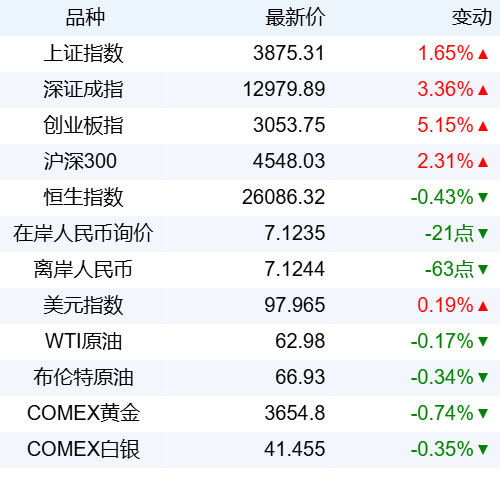
Report Summary 1. Report Industry Investment Rating No information provided. 2. Core Viewpoints - Driven by the significant rise of overseas large - cap technology stocks, domestic semiconductor and communication sectors have also risen substantially. The market's expectation of a bull - market adjustment is lower than anticipated, and the significant increase in trading volume has further warmed market sentiment. Currently, the contango of stock index futures is shallow, providing room for inter - period arbitrage operations [2] - The US inflation is moderately cooling. Domestically, the State Council has approved a two - year factor market reform pilot in 10 regions, covering both traditional and innovative factors. Overseas, the US CPI data in August showed certain trends, and the number of initial jobless claims last week reached a new high since October 2021 [1] - In the spot market, A - share indices rose strongly, with all sector indices closing in the green. The trading volume in the Shanghai and Shenzhen stock markets increased to 2.4 trillion yuan. Overseas, US stock indices hit new highs. In the futures market, the basis of stock index futures rose significantly, and both trading volume and open interest increased [1] 3. Summary by Directory Macro - economic Charts - Include charts showing the relationship between the US dollar index and A - share trends, US Treasury yields and A - share trends, RMB exchange rate and A - share trends, and US Treasury yields and A - share style trends [5][7][11] Spot Market Tracking Charts - Table 1 shows the daily performance of major domestic stock indices on September 11, 2025. The Shanghai Composite Index rose 1.65% to 3875.31, the Shenzhen Component Index rose 3.36% to 12979.89, and the ChiNext Index rose 5.15% to 3053.75 [13] - Charts include those on the trading volume of the Shanghai and Shenzhen stock markets and margin trading balances [5][14] Stock Index Futures Tracking Charts - Table 2 shows the trading volume and open interest of stock index futures. For example, the trading volume of IF was 169613 (an increase of 38933), and the open interest was 282139 (an increase of 6664) [15] - Table 3 shows the basis of stock index futures. For instance, the basis of the current - month IF contract was 13.97 (an increase of 26.93) [36] - Table 4 shows the inter - period spreads of stock index futures. For example, the spread between the next - quarter and current - month IF contracts was - 31.80 (no change) [39][40] - Relevant charts display the basis, open interest, and inter - period spreads of different stock index futures contracts [5][16][18]
2000万辆、50万件;活力、增长!透过“数据+关键词”看经济稳中有进支撑更稳
Yang Shi Wang· 2025-09-12 04:18
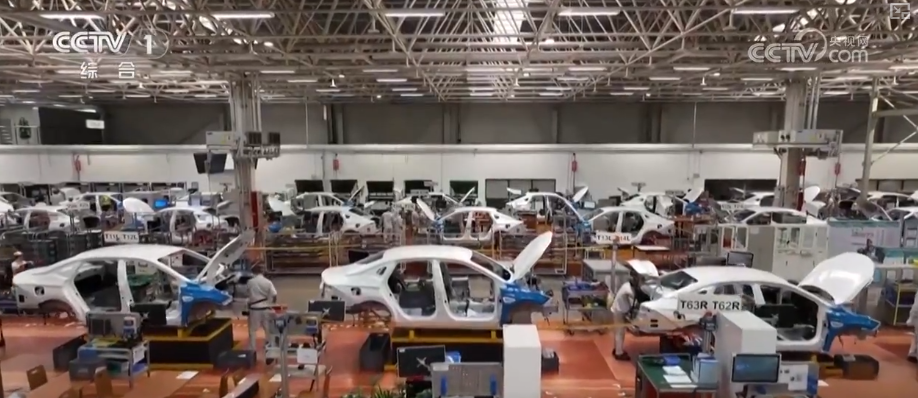
Group 1: Automotive Industry - In the first eight months of 2025, China's automotive production and sales both exceeded 20 million units for the first time, with new energy vehicles (NEVs) accounting for 45.5% of total new car sales [3] - NEV production reached 9.625 million units, while sales were 9.62 million units, reflecting year-on-year growth of 37.3% and 36.7% respectively [3] - Exports of automobiles totaled 4.292 million units, with NEV exports at 1.532 million units, marking a significant year-on-year increase of 87.3% [3] Group 2: E-commerce and Digital Economy - In the first half of 2025, China's cross-border e-commerce imports and exports reached approximately 1.3 trillion yuan, setting a historical record [15] - The core industries of China's digital economy saw a total of 500,000 invention patents granted, ranking first globally [14] - The "Shenzhen-Hong Kong-Guangzhou" innovation cluster ranked first in the latest global innovation cluster rankings [14] Group 3: Logistics and Cold Chain - In August, China's express delivery development index grew by 4.4% year-on-year, driven by the harvest season of various agricultural products [6][8] - Investments in mobile fresh cold storage and professional cold chain logistics have enhanced the capacity for comprehensive cold chain transportation [11] Group 4: Financial Support and Employment - The People's Bank of China is actively supporting the market-oriented allocation of factors, with a focus on enhancing capital's service capabilities for the real economy [19] - A total of 2.2 trillion yuan has been allocated to support banks in signing loans for technological innovation and transformation, benefiting nearly 20,000 small and medium-sized tech enterprises [21] - Employment policies will prioritize job creation, particularly in advanced manufacturing and emerging consumption sectors [27]

要素市场化配置综合改革,首批选定10个城市
Huan Qiu Wang· 2025-09-12 01:03
Core Insights - The State Council has approved a pilot implementation plan for market-oriented allocation of factors in ten regions, aiming to enhance the free flow and efficient allocation of production factors [1][2] - The reform focuses on ensuring equal legal protection and market participation for various ownership economies, promoting the quality of factors, and maximizing market potential [1] Group 1: Pilot Regions and Objectives - The ten pilot regions include Beijing's urban sub-center, key cities in southern Jiangsu, Hangzhou-Ningbo, Hefei metropolitan area, Fuzhou-Xiamen-Quanzhou, Zhengzhou, Chang-Zhu-Tan, the Guangdong-Hong Kong-Macao Greater Bay Area, Chongqing, and Chengdu [1][2] - These regions are characterized by strong economic growth and development foundations, making them representative for the reform [2] Group 2: Capital Factor Reforms - The pilot plan for Beijing's urban sub-center includes exploring the capitalization of technology, supporting financial institutions to use intellectual property and accounts receivable as collateral for financing [1] - The initiative aims to provide more financial products to facilitate technology transfer and support qualified technology companies in going public or listing [1]
要素市场化配置综合改革涉及哪些创新点?解读来了
Yang Shi Xin Wen· 2025-09-12 01:02
Core Viewpoint - China will implement comprehensive pilot reforms for market-oriented allocation of factors in 10 regions, focusing on traditional factors like land, labor, and capital, as well as innovative factors such as technology and data [1][2]. Group 1: Pilot Regions and Economic Impact - The pilot reforms will take place in regions with strong economic foundations, including Beijing's urban sub-center, key cities in Jiangsu, Hangzhou and Ningbo in Zhejiang, the urban area of Hefei in Anhui, and Fuzhou, Xiamen, and Quanzhou in Fujian, which together account for over a quarter of the national economic total in 2024 [1]. - The selected regions are expected to have a significant influence and strong pull on the overall economic landscape due to their economic scale and development [1]. Group 2: Financial Support and Capital Allocation - The People's Bank of China will actively support the market-oriented allocation reforms, enhancing the ability of capital factors to serve the real economy through various financial tools, including loans for agriculture, small enterprises, carbon reduction, and technological innovation [2]. - A total of 2.2 trillion yuan (approximately 308 billion USD) has been allocated for technology innovation and transformation loans, benefiting nearly 20,000 technology-oriented small and medium-sized enterprises [2]. Group 3: Employment and Talent Mobility - The reforms will prioritize employment, facilitating the orderly flow of labor and talent, particularly in advanced manufacturing and emerging consumption sectors, aiming to create more high-quality job opportunities [3]. - Policies will be implemented to improve social security transfer and continuity, and to enhance the service system for postdoctoral talents and foreign experts [3]. Group 4: Data Sharing and Utilization - The pilot regions will be supported in enhancing public data sharing and openness, aiming to unlock the value of public data resources, which are crucial for the market-oriented allocation of data factors [4][5]. - Efforts will be made to address issues related to data quality and circulation, with a focus on developing impactful projects and replicable models for public data resource utilization [4].
国务院批复全国部分地区要素市场化配置综合改革试点实施方案 粤港澳大湾区内地九市纳入试点
Shen Zhen Shang Bao· 2025-09-11 23:25
Core Insights - The State Council has approved a pilot program for the market-oriented allocation of factors in ten regions, including the Guangdong-Hong Kong-Macao Greater Bay Area and several key cities in southern Jiangsu, with a two-year implementation period starting immediately [1] Group 1: Key Areas of Reform - Establish a sound system for the ownership of scientific and technological achievements, allowing researchers to have ownership or long-term usage rights, with a focus on public universities and research institutions in the Pearl River Delta [2] - Improve the allocation of scientific innovation resources by encouraging market-driven selection of technology projects and supporting new research institutions in Guangdong to enjoy local preferential policies [2] - Explore reforms in land management systems, including innovative management models for green land and adjustments to urban construction land indicators [2] Group 2: Industrial Land Supply and Data Utilization - Optimize the supply of industrial land through various methods such as long-term leasing and flexible terms, while establishing a control index system for investment intensity and employment contributions [2] - Expand standardized data development and utilization scenarios, promoting data standardization in fields like AI and IoT, and supporting the establishment of a comprehensive industrial database [3] - Develop a multi-tiered capital market by enhancing the listing system at the Shenzhen Stock Exchange and building a bond platform for the Greater Bay Area [3]
我国开展要素市场化配置综合改革试点 10个地区获批试点 2个地区试点方案支持期货交易所建设
Qi Huo Ri Bao Wang· 2025-09-11 18:37
Core Viewpoint - The State Council has approved a two-year pilot program for market-oriented allocation of factors in ten key regions, aiming to enhance innovation and efficiency in resource allocation, with a completion target set for 2027 [1][2]. Group 1: Pilot Program Overview - The pilot program includes ten regions: Beijing's sub-center, key cities in southern Jiangsu, Hangzhou-Ningbo-Wenzhou, Hefei metropolitan area, Fuzhou-Xiamen-Quanzhou, Zhengzhou, Chang-Zhu-Tan, Guangdong-Hong Kong-Macao Greater Bay Area, Chongqing, and Chengdu [1]. - The overall structure of the pilot schemes is consistent, focusing on stimulating technological innovation, efficient land allocation, rational flow of human resources, and enhancing capital service capabilities for the real economy [1][2]. Group 2: Financial Support and Measures - The People's Bank of China will enhance financial support for the pilot regions, focusing on improving financial service supply, promoting higher-level financial openness, and leveraging digital finance [2]. - Eight out of the ten pilot regions' plans emphasize increasing effective financial services to support the real economy [2]. Group 3: Specific Regional Initiatives - Zhengzhou's plan encourages the development of futures products that meet the needs of the real economy, while the Greater Bay Area aims to establish a high-standard futures exchange [3]. - The Chang-Zhu-Tan plan includes exploring new markets for electricity capacity and financial derivatives [3]. Group 4: Impact of Futures Market Development - The development of the futures market is expected to enhance factor flow efficiency, increase industry resilience, attract high-end resources, and promote unified standards [4]. - The futures market's role as a pricing benchmark will facilitate cross-regional factor flow and reduce transaction costs [4]. Group 5: Future Prospects - The pilot program is anticipated to accelerate innovation in futures products, such as electricity and carbon emission futures, and deepen the opening process of the futures market [5]. - The pilot regions may serve as experimental grounds for cross-border delivery and integration with international standards, enhancing China's price influence globally [5].
人民银行:截至2025年二季度末 绿色贷款余额约42.4万亿元
Bei Jing Shang Bao· 2025-09-11 15:43
Core Points - The People's Bank of China (PBOC) is actively supporting the market-oriented allocation of resources and enhancing the government's role in financial reforms [1][2] - As of the end of Q2 2025, the PBOC has established various loan tools, including those for agriculture, small enterprises, carbon reduction, technological innovation, and consumption, with significant financial backing [1] - The cumulative carbon reduction loans issued by financial institutions have exceeded 1.38 trillion yuan, while loans for technological innovation and transformation have reached 2.2 trillion yuan, benefiting nearly 20,000 small and medium-sized tech enterprises [1] - Green loan balances are approximately 42.4 trillion yuan, and green bond balances exceed 2.2 trillion yuan, placing China among the top globally in these metrics [1] - Inclusive small and micro loans and technology loans have grown by over 12% year-on-year, while loans for the elderly care industry have surged by 43%, outpacing overall loan growth [1] Financial Support Initiatives - The PBOC is increasing financial support for pilot regions of market-oriented reforms to enhance effective financial service supply and promote higher levels of financial openness and cooperation [2] - The focus is on digital empowerment in financial development to contribute positively to the establishment of a unified national market [2]
新华财经晚报:前8个月汽车产销量首次双超2000万辆
Xin Hua Cai Jing· 2025-09-11 14:01
【重点关注】 ·中国人民银行:将加大对要素市场化配置综合改革试点地区的金融支持力度 ·商务部:鼓励外商加大数字领域投资 ·今年1至8月我国汽车产销量首次双超2000万辆 ·在国务院新闻办公室举行的新闻发布会上,商务部有关负责人介绍,在进一步扩大数字贸易相关对外 开放方面,将推动电信、互联网、文化等领域有序扩大开放。商务部副部长盛秋平介绍,将鼓励外商加 大数字领域投资。促进数据跨境有序流动,实施好跨境服务贸易负面清单。在建设数字贸易平台载体方 面,打造国家数字贸易示范区,建设开放层次高、制度创新多、营商环境优、辐射作用强的数字贸易集 聚发展高地。 ·11日消息,9月9日,商务部国际贸易谈判代表兼副部长李成钢主持召开外贸企业圆桌会。李成钢表 示,下一步,商务部将会同相关方面认真落实稳外贸政策措施,推动解决外贸企业的困难和问题,努力 为企业开拓国际市场营造良好的外部环境,培育外贸发展新动能,全力稳住外贸基本盘。 ·今年1至8月份,我国汽车产销量分别完成2105.1万辆和2112.8万辆,同比分别增长12.7%和12.6%。其 中,新能源汽车产销量分别完成962.5万辆和962万辆,同比分别增长37.3%和36.7% ...
人民银行:截至2025年二季度末,绿色贷款余额约42.4万亿元
Bei Jing Shang Bao· 2025-09-11 12:45
Core Points - The People's Bank of China (PBOC) is actively supporting the comprehensive reform of market-oriented resource allocation, emphasizing the decisive role of the market and the government's role in financial initiatives [1][2] - As of the end of Q2 2025, the PBOC has established various loan tools, including those for agriculture, small enterprises, carbon reduction, technological innovation, and elderly care, with significant financial support directed towards these areas [1] - The cumulative carbon reduction loans issued by financial institutions have exceeded 1.38 trillion yuan, while loans for technological innovation and transformation have reached 2.2 trillion yuan, benefiting nearly 20,000 small and medium-sized tech enterprises [1] - Green loan balances are approximately 42.4 trillion yuan, and green bond balances exceed 2.2 trillion yuan, placing these metrics among the top globally; inclusive small and micro loans and technology loans have grown by over 12% year-on-year, with loans for the elderly care industry increasing by 43% [1] Financial Support Initiatives - The PBOC is increasing financial support for pilot regions of market-oriented resource allocation reforms, focusing on enhancing effective financial service supply, promoting higher levels of financial openness, and leveraging digital technology for financial development [2]
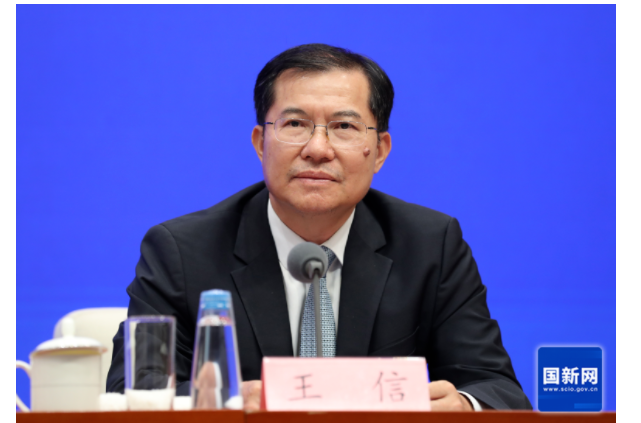
刚刚,央行研究局局长王信发声!
Jin Rong Shi Bao· 2025-09-11 12:08
Core Viewpoint - The People's Bank of China (PBOC) is actively supporting the comprehensive reform of factor market-oriented allocation, emphasizing the decisive role of the market in resource allocation while enhancing the government's role in promoting high-quality economic development [1][3]. Group 1: Financial Infrastructure and Standards - The PBOC is focused on improving foundational infrastructure such as standard setting, financial statistics, and information disclosure to facilitate the reasonable flow of factors. A new "Green Finance Support Project Directory (2025 Edition)" will be issued, which includes definitions for various green financial products and adds categories like green consumption and green trade [3]. - The PBOC is leading the development of 11 financial standards for the transformation of traditional high-carbon industries and is revising guidelines for sustainable information disclosure by financial institutions [3]. Group 2: Capital Support for the Real Economy - The PBOC has established various loan tools to support key sectors, including agricultural and small business loans, carbon reduction support tools, and loans for technological innovation. By the end of Q2 2025, over 1.38 trillion yuan in carbon reduction loans had been issued [4]. - Green loans reached approximately 42.4 trillion yuan, and green bond issuance exceeded 2.2 trillion yuan, placing these metrics among the highest globally. Inclusive small and micro loans, as well as technology loans, grew by over 12% year-on-year, while loans for the elderly care industry increased by 43% [4]. Group 3: Regional Financial Reforms - The PBOC is guiding regional financial reforms in ten pilot areas for factor market-oriented allocation. Cities like Beijing, Hangzhou, and Hefei are implementing financial reforms focused on technological innovation, while Chongqing and Guangzhou are advancing green finance initiatives [4]. Group 4: Risk Management and Future Directions - The PBOC emphasizes the importance of balancing growth and risk management, ensuring that systemic financial risks are avoided. Future efforts will focus on increasing effective financial service supply, promoting higher levels of financial openness, and leveraging digital technology to enhance financial development [5].