
轨道上的京津冀

Search documents
从“四站集中”到“八站分流”,北京迈入“八站两场”交通新阶段
Bei Jing Ri Bao Ke Hu Duan· 2025-12-27 00:36
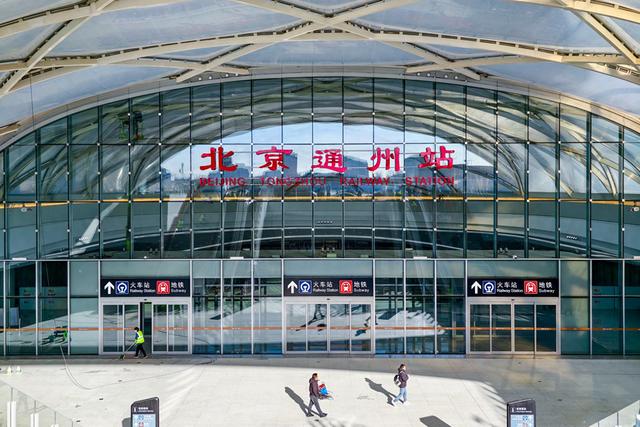
转自:北京日报客户端 2025年12月30日,坐落于北京城市副中心综合交通枢纽内的北京通州站将投入运营。届时,北京将成为 国内首个拥有由八个一类铁路客运站和两个大型国际机场共同构成综合交通枢纽集群的城市。首都"八 站两场"综合交通枢纽格局成型! 坐落于北 八站各司其职实现多点乘降 京城市副中心综合交通枢纽内的北京通州站,将于12月30日正式开通投运。北京日报记者 邓伟摄 北京为何需要八大火车站、两座机场?"八站两场"将对市民出行带来哪些改变?本报记者采访交通部 门、业内专家进行了解读。 为三环内四座老站减压 建轨道,就是建"轨道上的城市"。随着城市的发展,人们也越来越依赖轨道。 北京铁路枢纽处于全国铁路网核心位置,2024年北京区域内各铁路车站累计运送旅客3.36亿人次,日均 运送旅客91.8万人次! "2020年以前,市民铁路出行主要依靠北京站、北京西站、北京南站、北京北站四座铁路客站。四座车 站建设年代早,全部位于城市三环路甚至二环路以内,周边道路交通负荷大,尤其是早晚高峰时段与城 市通勤交通流叠加,道路交通压力日益加剧。"市交通委客运综合协调处处长李雪滨介绍。 随着北京市疏解非首都功能和《国家综合立体交 ...

北京迈入“八站两场”交通新阶段
Bei Jing Ri Bao Ke Hu Duan· 2025-12-26 21:14
Core Insights - Beijing will become the first city in China to have a comprehensive transportation hub cluster consisting of eight first-class railway stations and two major international airports by the end of 2025, enhancing its transportation infrastructure significantly [1][2] Group 1: Transportation Infrastructure Development - The new Beijing Tongzhou Station will be operational by December 30, 2025, contributing to the "Eight Stations and Two Airports" framework [1] - The eight railway stations include Beijing Station, Beijing West Station, Beijing South Station, Beijing North Station, Qinghe Station, Beijing Chaoyang Station, Beijing Fengtai Station, and the upcoming Beijing Tongzhou Station, which will connect to the national railway network [2] - The combined passenger throughput for Beijing Capital International Airport and Beijing Daxing International Airport is projected to be approximately 117 million passengers in 2024, with the former handling about 67.37 million and the latter about 49.44 million [3] Group 2: Operational Efficiency and Passenger Experience - The "Eight Stations" are strategically positioned to manage passenger flow effectively, reducing congestion in the city center and providing diverse travel options [4][5] - The introduction of high-speed rail services has significantly improved travel times, such as the journey from Beijing to Shenyang taking only 2 hours and 29 minutes [4] - The integration of metro services with the eight railway stations and two airports has enhanced passenger transfer efficiency, particularly during peak hours [5] Group 3: Regional Connectivity and Economic Impact - The "Eight Stations and Two Airports" framework supports the integration of Beijing into the national high-speed rail network, facilitating a one to 1.5-hour travel circle among major cities in the Beijing-Tianjin-Hebei region [6] - The development of intercity railways, such as the Beijing-Tianjin Intercity Railway, has reduced travel times to as little as 30 minutes, enhancing cross-regional commuting [7] - The infrastructure improvements are expected to significantly boost the economic integration of the Beijing-Tianjin-Hebei region, promoting efficient personnel movement and regional industrial collaboration [6][7]
北京通州站将开通投运 轨道上的京津冀再添新节点
Xin Lang Cai Jing· 2025-12-26 08:47
Core Viewpoint - The Beijing Tongzhou Station, located within the Beijing Urban Sub-center Comprehensive Transportation Hub, is set to officially open on December 30, marking a significant milestone in the development of Beijing's transportation infrastructure and the integration of the Beijing-Tianjin-Hebei region [1][2]. Group 1: Infrastructure Development - The Tongzhou Station is a key station identified in Beijing's overall urban planning and serves as an important node in the "Railway on the Beijing-Tianjin-Hebei" initiative [1]. - The sub-center hub adopts an innovative all-underground design, integrating railway stations and transit systems underground to free up valuable surface space for urban development [2]. - The hub is designed as a "growing" urban complex, with phased openings to continuously enhance functional layouts, including the integration of subway lines and bus services [3]. Group 2: Transportation Connectivity - Initially, the Tongzhou Station will operate 12 pairs of trains, connecting to Tangshan, Qinhuangdao, and Beichen, significantly reducing travel times between cities in the Beijing-Tianjin-Hebei region [4]. - The station will facilitate a multi-modal transportation system, including connections to subway line 6, optimized bus routes, and airport shuttles to both Beijing Capital International Airport and Daxing International Airport [5][6]. - The hub will also feature a comprehensive parking system, including designated areas for taxis, ride-hailing services, and non-motorized vehicles, enhancing accessibility for travelers [6]. Group 3: Commercial and Community Integration - The B1 level of the station will include convenience retail points to provide travelers with food and shopping options, with further commercial facilities to be developed as the hub expands [7]. - The design emphasizes a comfortable waiting environment for passengers, with plans for additional seating and smart waiting displays to improve the overall travel experience [6].
五年来北京开通19条(段)180公里地铁新线
Zhong Guo Xin Wen Wang· 2025-11-21 02:01
Core Points - Beijing has opened 19 new subway lines totaling 180 kilometers in the past five years, contributing to a total rail network of 1244 kilometers, the largest in the country [1] - The "Beijing-Tianjin-Hebei" rail network has accelerated, with the completion of major rail projects such as the Beijing-Harbin High-speed Railway and the Beijing-Xiong'an Intercity Railway [1] - A one to 1.5-hour transportation circle among major cities in the Beijing-Tianjin-Hebei region has been largely achieved, with a one-hour commuting circle around Beijing taking shape [1] Transportation Infrastructure - In the road network, new highways such as the Beijing-Xiong'an and Beijing-Wanrong have been fully opened, with plans for the completion of several expansion projects by the end of the year [1] - Over the past five years, Beijing has added 108 kilometers of highways, bringing the total to 1276 kilometers, with 76 connecting roads in the Beijing-Tianjin-Hebei region [1] - 39 inter-provincial bus routes have achieved regular operation, covering key commuting areas around Beijing [1] Urban Development - The city road network has increased by 140 kilometers over the past five years, reaching a total of 6296 kilometers [1] - The overall road network has grown by approximately 200 kilometers, exceeding 22,000 kilometers, providing strong support for urban construction and industrial development [1]
北京市第八座火车站年内具备开通运营条件
Xin Hua She· 2025-11-21 00:32
Core Points - Beijing's eighth railway passenger station, the Beijing Urban Sub-center Station, is set to be operational by the end of 2025, featuring connections to the city's subway system [1] - The station, located in Tongzhou District, will be the largest underground transportation hub in Asia, integrating various transport modes including intercity rail, urban subway, suburban rail, and ground public transport [1] - The operational launch of the station will enhance connectivity between the urban sub-center and Beijing's city center, as well as neighboring regions, supporting economic development and the coordinated development strategy of the Beijing-Tianjin-Hebei area [1] Transportation Development - During the 14th Five-Year Plan period, significant progress has been made in the "Railway on the Beijing-Tianjin-Hebei" initiative, with the completion of key rail lines such as the Beijing-Harbin High-speed Railway and the Beijing-Xiong'an Intercity Railway [2] - The establishment of a 1 to 1.5-hour transportation circle among major cities in the Beijing-Tianjin-Hebei region is nearing completion, with the initial formation of a one-hour commuting circle around Beijing [2]
北京轨道交通运营总里程全国第一
Bei Jing Shang Bao· 2025-11-20 16:30
Core Insights - Beijing has made significant progress in its transportation infrastructure during the "14th Five-Year Plan" period, with the opening of 19 new subway lines totaling 180 kilometers, contributing to a total rail network of 1,244 kilometers, the largest in the country [1][5][6] - The city aims to enhance its transportation system by focusing on integration, optimization, and efficiency, with a vision for a comprehensive transportation network that supports urban development and improves service quality [1][3][8] Transportation Network Development - The "1-hour commuting circle" around Beijing has taken shape, with major rail lines such as the Beijing-Harbin High-Speed Railway and the Beijing-Xiong'an Intercity Railway completed, facilitating rapid transit between key cities in the Beijing-Tianjin-Hebei region [3][4] - The city has established a robust hub network with eight major train stations and two airports, enhancing connectivity and passenger experience through optimized security checks and seamless transfers [3][4] Urban Traffic Management - The urban road network has been expanded, adding 140 kilometers of roads over five years, with a total of 6,296 kilometers now in place, supporting urban construction and industrial development [7] - The city has implemented a comprehensive traffic governance strategy, focusing on alleviating congestion and improving the travel environment in key areas, including schools, hospitals, and commercial centers [9][10] Technological Integration - Beijing is leveraging technology to enhance traffic management, including the establishment of a high-level autonomous driving demonstration zone and the implementation of smart traffic signal systems to improve traffic flow [10] - The city has introduced innovative services such as carbon reduction incentives for green travel, serving over 600,000 users daily and achieving significant carbon emission reductions [10]
北京副中心综合交通枢纽年底将具备开通运营条件
Zhong Guo Xin Wen Wang· 2025-11-20 11:47
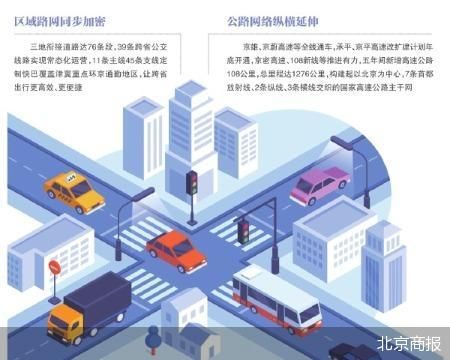
Core Points - Beijing's sub-center comprehensive transportation hub is set to be operational by the end of the year, completing the "eight stations and two airports" hub layout established over the past five years [1][3] - The city aims to enhance its transportation network with a focus on convenience, efficiency, sustainability, intelligence, and safety, achieving a vision of smooth travel for people and goods [3][4] Transportation Network Development - The construction of high-speed railways such as the Beijing-Harbin and Beijing-Xiong'an intercity lines has been completed, facilitating a 1 to 1.5-hour travel circle among major cities in the Beijing-Tianjin-Hebei region [3][4] - The highway network has expanded significantly, with 108 kilometers of new highways added over five years, bringing the total to 1,276 kilometers, creating a national highway backbone centered around Beijing [3][6] Urban Rail and Public Transport - Over the past five years, 19 new subway lines totaling 180 kilometers have been opened, contributing to a total rail network of 1,244 kilometers, the largest in the country [5][6] - The integration of bus and rail services has improved, with 90% of subway stations allowing transfers to buses within 50 meters, enhancing the overall public transport experience [5][6] Road Infrastructure Improvements - The city has added 140 kilometers of urban roads, increasing the total to 6,296 kilometers, which supports urban development and industrial growth [6] - The slow-moving traffic system has been enhanced, with the construction of 22 slow traffic corridors and improvements to existing pathways, promoting a more organized and efficient last-mile connectivity [6]
北京全市八大火车站将全部实现地铁接驳
Bei Jing Shang Bao· 2025-11-20 09:55
Core Points - The "14th Five-Year Plan" period aims to accelerate the realization of the "Railway on the Beijing-Tianjin-Hebei" initiative, with significant infrastructure developments including the completion of the Beijing-Harbin High-Speed Railway and the Beijing-Xiong'an Intercity Railway [1] - A major transportation network is being established, with a focus on creating a 1 to 1.5-hour travel circle between major cities in the Beijing-Tianjin-Hebei region and a one-hour commuting circle around Beijing [1] - The "Eight Stations and Two Airports" hub pattern is taking shape, enhancing the connectivity and accessibility of the dual airport network in Beijing [1] Transportation Infrastructure Developments - The completion of highways such as the Jingxiong and Jingwei Highways, along with the expansion plans for Jingping and Jingmi Highways, has added 108 kilometers of new highways over five years, bringing the total to 1,276 kilometers [1] - The regional road network is being strengthened with 76 connecting road segments and 39 inter-provincial bus lines operating regularly, covering key commuting areas in the Beijing-Tianjin-Hebei region [1] Urban Sub-center Transportation Enhancements - The urban sub-center is seeing improved transportation support, with enhancements to the capacity of Line 6 and the extension of suburban rail lines to strengthen connections with the central city [2] - New road constructions, such as the Guangqu Road East Extension and the Yunhe East Street, are forming a "Three Fast Two Main" road system between the sub-center and the central city [2] - The implementation of smart traffic control systems is being phased in to improve travel efficiency in the sub-center [2]
轨道上的京津冀,“十四五”跑出加速度
Bei Jing Ri Bao Ke Hu Duan· 2025-10-20 06:57
Core Viewpoint - The article highlights the significant advancements in the Beijing-Tianjin-Hebei (Jing-Jin-Ji) region's rail transportation network during the 14th Five-Year Plan period, emphasizing the transformation towards a world-class urban agglomeration with improved connectivity and efficiency [1][2][4]. Group 1: Infrastructure Development - The rail network in the Jing-Jin-Ji region has evolved from isolated points and lines to a comprehensive, interconnected system, fulfilling the goals set in the 14th Five-Year Plan [1][2]. - By the end of 2024, the total high-speed rail mileage in the Jing-Jin-Ji region is expected to increase from 1,284 kilometers in 2013 to 2,669 kilometers, achieving full coverage of all prefecture-level cities in the region [2]. - The completion of major high-speed rail projects, such as the Beijing-Harbin high-speed rail and the Beijing-Tangshan intercity railway, has significantly reduced travel times within the region [2][4]. Group 2: Economic Impact - The GDP of the Jing-Jin-Ji region is projected to reach 11.5 trillion yuan by 2024, which is 2.1 times that of 2013, indicating robust economic growth supported by the rail network [9]. - The region's economic structure is being optimized, with Beijing, Tianjin, and Hebei's GDP growth rates surpassing the national average, reflecting the positive impact of improved transportation [9]. Group 3: Social Changes - The enhanced rail connectivity is reshaping lifestyles, with more individuals opting for a cross-city living model, such as working in Beijing while residing in Hebei and enjoying leisure activities in Tianjin [6][7]. - The introduction of convenient travel services, such as the "Traffic Union" card and customized commuting buses, has facilitated smoother cross-city travel for residents [7][9]. Group 4: Future Outlook - The focus for the 15th Five-Year Plan will shift towards optimizing and perfecting the existing network, emphasizing the integration of various transportation modes [13][14]. - Future developments will include smart and low-carbon transportation solutions, with the aim of creating a more efficient and environmentally friendly rail system [14][15].
京津冀城际铁路投资公司搬进雄安办公
Bei Jing Wan Bao· 2025-10-11 06:43
Core Points - The relocation of the Beijing-Tianjin-Hebei Intercity Railway Investment Company to Xiong'an New Area aims to alleviate non-capital functions of Beijing and promote high-quality development in Xiong'an [1][2] - The company, established in March 2015 with a registered capital of 80 billion yuan, is responsible for planning, construction, operation, financing, and comprehensive development of intercity railway projects in the Beijing-Tianjin-Hebei region [1] - During the 14th Five-Year Plan period, the company is tasked with constructing 11 railway projects with a total length of approximately 1,220 kilometers and a total investment of about 295 billion yuan [1] Project Details - Completed projects include the Beijing-Tangshan Railway (Yanjiao to Tangshan section), Beijing-Tianjin Binhai New Area Railway (Baodi to Beichen section), Tianjin to Beijing Daxing International Airport Railway, and Beijing Huairou to Beijing Daxing International Airport Railway [1] - Ongoing projects include the Beijing Urban Sub-center section of the Beijing-Tangshan Intercity Railway, Shijiazhuang to Huanghua Port Intercity Railway, and the Tianjin to Chengde Railway, among others [1] Economic Impact - The relocation is expected to enhance resource aggregation and drive related industry development, effectively leveraging railway construction investment to stimulate regional economic growth [2] - The company plans to improve the layout of the high-speed railway network in the Beijing-Tianjin-Hebei region, promoting regional connectivity and aiming to create a "railway-based Beijing-Tianjin-Hebei" [2]