
金融对外开放

Search documents
“金杜沪航国际论坛:涉外法治营商国际论坛”在上海成功举办
Jing Ji Guan Cha Wang· 2025-10-17 11:40
Core Insights - The "Jindu Huhang International Forum: International Forum on Foreign-related Legal Business" was successfully held in Shanghai, focusing on enhancing foreign-related legal construction and supporting enterprises going abroad [1][4] - A new comprehensive strategic cooperation agreement was signed between the Changning District Government and Jindu Law Firm, aiming to create a market-oriented, legal, and international business environment [1][4] - The establishment of the Jindu China Enterprises Going Abroad Legal Research and Cooperation Exchange Center marks a significant step in building a legal business environment and serves as a demonstration platform for foreign-related legal construction in the Greater Hongqiao area [1][4] Event Highlights - Key figures from government, academia, and legal sectors attended the forum, including leaders from the Changning District and Jindu Law Firm, with nearly 300 guests participating [2][3] - The forum featured speeches from prominent leaders emphasizing collaboration in various fields such as aviation dispute resolution, intellectual property protection, and legal talent cultivation [3][4] - The forum included sub-forums focusing on topics like "enterprises going abroad," "artificial intelligence and cross-border intellectual property protection," and "financial innovation and openness," fostering constructive discussions and consensus [4][5] Strategic Implications - The successful hosting of the forum signifies a new starting point for Jindu Law Firm in aligning with national strategies and deepening its engagement in Changning [4][5] - Changning aims to further collaborate with law firms, enterprises, and think tanks to enhance the legal support for outbound enterprises and international intellectual property layout, injecting strong legal momentum into the "Greater Hongqiao" national strategy [5]
金融业三维度同频共振 激活高质量发展新引擎
Zheng Quan Ri Bao· 2025-10-14 15:44
Core Insights - The financial industry in China has undergone significant transformation during the "14th Five-Year Plan" period, focusing on internal reforms, enhanced services to the real economy, and accelerated international openness [1] Group 1: Internal Reforms - The financial system reform has deepened, with improved top-level design and modernization of governance capabilities [2] - The establishment of the Central Financial Committee and the Central Financial Work Committee in 2023 has strengthened centralized leadership over financial work [2] - The financial regulatory framework has transitioned from "one bank and two commissions" to "one bank, one bureau, and one commission," enhancing regulatory efficiency and coordination [2][3] Group 2: Service to the Real Economy - The financial sector has significantly improved its service quality to the real economy, providing an additional 170 trillion yuan in funding through various means [4] - The annual growth rate of loans to technology-based SMEs, inclusive finance for small businesses, and green loans has exceeded 20% during the "14th Five-Year Plan" period [4][5] - The People's Bank of China has implemented structural monetary policy tools to ensure effective funding allocation to key areas such as inclusive finance and green development [5] Group 3: International Openness - The financial sector has made steady progress in high-level bilateral openness, enhancing its influence and participation in international financial governance [6] - As of July 2023, foreign institutions and individuals held over 10 trillion yuan in domestic stocks, bonds, and deposits, with panda bond issuance exceeding 1 trillion yuan [6] - The internationalization of the renminbi has advanced, with bilateral currency swap agreements signed with 32 countries, making the renminbi a major currency in global trade financing [6][7]
砥砺奋进五载路 金融强国建设迈出坚实步伐
Jin Rong Shi Bao· 2025-10-13 02:07
Group 1: Overview of China's Financial Sector - As of June 2023, China's banking sector total assets reached nearly 470 trillion yuan, ranking first in the world; stock and bond market sizes rank second globally; foreign exchange reserves have been the largest for 20 consecutive years [1] - The financial system has made significant achievements during the "14th Five-Year Plan" period, with comprehensive reforms deepening and the financial governance system modernizing [1] - The financial sector has enhanced its international competitiveness and influence, with a complete and competitive financial institution, market, and product system [1] Group 2: Financial Support for the Real Economy - The financial system has focused on serving the real economy, with total assets of the banking and insurance sectors exceeding 500 trillion yuan, averaging a 9% annual growth over the past five years [2] - Financial support for key areas such as manufacturing, technological innovation, and green development has increased, with average annual growth rates for loans in these sectors at 27.2%, 21.7%, and 10.1% respectively [2] - The balance of loans to small and micro enterprises reached 36 trillion yuan, 2.3 times that of the end of the "13th Five-Year Plan" [2] Group 3: Capital Market Developments - The capital market has accelerated its service to technological innovation, with over 90% of newly listed companies being technology-related [3] - The market capitalization of the A-share technology sector exceeds 25% of the total market, significantly higher than that of banking, non-banking financial, and real estate sectors combined [3] Group 4: Financing Costs and Transparency - Market financing costs have continued to decline, with the weighted average interest rate for new corporate loans at approximately 3.1%, down about 40 basis points year-on-year [4] - The introduction of transparent loan cost disclosures has improved the financing environment for enterprises, reducing hidden fees [4] Group 5: Risk Management and Financial Stability - Financial regulatory reforms have effectively mitigated risks, with key indicators such as non-performing loans and capital adequacy remaining stable [7][8] - The number of financing platforms has decreased by over 60%, and the scale of financial debt has dropped by over 50% compared to early 2023 [9] - The financial system has maintained stability in the foreign exchange and bond markets, with low default rates and effective risk management measures in place [10] Group 6: International Financial Integration - The financial sector has made strides in international openness, with significant increases in foreign investment and participation in global financial governance [11][12] - The RMB's international status has improved, becoming the largest currency for China's external payments and the third-largest trade financing currency globally [13] - The establishment of financial infrastructure in Shanghai aims to enhance its role as a global center for RMB asset allocation and risk management [14]
四部门介绍“十四五”时期金融业发展成就 金融体制改革全面深化 顶层设计更加完善
Zheng Quan Ri Bao· 2025-09-22 16:28
Group 1 - The Chinese financial sector has achieved significant accomplishments during the "14th Five-Year Plan" period, with comprehensive reforms and improvements in the financial governance system [1][2] - The People's Bank of China aims to ensure ample liquidity and support economic recovery by utilizing various monetary policy tools, while maintaining the stability of the RMB exchange rate [1][2] - The National Financial Regulatory Administration emphasizes the importance of risk prevention and resolution, successfully reducing the number of high-risk institutions and assets [2] Group 2 - The China Securities Regulatory Commission has focused on enhancing market stability and investor confidence, leading to a steady growth in both the quantity and quality of the capital market [2] - The foreign exchange sector has effectively balanced development and security, maintaining foreign exchange reserves above $3 trillion and improving services to the real economy [3] - Looking ahead to the "15th Five-Year Plan," the foreign exchange management system will be further enhanced to support China's modernization efforts [3]
四部门详解“十四五”金融答卷
21世纪经济报道· 2025-09-22 15:42
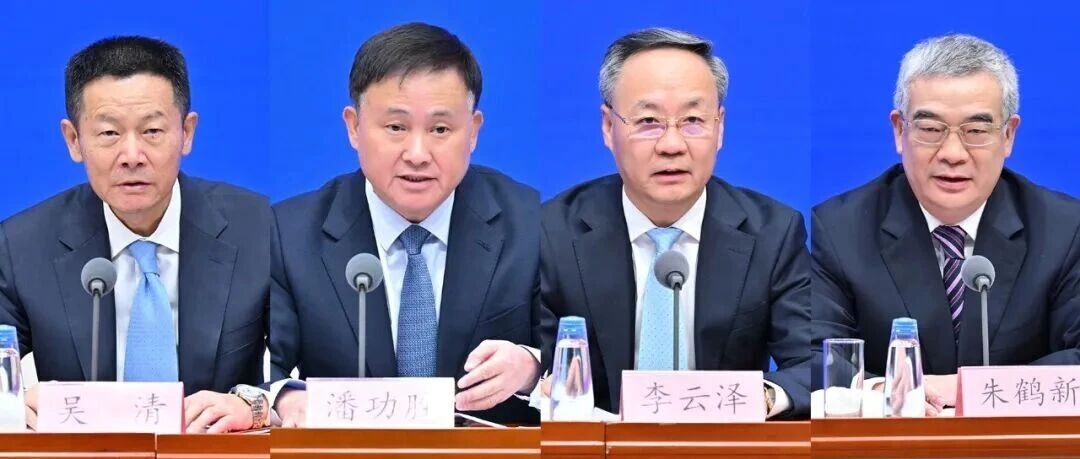
记者丨 唐婧 编辑丨曾芳 视频丨 许婷婷 王学权 9月22日,国务院新闻办举行"高质量完成'十四五'规划"系列主题新闻发布会,中国人民银行 行长潘功胜,金融监管总局局长李云泽,中国证监会主席吴清,中国人民银行副行长、国家外 汇局局长朱鹤新介绍"十四五"时期金融业发展成就,并答记者问。 潘功胜介绍,五年来,在党中央坚强领导下,我国金融事业取得新的重大成就。金融体制改革 全面深化,顶层设计更加完善,我国金融治理体系和治理能力现代化迈上新台阶;种类齐全、 竞争充分的金融机构、市场、产品体系更加健全,金融服务的质量、效率、普惠性大幅提升; 重点领域金融风险有序化解,守住了不发生系统性金融风险的底线;金融对外开放步伐加快, 我国金融业的国际竞争力和影响力显著增强。 截至今年6月末,中国银行业总资产近470万亿元,位居世界第一;股票、债券市场规模位居世 界第二;外汇储备规模连续20年位居世界第一。我国在绿色金融、普惠金融、数字金融等方面 走在世界前列,基本建成多渠道、广覆盖、安全高效的人民币跨境支付清算网络,移动支付处 于国际领先水平。"十四五"时期,科技型中小企业贷款、普惠小微、绿色贷款年均增速超过 20%。 潘功胜表 ...

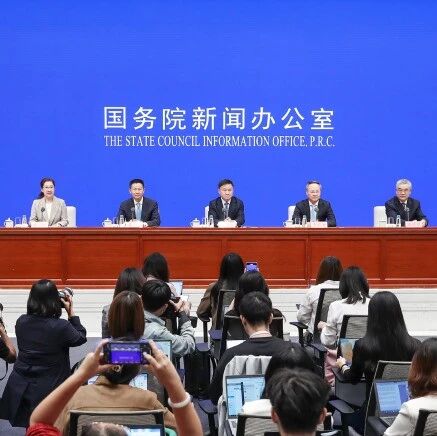
潘功胜、李云泽、吴清、朱鹤新同日发声
第一财经· 2025-09-22 13:16
Core Viewpoint - The article discusses the achievements of China's financial industry over the past five years, emphasizing the focus on long-term stability and development rather than short-term policy adjustments. The upcoming "Fifteen Five" plan is also hinted at, with expectations for continued financial reforms and support for economic growth [3][4][13]. Financial Development Achievements - The financial market has undergone significant changes, with the total assets of the banking and insurance sectors surpassing 500 trillion yuan, averaging a growth of 9% annually over the past five years [6][7]. - Financial support for the real economy has increased, with new funds injected into the economy reaching 170 trillion yuan, and specific sectors like technology and infrastructure receiving targeted loans [7][8]. - The insurance industry has paid out 9 trillion yuan in claims, a 61.7% increase compared to the previous five-year period [7]. Financial Risk Management - The financial regulatory framework has been reformed, with a focus on maintaining a high-pressure stance against illegal activities, resulting in significant penalties for financial misconduct [8]. - The number of high-risk small and medium-sized banks has decreased, and the cleanup of "zombie" private equity firms has been effective [8]. Financial Opening and International Cooperation - The financial sector has made strides in opening up, with significant reforms in capital markets and foreign exchange management, enhancing China's global financial integration [9][10]. - The removal of foreign ownership limits in the banking sector and the establishment of various cross-border investment mechanisms have expanded foreign participation in China's financial markets [11][12]. Future Financial Policy Outlook - The article outlines expectations for the upcoming "Fifteen Five" plan, with a focus on flexible and precise monetary policy to support economic recovery and stability [13][14]. - The emphasis will be on maintaining a balance between financial openness and risk prevention, with ongoing efforts to create a favorable environment for foreign exchange and investment [15].
潘功胜:重点领域风险有序化解,融资平台数量下降超过60%|"十四五"成绩单
Sou Hu Cai Jing· 2025-09-22 11:21
来源:中国经营报 针对外界期待的"是否会有新政策出台",潘功胜在发布会一开始就明确表示,本次发布会不涉及短期政 策调整。关于"十五五"及下一步的金融改革安排,将在中央统一部署后对外沟通。 金融体制改革全面深化 记者在会上了解到,"十四五"期间,人民银行有序化解重点领域金融风险,守住了不发生系统性金融风 险的底线。 在化解融资平台债务风险方面,截至今年6月末,与2023年年初相比,融资平台数量下降超过60%,金 融债务规模下降超过50%,地方政府融资平台风险水平总体大幅收敛。 潘功胜指出,五年来,在党中央坚强领导下,我国金融体制改革全面深化,顶层设计更加完善,金融治 理体系和治理能力现代化迈上新台阶;金融机构、市场和产品体系日趋完善,金融服务质量、效率和普 惠性显著提升;重点领域金融风险有序化解,守住了系统性风险底线;金融对外开放步伐加快,国际竞 争力和影响力显著增强。 截至今年6月末,我国银行业总资产近470万亿元,位居世界第一;股票、债券市场规模位居世界第二; 外汇储备规模连续20年保持世界第一。我国在绿色金融、普惠金融、数字金融等方面走在世界前列,人 民币跨境支付清算网络基本建成,移动支付处于国际领先水平 ...
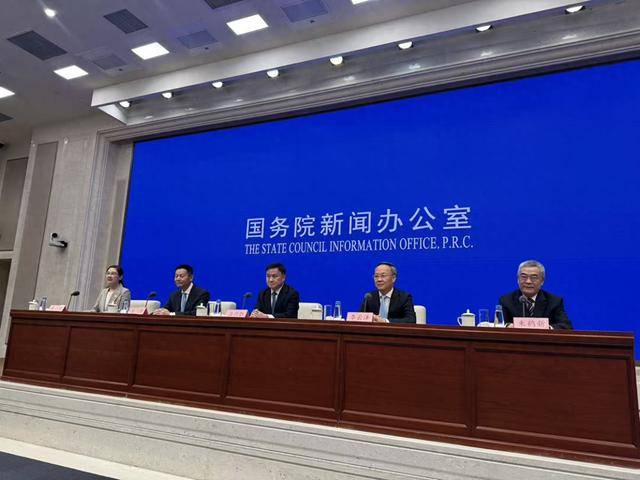
潘功胜:重点领域风险有序化解,融资平台数量下降超过60% "十四五"成绩单
Zhong Guo Jing Ying Bao· 2025-09-22 11:08
Core Insights - The press conference highlighted significant achievements in China's financial sector during the "14th Five-Year Plan" period, with a focus on financial stability and risk management [2][5][9] Financial Sector Achievements - As of June 2023, China's banking sector total assets reached nearly 470 trillion yuan, ranking first globally; stock and bond market sizes are second in the world; and foreign exchange reserves have maintained the top position for 20 consecutive years [5][9] - The number of financing platforms has decreased by over 60% and financial debt has dropped by more than 50% compared to the beginning of 2023, indicating a significant reduction in local government financing platform risks [5][8] Financial System Reforms - Financial system reforms have deepened, with a focus on modernizing the financial governance structure and enhancing the quality and efficiency of financial services [5][6] - The People's Bank of China (PBOC) has implemented a series of monetary policies to stabilize expectations and boost confidence, contributing to economic recovery [7] Risk Management and Stability - The PBOC has effectively managed financial risks, particularly in local government financing and real estate sectors, ensuring that systemic financial risks are contained [8][9] - The overall financial system remains stable, with healthy operation of financial institutions and a low default rate in the bond market [9] Future Outlook - The PBOC plans to further explore and expand its macro-prudential and financial stability functions to maintain systemic financial risk control [9]
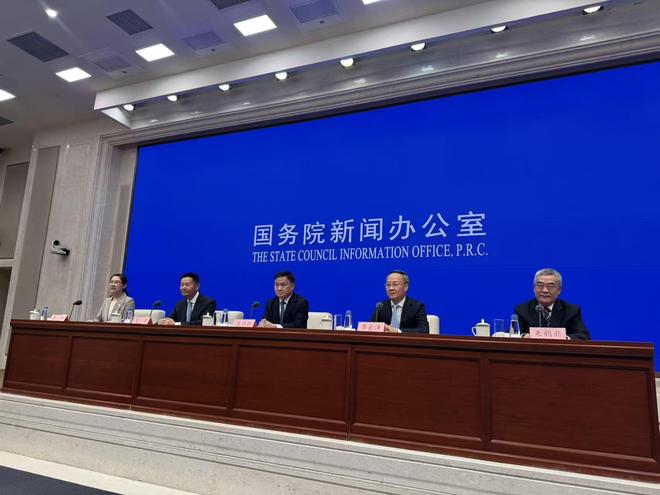
国新办举行高质量完成“十四五”规划系列主题新闻发布会 介绍“十四五”时期金融业发展成就
证监会发布· 2025-09-22 10:13
Core Viewpoint - The article highlights the significant achievements of China's financial sector during the "14th Five-Year Plan" period, emphasizing the deepening of financial reforms, enhancement of financial services to the real economy, and the ongoing efforts to mitigate financial risks while promoting high-quality development [6][10]. Financial System Reform - The financial system reform has been further deepened, with the establishment of the Central Financial Commission and the Central Financial Work Committee to strengthen the centralized leadership of the Party over financial work [6][7]. - The banking sector's total assets reached nearly 470 trillion yuan, ranking first in the world, while the stock and bond markets ranked second globally [6][7]. Financial Services to the Real Economy - Financial services to the real economy have significantly improved, with annual growth rates exceeding 20% for loans to technology-based SMEs, inclusive small and micro enterprises, and green loans during the "14th Five-Year Plan" [7][10]. - The banking and insurance sectors provided an additional 170 trillion yuan in funding to the real economy over the past five years [15]. Financial Industry Reform and Opening Up - The financial supply-side structural reform has been continuously promoted, with a focus on developing a multi-level financial market and optimizing the financial structure [9][10]. - The number of financial institutions has decreased from over 4,600 in 2019 to 4,295 by the end of 2024, indicating effective risk mitigation efforts [44]. Risk Prevention and Mitigation - Significant progress has been made in preventing and mitigating financial risks, with a focus on orderly handling of high-risk institutions and reducing the scale of high-risk assets [9][44]. - The overall health of the financial system has been maintained, with key regulatory indicators such as non-performing loans and capital adequacy remaining stable [15][16]. Capital Market Development - The capital market has seen substantial growth, with the total market value of A-shares surpassing 100 trillion yuan for the first time [21][22]. - The direct financing ratio has increased to 31.6%, reflecting a steady rise in the importance of direct financing in the economy [22]. Foreign Exchange Management - The foreign exchange market has operated steadily, with foreign exchange reserves remaining above 3 trillion USD, providing a strong stabilizing effect on the economy [29][30]. - The cross-border capital flow has remained balanced, with the international balance of payments showing resilience despite external pressures [29][30]. Future Outlook - The People's Bank of China aims to continue enhancing the financial system and supporting high-quality economic development in the "15th Five-Year Plan" period [10][40]. - The focus will be on building a more open, secure, and efficient foreign exchange management system to contribute to the modernization of China's economy [30][31].
“十四五”时期金融业发展成就—— 我国金融治理体系和治理能力现代化迈上新台阶
Ren Min Wang· 2025-09-22 09:18
Core Viewpoint - During the "14th Five-Year Plan" period, China's financial sector has achieved significant milestones, including becoming the world's largest banking asset holder and maintaining the largest foreign exchange reserves for 20 consecutive years [1][2]. Financial System Reform - The Chinese government has implemented a series of transformative reforms in the financial leadership and regulatory systems, establishing the Central Financial Committee and the Central Financial Work Committee to enhance centralized leadership [2]. - A modern financial system is being constructed to promote high-quality development in the financial sector [2]. Financial Services to the Real Economy - The People's Bank of China has adopted a supportive monetary policy stance, leading to the formation of an effective modern monetary policy framework that aids in achieving the main goals of economic and social development during the "14th Five-Year Plan" [2]. - Financial support for technology-driven small and medium-sized enterprises, inclusive microfinance, and green loans has seen an annual growth rate exceeding 20% [2]. Financial Industry Reform and Opening Up - Continuous promotion of supply-side structural reforms in finance, deepening institutional reforms, and developing multi-tiered financial markets are key focuses [2]. - There is a steady push for high-level bilateral financial openness, enhancing the level of institutional openness and increasing participation in international financial governance [2]. Risk Prevention and Mitigation - The People's Bank of China has effectively addressed several prominent risk points in the financial sector, safeguarding the interests of depositors and small investors [3]. - The overall financial system remains stable, with healthy financial institutions and smooth market operations [3]. Lessons Learned - The achievements of the past five years in China's financial sector provide valuable lessons that should be consistently applied [3]. - Emphasis on serving the real economy, preventing and mitigating financial risks, and adhering to market-oriented and legal frameworks are essential for future financial governance [3].