
AI智能化

Search documents
北汽蓝谷:向控股子公司提供不超60亿元借款用于募投项目
2 1 Shi Ji Jing Ji Bao Dao· 2025-12-12 03:08
Core Viewpoint - Beiqi Blue Valley (600733.SH) plans to raise funds through a private placement of shares to provide a loan of up to 600 million yuan to its subsidiary, Beiqi New Energy, for the development of new energy vehicle models and AI intelligent platform projects [1] Group 1: Fundraising and Loan Details - The company intends to use the raised funds specifically for investment projects, ensuring that the loan does not affect the intended use of the raised funds [1] - The loan will be provided to Beiqi New Energy, in which the company holds a total direct and indirect stake of 71.70% [1] - The loan's interest rate will be based on the current bank loan rates applicable to Beiqi New Energy [1] Group 2: Project Implementation - The loan will be available until the completion of the project implementation [1] - The funds will be deposited into a dedicated account for the purpose of the investment projects [1]

英方软件:翻越数据韧性“三座山”
Shang Hai Zheng Quan Bao· 2025-12-12 00:44
Core Viewpoint - The article highlights the increasing importance of disaster recovery solutions in the face of frequent data crises, showcasing the significant value of Yingfang Software's disaster recovery products, especially after a recent technical failure at a major bank that led to a surge in the company's stock price by over 14% [3]. Group 1: Company Overview - Yingfang Software is the first A-share listed company in China to provide data replication and disaster recovery-related software and hardware, serving over 6,000 institutional clients globally [3]. - The company was founded in 2011, during the early days of mobile internet, with a vision to create domestic disaster recovery software, believing that data management would become a necessity for businesses in the internet era [4][5]. - The company aims to maintain a research and development (R&D) expense ratio of over 50% of its revenue and plans to increase the proportion of overseas business revenue to 20% or more in the future [3][4]. Group 2: Product and Technology - Yingfang Software's disaster recovery products support various applications, including securities trading systems, hospital LIS systems, and manufacturing MES systems, achieving microsecond-level recovery for any point in time [5]. - The company's disaster recovery management system is designed to create real-time backups and ensure quick business switching during failures, likened to a "backup granary" for businesses [5]. - The company has developed core technologies for file-level, block-level, and semantic-level replication, achieving byte-level consistency and second-level switching capabilities [6]. Group 3: Market Position and Strategy - The company has successfully navigated challenges in R&D, market expansion, and building trust, particularly in critical sectors like banking and telecommunications, where software must withstand rigorous pressure testing [6][7]. - Yingfang Software is transitioning from a disaster recovery product company to a data resilience platform enterprise, driven by advancements in AI and international market expansion [8][9]. - The company plans to establish three core regional centers in Shanghai, Hong Kong, and Singapore to enhance its global competitiveness and brand influence [9]. Group 4: Future Vision - The company's vision is to become a global leader in data resilience platforms by the end of the 14th Five-Year Plan, focusing on increasing market share and overseas revenue [10].


北汽蓝谷:拟用6亿元募集资金向子公司借款实施项目
Xin Lang Cai Jing· 2025-12-11 08:30
Core Viewpoint - The company plans to raise funds through a specific stock issuance to provide a loan of up to 600 million yuan to its subsidiary, BAIC New Energy, for investment in new energy vehicles and AI intelligent platforms [1] Group 1: Financial Details - The loan to BAIC New Energy will be used for projects related to new energy vehicles and AI platforms, with a loan term until project completion and interest rates based on current bank loan rates [1] - For the period of January to September 2025, the company reported revenue of 1,389,040.02 million yuan and a net loss of 474,781.74 million yuan [1] Group 2: Corporate Structure - BAIC New Energy is directly held by the company with a 71.69% stake, while a subsidiary holds a 0.01% stake [1] - The proposed loan is subject to approval by the shareholders' meeting [1]
英伟达20亿美元入股EDA龙头,或重塑从芯片到系统整个设计流程
Xuan Gu Bao· 2025-12-02 00:33
Group 1 - Nvidia has announced a strategic partnership with Synopsys, investing $2 billion to integrate AI computing technology into industrial design and engineering [1] - EDA tools are essential in the integrated circuit industry, serving as a strategic foundation for the entire supply chain [1] - The EDA industry is experiencing a shift towards AI, cloud integration, and system integration, driven by rising design costs in advanced processes [1] Group 2 - The EDA sector is expected to see a new wave of mergers and acquisitions in 2024, with major players like Synopsys, Siemens EDA, and Cadence enhancing their ecosystems through acquisitions [1] - Despite being dominated by three international giants, local EDA suppliers are gaining market share in China and excelling in specific niches [1] - Domestic EDA companies are rapidly improving their competitiveness through a combination of self-research and acquisitions, aiming for full localization of EDA tools [1] Group 3 - Notable domestic EDA leaders include Huada Jiutian, Gaon Electronics, Guangli Micro, Canxin Co., and Anlu Technology [1]


公司问答丨倍轻松:此前已联合阿里云、百度等企业 落地过See5k系列、数字人项目等智能化成果
Ge Long Hui A P P· 2025-12-01 08:56
Core Viewpoint - The company emphasizes AI intelligence as a core direction for product development and has collaborated with major firms like Alibaba Cloud and Baidu to achieve intelligent outcomes [1] Group 1 - The company has integrated AI technology into its product development strategy [1] - Previous collaborations with Alibaba Cloud and Baidu have resulted in projects such as the See5k series and digital human initiatives [1]


以变革驱动高质量发展 广汽集团多品牌协同筑就新优势
Bei Jing Ri Bao Ke Hu Duan· 2025-11-26 03:45
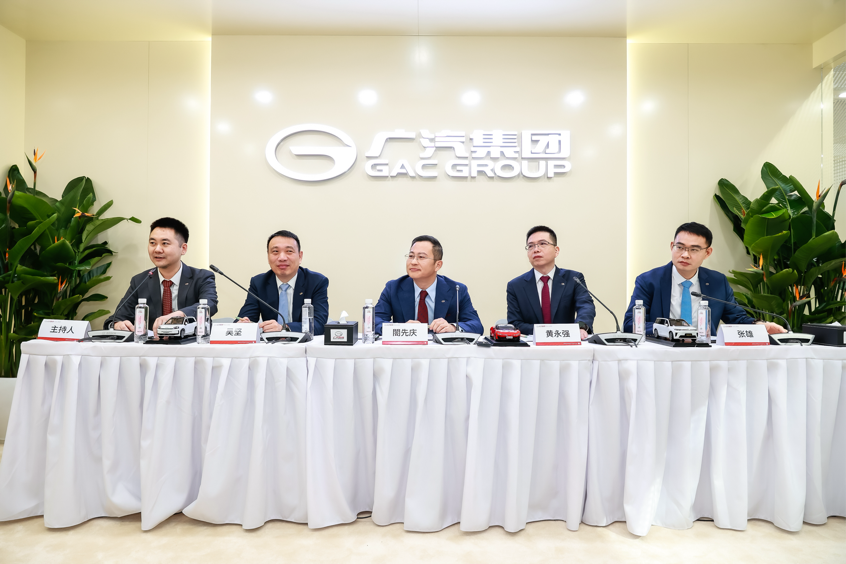
广汽集团产品本部本部长张雄表示,面对市场同质化竞争,广汽通过三大举措构建差异化优势:一是变革产品开发体 系,导入IPD聚焦用户痛点,提前预判未来需求;二是强化各品牌产品特色,要形成差异化,埃安主打高性价比国民 2025年11月21日,广汽集团总经理閤先庆、广汽集团副总经理黄永强、广汽集团执委会委员吴坚、广汽集团产品本部本 部长张雄出席了媒体群访活动,围绕企业转型、品牌合作、技术创新、产品规划及营销变革等热点问题与媒体深度交 流。 广汽集团总经理閤先庆表示,"新广汽"发展核心是实现以"市场+技术"双轮驱动向科技型企业转型,关键在于"四大引 擎"协同发力。新技术是基础支撑,在产品开发上广汽的技术有非常丰厚的底子,同时聚焦新能源与AI智能化两大方 向,持续迭代整车平台集成能力;新产品是给客户价值兑现,需从功能开发转向满足用户情绪价值与场景化需求,打造 兼具品质与体验的竞争力产品;新服务聚焦新能源用户的补能体验,推进"可充可换"补能体系建设,全国布建超21000 根自营充电桩,与宁德时代深化换电合作,同时通过OTA持续升级软件服务,今年已完成45次OTA,优化超300项功 能;新生态则依托与华为、宁德时代、京东等头部 ...

汽车周报:反弹科技先行,重视T链真落地企业-20251125
Shenwan Hongyuan Securities· 2025-11-25 04:12
Investment Rating - The report maintains a positive outlook on the automotive industry, highlighting potential investment opportunities in technology-driven companies and the robotics supply chain [5][6]. Core Insights - The automotive industry is experiencing a rebound, particularly in the robotics sector, with companies like Tesla and Xpeng leading the way. The report suggests focusing on technology leaders and related robotics companies [5][6]. - The report emphasizes the importance of the upcoming 2026 timeline for the realization of technological advancements in the automotive sector, particularly in electric vehicles and AI integration [6][7]. - The report notes a significant decline in average daily retail sales of passenger vehicles, down 9% year-on-year, indicating a challenging market environment [5][51]. - The Guangzhou Auto Show showcased a shift in competition from individual models to comprehensive technology ecosystems, reflecting the industry's evolution towards system-level competition [10][24]. Industry Updates - The report indicates that the average daily retail sales of passenger vehicles in the second week of November were 67,000 units, a decrease of 9% compared to the same period last year [5][51]. - The automotive industry index fell by 4.89% this week, underperforming compared to the Shanghai Composite Index, which declined by 3.77% [11][14]. - The report highlights that 20 stocks in the automotive sector rose while 251 fell, with the largest gainers being Tianpu Co., Luochang Technology, and Zhejiang Rongtai [17][19]. Market Conditions - The total transaction value in the automotive sector for the week was 421.1 billion yuan, reflecting an 18.56% decrease from the previous week [5]. - The report notes a decrease in both traditional and new energy raw material price indices, indicating potential cost pressures for manufacturers [5]. - The report identifies key events, including the Guangzhou Auto Show, which highlighted the acceleration of brand clearing and systemic competition in the automotive market [8][9]. Investment Recommendations - The report recommends focusing on domestic leading manufacturers such as NIO, Xiaomi, and Xpeng, as well as component companies with strong performance and growth potential [5][6]. - It suggests that companies with strong performance growth and capabilities in robotics or overseas expansion, such as Xingyu Co., Fuyao Glass, and Newquay Co., should be closely monitored [5][6]. - The report also emphasizes the importance of state-owned enterprise reforms and their potential impact on companies like SAIC and Dongfeng [5].




孩子王:与火山引擎在云服务与算力、全栈AI大模型能力及BYKIDs AI伴身智能硬件孵化器等方面合作
Di Yi Cai Jing· 2025-11-24 04:03
Group 1 - The company has entered into a comprehensive partnership with Beijing Volcano Engine Technology Co., Ltd. focusing on cloud services, computing power, full-stack AI model capabilities, and the BYKIDs AI smart hardware incubator [1] - This collaboration aims to assist the company in upgrading its AI capabilities and building an AI + parent-child family industry ecosystem [1] - The company's AI business is still in its early development stage and currently represents a small proportion of overall business, thus not significantly impacting the company's performance [1]
齐心集团(002301) - 2025年11月20日投资者关系活动记录表
2025-11-21 07:40
Group 1: Company Overview and Strategy - The company focuses on digital transformation and customer service, enhancing core business capabilities in MRO industrial products and employee benefits, while expanding into high-value marketing materials [2][10] - Currently, the company serves over 60 out of 100 central enterprises, emphasizing its commitment to high-quality clients [2][13] - The digital operation platform integrates automation and AI to improve service efficiency and customer experience [2][11] Group 2: Financial Performance - In the first three quarters of 2025, the company achieved a revenue of CNY 77.29 billion, with a net profit of CNY 1.40 billion attributable to shareholders [2][13] - The company has implemented cash dividends totaling CNY 10,924.08 million for 2023 and 2024, with an additional CNY 4,981.96 million in the first half of 2025 [2][8] Group 3: AI and ESG Initiatives - Since 2021, the company has been advancing AI applications, launching the Qixin Zhipan AI model in early 2025 to enhance procurement efficiency across various digital processes [2][5] - The company prioritizes environmental protection and governance, continuously optimizing its ESG efforts to promote sustainable development [2][6] Group 4: MRO Business Development - The MRO business operates digitally across multiple verticals, including energy, rail transportation, and petrochemicals, providing tailored procurement solutions [2][7] - The company is actively involved in the procurement projects of major clients like Southern Power Grid and COFCO Group, ensuring timely supply based on contract requirements [2][12] Group 5: Cultural and Creative Collaborations - The company has partnered with various domestic IPs to promote "Guochao" cultural products, appealing to younger consumers [2][9]

申万宏源:2026年汽车行业换道拥抱科技浪潮 电动化与AI智能化双重变革
智通财经网· 2025-11-19 03:21
Group 1: Overall Industry Outlook - The automotive industry is entering a new growth phase driven by mid-to-high-end vehicle replacements and overseas expansion, with limited impact from policy changes expected next year [1] - The demand for vehicles is anticipated to recover significantly, particularly in the mid-to-high-end segments, due to changes in consumer habits, capabilities, and product competitiveness compared to eight years ago [1] - The global sales of Chinese smart electric vehicles are expected to approach 10 million units in five years, indicating a strong international market potential [1] Group 2: Automotive Components - Automotive components represent a typical example of China's "high-end manufacturing," characterized by scale effects, cost advantages, and technological superiority [2] - New applications such as robotics and low-altitude economy are becoming essential areas for component manufacturers, with a significant focus on companies like Tesla and Zhiyuan [2] - The globalization strategy is seen as a long-term growth path for leading automotive component companies, particularly with an emphasis on European markets by 2026 [2] Group 3: AI Integration - The automotive industry is undergoing dual transformations of electrification and AI integration, with AI expected to play a crucial role in the physical world [3] - AICar is projected to become a super intelligent entity by integrating four major intelligent systems: driving, cabin, chassis, and power [3] - The future will likely see technology spillover from smart vehicles to robotics, low-altitude economy, and deep-sea technology [3]
