
AI to C

Search documents
夸克眼镜交卷:到底谁是阿里AI to C“一哥”?
Bei Jing Ri Bao Ke Hu Duan· 2025-11-27 17:10
Core Viewpoint - Quark AI glasses were launched on November 27, featuring two series with six models, marking a significant step in AI consumer technology [1][3] Product Launch and Features - The Quark AI glasses S1 series includes three models with prices starting at 3,799 yuan, while the G1 series focuses on fashion and lightweight design, starting at 1,899 yuan [3] - S1 is equipped with dual flagship chips, five microphone arrays, and bone conduction technology, enabling 0.6 seconds rapid capture and 3K video recording, with 4K output after processing [3] - G1 weighs around 40 grams and shares similar hardware specifications with S1, except for the display feature [3] - The design incorporates ultra-thin frames and legs, making it 25% thinner than mainstream products, with a replaceable battery feature [3] Market Context and Competition - The AI glasses market is viewed as a challenging space, with previous attempts by companies like Google and Meta failing to gain traction [5][6] - Despite skepticism, the global smart glasses market is projected to see significant growth, with an expected shipment of 406.5 million units by mid-2025, a 64.2% increase year-on-year [7] - Chinese manufacturers are gaining ground in the global market, with predictions of over 491.5 million units shipped by 2026, marking a new phase of growth [7] Strategic Positioning - The integration of the Qianwen AI assistant with Alibaba's ecosystem is emphasized as a key advantage, enhancing user experience across various applications [9] - Industry experts express mixed feelings about Alibaba's entry into the smart glasses market, with some viewing it as a potential risk while others see it as a necessary exploration [6][10]


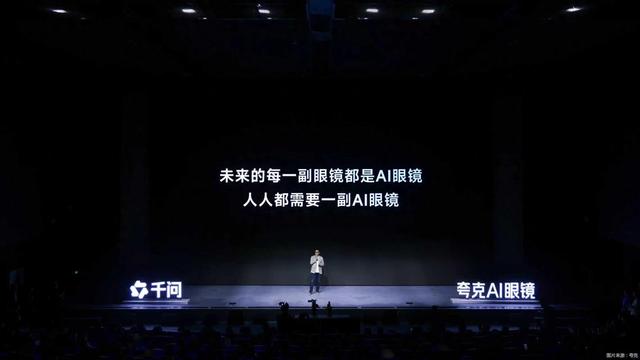
夸克眼镜交卷,到底谁是阿里AI to C“一哥”?
Bei Jing Shang Bao· 2025-11-27 14:32
Core Insights - Quark AI glasses were launched on November 27, featuring two series with six models, highlighting the integration of the Qianwen app, which has surpassed 10 million downloads in its first week of public testing [1][2][3] - The event emphasized the potential of AI glasses to revolutionize human-computer interaction, positioning them as essential devices comparable to smartphones [6][10] Product Details - The Quark AI glasses S1 series includes three models with prices starting at 3,799 yuan, while the G1 series focuses on fashion and lightweight design, starting at 1,899 yuan [2][3] - The S1 model features dual flagship chips, five microphone arrays, and capabilities for 3K video recording, while the G1 model weighs around 40 grams and shares similar hardware specifications without a display [4][5] Market Context - The global smart glasses market is projected to see significant growth, with an expected shipment of 406.5 million units by mid-2025, marking a 64.2% year-on-year increase [8][9] - Chinese manufacturers are gaining traction in the global market, with predictions indicating that by 2026, shipments will exceed 491.5 million units, entering a new phase of scaled growth [8][9] Competitive Landscape - The entry of major players like Alibaba into the smart glasses market has elicited mixed reactions from industry insiders, with some expressing skepticism about the viability of smart glasses as a product category [7][11] - Despite past failures of similar products from companies like Google and Meta, the industry remains optimistic about the future of AI glasses, with expectations that every pair of glasses will eventually incorporate AI technology [9][10]

阿里,解构AI技术霸权
2 1 Shi Ji Jing Ji Bao Dao· 2025-11-27 11:00
Core Insights - Alibaba's CEO, Wu Yongming, emphasizes the necessity for an AI-native consumer-facing super entry point, leading to the launch of the "Qianwen" app [1][2] - The app achieved over 10 million downloads within a week of public testing, surpassing the growth rates of competitors like ChatGPT and DeepSeek, marking it as the fastest-growing AI application to date [3][5] - Despite facing short-term challenges such as profit pressure and technology integration, Alibaba's strategic focus on AI indicates a commitment to not miss out on the AI ecosystem reshaping [3][18] Market Dynamics - The AI market is becoming increasingly competitive, with major players like ByteDance, Tencent, and Baidu already establishing a strong presence in the consumer AI sector [6][8] - According to QuestMobile, the current market is dominated by three major players: ByteDance's Doubao with 172 million monthly active users, DeepSeek with 145 million, and Tencent's Yuanbao with 32.86 million [6] Strategic Positioning - Wu Yongming's AGI three-stage theory underpins Alibaba's push into the consumer AI market, identifying the current phase as "assisting humans" [7][8] - The focus is shifting from entertainment-based AI to productivity-oriented AI, which is seen as the true growth area for consumer applications [8] Future Vision - The "Qianwen" app aims to integrate various life scenarios such as maps, food delivery, ticket booking, and shopping, positioning itself as a future AI life entry point [11][18] - The competition for consumer entry points is viewed as a battle for future traffic distribution rights, with successful AI applications expected to directly understand user needs and deliver services [11][12] Infrastructure and Ecosystem - Alibaba's comprehensive AI strategy includes significant investments in AI and cloud infrastructure, with a reported capital expenditure of 120 billion yuan over the past four quarters [3][15][19] - The company has open-sourced over 300 AI models, achieving over 600 million downloads, which positions it as a leading player in the global open-source AI landscape [14][15] Financial Implications - Alibaba's aggressive investment in AI has led to a significant decline in profits, with a reported 85% year-on-year drop in operating profit for Q2 of fiscal year 2026 [18][19] - The CFO noted that while core business revenues are strong, the focus remains on long-term growth through AI investments, despite short-term profitability fluctuations [19]
阿里下场硬刚字节,争夺AI超级入口
3 6 Ke· 2025-11-27 10:19
Core Viewpoint - Alibaba is making a significant push into the AI consumer market with the launch of its revamped "Qianwen" app, aiming to establish itself as a leading AI assistant for everyday users, while also competing against ByteDance's "Doubao" [1][5][32] Group 1: AI Strategy and Developments - Alibaba's CEO emphasized the company's dual focus on AI for businesses (AI to B) and consumers (AI to C), with a particular emphasis on creating "AI native super applications" for the consumer market [1][3] - The "Qianwen" app has been positioned as a Chinese version of ChatGPT, featuring the powerful Qwen3 model, which is expected to enhance user engagement and functionality [6][27] - The app achieved over 10 million downloads within a week of its launch, surpassing records set by other AI applications [5][6] Group 2: Competitive Landscape - ByteDance's "Doubao" has a significant lead in the AI application market, with 172 million monthly active users projected by September 2025, leveraging its integration with the popular Douyin platform [7][10] - Doubao benefits from a strong content ecosystem and user engagement, making it a formidable competitor for Alibaba's Qianwen [8][9] - The competition is intensified by the rapid growth of Douyin's e-commerce capabilities, which poses a direct challenge to Alibaba's traditional business model [14][29] Group 3: Challenges and Market Dynamics - Alibaba faces a "traffic anxiety" issue, as it struggles to create a new traffic entry point in an increasingly competitive landscape dominated by Douyin and WeChat [11][13] - The company has previously attempted to establish super entry points but has faced challenges, such as the failure of its social initiatives [12][14] - The current market dynamics indicate that Alibaba must innovate to capture consumer attention and convert it into sales, particularly through the Qianwen app [20][23] Group 4: Financial Commitments and Investments - Alibaba has committed to investing 380 billion yuan over the next three years to build its AI and cloud infrastructure, indicating a strong long-term strategy [27] - Despite significant investments, ByteDance's capital expenditures are projected to exceed Alibaba's, highlighting the competitive pressure in the AI sector [28][29] - The financial landscape suggests that Alibaba's cash reserves are declining, which may impact its ability to sustain aggressive competition [28][29]
阿里升维 AI 和消费之战
Sou Hu Cai Jing· 2025-11-26 13:34
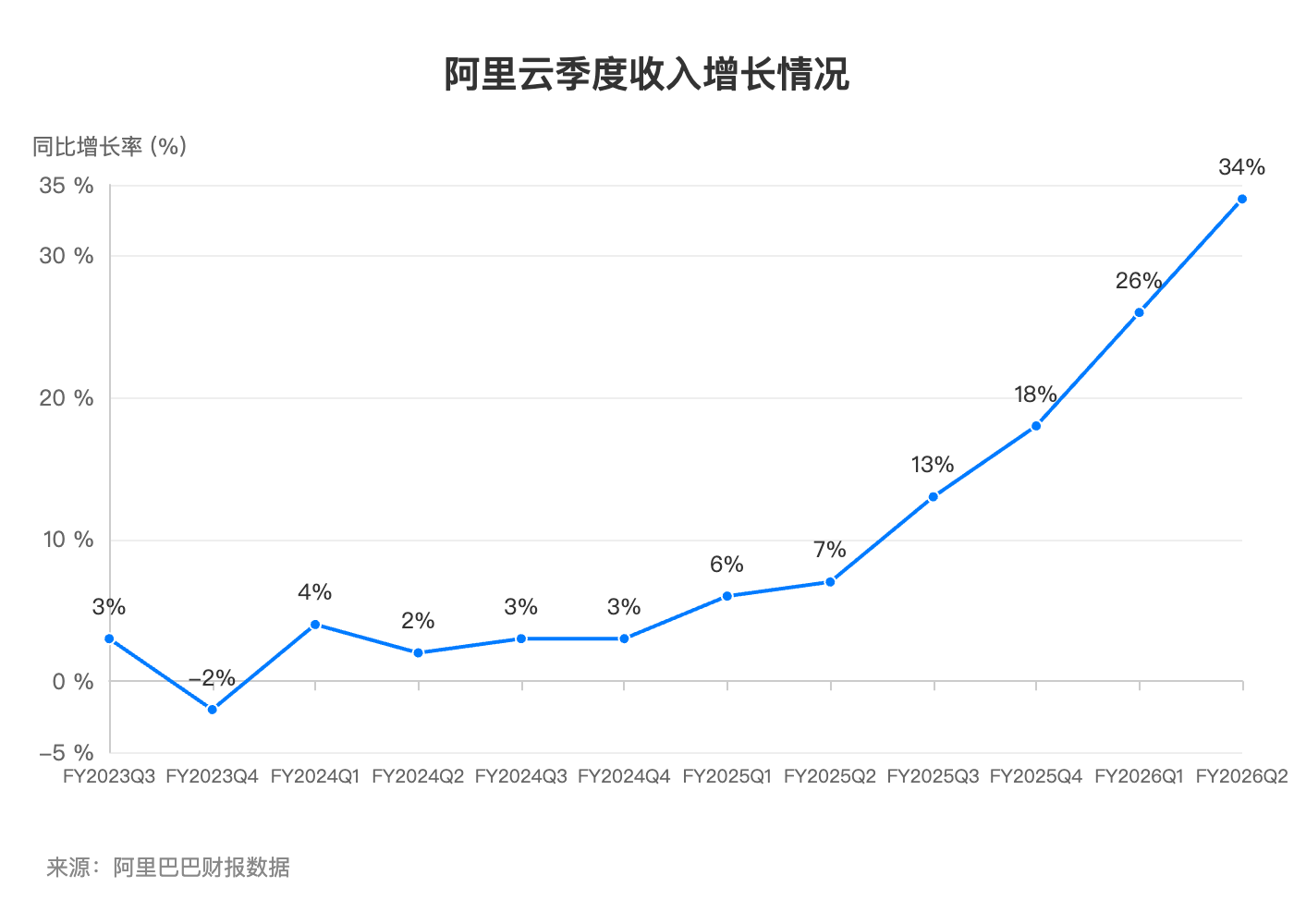
Core Insights - Alibaba Group reported strong performance in its Q2 FY2026 earnings, with core e-commerce showing steady growth and a 10% year-on-year increase in CMR [3] - The company's instant retail business, UE, significantly improved, with losses halved compared to July and August, and average order value rising by over double digits month-on-month [3] - The AI and cloud segment was a standout performer, with Alibaba Cloud's overall revenue growing by 34% year-on-year, and AI-related product revenue achieving triple-digit year-on-year growth for nine consecutive quarters [3][4] AI Strategy and Developments - Alibaba's AI strategy is advancing with the public testing of the Qwen app, which has seen over 10 million downloads in its first week, marking it as the fastest-growing AI application [4][12] - The company is focusing on both AI to B and AI to C markets, aiming to be a leading full-stack AI service provider while also developing consumer-facing AI applications [4][6] - Significant capital expenditure of 31.5 billion yuan in the quarter and approximately 120 billion yuan over the past four quarters underscores Alibaba's commitment to AI and cloud infrastructure [7] Competitive Positioning - Alibaba Cloud has become a key player in the hybrid cloud market, with growth exceeding 20%, and it maintains a leading position in the AI cloud market, surpassing the combined market share of its closest competitors [7][14] - The company has established a comprehensive technology ecosystem, from foundational computing power to AI frameworks and application services, positioning itself as a full-stack AI enterprise [9][14] - The Qwen model family has become the most popular in the global AI open-source community, with over 300 models released and significant download numbers [13][14] Future Outlook - Alibaba's dual focus on AI to B and AI to C is expected to drive synergy across its core business segments, enhancing user value and creating new revenue streams [28][29] - The strategic vision includes transforming Alibaba into an AI-driven ecosystem, potentially leading to significant revenue growth and value re-evaluation in the long term [29]

AI日报丨英伟达反驳TPU担忧,称其GPU仍“领先一代”,新AI模型可精准锁定人体致病突变
美股研究社· 2025-11-26 11:54
Group 1 - Alibaba is focusing on both AI to B and AI to C strategies, aiming to make Alibaba Cloud a leading full-stack AI service provider and develop AI applications for end-users [5] - Nvidia claims its GPU technology is a generation ahead of Google's AI chips, emphasizing its flexibility and capability to run all AI models across various computing scenarios [6][9] - A new AI model named popEVE has been developed by researchers from Harvard Medical School and the Barcelona Genomics Center, which can accurately identify disease-causing mutations in human proteins, potentially transforming genetic disease diagnostics [7] Group 2 - Apple is projected to surpass Samsung to become the world's largest smartphone manufacturer again, driven by strong sales of the new iPhone series and a significant upgrade cycle among consumers [9] - Meta is in negotiations with Google for a multi-billion dollar AI chip deal, which could significantly reduce its data center costs and allow for more investment in product innovation and user growth [10]


阿里财报:投入AI和即时零售,构建长期战略价值
Zhong Guo Jing Ying Bao· 2025-11-26 09:48
Core Insights - Alibaba reported a revenue of 247.795 billion yuan for Q2 FY2026, with a year-on-year growth of 15% after excluding the impact of divested businesses [1] - The company's core e-commerce segment (CMR) grew by 10% year-on-year, while its instant retail business (UE) showed significant improvement, with losses halved compared to July and August [1][2] - Alibaba Cloud's revenue reached 39.824 billion yuan, marking a 34% increase year-on-year, driven by strong demand for AI [1][2] - Morgan Stanley maintains an "Overweight" rating on Alibaba, with a target price of $200, indicating a 27% upside potential from current levels [1] AI to B Strategy - Alibaba's AI to B strategy is showing strong growth, with cloud revenue increasing by 34% year-on-year [2][3] - The company has made significant investments in AI infrastructure, with capital expenditures of approximately 120 billion yuan over the past four quarters [3] - The AI-related product revenue has seen triple-digit growth for nine consecutive quarters, indicating robust market demand [2][3] AI to C Strategy - The launch of the Qwen App has resulted in over 10 million downloads within a week, making it the fastest-growing AI application [4][5] - Alibaba's AI to C strategy is supported by its extensive ecosystem, which includes e-commerce, digital payments, and cloud computing [5][6] - The company aims to integrate various life scenarios into the Qwen App, enhancing its utility and user engagement [5][6] Synergy Between AI to B and AI to C - The interplay between AI to B and AI to C is expected to create a positive feedback loop, where B-end services enhance C-end applications and vice versa [6][7] - This dual strategy is anticipated to drive Alibaba's growth and reshape the competitive landscape in the AI sector [7][8] Future Outlook - Alibaba's commitment to AI infrastructure investment may exceed the previously announced 380 billion yuan if market demand continues to grow [3][4] - The company is positioned to leverage its full-stack AI capabilities and rich consumer scenarios to create a new form of large-scale consumption platform in the AI era [8]
阿里AI+云收入涨三成 淘宝闪购亏损折半 投入将显著收缩
Nan Fang Du Shi Bao· 2025-11-25 17:51
Core Insights - Alibaba Group reported Q2 FY2026 financial results, showing revenue of 247.8 billion yuan, a 5% year-on-year increase, exceeding market expectations [2] - The company faced short-term profit pressure due to high investments in its "instant retail" business, with operating profit down 85% year-on-year to 5.4 billion yuan and net profit down 53% to 20.6 billion yuan [2] - Significant growth was observed in Alibaba Cloud and instant retail, with cloud revenue increasing by 34% and instant retail revenue rising by 60% year-on-year [2][6] E-commerce Performance - Alibaba's China E-commerce Group generated revenue of 132.6 billion yuan in Q3, a 16% year-on-year increase, driven by effective business collaboration [3] - The core e-commerce segment reported revenue of 102.9 billion yuan, up 9% year-on-year, with customer management revenue increasing by 10% to 78.9 billion yuan [3] Instant Retail Developments - Instant retail revenue reached 229.1 billion yuan, a 60% year-on-year increase, primarily due to growth in the Taobao Flash Sale [5] - The average loss per order for Taobao Flash Sale has been reduced to half compared to July and August, with non-tea drink orders now accounting for over 75% [5] Alibaba Cloud Growth - Alibaba Cloud's revenue surged by 34% to 398.2 billion yuan, marking a record growth rate, with AI-related product revenue showing triple-digit year-on-year growth for nine consecutive quarters [6] - The company is focusing on both AI to B and AI to C strategies, aiming to become a leading full-stack AI service provider [6][7] Future Strategies - Alibaba plans to significantly reduce investments in Taobao Flash Sale in the next quarter, adjusting strategies based on market competition [5] - The company aims to enhance user experience and focus on high-value customers, targeting a trillion yuan in transaction volume over the next three years [5]

阿里财报:全栈AI能力提升,全力入局AI to C,天猫双11首次大规模应用AI
Yang Zi Wan Bao Wang· 2025-11-25 13:05
Core Insights - Alibaba Group reported a strong revenue growth of 34% year-on-year for its cloud segment, driven by robust AI demand, with AI-related product revenue achieving triple-digit growth for nine consecutive quarters [1][2] - The company has made significant capital investments, totaling 31.5 billion yuan in the latest quarter, and approximately 120 billion yuan over the past four quarters, to bolster its AI and cloud infrastructure strategy [1][5] Group 1: AI Infrastructure and Model Development - Alibaba Cloud announced major upgrades to its full-stack AI capabilities, covering advanced AI foundational models and high-performance infrastructure, including servers and AI platforms [2] - The flagship model Qwen3-Max has surpassed competitors like GPT-5 and Claude Opus 4, ranking among the top three globally [2] - The number of derivative models based on the Qwen family on Hugging Face has exceeded 180,000, more than double that of the second-ranked competitor [2] Group 2: AI to Consumer Market Expansion - The launch of the "Qianwen" project aims to penetrate the AI to consumer market, creating a personal AI assistant that integrates deeply with Alibaba's ecosystem [3] - The Qianwen App achieved over 10 million downloads within a week of its public beta, making it the fastest-growing AI application, surpassing ChatGPT and others [3] - Management views Qianwen as a critical initiative in the AI era, with plans to integrate it into various Alibaba services such as e-commerce and local life [3] Group 3: AI Application in E-commerce - During the Double 11 shopping festival, Alibaba implemented AI tools to enhance merchant efficiency and consumer experience, impacting core areas like search and recommendations [4] - Approximately 5 million merchants utilized the AI tool "Business Manager," achieving an average efficiency increase of 1.5 times [4] - AI customer service "Dianxiaomi" served 300 million consumers, improving merchant conversion rates by 30% [4] Group 4: Long-term Strategic Investments - Alibaba plans to continue investing in AI technology and infrastructure, as well as in integrating life services with e-commerce to create long-term strategic value [5]
吴泳铭披露阿里AI战略进展:B端C端齐发力,千问APP有望打造未来的AI生活入口
Xin Lang Cai Jing· 2025-11-25 13:04
Core Insights - Alibaba is focusing on both AI to B and AI to C strategies to enhance its market position and meet the growing AI demand across various industries [1] - The company aims to become a world-leading full-stack AI service provider in the AI to B sector while developing AI-native applications for consumers in the AI to C sector [1] - The synergy between AI and Alibaba's existing businesses, such as e-commerce and local services, is expected to drive significant growth and innovation [1] AI to B Strategy - Alibaba is committed to becoming a leading full-stack AI service provider, addressing the increasing AI needs across multiple industries [1] - The Qwen3-Max model has achieved global leadership in intelligence and tool utilization capabilities [1] AI to C Strategy - The company is focused on creating AI-native applications for end-users, aiming to make AI accessible to everyone [1] - The Qianwen APP is positioned to be a future AI lifestyle entry point, leveraging Alibaba's ecosystem advantages [1] Synergy and Growth - The dual focus on AI to B and AI to C is expected to generate greater synergy within Alibaba's core businesses, acting as a driving force for sustained growth [1]