ETF套利

Search documents
如何进行ETF套利(中)
Zhong Guo Zheng Quan Bao· 2025-07-22 21:05
Group 1 - The core concept of intraday swing arbitrage strategy is based on delayed trading, also known as intraday trend trading, which carries higher risks compared to premium/discount arbitrage [1] - Intraday bullish trends involve two operational methods: buying sufficient ETF shares at relatively low levels to redeem a basket of stocks and selling them after market rebounds, or buying a basket of stocks at low levels to subscribe to ETF products and selling ETF shares after market rebounds [1] - Intraday bearish trends allow investors to short sell ETF shares at relatively high levels and buy them back after market declines, with the potential need to pay overnight interest due to the inability to return shares on the same day [1] Group 2 - Investors engaging in intraday swing trend trading must pay attention to the liquidity of constituent stocks and ETFs, as well as the premium/discount situation at the time of purchase [2] - The specific operational steps for intraday swing arbitrage require quick decision-making and real-time risk control, necessitating sensitivity to sudden information events regarding individual stocks and sectors [1]
第三十九期:如何进行ETF套利(中)
Zheng Quan Ri Bao· 2025-07-16 16:47
Core Viewpoint - The article discusses the intraday swing arbitrage strategy for ETFs, emphasizing its reliance on market trend analysis and the associated risks compared to premium/discount arbitrage. Group 1: Intraday Swing Arbitrage Strategy - Intraday swing arbitrage is a delayed trading strategy, also known as intraday trend trading, which involves assessing daily market trends [1] - The success of this strategy depends on the investor's ability to analyze intraday market conditions, making it riskier than premium/discount arbitrage [1] Group 2: Bullish and Bearish Market Conditions - In a bullish market, investors can either buy ETFs at relatively low prices and redeem them for a basket of stocks to sell later at a market rebound, or buy a basket of stocks to create ETF shares and sell them when the market rebounds [1] - In a bearish market, investors can short sell ETFs at high prices and buy them back at lower prices after the market declines, although they may incur overnight interest costs due to the inability to cover the short position on the same day [1] Group 3: Key Considerations for Investors - Investors must pay attention to the liquidity of the underlying stocks and the ETF's secondary market, as well as the premium/discount situation at the time of purchase [1] - If the underlying index experiences frequent fluctuations throughout the day, the intraday swing trading strategy can be executed multiple times [1] Group 4: Execution Steps - The execution of intraday swing arbitrage involves selecting a bullish or bearish direction based on market trend analysis [1] - Choosing ETFs with good liquidity and low tracking error is crucial for effective trading [2] - Investors should aim to buy at relative lows and sell at relative highs to capitalize on market movements [3] - Utilizing the ETF creation and redemption mechanism is essential for executing arbitrage operations [4] - Timely profit-taking and loss-cutting at appropriate levels are necessary for successful trading [5]
金工ETF点评:跨境ETF单日净流入20.67亿元,电子、汽车、家电拥挤低位
Tai Ping Yang Zheng Quan· 2025-07-14 13:11
Quantitative Models and Construction Methods 1. Model Name: Industry Crowding Monitoring Model - **Model Construction Idea**: This model is designed to monitor the crowding levels of Shenwan First-Level Industry Indices on a daily basis, identifying industries with high or low crowding levels to provide actionable insights[4] - **Model Construction Process**: The model calculates crowding levels for each industry index daily, using metrics such as main fund flows and single-day crowding changes. For example, the model identified that non-ferrous metals and steel had high crowding levels, while automobiles and electronics had lower levels. Additionally, significant single-day crowding changes were observed in the power equipment sector[4] - **Model Evaluation**: The model provides a useful tool for identifying industry crowding trends and potential investment opportunities[4] 2. Model Name: Premium Rate Z-Score Model - **Model Construction Idea**: This model is used to screen ETF products for potential arbitrage opportunities by calculating the Z-score of premium rates on a rolling basis[5] - **Model Construction Process**: The Z-score is calculated for the premium rates of ETF products over a rolling window. This helps identify ETFs with significant deviations from their historical averages, signaling potential arbitrage opportunities. The model also flags ETFs with potential downside risks[5] - **Model Evaluation**: The model effectively identifies ETFs with potential arbitrage opportunities while also highlighting associated risks[5] --- Model Backtesting Results 1. Industry Crowding Monitoring Model - **Key Observations**: - Non-ferrous metals and steel had the highest crowding levels on the previous trading day[4] - Automobiles and electronics exhibited the lowest crowding levels[4] - Power equipment showed significant single-day crowding changes[4] 2. Premium Rate Z-Score Model - **Key Observations**: - The model identified ETFs with significant premium rate deviations, signaling potential arbitrage opportunities[5] --- Quantitative Factors and Construction Methods No specific quantitative factors were explicitly mentioned in the provided content --- Factor Backtesting Results No specific factor backtesting results were explicitly mentioned in the provided content
金工ETF点评:宽基ETF单日净流出39.82亿元,农林牧渔、有色拥挤度增幅较大
Tai Ping Yang Zheng Quan· 2025-07-10 12:13
- The report constructs an industry crowding model to monitor the daily crowding levels of Shenwan primary industry indices, identifying high crowding in building materials and electrical equipment, while home appliances and transportation show lower levels[3] - A Z-score model is used to screen ETF products based on premium rates, providing signals for potential arbitrage opportunities and warning of potential risks of price corrections[4] - The industry crowding model highlights significant daily changes in crowding levels for agriculture, forestry, animal husbandry, and fishery, as well as non-ferrous metals[3] - The Z-score model applies rolling calculations to identify ETFs with potential arbitrage opportunities, focusing on premium rate deviations[4] - The industry crowding model suggests monitoring industries with extreme crowding levels for potential investment opportunities or risks[3] - The Z-score model emphasizes the importance of tracking premium rate deviations to identify arbitrage opportunities and mitigate risks[4]

第三十八期:如何进行ETF套利(上)
Zheng Quan Ri Bao· 2025-07-09 16:41
Core Viewpoint - The article discusses various arbitrage strategies available for Exchange-Traded Funds (ETFs), emphasizing the importance of selecting strategies based on individual investment research capabilities and risk tolerance. Group 1: Arbitrage Strategies - There are three popular arbitrage strategies for ETFs: discount arbitrage, intraday swing arbitrage, and event arbitrage [1] - Discount arbitrage involves exploiting the price difference between the primary market (creation/redemption) and the secondary market (trading price) of ETFs [2] - Premium arbitrage occurs when the secondary market price exceeds the net asset value, allowing investors to buy underlying stocks and create ETF shares for profit [4] Group 2: Discount and Premium Calculation - The discount rate is calculated as (real-time reference net value - market price) / real-time reference net value, and arbitrage is feasible when the discount rate exceeds transaction costs [3] - The premium rate is calculated as (market price - real-time reference net value) / real-time reference net value, and arbitrage is feasible when the premium rate exceeds transaction costs [4] Group 3: Operational Considerations - Executing discount and premium arbitrage requires a high level of programmatic trading capabilities to quickly capture price discrepancies and perform large-scale creation/redemption operations [5] - Investors should select ETFs with more pronounced premium/discount effects and smaller tracking errors for better arbitrage opportunities [5] - The process involves comparing secondary market prices with real-time reference net values, calculating expected arbitrage returns, and executing trades accordingly [6]
“超70亿元涌入信创ETF试图套利”始末
Nan Fang Du Shi Bao· 2025-06-22 23:08
Core Viewpoint - The recent ETF investment frenzy labeled as "arbitrage" is cooling down, with significant losses for investors who participated in the "信创" ETF arbitrage movement as the ETFs have collectively dropped below their pre-suspension levels [1][4] Group 1: ETF Investment Dynamics - The announcement of a merger between 海光信息 and 中科曙光 led to a surge in interest for the "信创" ETFs, which are linked to these stocks, as investors anticipated potential gains upon their resumption of trading [2][3] - From May 26 to June 9, the "信创" ETFs saw a massive inflow of funds totaling 71.7 billion yuan, with some ETFs experiencing over 20-fold increases in their share volumes [3][4] - Following the resumption of trading on June 10, the "信创" ETFs were collectively sold off, resulting in declines ranging from 2.5% to 3.8% [3][4] Group 2: Risks and Limitations of ETF Arbitrage - Investors attempting to leverage the "信创" ETFs for gains faced multiple risks, including the dilution of returns due to increased ETF scale and changes in redemption rules that may disadvantage original holders [5][9] - The significant increase in ETF scale during the suspension of the stocks led to a dilution of the stocks' weight in the ETFs, reducing their potential contribution to returns upon resumption [7][11] - The shift in redemption rules from "allowed" to "mandatory" cash substitutes for the suspended stocks limited investors' ability to execute arbitrage strategies effectively [8][10] Group 3: Controversy Over Fund Management Practices - A debate has emerged regarding whether the redemption rules implemented by certain fund managers have harmed the interests of original ETF holders, as the influx of new capital diluted their potential returns [9][11] - Fund managers, such as 国泰基金, have faced scrutiny for their decisions to adjust redemption limits and rules, which some argue may have encouraged arbitrage and further diluted original holders' interests [10][11] - The outcome of this ETF arbitrage episode raises questions about how fund managers can better balance the interests of new and existing investors in future scenarios [11]


套利不成反被套?信创ETF集体大跌,哄抢资金“折戟”
券商中国· 2025-06-10 23:28
Core Viewpoint - The article discusses the recent challenges faced by the arbitrage funds in the context of the stock market, particularly focusing on the performance of the 信创 (Xinchuang) sector and related ETFs following the resumption of trading for key stocks [1][4]. Group 1: Market Performance - On June 10, the major asset restructuring targets, 海光信息 (Haiguang Information) and 中科曙光 (Zhongke Shuguang), resumed trading, with 中科曙光 hitting a daily limit up while 海光信息 initially surged over 8% before closing with a 4% increase [2][4]. - The overall 信创 sector experienced a pullback, with several stocks like 天阳科技 (Tianyang Technology), 深信服 (Shenxinfeng), and 星环科技 (Xinghuan Technology) dropping over 5%, and the 国证信创 and 中证信创 indices declining by 1.49% and 2.32% respectively [5]. Group 2: ETF Performance and Arbitrage Issues - The 信创 ETFs, which had been heavily bought during the suspension of the two stocks, faced significant sell-offs, with declines ranging from 2.5% to 3.8% on the same day [3][6]. - The seven 信创 ETFs collectively saw a substantial increase in trading volume, with 国泰信创 ETF reaching a turnover rate of 57.99% and closing down 2.98%, indicating a shift to a discount state [6][8]. - From May 26 to June 9, these ETFs attracted nearly 70 billion yuan in net inflows, with individual funds like 华夏信创 ETF and 国泰信创 ETF seeing their shares increase by over ten times [8]. Group 3: Operational Challenges in ETF Arbitrage - The operational challenges for ETF arbitrage were highlighted, as the presence of suspended stocks complicates the redemption process, potentially leading to cash instead of stock for those stocks marked as "must" in the cash alternative section [9][10]. - The ETFs' performance is also influenced by the volatility of other constituent stocks, which can affect the overall ETF price, especially in premium situations where the price may already reflect some arbitrage potential [10]. Group 4: Future Outlook - Despite the recent pullback in the 信创 sector, several institutions remain optimistic, citing the ongoing AI Agent trend and the acceleration of commercialization as drivers for a potential annual tech rally [11]. - The 信创 industry is expected to continue evolving towards "technology complementary integration" and "ecosystem construction," indicating a robust outlook for the sector [11].

海光信息、中科曙光复牌大涨,信创ETF却集体大跌,竟是“埋伏”资金在捣鬼?
Mei Ri Jing Ji Xin Wen· 2025-06-10 11:23
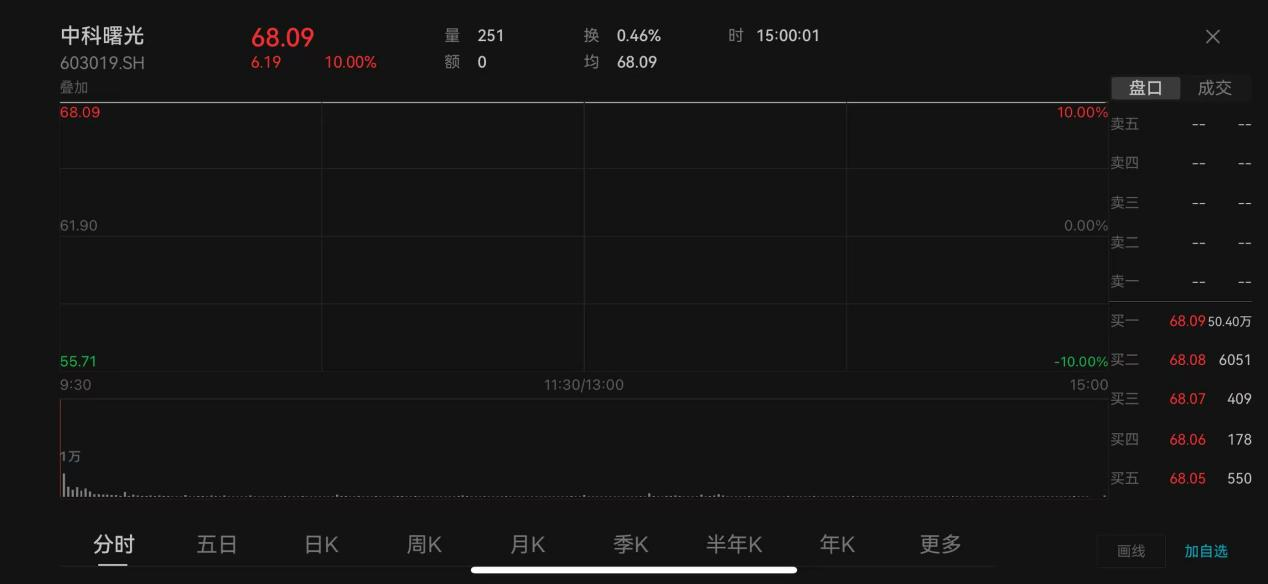
Core Viewpoint - The merger between Haiguang Information and Zhongke Shuguang, valued at 116 billion yuan, has led to significant stock price increases for both companies, while related ETFs have experienced declines, raising concerns about potential arbitrage activities in the market [1][2][4]. Group 1: Merger Details - Haiguang Information plans to absorb Zhongke Shuguang through a share swap valued at 116 billion yuan, marking a significant consolidation in the domestic computing power industry [1]. - Both companies are seen as key players in the domestic computing power supply chain, with complementary roles that could reshape the competitive landscape [9][10]. Group 2: Market Reactions - On June 10, Zhongke Shuguang's stock surged by 10% with a trading volume of 458 million yuan, while Haiguang Information rose by 4.3% with a trading volume of 8.73 billion yuan [1]. - In contrast, several related ETFs, including the Xinchuan 50 ETF, experienced notable declines, with the Xinchuan 50 ETF dropping by 3.76% [2][3]. Group 3: ETF Dynamics - The significant drop in ETF prices is attributed to arbitrage activities, where funds that anticipated the rise in individual stocks sold off ETF shares to lock in profits after the stocks' price increases [4][10]. - During the suspension period before the merger announcement, the assets under management of related ETFs surged, with some increasing nearly sevenfold, which diluted the impact of the individual stocks' price increases on the ETF's net asset value [4][8]. Group 4: Investment Considerations - Analysts suggest that investors should carefully evaluate the merger's potential to enhance the companies' core competitiveness and future profitability, rather than blindly following market trends [10]. - It is important for investors to understand the mechanisms in place to prevent arbitrage and the implications of the merger on both individual stocks and ETFs [9][10].
7只信创ETF单日成交额创新高 基金公司打出风控“组合拳”
Zheng Quan Ri Bao Zhi Sheng· 2025-06-06 16:43
Group 1 - The core announcement involves Haiguang Information planning to absorb and merge with Zhongke Shuguang through a share swap, leading to a temporary suspension of trading for both companies, expected to last no more than 10 trading days [1] - Haiguang Information and Zhongke Shuguang are key players in the domestic computing power sector, holding significant positions in the Guozheng Information Technology Innovation Index and the Zhongzheng Information Technology Application Innovation Industry Index, with combined weights of 13.57% and 9.66% respectively [1] Group 2 - Following the trading suspension, funds have shifted towards ETFs linked to these companies, with a total net inflow of 4.981 billion yuan across seven innovation-themed ETFs from May 26 to June 5, with significant contributions from Huaxia Fund and Guotai Fund [2] - The scale of Huaxia Zhongzheng Information Technology Application Innovation Industry ETF surged from 440 million yuan to 2.12 billion yuan, while Guotai Guozheng Information Technology Innovation Theme ETF increased from 124 million yuan to 1.498 billion yuan, representing growth rates of over 300% and 1100% respectively [2] - The average change rate in the total shares of the seven innovation-themed ETFs during this period was 539% [2] Group 3 - The market is experiencing heightened arbitrage expectations, with significant trading activity in the ETFs, as investors seek to indirectly hold suspended stocks and capitalize on potential price increases upon resumption of trading [2] - The success of ETF arbitrage is contingent on three main variables: whether the merger plan exceeds expectations, changes in industry valuation during the suspension, and the dynamic balance between ETF scale expansion and the proportion of suspended stocks held [3][4] Group 4 - Fund companies have issued warnings regarding risks associated with significant changes in fund sizes due to the suspension of key index stocks, which may lead to tracking errors and deviations [5] - Several fund companies have adjusted their valuation methods for suspended stocks to the "index return method," which helps address valuation freezes and reflects market fluctuations more accurately, thereby protecting the interests of long-term investors [6] - Some fund companies have initiated liquidity plans, including the addition of market makers to maintain product stability, as seen with the announcement from FuGuo Fund on June 6 [6]
ETF交易过程中的常见问题一览表
Sou Hu Cai Jing· 2025-05-29 03:27
Group 1 - Investors do not need to open a separate account to trade ETFs; an A-share securities account is sufficient [1] - Some domestic ETF varieties support T+0 trading, such as bond ETFs, gold ETFs, cross-border ETFs, and currency ETFs, while stock ETFs implement T+1 trading [2] - ETF subscription and redemption generally follow the principle of share subscription and share redemption, with the consideration including a basket of securities, cash alternatives, cash differences, and other considerations [3] Group 2 - Investing in stock ETFs offers advantages of both funds and stocks, providing a convenient, flexible, and cost-effective investment channel, allowing investors to invest in a basket of stocks with a single transaction, thus reducing risk compared to individual stocks [4] - There is an arbitrage opportunity in bond ETFs; for example, if a bond ETF's net asset value in the primary market is 100 yuan and its price in the secondary market is 95 yuan, investors can buy in the secondary market and redeem a basket of bonds in the primary market to profit from the price difference [5]