
循环经济

Search documents
中国长城资产支持民企重获新生
Jin Rong Shi Bao· 2025-12-25 03:09
Core Viewpoint - The article highlights the role of China Great Wall Asset Management Co., Ltd. in supporting the restructuring of Beijing Huafu Engineering Co., Ltd., emphasizing the importance of cooperation between state-owned and private enterprises in promoting sustainable development along the Belt and Road Initiative [1][5]. Group 1: Company Background and Challenges - Huafu Engineering, established in 1985 as a Sino-American joint venture, faced a severe debt crisis since 2018, leading to halted projects and potential bankruptcy, affecting over 400 creditors and nearly 7 billion yuan in debts [2]. - The restructuring of Huafu is crucial not only for the company but also for the stability of the local economy and the protection of the rights of its employees [2][3]. Group 2: Role of China Great Wall Asset Management - As the largest creditor, China Great Wall Asset Management closely monitored Huafu's operations and supported its recovery efforts, facilitating communication with government bodies and potential investors [3]. - The company played a pivotal role in ensuring the stability of Huafu's operations during the restructuring process, laying the groundwork for future technological development and market expansion [3]. Group 3: Green Development Initiatives - With Huafu back on track, China Great Wall Asset Management, as its second-largest shareholder, is focused on promoting green development through effective corporate governance and support for environmentally friendly technologies [4]. - Huafu's strengths lie in its advanced biodegradable plastic technology (PBAT) and phosphogypsum utilization technology, which contribute to environmental sustainability and economic benefits [4]. Group 4: Cooperation Between State-Owned and Private Enterprises - The collaboration between China Great Wall Asset Management and Huafu exemplifies the synergy of state-owned financial strength and private sector technical expertise, enabling both parties to explore overseas markets effectively [5]. - This partnership reflects the broader strategy of integrating finance, technology, and industry to support the restructuring of troubled enterprises and enhance their competitiveness in the global market [5].

百亿“甜蜜产业链”的突围之路
Guang Xi Ri Bao· 2025-12-25 02:57
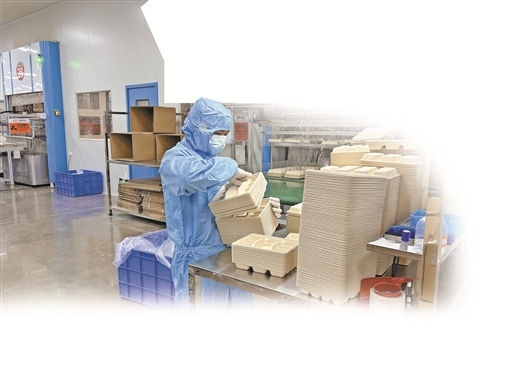
Core Insights - The article highlights the transformation of the sugar industry in Laibin, Guangxi, focusing on technological innovation and circular economy practices to enhance productivity and sustainability [7][14][16] Group 1: Industry Transformation - Laibin contributes to 10% of China's sugar production despite challenging terrain, emphasizing a shift from traditional resource-dependent practices to a technology-intensive, high-value, and green industry model [7][16] - The total industrial chain output value is expected to exceed 16 billion yuan in the 2024/2025 season, with over 7 billion yuan generated from the utilization of by-products [7][12] Group 2: Technological Advancements - The introduction of smart agricultural practices, such as the use of Beidou navigation systems in harvesting, has significantly increased sugarcane yields from 5-6 tons to 7-8 tons per acre [9][10] - Investments of 2 billion yuan in smart upgrades at sugar factories have improved sugar recovery rates by 2.9%, resulting in an additional production of over 2,800 tons of sugar per season [11][15] Group 3: Circular Economy Practices - Laibin has established the largest straw-based biodegradable tableware production base in China, achieving a 100% utilization rate of sugarcane by-products, with an annual capacity of 220,000 tons and a value exceeding 3 billion yuan [13][12] - The comprehensive utilization of by-products, including molasses and filter mud, has created new revenue streams and enhanced the resilience of sugar enterprises against market fluctuations [12][13] Group 4: Economic and Social Impact - The sugar industry in Laibin supports approximately 520,000 agricultural workers, with an average income of 9,650 yuan per farmer in the 2024/2025 season, contributing to rural revitalization [14][16] - The implementation of "order agriculture + price linkage" mechanisms ensures stable income for farmers while allowing them to benefit from rising sugar prices [14]

总规模达到1.1万亿元 我国生物制造进入关键发展期
Ke Ji Ri Bao· 2025-12-25 02:05
Core Viewpoint - Biomanufacturing is recognized as a crucial driver of the fourth industrial revolution, with significant potential for economic growth and innovation in the manufacturing sector [1][3]. Group 1: Industry Development and Achievements - Since the start of the 14th Five-Year Plan, China's biomanufacturing industry has grown to a total scale of 1.1 trillion yuan, with bioproducts accounting for over 70% of global production [2]. - The production value of food and pharmaceutical biomanufacturing segments has each exceeded 400 billion yuan, showcasing a strong competitive advantage in traditional bioproducts like vitamins and antibiotics [2]. - China has established numerous national key laboratories and innovation platforms, contributing to over 20% of global research papers and patent applications in the biomanufacturing field [2]. Group 2: Future Economic Potential - Predictions indicate that by 2050, the biomanufacturing sector could generate an economic value of 30 trillion dollars, representing one-third of global manufacturing [3]. - The Chongqing government plans to implement various measures to accelerate the development of the biomanufacturing industry, including innovation actions and the establishment of verification platforms [3]. Group 3: Technological Challenges and Needs - Despite the current industry scale, there is a significant gap in technological supply, with a need for thousands of mature technologies to support a trillion-yuan industry [4]. - Experts emphasize the necessity of enhancing national strategic technological capabilities to provide a robust foundation for the biomanufacturing sector [4][5]. Group 4: Innovation and AI Integration - The integration of artificial intelligence with biomanufacturing is emerging as a trend, potentially enhancing research efficiency and process optimization [5][6]. - There is a pressing need to upgrade the research paradigm in biomanufacturing to leverage big data and AI, addressing challenges in data quality and model construction [6][7]. Group 5: Strategic Recommendations - The industry is encouraged to focus on original innovation and tackle engineering bottlenecks, fostering collaboration between academia and industry to drive technological advancements [7]. - The Ministry of Industry and Information Technology plans to release a development plan for biomanufacturing, outlining key products and AI applications to support the sector's growth [7].
博苑股份:深耕循环经济“新蓝海” 筑牢精细化工绿色基石
Zheng Quan Shi Bao· 2025-12-25 00:22
Core Viewpoint - The company, Boyuan Co., Ltd. (301617), is positioned as a leader in the fine chemical sector, successfully navigating the transition from "scale expansion" to "green high-quality development" in the context of the global "dual carbon" strategy [1] Group 1: Circular Economy and Business Model - Boyuan Co., Ltd. has established a circular economy business model centered on the recovery and utilization of iodine and precious metals, differentiating itself from traditional chemical enterprises [2] - This model allows the company to procure iodine and precious metal-containing waste from upstream enterprises, effectively addressing waste disposal challenges while reducing raw material dependency and production costs [2] - The circular economy approach not only mitigates risks associated with imported raw material price fluctuations but also enhances customer trust, leading to long-term cooperation agreements [2] Group 2: Integrated Service Capability - The company has developed a comprehensive service capability that spans from basic chemical raw material supply to hazardous waste resource utilization and product processing, fostering mutually beneficial strategic partnerships with major clients [3] - Boyuan Co., Ltd.'s iodine resource utilization business is recognized for its advanced recycling processes and large-scale processing capabilities, placing it in a leading position within the industry [3] Group 3: Technological Innovation and Product Development - The company emphasizes technological innovation as a key driver of growth, increasing R&D investment and accelerating the commercialization of research outcomes [5] - Boyuan Co., Ltd. is focusing on high-end and emerging fields such as new materials and new energy, aiming to enhance product structure and extend the industrial chain [5] - The company actively participates in the establishment of industry standards, having contributed to the formulation of 3 industry standards and 11 group standards, thereby enhancing its professional influence [4] Group 4: Strategic Growth and Market Positioning - Boyuan Co., Ltd. maintains a cautious yet open approach to mergers and acquisitions, considering opportunities that align with its strategic goals to enhance core competitiveness [6] - The company has outlined a clear roadmap for high-quality development during the 14th Five-Year Plan period, focusing on talent, R&D, market expansion, governance, and green development [6] - The company is committed to integrating into local industrial layouts and development plans, promoting sustainable practices through increased environmental investment and resource recycling [7]
博苑股份:深耕循环经济“新蓝海” 筑牢精细化工绿色基石
证券时报· 2025-12-25 00:20
Core Viewpoint - The article highlights how Boyuan Co., Ltd. is navigating the transformation of the chemical industry towards green and high-quality development, leveraging a circular economy model to enhance resource utilization and economic benefits while addressing environmental concerns [1]. Group 1: Circular Economy and Business Model - Boyuan Co., Ltd. has established a circular economy business model centered on the recovery and utilization of iodine and precious metals, differentiating itself from traditional chemical companies [3]. - The company effectively addresses waste disposal challenges for upstream enterprises, facilitating compliance and resource utilization, which in turn broadens its raw material sources and reduces production costs [3]. - This model not only mitigates risks associated with raw material price fluctuations but also fosters long-term partnerships with clients, enhancing operational stability and sustainability [3]. Group 2: Product and Market Position - Boyuan Co., Ltd. has developed a comprehensive service capability that spans the entire industrial chain, from basic chemical raw material supply to hazardous waste resource utilization and product processing, strengthening strategic partnerships with major clients [4]. - The company holds a leading position in the iodine resource utilization sector, thanks to its mature recovery processes and large-scale processing capabilities [4]. - In the organic iodine market, products like trimethyl iodide occupy significant market shares, while inorganic iodides such as potassium iodate and potassium iodide are widely used in critical industries like pharmaceuticals and chemicals [7]. Group 3: Technological Innovation and Development Strategy - The company emphasizes the importance of innovation as a growth engine, supported by a strong technical foundation and a competitive product matrix [7]. - Boyuan Co., Ltd. is increasing R&D investments and enhancing its innovation center to accelerate the commercialization of research outcomes and the development of new products and technologies [8]. - The company is also focusing on high-end fields such as new materials and new energy, aiming to upgrade its product offerings to higher value-added areas and cultivate new growth points [9]. Group 4: Strategic Growth and Future Outlook - Boyuan Co., Ltd. maintains a cautious yet open approach to mergers and acquisitions, considering opportunities that align with its strategic goals to enhance core competitiveness [11]. - The company has outlined a clear roadmap for high-quality development during the 14th Five-Year Plan period, focusing on talent, R&D, market expansion, governance, and green development [12]. - By integrating green, low-carbon, and sustainable practices into its operations, Boyuan Co., Ltd. aims to contribute to regional economic development while positioning itself as a benchmark for high-quality development in the fine chemical industry [12].

循环经济助铝产业向绿向新
Jing Ji Ri Bao· 2025-12-24 22:40
在遵义务川仡佬族苗族自治县,国家电投集团贵州遵义产业发展有限公司实施22项新工艺,推动传统冶 炼向绿色制造转型。公司还通过实施屋顶光伏发电、换电重卡、余热回收再利用等7个延链补链项目, 构建起"铝土矿开采—氧化铝生产—新能源利用"的绿色产业链。 在贵州省遵义市播州区遵义铝业股份有限公司生产车间,火红的电解铝液正源源不断地通过多功能天 车,被直接输送到下游企业。"我们根据下游企业的需求调配产品,直接销售给对方,省去了中间的重 熔环节,每吨铝大约节约天然气60立方米。"该公司副总经理陈静说。 遵义铝土矿资源丰富。近年来,按照"资源就地转化、发展循环经济、延伸产业链条、构建产业集群"原 则,遵义依托当地龙头企业,推动原矿—氧化铝产业、精矿—磨料产业、原矿—铝土矿熟料—耐火(陶 瓷)材料等产业链发展壮大,打造铝及铝加工产业集群,实现了资源综合利用最大化。据了解,仅播州 区就已集聚规上铝及铝加工企业32家,铝及铝加工产值常年占当地工业总产值的70%左右。 贵州航鹏新材料科技有限公司的特种铝合金材料生产线于今年6月底成功点火。该生产线搭建了可循环 系统,边角料可直接回炉重熔,转化为高端合金材料,资源利用水平进一步提升。公 ...
新股消息 | 优乐赛三次递表港交所
智通财经网· 2025-12-24 22:34
Group 1 - The core viewpoint of the article is that Suzhou Youlesai Shared Services Co., Ltd. has submitted an application for listing on the Hong Kong Stock Exchange, with CITIC Securities International as the sole sponsor [1] - Youlesai is identified as a provider of circular packaging services in China, primarily focusing on serving automotive parts manufacturers and OEMs within the automotive industry [1] Group 2 - The company previously submitted listing applications on November 18, 2024, and June 13, 2025 [1] - The shares to be issued are H-shares, with a nominal value of RMB 1.00 per share [3]
十四届全国人大常委会第十九次会议审议多部报告
Ren Min Ri Bao· 2025-12-24 22:32
Group 1: Energy Conservation Law Implementation - The implementation of the Energy Conservation Law has led to significant achievements, with a cumulative reduction of energy consumption per unit of GDP by approximately 43% from 2007 to 2024, equating to about 2.3 billion tons of standard coal saved [1] - Since the 18th National Congress, the energy consumption per unit of GDP has decreased by 27.2%, making China one of the fastest countries in the world to reduce energy intensity [1] - The government has established a comprehensive legal framework for energy conservation, with over 800 departmental regulations and policy documents issued in key sectors such as industry, construction, and transportation [1][2] Group 2: Sector-Specific Energy Efficiency Improvements - In the industrial sector, a special action for energy efficiency improvement has been implemented, identifying 206 leading enterprises in energy efficiency and 246 national green data centers [2] - The construction sector is advancing energy-saving renovations and promoting green buildings, with over 97% of new urban buildings expected to be green buildings by 2024 [2] - The transportation sector is optimizing its structure, with railway freight volume expected to increase by 17.3% and water transport by 31.3% compared to 2019 [2] Group 3: Challenges and Recommendations - The report identifies challenges in implementing the Energy Conservation Law, including the need to strengthen the energy-saving priority strategy and improve management mechanisms [3] - Recommendations include enhancing the energy-saving policy framework, fostering technological innovation, and improving the legal system to support energy conservation efforts [3] Group 4: Circular Economy Development - The Circular Economy Promotion Law has significantly contributed to resource conservation and environmental protection since its implementation in 2009, with various regions actively fulfilling their legal responsibilities [4] - A comprehensive legal framework for circular economy development has been established, with over 600 national standards and local regulations in place [4][5] - The report highlights the establishment of the largest resource recovery and recycling system globally, with over 4 billion tons of recycled resources expected by 2024 [5] Group 5: Economic Impact and Employment - The circular economy sector is projected to generate over 4 trillion yuan in total output value by 2024, employing more than 35 million people, thus becoming a new economic growth point [5] - The report emphasizes the need for improved resource recovery and recycling practices, as well as enhanced technological support and policy incentives [6] Group 6: Legislative and Budgetary Oversight - The National People's Congress has successfully completed the handling of all representative suggestions from the previous session, focusing on the implementation of major decisions and addressing public concerns [7][8] - The budget committee has reviewed various fiscal policies and found them to align with legal requirements, promoting significant national strategies and public welfare [10][11]
十四届全国人大常委会第十九次会议审议多部报
Ren Min Ri Bao· 2025-12-24 22:14
Group 1: Energy Conservation Law Implementation - The Energy Conservation Law has been effectively implemented, leading to a significant reduction in energy consumption per unit of GDP by approximately 43% from 2007 to 2024, equating to about 2.3 billion tons of standard coal saved [1][2] - Since the 18th National Congress, energy consumption per unit of GDP has decreased by 27.2%, making China one of the fastest countries in the world to reduce energy intensity, supporting an average economic growth of 6.1% with an energy consumption growth rate of 3.3% [1][2] - The government has established a comprehensive legal framework for energy conservation, with over 800 departmental regulations and more than 2,000 local regulations supporting the Energy Conservation Law [1][2] Group 2: Sector-Specific Energy Efficiency Improvements - In the industrial sector, initiatives have been launched to enhance energy efficiency, including the identification of 206 leading enterprises and 246 national green data centers [2] - The construction sector is advancing energy-saving renovations and promoting green buildings, with over 97% of new urban buildings expected to be green by 2024 [2] - The transportation sector is optimizing its structure, with railway freight volume projected to increase by 17.3% and water transport by 31.3% compared to 2019, alongside a target of 40.9% for new energy vehicle sales in 2024 [2] Group 3: Technological Innovation in Energy Conservation - The implementation of the Energy Conservation Law has spurred innovation in energy-saving technologies, with active participation from various sectors including equipment manufacturing and technical services [2][3] Group 4: Circular Economy Development - The Circular Economy Promotion Law has been instrumental since its implementation in 2009, contributing to resource conservation and ecological civilization [4][5] - A comprehensive legal framework for circular economy has been established, with over 600 national standards and local regulations in place to support its development [4][5] - Significant progress has been made in reducing resource consumption and waste generation across production, circulation, and consumption stages, with a focus on building "waste-free cities" [4][5] Group 5: Resource Recycling and Utilization - China has established the world's largest resource recycling and reuse system, with plans to add over 11,000 smart recycling facilities in communities by 2024 [5][6] - The total volume of recycled resources is expected to exceed 400 million tons in 2024, with recycled steel and paper providing significant raw materials for production [6] - The circular economy sector is projected to generate over 4 trillion yuan in output value by 2024, employing more than 35 million people [6] Group 6: Challenges and Recommendations - The report identifies challenges in the implementation of laws and the development of the circular economy, including incomplete legal responsibilities and the need for improved recycling industry standards [6][7] - Recommendations include enhancing planning for green low-carbon development, strengthening responsibility enforcement, and improving the legal framework for circular economy [7]
让废旧电池“绿色重生”
Xin Lang Cai Jing· 2025-12-24 19:52
Core Viewpoint - The article highlights the transformation of Chen Kai from a retired soldier to an entrepreneur and a representative focused on local development, emphasizing his commitment to industrial growth and green practices in the Guizhou province [1]. Group 1: Entrepreneurial Journey - Chen Kai invested over 500,000 yuan in his entrepreneurial journey, starting with a sand and gravel factory and expanding into municipal engineering [1]. - In 2022, with government support, he established the Jiahong Industrial Park, marking significant growth in his business endeavors [2]. - The industrial park focuses on the recycling and comprehensive utilization of waste new energy batteries, diversifying into health medicine, electronic equipment, aerospace parts manufacturing, and smart logistics [1][2]. Group 2: Economic Impact - The industrial park spans over 400 acres with over 80,000 square meters of standard factory buildings, housing more than 10 enterprises across four major sectors [2]. - Once fully operational, the park is expected to create over 1,000 jobs, generate an annual output value exceeding 1 billion yuan, and contribute approximately 45 million yuan in taxes [2]. Group 3: Green Development Initiatives - Chen Kai emphasizes that green development is essential, stating that breakthroughs in battery recycling reduce environmental pollution and enhance resource utilization [2]. - The park implements advanced technologies to repurpose waste batteries into energy storage devices and extract valuable metals like copper, cobalt, and nickel, creating a closed-loop industrial chain [3]. Group 4: Community Engagement and Responsibilities - In 2022, Chen Kai was elected as a representative in the local People's Congress, balancing his role as a business leader with responsibilities towards community welfare [4]. - He has proposed several high-quality suggestions focused on the recycling industry and enhancing the role of business associations in market development [5]. - Chen Kai actively engages with the community, conducting surveys and donating funds to support underprivileged groups and improve infrastructure [5].