经济全球化

Search documents
第三届链博会参展参会情况超预期
Zhong Guo Zheng Quan Bao· 2025-06-17 20:34
维护产业链供应链畅通 "链博会展示的是全球工商界坚定维护产业链供应链畅通的鲜明态度,也是全球供应链深度融合、全球 企业共生共赢的产业生态。"于健龙说,在当前国际形势变乱交织、经济全球化遭遇逆流的大背景下, 众多四海宾朋,特别是全球工商界的朋友们齐聚链博会,是对链博会投下的信任票,也是对中国经济发 展投下的信任票。 中国贸促会副会长李兴乾表示,当前,中美工商界沟通交流是顺畅的,对加强供应链合作有共同意愿。 李兴乾介绍,在本届链博会上,美国参展商数量比上届增长15%,继续位列境外参展商数量之首,参展 面积同比增长10%。中国贸促会也积极为相关中美企业提供咨询、合规、对接等纾困解难服务。中国美 国商会、美国大豆出口协会、美国谷物协会等机构有关负责人先后表示,中国是非常重要的市场,美国 企业愿持续投资中国,参与中国经济增长和创新,与中国市场和发展共同进步。 将有超100项首发首秀首展 "参展企业中既有很多连续三届参展的铁杆老朋友,也有230多家首次参展的中外新伙伴。"于健龙介 绍,一些国内重要产业集聚地的企业积极组团参展。比如,宇树科技、强脑科技等新锐企业将组成浙江 人工智能产业链参展,湖北将有18家具身智能企业亮相 ...
深夜!商务部,最新发声!
券商中国· 2025-06-17 14:39
Core Viewpoint - China is willing to implement a 100% zero-tariff policy on products for 53 African countries with diplomatic relations, through the signing of a Joint Development Economic Partnership Agreement, as part of efforts to enhance economic cooperation and respond to global trade challenges [1][2]. Group 1: Joint Development Economic Partnership Agreement - The Joint Development Economic Partnership Agreement is an innovative free trade agreement between China and African countries, aimed at promoting economic cooperation and implementing the zero-tariff policy [1]. - This initiative reflects the spirit of the 20th National Congress of the Communist Party of China and aims to expand autonomous opening-up, serving as a concrete action to further the outcomes of the Beijing Summit of the Forum on China-Africa Cooperation [1][2]. - The agreement is expected to provide institutional guarantees for deepening economic and trade cooperation between China and Africa, setting a new benchmark for South-South cooperation [2]. Group 2: Implementation and Future Steps - The Ministry of Commerce will collaborate with relevant departments to promote the signing of the agreement based on principles of equality and mutual benefit, considering the specific needs of African countries [2]. - The agreement will focus on facilitating trade, inclusive growth, resilient supply chains, and modern development areas, aiming for a swift conclusion that aligns with World Trade Organization rules [2]. - As of December 1, 2024, China has already granted 100% zero-tariff treatment to products from 33 African countries and other least developed countries with diplomatic relations with China [3].


商务部:将按照平等协商、互利共赢原则 推动与非洲国家商签共同发展经济伙伴关系协定工作
news flash· 2025-06-17 12:52
Core Viewpoint - The Chinese government aims to promote the signing of a Joint Development Economic Partnership Agreement with African countries, emphasizing equal consultation and mutual benefit, while implementing a 100% zero-tariff policy on products for 53 African countries with diplomatic relations [1] Group 1: Economic Partnership Agreement - The Chinese government is committed to signing a Joint Development Economic Partnership Agreement to enhance trade relations with African nations [1] - The agreement will provide a framework for deeper economic cooperation between China and Africa, establishing a new benchmark for South-South cooperation [1] - The partnership aims to facilitate more convenient trade, inclusive growth, resilient supply chains, and modern development areas [1] Group 2: Tariff Policy - China has already implemented a 100% zero-tariff policy on products for all least developed countries that have diplomatic relations with China, including 33 African nations, effective from December 1, 2024 [1] - The Chinese government is willing to offer additional export facilitation to the least developed African countries under the zero-tariff policy [1] Group 3: Future Steps - The Ministry of Commerce will collaborate with relevant departments to advance the agreement negotiations, considering the specific needs and situations of African countries [1] - The goal is to reach an agreement that aligns with World Trade Organization rules and meets the interests of both parties as soon as possible [1]
商务部有关负责人解读中国愿通过商签共同发展经济伙伴关系协定落实对53个非洲建交国实施100%税目产品零关税举措
news flash· 2025-06-17 12:52
Group 1 - The core viewpoint of the article emphasizes the significance of the Economic Partnership Agreement as an innovative free trade agreement between China and African countries, aiming to implement zero tariffs on 100% of products for 53 African countries that have diplomatic relations with China [1] - This agreement is a concrete action to expand autonomous opening-up and reflects the spirit of the 20th National Congress of the Communist Party of China, further promoting the outcomes of the China-Africa Cooperation Forum Beijing Summit [1] - The initiative is a response to the rising trends of unilateralism and protectionism, showcasing the determination of China and Africa to jointly address challenges and inject stability and positive energy into global trade development [1] Group 2 - The agreement aligns with the direction of economic globalization, meets the expectations of African countries, and complies with World Trade Organization rules [1]
习近平会见吉尔吉斯斯坦总统扎帕罗夫
证监会发布· 2025-06-17 09:40
新华社阿斯塔纳6月17日电 当地时间6月17日上午,国家主席习近平在阿斯塔纳出席第二届 中国-中亚峰会期间会见吉尔吉斯斯坦总统扎帕罗夫。 习近平指出,建交33年来,中吉关系实现跨越式发展,处于历史最好时期。今年2月我 们在北京举行富有成果的会晤,达成一系列重要共识,为两国合作注入新的强劲动力。中方 愿同吉方一道,持续深化发展战略对接,在涉及彼此核心利益和重大关切问题上继续坚定相 互支持,维护好双方共同和长远利益。 习近平强调,中吉合作大有可为。双方要扩大贸易和投资规模,深化金融合作;完善互 联互通网络,高质量推进中吉乌铁路建设;拓展新兴领域合作,在清洁能源、绿色矿产、人 工智能等方面培育新的增长点;深化文化、旅游、教育、卫生等领域交流,实施更多惠民项 目。中吉两国都是经济全球化的受益者,要共同反对单边主义,坚定维护国际经贸秩序,推 动构建更加公正合理的全球治理体系。双方将先后担任上海合作组织轮值主席国并主办峰 会,中方愿同吉方相互支持,共同推动上合组织取得更大发展。 扎帕罗夫表示,在习近平主席卓越领导下,中国沿着繁荣富强的道路奋力前行,取得伟 大发展成就,在国际舞台上发挥着关键引领作用。吉方高度重视发展对华关 ...
对53国,实施100%税目产品零关税,中国这一招,美国破解不了
Sou Hu Cai Jing· 2025-06-17 03:55
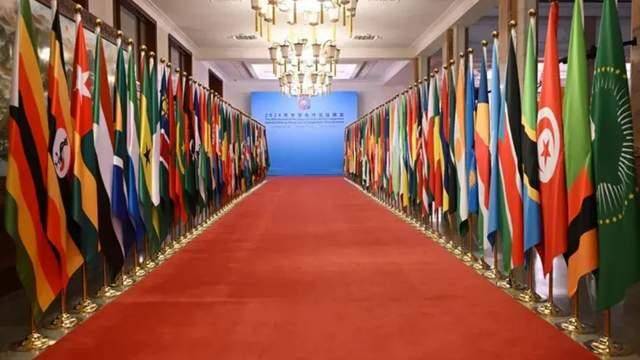
Core Viewpoint - China is implementing a 100% zero-tariff policy on products for 53 African countries, contrasting with the U.S. approach of imposing tariffs on its allies, thereby enhancing its influence in Africa and promoting globalization [1][2][4]. Group 1: Policy Implementation - China announced the zero-tariff policy during the China-Africa Cooperation Forum, which applies to all but one of Africa's 54 countries, indicating a significant economic gesture towards the continent [2][4]. - The policy aims to support the economic development of African nations, which have historically been marginalized in global markets due to colonial influences [2][4]. Group 2: Economic Implications - The zero-tariff policy is expected to facilitate China's access to essential raw materials from Africa, such as minerals and agricultural products, which are crucial for its manufacturing sector [6]. - This move is anticipated to deepen economic ties between China and Africa, fostering cooperation across various sectors including political, military, and cultural [6]. Group 3: Comparison with U.S. Strategy - The U.S. has been criticized for its protectionist policies and attempts to undermine China's influence in Africa, often framing its investments as a means to counter perceived threats from China [4][9]. - Unlike China, the U.S. faces challenges in offering similar tariff exemptions due to its own manufacturing limitations, which could lead to significant losses if it were to adopt a zero-tariff approach [7][8]. Group 4: Global Economic Context - China's actions are positioned as a counter to the U.S. trade barriers and tariffs, highlighting the contrasting approaches to globalization and economic cooperation [9][11]. - The zero-tariff policy is seen as a strategic move to reshape the current global economic order, which has been criticized for favoring developed nations at the expense of developing countries [13].
阿根廷驻华大使: 发展中国家以中国模式为范本应对挑战
Xin Hua Wang· 2025-06-14 05:51
Group 1 - The Argentine Ambassador to China, Ma Zhi Yuan, emphasized that developing countries, including Argentina, are using the Chinese model to address economic development challenges [1][2] - China is seen as a significant partner for Argentina, with complementary advantages in trade and economic cooperation [1][2] - The cooperation between China and Argentina in the renewable energy sector is highlighted, particularly the successful implementation of the Huachari 300 MW solar power station in Argentina [2] Group 2 - The Huachari solar power station has become a model for solar energy application in Latin America, significantly alleviating local electricity shortages and ensuring daily power supply for residents [2] - The "Local Tour of Diplomats in China" event aims to deepen the understanding of foreign diplomats regarding local regions in China and to promote international cooperation in key national development strategies [4]

“只谈吃亏 避谈获利”中方揭批美国“对等关税”错误叙事
Yang Shi Xin Wen· 2025-06-14 04:46
Group 1 - The core argument of the article highlights China's criticism of the U.S. for its selective focus on trade deficits in goods while ignoring the benefits it gains from service trade, emphasizing the need for adherence to WTO rules and multilateral cooperation [1][2] - China points out that the U.S. is the largest surplus country in service trade, with a projected surplus nearing $300 billion in 2024, and argues that the U.S. benefits significantly from global value chains, particularly in high-value sectors like R&D and sales [1] - The article notes that China's proactive agenda at the WTO meeting has garnered support from various countries, including developed members like the EU and Australia, as well as developing nations like Brazil and Pakistan, emphasizing the importance of service trade for global economic stability [2] Group 2 - China advocates for bilateral negotiations based on WTO rules to resolve trade tensions, stressing that such discussions should not violate non-discrimination principles or harm third-party interests [2] - The article mentions a collective call from various nations for restraint in trade restrictions and the importance of maintaining stable and predictable regulatory policies to ensure the healthy development of global trade [2]
《跨国公司在中国》报告即将发布,解码跨国公司投资中国的 “共赢方程式”
Qi Lu Wan Bao· 2025-06-13 03:36
Group 1 - The sixth Qingdao Summit for Multinational Company Leaders will be held from June 18 to 20, 2025, focusing on "Multinational Companies and China: Linking the World for Win-Win Cooperation" [1] - The annual report titled "Multinational Companies in China" will highlight the commonalities and benefits that multinational companies have gained from the Chinese economy, emphasizing their role in enhancing China's open economy and modern industrial system [1][2] - The report will also analyze the current global investment landscape, noting challenges such as trade protectionism and unilateralism, while recognizing positive developments in investment agreements at multilateral and regional levels [2] Group 2 - The report identifies seven aspects of new opportunities for multinational companies investing in China, including certainty, security, openness, scale, convenience, growth, and profitability, supported by a stable policy environment and a comprehensive supply chain [2][3] - It emphasizes the importance of digital economy and green technology as new avenues for investment, providing a broad platform for technological iteration and business model innovation [3] - Recommendations will be made for multinational companies to adjust their investment strategies, deepen long-term cooperation, and leverage local innovations to enhance global business upgrades, aiming for a win-win development model [3]
免签退税催热“跨境购”,中国开放新步伐激起世界回响
Sou Hu Cai Jing· 2025-06-12 12:57
Core Insights - China is expanding its visa-free policy and implementing new tax refund measures, which are driving a surge in inbound tourism and international consumer spending [1][4] - The integration of culture and tourism is showing strong momentum, with traditional products and local brands gaining global recognition [1][7] - China is transitioning from being the "world's factory" to a "global consumption center," reflecting its market attractiveness and contributing to economic globalization [1][6] Group 1: Inbound Tourism Growth - The number of foreign visitors entering China has significantly increased, with 64.88 million entries recorded in 2024, a year-on-year rise of 82.9% [4] - Visa-free policies have led to a 112.3% increase in foreign visitors utilizing these policies, with 3.8 million entering under visa exemptions during the recent holiday [4][6] - The Chinese government is actively promoting policies to enhance the inbound tourism experience, including the introduction of the "immediate purchase and refund" tax policy [3][4] Group 2: Consumer Behavior and Shopping Trends - International tourists are engaging in extensive shopping, with notable increases in visitor numbers at popular retail locations, such as a 15% rise in customers at a major supermarket in Shanghai [2][4] - The "immediate purchase and refund" tax policy has encouraged tourists to spend more, as they perceive it as a discount on their purchases [2][3] - Tourists are increasingly sharing their shopping experiences on social media, influencing others to visit China for its diverse and affordable products [2][7] Group 3: Cultural Exchange and Branding - Influencers and content creators are playing a crucial role in reshaping the global perception of China, showcasing its culture and attractions through various media platforms [1][7] - The Chinese tourism brand is evolving, with a focus on enhancing cultural experiences and promoting local heritage to attract more visitors [7][8] - Experts suggest that improving service offerings and leveraging technology, such as AI, can enhance the travel experience for international tourists [8][7]