量化投资

Search documents
牛市抄底陷阱:90%散户都做错了!
Sou Hu Cai Jing· 2025-12-01 12:55
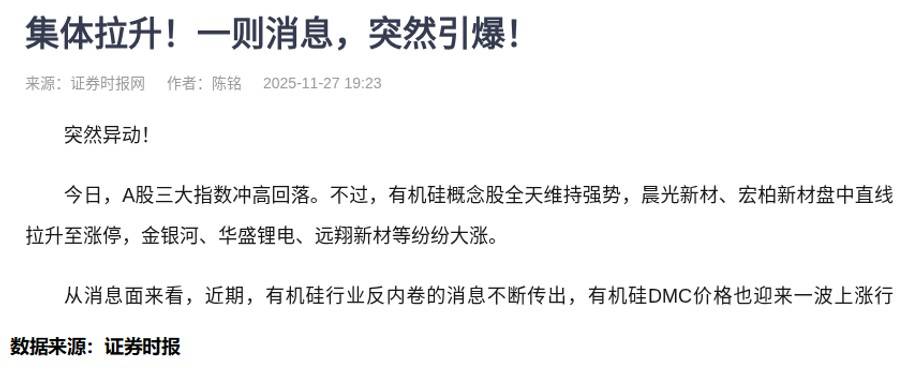
Group 1 - The article discusses the disconnect between policy announcements and actual investment opportunities, highlighting that not all sectors will benefit from government notifications, such as the recent fire hazard inspection notice [3][19] - It emphasizes the importance of understanding the underlying data, such as the mixed signals from the manufacturing PMI, where large enterprises are declining while small enterprises show a 2% increase [3] - The financial performance of state-owned enterprises is concerning, with a revenue growth of only 0.9% and a profit decline of 3% from January to October, alongside a 0.4 percentage point increase in the debt-to-asset ratio [3] Group 2 - The article points out that only 60% of stocks outperformed the index in the current bull market, indicating that a significant portion of stocks are merely following market trends without solid backing [4] - The case of Hualan Vaccine is highlighted, where its stock price fell for six consecutive days while the market rose, leading many retail investors to sell, despite institutional data indicating active stock accumulation [6] - It notes that extreme behaviors emerge during market volatility, with some investors holding onto stocks while others panic sell, both groups ultimately missing out on potential gains [9] Group 3 - The article warns about stocks that may appear to have institutional support but suddenly show a drop in institutional holdings, indicating potential manipulation or exit strategies by major players [15] - It references the investigation into Tianfeng Securities, suggesting that quantitative systems may have already detected unusual fund flows prior to the news breaking [18] - The article concludes that understanding the nuances of policy impacts and fund flows through quantitative analysis can provide a clearer picture of market trends, as seen in the subtle changes in PMI data [19]

博格偶然发现!海外资管巨鳄的中国身影
Sou Hu Cai Jing· 2025-12-01 10:23
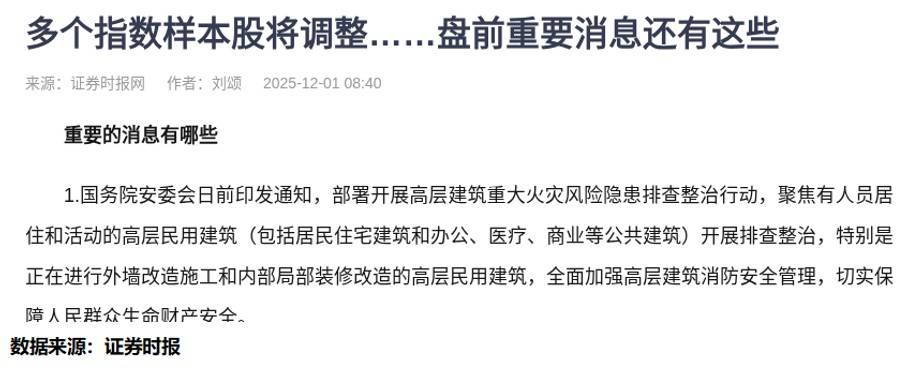
Group 1 - AllianceBernstein, known as 联博 in Chinese, is a major asset management firm formed from the merger of Alliance Capital and Bernstein in 2000, with a current asset management total of $860 billion (over 6 trillion RMB) as of September 30, 2025 [4][5][6] - The firm has recently established 联博基金管理有限公司 and started issuing public products, indicating a strategic entry into the Chinese market [6][7] - The firm has developed a unique investment strategy called "quantitative fundamentals," which combines quantitative data processing with in-depth fundamental research for stock selection [10][11] Group 2 - The performance of their funds, such as "联博智远," shows a year-to-date return of 28.32% with a maximum drawdown of only 3.82%, demonstrating effective risk control and validating their investment strategy [17][20] - 联博 has launched its first index-enhanced product, the 联博中证500指数增强基金, targeting the 中证500 index, which includes high-tech sectors like chips and pharmaceuticals, aligning with national development goals [23][25] - The firm aims to leverage its global technology platform and multi-asset quantitative models to enhance investment efficiency and identify opportunities while controlling risks [26][29] Group 3 - The firm emphasizes the importance of steady performance and risk management, which is crucial for investor confidence and long-term investment success [31][34] - The new index-enhanced fund is seen as a suitable core investment for ordinary investors, particularly due to its focus on high-tech sectors and alignment with national policies [34][35] - The fund managers have extensive experience, with one being a veteran in quantitative research and the other specializing in machine learning strategies, which adds credibility to the new product [35]
【广发金工】估值高位震荡,指数趋势向下:量化转债月度跟踪(2025年12月)
广发金融工程研究· 2025-12-01 06:49
Core Viewpoint - The quantitative convertible bond portfolio experienced a slight decline in November, with a year-to-date return of 20.14% and an excess return of 3.96% [1] Group 1: Portfolio and Performance - The quantitative convertible bond portfolio is generated based on three factor systems: fundamental factors, low-frequency price-volume factors, and high-frequency price-volume factors [5] - The portfolio's performance in November showed a return of -0.72% and an excess return of -0.03% [1] Group 2: Convertible Bond Factors - A total of 32 fundamental factors, 80 low-frequency price-volume factors, and 32 high-frequency price-volume factors are tracked for convertible bonds [2] - The report illustrates the latest data using the pricing deviation factor as an example [2] Group 3: Risk Warnings for Convertible Bonds - The report provides risk warnings for convertible bonds based on forced delisting rules and credit scoring methods, highlighting various risks including trading and financial delisting risks [3][13] Group 4: Timing for Convertible Bond Index - The report employs price-volume models, pricing deviations, and convertible bond elasticity for timing and position management of the CSI Convertible Bond Index, indicating a bullish signal for the end of November with a position recommendation of 1/3 [4][14] Group 5: Timing Signals - The timing signals for the CSI Convertible Bond Index from early November show a mix of bullish and neutral signals, with a position recommendation fluctuating between 0% and 67% throughout the month [15]


源达信息吴起涤:2026年个人投资者量化投资规模有望超万亿,带来量化服务费用市场空间154亿元(附演讲PPT)
Xin Lang Zheng Quan· 2025-12-01 06:21
Group 1 - The 2025 Analyst Conference highlighted the potential for a bull market in A-shares, attracting global capital inflows [1] - The speaker, Wu Qidi, emphasized the transformation of sell-side research, indicating that only the top 20 brokerage firms can earn substantial commission income, making it difficult for smaller firms to break through [3][17] - The direction of transformation includes shifting from a single institutional service model to a diversified approach that combines external services for institutions, internal wealth management, and industry research [3][17] Group 2 - The number of individual investors in the A-share market has surpassed 240 million as of June 2025, with a steady increase in their scale [3][26] - Despite the growth, the penetration rate of quantitative investment among individual investors remains low, with institutional investors still dominating the space [3] - The scale of public quantitative funds reached 312.1 billion yuan, a 5.8% increase from the end of 2024, while private quantitative funds totaled approximately 1.49 trillion yuan, growing by 6.0% [3] Group 3 - By 2026, the scale of individual quantitative investment is expected to exceed one trillion yuan, creating a market space of 15.4 billion yuan for quantitative services [4][26] - The annualized return of a selected stock pool from 50 brokerages was 7.28% from January 2018 to June 2025, with a maximum drawdown of 46.18% [19] - The research indicates that the lack of a buy-side mindset and herd mentality are reasons for the lower-than-expected returns from the selected stocks [19] Group 4 - The company aims to leverage AI and financial engineering to enhance investment strategies, with specific quantitative strategies showing annualized returns of 22.0% and 16.0% [20] - AI is transforming traditional securities research by automating data collection and analysis, significantly improving efficiency compared to manual methods [23][24] - The research emphasizes the importance of multi-dimensional data applications to better understand future market trends [24]

核心不凡·量创卓越|千亿ETF大厂今日力推沪深300指增ETF新品首发!
Sou Hu Cai Jing· 2025-12-01 00:54
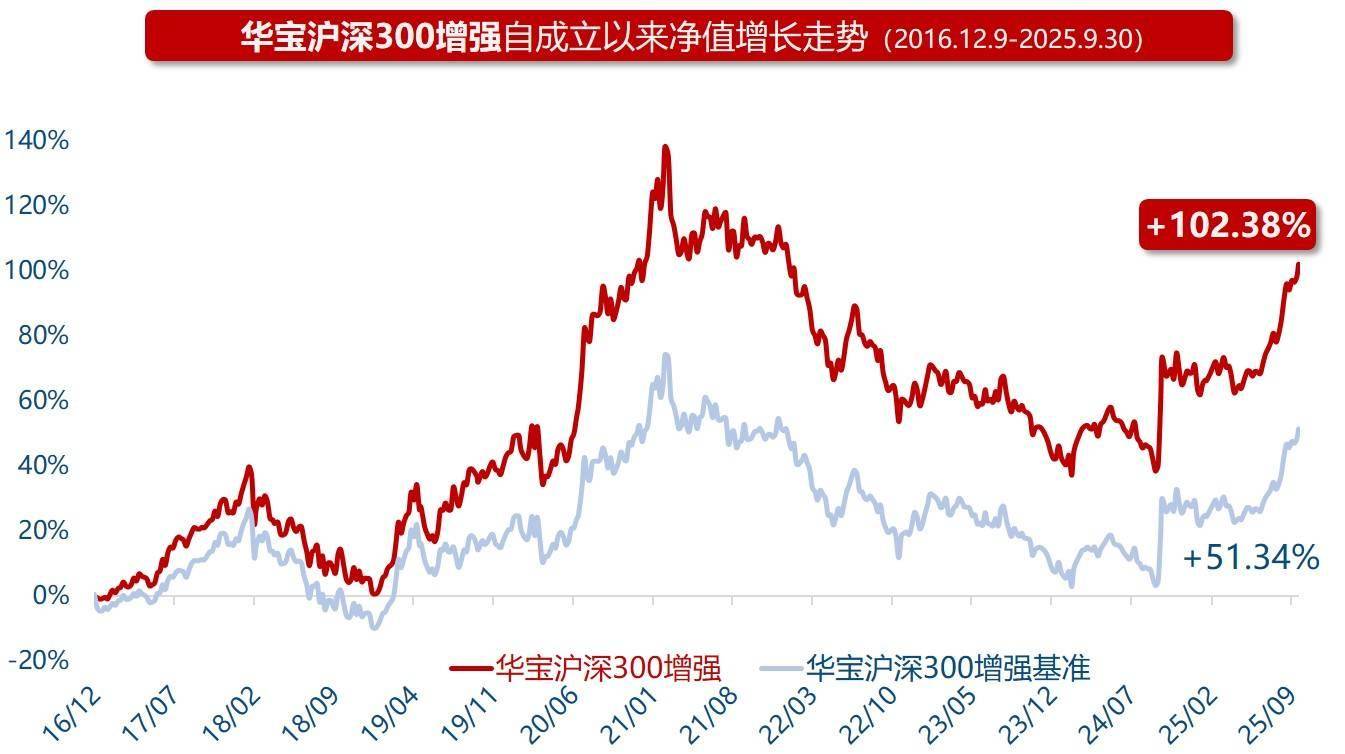
Core Viewpoint - The launch of the Huabao CSI 300 Enhanced Strategy ETF marks a significant addition to the growing market of enhanced index ETFs, reflecting a bullish sentiment in the A-share market and the increasing importance of the CSI 300 index as a core asset allocation tool in China [1][2]. Group 1: ETF Launch and Market Context - The Huabao CSI 300 Enhanced Strategy ETF (subscription code: 562073) officially launched on December 1, 2025, as the second enhanced index ETF introduced by Huabao Fund this year [1]. - The ETF will be listed on the Shanghai Stock Exchange under the abbreviation "CSI 300 Enhanced ETF" after its issuance [1]. - The overall A-share market is experiencing a recovery, with expectations of a slow bull market strengthening, making the performance of the new ETF highly anticipated [1][2]. Group 2: Competitive Landscape and Management - The enhanced index ETF segment has evolved from a niche category to a competitive field with numerous strong players, emphasizing the need for superior active management capabilities from fund managers [2]. - The Huabao CSI 300 Enhanced Strategy ETF will be co-managed by Wang Zheng and Xu Linming, highlighting Huabao Fund's commitment to this product [2]. - Xu Linming, the head of Huabao Fund's quantitative investment department, and Wang Zheng, a notable figure in quantitative investment, will oversee the ETF's management [2]. Group 3: Historical Performance and Strategy - The Huabao CSI 300 Enhanced Fund, managed by the same team since its inception in December 2016, has demonstrated strong long-term excess return capabilities, achieving a net value growth of 102.38% and an excess return of 51.04% as of September 30, 2025 [3][8]. - The fund has outperformed its benchmark in 7 out of 8 years from 2017 to 2024, showcasing the effectiveness of its investment strategy [3][8]. - The quantitative investment team at Huabao Fund has been dedicated to developing local quantitative investment strategies since 2005, leading to a robust track record in the market [3][8].
国金基金马芳:主动量化投资策略赋能 掘金硬科技与新成长
Zhong Guo Zheng Quan Bao· 2025-12-01 00:43
Core Insights - The article emphasizes that technological innovation and industrial upgrading are key drivers of high-quality economic development in China, with the Sci-Tech Innovation Board and the Growth Enterprise Market as primary platforms supporting this innovation [1][3]. Group 1: Investment Strategy - The Guojin Sci-Tech Innovation and Entrepreneurship Quantitative Stock Fund aims to leverage active quantitative investment strategies focused on the "Double Innovation" sector, selecting individual stocks to capitalize on "hard technology" and "new growth" opportunities [1][3]. - The fund invests at least 80% of its non-cash assets in the Sci-Tech Innovation Board and the Growth Enterprise Market, allowing for diversified allocation across sectors and market capitalizations [3][4]. Group 2: Market Characteristics - The "Double Innovation" sector is characterized by high levels of information, specialization, and volatility, making investment challenging; however, it also presents significant growth potential due to high R&D investments driving performance well above market averages [4][5]. - The Wande Double Innovation Index has shown significantly higher returns and risk-adjusted performance metrics compared to mainstream indices like the CSI 300 and the CSI 500 since 2020 [4]. Group 3: Quantitative Investment Approach - The fund employs a systematic model and strict risk control to address the challenges of investing in the "Double Innovation" sector, enhancing the probability of capturing quality growth stocks while minimizing non-systematic risks [5][6]. - Unlike traditional actively managed funds, the quantitative fund relies on model-driven strategies and comprehensive market coverage rather than deep fundamental research [5][6]. Group 4: Team and Technology - The Guojin Fund has a well-established quantitative research team with a strong background in mathematics and investment, having built its quantitative investment framework since 2013 [7]. - The team utilizes a wide range of data sources, including research reports and trading data, to construct dynamic predictive models that identify market opportunities that traditional strategies may overlook [7].

主动量化投资策略赋能 掘金硬科技与新成长
Zhong Guo Zheng Quan Bao· 2025-11-30 20:21
Core Insights - The article emphasizes that technological innovation and industrial upgrading are key drivers of high-quality economic development in China, with the Sci-Tech Innovation Board and the Growth Enterprise Market as primary platforms supporting this innovation [1][2] Investment Focus - The newly launched Guojin Sci-Tech Innovation and Entrepreneurship Quantitative Stock Fund aims to leverage active quantitative investment strategies, focusing on "hard technology" and "new growth" sectors to capitalize on economic growth and industrial transformation [1][2] - The fund will invest at least 80% of its non-cash assets in the Sci-Tech Innovation Board and the Growth Enterprise Market, allowing for diversified allocation across sectors and market capitalizations [1][2] Sector Characteristics - The "double innovation" sector is characterized by information explosion, high specialization, and strong volatility, making stock selection challenging due to rapid technological changes and varying company quality [3] - Companies in this sector exhibit high R&D investment, leading to performance growth that significantly outpaces market averages, as evidenced by the Wind Double Innovation Index outperforming major indices like CSI 300 and CSI 500 since 2020 [2][3] Quantitative Investment Strategy - The Guojin fund employs a systematic quantitative investment approach, which includes broad stock selection through technical models, strict risk control, and optimization of portfolios to achieve smoother long-term excess returns [3][4] - Unlike traditional actively managed funds, the quantitative fund relies on model-driven strategies and comprehensive market coverage rather than deep fundamental research [3][4] Team and Technology - Guojin Fund has a strong quantitative research team with extensive experience and a solid mathematical background, having established its quantitative investment framework since 2013 [4][5] - The team utilizes a wide range of data sources, including research reports and trading data, to build dynamic predictive models and enhance strategy effectiveness [4][5]
记者观察 | 投资的“终极智慧”:大道至简
Shang Hai Zheng Quan Bao· 2025-11-30 18:44
Group 1 - The core viewpoint of the articles highlights the changing market ecology, where traditional investment methods are becoming less effective due to the rise of quantitative investing and the deep application of artificial intelligence [1] - The Shanghai Composite Index has reached a ten-year high, yet many investors are underperforming compared to the index, indicating a disconnect between market performance and individual investor returns [1] - Quantitative private equity has altered market dynamics, changing trading speed, frequency, and the pricing mechanism, making it increasingly difficult for individual investors to achieve excess returns using traditional analysis methods [1] Group 2 - Investors must return to the essence of investing, which is understanding the intrinsic value of companies rather than merely speculating on price movements [2] - The article emphasizes that short-term price fluctuations are often amplified by algorithms, but long-term prices will eventually revert to value, highlighting the importance of a value-based investment approach [2] - Successful investors are those who focus on fundamental research of companies, accurate industry trend analysis, and a clear understanding of their own capabilities [2] Group 3 - The concept of "abandoning cleverness" does not mean rejecting modern investment tools; rather, it suggests that investors should use these tools to enhance their value investment philosophy [3] - Investors can utilize quantitative models to filter companies based on specific financial metrics and monitor industry trends using big data, but final investment decisions should be based on independent thinking [3] - The long-term value of a company is considered its "root," and anchoring investment decisions to this value is essential for successful investing [3]
牛市淘汰赛:如何抓住那20%的牛股?
Sou Hu Cai Jing· 2025-11-30 15:17
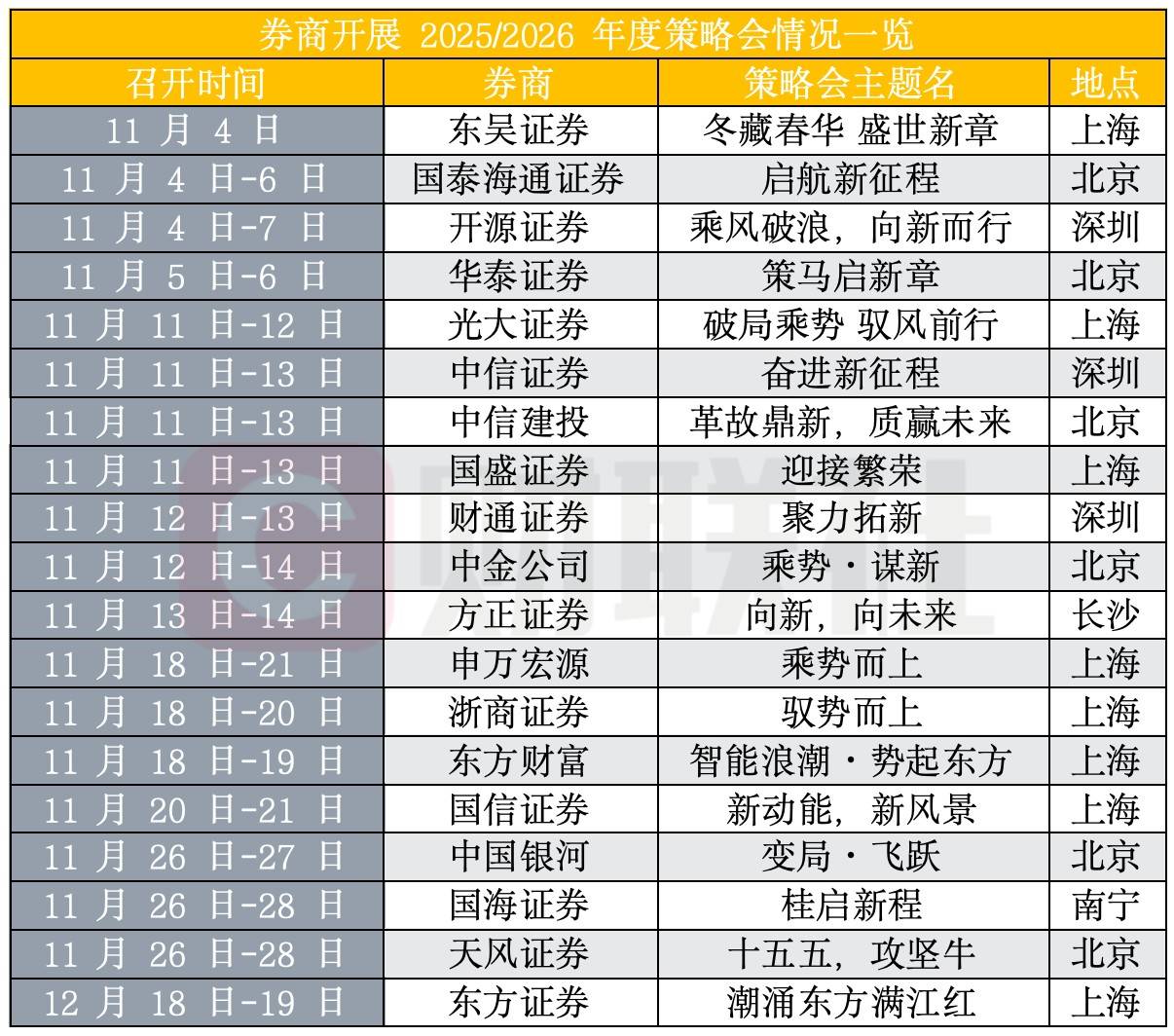
Group 1 - Major securities firms are holding their annual strategy meetings for 2025/2026, with 15 firms already scheduled and more expected to join [1][2] - The themes of these meetings include "New Journey," "Intelligent Wave," and "Fifteen Five, Striving for Bull Market," reflecting a focus on innovation and adaptation to current market conditions [1][2] Group 2 - The strategy meetings reveal four key characteristics: frequent use of the word "new," alignment with current trends, adherence to policy directions, and emphasis on trend identification [3] - A notable increase in cross-border ETF inflows, with a 300% year-on-year rise, indicates significant institutional interest in international markets [3] Group 3 - The market is described as a brutal elimination race, with only 40% of stocks rising in 2025 and only 8% achieving over 100% gains, suggesting that the majority of investors are merely participating without substantial returns [4] - Two key rules for identifying potential bull stocks are highlighted: scarcity of good stocks attracts attention from both retail and institutional investors, and significant price increases often require a "washing out" of speculative positions [5] Group 4 - Behavioral finance principles suggest that large capital movements leave identifiable traces, which can be analyzed to predict stock movements [11] - The strategy meetings showcased advancements in AI and data analysis, emphasizing the importance of developing a "data mindset" to understand market dynamics beyond traditional technical analysis [12] Group 5 - Recommendations for ordinary investors include creating a watchlist of stocks with unusual capital movements that have not yet seen price increases, exercising patience in waiting for clear signals, and managing emotions to avoid being swayed by short-term market fluctuations [14]
量化数据揭秘:牛市中80%人亏钱真相
Sou Hu Cai Jing· 2025-11-30 12:19
Group 1 - The core viewpoint of the article highlights the volatility and potential pitfalls in the market, particularly in the context of the silicon industry and stock price movements [1][2][3] - The article discusses the recent price surge in the silicon sector, driven by supply constraints and increased demand, but warns that this may not be sustainable as institutional investors may be offloading shares while retail investors rush in [2][4] - It emphasizes the discrepancy between index performance and individual stock movements, suggesting that a rising index does not necessarily indicate broad market strength, as evidenced by the decline in the percentage of stocks rising alongside the index [2][3] Group 2 - The article presents a cautionary tale about the dangers of following market trends blindly, particularly when media coverage is overwhelmingly positive, indicating a potential market peak [5][6] - It advises investors to be wary of unusual market behaviors, such as a rising index accompanied by falling individual stock prices, which could signal underlying weaknesses [5][6] - The importance of utilizing quantitative tools to track real capital flows and identify genuine market trends is stressed, as this can provide a competitive edge in an information-asymmetric environment [5][6]