AI芯片

Search documents
以NV服务器分销商的身份分析H200的放开
是说芯语· 2025-12-09 06:37
Group 1: Reasons for the U.S. Lifting Restrictions on H200 - The primary reason for the U.S. lifting restrictions on H200 is to clear inventory, as NVIDIA's H200 stock is concentrated among NV and OEM manufacturers, while upstream Taiwanese ODMs have low inventory levels [3][4] - The U.S. data centers are facing power supply issues, which is a significant challenge for expansion, making it difficult to absorb older models like H100/H200 domestically [4] - The ideal solution for NVIDIA is to legally sell H200 to China if it cannot be consumed in the U.S. market [4] Group 2: China's Perspective on H200 - There is a divided opinion in China regarding the lifting of H200 restrictions, with some believing that domestic AI chips are not yet competitive, while others argue that agreeing to U.S. terms undermines domestic chip development [5][6] - From an economic standpoint, there is no reason for China to impose a ban on H200, especially given the current market dynamics [6] Group 3: Impact on the Domestic Market - H200 has practical application value for Chinese customers, particularly in training scenarios, while domestic AI chips are primarily used for inference tasks [10] - The competition between H200 and domestic GPUs is limited, as H200 does not directly compete with domestic GPU cards [11] - The rising memory prices mean that even if H200 modules drop in price by $10,000, the overall cost savings will be minimal, thus not significantly improving economic viability [12] Group 4: Market Sentiment and Future Outlook - The news about the lifting of H200 restrictions has led to market fluctuations and intense discussions, but the actual impact is limited, with key factors being policy direction, market demand, and funding conditions rather than just technical availability [14]


H200是不是要让中国“上瘾”?
Guan Cha Zhe Wang· 2025-12-09 06:31
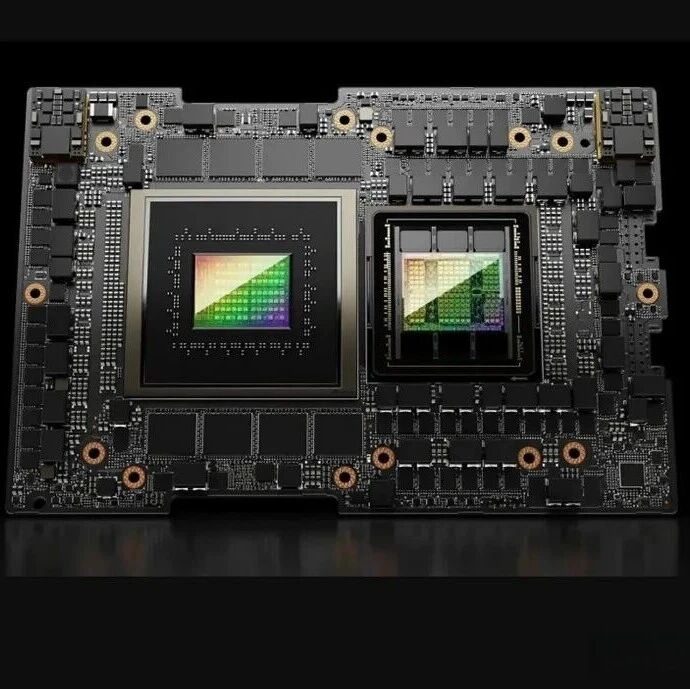
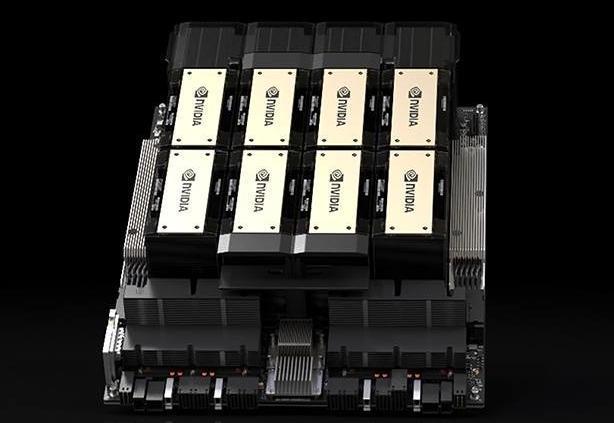
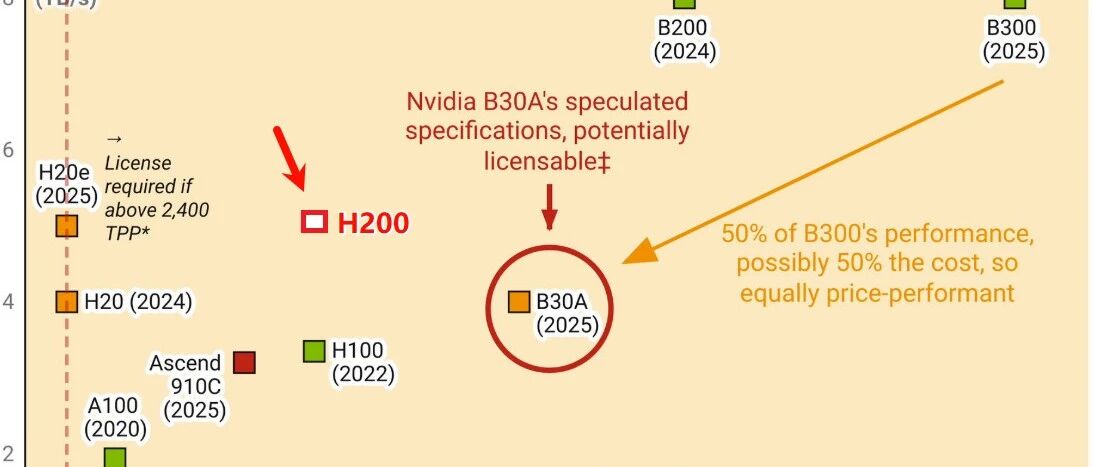
Core Viewpoint - The recent announcement by President Trump allowing Nvidia to export its H200 AI chips to China marks a significant easing of the U.S. technology containment policy, reflecting economic pressures and strategic fatigue within the U.S. government [1][8]. Group 1: Nvidia H200 Chip Overview - The H200 chip, based on the Hopper architecture, is a top-tier GPU launched at the end of 2023, designed for generative AI and large language model training and inference optimization [1]. - The H200 features 141GB of HBM3e high-speed memory with a bandwidth of 4.8TB/s, nearly double that of its predecessor, the H100, which has 80GB of HBM3 and 3.35TB/s bandwidth [1]. - The H200's performance in handling large-scale models, such as Llama2 with 70 billion parameters, shows nearly a 100% improvement in inference performance compared to the H100 [1]. Group 2: Market Implications for China - The introduction of the H200 chip fills the performance gap between the H20 (a downgraded version for China) and the upcoming Blackwell architecture, providing a significant boost to Chinese AI capabilities [4]. - The total processing performance (TPP) of the H200 is approximately ten times the previous export control limits set by the U.S. [4]. - Despite the potential benefits, the market reaction to the H200's availability was muted, as leading Chinese AI teams had already accessed advanced chips through Cloud Service Provider (CSP) channels [4][5]. Group 3: CSP Model and Domestic Chip Market - The CSP model allows Nvidia and other companies to sell top-tier AI chips to select Chinese cloud service providers, who then offer computing power to various AI companies, circumventing direct sales bans [5]. - Current domestic AI chip manufacturers have not significantly penetrated the CSP market, with most relying heavily on the domestic market, particularly in the Xinchuang sector [5]. - The introduction of the H200 may not immediately impact domestic chip sales, but it could pose long-term challenges by increasing dependency on Nvidia's ecosystem [5]. Group 4: Strategic and Political Context - The easing of restrictions on the H200 is viewed as a diplomatic victory for China, showcasing its strategic patience and leverage in U.S.-China relations [8]. - Nvidia's CEO expressed uncertainty about whether China would accept the H200, highlighting the critical importance of the Chinese market to Nvidia's revenue [8]. - The U.S. political landscape is divided on this issue, with some viewing the decision as a significant economic and national security failure, while others see it as a necessary compromise for business interests [9].
特朗普放开英伟达H200芯片对华出口,有何影响?
Nan Fang Du Shi Bao· 2025-12-09 06:05
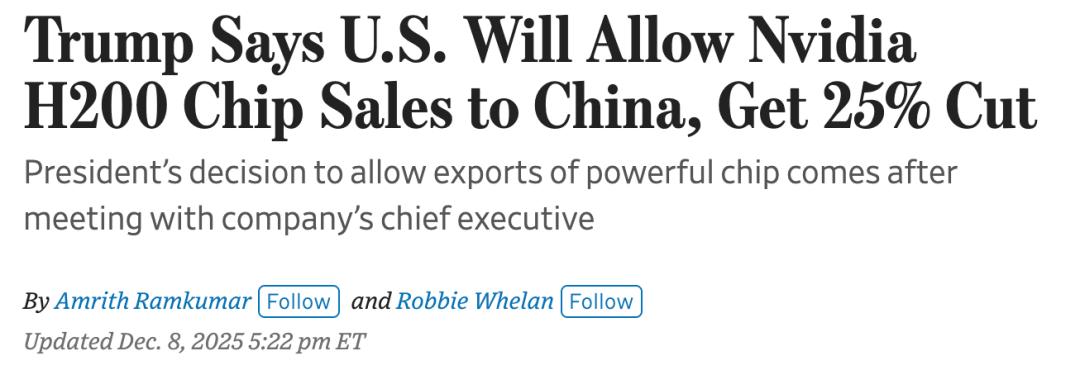
Core Viewpoint - The U.S. government has allowed NVIDIA to export H200 chips to China under national security conditions, with a 25% revenue share to the government, while the latest Blackwell and Rubin architecture AI chips are excluded from this approval [2][3]. Group 1: NVIDIA's Position and Strategy - NVIDIA's spokesperson expressed appreciation for President Trump's decision, viewing it as a way to support U.S. jobs and manufacturing by allowing participation in the competitive market [3]. - CEO Jensen Huang has been lobbying for relaxed export restrictions, noting that NVIDIA's market share in China's AI chip market has dropped from 95% to 0%, indicating that U.S. restrictions could harm both China and the U.S. [3]. - To maintain its presence in the Chinese market, NVIDIA agreed to pay 15% of its sales revenue from China for H20 chip exports, which has now increased to 25% for H200 exports [3]. Group 2: Impact on Domestic AI Chip Industry - If H200 exports to China are compliant, there may be implications for the overseas production of domestic AI chips, potentially shifting the focus from restricting models to restricting domestic chip production [4]. - Currently, domestic AI chips lag behind NVIDIA's H200, with most domestic products still at the performance level of NVIDIA's A100, while a few companies are approaching H100 performance through advanced packaging techniques [4]. - Domestic AI chip companies face challenges in attracting internet company clients, as these companies prefer international products due to considerations of cost-effectiveness and competitive ecosystems [5]. Group 3: Market Dynamics and Competition - Major Chinese internet companies like ByteDance, Tencent, Alibaba, and Baidu are projected to account for 87% of H20 chip shipments in 2024, indicating a strong preference for NVIDIA's products [5]. - Domestic chip manufacturers must differentiate their products significantly to survive in the market once H200 is available, or they may struggle to compete effectively [5].
突发,英伟达H200对华解禁,老黄赢麻了
3 6 Ke· 2025-12-09 03:44
Core Insights - Nvidia's H200 chip has been approved for sale to China, with the condition of a 25% revenue share to the U.S. government, marking a significant development in the semiconductor industry [1][3][7] Group 1: Approval and Market Impact - The approval of the H200 chip allows Nvidia to maintain its market dominance while generating substantial revenue through the imposed 25% fee [7][15] - Following the announcement, Nvidia's stock price saw a slight increase, raising its market capitalization to $4.51 trillion [4] - The H200 chip's performance is six times that of the previous H20 model, making it suitable for training and inference tasks, although it still lags behind the latest Blackwell architecture [9][14] Group 2: Strategic Implications - The U.S. government's strategy aims to leverage high-performance chip exports to secure market dominance and establish technological standards centered around the U.S. [7][17] - Nvidia's CEO Jensen Huang has indicated that China represents a $50 billion market opportunity for the company, highlighting the significance of this approval [17] - The approval comes after Nvidia successfully lobbied against the inclusion of the "GAIN AI Act," which would have prioritized U.S. customers for AI chip supplies, indicating a favorable regulatory environment for Nvidia [17]
H200放开的理性分析
傅里叶的猫· 2025-12-09 02:50
Core Viewpoint - The article discusses the potential release of NVIDIA's H200 in China, analyzing the implications from both the U.S. and Chinese perspectives, focusing on inventory clearance and market dynamics. Group 1: Reasons for U.S. Release - NVIDIA's CEO is advocating for the release of H200 to clear inventory, as the current market is dominated by the B series products, making it difficult to sell H200 in the U.S. [2] - The U.S. data centers are facing power supply issues, and the newer Blackwell architecture is more energy-efficient, leading to a gradual phase-out of older models like H100/H200. [2] - The ideal solution for NVIDIA is to legally sell H200 to China if it cannot be absorbed in the U.S. market. [2] Group 2: China's Attitude - There is a divided opinion in China regarding the release of H200; some believe that domestic AI chips are not yet competitive, while others fear that agreeing to the release could hinder local chip development and give the U.S. leverage. [3][11] - Economically, there seems to be no strong reason for China to ban the import of H200. [4] Group 3: Performance and Market Impact - The performance of H200, particularly in terms of computing power and memory bandwidth, currently exceeds that of domestic AI chips. [5] - Many existing codes are based on the Hopper architecture, making H200 easy to integrate for large companies. [8] - The domestic production capacity for high-end GPUs is not expected to significantly increase until 2027, indicating a continued reliance on foreign technology. [8] Group 4: Implications for Domestic Market - H200 has practical applications for Chinese customers, primarily in training scenarios, while domestic chips are more suited for inference tasks. [12] - The economic benefits of H200 may be limited due to rising memory prices, which could offset any price reductions. [13] - The overall impact of H200 on domestic GPU cards is expected to be minimal, as it does not directly compete with them. [13] Group 5: Market Reactions - The news about H200's potential release has caused market fluctuations, but the actual impact is likely to be limited, with key factors being policy direction, market demand, and funding conditions rather than just technical availability. [14]
英伟达回应获准对华出口H200芯片
第一财经· 2025-12-09 02:38
Core Viewpoint - The approval of NVIDIA to export its H200 AI chips to China marks a significant lobbying victory and could help the company recover billions in lost business in this critical global market [1] Group 1 - President Trump has approved NVIDIA's export of H200 AI chips to China, with the condition that the U.S. government will take a 25% cut from the sales [1] - The decision follows weeks of discussions between Trump and his advisors regarding the approval of the chip exports [1] - Sales will be limited to "approved customers," and other chip manufacturers like Intel and AMD will also be eligible to obtain licenses for sales to China [1] Group 2 - NVIDIA responded positively to the news, stating that supplying H200 to commercial customers is a commendable initiative [1]
英伟达慌了,特朗普也慌了,终于批准H200芯片卖给中国了
Sou Hu Cai Jing· 2025-12-09 02:28
估计他真的没有想到过,有一天他在中国市场的份额会变为0。 但在2025年,这样的事情就发生了,美国不允许他销售先进的AI芯片,而中国发现H20有后门,同时再 加上国产AI芯片崛起。 英伟达作为全球AI芯片巨头,一度垄断全球95%以上的市场份额,在中国也是如此,市场份额最高时超 过95%。 于是黄仁勋又希望特朗普能够放开禁令,销售一点更强大的芯片,比如H200。 而在传了这么久之后,终于确定了,在黄仁勋的不断游说之下,特朗普政府肯定也慌了,因为中国是真 的不买H20,全面国产替代了,这可不是美国愿意看到的。 所以近日,特朗普政府终于放开了H200,只是要求销售额的25%上交政府,这个黄仁勋肯定是没问题 的,利润那么高,交25%而已,只要不丢了市场就行。 于是英伟达真的在中国市场份额降至0了。 这让黄仁勋有点慌了,他不断的游说政府,希望放开禁令。为了让他的游说产生效果,各种说中国AI 芯片市场规模高达500亿美元,如果不卖给中国,中国就会自己制造出先进的AI芯片来,以后就没有美 国公司的事了。 黄仁勋更说,美国要在AI上保持领先的基础,是让中国用美国的AI芯片,这样美国控制着基础算力, 相当于中国的AI是在美国的 ...
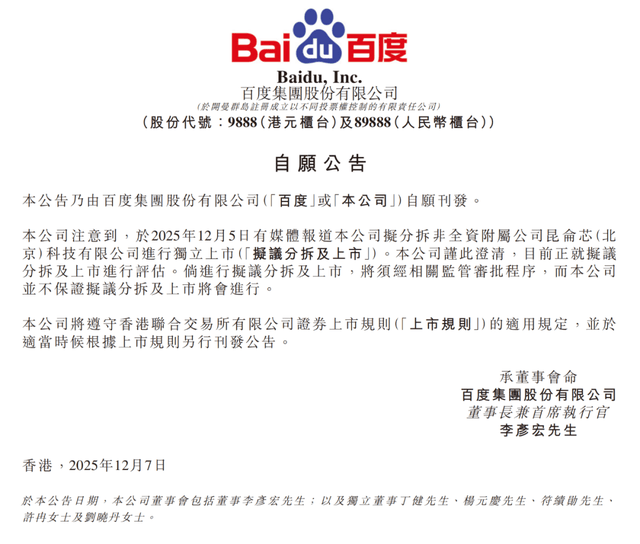
昆仑芯拟独立上市,百度确认处于评估阶段
Sou Hu Cai Jing· 2025-12-09 01:54
Group 1 - The core point of the news is that Baidu Group is evaluating the potential spin-off and independent listing of its subsidiary Kunlun Chip (Beijing) Technology Co., Ltd., with no guarantee that the process will proceed [1] - Kunlun Chip has reportedly initiated preparations for a Hong Kong listing, aiming to submit its application to the Hong Kong Stock Exchange in the first quarter of 2026, with a target IPO completion in early 2027 [3] - Following the news, Baidu's stock price surged by 5.01% to HKD 121.60 at the close on December 5 [4] Group 2 - Kunlun Chip, incubated internally by Baidu, completed its first round of financing in April 2021 with an initial valuation of approximately RMB 13 billion, and Baidu holds a 59.45% stake [4] - As of July 2025, Kunlun Chip has completed its D round of financing, attracting investments from notable institutions [4] - The market competitiveness of Kunlun Chip is recognized, with projected revenues exceeding RMB 1 billion in 2024, surpassing other companies in the sector [6] - Morgan Stanley forecasts that Kunlun Chip's revenue will increase from approximately RMB 1.3 billion in 2025 to RMB 8.3 billion in 2026, representing a sixfold growth [6]
沐曦股份申购热度超摩尔线程 预期明年盈利值多少溢价?
Sou Hu Cai Jing· 2025-12-09 01:37
在摩尔线程(688795.SH)上市首日被市场"预付"约3000亿元市值之后,沐曦股份(688802.SH)即将登 陆科创板,再度考验资本对国产算力的买单意愿。 12月7日,沐曦股份公告其科创板IPO网上发行最终中签率为0.03348913%,低于此前摩尔线程的 0.03635%,足见投资者申购热情高涨。 作为专注于高性能通用GPU及AI推理芯片的硬科技企业,沐曦股份不仅吸引了国家人工智能产业投资 基金等重量级战略投资者,更在网下询价阶段引发机构抢筹。 根据发行安排,沐曦股份以104.66元/股的价格公开发行4010万股,若发行后总股本为40010万股,对应 发行市值将达418.74亿元。若市场情绪复刻摩尔线程首日约425%的收盘涨幅,沐曦股份股价将冲至约 595元,对应市值一举突破2300亿元——这意味着二级市场愿为其未来技术兑现与盈利前景"预付"近 1900亿元的估值溢价。 与尚无明确盈利时间表的摩尔线程不同,沐曦股份给出"达到盈亏平衡点的预期时间最早为2026年"的预 期,这份"可预期的商业化能力"会否让市场支付更高昂的"预付款"?答案不久将揭晓。 沐曦股份接棒摩尔线程,引爆年末打新热潮 上周五(12月 ...
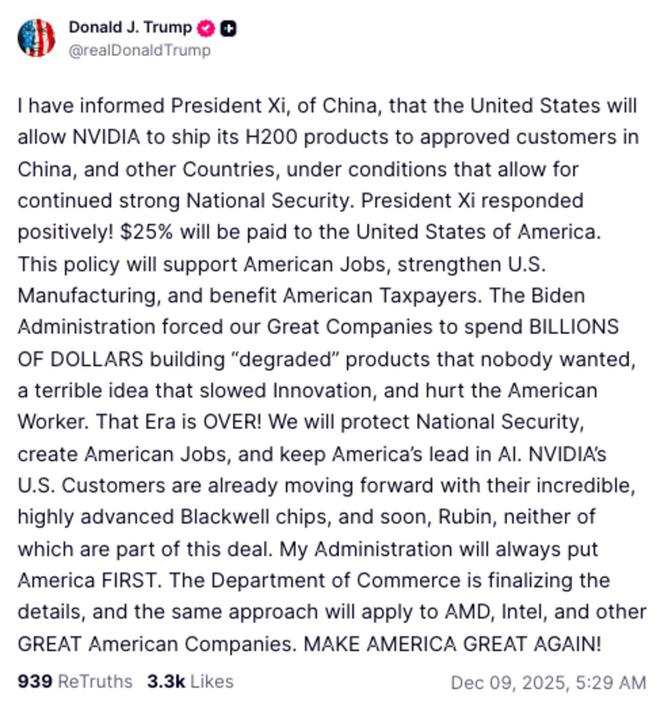
突发!特朗普宣布,美国允许英伟达对华出售H200芯片,Blackwell和Rubin除外
Tai Mei Ti A P P· 2025-12-09 00:16
Core Viewpoint - The U.S. government has allowed NVIDIA to export its H200 chips to qualified customers in China and other countries, while emphasizing that more advanced chips like Blackwell and Rubin are still restricted [1][3]. Group 1: Export Regulations and Impact - NVIDIA has faced significant challenges regarding chip exports to China, particularly after the U.S. imposed restrictions requiring export licenses for high-end chips [3]. - The company previously dominated the market with a special version of the H20 chip, but sales to China have drastically declined, with CEO Jensen Huang stating that sales dropped from 95% to 0% [3]. - In Q3, NVIDIA's AI chip sales in China amounted to only $5 million, representing just 0.09% of total revenue, indicating a severe impact on the company's market presence [3]. Group 2: Government Relations and Future Prospects - NVIDIA has successfully lobbied against further restrictions on chip exports, preventing the inclusion of the GAIN AI Act in the National Defense Authorization Act [4]. - The H200 chip, which is more advanced than the H20, is expected to have a better chance of re-entering the Chinese market, although it still requires approval from Chinese authorities after receiving U.S. export licenses [4]. - There is uncertainty regarding whether China will accept the H200 chip, as NVIDIA cannot compromise on product quality to meet market demands [4].