
产教融合

Search documents
数商兴农“双师型”名师团队如何赋能职业教育可持续发展
Yang Shi Wang· 2025-12-11 09:47
Core Insights - The integration of digital economy and rural revitalization has led to a rapid development of the agricultural industry, creating a pressing demand for versatile and practical talents [1] - The "dual-teacher" model serves as a crucial vehicle for industry-education integration, aiming to enhance vocational education and align talent cultivation with industry needs [1] Group 1: Industry Alignment - The studio conducted in-depth research to identify new trends in the digital agriculture industry, ensuring that students' career development starts from a precise industry alignment [2] - Collaboration with enterprises has led to the development of a comprehensive teaching mechanism that includes professional construction, curriculum development, and shared resources [3] - Regular adjustments to the curriculum and teaching modules are made based on real-time industry feedback, ensuring that educational content remains relevant and aligned with market demands [4] Group 2: Skill Development - A dual-track teaching system combining theory and practice has been established to solidify students' foundational skills and broaden their career development paths [5] - Real-world projects are utilized to enhance students' core skills, allowing them to engage in tasks that develop their digital business capabilities and teamwork [6] Group 3: Outcome Transformation - The quality of employment serves as a direct measure of the effectiveness of vocational training, with students demonstrating strong competitiveness in the job market [8] - The studio has produced innovative educational resources, such as specialized textbooks and online courses, which have contributed to students' practical skills and competitive edge [9] - The studio's contributions to social development and recognition from various sectors highlight its effectiveness in talent cultivation and its role in supporting rural revitalization [10] Group 4: Comprehensive Impact - The "dual-teacher" model has created a precise empowerment system that transforms industry knowledge into transferable core skills for students, witnessing multidimensional outcomes in their career development [11]
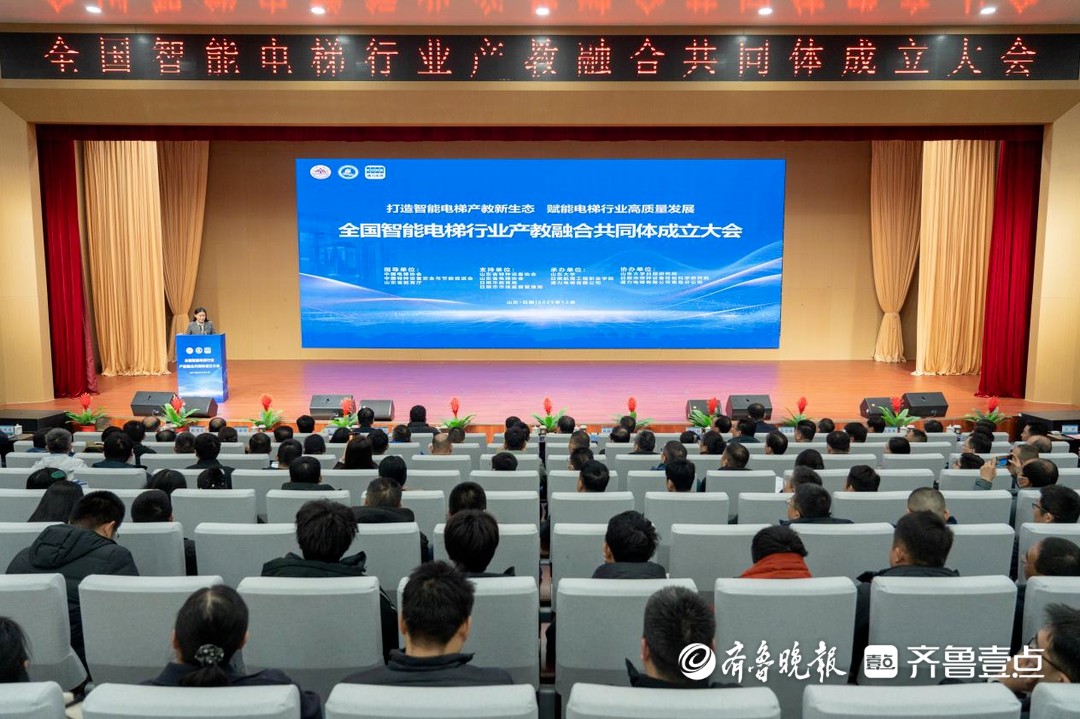
全国智能电梯行业产教融合共同体在日照成立
Qi Lu Wan Bao· 2025-12-11 08:45
Core Viewpoint - The establishment of the National Smart Elevator Industry Education-Industry Integration Community marks a significant step towards systematic and practical operation in the smart elevator sector, aligning with the national strategy for deepening education-industry integration [1][3]. Group 1: Formation and Structure - The community was initiated by Shandong University, Rizhao Navigation Engineering Vocational College, and KONE Elevator Co., Ltd., gathering 130 educational institutions and industry organizations from 19 provinces [3]. - This initiative aims to create a new development pattern that integrates government, industry, enterprises, and educational institutions [3]. Group 2: Support and Development - The Vice Mayor of Rizhao emphasized the city's commitment to supporting the community's development, aiming to establish a high-quality talent training base in the smart elevator field [5]. - The Secretary-General of the China Elevator Association highlighted the increasing demand for skilled technical personnel in the industry, positioning the community as a crucial link between education and industry [5]. Group 3: Goals and Future Directions - The community aims to innovate talent training models, collaborate on key technology development, and provide precise services to the industry, contributing to the transformation and upgrading of the smart elevator sector [7]. - The establishment is seen as a practical outcome of deepening education-industry integration and promoting collaborative development between vocational education and industry [7].

赋能航空产业高质量发展 江苏航空职业技术学院科学技术协会成立
Yang Zi Wan Bao Wang· 2025-12-11 07:51
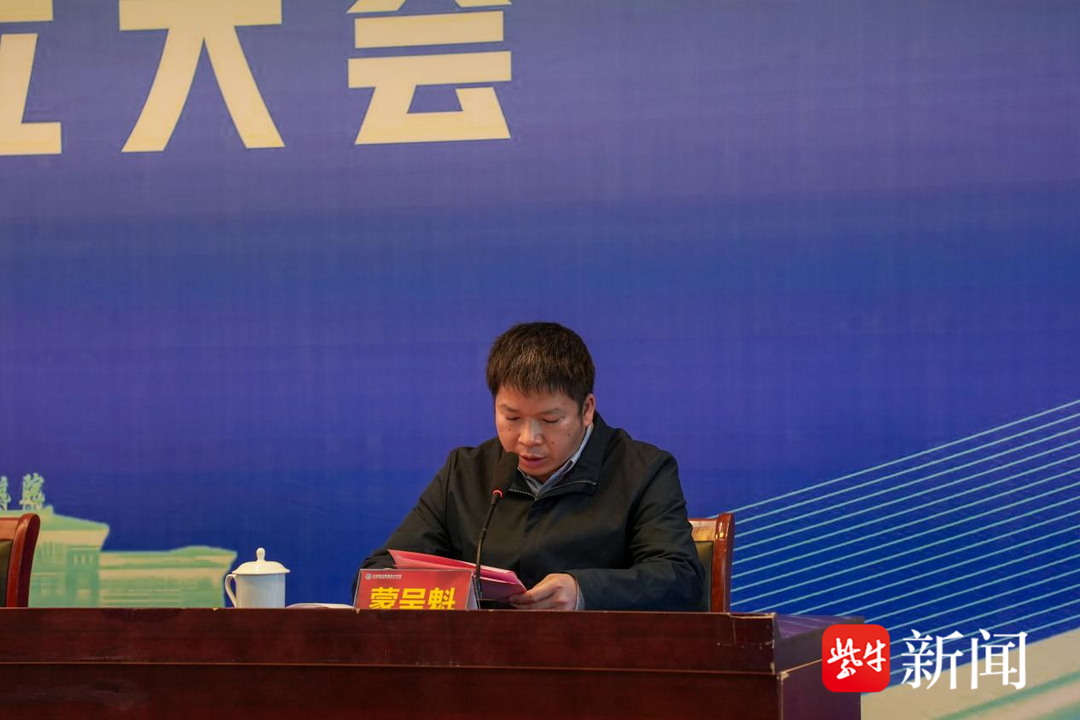
现场 扬子晚报网12月11日讯(通讯员宋静怡记者万凌云姜天圣)12月10日下午,在镇江市科协的指导下,江苏航空职业技术学院科学技术协会成立大会在大学 生"一站式"服务中心召开。镇江市科协党组成员、副主席翟海,镇江经开区科信局党组书记、局长蒙呈魁,学院党委书记谭坚强,党委副书记、院长高尚 兵,党委副书记戴金跃以及学校会员共150余人参会。会议由戴金跃主持。 现场 现场 大会在全体奏唱国歌的庄严气氛中正式拉开序幕。蒙呈魁首先致辞,他对学校科协的成立表示热烈祝贺,充分肯定了江苏航空职业技术学院在航空职业教 育领域的办学特色与科技创新基础。他指出,高校科协是推动高校科技事业发展的重要力量,希望学校科协成立后,紧紧围绕服务国家航空产业发展战略 和地方经济社会发展需求,搭建高水平科技创新平台,促进产教融合,激发科技工作者创新活力,在学术交流、技术创新、人才培养等方面展现新作为, 为镇江乃至江苏航空产业高质量发展贡献智慧和力量。 会上,翟海宣读《关于同意成立江苏航空职业技术学院科协的批复》。 学校科研处仪杰宣读了江苏大学、镇江市高等专科学校科协对该校科协成立的贺信。 现场 现场 现场 谭坚强在讲话中表示,科技创新是院校内涵 ...
威海高区总工会:“三级”技能人才培育体系赋能产改
Qi Lu Wan Bao· 2025-12-11 06:59
Group 1 - The core viewpoint of the news is the establishment of a three-tiered skill talent cultivation system in Weihai High-tech Zone, which includes "Craftsman Colleges, Training Stations, and Innovation Studios" to support regional industrial development [1] Group 2 - Craftsman Colleges serve as the core engine driving the innovation system, with 4 colleges integrating resources from enterprises, schools, and industries, developing 253 standardized courses, and training over 400 high-level talents [2] - The colleges facilitate a virtuous cycle of skill development, providing support to training stations and addressing the technical upgrade needs of innovation studios, contributing to over 150 million yuan in additional revenue for enterprises through project outcomes [2] Group 3 - Craftsman Training Stations act as key hubs linking education and industry, with 4 new stations established this year, conducting over 120 specialized training sessions and covering more than 2300 technical workers [3] - The training stations focus on industry-specific training paths, such as precision manufacturing for high-end medical devices and welding technology for nuclear safety, effectively bridging skill learning with production applications [3] Group 4 - Innovation Studios are embedded in the production frontline, focusing on practical production issues and achieving a "problem-oriented, rapid response, results transformation" work mechanism, with 331 studios completing 2317 micro-innovation and technical improvement projects this year [4] - These studios have generated direct economic benefits exceeding 52 million yuan through 576 process optimizations, while also nurturing over 1200 junior skilled talents, laying a solid foundation for the talent pipeline [4]
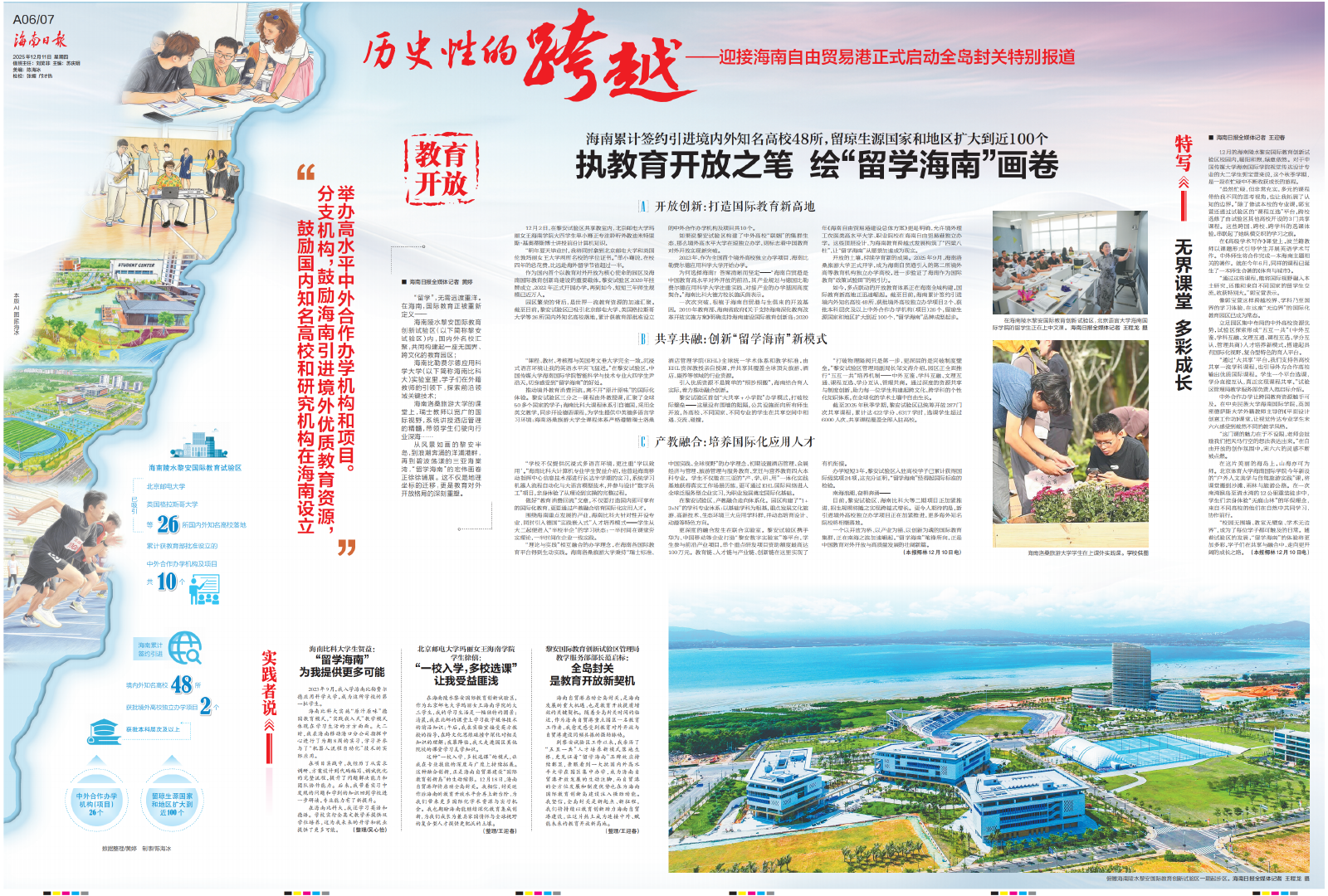
历史性的跨越丨执教育开放之笔 绘“留学海南”画卷
Hai Nan Ri Bao· 2025-12-11 03:16
Core Viewpoint - Hainan is redefining international education by establishing the Lingshui Li'an International Education Innovation Pilot Zone, attracting renowned domestic and foreign universities to create a borderless, cross-cultural educational environment [1][3]. Group A: Open Innovation - Building an International Education Hub - The Lingshui Li'an Pilot Zone has attracted 26 well-known universities, including Beijing University of Posts and Telecommunications and the University of Glasgow, and has established 10 Sino-foreign cooperative education institutions and projects [4][6]. - The zone aims to facilitate the independent operation of foreign universities, marking a new breakthrough in China's educational openness [5]. - As of 2025, the zone has signed agreements with 48 domestic and foreign universities, expanding the source countries and regions for students to nearly 100 [7][16]. Group B: Shared Integration - Innovating the "Study in Hainan" Model - The Pilot Zone offers a unique educational experience with one-third of courses taught by foreign professors, creating an immersive language environment for students from over 50 countries [8][9]. - The "Big Sharing + Small College" model promotes resource sharing among institutions, allowing students to engage in cross-disciplinary and cross-cultural learning [9][17]. - By the fall semester of 2025, the zone has opened 287 shared courses, accumulating 422 credits and 6,317 class hours, with over 6,000 students participating [10]. Group C: Industry-Education Integration - Cultivating International Application Talent - The Pilot Zone emphasizes practical learning, with students participating in internships and projects that align with local industry needs, such as the "half school, half enterprise" model adopted by Hainan University of Applied Sciences [12][14]. - The Hainan Lausanne University and Hainan University of Applied Sciences have established programs that integrate theory with practice, preparing students for international careers [12][14]. - The zone has created a "1+3+N" academic system focusing on cultural tourism, high-tech, and ecological environment disciplines, fostering a comprehensive talent development approach [14].
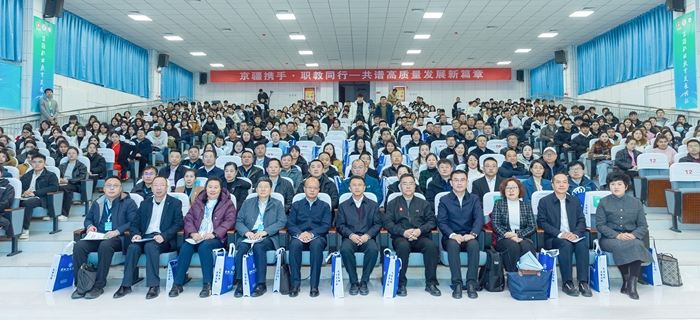
京疆携手、职教同行,京疆职业教育发展论坛在和田举办
Xin Jing Bao· 2025-12-10 23:37
Core Viewpoint - The "Beijing-Xinjiang Vocational Education Development Forum" aims to enhance collaboration between Beijing and Xinjiang in vocational education, focusing on high-quality development and resource sharing [1][14]. Group 1: Forum Overview - The forum was co-hosted by the Beijing Aid Xinjiang Hetian Command, the Hetian Regional Administrative Office, and Capital Normal University, gathering nearly 500 participants from various educational institutions and enterprises [1][3]. - The theme of the forum is "Beijing and Xinjiang Work Together in Vocational Education - Co-writing a New Chapter of High-Quality Development" [1]. Group 2: Government and Institutional Support - The Deputy Secretary of the Hetian Regional Committee emphasized vocational education as a cornerstone for improving livelihoods and supporting industrial upgrades, with plans to deepen one-on-one assistance mechanisms and strengthen dual-teacher training [3][6]. - The Vice President of Capital Normal University highlighted the need for policy alignment and collaboration with government departments to enhance educational pathways and industry integration [5][6]. Group 3: Expert Contributions and Insights - Experts shared insights on vocational education policies and development strategies, with a focus on the achievements of the Beijing-Xinjiang vocational education collaboration project over the past two years [7]. - The forum featured discussions on sustainable collaborative development mechanisms and new models for integrating education and industry [12][14]. Group 4: Practical Outcomes and Achievements - The "Master Workstation" was officially launched during the forum, with certificates awarded to seven specially appointed experts and three outstanding instructors, aiming to strengthen professional collaboration [8][10]. - The Beijing-Xinjiang vocational education collaboration project has resulted in over 380 achievements in areas such as professional development and curriculum design, significantly enhancing teaching management capabilities [14].
县域“长出”的大学,把“根”扎进地方产业里
Qi Lu Wan Bao· 2025-12-10 16:23
Core Viewpoint - The article highlights the significant role of Weifang Business Vocational College in nurturing skilled talent that supports local industries in Zhucheng, contributing to the region's industrial growth over the past 20 years [2][3]. Group 1: Contribution to Local Industries - Graduates from Weifang Business Vocational College are integral to various local enterprises, particularly in the automotive and food industries, showcasing their skills in production and technology [2][3]. - The college has cultivated over 200,000 graduates since its establishment, with many contributing to the industrial development of Zhucheng and surrounding areas [3]. - Alumni are found in key positions across local companies, such as Shandong Meichen Technology Co., where numerous graduates work in critical roles [3]. Group 2: Industry-Education Integration - Weifang Business Vocational College actively integrates industry knowledge into its curriculum by involving industry professionals as instructors, enhancing the practical relevance of education [5][6]. - The college has established multiple industry-specific academies in collaboration with leading companies, creating a robust framework for practical training and skill development [7][8]. - The institution has developed a comprehensive approach to talent cultivation, ensuring that educational programs align closely with the needs of local industries [6][8]. Group 3: Curriculum and Professional Development - Approximately two-thirds of the college's 51 programs are engineering-related, reflecting a strong alignment with local industrial demands [8]. - The college engages in order-based training and apprenticeship programs with local companies, aiming to produce nearly 6,000 skilled graduates in 2024 alone [8]. - The establishment of a national pre-prepared food industry education integration community demonstrates the college's commitment to collaborative skill development and industry standards [8]. Group 4: Future Vision - The college aims to deepen its roots in local industries while expanding its influence, emphasizing the importance of integrating education with regional industrial growth [9].
教育部:60多名工程硕士毕业生以实践成果获学位
Zhong Guo Jing Ji Wang· 2025-12-10 14:36
Core Viewpoint - The Ministry of Education's reform in cultivating outstanding engineers establishes a new evaluation standard focused on integrating education with industry by replacing traditional thesis requirements with practical achievements, marking a significant shift in higher education in China [1][2]. Group 1: National Strategy Orientation - The reform emphasizes alignment with national strategic needs, focusing on 18 key areas such as integrated circuits and artificial intelligence, which are critical for national development [1]. - The Ministry of Education has accelerated the establishment of master's and doctoral programs in these strategic fields, exceeding the traditional three-year cycle for academic program adjustments, resulting in over 20% of academic programs being optimized since 2023 [1]. Group 2: Curriculum and Content Update - The reform employs the "Four Commons" and "Four Connections" as innovative paradigms, leading to a comprehensive restructuring of training programs, course systems, faculty teams, teaching materials, and practical innovation [2]. - This systematic overhaul aims to enhance the intrinsic quality of existing academic disciplines, providing a reference for updating other professional fields [2]. Group 3: New Evaluation Standards - The reform introduces a new evaluation standard by allowing practical achievements to replace traditional thesis requirements, which has already resulted in over 60 engineering master's graduates receiving degrees based on practical outcomes [2]. - This reform is expected to act as a lever for the classification development and evaluation of the entire academic discipline system, further promoting the integration of education, talent, industry, and innovation chains [2].
深化产教融合!多方合力建强卓越工程师队伍
Bei Jing Ri Bao Ke Hu Duan· 2025-12-10 13:18
Core Viewpoint - The Ministry of Education held a press conference to discuss the progress of the "Excellence Engineer Training Reform" and the interpretation of the "Excellence Engineer Education Certification Standards" aimed at enhancing the integration of industry and education in cultivating engineers [1] Group 1: Policy and Support - The Ministry of Industry and Information Technology (MIIT) has issued implementation opinions to strengthen the construction of the industrial and information technology talent team, including the "Excellence Engineer" initiative [4] - MIIT plans to support approximately 300 advanced manufacturing technology talents and 500 advanced basic process talents annually through the "Manufacturing Talent Support Plan" [4] - Regular national industrial and information technology skills competitions will be held to recognize outstanding talents and promote industry-academia collaboration [5] Group 2: Educational Institutions' Initiatives - Tsinghua University is innovating its engineer training model by establishing a demand-driven enrollment mechanism and implementing a "course study + professional practice" model [11] - Over three years, Tsinghua has enrolled 1,430 engineering master's and doctoral students, collaborating with 56 units across 14 key fields [11] - The university has formed a closed-loop education system where students participate in the entire process from research and design to mass production [11] Group 3: Corporate Involvement - The China Aviation Industry Corporation has established a comprehensive management approach for training engineers, collaborating with 32 key universities and enterprises to form an "Excellence Engineer Training Industry-Education Alliance" [12] - A personalized support mechanism has been implemented to track and assist engineering master's and doctoral students throughout their training [12] - The corporation aims to attract engineering graduates by offering favorable employment conditions and opportunities for early professional evaluations [12] Group 4: Local Government Initiatives - Beijing's education authorities are promoting the integration of industry and education by developing action plans and measures to strengthen the excellence engineer workforce [13] - The city is establishing new educational platforms, such as the National Excellence Engineer Innovation Research Institute, to support the training of engineers [13] - Collaborative projects between industry and education are being initiated to address key technological challenges and enhance practical applications [13]
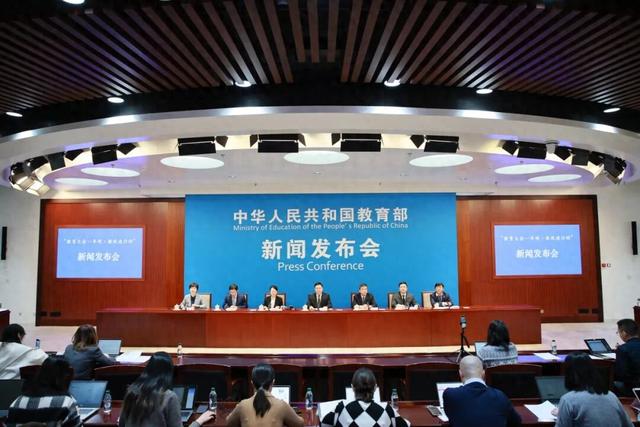
教育部:校企联合招收培养工程硕博近2.6万人
Xin Jing Bao· 2025-12-10 10:49
Core Viewpoint - The reform of the training system for outstanding engineers in China has made significant progress, with nearly 26,000 master's and doctoral students being jointly recruited and trained by universities and enterprises, marking a successful large-scale collaboration in talent cultivation [1][2]. Group 1: Strategic Importance - The training of outstanding engineers is crucial for enhancing national competitiveness and is a necessary step in building a modern industrial system [2][4]. - The reform aims to transition China from a country with a large number of engineers to a strong engineering nation by nurturing top-tier talent [2][4]. Group 2: Implementation Practices - The reform includes a restructuring of the training system, breaking away from traditional discipline-based models, and establishing 50 national outstanding engineer colleges and innovation research institutes [2][3]. - Over 10,000 research topics have been refined from industry, serving as the main source for master's and doctoral research projects [4]. - A collaborative curriculum has been developed, with over 200 core courses created in partnership with enterprises, and more than 300 engineering technology centers established for practical training [4][5]. Group 3: Employment Outcomes - 81% of the first cohort of over 2,000 engineering master's graduates have secured jobs in key enterprises within their field [5]. - More than 60 engineering doctoral graduates have obtained degrees based on practical achievements, indicating a shift towards industry-relevant evaluation standards [5][6]. Group 4: Future Directions - The Ministry of Education plans to establish a distinctive training system for outstanding engineers, focusing on standard system construction and deepening industry-academia cooperation [6][8]. - The reform will also drive the overall transformation of higher engineering education and explore models for integrating education with industry to support regional industrial upgrades [6][8].