AGI

Search documents
冲刺第一股,中国最大独立模型厂商的成色、能力与野心
晚点LatePost· 2025-12-22 13:39
智谱带来 AI 市场估值新叙事。 文 丨 江思远 243.77 亿元,17 日通过港交所聆讯的智谱在网上公开的招股书中确认了它自己的最新估值,这也是第 一次,人们确切知道中国大模型公司的估值金额。 这是一个恰切的时间点,ChatGPT 在业界投下的震撼弹已经过去三年,经历了百模大战的喧嚣,留在 牌桌上的中国大模型选手,在证明了自己创新与技术能力不逊色于任何人之后,开始向资本市场发起 冲刺。 在 "少年走向成年" 的关键转型期,市场期待大模型公司如何向所有人论证,"新奇类、炫技型" 的模 型技术向 "实际类、适配型" 的大模型端到端落地的过程。 作为百团大战中第一家成功 "上岸" 的公司,智谱给出的回答不那么让人满意。招股书披露的亏损规模 远大于收入增长,而研发费用还在大幅增加,似乎没有要停止 "烧钱" 的趋势。 如果是一个成熟公司,这样的资产负债表实在让人难以满意,但大模型是特殊的。 智谱是中国成立最早的独立大模型公司之一,但它也只有不到 6 年历史,AI 行业让无数人兴奋的原因 是它在潜在未来的革命性,而这很难从过往的历史中直接推导出来,因为变革往往在某个时刻突然以 指数级形式发生。 这是智谱的赌注,或者可 ...


MiniMax 叩响港股大门:4 年累计亏损 5 亿?账上现金超过 10 亿美金!
Zhi Tong Cai Jing· 2025-12-22 12:47
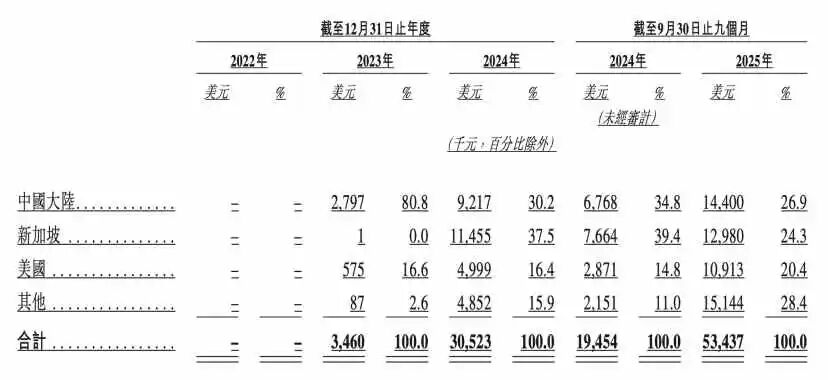
4 年累计亏损 5.3 亿,这是不是一家值得投资的公司? 但在这亏损的另一面,是:385 人,平均年龄 29 岁,累计融资 15 亿美元,实际花费约 5 亿美元,便跻身全球全模态 AGI 四强,70% 收入来自海外,服 务覆盖 200 个国家与地区的 2.12 亿用户。 | | | | 截至12月31日止年度 | | | | | 截至9月30日止九個月 | | | | --- | --- | --- | --- | --- | --- | --- | --- | --- | --- | --- | | | 2022年 | | 2023年 | | 2024年 | | 2024年 | | 2025年 | | | | 美元 | 2 | 美元 | 是 | 麦儿 | গুন | 美元 | % | 美元 | 多 | | | | | | | | | (未經濟計) | | | | | | | | | | (千元,自分比除外) | | | | | | | 國大陸 | 11 | = | 2.797 | 80.8 | 9.217 | 30.2 | 6.768 | 34.8 | 14,400 | 26.9 | | 加坡 | = | ...
OpenAI’s Potential, Google’s Speedy Model, Copilot Hits Turbulence
Alex Kantrowitz· 2025-12-22 12:04
OpenAI's Strategy & Focus - OpenAI will prioritize enterprise in 2026 [1] - OpenAI's enterprise push could help it fund infrastructure [1] - OpenAI is planning an erotic ChatGPT, expected in Q1 [1] - OpenAI faces challenges in designing for both consumer and enterprise markets simultaneously [1] AI Industry Trends & Challenges - The discussion questions whether the dream of Artificial General Intelligence (AGI) is over [1] - The AI infrastructure trade is showing signs of instability [1] - There is critique on Microsoft's AI products [1] - Google's Gemini 3 Flash and AI efficiency are discussed [1] Partnerships & Deals - Disney and OpenAI have signed a groundbreaking deal [1] - Disney benefits from relinquishing some control in the deal [1]

昆仑万维(300418):前瞻布局世界模型,持续关注AI算力芯片进展
China Post Securities· 2025-12-22 11:09
Investment Rating - The report maintains a "Buy" rating for the company, expecting a relative increase in stock price of over 20% compared to the benchmark index within six months [10]. Core Insights - The company is positioned as a leader in AI capabilities, with ongoing advancements in AI products that are expected to enhance commercialization potential [7]. - The demand for computing power is projected to grow significantly, with estimates indicating that China's intelligent computing power will reach 1,037.3 EFLOPS in 2025, a 43% increase from 2024 [8]. - The company has made significant strides in the development of AI chip technology, which is anticipated to become a new growth driver as products are launched [8]. Company Overview - The latest closing price of the company's stock is 39.99 yuan, with a total market capitalization of 50.2 billion yuan [4]. - The company has a total share capital of 1.255 billion shares, with a debt-to-asset ratio of 17.9% [4]. - The largest shareholder is Beijing Yingrui Century Software Development Center [4]. Financial Projections - Expected revenues for 2025, 2026, and 2027 are projected to be 71 billion, 80 billion, and 89 billion yuan respectively, with corresponding net profits of -440 million, 130 million, and 2.74 billion yuan [9]. - The report forecasts an EPS of -0.35 yuan for 2025, transitioning to 0.01 yuan in 2026 and 0.22 yuan in 2027 [9]. - The company is expected to experience a significant turnaround in profitability, with a projected net profit growth rate of 2,056.91% in 2027 [12].

信仰与突围:2026人工智能趋势前瞻
3 6 Ke· 2025-12-22 09:32
Core Insights - The AI industry is experiencing intense competition, particularly with the emergence of models like Gemini 3, prompting OpenAI to accelerate the release of GPT 5.2 to regain its competitive edge [1] - There is a growing skepticism regarding the scalability of large models, with some experts suggesting that the current scaling laws may be reaching their limits, indicating a potential shift in focus towards more innovative learning methods [2][3] - The future of AI is expected to be characterized by a combination of scaling and structural innovations, including advancements in multimodal models that could lead to significant leaps in AI capabilities [4][5] Group 1: Scaling and Innovation - The Scaling Law has been a driving force behind the evolution towards AGI, but recent trends indicate a slowdown in performance improvements, leading to questions about its long-term viability [2] - Despite criticisms, the Scaling Law remains a practical growth path, as it allows for predictable capability enhancements through increased training and data optimization [3] - The AI infrastructure in the U.S. is set to attract over $2.5 trillion in investments, with large data center projects exceeding 45 GW in capacity, reinforcing the importance of scaling in AI development [3] Group 2: Multimodal Models - The advent of multimodal models like Google's Gemini and OpenAI's Sora signifies a pivotal moment in AI, enabling deeper content understanding and the generation of diverse media formats [5] - Multimodal advancements are expected to drive a nonlinear leap in AI intelligence, as they allow for a more comprehensive understanding of the world through various sensory inputs [5][10] - The integration of multimodal capabilities could facilitate a closed-loop technology pathway for AI, enhancing its ability to perceive, decide, and act in real-world environments [10] Group 3: Research and Development - The research landscape for large models is diversifying, with numerous experimental labs emerging that focus on various aspects of AI, including safety, reliability, and multimodal collaboration [12][13] - Innovative approaches such as evolutionary AI and liquid neural networks are being explored to reduce reliance on traditional scaling methods and enhance model adaptability [13][14] - New evaluation methods are being developed to better assess AI capabilities, focusing on long-term task completion and dynamic environments rather than static benchmarks [15] Group 4: AI for Science - AI for Science (AI4S) is transitioning from academic breakthroughs to practical applications, with initiatives like DeepMind's automated research lab set to revolutionize scientific experimentation [22][23] - The U.S. government is prioritizing AI4S as a national strategy, aiming to create a nationwide AI science platform that integrates vast scientific datasets with supercomputing resources [25] - While widespread commercial adoption of AI4S may still be a few years away, significant advancements in research efficiency and automation are anticipated by 2026 [26] Group 5: AI Glasses and Consumer Electronics - AI glasses are projected to reach a critical sales milestone of 10 million units, marking a significant shift in consumer electronics towards wearable AI technology [45][47] - The success of AI glasses hinges on reducing hardware complexity and enhancing user experience, moving from traditional app-based interactions to intention-based commands [48] - The potential for AI glasses to generate vast amounts of data could lead to new algorithms and advertising models, fundamentally changing user interaction with technology [48] Group 6: AI Safety and Governance - As AI capabilities advance, safety and ethical considerations are becoming increasingly important, with a notable decline in public trust despite rising usage [50][51] - The industry is focusing on developing safety technologies and governance frameworks to ensure responsible AI deployment, with a significant portion of computational resources allocated to safety research [54] - Regulatory proposals are emerging that mandate systematic testing and monitoring of high-risk AI models, indicating a shift towards more stringent safety standards in AI development [54]



信仰与突围:2026人工智能趋势前瞻
腾讯研究院· 2025-12-22 08:33
Core Insights - The article discusses the competitive landscape of AI, particularly focusing on the advancements and challenges faced by large models like ChatGPT and Gemini 3, highlighting the ongoing debate about the scalability and limitations of AI models [2][3][4]. Group 1: AI Model Development and Scaling - The belief that increasing computational power and data will lead to exponential growth in AI intelligence is being challenged as the performance improvements of large models slow down [3]. - Gary Marcus argues that large models do not truly understand the world but merely fit language correlations, suggesting that future breakthroughs will come from better learning methods rather than just scaling [3][4]. - Despite criticisms, the Scaling Law remains a practical growth path for AI, as evidenced by the successful performance of Gemini 3 and ongoing investments in AI infrastructure in the U.S. [4][5]. Group 2: Data Challenges and Solutions - High-quality data is a critical challenge for the evolution of large models, with the industry exploring systematic methods to expand data sources beyond just internet corpora [5][7]. - The future of data generation will focus on creating scalable, controllable systems that can produce high-quality data through various modalities, including synthetic and reinforcement learning data [7][19]. Group 3: Multi-Modal AI and Its Implications - The emergence of multi-modal models like Google Gemini and OpenAI Sora marks a significant advancement, enabling deeper content understanding and the potential for non-linear leaps in AI intelligence [8][12]. - Multi-modal models can provide a more direct representation of the world, allowing for a more robust world model and the possibility of closing the perception-action loop in AI systems [12][13]. Group 4: Research and Innovation in AI - The article highlights the importance of research-driven approaches in the AI industry, with numerous experimental labs emerging to explore various innovative directions, including safety and multi-modal collaboration [15][16][17]. - Innovations in foundational architectures and learning paradigms are expected to yield breakthroughs in areas such as long-term memory mechanisms and agent-based systems [15][17]. Group 5: AI for Science (AI4S) and Industry Impact - AI for Science is transitioning from model-driven breakthroughs to system engineering, with significant implications for fields like drug development and materials science [24][25]. - The establishment of AI-driven automated research labs signifies a shift towards integrating AI into experimental processes, potentially accelerating scientific discovery [25][28]. Group 6: AI Glasses and Consumer Electronics - The rise of AI glasses is anticipated to reach a critical mass, with projections of significant sales growth, indicating a shift towards a new computing paradigm [46][47]. - The design philosophy of AI glasses focuses on lightweight, user-friendly devices that prioritize functionality over traditional display technologies, potentially transforming user interaction with technology [47][48]. Group 7: AI Safety and Governance - As AI capabilities advance, safety and ethical considerations are becoming increasingly important, with a growing emphasis on establishing safety protocols and governance structures within AI development [50][53]. - The establishment of AI safety committees and the allocation of computational resources for safety research are becoming essential components of responsible AI deployment [54][55].

Transformer能否支撑下一代Agent?
Tai Mei Ti A P P· 2025-12-22 07:39
Core Insights - The current Transformer architecture is deemed insufficient for supporting the next generation of AI agents, as highlighted by experts at the Tencent ConTech conference [1][2][11] - There is a growing consensus that the AI industry is transitioning from a "scaling era" focused on data and computational power to a "research era" that emphasizes foundational innovation [11][12] Group 1: Limitations of Current AI Models - Experts, including prominent figures like Fei-Fei Li and Ilya Sutskever, express concerns that existing Transformer models are reaching their limits, particularly in understanding causality and physical reasoning [2][5][11] - The marginal returns of scaling laws are diminishing, indicating that simply increasing model size and data may not yield further advancements in AI capabilities [2][10] - Current models are criticized for their reliance on statistical correlations rather than true understanding, likening them to students who excel in exams through memorization rather than comprehension [4][5] Group 2: Challenges in Long Context Processing - The ability of Transformers to handle long contexts is questioned, with evidence suggesting that performance degrades significantly beyond a certain token limit [6][7] - The architecture's unidirectional information flow restricts its capacity for deep reasoning, which is essential for effective decision-making [6][7] Group 3: Need for New Architectures - The industry is urged to explore new architectural breakthroughs that integrate causal logic and physical understanding, moving beyond the limitations of current models [11][12] - Proposed alternatives include nonlinear RNNs that allow for internal feedback and reasoning, which could enhance AI's ability to learn and adapt [12][13] Group 4: Implications for the AI Industry - A shift away from Transformer-based models could lead to a reevaluation of hardware infrastructure, as current systems are optimized for these architectures [13] - The value of data types may also change, with physical world sensor data and interactive data becoming increasingly important in the new AI landscape [14] - Companies in the tech sector face both challenges and opportunities as they navigate this transition towards more advanced AI frameworks [16]
成立四年的AI公司闪电冲击港股上市
Xin Lang Cai Jing· 2025-12-22 06:58
本报讯(记者 郜阳)昨天夜里,记者从国产大模型"六小龙"、模速空间"北斗七星"之一的MiniMax(稀 宇科技)获悉,该公司首次刊发其聆讯后资料集(PHIP)版本的招股书资料,有望刷新纪录,成为从 成立到IPO历时最短的AI公司。 MiniMax专注全模态模型自研,技术迭代密集,模型进展每年上一个台阶,实现持续突破。 在持续高强度研发投入、快速迭代全模态模型的同时,MiniMax的商业化效率与组织效率都十分高效。 招股书数据显示,经调整净亏损在2025年与上年同期相比近乎持平,实现了在高速增长下的亏损有效收 窄。这得益于多元化的收入模型与高效的费用投入——今年前9个月,在收入同比增长超170%的同时, 研发开支同比增幅为30%,销售及营销开支更是同比下降26%,印证了其产品依靠模型智能与用户口碑 驱动的增长逻辑,而非依赖巨额流量投入。 更值得一提的是,MiniMax自成立到今年9月累计花费5亿美元,对比OpenAI的400亿至550亿美元累计花 销,MiniMax仅仅用了不到1%的钱做了全模态全球领先的公司。 MiniMax成立于2022年初,是一家"生而全球化"的AI公司,致力于研发具备国际竞争力的通用模型 ...
奥特曼凡尔赛自曝:我不想当上市公司CEO!砸1.4万亿豪赌AGI
猿大侠· 2025-12-22 04:11
Core Viewpoint - OpenAI CEO Sam Altman expresses reluctance to become a public company CEO, indicating that while he does not desire to go public, it may become a necessity due to the company's need for substantial capital investment [11][12][14]. Group 1: Financial Strategy and Capital Investment - OpenAI plans to invest a total of $1.4 trillion in computing power and infrastructure over the coming years, which has raised concerns in the market [32]. - Altman clarifies that this investment is not a short-term gamble but a long-term strategy validated by demand [34]. - The company aims to achieve positive cash flow by potentially raising $75 billion through private funding and an IPO, which would provide sufficient capital for its operations [8]. Group 2: AI Development and Market Position - Altman emphasizes that the true value of AI models has not yet been fully realized, and the demand for AI capabilities is expected to grow significantly [35][41]. - He argues that the current AI models are already powerful, but society is not yet prepared for their implications, highlighting a gap in readiness regarding usage, regulation, and ethics [19]. - OpenAI's competitive edge is not merely about having superior models but about creating a stable and valuable platform that users can rely on [29][30]. Group 3: Risks and Future Outlook - Altman acknowledges that OpenAI may incur losses in the range of billions in the coming years, with profitability expected around 2028-2029 if they stop expanding their training scale [54][56]. - He asserts that the real risk lies not in having too much computing power but in having insufficient capacity, which could limit potential [50]. - The company is betting on the growth rate of intelligent demand to outpace conservative expectations, viewing AI as a transformative technology akin to electricity or the internet [67][68].

AI大模型独角兽招股书深度拆解:MiniMax to C,智谱 to B
Hua Er Jie Jian Wen· 2025-12-22 03:57
Core Insights - Two Chinese AI unicorns, Zhiyu and MiniMax, submitted their IPO applications to the Hong Kong Stock Exchange within 48 hours, showcasing different commercialization paths in the AI large model sector [1] - The IPO documents reveal distinct business models: MiniMax focuses on consumer-driven applications, while Zhiyu emphasizes enterprise-level services [8][9] Group 1: Business Models - MiniMax's business model is centered around "AI Native Apps," with significant revenue growth projected from $758,000 in 2023 to $21.8 million in 2024, and reaching $38 million in the first nine months of 2025, accounting for 71.1% of total revenue [3][4] - MiniMax's average monthly active users (MAU) are expected to surge from 3.1 million in 2023 to 27.6 million by September 2025, with paid user numbers reaching 1.77 million and average revenue per paid user (ARPPU) increasing from $6 to $15 [4][5] - Zhiyu AI focuses on enterprise services, with local deployment revenue reaching 162 million RMB by June 2025, constituting 84.8% of total revenue [10][11] Group 2: Financial Performance - MiniMax's gross margin improved from -24.7% in 2023 to 12.2% in 2024, and further to 23.3% in the first nine months of 2025, indicating effective cost control and revenue growth [18][27] - Zhiyu AI reported a gross margin of 50%, with local deployment services achieving a high margin of 59.1% in the first half of 2025, although its cloud deployment business faced declining margins [20][25] Group 3: R&D Investments - Both companies are heavily investing in R&D, with Zhiyu AI's R&D expenses reaching 1.595 billion RMB in the first half of 2025, resulting in a staggering R&D expense ratio of 835.4% [25][26] - MiniMax's R&D expense ratio decreased from over 2000% in 2023 to 337.4% in the first nine months of 2025, reflecting improved operational efficiency as revenue grows [27] Group 4: Market Focus - MiniMax is highly globalized, with only 26.9% of its revenue coming from mainland China in 2025, while Zhiyu AI primarily targets the domestic market, focusing on state-owned enterprises and large institutions [30][32] - The shareholder structures of both companies include major tech players, with MiniMax backed by Alibaba and Tencent, while Zhiyu AI has a more diversified investor base including state-owned funds [32][33] Group 5: Future Outlook - Both companies have sufficient cash reserves to continue their technological advancements, with MiniMax holding approximately $1 billion and Zhiyu AI having 2.55 billion RMB in cash equivalents [34] - The IPO submissions signal a shift in the Chinese AI industry from a focus on technology to a more commercialized approach, with both companies vying to become leaders in the large model sector [34]