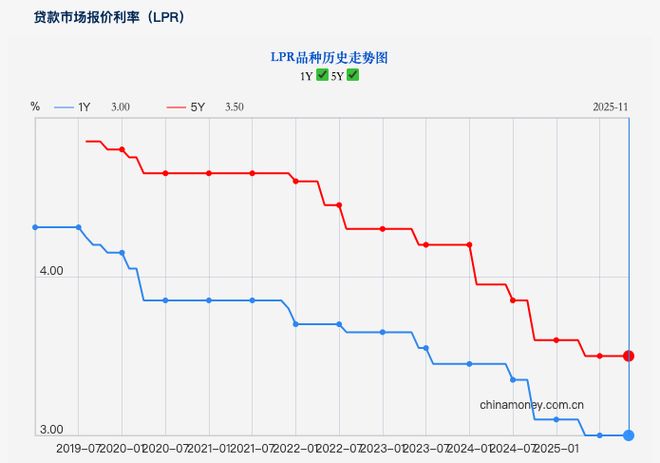
降准降息

Search documents
【笔记20251205--债市已到 “抑郁底” 】
债券笔记· 2025-12-05 12:54
Group 1 - The 10Y government bond yield remained stable compared to last week, while the 30Y government bond yield increased by nearly 7 basis points [1] - The 30-year government bond futures have erased all gains since last year's "moderately loose monetary policy" and have even incurred losses, indicating that "super long bonds" may actually mean "super debt repayment" [1] - Various bond funds, particularly those heavily invested in 30Y government bonds, have experienced significant losses over the past six months, with declines ranging from -6.13% to -7.99% [1] Group 2 - Recent declines in the bond market, especially for long-term 30-year bonds, have led to a sentiment of despair among investors, with some fund managers reportedly facing severe stress [2][3] - There is a prevailing sentiment among investors that the market may not align with the predictions of a bullish stock market in 2026, suggesting a potential disconnect between expectations and reality [6][7] - The future market trajectory remains uncertain, with possibilities of fluctuations, but there is an underlying optimism about overcoming challenges and achieving higher goals [9]


注意,市场在等重磅大消息,快了……
Sou Hu Cai Jing· 2025-12-04 13:36
Group 1 - The market has experienced a significant decline over the past three days, with a notable drop in trading volume and a strong sell-off in individual stocks, leading to heightened panic among investors [1][2] - The index closed at 3875 points, remaining above the critical support level of 3850 points, indicating potential for stabilization and possible upward movement if it can hold above this level [2] - There is a lack of major positive news or significant capital inflow, contributing to the current market conditions, and investors are awaiting important upcoming meetings that may influence market direction, such as potential interest rate changes by the Federal Reserve [1] Group 2 - The focus for tomorrow's market performance is on the 3900-point level, with expectations for a potential rebound after the recent sell-off, suggesting a cautious but optimistic outlook [2] - Investors are advised to adopt a patient and disciplined approach, avoiding impulsive trading behaviors and maintaining a long-term perspective to capitalize on future opportunities [4]

【立方债市通】河南重启土储专项债/渭南城投中票遭变相撤标/机构展望2026年货币政策
Sou Hu Cai Jing· 2025-12-04 13:00
Group 1 - Henan Province plans to issue a total of 30 billion yuan in land reserve special bonds for 36 projects [1] - The issuance of 114.7563 billion yuan in local bonds includes fixed-rate bonds [1] - The first batch of land reserve special bonds is part of a broader strategy to enhance local infrastructure [1] Group 2 - Chongqing Bank modified its bid for the "25 Weinan City Investment MTN001" bond, reducing the subscription rate from 3% to 2.5% [3] - The initial subscription amount was 1 billion yuan, which was later reduced to 500 million yuan [3] - This change occurred just before the subscription period ended, indicating potential market volatility [3] Group 3 - The People's Bank of China will conduct a 10 billion yuan reverse repurchase operation with a term of 3 months [4] - Central bank governor Pan Gongsheng emphasized the need to enhance the role of policy interest rates [4] - The aim is to improve the transmission of interest rates from central bank policies to market rates [4] Group 4 - Hubei Provincial State-owned Assets Supervision and Administration Commission plans to explore professional integration of different levels of enterprises during the 14th Five-Year Plan [7] - The focus will be on optimizing the layout and management of state-owned enterprises [7] - The initiative aims to improve the efficiency of state capital operations [7] Group 5 - The first housing voucher for guaranteed housing in Guangzhou Huangpu has been successfully exchanged, valued at 3.429 million yuan [8] - This voucher can be used to purchase properties in designated projects by December 30, 2025 [8] - The program aims to support homeowners in securing housing amid ongoing market challenges [8] Group 6 - Henan Energy Group completed the issuance of a 5 billion yuan short-term financing bond at a rate of 2.30% [9] - The funds raised will be used to repay interest-bearing debts [9] - The bond is backed by a full unconditional guarantee from China Pingmei Shenma Group [9] Group 7 - China Pingmei Shenma Group plans to issue 10 billion yuan in medium-term notes to repay interest-bearing debts [10] - The issuance will be divided into two tranches, with a total of 7 billion yuan for a 3-year term and 3 billion yuan for a 5-year term [10] - The funds are intended to strengthen the company's financial position [10] Group 8 - Xinyang Investment Group has received approval for a 10 billion yuan corporate bond issuance from the Shanghai Stock Exchange [11] - The bond is rated AA+ with a stable outlook [11] - The issuance aims to attract professional investors [11] Group 9 - Xuchang Weiwu Industrial Investment Group's 5 billion yuan corporate bond has been accepted by the Shenzhen Stock Exchange [12] - The bond is rated AA with a stable outlook [12] - The issuance is part of the company's strategy to enhance its capital structure [12] Group 10 - The Ministry of Finance plans to issue two types of book-entry discount treasury bonds totaling 100 billion yuan [13] - The bonds will have terms of 63 days and 91 days, with competitive bidding for 400 billion yuan and 600 billion yuan respectively [13] - This issuance is aimed at managing government financing needs [13] Group 11 - The appointment of Yin Chunhua and Kang Shuxia as chairman and general manager of Henan Zhongyu International Port Group has been announced [14] - This leadership change is part of a broader strategy to enhance operational efficiency [14] Group 12 - The total asset transfer of 9,470 million yuan to Gongyi Industrial Investment Development Co., Ltd. has been approved [16] - The assets include stakes in various companies and real estate [16] - This transfer is expected to optimize asset management within the company [16] Group 13 - Country Garden's debt restructuring plan for nine bonds totaling over 13.8 billion yuan has been approved by creditors [16] - This restructuring is part of the company's efforts to manage its financial obligations [16] - The approval indicates a potential stabilization in the company's financial situation [16] Group 14 - The Shanghai Stock Exchange issued a written warning to Water Development Group for violations in information disclosure [17] - The company failed to accurately disclose financial information and timely report significant borrowing [17] - This warning highlights the importance of compliance in financial reporting [17] Group 15 - The outlook for monetary policy in 2026 suggests 2-3 potential rate cuts and increased use of structural tools [19][20] - The focus will be on maintaining a low-interest environment to support economic growth [19][20] - Structural monetary policy tools will target key sectors such as consumption and technology [19][20]

从货币政策目标视角看降准降息的时机
Sou Hu Cai Jing· 2025-12-03 03:03
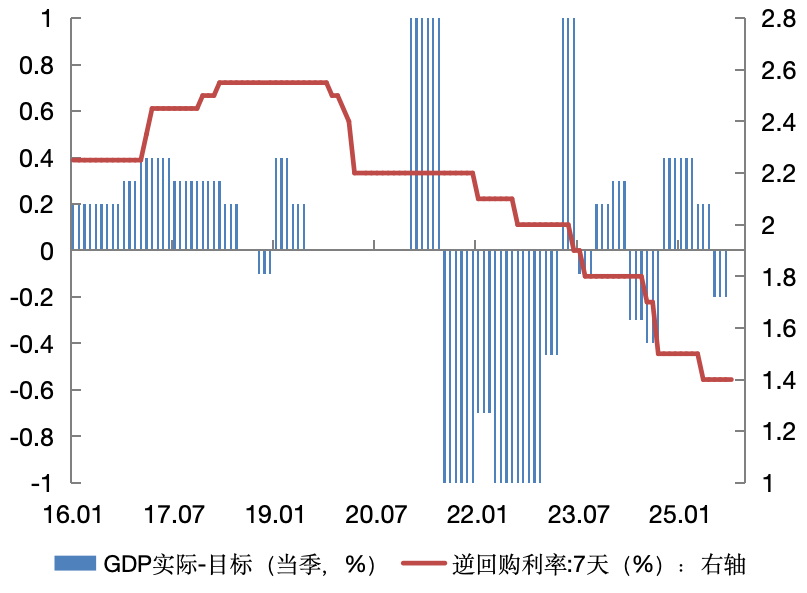
内容提要 文章分析了2018年以来央行降准降息的背景特征,认为经济增长(GDP增速达标情况)、金融稳定(股市表现)对降准降息节奏影响较大,且降准作为中 长期流动性投放工具存在一定的周期性,通胀和汇率等因素对我国降准降息的影响相对有限。 2018年以来,我国进入降准降息周期,大行(中小行)的法定存款准备金率从2018年高点17%(15%)下调到目前的9%(6%),7天期逆回购利率从2018年 高点2.55%降至目前的1.4%。2025年,央行坚持"适度宽松"的货币政策基调,美联储重启降息周期,资本市场则时刻关注我国货币政策走向。本文整理近年 来央行降准降息时货币政策主要目标(经济增速、通胀、国际收支、金融稳定等)所处的状态,分析货币政策目标触发降准降息有无规律可循,为判断货币 政策走向提供参考。 一、经济增速不高于目标值可能是降息的必要条件 2018年以来7天期逆回购利率共下调10次,合计下调1.15个百分点,平均每次下调的时间间隔为7.2个月,最长间隔超过21个月,最短则连续两个月降息。 图1 GDP增速缺口和降息 数据来源:同花顺 这10次降息里,8次降息当季GDP增速低于或等于当年目标值,但有两次例外。一 ...
开源晨会-20251202
KAIYUAN SECURITIES· 2025-12-02 14:43
Group 1: Macro Economic Outlook - The "14th Five-Year Plan" emphasizes three key points: continuity, technological strength, and expanding domestic demand [5][6] - The GDP growth target for 2026 is projected at around 5%, with an average annual growth rate of 4.17% needed over the next decade to meet the 2035 goals [5][6] - The macroeconomic policy is expected to be more proactive, with potential interest rate cuts and an expansion of the broad deficit [9][10] Group 2: Supply and Demand Dynamics - On the supply side, there is a focus on enhancing service supply to stimulate consumption, with a service trade restrictiveness index of 0.225, higher than the OECD average of 0.19 [6] - The demand side anticipates limited recovery in fixed asset investment, with manufacturing investment supported by equipment updates, while real estate investment is expected to narrow its decline [7][8] - CPI is projected to rise by approximately 0.7% in 2026, while PPI could range from -0.7% to 0.5% depending on various scenarios [8] Group 3: Manufacturing and PMI Insights - The manufacturing PMI for November 2025 is reported at 49.2%, indicating a slight recovery but still in the contraction zone [14][15] - The service sector PMI has dropped to 49.5%, reflecting a contraction influenced by seasonal factors and consumer behavior [16] - High-tech manufacturing continues to expand, with a PMI of 50.1%, while the overall manufacturing sector remains under pressure [17] Group 4: Financial Market Perspectives - The bond market is expected to see a slight upward trend in yields due to revised economic expectations [19] - The Hong Kong stock market faced pressure in November 2025, with the Hang Seng Index declining by 0.2% and the Hang Seng Tech Index dropping by 5.2% [21][22] - The CCASS selected 20 portfolio achieved a historical high in excess returns, with a 0.13% return in November compared to a -0.18% return for the Hang Seng Index [27][28]
央行今日开展1万亿MLF操作 年内降准降息预期减弱
Bei Ke Cai Jing· 2025-11-25 03:41
Core Viewpoint - The People's Bank of China (PBOC) has conducted a 1 trillion yuan Medium-term Lending Facility (MLF) operation, indicating a proactive approach to maintain liquidity in the banking system amid potential tightening [1][2][3]. Group 1: MLF Operations - The PBOC's 1 trillion yuan MLF operation marks the ninth consecutive month of increased MLF issuance, with a total net injection of 600 billion yuan in November, maintaining a high level of liquidity [2][3]. - The MLF operation is aimed at countering the expected liquidity tightening, ensuring that the funding environment remains stable and abundant [1][3][4]. Group 2: Market Expectations - Following the MLF operation, market expectations for interest rate cuts and reserve requirement ratio (RRR) reductions have diminished [1][5]. - Analysts suggest that the PBOC will continue to utilize MLF and reverse repos to inject liquidity, signaling a sustained supportive monetary policy stance [6][8]. Group 3: Economic Context - The ongoing liquidity support is seen as essential for facilitating government bond issuance and encouraging financial institutions to increase credit supply, especially in light of recent economic downturns [3][4][8]. - The anticipated issuance of additional local government bonds and the completion of new policy financial instruments are expected to further influence liquidity dynamics in the banking system [3][4].
瑞达期货宏观市场周报-20251121
Rui Da Qi Huo· 2025-11-21 10:43
Report Industry Investment Rating No relevant content provided. Core Viewpoints - A-share major indices tumbled this week, with all but the Shanghai Composite Index dropping over 5%. The four stock index futures also declined collectively, with small and mid-cap stocks performing weaker than large-cap blue-chip stocks. The market's trading activity decreased significantly compared to last week. The 10-year economic growth continued the slowdown trend of the third quarter, and some economic indicators were notably affected by the external environment. The inflation level rebounded slightly, but its sustainability remains to be seen. It is expected that the economy will continue a weak recovery in the fourth quarter, which will support the bond market [7]. Summary by Directory This Week's Summary and Next Week's Allocation Recommendations Stocks - This week, A-share major indices and four stock index futures all fell. The market was in a data and news vacuum from Monday to Wednesday, with stock indices moving randomly. On Thursday, the unchanged LPR weakened market expectations of a reserve requirement ratio cut and interest rate reduction this year, causing A-shares to open high and close low. On Friday, the overnight slump in US technology stocks dragged down Asian-Pacific stocks. The trading activity declined significantly compared to last week. The allocation recommendation is to go long on dips [7]. Bonds - In October, the economic growth continued to slow down, and some economic indicators were affected by the external environment. The inflation level rebounded slightly, and it is expected that the economy will continue a weak recovery in the fourth quarter, supporting the bond market. The central bank will maintain a moderately loose policy tone, and the scope for further monetary easing this year is limited. The allocation recommendation is range-bound operation [7]. Commodities - China's October economic data, especially the continuous weakening of fixed asset investment, pressured industrial products. However, gold and crude oil showed a volatile trend. The subsequent commodity index is expected to enter a wide-range oscillation. The allocation recommendation is to mainly wait and see [7]. Foreign Exchange - The US government shutdown-delayed September non-farm payroll report was controversial. Fed officials' overall tone was neutral to hawkish, potentially supporting the US dollar. The euro weakened due to the strengthening US dollar, but the eurozone's fundamental situation continued to improve. The allocation recommendation is to cautiously wait and see [7]. Important News and Events - China notified Japan of the suspension of Japanese aquatic product imports. The Chinese government expressed dissatisfaction with Japan's wrong remarks on Taiwan and warned of countermeasures [13]. - Premier Li Qiang met with WTO Director-General Ngozi Okonjo-Iweala, calling for free trade and reduced trade barriers, and proposed strengthening security cooperation and technological exchanges within the SCO [13]. - The Chinese and Japanese foreign affairs departments held consultations, with China expressing dissatisfaction with the results and demanding that Japan retract its wrong remarks [13]. - The Fed's October meeting minutes revealed significant internal differences on interest rate cuts. Most officials supported maintaining the interest rate unchanged this year, while some advocated a more relaxed rate policy. There was almost unanimous agreement to stop the quantitative tightening (QT) of reducing the balance sheet [14]. - The US modified the rules for patent invalidation applications, targeting foreign-backed enterprises. China will take measures to safeguard the legitimate rights of Chinese enterprises [14]. - The Dutch government suspended the administrative order against Nexperia. China welcomed the move but hoped for a complete solution to the semiconductor supply chain issue [14]. This Week's Domestic and International Economic Data United States - The US 9-month unemployment rate reached 4.4%, the highest in four years. The number of new jobs significantly exceeded expectations, but the previous data was revised downward. Fed officials were divided on interest rate cuts, and the probability of a December rate cut decreased significantly [11]. Japan - Japan's inflation continued to be high, and the yen was weak. The GDP in the third quarter shrank for the first time in six quarters, and the new government may introduce fiscal stimulus measures [11]. Eurozone - The euro fell to a two-week low due to the strengthening US dollar. The eurozone's October CPI year-on-year growth rate met the policy target, and the European Central Bank is expected to keep interest rates unchanged until the end of 2026 [11]. China - The central bank's net open market injection this week was 554 billion yuan. The 11-month LPR remained unchanged, in line with market expectations. The central bank will continue to reform and improve the LPR formation mechanism. If the fourth-quarter economic growth is significantly lower than expected, there is still room for LPR cuts [12]. Next Week's Important Economic Indicators and Events - Next week, important economic data from Germany, the United States, the eurozone, Japan, and France will be released, including GDP, retail sales, unemployment rates, and CPI [78].

股指期货周报-20251121
Rui Da Qi Huo· 2025-11-21 10:43
1. Report Industry Investment Rating - No relevant information provided 2. Core Viewpoints of the Report - A - share major indices tumbled collectively this week, with all but the Shanghai Composite Index dropping over 5%. The four stock - index futures also declined, and small - and medium - cap stocks were weaker than large - cap blue - chip stocks. The market was in a data and news vacuum from Monday to Wednesday, with stock indices showing a random walk. On Thursday, the unchanged LPR weakened market expectations of reserve requirement ratio and interest rate cuts this year, leading to a high - opening and low - closing situation for A - shares. On Friday, the overnight plunge in US tech stocks dragged down Asia - Pacific stock markets. Market trading activity significantly declined compared to last week. Domestically, economic fundamentals were weak in October, and financial data showed a larger decline in M1 growth than M2. The unchanged LPR for six consecutive months reflected a prudent monetary policy, and the market is expected to be in a random walk state with stock indices remaining volatile [5][87]. 3. Summary by Relevant Catalogs 3.1 Market Review - Futures: IF2512 dropped 3.74% this week, IH2512 fell 2.77%, IC2512 declined 5.15%, and IM2512 decreased 4.80%. Spot: The CSI 300 dropped 3.77%, the SSE 50 fell 2.72%, the CSI 500 declined 5.78%, and the CSI 1000 decreased 5.80% [8]. 3.2 News Overview - The Fed's October policy meeting minutes showed a split among policymakers on last month's interest - rate cut. Many officials thought it "might be appropriate" to keep rates unchanged for the rest of 2025, while some believed a December rate cut "would likely be appropriate". There was near - unanimity on stopping the quantitative tightening (QT) of balance - sheet reduction. The LPR remained unchanged on November 20. US September non - farm payrolls increased by 119,000, more than twice the expected figure, but the unemployment rate rose to 4.4%, the highest since October 2021. The number of initial jobless claims last week dropped by 8,000 to 220,000, and the number of continued claims reached a four - year high [11][12]. 3.3 Weekly Market Data 3.3.1 Domestic and Overseas Major Indices - Domestic: The Shanghai Composite Index dropped 3.90%, the Shenzhen Component Index fell 5.13%, the STAR 50 declined 5.54%, the SME 100 decreased 5.10%, and the ChiNext Index dropped 6.15%. Overseas (as of Thursday): The S&P 500 dropped 2.90%, the UK's FTSE 100 fell 1.76%, the Hang Seng Index declined 5.09%, and the Nikkei 225 decreased 3.48% [15][16]. 3.3.2 Industry Sector Performance - Industry sectors all declined, with the power equipment and comprehensive sectors weakening significantly. Industry main funds generally had a net outflow, with a large net outflow from the power equipment sector and a small net inflow in the communication sector [19][23]. 3.3.3 Other Market Data - SHIBOR short - term interest rates first rose and then fell, with the capital price at a low level. This week, major shareholders had a net secondary - market reduction of 11.471 billion yuan, and the market value of restricted - share unlockings was 100.946 billion yuan. Northbound funds had a total trading volume of 814.515 billion yuan. The basis of IF and IH main contracts weakened slightly, while the basis of IC and IM main contracts converged [27][30][38]. 3.4 Market Outlook and Strategy - A - share major indices and the four stock - index futures declined this week. The domestic economic fundamentals were weak in October, and the unchanged LPR for six consecutive months reflected a prudent monetary policy. The market is in a vacuum of macro - data, earnings, and policies, and is expected to show a random walk with stock indices remaining volatile [87].
11月LPR维持不变:年内降准降息预期减弱 货币政策更趋精准
2 1 Shi Ji Jing Ji Bao Dao· 2025-11-20 14:27
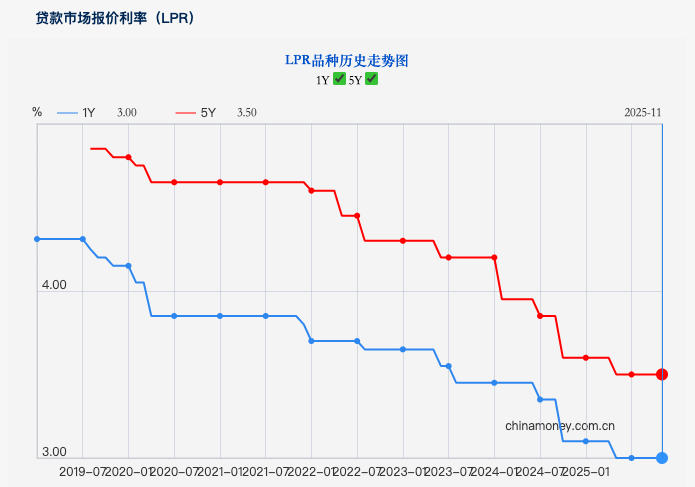
值得关注的是,LPR报价已连续六个月保持不变。究其原因,一方面是作为LPR定价"锚"的7天期逆回 购利率连续多月保持稳定;另一方面,银行受净息差等因素影响,下调LPR报价加点的动力不足。 当前,市场对降准降息预期已有减弱。中国邮政储蓄银行研究员娄飞鹏向21世纪经济报道记者表 示,"目前市场流动性总体较为充裕,央行通过公开市场操作精准调控流动性,利率水平也处于较低水 平,银行净息差本身较低,也需要维持合理的净息差更好服务实体经济。" LPR维持不变 2019年8月,央行推进贷款利率市场化改革。改革后的LPR由各报价行按照对最优质客户执行的贷款利 率,于每月20日(遇节假日顺延)以公开市场操作利率(主要指七天逆回购操作利率)加点形成的方式 报价。加点幅度则主要取决于各行自身资金成本、市场供求、风险溢价等因素。 目前,LPR已经成为银行贷款利率的定价基准,金融机构绝大部分贷款已参考LPR进行定价,直接影响 着各类经营主体融资成本。LPR 包含1年期与5年期以上两个品种,前者主要短期经营贷与消费贷,后 者则与房贷等长期限贷款密切相关。 根据11月最新报价,1年期LPR为3.0%,5年期以上LPR为3.5%,两个期限品 ...
11月LPR不变,四季度降准降息预期减弱
2 1 Shi Ji Jing Ji Bao Dao· 2025-11-20 14:01
作者丨边万莉 唐婧 编辑丨包芳鸣 (图片来源:中国人民银行) LPR维持不变 2019年8月,央行推进贷款利率市场化改革。改革后的LPR由各报价行按照对最优质客户执行的贷款利 率,于每月20日(遇节假日顺延)以公开市场操作利率(主要指七天逆回购操作利率)加点形成的方式 报价。加点幅度则主要取决于各行自身资金成本、市场供求、风险溢价等因素。 目前,LPR已经成为银行贷款利率的定价基准,金融机构绝大部分贷款已参考LPR进行定价,直接影响 着各类经营主体融资成本。LPR 包含1年期与5年期以上两个品种,前者主要短期经营贷与消费贷,后 者则与房贷等长期限贷款密切相关。 11月20日,最新一期LPR报价出炉。中国人民银行授权全国银行间同业拆借中心公布,2025年10月20日 贷款市场报价利率(LPR)为:1年期LPR为3.0%,5年期以上LPR为3.5%。以上LPR在下一次发布LPR 之前有效。 值得关注的是,LPR报价已连续六个月保持不变。究其原因,一方面是作为LPR定价"锚"的7天期逆回 购利率连续多月保持稳定;另一方面,银行受净息差等因素影响,下调LPR报价加点的动力不足。 当前,市场对降准降息预期已有减弱。中国 ...