
创新药出海

Search documents
创业板ETF天弘盘中大涨超3.5%,中证A500ETF天弘冲击两连涨,机构称市场短期赚钱效应已形成
2 1 Shi Ji Jing Ji Bao Dao· 2025-08-29 05:29
Group 1 - The market showed a rebound on August 29, with the ChiNext Index rising by 2.34%, driven by a collective surge in solid-state battery concept stocks [1] - The Tianhong ChiNext ETF (159977) experienced a peak increase of over 3.5% during the session, closing up 2.31% with a trading volume exceeding 98 million yuan [1] - Key component stocks such as XianDao Intelligent (300450) hit the daily limit, while Ningde Times (300750), Tianfu Communication (300394), and Yiwei Lithium Energy (300014) also saw significant gains [1] Group 2 - As of August 28, the Tianhong ChiNext ETF (159977) recorded a year-to-date increase of 32.94%, closely tracking the ChiNext Index, which consists of 100 representative companies in the ChiNext market [2] - The Tianhong CSI 500 ETF (159360) rose by 1.01% during the session, with a trading volume exceeding 42 million yuan, reflecting active trading with a premium rate of 0.11% [2] - The Tianhong Sci-Tech Innovation Index ETF (589860) saw a decline of 1.72% at midday, with a trading volume over 30 million yuan and a turnover rate exceeding 7% [2] Group 3 - Short-term market conditions indicate a positive feedback loop in liquidity, suggesting a continuation of valuation-driven market trends [3] - Investment opportunities are identified in the TMT sector and pharmaceutical biotechnology, driven by AI trends and innovation [3] - The non-bank financial sector is expected to benefit from a stabilizing capital market, while power equipment and certain resource products may see investment opportunities due to capacity governance [3]

“纯度”100%港股创新药标的恒生创新药ETF(159316)涨3.12%,近20日资金净流入额8.29亿元
Ge Long Hui· 2025-08-29 03:31
Group 1 - The Hong Kong innovative drug sector has seen significant gains, with companies like Innovent Biologics and BeiGene rising over 5%, leading to a 3.12% increase in the Hang Seng Innovative Drug ETF (159316) [1] - The Hang Seng Innovative Drug ETF (159316) is the only ETF tracking the Hang Seng Hong Kong Stock Connect Innovative Drug Index, which has received a net inflow of 828 million yuan over the past 20 days, bringing its total size to 1.715 billion yuan [1] - The Hang Seng Hong Kong Stock Connect Innovative Drug Index underwent an adjustment on August 11, removing CXO companies to become a "pure" 100% innovative drug index, which is expected to better reflect the overall performance of Chinese innovative drug companies [1] Group 2 - The innovative drug sector in China is expected to have more growth potential following the onset of a global interest rate cut cycle, which could improve the investment environment significantly [2] - The essence of Chinese innovative drugs going global this year is to leverage national advantages to replace certain ecological niches of overseas biotech, indicating a strategic shift in the industry [2] - If a new round of interest rate cuts occurs overseas, the global innovative drug industry may experience breakthroughs, leading to a period of prosperity for both Chinese and American innovative drug sectors [2]
创新药新适应症获欧盟批准 百济神州加快拓展全球市场
Zhong Guo Jin Rong Xin Xi Wang· 2025-08-29 03:10
Core Viewpoint - The European Commission has approved the innovative drug Baiyue An (Tislelizumab) for use in neoadjuvant therapy combined with platinum-based chemotherapy for adult patients with resectable non-small cell lung cancer (NSCLC) at high risk of recurrence, further expanding its application in the European oncology market [1] Group 1: Market Context - Lung cancer is the most common cancer globally, with NSCLC accounting for 80%-90% of all lung cancer types, and approximately 25%-30% of NSCLC patients are eligible for surgical resection [1] - The treatment needs of this patient group represent a significant market opportunity for related drugs [1] Group 2: Product Approval and Market Expansion - Tislelizumab has received a total of 9 approvals for solid tumor indications in the EU, including 5 for lung cancer and others for gastric or gastroesophageal junction adenocarcinoma, unresectable esophageal squamous cell carcinoma, and nasopharyngeal carcinoma [2] - Tislelizumab is the first PD-(L)1 inhibitor from China to enter the global market and is a core product developed by the company following the BTK inhibitor Zebutini [2] - The global market presence of Tislelizumab has expanded to 47 countries and regions, including major markets in Europe, the United States, the United Kingdom, and Japan [2]
港股医药股盘中爆发!港股创新药ETF(159567)直线拉升逾2%,8月以来累计吸金超17亿元
Mei Ri Jing Ji Xin Wen· 2025-08-29 03:03
Group 1 - Hong Kong pharmaceutical stocks experienced a rapid increase, with Rongchang Biopharmaceutical rising over 8%, and Green Leaf Pharmaceutical, CSPC Pharmaceutical, and Junshi Biosciences each rising over 5% [1] - The Hong Kong Innovative Drug ETF (159567) surged over 2%, reflecting strong market interest [1] - The Innovative Drug ETF has seen continuous net inflows for four consecutive trading days, accumulating over 1.7 billion yuan since August [1] Group 2 - Major pharmaceutical companies are significantly increasing their procurement of innovative drug patents in China, with procurement amounts from January to May nearing the total for the entire year of 2024, indicating the competitiveness of Chinese innovative drugs in the international market [1] - Upcoming major conferences, including the World Lung Cancer Conference (WCLC) in September and the European Society for Medical Oncology (ESMO) in October, will showcase research results from domestic innovative drugs, enhancing their global competitiveness [1] - The Hong Kong Innovative Drug ETF tracks the CSI Hong Kong Stock Connect Innovative Drug Index, aiming to reflect the performance characteristics of listed companies in the innovative drug sector within the Hong Kong Stock Connect [1]
头部券商最新研判:国内财政政策保持多样性 A股ROE拐点或在四季度出现
Shang Hai Zheng Quan Bao· 2025-08-29 00:02
Group 1 - The 2025 Autumn Investment Summit held by Huatai Securities focused on long-term planning and new opportunities in growth sectors such as digital assets, AI+, and innovative pharmaceuticals [1] - Huatai's Chief Macro Economist Yi Han indicated that domestic fiscal policy will maintain diversity and that the U.S. may continue a trend of monetary easing, contributing to global economic resilience [1] - Yi Han warned investors about the declining credibility of the U.S. dollar and suggested a more open attitude towards asset allocation, particularly in scarce assets like equities [1] Group 2 - Huatai Securities' Head of Research Zhang Jiqiang noted that the price-performance ratio between stocks and bonds is narrowing, with a focus on whether corporate earnings can follow market recovery [2] - Zhang expressed confidence in the long-term revaluation of Chinese assets, despite potential volatility in the stock market [2] - From a quantitative perspective, Huatai's Chief of Financial Engineering Lin Xiaoming advised caution regarding U.S. equities, which are at a cyclical high, while suggesting opportunities in U.S. Treasuries as the economic cycle shifts [2] Group 3 - The commodity market is experiencing a pause in the long-term upward trend of gold, with a recommendation for investors to adopt a wait-and-see approach, while still recognizing its hedging value [3] - Copper prices may decline if the global economy enters a downturn, while black commodities and crude oil are currently at relatively low levels, expected to experience wide fluctuations [3] Group 4 - Huatai's Chief Strategist He Kang suggested that the A-share market may see a return on equity (ROE) turning point in the fourth quarter, with a shift from liquidity-driven to fundamentals-driven market dynamics [4] - He recommended focusing on sectors that have shown signs of overbuying while reserving some capital to manage potential future volatility [4] Group 5 - Huatai's Analyst Li Yujie highlighted the increasing importance of the Hong Kong stock market, emphasizing that it should not be viewed merely as an extension of the A-share market but as a distinct market with core and scarce assets [5] - The advantages of the Hong Kong market lie in sectors such as internet and software, new consumption, and innovative pharmaceuticals, which are currently experiencing positive trends [5]

头部券商,最新研判
Shang Hai Zheng Quan Bao· 2025-08-28 16:31
Group 1: Macro Economic Outlook - The 2025 Autumn Investment Summit by Huatai Securities focused on global macroeconomic and market outlooks for the second half of 2025, discussing opportunities in growth sectors such as digital assets, AI, and innovative pharmaceuticals [1] - Huatai's Chief Macro Economist Yi Han anticipates that domestic fiscal policy will maintain diversity and a proactive stance, with a focus on steady growth in the "14th Five-Year Plan" period [3] - The weakening of the US dollar is expected to provide a buffer for global growth, with the US likely to continue a trend of monetary easing [3] Group 2: Market Dynamics - The trend of stocks outperforming bonds may continue, but the focus will shift to whether corporate earnings can keep pace with market valuations [5] - The current stock-bond valuation ratio has slightly converged, and while the bond market faces limited impact, the performance of stock sectors will be crucial [5] - Huatai's strategy suggests that the A-share market is in an upward cycle, with a relatively optimistic outlook compared to the US market, which is expected to face greater risks in the coming months [5] Group 3: Sector and Asset Allocation - The A-share market may see a return on equity (ROE) turning point in Q4, presenting opportunities for left-side positioning in consumer sectors [7] - The Hong Kong stock market is gaining importance, with advantages in sectors like internet, software, and innovative pharmaceuticals, as well as local stocks benefiting from easing monetary and trade conditions [9] - Investors are advised to remain cautious in the commodity market, particularly with gold and copper, while black metals and crude oil are expected to experience wide fluctuations [6]
华泰证券:四季度市场关注业绩兑现
Zhong Zheng Wang· 2025-08-28 14:07
Group 1 - The 2025 Autumn Investment Summit held by Huatai Securities focused on long-term planning and new opportunities in growth sectors such as digital assets, AI+, and innovative pharmaceuticals [1] - Huatai Securities anticipates a clear domestic liquidity environment in Q4 2023, with a shift in market focus towards corporate earnings realization after valuation and sentiment recovery [1][2] - The global asset allocation is becoming more diversified, with domestic policies supporting economic stabilization and restoring market confidence [1][2] Group 2 - Huatai Securities' Chief Macro Economist noted that proactive fiscal policies in China are expected to maintain diversity and support growth, while the impact of U.S. tariff policies on global growth remains manageable [2] - The current investment environment suggests a cautious approach towards U.S. equities, which are at a cyclical high, while opportunities in U.S. Treasuries may arise as the economic cycle shifts [3] - The A-share market in China is currently in an upward cycle, presenting a relatively optimistic outlook compared to the lagging U.S. market [3] Group 3 - In terms of industry allocation, there are signs of market overbuying, and it is advised to reserve some positions for potential future volatility [4] - The consumer sector presents left-side layout opportunities, driven by underlying factors such as bottoming operating cycles and high dividends [4] - The relative performance of Hong Kong stocks compared to A-shares has slowed, with a focus on specific sectors like internet, software, and innovative pharmaceuticals showing positive trends [4]
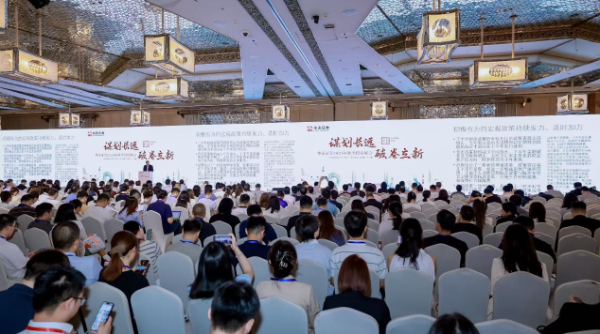
谋划长远 破卷立新——华泰证券2025年秋季投资峰会在上海举办
Xin Hua Wang· 2025-08-28 13:05
Group 1 - The 2025 Autumn Investment Summit held by Huatai Securities focused on long-term planning and new opportunities in global macro and market outlooks [1] - The summit included a main forum and 10 industry sub-forums, discussing growth areas such as digital assets, Hong Kong market allocation, AI+, "New Consumption 3.0", and innovative pharmaceuticals [1] - Experts from various institutions presented on topics including the "14th Five-Year Plan" outlook, structural changes in global trade and financial systems, and current international situations [1] Group 2 - Huatai Securities' Institutional Business Committee Chair Liang Hong noted a trend towards more diversified global asset allocation, driven by domestic policies that stabilize the economy and restore market confidence [3] - The Deepseek initiative has led to a global reassessment of China's technological innovation potential, impacting asset prices in equities, bonds, and currencies [3] - China is transitioning its economic growth model towards consumption-driven domestic demand, with structural reforms being crucial for success [3] Group 3 - Huatai Securities' Chief Macro Economist Yi Han highlighted that domestic fiscal policies have exceeded expectations, improving liquidity for residents, government, and markets [5] - The impact of U.S. tariffs on global economic growth remains manageable, with a weaker dollar providing a buffer for global growth momentum [5] - The focus for the upcoming quarter includes the sustainability of the stock outperforming bonds trend, the "14th Five-Year Plan" layout, and the potential for U.S. interest rate cuts [5] Group 4 - Zhang Jiqiang from Huatai Securities indicated that the current stock-bond valuation ratio is narrowing, and sector opportunities will be key in determining market outcomes [6] - The U.S. stock market is expected to enter a downtrend after two years of growth, while the A-share market is in an upward cycle with a relatively optimistic outlook [6] - In the commodity market, gold's long-term uptrend has paused, and investors are advised to remain cautious, while copper prices may decline if the global economy enters a downturn [6] Group 5 - Huatai Securities' Strategy Chief He Kang believes the current market is driven by both liquidity and fundamentals, with expectations for a turning point in ROE by Q4 this year [7] - The relative performance of Hong Kong stocks compared to A-shares has slowed, and the importance of sector-specific analysis in Hong Kong investments is increasing [7] - Key sectors in Hong Kong include internet and software, new consumption, and innovative pharmaceuticals, benefiting from favorable monetary and trade conditions [7] Group 6 - The outlook for Hong Kong assets is entering a new phase of valuation recovery, with a focus on industry allocation and structural opportunities becoming increasingly important [8] - Hong Kong is now viewed as a capital market with numerous core and scarce assets, rather than just an alternative to A-shares [8]

港股创新药板块延续调整,资金逆势加仓,恒生创新药ETF(159316)盘中获2200万份净申购
Mei Ri Jing Ji Xin Wen· 2025-08-28 06:22
Core Viewpoint - The Hong Kong innovative drug sector continues to experience a pullback, with the Hang Seng Innovative Drug Index down by 3.5% as of 13:40, despite significant capital inflow into related products, indicating a mixed market sentiment towards innovative pharmaceuticals [1] Group 1: Market Performance - The Hang Seng Innovative Drug ETF (159316) saw a net subscription of 22 million units during intraday trading, following two consecutive days of net inflow, bringing its latest scale to 1.7 billion yuan, a record high [1] - The recent adjustment of the Hang Seng Innovative Drug Index, which now excludes contract research organizations (CROs), has resulted in a more accurate reflection of the performance of domestic innovative drug companies [1] Group 2: Upcoming Events and Trends - The World Lung Cancer Conference (WCLC) and the European Society for Medical Oncology (ESMO) annual meeting are scheduled for September and October 2025, respectively, where several domestic innovative drugs, such as Akeso's AK112 and InnoCare's DB-1311, will showcase their research results [1] - The competitiveness of domestic innovative drugs in clinical data and progress is increasing globally, leading to a growing trend of innovative drugs entering international markets [1] Group 3: Index Performance - The removal of CROs from the index has led to higher annualized returns and Sharpe ratios since the index's launch on July 10, 2023, indicating improved performance metrics for the remaining innovative drug companies [1] - The Hang Seng Innovative Drug ETF (159316) is currently the only product tracking this newly adjusted index, providing investors with a targeted opportunity to capitalize on the growth of the innovative drug sector [1]
恒瑞医药(600276):业绩高速增长,出海有望加速前行
Orient Securities· 2025-08-27 13:19
⚫ 公司对外许可收入增厚业绩,考虑到创新药出海有望持续,假设未来对外许可收入 稳定增长,故上调 2025-2027 年 EPS 为 1.19、1.36、1.54 元(原预测值分别为 1.06、1.17、1.42 元)。根据 PE 估值法及可比公司估值水平,给予公司 2025 年 62 倍市盈率,对应目标价为 84.32 元,维持"买入"评级。 风险提示 ⚫ 创新药研发不及预期的风险,创新药销售不及预期的风险,仿制药进入集采的风 险。 公司主要财务信息 | | 2023A | 2024A | 2025E | 2026E | 2027E | | --- | --- | --- | --- | --- | --- | | 营业收入(百万元) | 22,820 | 27,985 | 31,684 | 35,553 | 40,900 | | 同比增长 (%) | 7.3% | 22.6% | 13.2% | 12.2% | 15.0% | | 营业利润(百万元) | 4,910 | 7,491 | 9,088 | 10,355 | 11,738 | | 同比增长 (%) | 19.4% | 52.6% | 21.3% ...
