
国内大循环

Search documents
政策持续显效 内需活力增强 经济回升向好基础不断夯实
Jing Ji Ri Bao· 2025-08-01 21:58
Group 1 - The National Development and Reform Commission (NDRC) has completed the allocation of 800 billion yuan for "two重" construction projects and 735 billion yuan of central budget investment, with plans to distribute an additional 690 billion yuan in special bonds for consumer goods by October [1] - In the first half of the year, China's economy showed resilience, with major macroeconomic indicators performing well and contributing to a solid foundation for achieving annual economic and social development goals [1] - Retail sales of consumer goods increased by 5% year-on-year in the first half of the year, with final consumption contributing 52% to economic growth [1] Group 2 - The NDRC emphasizes the importance of enhancing consumer capacity and willingness, alongside high-quality supply to stimulate new demand [2] - The national unified market construction is progressing, with logistics costs as a percentage of GDP dropping to 14%, the lowest on record, saving over 130 billion yuan in logistics expenses [2] - The NDRC plans to strengthen domestic circulation by stabilizing employment, boosting consumption, and expanding effective investment [3] Group 3 - The NDRC is addressing "involution" competition issues through legal revisions, policy introductions, and industry self-regulation [4] - The NDRC aims to maintain policy continuity and stability while enhancing flexibility and foresight to convert external pressures into internal momentum [4] - Continuous monitoring and forecasting of the economy will be conducted to ensure stability in employment, enterprises, markets, and expectations [4]
把稳中向好的趋势延续好(子夜走笔)
Ren Min Ri Bao· 2025-08-01 21:47
以消费和投资扩内需,让国内大循环"大"起来。"两新"政策加力扩围,带旺市场;服务消费、首发经济 等新增长点,燃起消费热情。"两重"建设扎实推进,把项目建设和民生保障结合起来,扩大有效投资。 打通市场堵点和卡点,让国内大循环"转"起来。整治"内卷式"竞争,企业利润有保障;规范政府招商引 资行为,企业竞争站在同一"起跑线"。企业好,就业好,消费才能好。而要扩大投资,也离不开企业, 特别要激发民间投资动力和活力,把好项目推介给民企,才能形成合力。 破除壁垒、统一规则,让更多人共享发展成果,中国经济就能抵御风险、破浪向前。 (文章来源:人民日报) 上半年,我国国内生产总值同比增长5.3%,为实现全年经济社会发展目标任务奠定了基础。 这一成绩是在顶住外部压力、消化累积风险的过程中取得的,来之不易。当前我国经济运行依然面临不 少风险挑战,要把稳中向好的趋势延续好,就要纵深推进全国统一大市场建设,做强国内大循环。 ...
华夏时评:以“超预期”政策,全方位扩大内需
Hua Xia Shi Bao· 2025-08-01 12:13
Core Viewpoint - The upcoming economic policies and planning for the 15th Five-Year Plan are crucial as the Central Committee prepares for the fourth plenary session in October, focusing on economic and social development strategies [2][3]. Economic Policy Direction - The macroeconomic policies will continue to exert influence, with an emphasis on releasing domestic demand potential, deepening reforms, expanding high-level opening-up, and ensuring risk prevention in key areas [3][4]. - Key points from Xi Jinping's speech include maintaining stability while seeking progress, enhancing consumer confidence, and promoting domestic circulation to achieve economic goals for the year [3][4]. Consumer Stimulus and Policy Innovations - A significant focus is on boosting consumption and breaking the cycle of "involution," which aims to enhance the quality of supply and shift economic growth towards domestic consumption [4][5]. - The introduction of a new child-rearing subsidy policy, effective from January 1, 2025, will provide annual subsidies of 3,600 yuan per child for families with children under three years old, marking a significant shift in public policy towards direct cash support for families [5][6]. Anticipated Economic Impact - Economists estimate that the child-rearing subsidy could increase retail sales by approximately 0.2 percentage points nationwide, indicating a potential boost in consumer spending [6]. - The political bureau's meeting highlighted plans for implementing consumption-boosting actions and expanding service consumption, suggesting that improving livelihoods will be a key driver for consumption policies in the 15th Five-Year Plan [6].

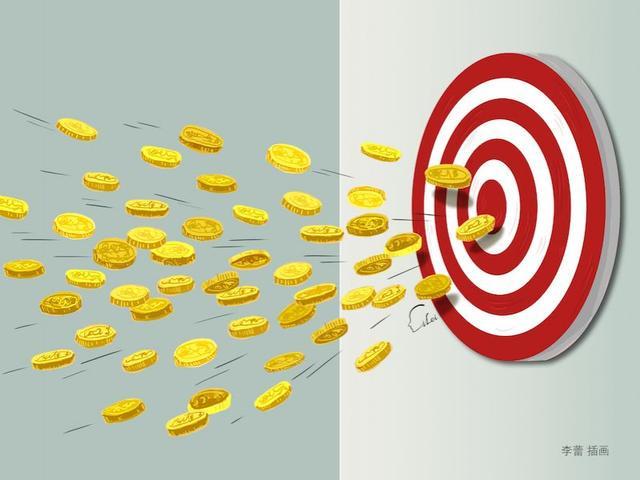
事关国补、内卷式竞争等,发改委最新发声
Di Yi Cai Jing Zi Xun· 2025-08-01 07:53
Economic Policy and Measures - The National Development and Reform Commission (NDRC) is committed to improving policies for stabilizing employment and expanding domestic demand, responding to external environmental changes in a timely manner [3][4] - A total of 300 billion yuan will be allocated for consumption support, with the fourth batch of 69 billion yuan planned for October [4] - The NDRC aims to ensure effective investment and support local governments in creating development highlights while balancing development and safety [4] Artificial Intelligence Initiatives - The State Council has approved the implementation of the "Artificial Intelligence+" initiative to enhance AI applications across various industries [5][6] - The initiative focuses on promoting large-scale commercial applications of AI, leveraging China's complete industrial system and large market scale [6] - The NDRC plans to optimize the AI innovation ecosystem by increasing policy support and enhancing foundational elements such as computing power, algorithms, and talent [6] Competition Regulation - The Central Economic Commission emphasizes the need to regulate low-price and disorderly competition among enterprises [7] - The NDRC is working on revising the pricing law to clarify standards for identifying unfair pricing behaviors, including predatory pricing [7] - Efforts will be made to combine effective market mechanisms with proactive government actions to improve market order and encourage quality products [7]

北京、上海不具备放开条件,业界再议彻底取消汽车限购
Hua Xia Shi Bao· 2025-08-01 00:21
华夏时报记者于建平见习记者黄蓓北京报道 7月28日,中国汽车技术研究中心有限公司中国汽车战略与政策研究中心教授级高级工程师吴松泉发表专论文章——《吴松泉:是时候全面彻底取消汽车 限购了》。"汽车限购"这个汽车行业的老话题又再次被重新提起。 7月16日,国务院常务会议指出:"做强国内大循环是推动经济行稳致远的战略之举""要找准关键着力点,深入实施提振消费专项行动,系统清理制约居民 消费的不合理限制""要聚焦突出问题,提高政策精准度和可操作性,加强部门间协同配合,汇聚政策落实的合力,加快破解制约国内大循环的堵点卡 点"。 吴松泉认为,在当前扩大内需已经成为经济工作的头号任务的情况下,对汽车实施限购,已经不符合当前经济工作的要求,不符合中央关于做强国内大循 环和全方位扩大国内需求的要求。 部分限购城市已具备彻底解限的条件 今年3月,中共中央办公厅、国务院办公厅印发《提振消费专项行动方案》:各地区各有关部门要结合实际,及时清理对消费的不合理限制,不得搞"一刀 切"和层层加码。推动汽车等消费由购买管理向使用管理转变,分年限保障"久摇不中"无车家庭购车需求。 自中央政府启动刺激消费政策以来,一些对汽车进行限行限购的城市陆 ...

业界再议彻底取消汽车限购 ,北京、上海等特大城市仍不具备放开条件
Hua Xia Shi Bao· 2025-07-31 17:28
Core Viewpoint - The article discusses the necessity of completely abolishing car purchase restrictions in China, emphasizing that such restrictions are no longer aligned with the current economic goals of expanding domestic demand and strengthening the domestic circulation [1][3]. Group 1: Policy Context - The State Council's recent meeting highlighted the importance of boosting domestic consumption and removing unreasonable restrictions that hinder consumer spending [1][2]. - The "Special Action Plan to Boost Consumption" issued in March 2023 calls for the timely removal of unreasonable consumption restrictions and encourages a shift from purchase management to usage management [2]. Group 2: Current Situation of Car Purchase Restrictions - Some cities have begun to lift car purchase restrictions, but major cities like Beijing, Shanghai, Guangzhou, Shenzhen, Tianjin, and Hangzhou still maintain these policies [2]. - The article notes that while the restrictions have helped manage traffic congestion and environmental concerns, the current economic and automotive market conditions necessitate a reevaluation of these policies [3]. Group 3: Expert Opinions - Wu Songquan advocates for a national policy to eliminate car purchase restrictions by 2026, suggesting that more scientific and reasonable alternative measures should be developed [3]. - Other experts agree that cities with lower car ownership, such as Tianjin and Guangzhou, can lift restrictions, but cities like Beijing and Shanghai may not be ready for such changes [4]. Group 4: Traffic and Environmental Considerations - Despite improvements in traffic management and environmental capacity, congestion remains a significant issue in major cities, with Beijing ranking 15th globally in congestion index [5]. - The potential removal of restrictions could place considerable pressure on local traffic and city management departments [5].
重磅发布会!明天上午10时召开
Sou Hu Cai Jing· 2025-07-31 12:41
Core Viewpoint - The National Development and Reform Commission (NDRC) is set to hold a press conference on August 1 to discuss the current economic situation and work plans, indicating a proactive approach to economic management [1]. Economic Performance Summary - In the first half of the year, China's GDP reached 66,053.6 billion yuan, reflecting a year-on-year growth of 5.3% when calculated at constant prices [4]. - By industry, the value added in the primary sector was 3,117.2 billion yuan, growing by 3.7%; the secondary sector's value added was 23,905.0 billion yuan, with a growth of 5.3%; and the tertiary sector's value added was 39,031.4 billion yuan, increasing by 5.5% [4]. - Quarterly analysis shows that GDP growth was 5.4% in Q1 and 5.2% in Q2, with a quarter-on-quarter growth of 1.1% in Q2 [4]. Policy Implications - The NDRC emphasizes that the macroeconomic policies have been effective, leading to a stable and positive economic development trend, showcasing resilience and vitality [4]. - However, it also highlights the presence of external uncertainties and insufficient domestic demand, indicating that the foundation for economic recovery needs further strengthening [4]. - The next steps involve adhering to Xi Jinping's thoughts on socialism with Chinese characteristics, maintaining a stable yet progressive work tone, and accelerating the establishment of a new development pattern to enhance domestic circulation and ensure high-quality development in response to external uncertainties [4].
习近平:要有力提振消费、破除“内卷”
Xin Hua She· 2025-07-31 01:04
Core Viewpoint - The meeting emphasized the need for a stable yet progressive approach to economic work in the second half of the year, focusing on maintaining policy continuity and enhancing flexibility to boost consumption and stabilize employment and market expectations [2][4]. Economic Situation and Work Plans - The Central Committee of the Communist Party of China held a meeting to discuss the current economic situation and plans for the second half of the year, with input from various democratic parties and non-party representatives [2][3]. - The meeting highlighted the importance of a proactive macroeconomic policy to support economic recovery and stability, with a focus on expanding domestic demand and deepening reforms [4][5]. Suggestions from Democratic Parties - Leaders from various democratic parties and organizations expressed support for the Central Committee's analysis of the economic situation and provided suggestions on promoting technological and industrial innovation, enhancing service consumption, and improving social security for flexible employment groups [3][4]. Key Challenges and Opportunities - The meeting acknowledged ongoing risks and challenges in the economy, urging a correct understanding of the situation and the need to leverage development opportunities while consolidating the recovery momentum [4][5]. - Emphasis was placed on the necessity of continuous efforts in macroeconomic policy, risk prevention, and improving people's livelihoods [4][5]. Expectations for Future Collaboration - The Central Committee expressed hopes for unified understanding and collaboration among democratic parties to promote high-quality development and gather actionable insights for economic policies [5].
6月份规模以上工业企业利润降幅收窄 制造业改善明显
Zhong Guo Chan Ye Jing Ji Xin Xi Wang· 2025-07-31 00:09
Core Insights - In June, the total profit of industrial enterprises above designated size reached 715.58 billion yuan, a year-on-year decrease of 4.3%, with the decline narrowing by 4.8 percentage points compared to May [1] - The manufacturing sector showed significant improvement, with profits shifting from a 4.1% decline in May to a 1.4% increase in June [1] - Cumulatively, in the first half of the year, the operating income of industrial enterprises grew by 2.5%, while profits fell by 1.8% [1] Group 1: Manufacturing Sector Performance - In June, the operating income of industrial enterprises increased by 1.0% year-on-year, maintaining the same growth rate as in May, which supports the recovery of corporate profits [1] - The profit decline for industrial enterprises narrowed in June, with the equipment manufacturing sector showing rapid profit growth [1] - The equipment manufacturing sector's operating income grew by 7.0% year-on-year, and profits shifted from a 2.9% decline in May to a 9.6% increase in June, contributing significantly to the overall profit growth of industrial enterprises [1] Group 2: High-end and Green Manufacturing - Profits in high-end manufacturing sectors such as electronic materials, aircraft manufacturing, and marine engineering equipment grew by 68.1%, 19.0%, and 17.8% respectively [2] - The production of smart and automated products accelerated, leading to profit increases in related industries, with smart consumer devices and measuring instruments seeing profits rise by 40.9% and 12.5% respectively [2] - Green production and lifestyle trends positively impacted profits in sectors like lithium-ion battery manufacturing, biomass energy generation, and environmental monitoring instruments, with profit growth rates of 72.8%, 24.5%, and 22.2% respectively [2] Group 3: Policy Impact on Profit Growth - The expansion of "two new" policies and subsidies has significantly improved profits in related industries, with medical equipment manufacturing, specialized printing equipment, and general parts manufacturing seeing profit increases of 12.1%, 10.5%, and 9.5% respectively [3] - The "replace old with new" policy for consumer goods has shown continued effectiveness, with profits in sectors like smart drones, computer manufacturing, and air conditioning equipment rising by 160.0%, 97.2%, and 21.0% respectively [3] - Related industries such as optoelectronic devices and computer components also experienced profit growth of 29.6% and 16.9% respectively [3]
中央政治局会议释放八大信号!权威解读→
Shang Hai Zheng Quan Bao· 2025-07-30 14:53
Core Viewpoint - The meeting of the Central Political Bureau emphasizes the importance of economic work in the second half of the year to achieve the goals set for the "14th Five-Year Plan" and focuses on stabilizing employment, enterprises, markets, and expectations [1] Macro Policy - Macro policies need to continue to exert force and be adjusted as necessary, with a focus on maintaining policy continuity and stability while enhancing flexibility and foresight [2] - The meeting reiterates the need for a more proactive fiscal policy and moderately loose monetary policy to fully unleash policy effects [2][3] Fiscal Policy - The meeting calls for accelerating the issuance and utilization of government bonds to improve fund efficiency and ensure the "three guarantees" at the grassroots level [3] - As of the end of June, the budget for special bonds has reached 658.3 billion yuan, indicating a strong push for fiscal policy [3] Monetary Policy - Monetary policy should maintain ample liquidity and promote a decline in overall financing costs [4] - The meeting does not mention new structural monetary policy tools but emphasizes the effective use of existing ones to support small and micro enterprises, consumption, and foreign trade [4][5] Domestic Demand - The meeting highlights the need to effectively release domestic demand potential, with domestic demand contributing 68.8% to GDP growth in the first half of the year [6] - Measures to boost consumption include implementing special actions to stimulate consumption and expanding service consumption [6][7] Investment - The meeting stresses the importance of high-quality investment in infrastructure and stimulating private investment through reduced market access barriers and financial support [7] Technological Innovation - The meeting emphasizes the integration of technological innovation and industrial innovation as a core strategy for high-quality development [8] - Focus areas include strategic emerging industries and future industries, with a goal of fostering new supply to create new demand [8][9] Foreign Trade and Investment - The meeting underscores the need to stabilize foreign trade and foreign investment, with policies to support affected foreign trade enterprises [10][11] - The foreign trade sector showed resilience, with imports and exports maintaining a scale of over 20 trillion yuan in the first half of the year [11] Capital Market - The meeting calls for enhancing the attractiveness and inclusiveness of the domestic capital market to consolidate the positive momentum [12] - Reforms should focus on market-oriented, rule-of-law, and internationalization to improve capital allocation efficiency [12] Unified National Market - The meeting proposes deepening the construction of a unified national market to optimize market competition order and address current market pain points [13][14] Urban Renewal - The meeting emphasizes high-quality urban renewal as a means to ensure stable economic development, with a focus on transforming old urban areas and improving existing housing stock [15][16] - Urban renewal is seen as a key driver to stimulate housing demand and mitigate risks in the real estate sector [16]