成本控制

Search documents
H&M集团2025财年第三季度净销售额同比增长2%,营业利润同比增长40%
Cai Jing Wang· 2025-09-25 09:09
(H&M集团财报) 2025财年第四季度,H&M将再度携手上海时装周,联合发起"中国设计师合作计划",推出全新一季的 中国设计师合作系列。 据H&M集团2025财年第三季度及前九个月财报显示,2025财年第三季度(2025年6月1日至8月31日), 集团在当地货币计算下的净销售额同比增长2%,受瑞典克朗升值影响,折算后净销售额为570.17亿瑞 典克朗。毛利润为301.43亿瑞典克朗,毛利率提升至52.9%,较去年同期的51.1%有所改善。销售及管理 费用同比下降5%,展现出良好的成本控制能力。营业利润同比增长40%,达到49.14亿瑞典克朗,营业 利润率从5.9%提升至8.6%。库存水平持续优化,库存结构被评估为良好。 在中国市场,2025年三季度新增三家门店,含深圳大悦城店、1234space 店焕新,及上海淮海中路 "House of H&M";6月首秀天猫 "超级时装发布",六小时直播吸引超156万观众破纪录,借平台数据优 化会员服务,提升用户参与度与粘性。 ...
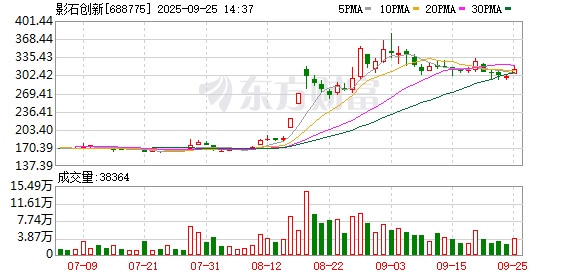
影石创新存货周转率大幅放缓 全球化挑战加剧
Xin Hua Cai Jing· 2025-09-25 06:36
Core Viewpoint - Yingstone Innovation, which went public on the Sci-Tech Innovation Board in June, is facing increasing competition in the global smart imaging device market, highlighted by declining inventory turnover and significant drops in cash flow from operating activities [2][4]. Financial Performance - In the first half of the year, Yingstone Innovation reported revenue of 3.671 billion yuan, a year-on-year increase of 51.17%, while total profit decreased by 6.46% to 540 million yuan, and net profit attributable to shareholders rose slightly by 0.25% to 520 million yuan [4]. - The company's inventory turnover ratio fell from 2.10 in the same period last year to 1.43, a decline of 32%, and net cash flow from operating activities dropped over 60% from 606 million yuan to 241 million yuan [2]. R&D and Production Costs - R&D expenses doubled year-on-year, exceeding 15% of revenue, with a workforce of 1,836 employees, 56.75% of whom are technical staff [4][5]. - External processing costs accounted for 10.14% of the main business costs, amounting to 180 million yuan in the first half of 2025 [5]. Market Competition - Yingstone Innovation is entering the drone market with the launch of the Antigravity A1, an 8K panoramic drone, to compete directly with DJI, which holds a dominant market share of 76% in the global drone market [6][7]. - The global consumer drone market is projected to reach $4.85 billion in 2023, with a compound annual growth rate of 13.5% expected until 2030 [7]. Strategic Focus - The company has decided not to enter the automotive sector, focusing instead on its core competency in imaging technology, which is supported by analysts who believe this strategy will help maintain competitive advantages [8]. - Future plans include increasing R&D investment to strengthen leadership in panoramic technology while expanding into new categories like action cameras and drones [8].

Cintas(CTAS) - 2026 Q1 - Earnings Call Transcript
2025-09-24 15:02
Financial Data and Key Metrics Changes - Total revenue for the first quarter grew by 8.7% to $2.72 billion, with an organic growth rate of 7.8% [4][6] - Gross margin as a percentage of revenue increased by 20 basis points to 50.3% [4] - Operating income rose to $617.9 million, a 10.1% increase year-over-year [4][11] - Diluted EPS increased by 9.1% to $1.20 [4][11] - Cash flow from operating activities was $414.5 million [11] Business Line Data and Key Metrics Changes - Organic growth by business: - Uniform rental facility services: 7.3% - First aid and safety services: 14.1% - Fire protection services: 10.3% - Uniform direct sale declined by 9.2% [8] - Gross margin percentages by business: - Uniform rental facility services: 49.7% - First aid and safety services: 56.8% - Fire protection services: 48.9% - Uniform direct sale: 41.7% [9] Market Data and Key Metrics Changes - The company reported steady customer behavior and retention rates, with no significant changes in sales cycles despite a somewhat uncertain environment [26][50] - The customer base improved slightly during the quarter [26] Company Strategy and Development Direction - The company is raising its fiscal 2026 financial guidance, expecting revenue between $11.06 billion and $11.18 billion, and diluted EPS between $4.74 and $4.86 [6][12] - Continued investments in technology and operational efficiency are emphasized as key drivers for future growth [5][99] - The company remains focused on converting "no-programmers" into customers, which is seen as a significant growth opportunity [19][72] Management's Comments on Operating Environment and Future Outlook - Management expressed confidence in the company's ability to grow even in uncertain macroeconomic conditions, highlighting the value proposition offered to customers [15][26] - The company is optimistic about the future of its first aid and safety services business, expecting it to maintain low double-digit growth [86][87] - Management noted that the competitive environment remains strong, with a focus on expanding the customer base among do-it-yourselfers [72][104] Other Important Information - The company has maintained a 15.4% increase in its quarterly cash dividend, marking the 42nd consecutive year of dividend increases [12] - The company is actively engaged in share buybacks, repurchasing $347.4 million of its shares [12] Q&A Session Summary Question: Impact of macroeconomic pressures on converting no-programmers - Management indicated that in pressured environments, the company helps customers free up cash flow and manage budgets, which aids in converting no-programmers [19][20] Question: Update on the selling environment and client budget trends - Management reported no significant changes in sales cycles and noted that customer retention rates remain strong [26][27] Question: Effects of decelerating non-farm payrolls on rental business - Management acknowledged the deceleration but emphasized the company's ability to grow despite employment levels [33][34] Question: Changes in competitive environment - Management stated that while the market remains competitive, the focus is on converting no-programmers rather than competing directly with traditional competitors [72] Question: Update on tariff-driven expense growth - Management acknowledged the impact of tariffs but emphasized the strength of their global supply chain and process improvements to mitigate costs [57][58] Question: Gross margins in the first aid segment - Management explained that the gross margin was flat sequentially and attributed any year-over-year changes to timing and investment strategies [66][67] Question: M&A pipeline and appetite for expansion - Management confirmed that M&A remains important, with ongoing evaluations for both tuck-in deals and larger acquisitions [80][82] Question: Impact of visa requirements on customer hiring - Management noted no material impact from changes in immigration policy on customer hiring [110] Question: Update on myCintas portal - Management highlighted the myCintas portal as a competitive advantage, though specific metrics were not disclosed for competitive reasons [105][106]

安琪酵母:9月24日接受机构调研,华源证券、融通基金等多家机构参与
Sou Hu Cai Jing· 2025-09-24 12:13
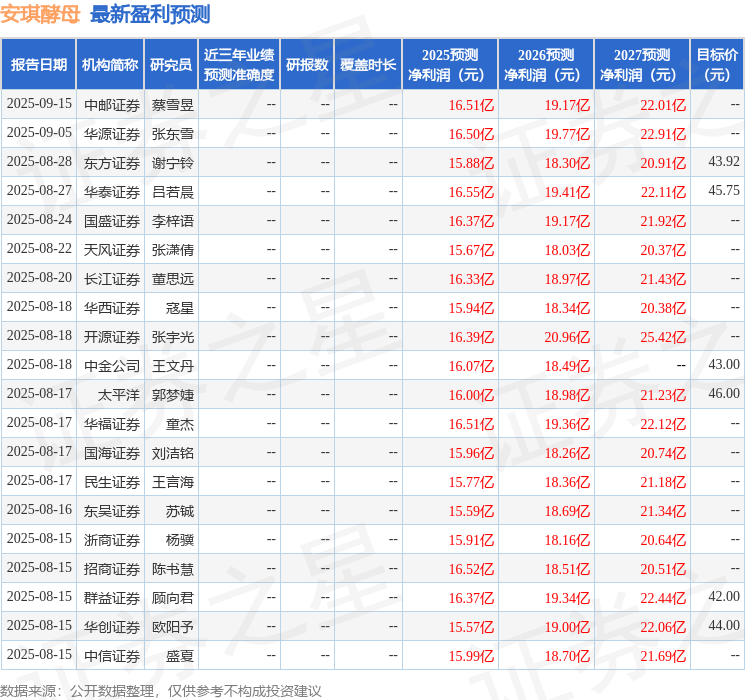
Core Viewpoint - Company Anqi Yeast (600298) is experiencing growth driven by overseas markets, while domestic demand remains constrained due to demographic factors. The company is focusing on expanding its production capacity overseas while maintaining strategic opportunities in the domestic market [1][2][3]. Domestic Demand - Domestic demand is expected to grow at a low single-digit rate this year, influenced by factors such as an aging population. However, specific segments like small-packaged yeast are seeing double-digit growth [2]. Overseas Growth - The company has maintained over 20% growth in overseas markets in recent years, with regions like the Middle East, Africa, Southeast Asia, and Central Asia showing particularly high growth rates [3]. Production Capacity Planning - Future production capacity will primarily focus on overseas regions due to better raw material availability and market proximity. The company recently acquired Shengtong Sugar Industry to ensure stable raw material supply and reduce production costs [5]. Cost Structure - The main production raw material is molasses, which has a cyclical price influenced by various factors. The company anticipates that molasses prices will remain low in the coming years. Additionally, the company has developed hydrolyzed sugar as a substitute for molasses, currently accounting for about 30% of its raw material usage [10][13]. Competitive Landscape - The yeast industry is characterized by stable operations, with the company facing competition primarily from a few overseas firms. The competitive landscape remains relatively stable [12]. Second Growth Curve - The company is developing its second major product line, yeast extract, which has seen gradual growth since the establishment of its first production line in 2000. Other areas like synthetic biology and yeast protein are also being developed steadily [14][15]. Financial Performance - For the first half of 2025, the company reported a main revenue of 7.899 billion yuan, a year-on-year increase of 10.1%. The net profit attributable to shareholders was 799 million yuan, up 15.66% year-on-year [20]. Future Projections - The company aims to achieve a minimum revenue growth target of 10% as part of its stock incentive plan for 2025. The third quarter's performance is expected to align with the overall annual forecast [17]. Taxation and Financial Management - The overall corporate income tax rate for overseas operations is higher than that in China, but the company benefits from export tax rebates for its products in Egypt [18]. The company has maintained an asset-liability ratio below 50% in recent years, with targets set for 2025 and 2026 not exceeding 53% and 55%, respectively [19]. Market Development - The company sees significant growth potential for yeast extract in developed markets like Europe and North America, while in developing countries, market development is still needed due to local consumption levels [20].

中欣氟材20250923
2025-09-24 09:35
Summary of Zhongxin Fluorine Materials Conference Call Company Overview - **Company**: Zhongxin Fluorine Materials - **Industry**: Fluorine materials, specifically focusing on PEEK (Polyether Ether Ketone) and related products Key Points and Arguments Production and Capacity - PEEK material trial production has stabilized since May, with a monthly output of approximately 20 tons, aiming for a capacity target of 120-150 tons by 2026, potentially exceeding 200 tons at full capacity [2][13] - The company is currently in the trial production phase, with a high pass rate for different product models tested [12] - The production capacity for DFAPP (Polyvinylidene Fluoride) is expected to be around 20% utilization in Q4 [11] Market Dynamics - The price of PICO products is influenced by downstream demand, with premium products priced between 300,000 to 350,000, potentially dropping to around 250,000 in the future [2][17] - There is a growing interest in PEEK materials among domestic robot manufacturers, with several companies currently testing the material [26] Competitive Advantages - The core competitive advantage lies in cost control, with factors such as the length of the supply chain, production process experience, and risk management capabilities being crucial [6][7] - The purification process is more challenging due to environmental regulations, affecting the speed of capacity expansion [8] Financial Projections - The company aims to reduce losses in 2025 and expects performance recovery in 2026, with contributions from four-generation refrigerants, optical values, and PK business [5][29] - Expected profit from TFTP business in 2026 is projected to be in the range of tens of millions [30] - BPF business is anticipated to produce 600-800 tons in 2026, generating 120-150 million in revenue [31] Product Development - The company is developing modified materials primarily focusing on carbon fiber and glass fiber, with future decisions on establishing a dedicated company depending on market development [2][18] - The demand for modified materials from downstream robot manufacturers is diverse, with a focus on specific applications [19] Environmental and Regulatory Considerations - The expansion of production capacity is influenced by local policies and environmental regulations, particularly for the purification process [8][9] Future Outlook - The application of PICK (Polyimide Composite Materials) is expected to gain traction in the robotics industry by 2026, with potential revenue generation [24] - Overseas markets, especially North America, show a positive attitude towards the application of PICK, with opportunities for collaboration [25] Internal Dynamics - Internal consumption of products may offset some external sales revenue, impacting the overall financial statements [33] Additional Important Insights - The company is currently focused on trial production and testing various models, with a stable production situation reported [12] - The complexity of modifying high-temperature materials requires specialized equipment, increasing costs and processing difficulty [22] - Lightweighting is a consideration in component selection, but overall performance characteristics are more critical [28]

海博思创20250922
2025-09-23 02:34
Summary of Haibo Company Conference Call Industry and Company Overview - Haibo Company operates in the energy storage industry, focusing on both domestic and international markets, with significant growth expectations for the coming years [2][3][4]. Key Points and Arguments - **Sales Projections**: Haibo Company anticipates total energy storage shipments of 300 GWh over the next three years, with specific targets of 70 GWh in 2026, 100 GWh in 2027, and 120-130 GWh in 2028. The domestic independent storage market is expected to contribute 200 GWh, while the remaining 100 GWh will come from overseas markets and central state-owned enterprise procurement [2][3]. - **Domestic Market Strategy**: The company has established strong partnerships with local design institutes and grid planning units, achieving nearly 20% market share in Inner Mongolia (approximately 7-8 GWh). Haibo plans to implement 20 GWh, 100 GWh, and over 200 GWh of operational orders in the coming years, with operational gross margins reaching 70%-80% [4][9]. - **International Expansion**: Haibo is expanding from Europe to the United States, expecting to ship several hundred megawatt-hours in Q4 and has signed multiple GWh orders, with a projected volume of around 2 GWh next year [2][5]. - **Team Background**: The founding team consists of graduates from Tsinghua University and prestigious U.S. institutions, bringing extensive semiconductor and materials science expertise [6]. - **Revenue and Profitability**: The company expects to achieve over 1 billion yuan in profits this year and 3 billion yuan next year, driven by high operational margins and strategic pricing adjustments [4][11]. Additional Important Insights - **Government Collaboration**: Haibo emphasizes collaboration with local governments to ensure demand is not overstretched, with specific examples from Inner Mongolia where demand remains stable despite limited quotas [7][10]. - **Cost Control Measures**: The company has secured 70% of its energy cell supply and is working with major suppliers to maintain price stability while adjusting prices for smaller clients. This strategy is expected to enhance profitability in the third quarter [11]. - **Impact of Policies**: The company views the Gansu energy storage policy favorably, as it is recognized by the National Development and Reform Commission and offers substantial subsidies, contributing to stable long-term growth [10]. - **Market Dynamics**: The increasing share of the overseas market is improving average unit profitability, while domestic market conditions are also showing significant improvement, benefiting Haibo's overall performance [12].
Q1财报亮眼难掩远期忧虑 联邦快递(FDX.US)逆风指引引发华尔街集体质疑
智通财经网· 2025-09-22 08:43
Group 1 - FedEx's Q1 performance for the new fiscal year showed a positive impression on Wall Street, with adjusted net income reaching $910 million (or $3.83 per share), surpassing last year's $890 million ($3.60 per share) and analyst expectations of $3.59 per share [1] - The quarterly revenue of $22.24 billion exceeded market expectations of $21.66 billion [1] - FedEx expects adjusted earnings per share for fiscal year 2026 to be between $17.20 and $19, slightly below the analyst average estimate of $18.25 [1] Group 2 - Analyst Stephanie Moore noted that despite ongoing industrial economic weakness impacting B2B volumes, FedEx is taking the right actions to fundamentally lower its cost structure and capital intensity, thereby improving profitability and free cash flow [1] - Key assumptions outlined by Moore include an operating profit margin below last year's 7.1%, low single-digit growth in freight revenue with a year-over-year decline in profit margins, and a $1 billion headwind from the global trade environment [2] - Evercore ISI analyst Jonathan Chappell indicated that due to ongoing tariff and tax policy headwinds, they have lowered their earnings per share forecast for fiscal year 2026, citing expected declines in profit margins for both FedEx and freight divisions [2] Group 3 - FedEx executives acknowledged challenges from global trade and industrial economic pressures, with CFO John Dietrich stating that the $1 billion headwind will be a significant challenge moving forward [2] - CEO Raj Subramaniam emphasized that the company's core business remains "very strong," and this trend is expected to continue into 2027 and beyond [2] - Morgan Stanley analyst Ravi Shankar raised concerns about the lack of significant upside potential reflected in the 2026 guidance, questioning how the company plans to achieve 5% revenue growth in the current environment [3]

通威股份,横扫400亿订单!
Xin Lang Cai Jing· 2025-09-21 10:15
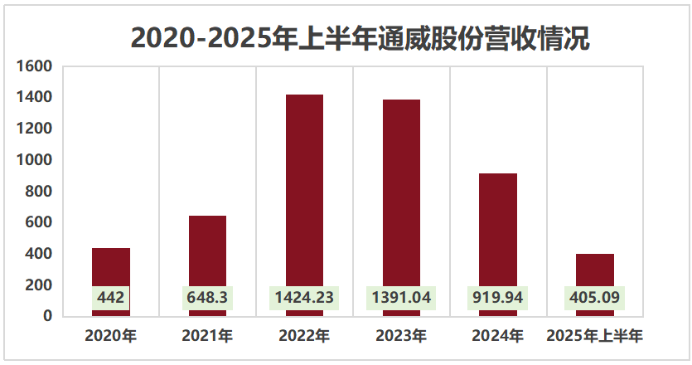
Core Insights - Tongwei Co., Ltd. has become the first company in the global photovoltaic industry to enter the Fortune Global 500 list in 2023, marking a significant achievement for both Sichuan manufacturing and the water and photovoltaic sectors [1][3] - Despite the challenging market conditions that have led to over 150 photovoltaic companies in China going bankrupt since 2024, Tongwei has maintained its leading position in the industry [4] - The company has undergone a strategic restructuring of its business segments since 2025, focusing on optimizing its operations [4][11] Business Performance - As of mid-2025, Tongwei's production capacity includes over 900,000 tons of high-purity crystalline silicon, over 150 GW of solar cells, and over 90 GW of modules [5] - In 2024, Tongwei signed nearly 40 billion yuan in orders with Longi Green Energy, showcasing its strong market presence [5] - The company reported a total loss of approximately 119.94 billion yuan for the entirety of 2024 and the first half of 2025, with significant losses attributed to its subsidiary Sichuan Yongxiang [9][10] Strategic Decisions - In February 2025, Tongwei decided to "strategically abandon" its battery cell business, which had previously been a stronghold for the company, due to ongoing patent disputes and production issues at its Southeast Asian factories [7][9] - The company has engaged in financing activities to alleviate cash flow pressures, raising approximately 49.16 billion yuan for Sichuan Yongxiang [10][11] Financial Health - As of mid-2025, Tongwei's cash and cash equivalents exceeded 33.2 billion yuan, reflecting a 3.9 billion yuan increase from the end of 2024 [13] - The company has managed to maintain a stable cash flow, which is crucial for navigating the current photovoltaic market cycle [12][15] Competitive Landscape - Tongwei's cost control capabilities are under scrutiny, especially in comparison to its main competitor, GCL-Poly Energy Holdings, which has demonstrated lower production costs for granular silicon [15][17] - The average production cash cost for Tongwei's multi-crystalline silicon remains between 26 to 29 yuan/kg, while GCL-Poly's costs have been reported at 25.31 yuan/kg [17][19] Conclusion - Tongwei has successfully integrated itself across the entire photovoltaic supply chain, positioning itself ahead of many competitors in terms of scale and cash flow [19] - The company's approach to navigating the current market cycle contrasts with GCL-Poly's focus on technological cost reduction, highlighting two different strategies for survival in the industry [19]

星巴克的月饼,年年难卖年年卖
Sou Hu Cai Jing· 2025-09-21 04:09
Core Viewpoint - The article highlights the internal pressure faced by Starbucks employees regarding mooncake sales, revealing a broader issue of operational challenges within the company and the retail industry as a whole [2][3][5]. Group 1: Employee Pressure and Sales Challenges - Employees at Starbucks have reported significant pressure to meet mooncake sales targets, with some resorting to purchasing mooncakes out of their own pockets, leading to financial strain [2][3]. - A survey indicated that 67% of chain restaurants impose mooncake sales targets on employees, with Starbucks facing some of the highest pressure in this regard [5]. - Despite the high profit margins of mooncakes (65%), the low repurchase rate (23%) indicates a struggle to sell these products effectively [7]. Group 2: Starbucks' Operational Struggles - Starbucks has experienced its first revenue decline in China for 2024, with same-store sales and average transaction values also decreasing, despite an increase in store count and membership [11]. - The competitive landscape has shifted, with local brands like Luckin Coffee offering significantly lower prices, leading to increased price sensitivity among consumers [11][13]. - The company's slower pace of product innovation has resulted in a perception among younger consumers that Starbucks lacks novelty, with 42% of consumers aged 18-30 expressing this sentiment [13]. Group 3: Industry-Wide Issues - The mooncake sales dilemma reflects a broader "Mid-Autumn curse" affecting the retail and dining sectors, with many businesses struggling to sell mooncakes despite their prominent marketing [14][16]. - The total production of mooncakes in China is projected at 420,000 tons for 2024, with a market value of 21.8 billion yuan, yet there are significant structural issues, including inflated prices and declining demand [16][18]. - The cultural shift away from mooncake gifting, exacerbated by anti-corruption measures, has led to a 78% decrease in reported violations related to mooncake gifts since 2019 [18][22]. Group 4: Changing Consumer Behavior - Consumer purchasing power and willingness to spend have declined, with a 23% drop in corporate mooncake procurement compared to 2023 [19][21]. - Younger consumers are increasingly favoring practical gifts over traditional mooncakes, with sales of alternative gifts like crabs and tea rising significantly [22][24]. - The traditional high-priced mooncake gift boxes are seeing a drastic decline in sales, with a 67% drop in those priced over 500 yuan since 2019, while more affordable options are gaining traction [24][26]. Group 5: Need for Industry Transformation - The article suggests that the traditional mooncake sales model needs reform, emphasizing the importance of aligning with consumer needs rather than relying solely on cultural traditions [26]. - For international brands like Starbucks, the challenge lies in balancing respect for local traditions with maintaining their global brand identity while addressing operational costs and risks [26].


萨莉亚生怕你不知道他们有预制菜
半佛仙人· 2025-09-20 03:54
Core Viewpoint - The article discusses the business model and strategies of the Japanese restaurant chain Salia, emphasizing its low-price strategy and cost control measures as key to its success in the competitive dining market [3][4][5]. Group 1: Business Model and Pricing Strategy - Salia's pricing strategy is based on offering affordable meals, with an average cost of around 30 RMB, which positions it as a value-for-money option compared to other dining establishments [26][32]. - The restaurant chain initially struggled due to its location and pricing but pivoted to a discount strategy, offering meals at 30% off, which significantly increased customer traffic from fewer than 20 customers a day to over 800 [18][19][20]. - Salia's approach to pricing is not just about being cheap; it is about creating a perception of value that resonates with consumers, making them feel they are getting a good deal [32][34]. Group 2: Cost Control and Operational Efficiency - Salia focuses on controlling costs by simplifying its menu and reducing the number of dishes offered, which in turn lowers inventory costs and streamlines operations [28][24]. - The restaurant employs innovative operational practices, such as using efficient cleaning tools and optimizing service processes to reduce labor costs while maintaining service speed [29][30]. - Salia's management philosophy emphasizes practical service over elaborate dining experiences, prioritizing cleanliness and food quality over ambiance [30][31]. Group 3: Market Expansion and Adaptation - After establishing a strong presence in Japan, Salia expanded internationally, particularly targeting markets in China and other Asian countries, where it adapted its pricing strategy to local conditions [37][39]. - The chain's entry into the Chinese market involved maintaining low prices to attract customers, which proved successful, with daily customer traffic exceeding 3,000 in some locations [39][41]. - Salia's strategy reflects a broader trend in the restaurant industry where affordability and value are prioritized, especially in economically challenging times [32][22].