餐饮创新

Search documents
Shake Shack(SHAK) - 2025 Q4 - Earnings Call Transcript
2026-02-26 14:02
Financial Data and Key Metrics Changes - In 2025, total revenue grew by more than 15% to $1.45 billion, with a fourth quarter revenue of $400.5 million, up 21.9% year-over-year [12][30] - Same-Shack sales growth was 2.3% for the year and 2.1% for the fourth quarter, with January 2026 Same-Shack sales increasing by 4.3% year-over-year [12][31][28] - Adjusted EBITDA grew by 20% year-over-year, reaching approximately $210 million [12][29] Business Line Data and Key Metrics Changes - The company opened 85 Shacks system-wide in 2025, including 45 new company-operated Shacks and 40 new licensed openings [12][24] - Restaurant-level profit margin expanded by 120 basis points to 22.6% [12][30] - Licensing revenue reached $15.2 million in the fourth quarter, up 26.4% year-over-year [30] Market Data and Key Metrics Changes - The company successfully entered new domestic markets like Buffalo and Oklahoma City, demonstrating strong demand in these areas [24][60] - Strong performance was noted in international markets, including the Middle East, Japan, and the U.K., with significant sales from new Shacks in Canada and Israel [25][26] Company Strategy and Development Direction - The company aims to provide high-quality food and hospitality at accessible price points, focusing on operational excellence and culinary innovation [10][13] - Strategic priorities include optimizing restaurant and supply chain operations, driving comp sales through culinary and digital innovation, and expanding the licensed business [27] - The company plans to open 55-60 new company-operated Shacks in 2026, primarily outside its historical Northeast footprint [24][26] Management's Comments on Operating Environment and Future Outlook - Management expressed confidence in the company's ability to navigate macroeconomic challenges and commodity inflation, emphasizing a focus on operational excellence and strategic initiatives [11][16] - The company anticipates low single-digit inflation in food and paper costs for 2026, with a pricing strategy that remains modest [39][40] - Management highlighted the importance of the app and loyalty program in driving traffic and engagement, with app downloads increasing by approximately 50% [22][57] Other Important Information - The company has implemented a new labor model that improved labor efficiency, resulting in a 150 basis point improvement in labor costs as a percentage of sales [14][33] - Significant improvements in supply chain management were made to mitigate rising costs without compromising quality [16][17] Q&A Session Summary Question: Update on kitchen equipment testing and rollouts - The company has implemented new fry hot-holding equipment across all Shacks, significantly reducing guest complaints related to fries [44] Question: Sales volumes and build cost inflation for new units - The average build cost for new Shacks was reduced by approximately 20% in 2025, with expectations for continued optimization [48] Question: Evolution of the loyalty program and initiatives for the Northeast market - The loyalty program is expected to launch by the end of the year, with a focus on delivering targeted value [57] - The company plans to diversify its footprint to mitigate weather-related impacts in the Northeast [60] Question: Labor costs and future margin expansion - Labor costs have been effectively managed, with improvements in scheduling and team member retention [66] Question: Impact of promotional activity on January comp - The app is a significant driver of traffic, with promotional initiatives strategically focused on high-margin products [73] Question: Profile of guests using the $1, $3, $5 menu - Guests utilizing the promotion resemble the company's typical customer base, enhancing perceived value without significantly altering customer demographics [78]

Shake Shack(SHAK) - 2025 Q4 - Earnings Call Transcript
2026-02-26 14:00
Financial Data and Key Metrics Changes - In 2025, total revenue grew by more than 15% to $1.45 billion, with a fourth quarter revenue of $400.5 million, up 21.9% year-over-year [9][28] - Same-Shack sales growth was 2.3% for the year, with a fourth quarter growth of 2.1% [9][30] - Adjusted EBITDA increased by 20% year-over-year, reaching approximately $210 million [9][27] - Restaurant-level profit margin expanded by 120 basis points to 22.6% [9][28] Business Line Data and Key Metrics Changes - The company opened 85 Shacks system-wide in 2025, including 45 new company-operated Shacks and 40 new licensed openings [9][20] - Licensing revenue reached $15.2 million in the fourth quarter, with licensing sales up 26.4% year-over-year [28][29] - Average weekly sales for company-operated Shacks were $77,000, with a decline of 7% year-over-year attributed to the 53rd week in 2025 [30] Market Data and Key Metrics Changes - The company expanded its footprint into new domestic markets like Buffalo and Oklahoma City, demonstrating potential for growth in previously questioned markets [20][59] - Strong performance was noted in international markets, including Canada, Israel, and the Middle East [22][23] Company Strategy and Development Direction - The company aims to provide high-quality food and hospitality at accessible prices, aspiring to bring fine dining quality to a broader audience [6][7] - Strategic priorities include optimizing restaurant and supply chain operations, driving comp sales through culinary and digital innovation, and accelerating the licensed business [25] - The company plans to open 55-60 new company-operated Shacks in 2026, focusing on markets outside the Northeast [21][22] Management's Comments on Operating Environment and Future Outlook - Management expressed confidence in the company's ability to navigate macroeconomic challenges and commodity inflation, emphasizing operational excellence and strategic initiatives [9][10] - The company anticipates low single-digit inflation in food and paper costs for 2026, with a focus on maintaining profitability despite rising costs [39][40] - January Same-Shack sales grew 4.3% year-over-year, indicating a strong start to 2026 despite weather-related challenges [26][30] Other Important Information - The company has implemented a new labor model that improved labor efficiency, resulting in a 150 basis point improvement in labor costs as a percentage of sales [11][32] - The introduction of a loyalty program is planned for later in 2026, leveraging increased app engagement to drive customer retention [56] Q&A Session Summary Question: Update on kitchen equipment testing and rollouts - The company has implemented new fry hot-holding equipment across all Shacks, significantly reducing guest complaints related to fries [43][44] Question: Sales volumes and build cost inflation for new units - The average build cost for new Shacks was reduced by approximately 20% in 2025, with expectations for continued optimization despite the mix of restaurant types [46][48] Question: Evolution of the loyalty program and Northeast market initiatives - The loyalty program is expected to launch by the end of the year, with a focus on delivering targeted value through the app [56][59]
【新春走基层·欢乐闹新春】甜醅也时尚
Xin Lang Cai Jing· 2026-02-17 23:50
Core Insights - The restaurant "再回首" in Lanzhou has been recognized for its local specialties and has received multiple honors over the years, including "Twenty-Year Old Brand" and "Famous Trademark of Gansu Province" [1] - The restaurant has innovated its menu by combining traditional dishes with modern flavors, such as the introduction of sweet rice wine milk tea and a new dish called "老兰州四合" that combines four classic desserts into one bowl [1] - The restaurant is adapting to customer preferences by incorporating vegetables into its offerings, which has attracted younger diners and revitalized the brand [2] Group 1 - "再回首" has been in operation for 33 years and has consistently ranked on popular dining lists, showcasing its enduring appeal and commitment to quality [1] - The introduction of innovative dishes, such as the "老兰州四合," reflects the restaurant's strategy to blend traditional and contemporary culinary elements, enhancing its marketability to both locals and tourists [1] - The restaurant's manager highlighted the importance of adapting traditional recipes to modern tastes, which has led to the creation of new products that resonate with a broader audience [1] Group 2 - The restaurant has diversified its menu by adding vegetable dishes, which have proven popular among younger customers, thereby injecting new life into the brand [2] - The layout of the restaurant has evolved, with different locations catering to distinct customer bases, from local regulars to tourists seeking trendy dining experiences [2] - To expand its reach, the restaurant has begun offering delivery and shipping options, allowing traditional dishes to be enjoyed by customers outside of Lanzhou [2]
甜醅也时尚
Xin Lang Cai Jing· 2026-02-17 22:48
Core Insights - The restaurant "再回首" in Lanzhou has been recognized for its local specialties and has received multiple honors over the years, including "Twenty-Year Old Brand" and "Famous Trademark of Gansu Province" [1] - The company has innovated its menu by combining traditional dishes with modern flavors, such as the introduction of sweet rice wine milk tea and a new dish called "老兰州四合" that combines four classic desserts into one bowl [1] - The restaurant has adapted to changing consumer preferences by incorporating vegetables into its offerings, appealing to younger customers and revitalizing the brand [2] Menu Innovation - The introduction of new products like sweet rice wine milk tea and "老兰州四合" reflects the company's commitment to innovation while maintaining traditional flavors [1] - The "老兰州四合" dish combines four classic desserts, showcasing a blend of local and contemporary culinary practices [1] Customer Engagement - The restaurant has diversified its menu to include vegetable dishes, which have attracted a younger demographic and provided new energy to the brand [2] - Different store locations cater to varying customer bases, with community stores serving regulars and central locations attracting tourists [2] Expansion Strategies - The company is exploring delivery and shipping options to reach a broader audience, utilizing vacuum packaging and fresh delivery methods to make traditional dishes accessible to customers outside the local area [2]
解码“岭南风味”:餐饮大咖共议粤菜的传统、现代与未来
Nan Fang Du Shi Bao· 2026-02-10 04:49
Core Insights - The event titled "Tradition, Modernity, and Future of Cantonese Cuisine" highlighted the core challenges and opportunities within the Cantonese culinary industry, moving beyond mere nostalgia to address fundamental issues [1][12]. Group 1: Essence of Cantonese Cuisine - The core flavor characteristic of Cantonese cuisine is defined as "harmony," emphasizing a balanced taste profile without any single flavor being overly dominant [4][8]. - This culinary approach reflects the cultural traits of Guangdong people, who value modesty and practicality, leading to a higher tolerance for less-than-perfect dining environments compared to other regions [8]. Group 2: Current Challenges - Recent data from the "Black Pearl Restaurant Guide" indicates a growing concern for Cantonese cuisine, stemming from both external competition and internal limitations, such as a subdued flavor expression that may not resonate in today's market [8][12]. - The traditional segmented kitchen roles have increased labor costs, making it difficult for restaurants to adapt to a more flexible market trend [8]. Group 3: Perspectives from Industry Leaders - Industry experts shared insights on the evolution of the restaurant scene, with a focus on the need for solid foundations in talent, ingredients, and customer experience to stand out in a competitive landscape [12]. - The importance of embracing new media for cultural dissemination was emphasized, with one restaurant owner reporting a 20% increase in performance through social media engagement [12][13]. Group 4: Future Trends - The discussion pointed towards the integration of AI in matching dining experiences to consumer preferences, indicating a shift in how restaurants must define and communicate their unique offerings [18]. - The potential for pre-prepared dishes was acknowledged, though it was noted that current technology struggles to replicate the essence of traditional Cantonese cooking methods [18]. Group 5: Cantonese Cuisine Museum - The Cantonese Cuisine Museum, set to open in 2025, will adopt an innovative "museum + dining" model, featuring various functional areas to enhance the cultural experience of Cantonese cuisine [19].


药房卖咖啡、火锅变市集 上海餐饮有多会"玩"
Xin Lang Cai Jing· 2026-01-11 10:59
Group 1: Company Innovations - The "氛子药局" is a new store by the 72-year-old brand, 第一医药, which combines traditional medicine with modern aesthetics, attracting a younger demographic [1] - The store features a unique design with a "day coffee, night bar" concept, transforming from a health drink space during the day to a social venue at night, while traditional medicine sales are located on the second floor [1] - The store has exceeded expectations in terms of customer traffic and sales within the first month of operation [1] Group 2: Market Trends - Young consumers are increasingly valuing experiential offerings, leading to a shift in how traditional brands like 第一医药 engage with their audience [2] - The restaurant industry in Shanghai is seeing a surge in new openings, with 498 new dining establishments launched by October last year, indicating a strong growth in the first-store economy [2] - The introduction of innovative dining experiences, such as the immersive dining experience led by a virtual chef, highlights the growing demand for unique culinary experiences among both domestic and international tourists [3][4] Group 3: Consumer Behavior - The average daily booking volume for the new restaurant concept is continuously increasing, with a significant portion of customers being international tourists [4] - The integration of cultural elements into dining experiences is enhancing the appeal of Shanghai as a culinary destination, attracting more visitors and encouraging further expansion into other cities [4]



袁小饺获“年度先锋品牌”,以创新之力引领餐饮高质量发展
Sou Hu Cai Jing· 2025-12-19 18:51
Core Insights - Yuan Xiaojiao won the "Pioneer Brand of the Year" award at Meituan's 8th Catering Industry Conference, recognizing its achievements in product innovation, digital operations, and industry empowerment [1][3]. Group 1: Industry Recognition - The award reflects the industry's acknowledgment of Yuan Xiaojiao's development and its alignment with the post-pandemic trends of high-quality and healthy consumption in the catering sector [3]. - The evaluation criteria for the awards focus on innovation, growth potential, and industry contribution, highlighting the importance of structural innovation in a highly competitive market [3]. Group 2: Product Innovation - Yuan Xiaojiao has expanded its product range beyond traditional dumplings and wontons to include noodles, creating a comprehensive product matrix for all-day dining experiences [3]. - The brand emphasizes health-conscious offerings, introducing beef and chicken series that cater to the evolving consumer demand for health-oriented meals [3]. Group 3: Digital Operations - The establishment of a traceable supply chain from procurement to delivery enhances food safety and supports Yuan Xiaojiao's core competitiveness [5]. - The brand leverages digital marketing strategies, including live-streaming product launches and cross-brand collaborations, to integrate online and offline consumer experiences [5]. Group 4: Industry Empowerment - Yuan Xiaojiao contributes to the industry by enhancing the income of upstream farmers through supply chain partnerships and creating job opportunities via store expansions [5]. - The brand's commitment to sustainable development in the catering industry serves as a valuable reference for building an ecosystem that aligns brand growth with social value [5]. Group 5: Future Plans - The brand aims to deepen product research and accelerate its penetration from a regional to a national market, supported by its headquarters and production center in Yiyang [5]. - Continued collaboration with platforms like Meituan is planned to create an efficient catering ecosystem [5]. Group 6: Cultural Impact - Yuan Xiaojiao's recognition provides a replicable model for small and medium-sized catering brands, combining product strength, digitalization, and cultural empowerment [6]. - The brand is expected to drive industry innovation and rejuvenate traditional Chinese culinary culture in the new era [6].

烟火气中的“大智慧”
Jing Ji Ri Bao· 2025-12-13 22:13
Core Insights - Shanghai's restaurant industry is thriving, with October 2023 restaurant revenue reaching 16.309 billion yuan, a 2.1% year-on-year increase and a 7.0% month-on-month increase [1] Group 1: Traditional and Innovative Cuisine - Shanghai restaurants emphasize traditional flavors and quality, with establishments like Shanghai Old Restaurant preserving culinary heritage while adapting to modern tastes [2] - Green Wave Restaurant combines traditional elements with innovative dishes, appealing to both local and international customers [3] Group 2: Dining Experience and Atmosphere - Aesthetic appeal and engaging dining experiences are crucial for attracting customers, with restaurants focusing on ambiance and unique service offerings [4][5] - Interactive experiences, such as cooking classes and themed events, enhance customer engagement and loyalty [6] Group 3: Technological Integration - The Shanghai government promotes smart dining initiatives, aiming for over 60% supply chain management automation by 2028 [7] - AI technology is being utilized in restaurants for efficient operations, with online reservations in Shanghai increasing by over 22% year-on-year [7][8] - New business models like "Meituan Satellite Stores" focus on high-quality takeout, reducing costs associated with traditional dining [8]

杨国福集团获2025中国餐饮创新头部品牌榜三大奖项
Zheng Quan Ri Bao Wang· 2025-12-11 13:43
Group 1 - The 11th China Catering Innovation Conference awarded Yang Guofu, founder of Yang Guofu Group, the "2025 China Catering Innovation Annual Pioneer" award [1] - Yang Guofu's brand won two significant awards: "Top 10 Fast Food Brands" and "Top 10 Chinese Cuisine Overseas Benchmark Brands" [1] - The awards are recognized as a valuable evaluation system in the catering industry, highlighting innovation and brand strength [1] Group 2 - Yang Guofu's brand has expanded globally, with nearly 200 overseas stores in 26 countries since opening its first store in Canada in 2017 [1] - Over 70% of customers at overseas stores are local diners, indicating strong acceptance of the brand in international markets [1] - Yang Guofu's brand has grown to nearly 7,000 stores worldwide over 22 years, establishing itself as a leading Chinese fast food brand [1] Group 3 - The company aims to uphold its core values of "sustainable health, win-win sharing, and gratitude" while creating value with partners [2] - The focus is on providing healthy and reassuring dining experiences for global consumers [2]
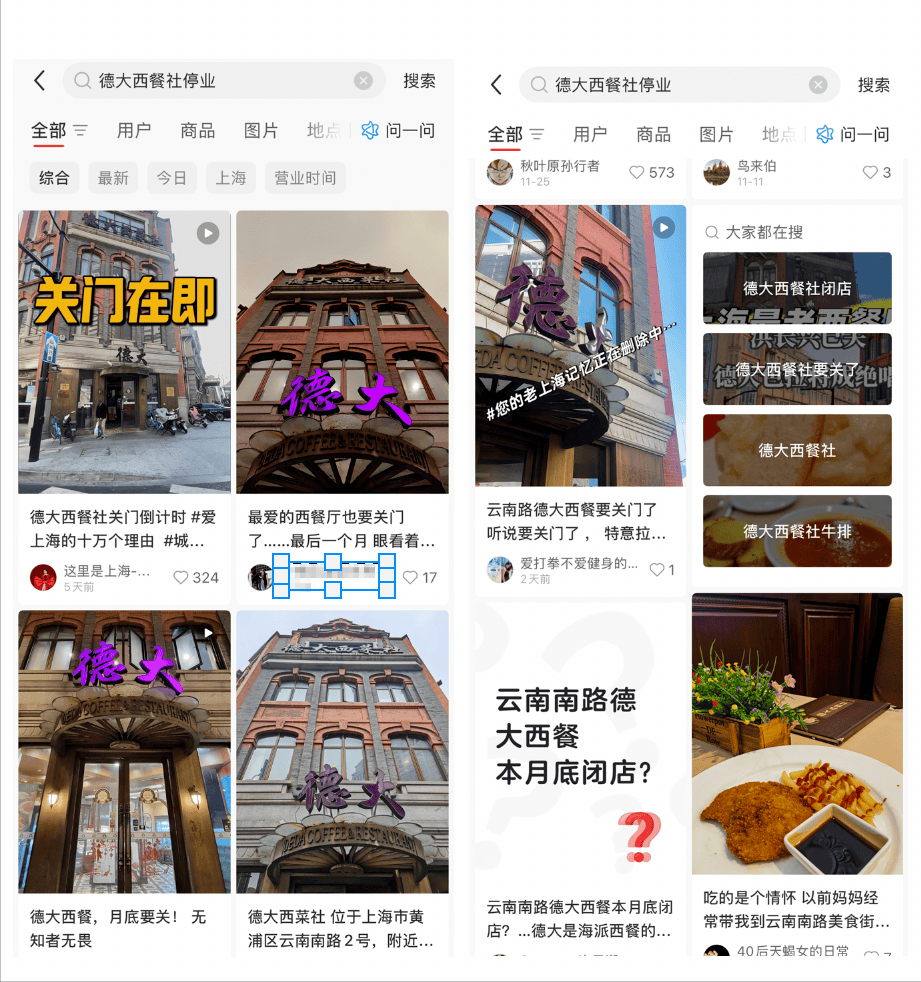
上海知名西餐老店暂停营业,“老味道”输给了新市场?
Sou Hu Cai Jing· 2025-12-06 08:46
Core Viewpoint - The closure of the De Da Western Restaurant on Yunnan Road by the end of December highlights the challenges faced by traditional dining establishments in adapting to modern consumer preferences and market dynamics [1][2]. Group 1: Market Dynamics - The growth of the domestic Western dining market is slowing, with a projected year-on-year growth of 4.5% in 2024, down from previous years [4]. - The rise of high-value meal options, such as fast food and casual dining, has led to a decrease in average spending per person to around 870 RMB, putting pressure on traditional high-end restaurants like De Da [4]. - De Da faces competition from chain brands like Sally's and Haokelai, which attract families and younger consumers with their high value and numerous locations [5]. Group 2: Product and Quality Challenges - De Da is known for its classic dishes but has neglected continuous innovation, while leading brands like Pizza Hut introduce nearly 9 new products each month to maintain customer interest [6]. - The restaurant has received 722 negative reviews on platforms like Dianping, primarily concerning food taste and quality, indicating issues with product consistency [7]. Group 3: Brand and Consumer Disconnect - De Da's brand image does not resonate with younger consumers who prioritize social media engagement and unique experiences, leading to a loss of this demographic [9]. - Only about 10% of the existing over a thousand Chinese time-honored brands are performing well, with many struggling to connect with younger consumers [9]. Group 4: The Essence of "Old Flavor" - The concept of "old flavor" encompasses both culinary techniques and cultural significance, with a need for innovation rather than mere replication of traditional dishes [10][11]. - Consumers seek stable, high-quality products while also valuing the unique historical and cultural aspects of dining experiences [12][13]. Group 5: Reasons for Decline of Traditional Brands - De Da's narrative has stagnated; its historical significance as a symbol of modernity and internationalization no longer aligns with current consumer expectations [15][16]. - Younger consumers are more inclined towards "emotional consumption," focusing on engaging brand stories and novel experiences rather than traditional craftsmanship [18][19]. Group 6: Strategies for Transformation - Traditional brands must enhance internal innovation, as demonstrated by successful examples like Chen Lijie, which leverage new platforms and technologies for revitalization [20]. - To attract younger consumers, Western dining establishments should focus on visually appealing dishes and increase the frequency of menu updates, as seen with brands like Pizza Hut and Sally's [24]. - Implementing diverse marketing strategies, such as promotional events and collaborations with popular IPs, can help traditional brands engage with younger audiences [25]. Conclusion - The closure of De Da Western Restaurant reflects a broader challenge faced by traditional brands, emphasizing the need for adaptation and innovation to thrive in a changing market landscape [26].