
智能体

Search documents
金砖盛会解码AI赋能新型工业化:智能体持续演进,协同生态探路
2 1 Shi Ji Jing Ji Bao Dao· 2025-09-17 11:02
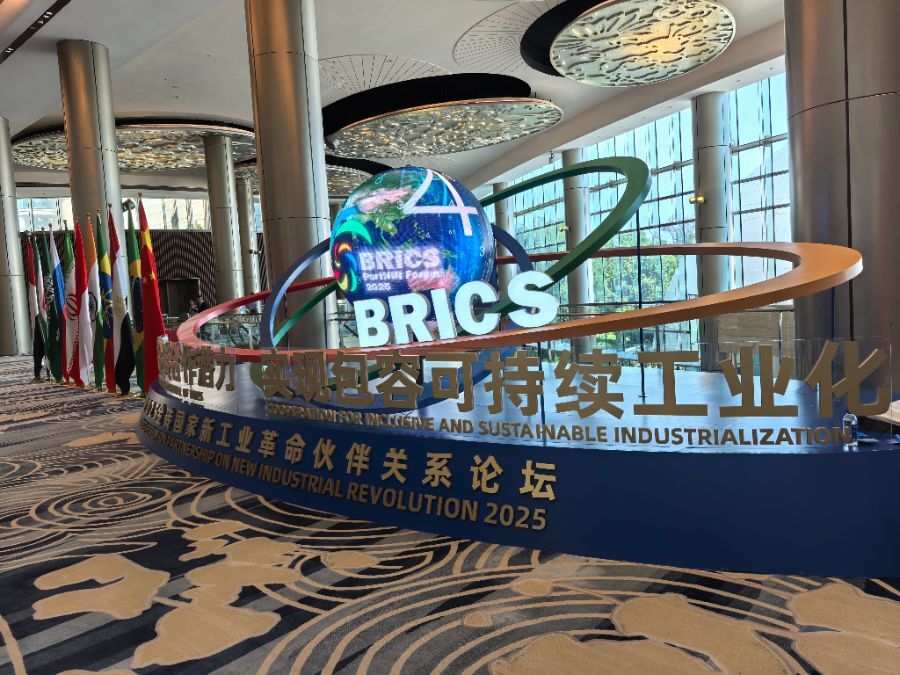
Group 1 - The 2025 BRICS New Industrial Revolution Partnership Forum was held in Xiamen, focusing on the strategic role of artificial intelligence (AI) in driving technological revolution and industrial transformation [1][3] - The Chinese government has reiterated its commitment to AI development, with the recent release of the "Opinions on Deepening the Implementation of 'AI+' Action," which aims to enhance AI integration across various sectors [3][4] - The forum highlighted the need for a collaborative approach to AI development, emphasizing the importance of building a comprehensive innovation ecosystem that includes academia, industry, and research [6][7] Group 2 - The New Development Bank's president pointed out that emerging technologies like AI, robotics, and quantum computing are reshaping national competitiveness and accelerating transformation processes [4][5] - There are significant challenges for many "Global South" countries in accessing key technologies, which hinders their participation in the new industrial revolution [5] - Knowledge sharing, joint technology development, and infrastructure co-building are essential for accelerating innovation in these countries, with BRICS nations positioned to lead this effort [5] Group 3 - AI is transitioning from isolated breakthroughs to collaborative advancements, necessitating the establishment of a broader and deeper innovation network [6][8] - The focus is on creating AI ecosystems that support the integration of digital and physical economies, thereby reducing barriers to AI research and application [6][8] - Companies like China Mobile are actively working to build international AI ecosystems, enhancing capabilities in AI computing, models, and applications to support high-quality industrial development [6][8] Group 4 - The development of intelligent agents is becoming central to the new industrial revolution, with a goal to achieve widespread integration of AI in six key areas by 2027 [7][8] - The Chinese government aims for over 70% penetration of new-generation intelligent terminals and agents by 2027, and over 90% by 2030 [7][8] - Companies are focusing on creating AI-driven solutions that enhance operational efficiency, such as the ICT intelligent agent developed by Xinhua San Group for wireless network management [9][10] Group 5 - Despite advancements, the application of large models and related technologies is still in the early stages, with ongoing efforts to enhance the intelligence and automation of intelligent agents [9][10] - The current capabilities of intelligent agents are limited, with performance levels in complex and uncertain business processes still needing improvement [10] - Future developments may lead to a collaborative intelligence era where intelligent agents surpass human capabilities, but this remains a work in progress [10]

和理想基座模型负责人交流我之前说的对理想有帮助的字节论文
理想TOP2· 2025-09-17 05:01
Core Viewpoint - Both Li Auto and ByteDance independently discovered a fundamental issue in the exploration of agents, leading to similar solutions and effects based on their respective business characteristics [2][4]. Group 1: Solutions and Algorithms - Li Auto's approach is more focused on efficient and practical engineering solutions, while ByteDance's method is supported by more formal and comprehensive mathematical theorems, considering all possible scenarios [3][27]. - Li Auto proposed the AWE algorithm, while ByteDance introduced the Entropy-Modulated Policy Gradients (EMPG) framework, which consists of two components: Self-Calibrating Gradient Scaling and Future Clarity Bonus [4][10]. - AWE focuses on supervised fine-tuning (SFT) within token-level adjustments, whereas EMPG emphasizes reinforcement learning (RL) at the step level, both addressing gradient issues caused by uncertainty [4][27]. Group 2: Key Components of Algorithms - AWE is designed to dynamically adjust the influence of each token on model parameter updates, allowing the model to learn easier tokens first before tackling more difficult ones [9]. - Self-Calibrating Gradient Scaling in the EMPG framework directly intervenes and calibrates the strength of learning signals based on the model's confidence in its actions [10]. - Future Clarity Bonus serves as an internal reward mechanism, guiding agents to choose paths that lead to clearer future states, thus enhancing learning efficiency [11]. Group 3: Insights on Learning Dynamics - The core insight from both companies is that there exists an undesirable coupling between the strength of learning signals (gradients) and the model's uncertainty state (entropy) [24][25]. - The EMPG framework focuses on the uncertainty at the step level, while AWE emphasizes the token level, with both approaches utilizing the model's internal feedback signals to guide training [27][28]. - Li Auto's AWE primarily addresses gradient size, while EMPG tackles both gradient size and credit assignment issues [6][27].


淘宝、美团、支付宝都在做AI导购,能不能用你的消费数据?
2 1 Shi Ji Jing Ji Bao Dao· 2025-09-17 04:58
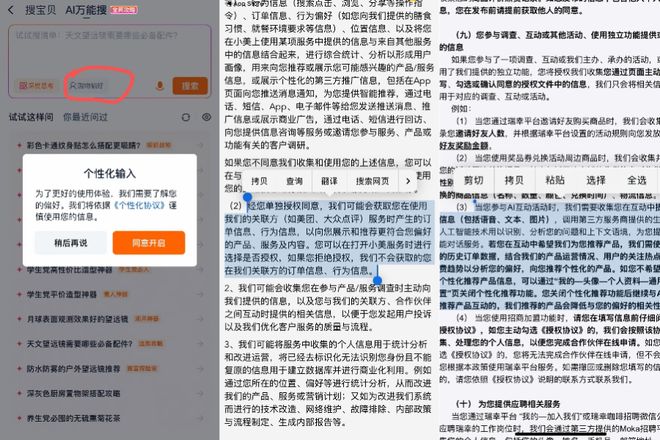
Core Insights - The article discusses the emergence of general-purpose AI agents in various consumer platforms, highlighting their integration into core products to enhance user experience and streamline decision-making processes [1][2] Group 1: AI Integration in Consumer Platforms - Major companies are embedding AI assistants into their applications, such as Taobao's AI assistant for multi-turn dialogue shopping and Meituan's "Xiao Mei" for food delivery and local services [1][2] - Alipay has launched the first "AI payment" service in China, allowing users to place orders and complete payments with a single command through the AI assistant [1] Group 2: Data Utilization and Personalization - AI assistants utilize user data, including order history and behavior information, to provide personalized recommendations, thereby enhancing conversion rates [2][3] - Taobao's "AI Universal Search" and Meituan's "Xiao Mei" both rely on user data to tailor search results and recommendations based on past interactions [2][3] Group 3: User Consent and Compliance - Platforms must obtain explicit user consent to utilize personal data for AI-driven recommendations, as outlined in their user agreements [3][5] - Compliance with regulations, such as the Personal Information Protection Law, requires platforms to inform users about data usage and provide options to opt-out of personalized recommendations [5][6] Group 4: Regulatory Considerations - The design of AI features must include easy opt-out options for users, as mandated by regulations governing algorithmic recommendations [6][8] - The article emphasizes the importance of user choice and transparency in data usage to mitigate regulatory risks and enhance user trust [8][9]


云迹科技谢云鹏:智能时代如何协同“AI同事”重构服务生态
Tai Mei Ti A P P· 2025-09-17 02:18
Core Insights - The article emphasizes that robots should be viewed as "AI colleagues" rather than mere tools, highlighting the importance of creating an efficient human-robot collaboration system to enhance operational efficiency and customer experience in the smart era [1][5][14] Company Overview - Cloudwise Technology, founded in 2014, has been deeply involved in the robotics field for 11 years, witnessing the industry's transformation from "machine tools" to "AI colleagues" [3][6] - As of 2024, Cloudwise robots have been deployed in over 30,000 hotels, completing 500 million service tasks, which is equivalent to traveling around the Earth's equator more than 500 times [3][6] Robot Capabilities - The company defines robots as intelligent entities with mobile and operational capabilities, driven by six dimensions of abilities: learning, adaptability, interaction, autonomy, emotional intelligence, and social integration [3][8][10] - Robots are designed to continuously optimize their strategies based on environmental feedback, maintain stability in various scenarios, and understand emotional cues from guests [3][9][10] Collaboration Strategies - Effective collaboration with AI colleagues requires focusing on four key aspects: clear objectives, controllable processes, traceable results, and responsive feedback [4][10] - Hotel managers set clear KPIs for robots, allowing them to identify subtle customer needs through operational data and drive system optimization through continuous feedback [4][10] Industry Applications - The human-robot collaboration model is applicable across various sectors, including hotels, hospitals, and factories, enabling intelligent upgrades and enhanced experiences [4][10] - The integration of embodied intelligence and disembodied intelligence is expected to create highly adaptable "industry intelligent agents" that can operate in specific scenarios [5][12] Future Outlook - The arrival of more "AI colleagues" should not induce fear regarding job value; instead, they should be seen as partners that extend human capabilities [5][14] - The article suggests that the era of robots will differ from the human population dividend era, as robots rely on research and development to optimize algorithms and enhance their capabilities [11][15]

360集团董事长周鸿祎:“超级员工” 是这样炼成的
Sou Hu Cai Jing· 2025-09-17 01:56
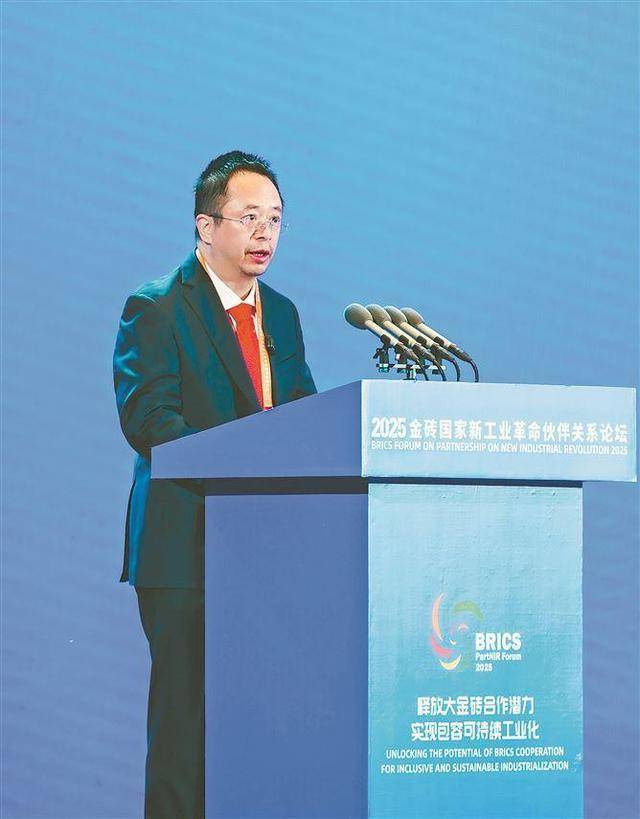
Core Insights - The core argument presented by Zhou Hongyi emphasizes the transition from large models to intelligent agents in the context of artificial intelligence, suggesting that while large models serve as a foundational element, they lack the practical application needed for real-world tasks [3][4]. Group 1: AI Development - Zhou Hongyi asserts that the focus of AI has shifted from large models to intelligent agents, which are seen as essential for driving the new industrial revolution [3][4]. - He critiques the current use of large models, stating that they often function merely as chatbots or customer service tools, failing to address production and business challenges effectively [3][4]. - The evolution of AI is described as moving from knowledge-based large models to reasoning models, with a notable decrease in operational costs [3]. Group 2: Intelligent Agents - Intelligent agents are defined as specialized digital employees that transform general large models into tailored solutions, possessing capabilities such as memory, tool usage, collaboration, and task planning [4]. - Zhou outlines five levels of intelligent agents, from chat assistants to collaborative multi-agent systems, with the highest level (L5) being self-learning and self-evolving agents [4]. - The emergence of intelligent agents is expected to redefine roles within organizations, positioning humans as planners, leaders, and supervisors of these agents, leading to the concept of "mixed teams" of silicon and carbon-based employees [4]. Group 3: Empowering the New Industrial Revolution - Zhou advocates for a specialized intelligent agent approach to empower the new industrial revolution, claiming that the potential for intelligent agents in industrial applications is ten times greater than traditional software [5]. - The 360 Intelligent Agent Factory aims to develop L3-L4 intelligent agents, providing customizable solutions for small and medium enterprises, with 50,000 agents already available [5]. - The digital transformation of traditional industries is framed as a profound change, with intelligent agents being the key driver for future opportunities, and 360 is open to sharing its intelligent agent factory technology with BRICS nations [5][6].

下一个10年,这3个能力最重要
3 6 Ke· 2025-09-17 00:40
Group 1 - AI is reshaping the world and human self-perception, but humans remain irreplaceable due to unique capabilities [1][2] - Humans possess three core abilities that AI cannot replicate: accountability, creativity and adventurous spirit, and self-drive [3][4] - Continuous self-drive, learning, and dialectical decision-making are fundamental drivers of human societal progress [4] Group 2 - The rise of AI has caused anxiety among people, with some rejecting it and others feeling overwhelmed [5] - Even if AI technology stagnates, existing models can still trigger profound societal changes, particularly with the emergence of AGI and ASI [5][6] - Humans must remain the decision-makers, especially in specific contexts where AI lacks understanding [6][9] Group 3 - Humans' accountability stems from their unique existence and ability to provide credible experiences, which AI cannot do [9][10] - Decision-making by humans is a concentrated act of judgment and responsibility, which AI cannot replicate [10][11] - The essence of human decision-making is rooted in personal experience and the ability to be held accountable [10][12] Group 4 - Creativity and the ability to take risks are uniquely human traits that AI cannot fully emulate [11][12] - AI can generate solutions based on existing information but lacks the ability to create entirely new concepts [12][13] - The ideal collaboration between humans and AI involves humans making final decisions based on AI-generated options [12][14] Group 5 - Continuous learning and self-driven exploration are essential for personal growth and adaptation in the AI era [28][30] - Reading is crucial for personal development, as it shapes neural connections and influences one's perspective [28][29] - The process of learning and searching for knowledge is scalable, leading to greater personal and professional growth [30][31] Group 6 - In the AI era, humans should embrace their role as decision-makers, particularly in micro-decisions that require personal accountability [23][24] - AI should be viewed as an enhancement to human capabilities rather than a competitor [25][26] - The future of work will involve leveraging AI to improve decision-making and creativity, allowing humans to focus on unique contributions [24][25]
焦点复盘科创50录得日线5连涨,算力芯片双龙续创历史新高,统一大市场概念异军突起
Sou Hu Cai Jing· 2025-09-16 16:59
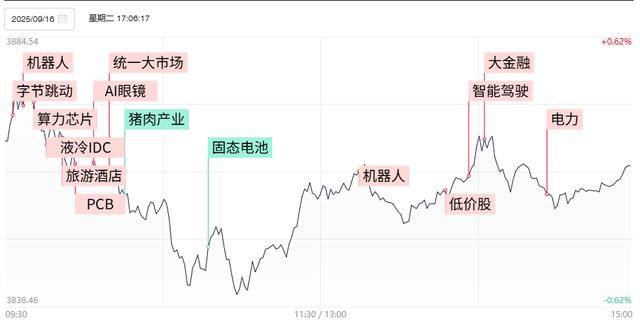
Market Overview - A total of 70 stocks hit the daily limit up, with 28 stocks experiencing limit down, resulting in a sealing rate of 71% [1] - The market showed a recovery trend, with the Shanghai Composite Index rising by 0.04%, the Shenzhen Component Index increasing by 0.45%, and the ChiNext Index gaining 0.68% [1] - The total trading volume in the Shanghai and Shenzhen markets reached 2.34 trillion yuan, an increase of 64 billion yuan compared to the previous trading day [1] Stock Performance - The stock with the highest performance was Huajian Group, achieving a four-day consecutive limit up, while Shoukai Co. had nine limit ups in ten days [1][3] - Other notable stocks included Shanghai Construction, Xiangjiang Holdings, and Rongsheng Development, each achieving three consecutive limit ups [1][3] - The low-priced stocks continued to attract significant capital, with several stocks achieving multiple limit ups, indicating a strong focus on this segment [3] Sector Analysis - The leading sectors included robotics, internet e-commerce, and logistics, which saw significant gains, while sectors like pork, non-ferrous metals, and film and television experienced declines [1] - The robotics sector gained momentum due to multiple positive developments, including the announcement of an open-source model by Yushu Technology and significant investments by Tesla [5] - The unified market concept also performed well, with logistics stocks like New Ning Logistics and Yiyaton hitting the limit up [7] Notable Stocks - Shoukai Co. achieved a 10.07% increase with nine limit ups in ten days, driven by its involvement in real estate and investment in Yushu Technology [11] - Chunzhong Technology saw a 10.00% increase with five limit ups over six days, benefiting from the liquid cooling IDC sector [11] - Bidet Technology and Huajian Group also recorded significant gains, with increases of 10.01% and 10.01%, respectively, due to their focus on high-speed rail and Shanghai microelectronics [11]
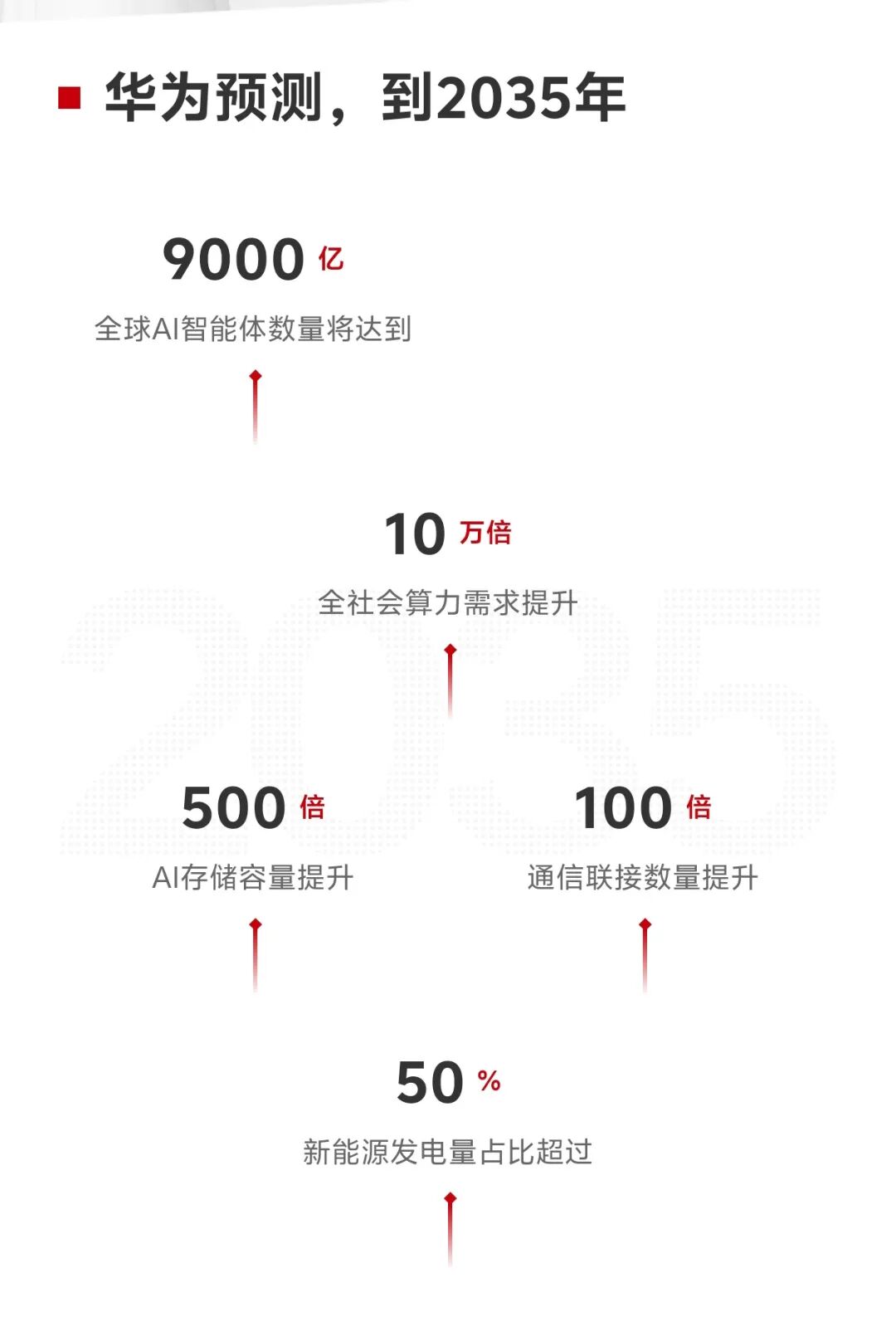
未来10年算力总量增长10万倍!华为发布十大技术趋势
Shang Hai Zheng Quan Bao· 2025-09-16 16:51
"到2035年,人工智能将助力预防超过80%的慢性病;超过90%的中国家庭将拥有智能机器人;人类将逐渐进入全息生活空间的时代。" 9月16日,华为发布智能世界2035系列报告,展望了未来十年的关键技术趋势以及这些技术对教育、医疗、金融、制造、电力等行业带来的改变和影响。 华为常务董事汪涛发表了"探索未知,跃见未来"的主题演讲。汪涛表示:"每一次文明的跃迁都源自人类对未知的不断探索。这份深植于人类基因的探索 精神,推动我们不断突破认知与技术的边界,走向更加繁荣的智能文明。生成式人工智能正在以我们从未想象过的方式,重新定义未来的可能性。因此, 我们比以往任何时候都更需要前瞻的视野,更需要依靠科技的愿景与假设来指引前路。" 在华为看来,未来十年,AGI、智能体、自动驾驶、算力等十大关键技术,将发展成什么样子呢?一起来看一下。 趋势一:AGI将是未来十年最具变革性的驱动力量,但仍需克服诸多核心挑战,方能实现AGI奇点突破。因此,走向物理世界是AGI形成的必由之路。 趋势二:随着大模型的发展,AI智能体将从执行工具演进为决策伙伴,驱动产业革命。 趋势三:开发模式迎来变革,人机协同编程成为主流。人类将更专注于顶层设计和创 ...
周鸿祎金砖论坛建言:拥抱智能体,打造“超级组织”驱动产业智能化变革
Zheng Quan Shi Bao Wang· 2025-09-16 12:09
Core Insights - The current industrial revolution is fundamentally driven by artificial intelligence, transitioning from digitalization to an intelligence-centric empowerment model [2] - The focus of artificial intelligence has shifted from large language models to intelligent agents, which are seen as essential for driving industrial transformation [2][3] - Intelligent agents are compared to "robots in virtual space" and possess four core capabilities: task decomposition and planning, memory, tool usage, and collaborative division of labor [2] Industry Implications - The adoption of "specialized intelligent agents" is emphasized over "general intelligent agents," as the former can better integrate into existing business processes and address specific industry challenges [3] - Specialized intelligent agents can replace traditional software and human execution roles, leading to reduced operational costs and improved quality of outcomes [3] - The concepts of "super employees" and "super organizations" are introduced, highlighting the potential for exponential productivity increases when individuals can manage multiple intelligent agents [3] Technological Development - The evolution of intelligent agents is outlined in five levels, from chat assistants to self-learning and self-evolving agents capable of creating other agents [3] - 360 Group has launched an intelligent agent factory platform that allows users to create intelligent agents without programming skills, facilitating rapid deployment [4] - The company aims to support the digital transformation of traditional industries by offering a comprehensive enabling platform for intelligent agent development and application [4][5]
企业AI落地卡在“最后一公里”,何以破解?
2 1 Shi Ji Jing Ji Bao Dao· 2025-09-16 10:28
21世纪经济报道记者孔海丽、实习生吴佳芸北京报道 人工智能时代,企业对AI工具跃跃欲试,却往往败在低于预期的投资回报率。投入巨大,产出有限, ROI难以兑现,企业应该如何跨过"试用期",把AI变成驱动增长的核心引擎,成为企业共同面对的难 题。 企业AI落地应用从实验探索到实际用例,再到模型自动化,被IBM亚太区总经理Hans Dekkers称为企业 AI的"价值创造曲线"。他强调,企业只有在每一个阶段都实现规模化发展,才能成为以人工智能为核心 的"AI优先"型企业。 目前,更多企业正在将AI技术部署到自身业务中。IDC数据显示,66.5%的中国企业已在局部场景中应 用AI,27.2%正迈向规模化部署。 机器学习、深度学习、自然语言处理和其他AI技术可以帮助企业推动业务目标和决策。除了数据收集 和分析,AI还可以完成自动化、客户服务和风险管理等更为复杂的运营任务。 以IBM为例,在过去两年里,AI转型为公司创造了35亿美元收益;在支持案例(support case)总结方面, 每季度节省超过12.5万小时的工作。另据凯傲集团亚太区信息技术及数字化业务副总裁张犇介绍,作为 工业叉车生产商,凯傲集团已在推进基于识别 ...
